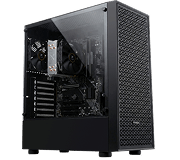


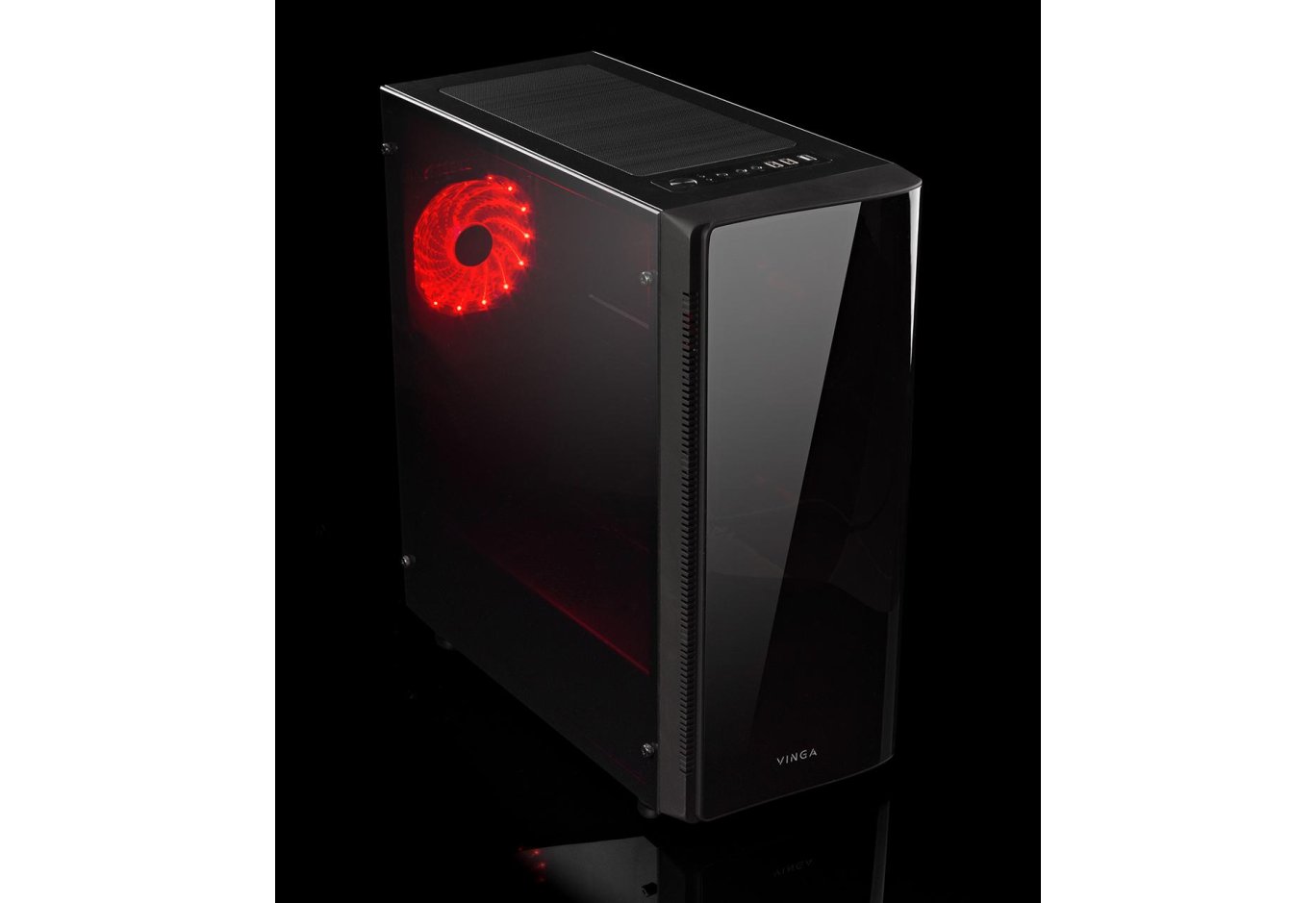
PC Case Vinga Gnoll
«Barbarian», «Gryphon», «Orc»...This time we have «Gnoll» - something between a hyena and a human, but you certainly wouldn't call this creature a beauty. Apparently, Vinga's marketers have a great sense of humor, as this name was given to another case with a focus on design.
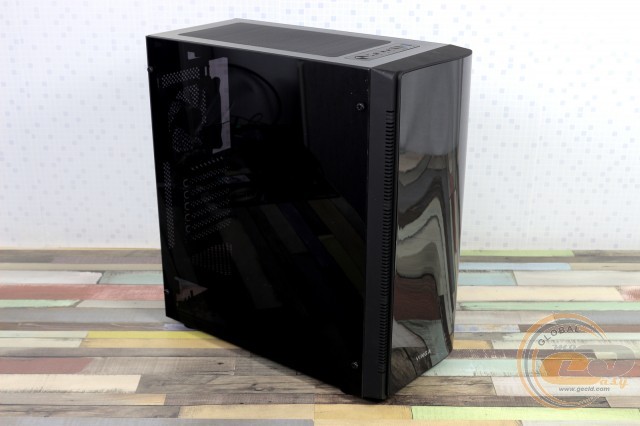
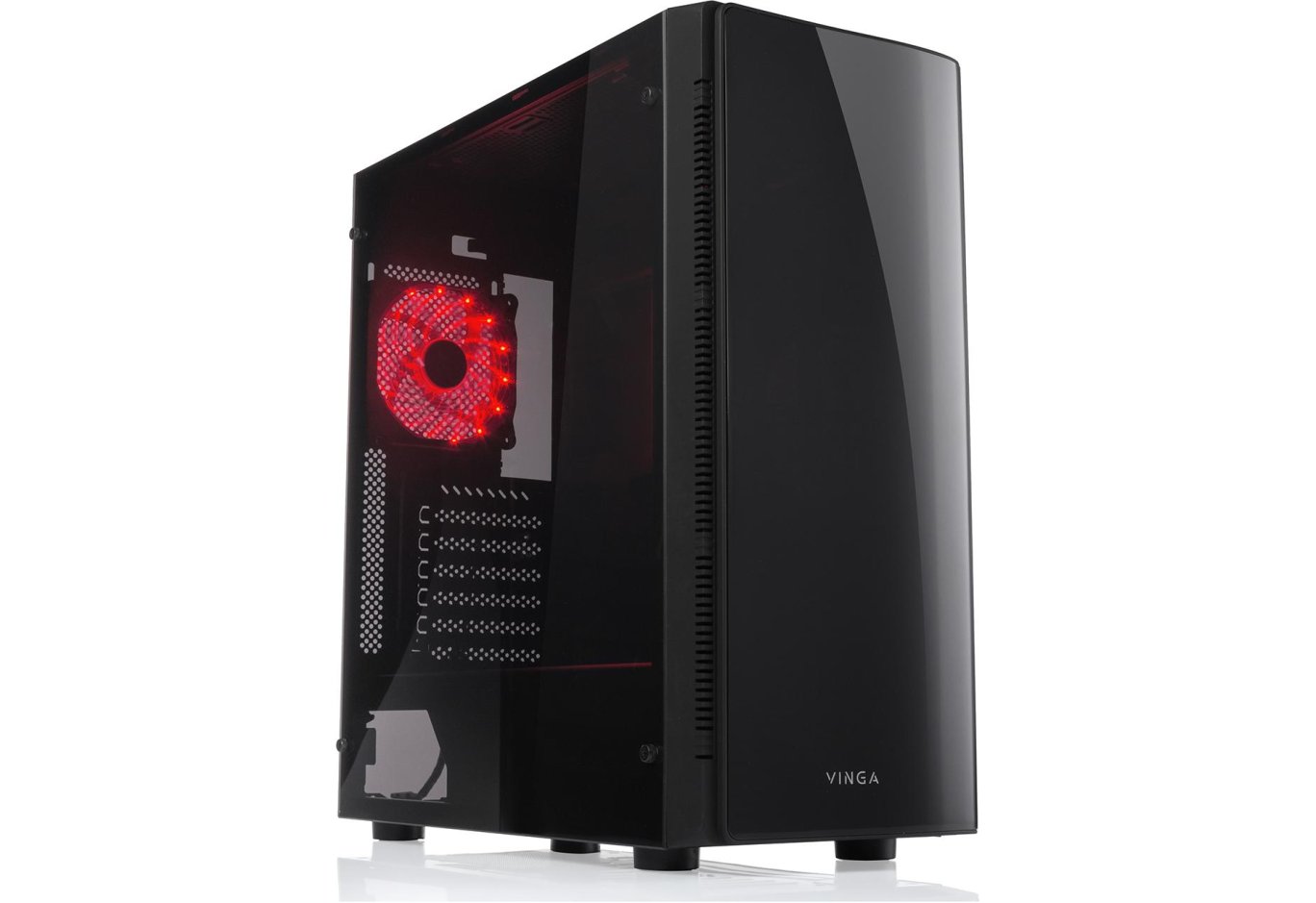
If you're already tired of such solutions, we hasten to assure you that the Vinga Gnoll is quite an interesting product. Firstly, the cost of this device is just over $40. Secondly, there aren't a lot of pre-installed fans - just one, whose pleasant glow can be seen through two semi-transparent panels. Thirdly, this case can accommodate even the largest components you can find on online platforms.
Specification
|
Model |
Vinga Gnoll |
|||
|
Case size |
Middle Tower |
|||
|
Support for motherboard form factors |
ATX / E-ATX / microATX / Mini-ITX |
|||
|
Color |
Black |
|||
|
Bays |
External |
None |
||
|
Internal |
2 x 3.5” 2 x 2.5” |
|||
|
Expansion card slots |
7 |
|||
|
Maximum graphics card length (in brackets - own measurements) |
390 mm (390 mm) |
|||
|
Maximum CPU cooler height (in brackets - own measurements) |
180 mm (165 mm) |
|||
|
Maximum PSU height (in brackets - own measurements) |
220 mm (200 mm) |
|||
|
Connectors |
1 x USB 3.0 2 x USB 2.0 2 x audio ports |
|||
|
Pre-installed fans |
On the rear panel |
1 x 120-mm (1100 RPM) |
||
|
Installation capability |
On the front panel |
3 x 120-mm |
||
|
On the top panel |
2 x 140-mm / 2 x 120-mm |
|||
|
On the rear panel |
1 x 120-mm |
|||
|
On the tunnel |
2 x 120-mm |
|||
|
Power supply unit |
None |
|||
|
Materials |
Front panel, left side |
2.9 mm thick acrylic |
||
|
Chassis |
0.61-0.64 mm thick steel |
|||
|
Right side |
0.55 mm thick steel |
|||
|
Case dimensions (in brackets - own measurements) |
485 x 200 x 445 mm (486 x 204 x 450 mm) |
|||
|
Weight |
4.59 kg |
|||
|
Manufacturer's website |
||||
Packaging and delivery set
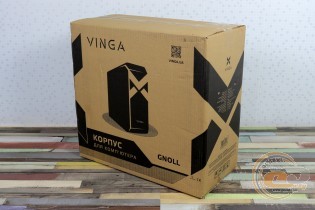
The monochrome box made of simple cardboard bears a schematic image of some case, but definitely not the one inside. However, the specification is correct. If only there were handles for transportation... Well, tape will help.
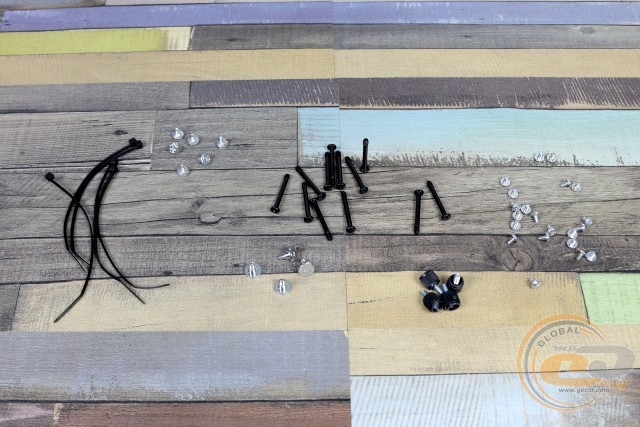
The included screws (for the board, drives, power supply, and even CBO) are complemented by five cable ties - a pleasant and very useful bonus.
Appearance
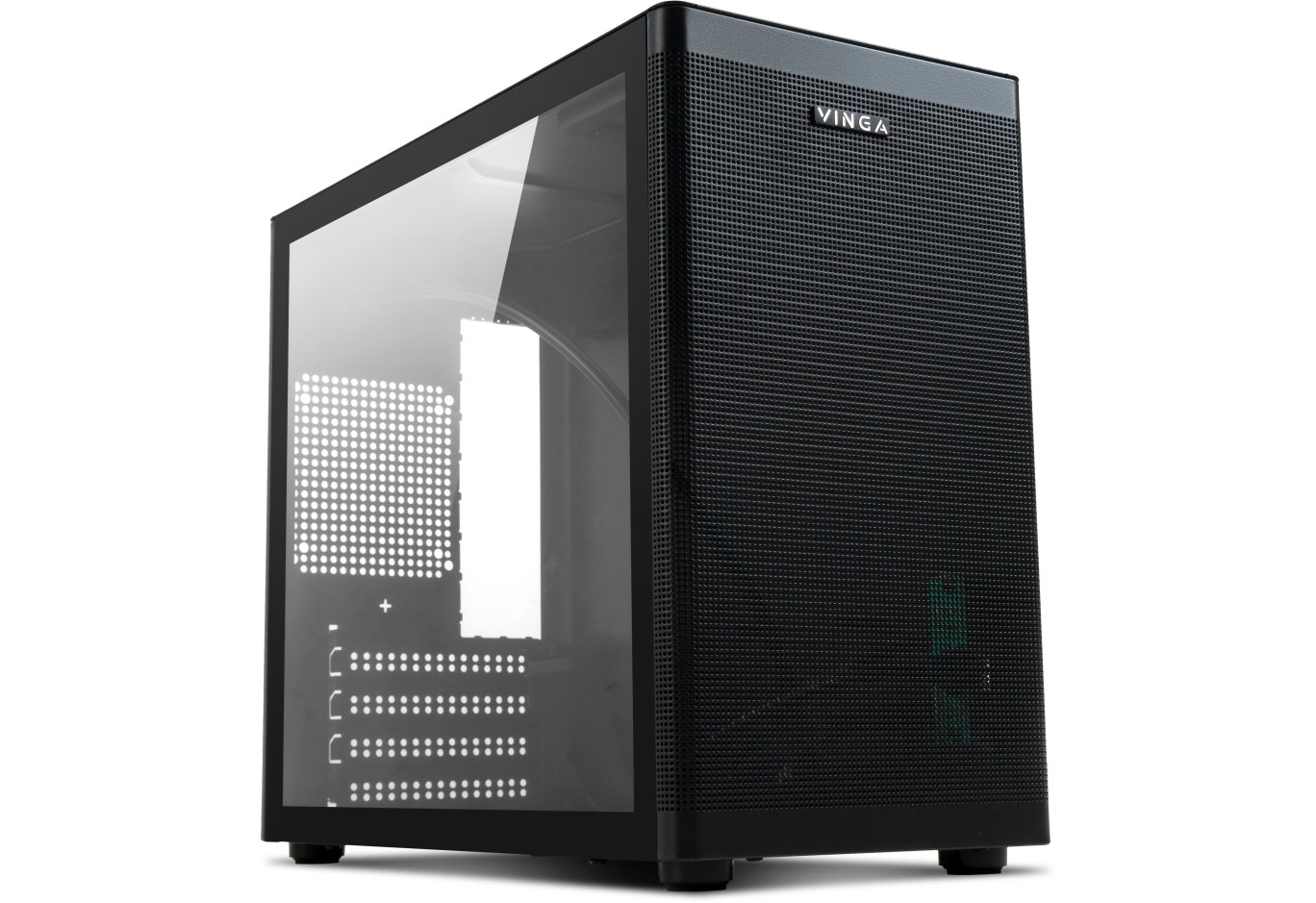
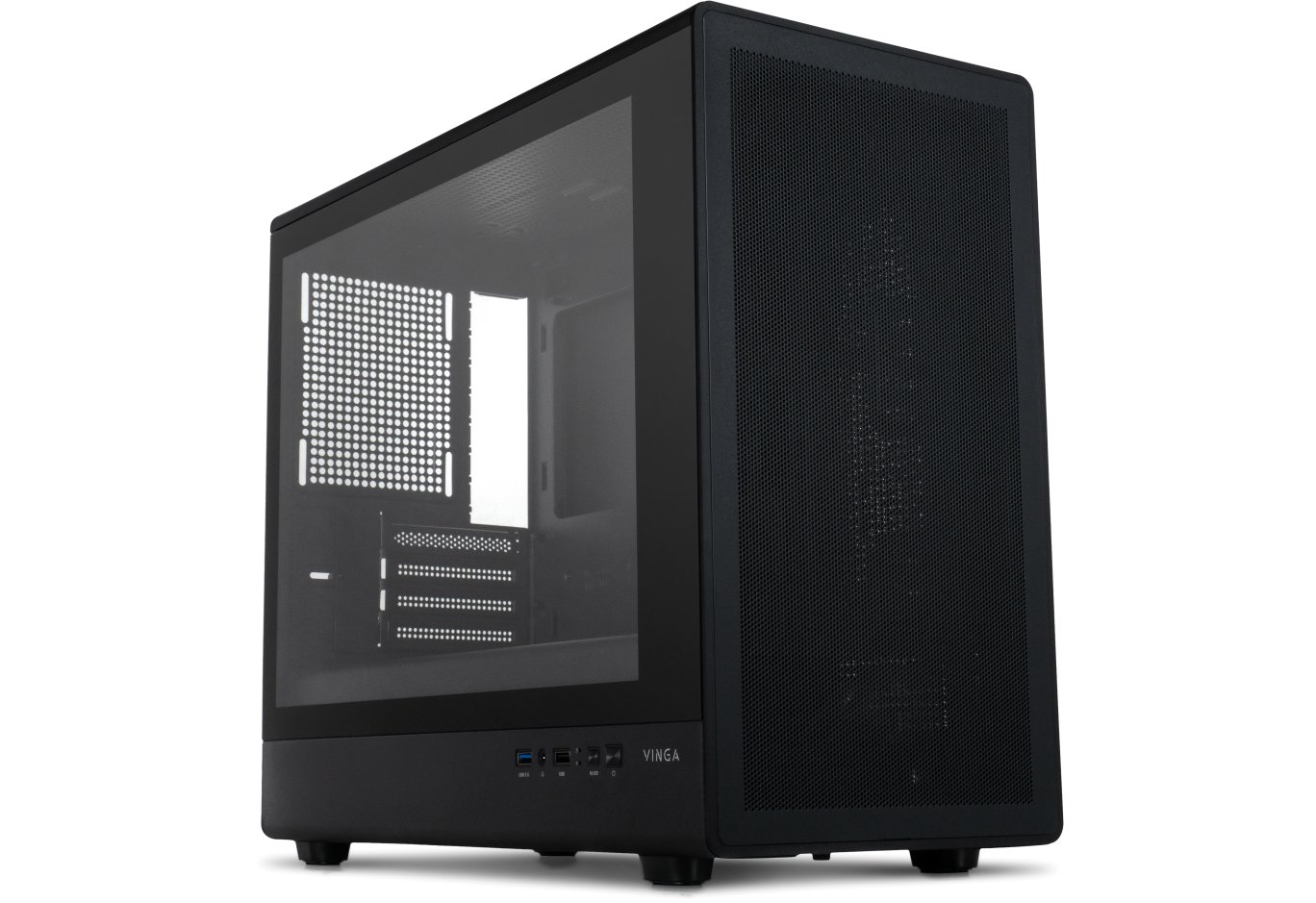
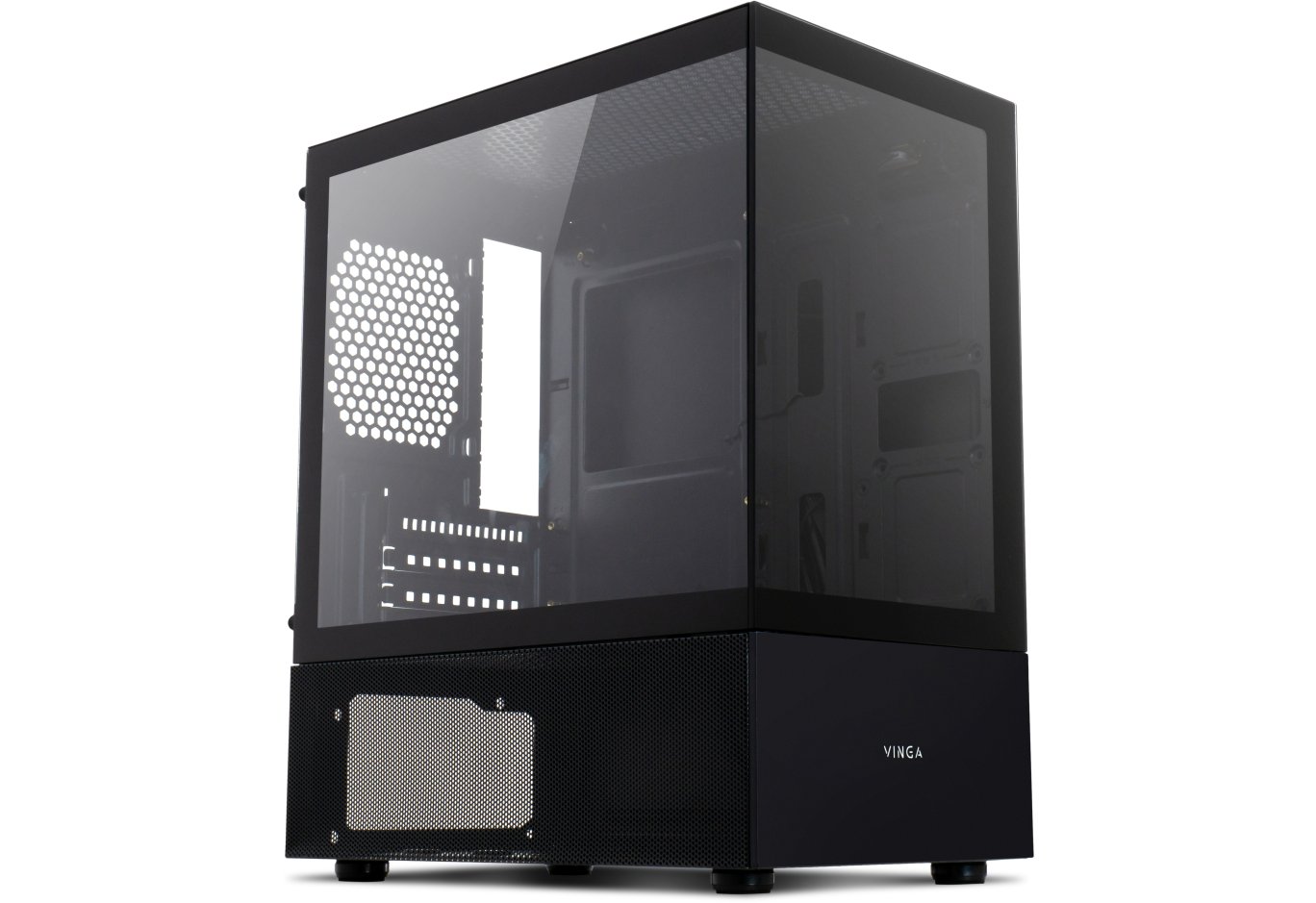
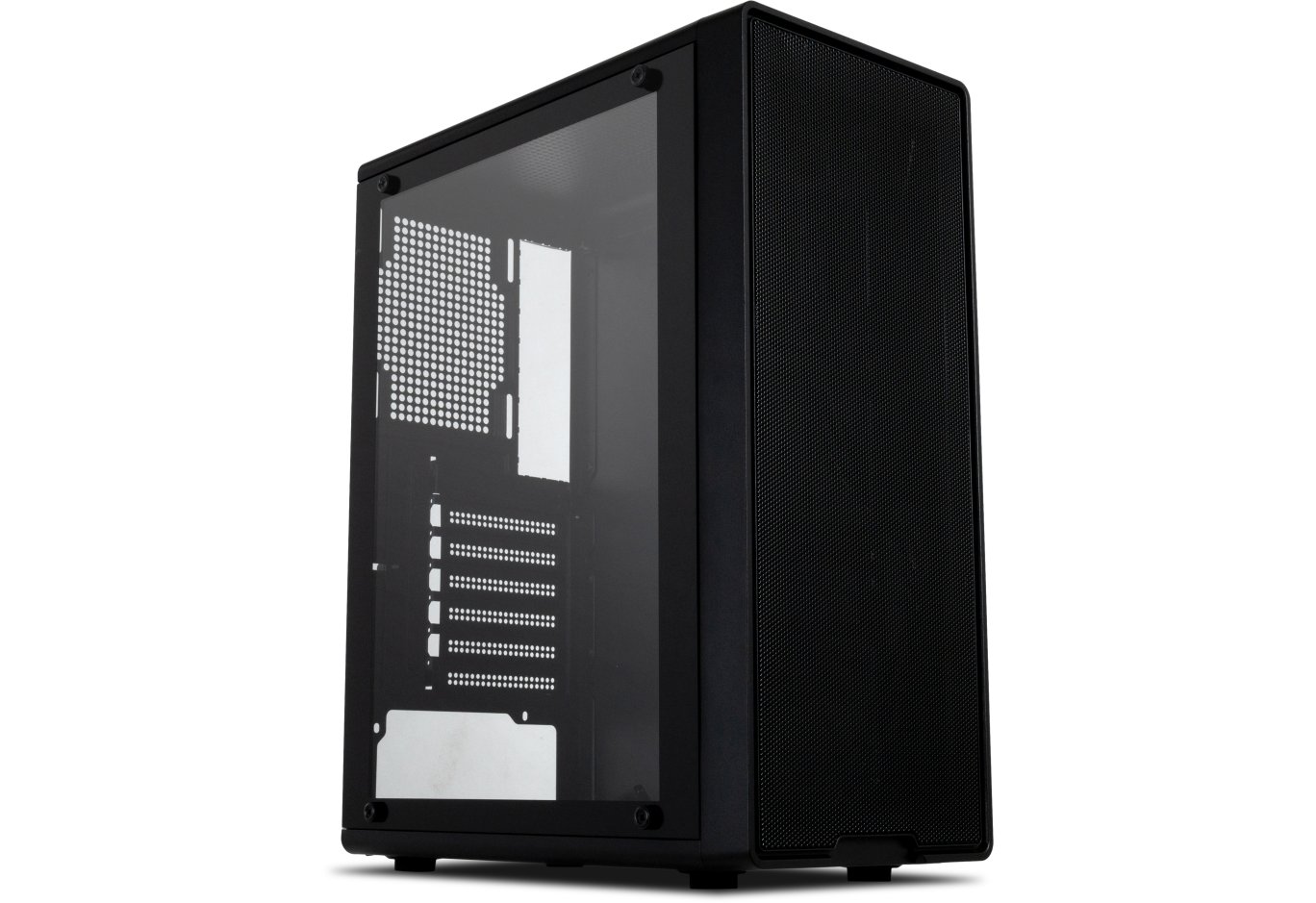
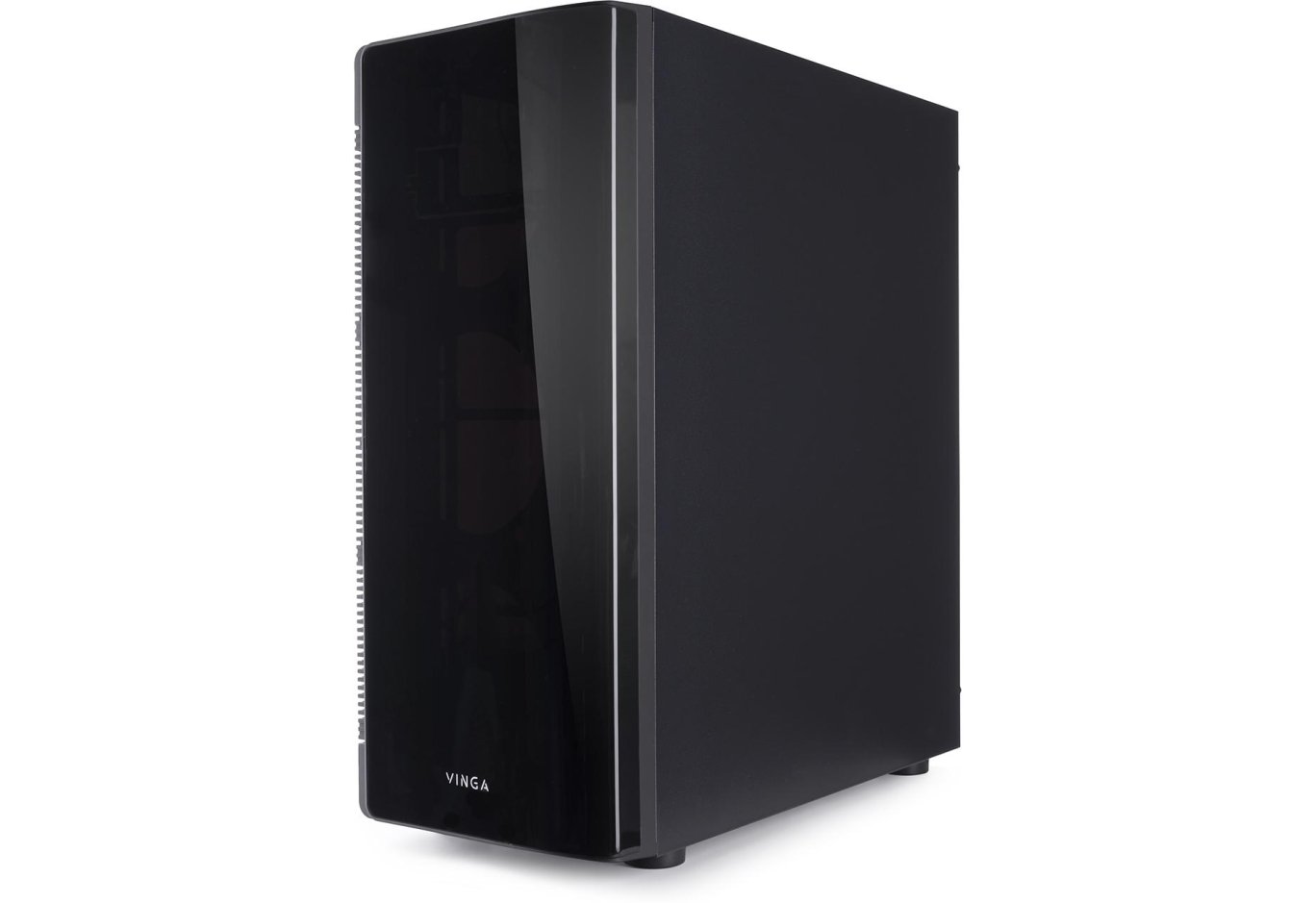
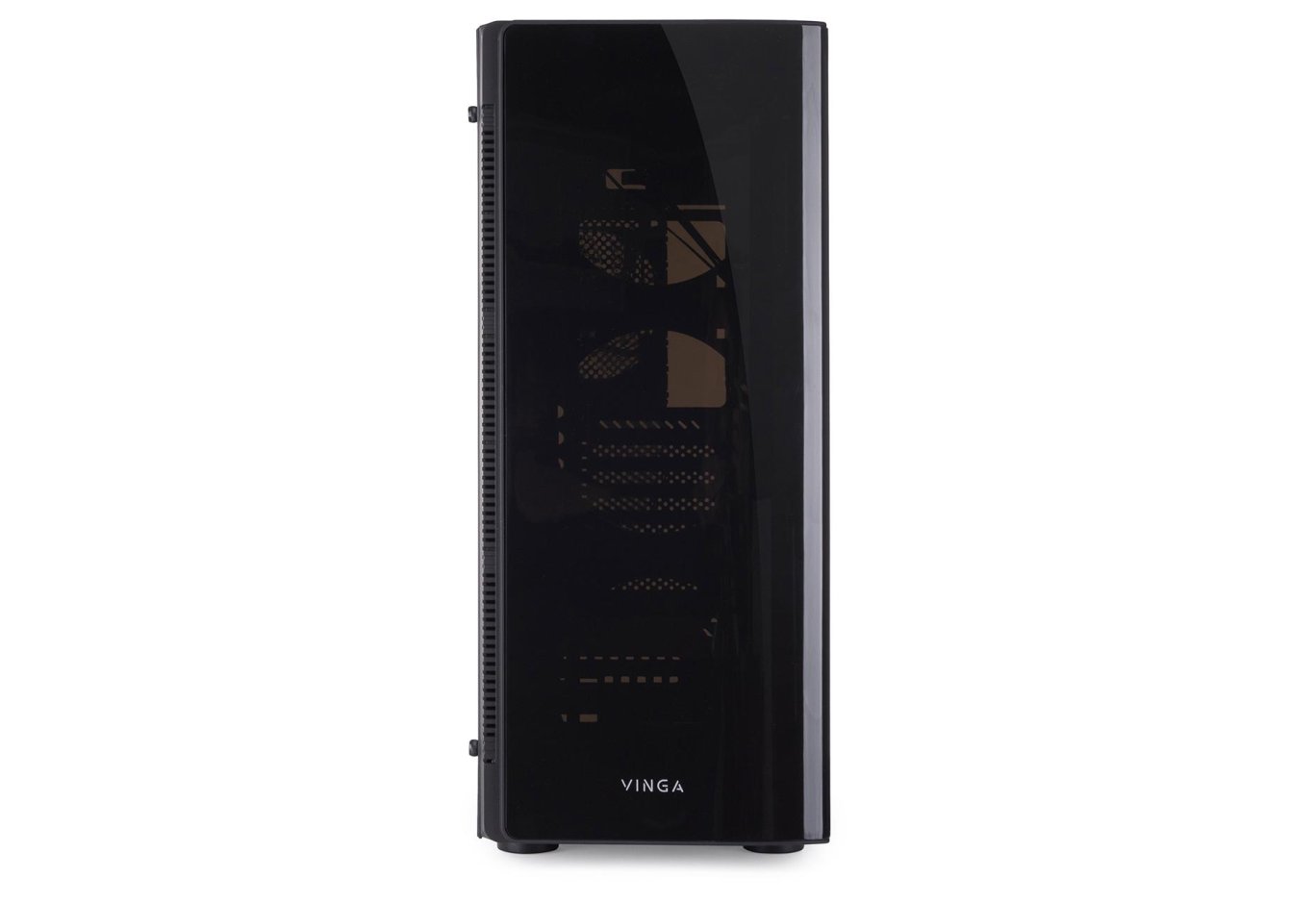
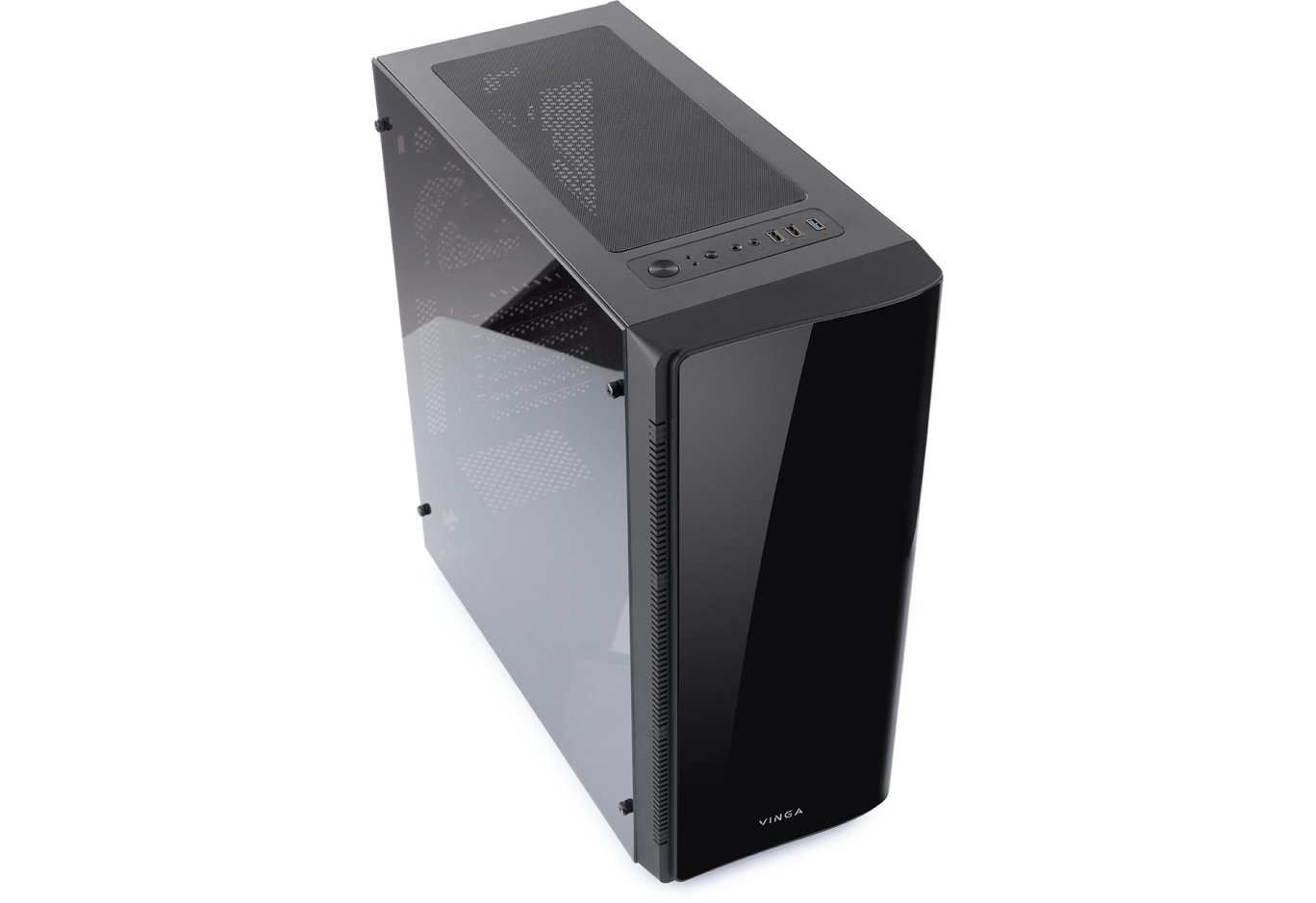
The front panel of the Vinga Gnoll is made of tinted acrylic, so there are no bays for external devices. When viewed head-on, it may seem like a regular flat wall, but the top view and reflection allow you to appreciate some design curve. Medium-sized ventilation holes are only on the left - it's good they weren't forgotten entirely. It's just a pity that the absence of a synthetic filter behind them will result in dust accumulation inside the case. Well, a budget option - something has to be sacrificed.
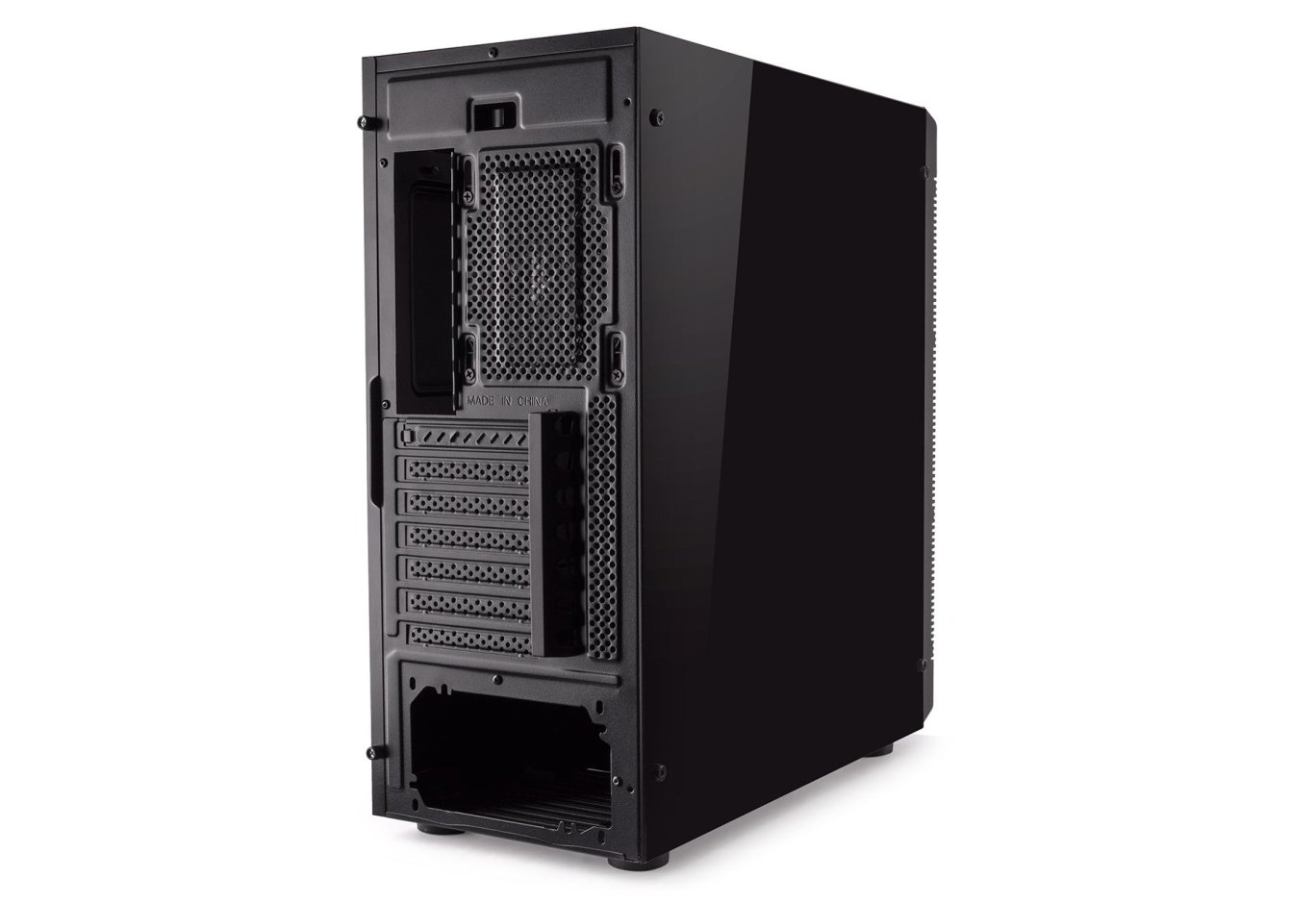
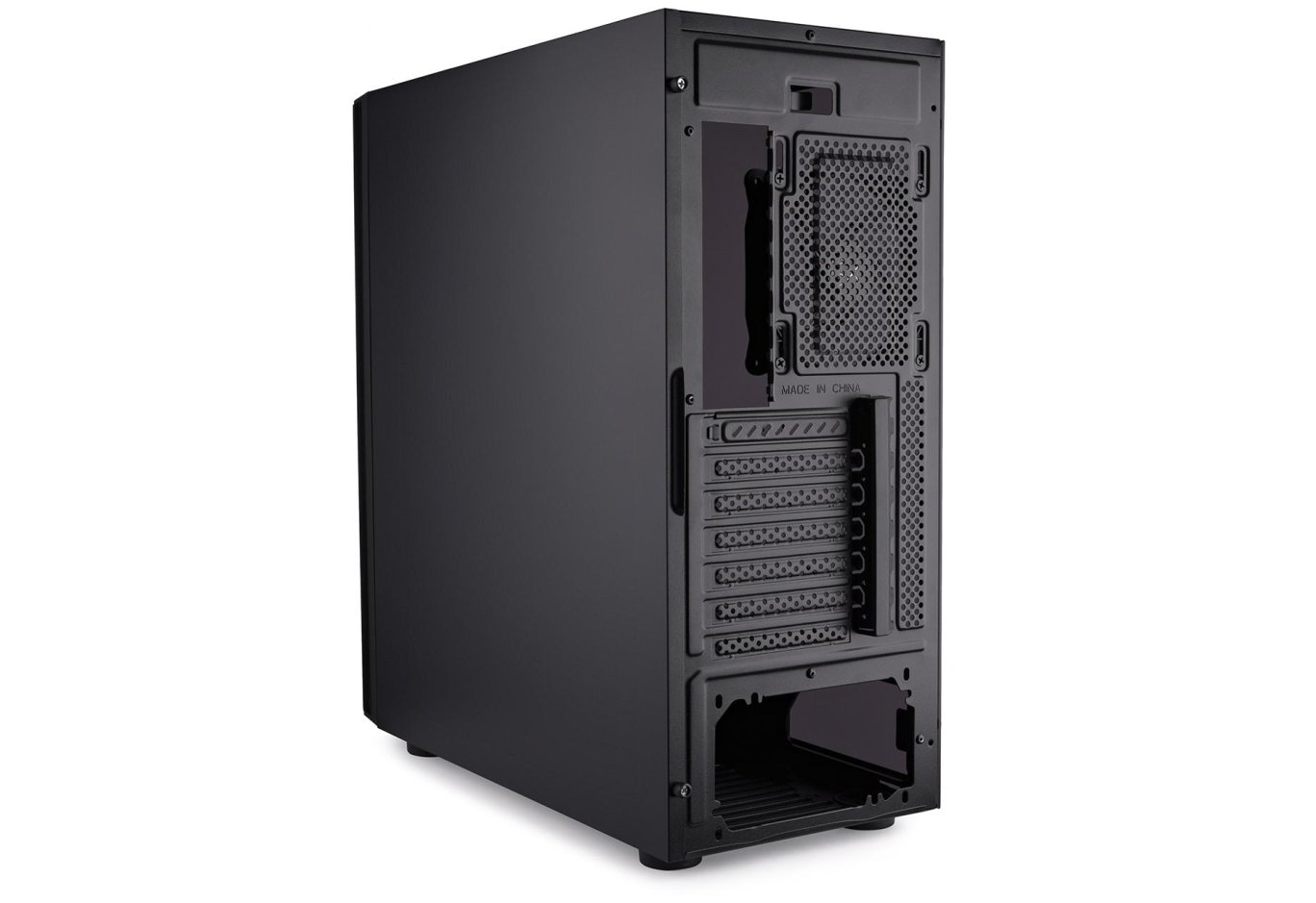
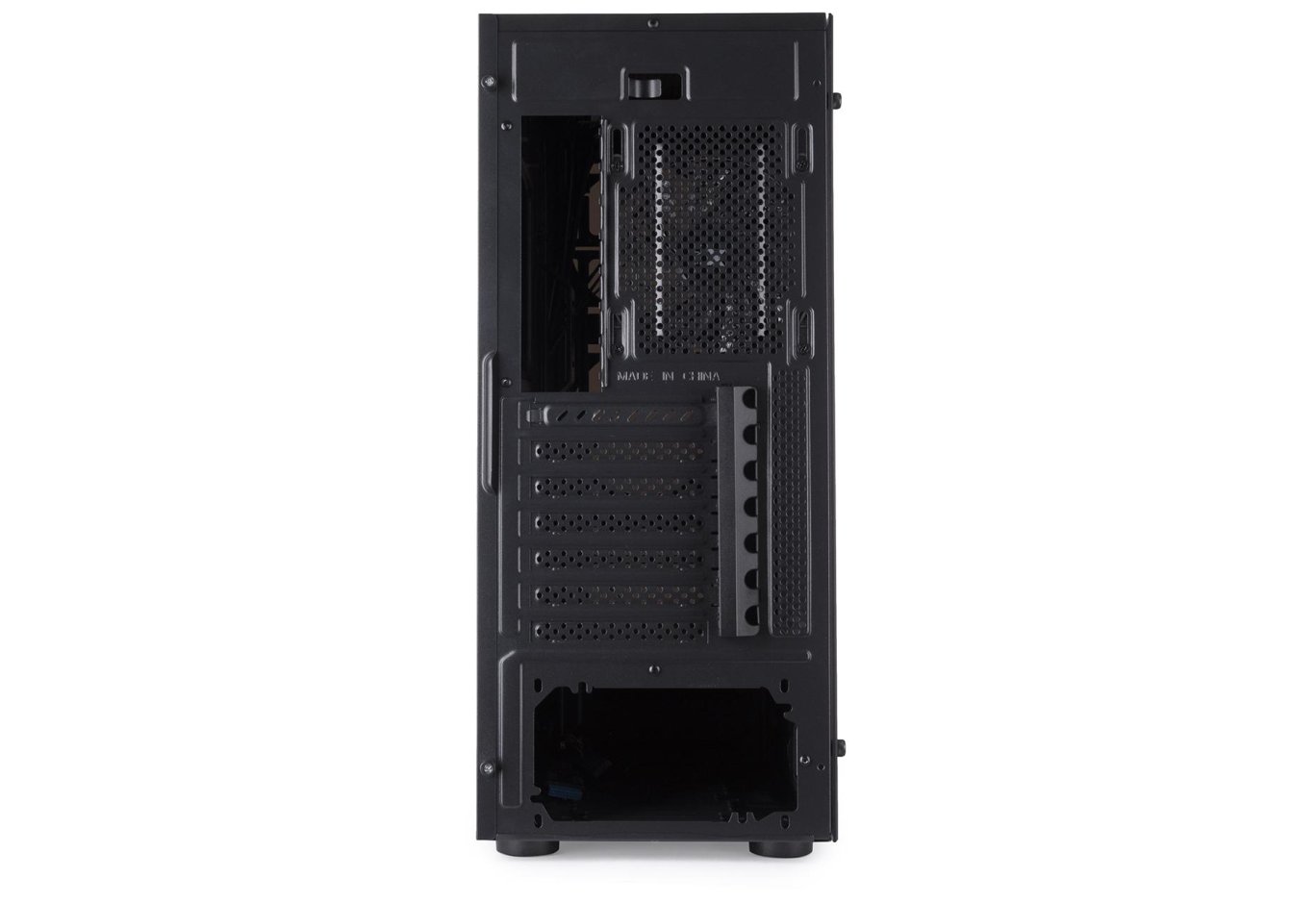
The back of the case is pleasing not only with a layer of black paint (we're used to this by now) but also with another very practical feature - a few centimeters of space between the top panel and the cutout for the motherboard interfaces, intended for installing a liquid cooling radiator. Despite the significantly higher price, the Vinga Orc did not have this option. Otherwise, the "gnoll" resembles its lineup siblings: space for a 120-mm fan with height adjustment, seven expansion slot covers (six of which are disposable), and a bottom-mounted power supply unit.
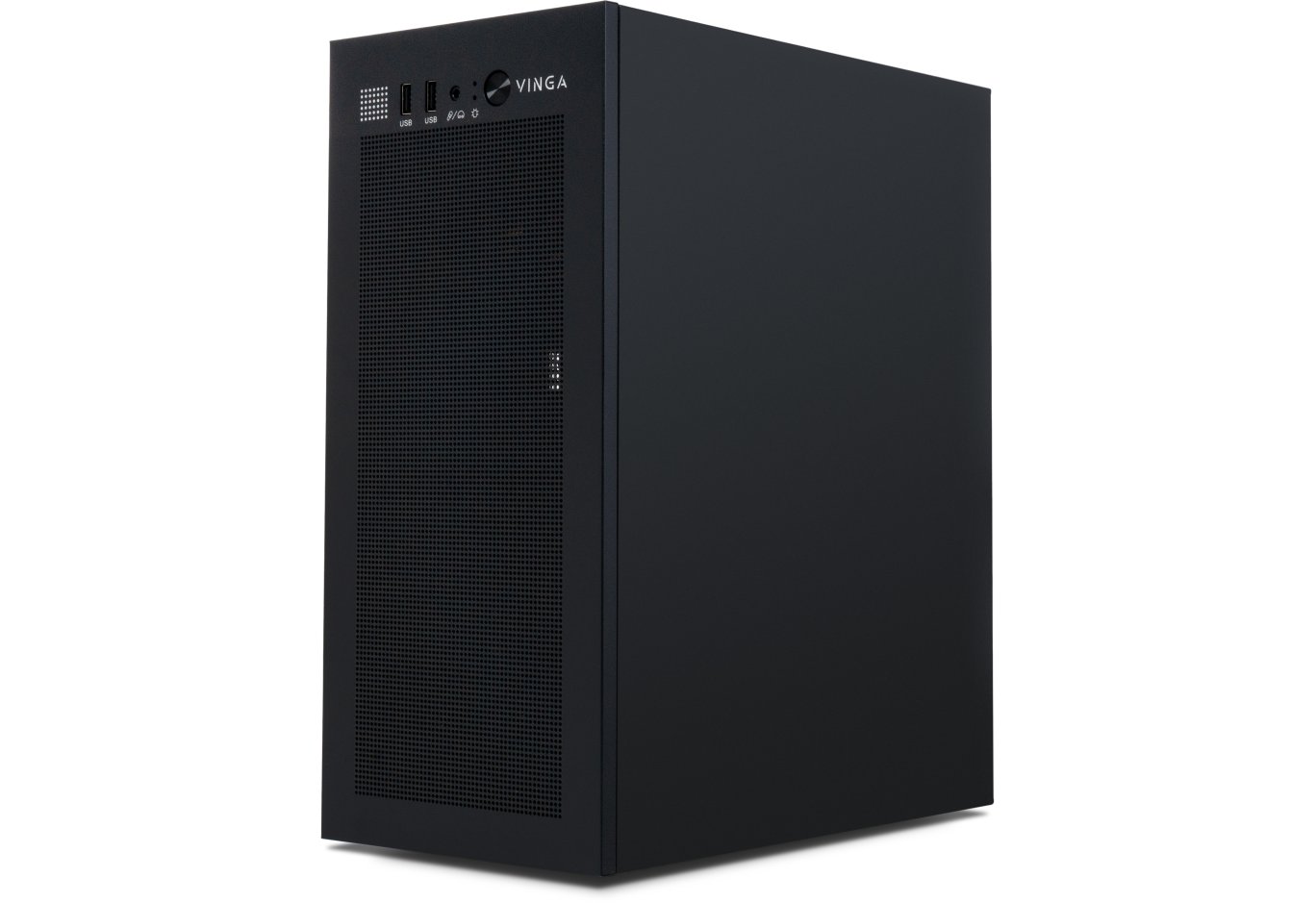
In addition to extra space for a liquid radiator, the presence of appropriate mounting locations is also a necessary condition. And they are here - under the top panel, you can install a pair of 140 or 120 mm fans or the mentioned cooler up to 280 mm long. It's also nice to note the presence of a simple-to-install, remove, and maintain magnetic filter. And nearby, closer to the user, are the usual elements of the interface panel. Next to the three USB ports (one of them version 3.0), there is space for two audio ports, the same number of buttons, and blue and red LED indicators. Unfortunately, extracting dust from the interfaces will not be easy.
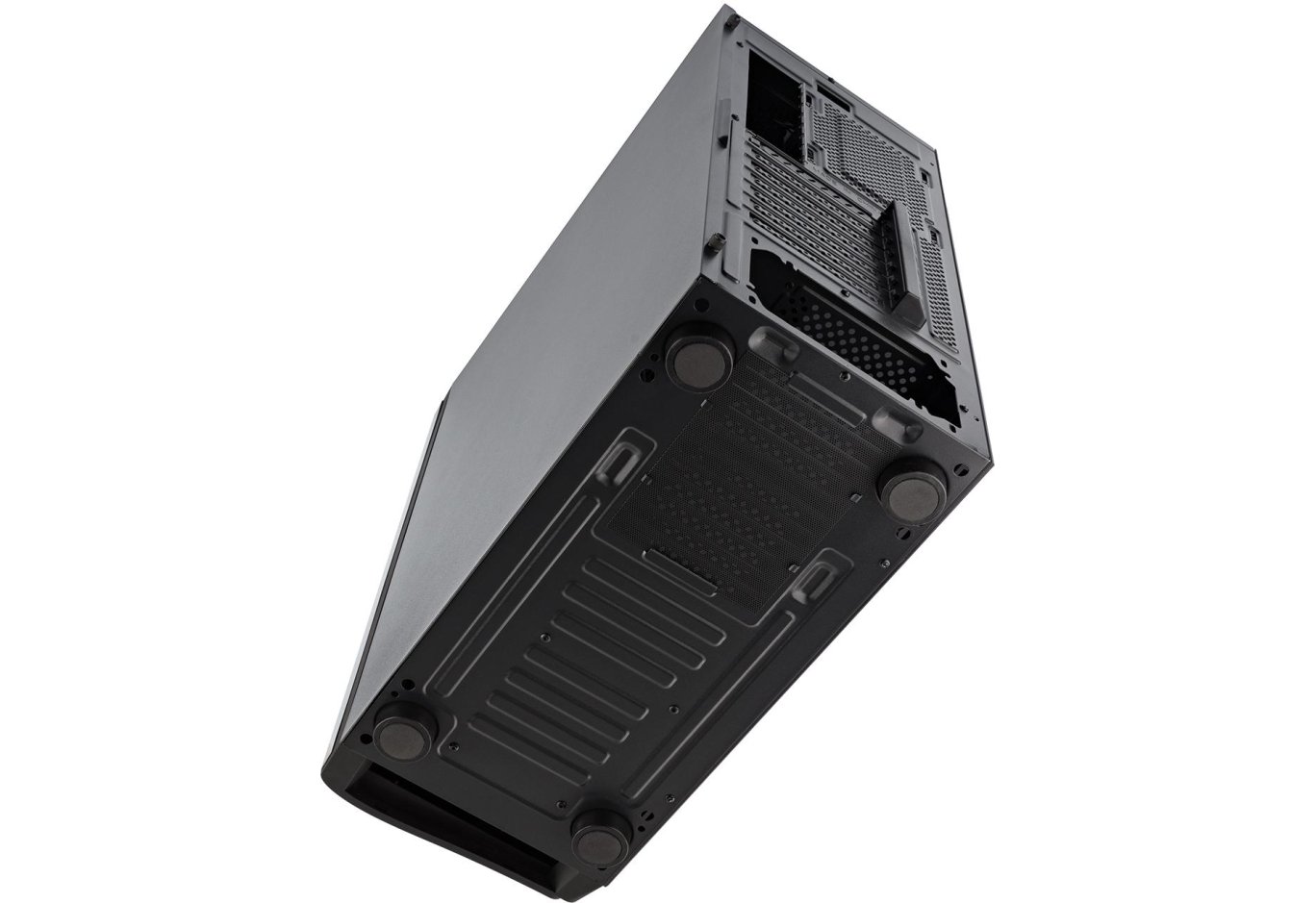
Another dust filter found its place on the bottom panel of the Vinga Gnoll - just what you need for the power supply unit. However, the foot height of 13 mm on some surfaces may not be enough for cool air intake. Therefore, a carpet is contraindicated for the novelty. However, soft pads will take care of the desk or any other surface.
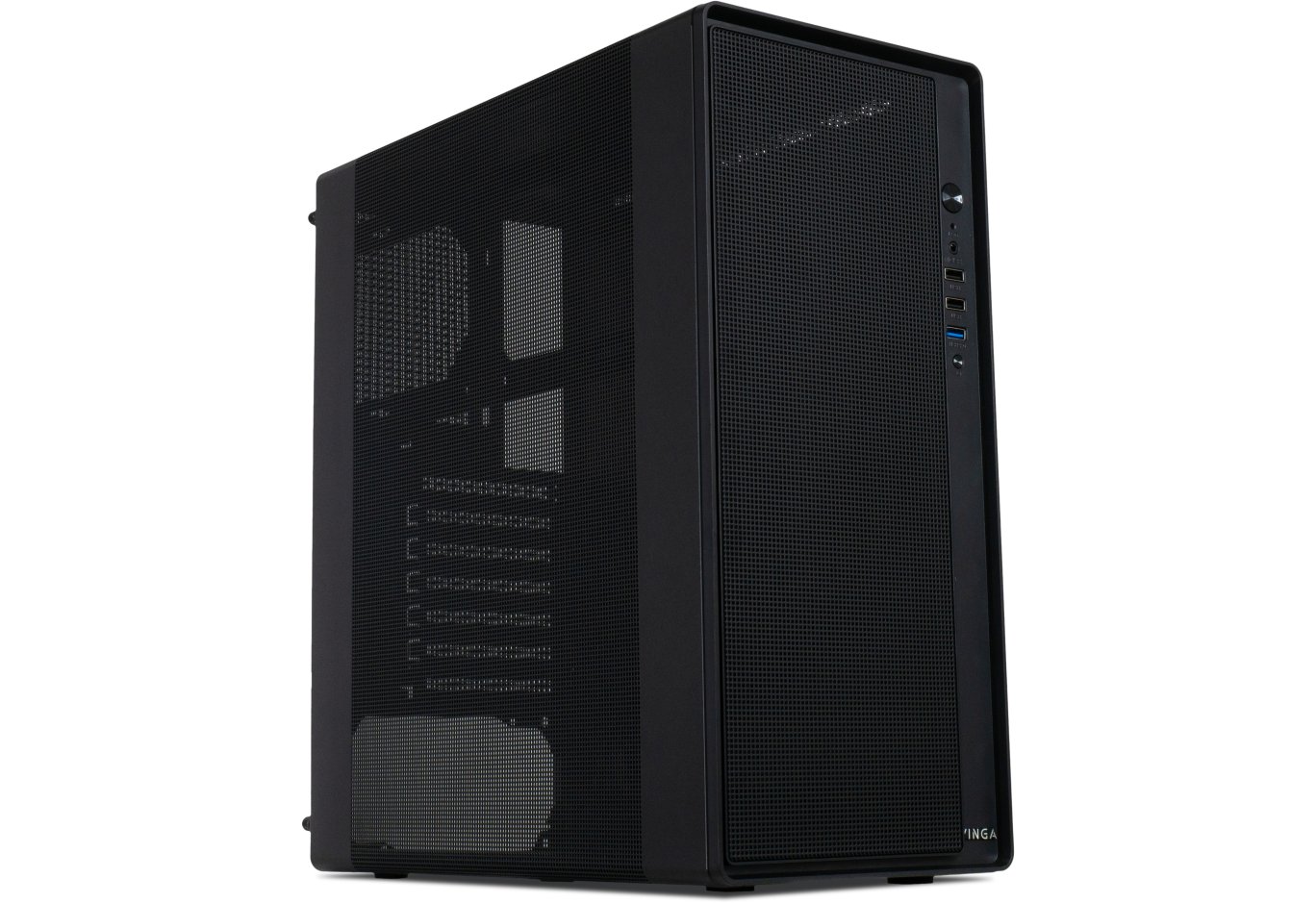
The right side panel of the case is a regular steel sheet 0.55 mm thick with stiffening ribs. It is attached in the usual way - at the back of the case with a pair of shaped screws.
The left wall is represented by tinted acrylic measuring 470 x 400 x 2.9 mm. It is also attached with shaped screws, but in a different plane. The tinting does not allow you to see the internal components without additional lighting, but whether it is needed at all is up to each individual owner to decide.
The smudging of metal and plastic surfaces is low, but glossy acrylic is much more prone to accumulating fingerprints.
Internal Structure

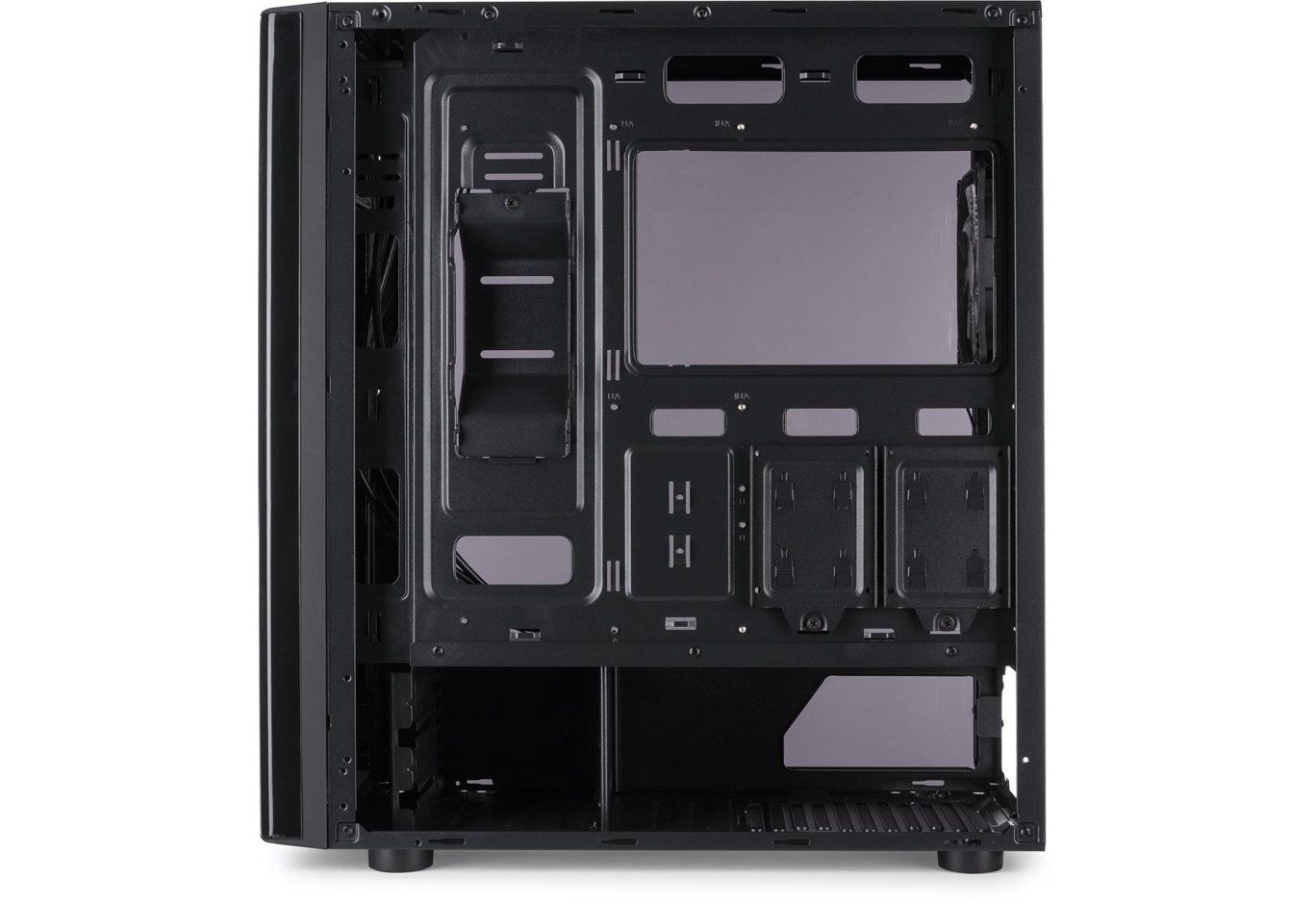
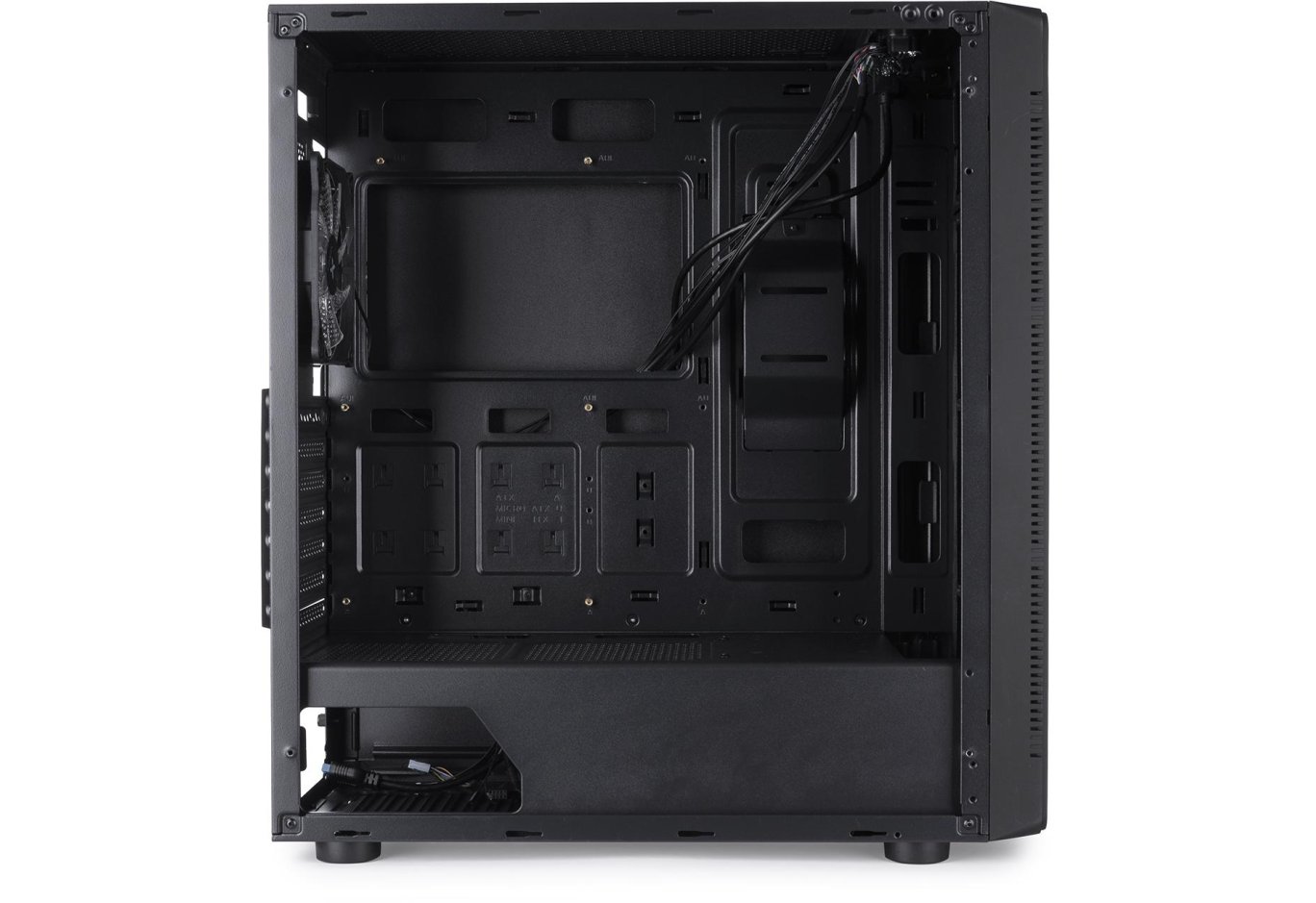
The modern layout without a drive cage and with a tunnel at the bottom pleases with an abundance of space. If desired, the Vinga Gnoll can accommodate not only an ATX board but also a larger E-ATX format solution (330 mm wide instead of 244 mm). And yes, modern power supplies are good enough to showcase at least the edge of the device. There is also a larger cutout in the tray - when replacing a large CPU cooler, it will not be necessary to remove the system board. And smaller holes (including on the tunnel) are designed to help with cable management.
In the front part of the chassis, there are "rails" for mounting up to three 120-mm fans. In addition, the front panel itself has plastic holders for these fans. The solution is somewhat convenient, but there is nowhere for them to draw in cool air. Behind the fan mounting locations in the lower tunnel, there is a cutout, allowing the wall to be used as a support for a liquid cooling radiator up to 360 mm long.
As for the drives, they are all placed away from prying eyes. There are places for a pair of SSDs on brackets behind the motherboard tray. If desired, the manufacturer could have provided another mount nearby, but for some reason, they did not. However, a place for a solid-state drive is not advertised in the specification and is located at the top of the drive cage. Here, you can also install a pair of 3.5" hard drives. In this case, you will have to screw guide screws into the drives from one side, while the other side will be fixed to the case from the PSU side.
About 240 mm of free space is allocated for the power source inside the Vinga Gnoll. If 40 mm of it is used for cable management, then the device itself can be up to 200 mm long - meaning almost any solution available on the market will fit in the novelty. However, remember that a long PSU will block access to the screws for hard drives, which may cause inconvenience during their installation and removal. And one more "but": unfortunately, there are no anti-vibration pads at the power supply installation site.
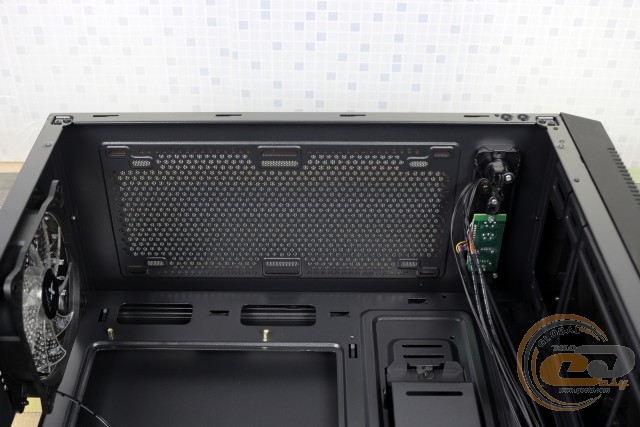
The aforementioned mounting locations for fans or a liquid cooling radiator are pleasing to the eye. However, the wires and interface panel components peeking out from under the top wall are not as attractive.
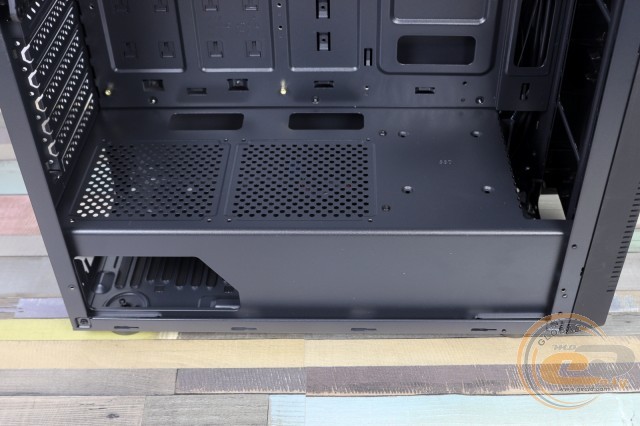
If desired, not only an SSD but also two 120-mm fans can be mounted on the lower tunnel. However, their installation in these places is unlikely to significantly affect the internal microclimate of the system unit, although the presence of such perforation is still worth noting as a plus.
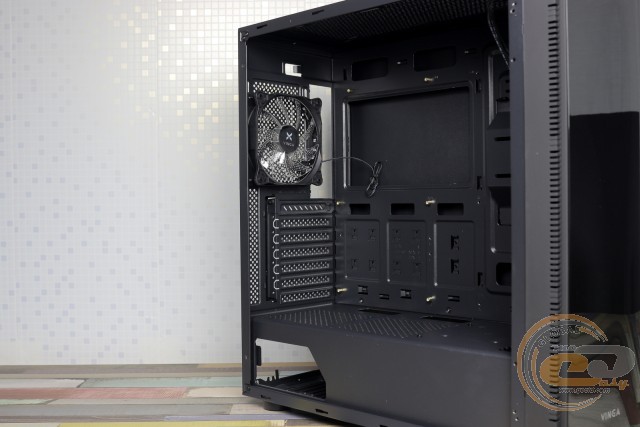
Despite the relatively low price, the manufacturer did not abandon bundled fans altogether - a 120-mm "Carlson" is attached to the rear panel. Its impeller quietly rotates at a constant speed of 1100 RPM, and the lighting... More on that a little below.
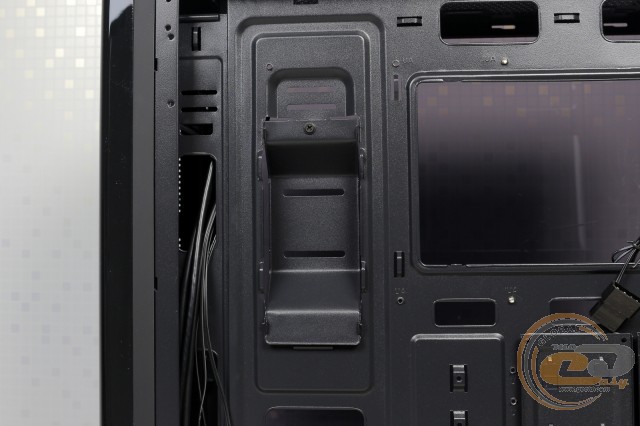
Another element worth noting is the bracket on the inner part of the tray. The distance between the holes allows a 3.5" drive to be mounted on it, although the resulting construction looks somewhat strange.
There is plenty of free space inside the Vinga Gnoll. Therefore, you can always count on a convenient process of assembling and replacing the main components, as well as the possibility of installing the vast majority of video cards and CPU coolers. Yes, the length of the graphics adapter can reach an impressive 390 mm, and the height of the CPU air cooler - 165 mm (according to our own measurements).
We also have additional space behind the tray, allowing cables to be hidden. But since the case is designed for E-ATX format boards, the cable management holes on the right side have moved closer to the front panel. Therefore, when installing a smaller format system board, it will not be possible to completely hide the wires, no matter how much you want to.
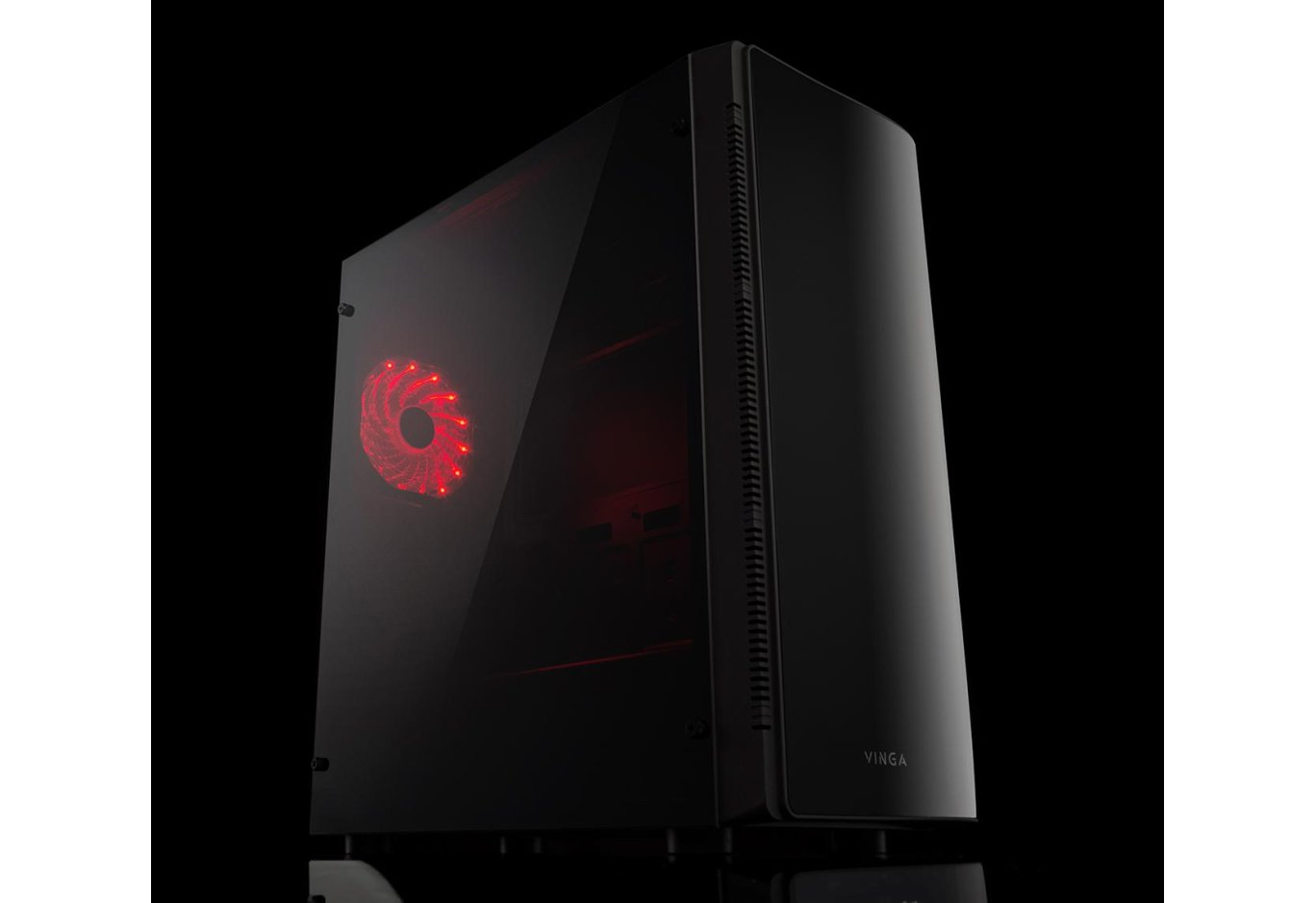
The rear fan constantly emits a red glow, which looks just great in the black case. With the side panel closed, you can barely see it, leaving a note of intrigue. Moreover, such lighting will not be annoying even at night.
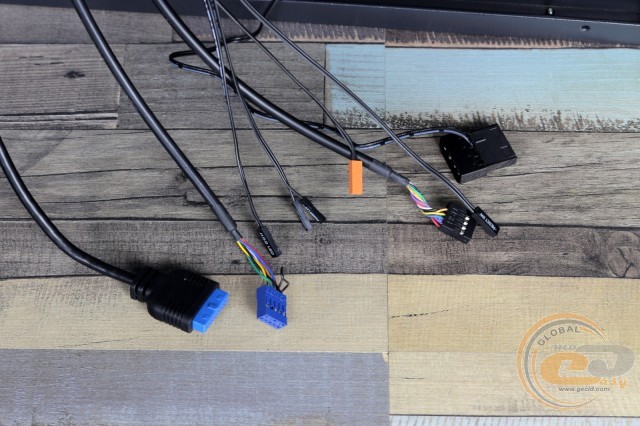
The cables from the front panel are long enough, so there should be no problems connecting its components. And the length of the fan wire with the PATA connector is also quite sufficient.
|
Name |
Length, cm |
|
USB 3.0 |
65 |
|
USB 2.0 |
65 |
|
HD Audio |
65 |
|
Buttons and indicators |
65 |
|
PATA |
30 |
Testing
|
Processor |
Intel Core i7-7700K (Socket LGA1151, 4.2 GHz, L3 8 MB) |
|
Cooler |
Scythe Mugen 3 |
|
Motherboard |
ASUS PRIME Z270-A (Socket LGA1151) |
|
RAM |
2 x 8 GB DDR4-2400 HyperX Fury HX424C15FBK2/16 |
|
Graphics Card |
ASUS GeForce GTX 980 MATRIX PLATINUM 4GB GDDR5 |
|
SSD |
SSD KINGMAX SME35 Xvalue |
|
Power Supply |
Seasonic X-560 Gold (SS-560KM Active PFC, ATX, 560W) |
|
Thermal Paste |
Noctua NT-H1 |
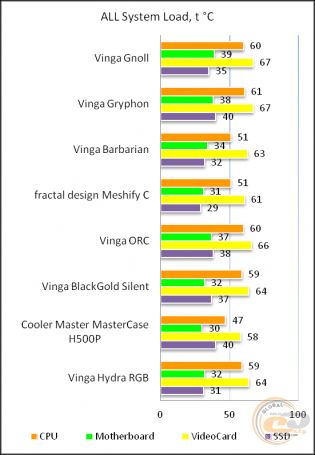
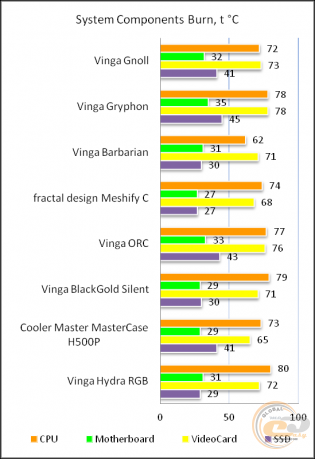
The "All System Load" chart shows the heating of components after 30 minutes of 3DMark Fire Strike in Ultra mode (4K resolution). The "System Component Burn" mode demonstrates temperatures under load with AIDA64 applications (Stress CPU and FPU) and MSI Kombustor for 15 minutes. The case was tested with a single installed fan.
Obviously, one fan on the rear wall makes more of a difference than several propellers mounted in other places. For example, the same Vinga Gryphon with four fans turned out to be an outsider among the brand's representatives due to the placement of three of them close to the front wall. The leader was Vinga Barbarian, which is equipped with seven fans, although it costs twice as much as the tested novelty.
As for Vinga Gnoll specifically, it showed decent results. Yes, the heating of the graphics card with a TDP of 165 W was higher than that of competitors, but in the era of energy-efficient components, this is hardly worth worrying about. So, if you are using something simpler than the GeForce GTX 1070 Ti or Radeon RX 580, then the "gnoll" is already ready to handle the task out of the box.
Conclusions
Yes, we would like to see anti-vibration pads here, a synthetic filter behind the front panel would be useful, and the feet could be made higher. On this note, we will probably stop complaining and remember the modest price of Vinga Gnoll - only about $40, and also the fact that there are significantly more reasons to praise the tested case.
Beautiful acrylic panels are already pleasing to the eye, and even more so after power is supplied. Where did the glow come from? The rear propeller not only properly performs its primary function of maintaining a comfortable microclimate inside but also serves as a source of pleasant red glow. By the way, it won't disturb you with noise either.
Despite its affordability, the case can accommodate very large components: an E-ATX motherboard, a graphics card up to 390 mm long, a CPU air cooler up to 165 mm high, or a water cooler with a 360 mm radiator. There aren't many places for drives, but for an ordinary computer user, they will be more than enough.
In the dry result, Vinga Gnoll impressed us even more than some of its counterparts in this lineup. Here you do not overpay for inefficient fans, but you get a beautiful and practical device at a fairly modest budget.
Advantages:
- unconventional design due to the front panel and left side made of semi-transparent acrylic;
- good build quality;
- support for 390 mm graphics cards and 165 mm CPU coolers;
- ability to mount up to eight propellers and water cooling radiators up to 360 mm in length;
- presence of a rear installed fan with red LED backlighting;
- ability to install two 3.5" and three 2.5" drives;
- presence of dust filters on the bottom and top panel, as well as soft feet;
- decent options for hidden cable management.
Features:
- due to the low 13 mm feet, it is better to refrain from placing the system unit on a carpet.
Disadvantages:
- lack of vibration-absorbing pads in the places of installation of the PSU and hard drives.
Author: Oles Pakholoch
Translation: Liliya Masyuk
We express our gratitude to the companies ASUS, Intel, Noctua, Sea Sonic Electronics and the brand HyperX for providing the equipment for the test bench.
Related products