Compact systems are usually built using energy-efficient components, as their cooling capabilities are quite limited. Therefore, in many cases, an SFX power supply unit with a capacity of 500W is quite sufficient to power them.

In this material, we will talk about such a device — the Vinga 500W (SFX-500G) power supply unit with a "gold" certificate, modular cable connection, and an affordable price tag of ₴2719 or $70. We will explore what's inside it, how quietly it operates, and what configuration it can "handle"?
Specification
|
Model |
Vinga 500W (SFX-500G) |
|
Type |
ATX12V |
|
Maximum power, W |
500 |
|
Power on +12V channel, W |
468 |
|
Power on +3.3V and +5V lines, W |
110 |
|
Number of +12V lines |
1 |
|
Maximum current on +3.3V channel, A |
20 |
|
Maximum current on +5V channel, A |
20 |
|
Maximum current on +12V channel, A |
39 |
|
Maximum current on -12V channel, A |
0.2 |
|
Maximum current on +5Vsb (standby power line), A |
3 |
|
Input voltage, V |
115 - 230 |
|
Input current, A |
5 - 10 |
|
Efficiency, % |
≥92 |
|
80 PLUS certification |
Gold |
|
Power factor correction method |
Active |
|
Power factor (PF), % |
≥98 |
|
PCIe connectors |
4 (6+2-pin) |
|
PCIe 5.0 connector (12VHPWR) |
None |
|
Modular |
Yes |
|
Fan dimensions, mm |
92 х 92 х 15 |
|
Protections |
Not specified |
|
Dimensions (L x W x H), mm |
125 х 100 х 65 |
|
Warranty |
3 years |
|
Device page |
|
|
Manufacturer's website |
|
|
Purchase page |
Packaging and delivery set
Besides the mediocre translation, the power supply box also surprised with the absence of the full name of the device inside and a list of its electrical parameters.
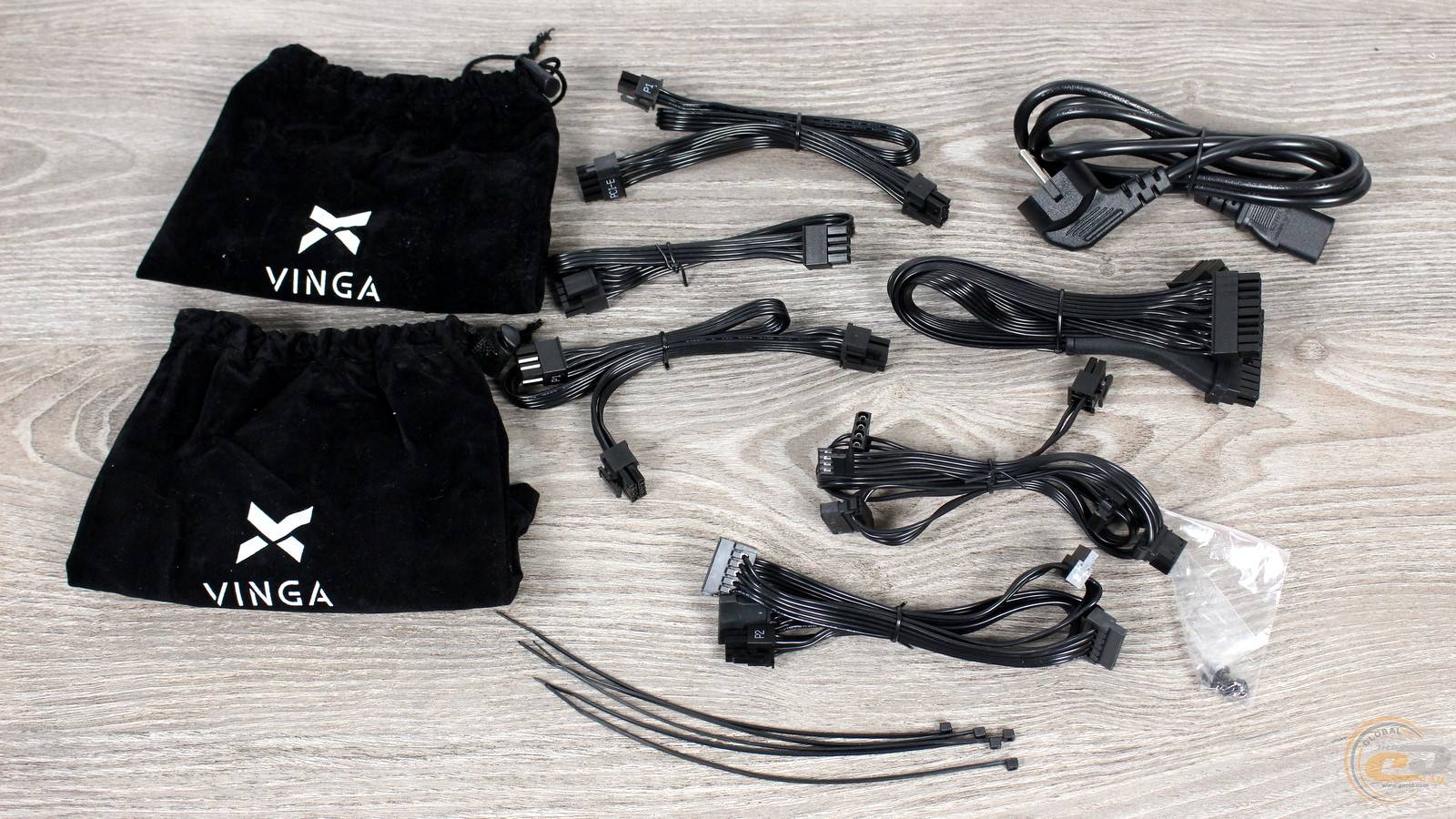
However, inside there was a substantial delivery set: a power cable, a set of modular wires, mounting screws, disposable ties, and even a couple of cases. One of them can be used to store unused cables, and the other will surely find its use in the household.
Appearance
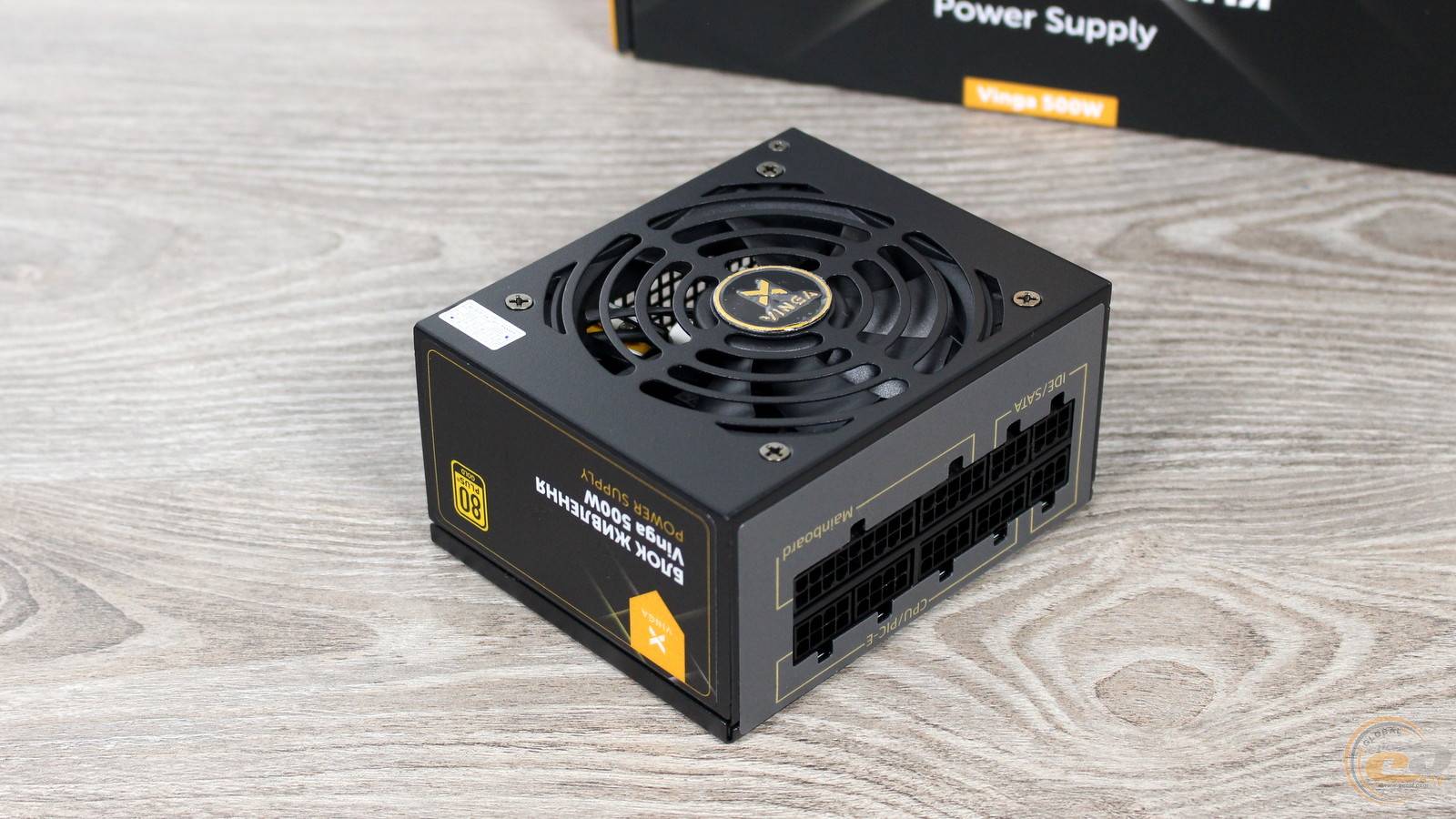
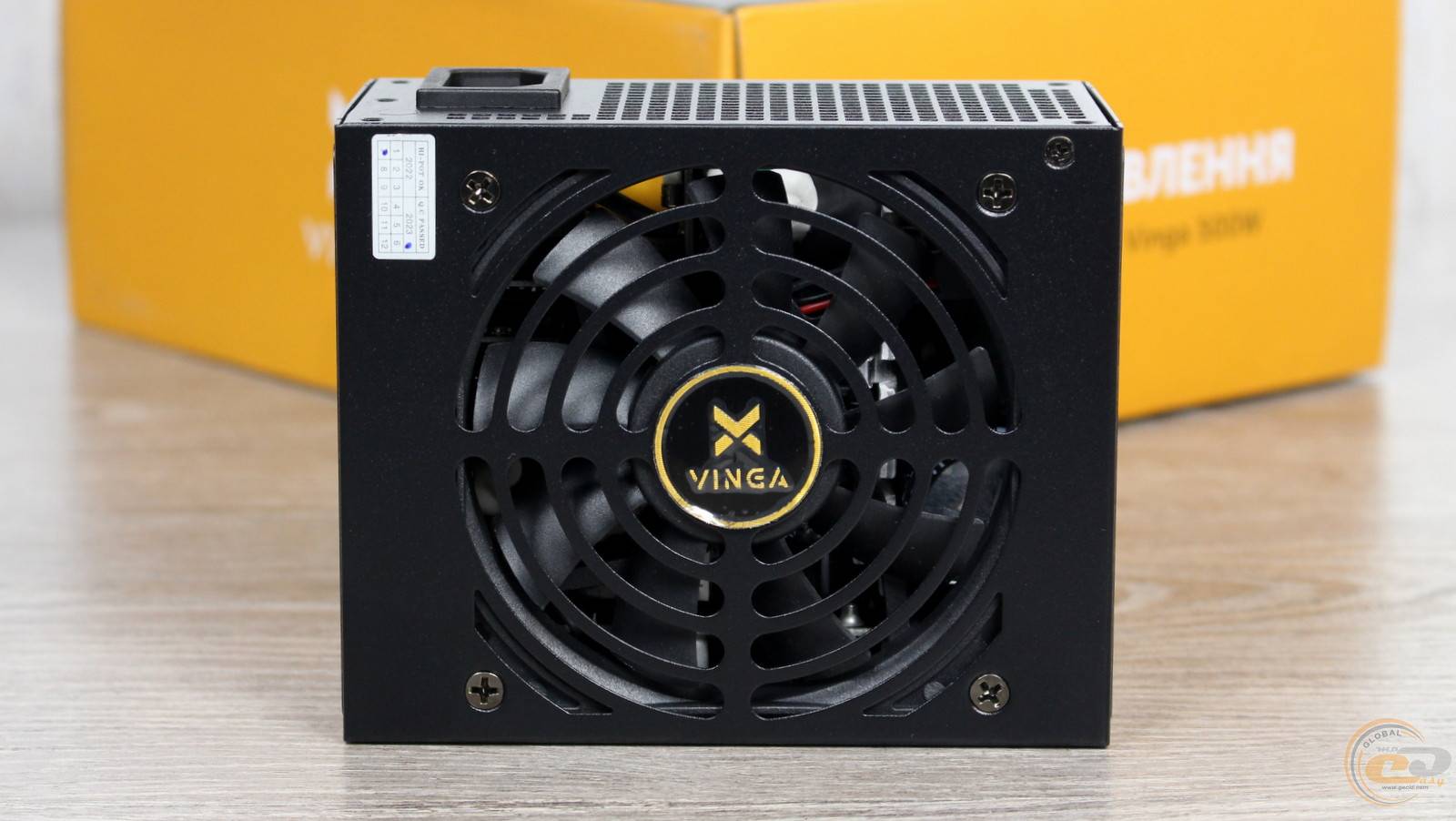
The dimensions and appearance of the Vinga 500W (SFX-500G) did not bring any particular surprises. Yes, the dimensions of 125 x 100 x 65 mm are quite typical for SFX solutions. In turn, the black matte case with stamped holes is decorated only with the manufacturer's logo and a few stickers — ...

...purely decorative on the sides...
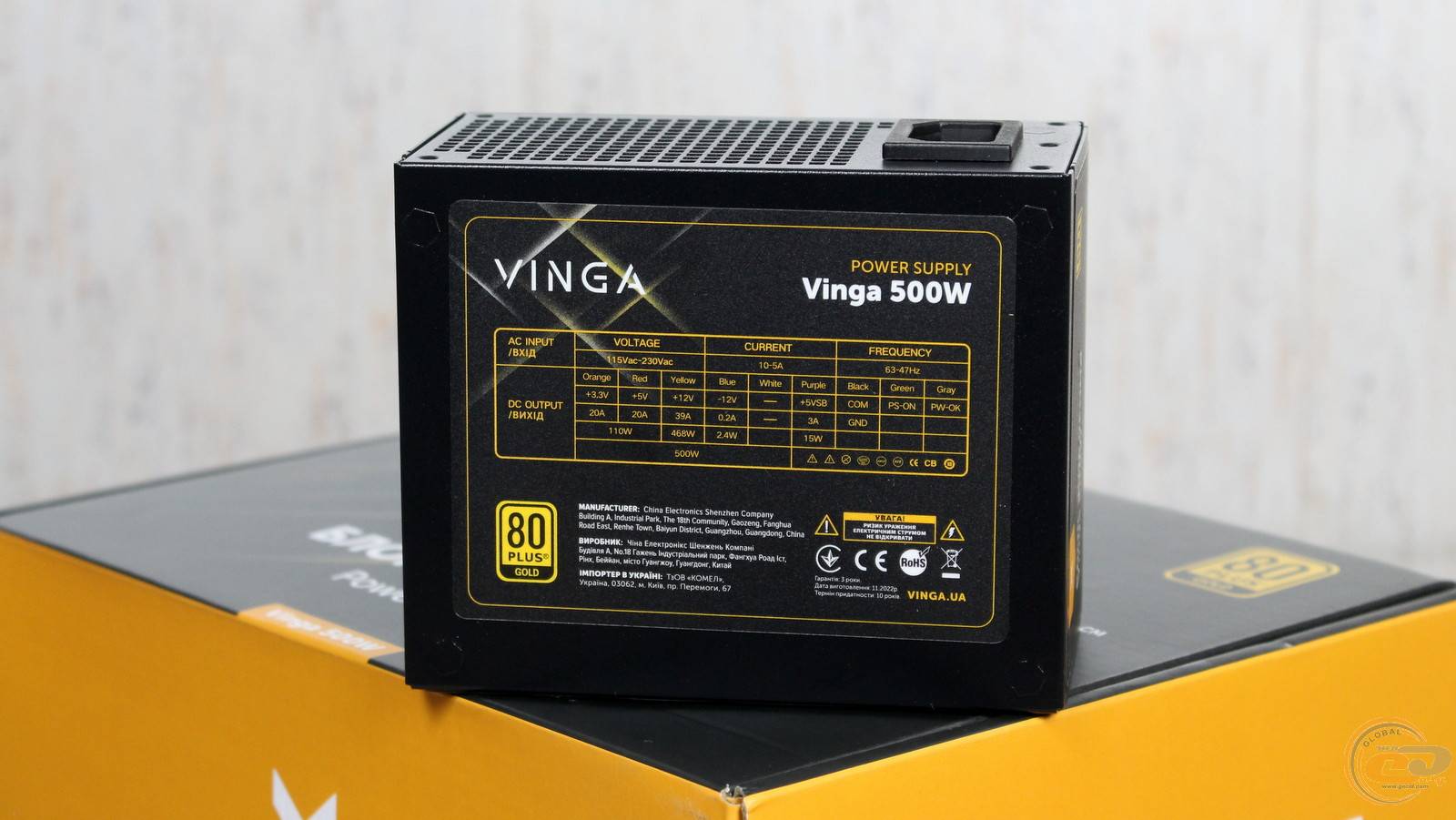
and much more informative on the back of the device.
The latter reports the presence of a dedicated +12V channel with a power of 468W. Frankly speaking, for a solution with an 80 PLUS Gold certificate, this is a small value — less than 94% of the nominal. If it weren't for such high energy efficiency, we would have already suspected the use of group voltage stabilization. In turn, 110W is allocated for the lower +3.3V and +5V lines, which is quite decent.
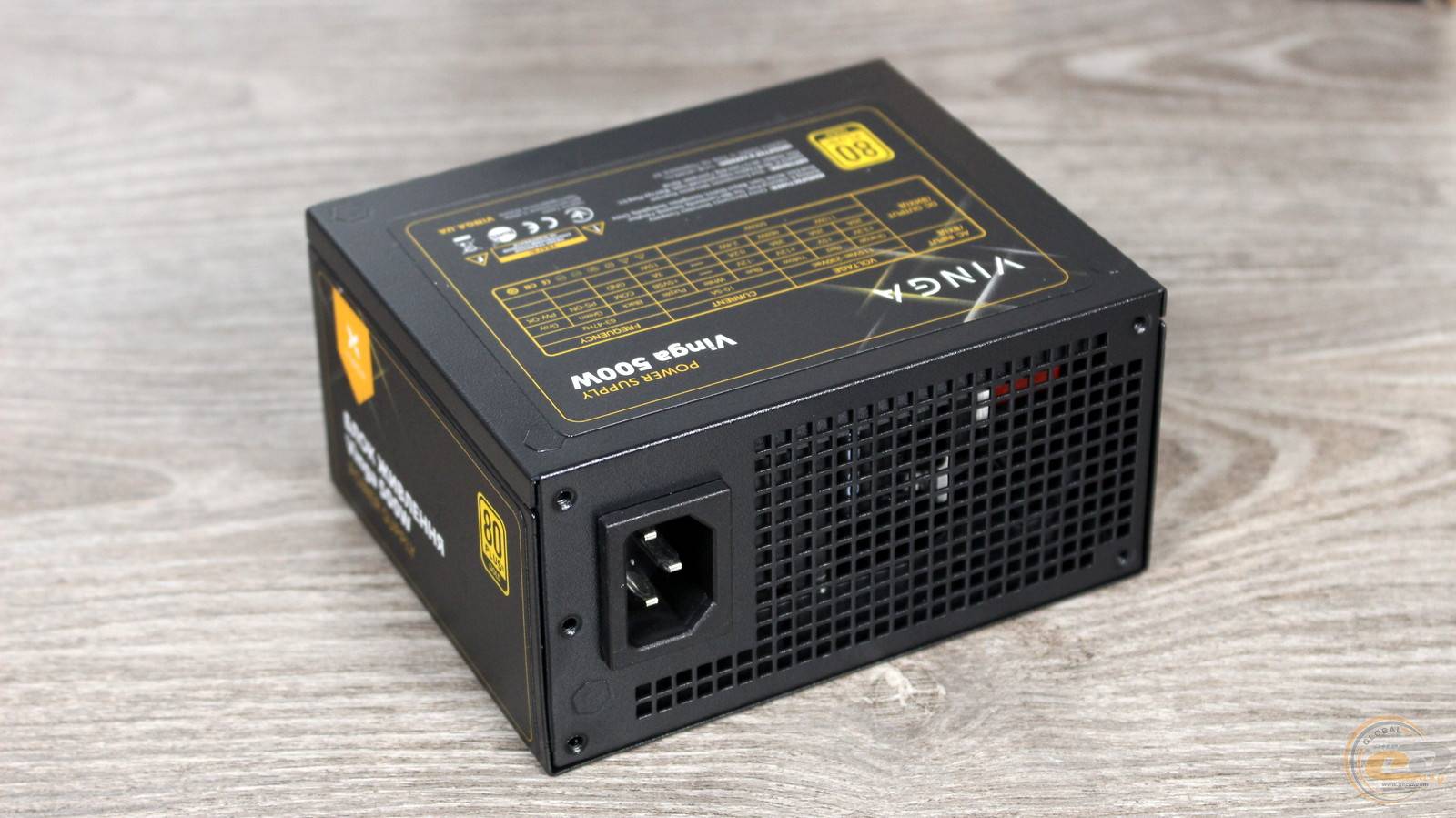
As for the back of the device, it is completely devoid of stickers. They decided to save on the switch, so here we only have a power connector and square ventilation holes.
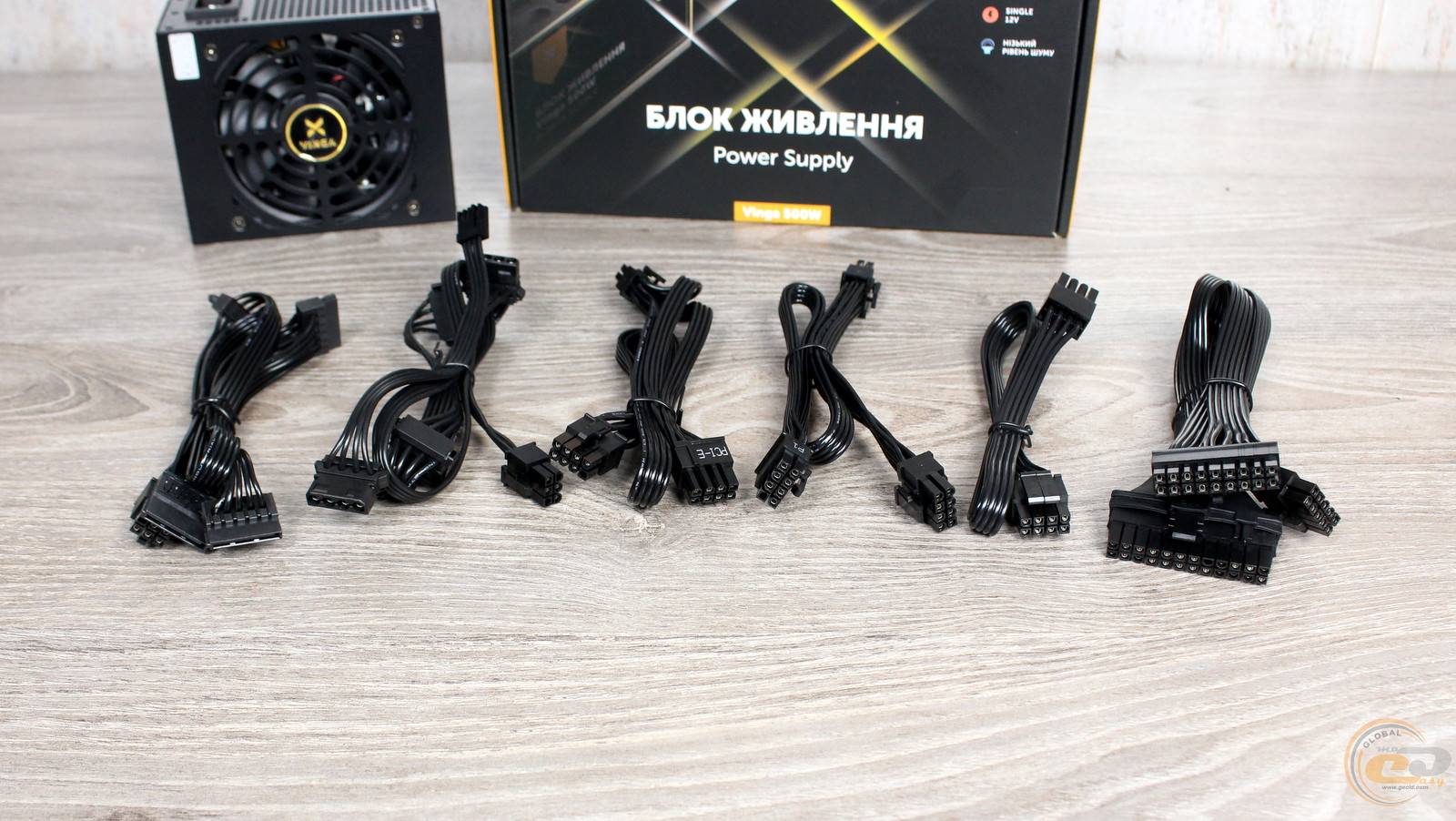
As for the cables, these are flat ribbons of the usual 18 AWG gauge. Their full configuration is as follows:
|
Connector types |
Quantity |
Wire length to connector(s), cm |
Gauge |
||||||||||||||||||||||||||||||||||||||||||||||||||||||||||||||||||||||||||||||||||||||
|
20+4-pin ATX |
1 |
30 |
18 AWG |
||||||||||||||||||||||||||||||||||||||||||||||||||||||||||||||||||||||||||||||||||||||
|
4+4-pin ATX12V |
1 |
40 |
18 AWG |
||||||||||||||||||||||||||||||||||||||||||||||||||||||||||||||||||||||||||||||||||||||
|
two 6+2-pin PCIe |
2 |
40-54 |
18 AWG |
||||||||||||||||||||||||||||||||||||||||||||||||||||||||||||||||||||||||||||||||||||||
|
four SATA |
1 |
45-60-75-90 |
18 AWG |
||||||||||||||||||||||||||||||||||||||||||||||||||||||||||||||||||||||||||||||||||||||
|
four PATA + one FDD |
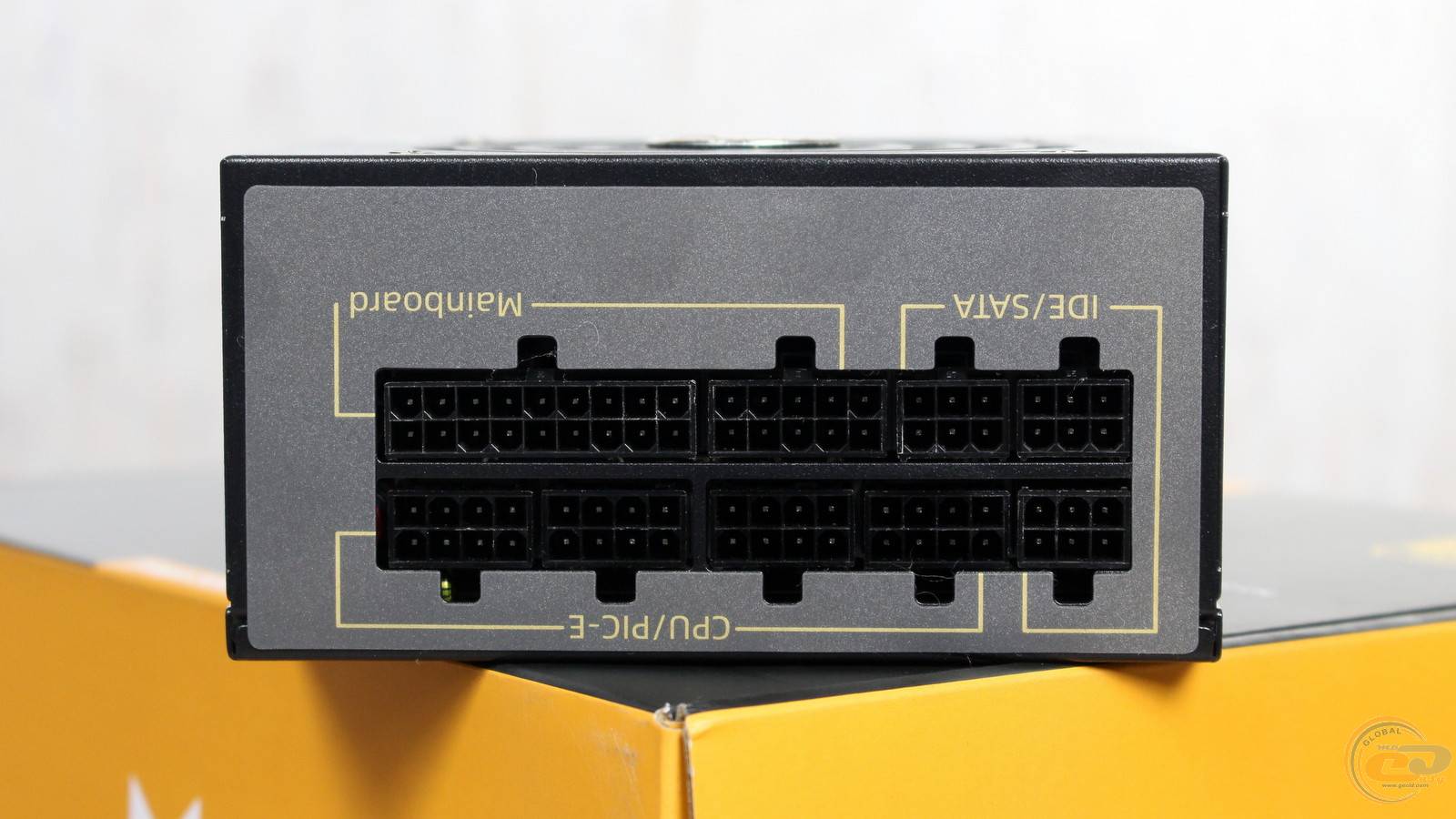
1 Main power connectors are 20+4-pin ATX and 4+4-pin ATX12V. For connecting video cards, there are four 6+2-pin PCIe connectors on two separate cables. Additionally, there are nine peripheral connectors: four SATA and four PATA connectors, plus an FDD. Overall, this set will be quite sufficient for a compact system. However, to power modern high-performance NVIDIA video adapters, you will need to use an adapter from a pair of 6+2-pin PCIe to a 16-pin 12VHPWR connector.
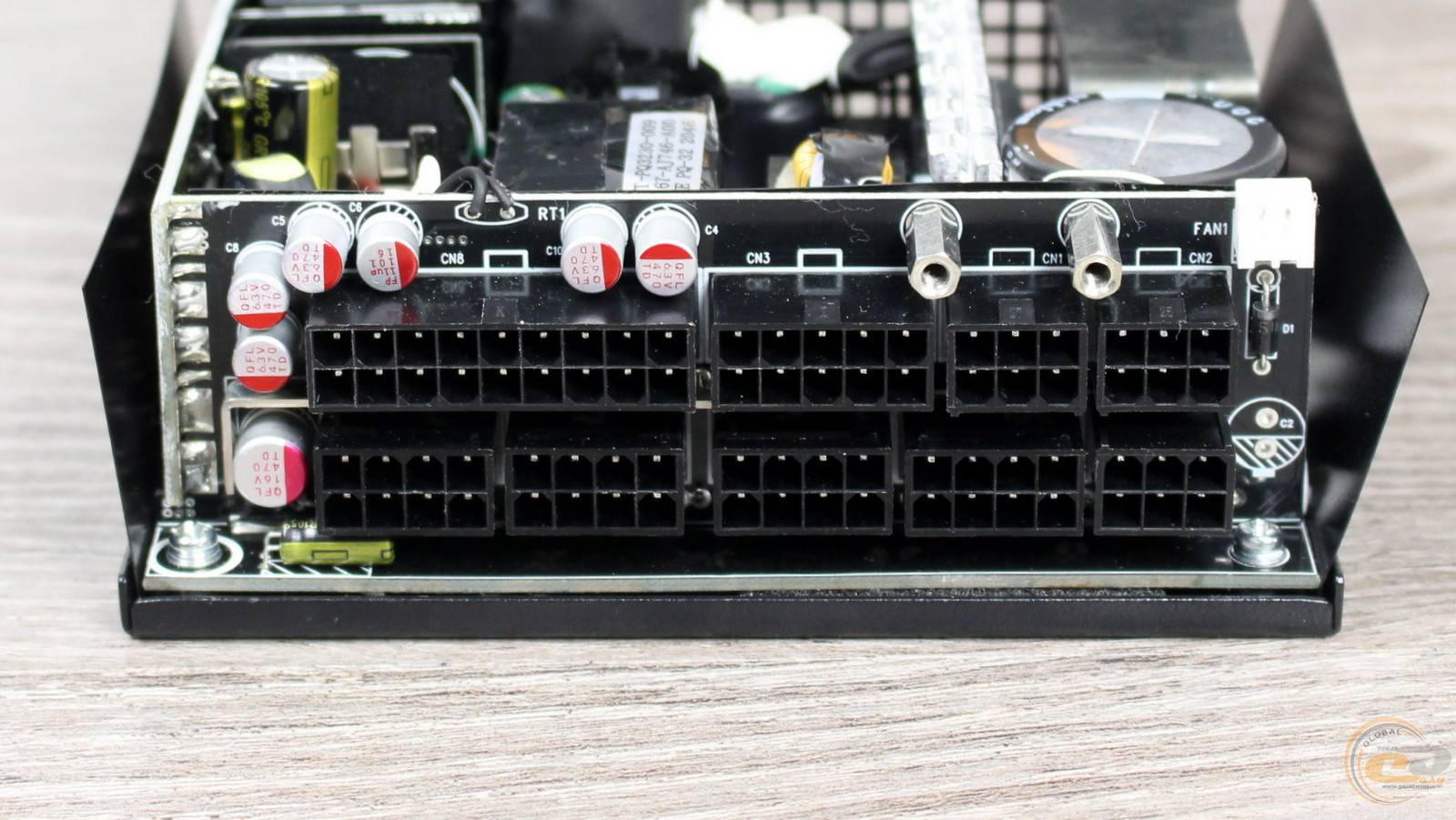
Connecting cables to the unit will be easy since all connectors are labeled and have different numbers and shapes of contacts. Interestingly, the device has more output connectors than the supplied cables. So, if desired, the set of connectors can be expanded. Internal Structure What do we find inside the Vinga 500W (SFX-500G)?
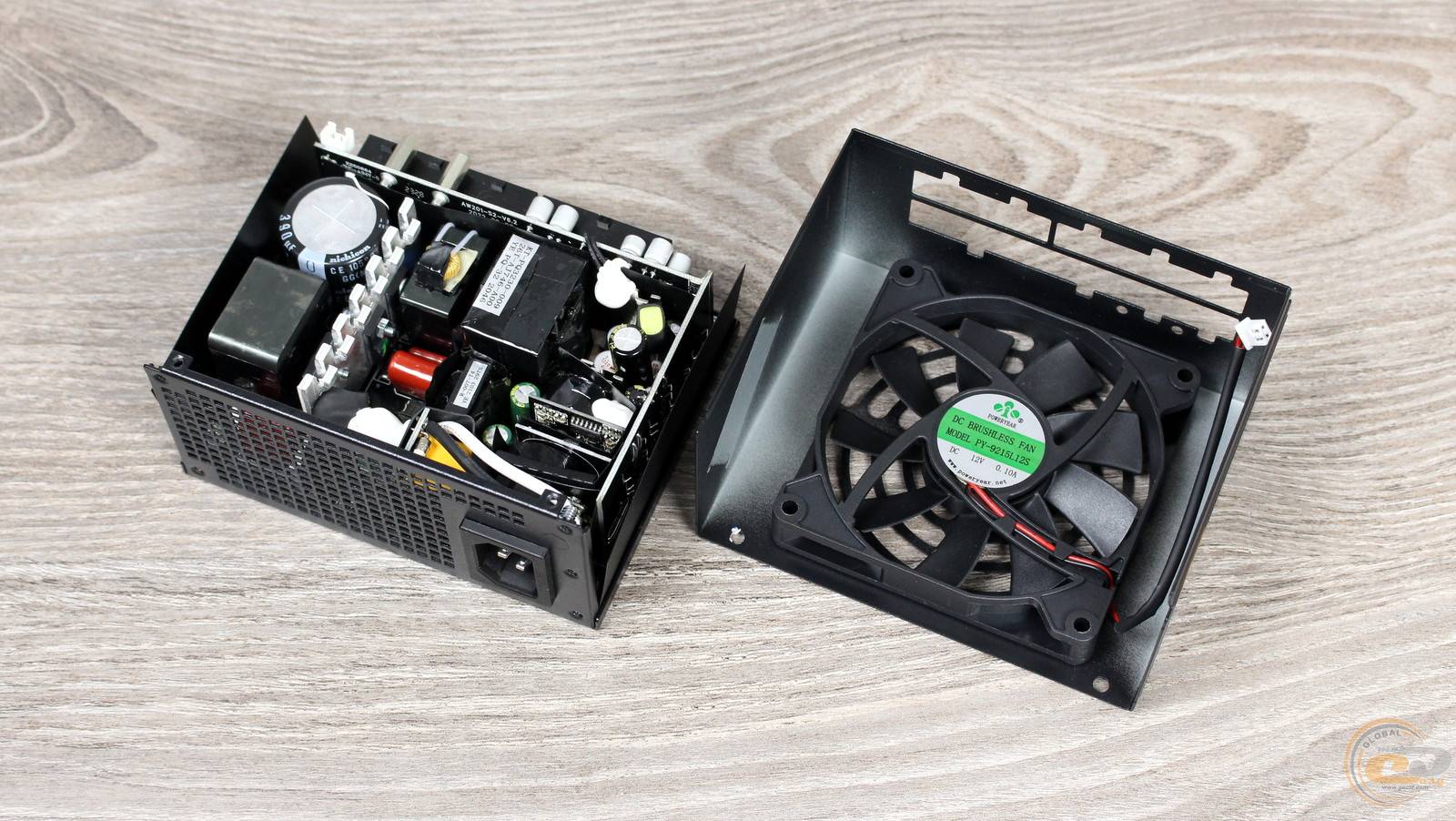
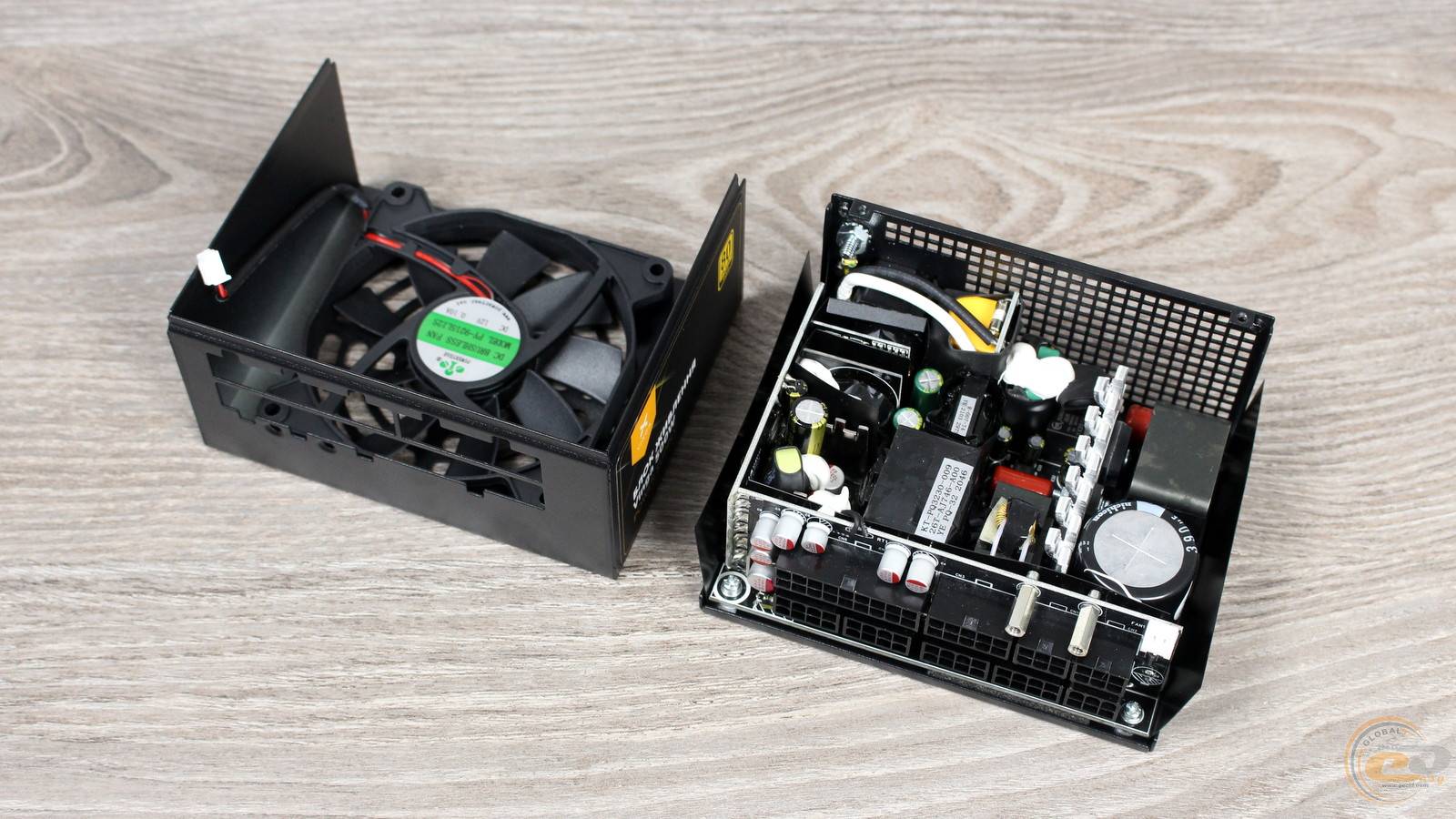
First of all, there is a compact fan from a well-known manufacturer. The low-profile POWERYEAR PY-9215L12S fan, measuring 92 x 92 x 15 mm, is based on an inexpensive sleeve bearing. It connects via a 2-pin connector, and its power consumption is within 1.2 W (0.1 A at 12 V).
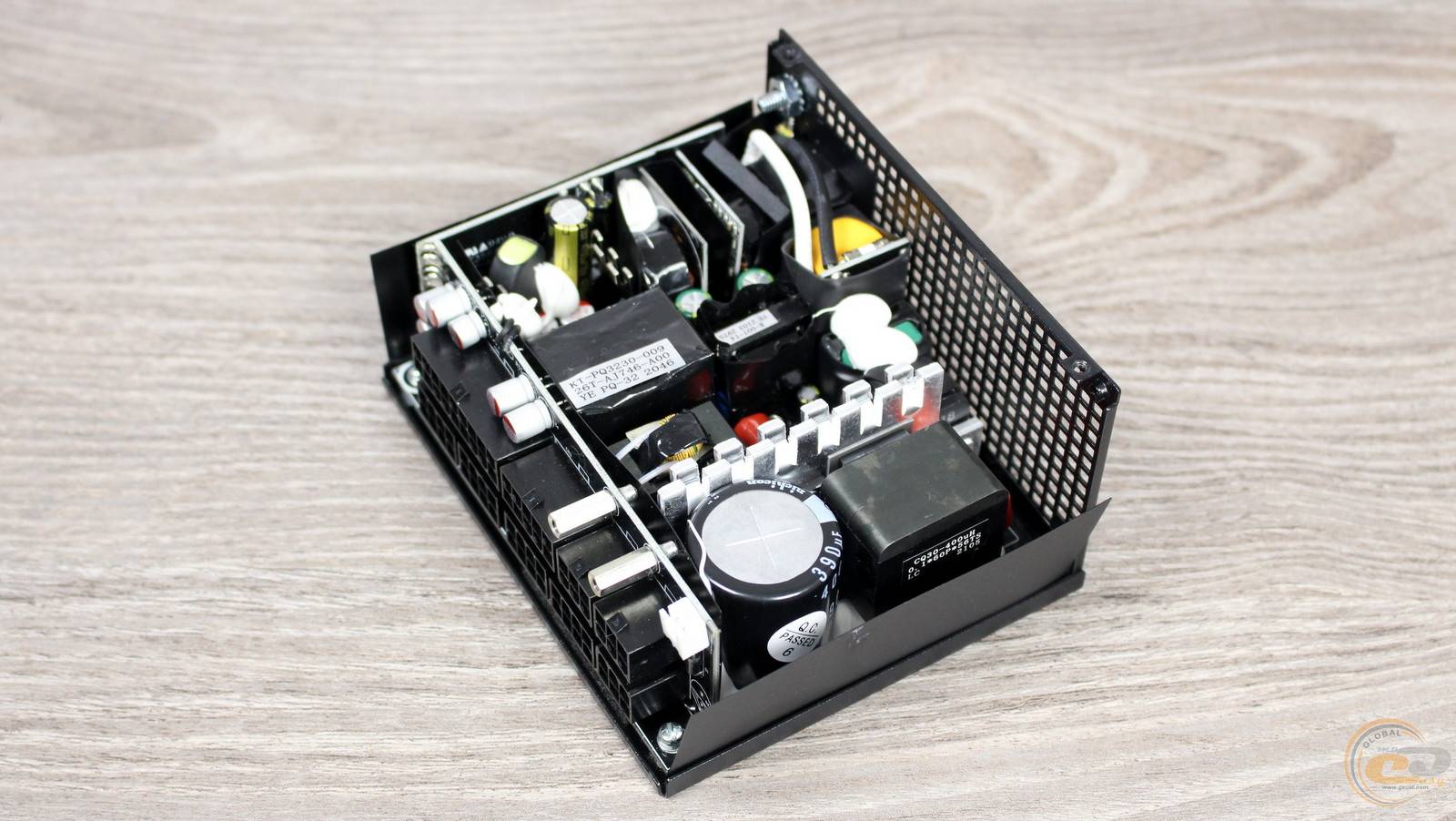
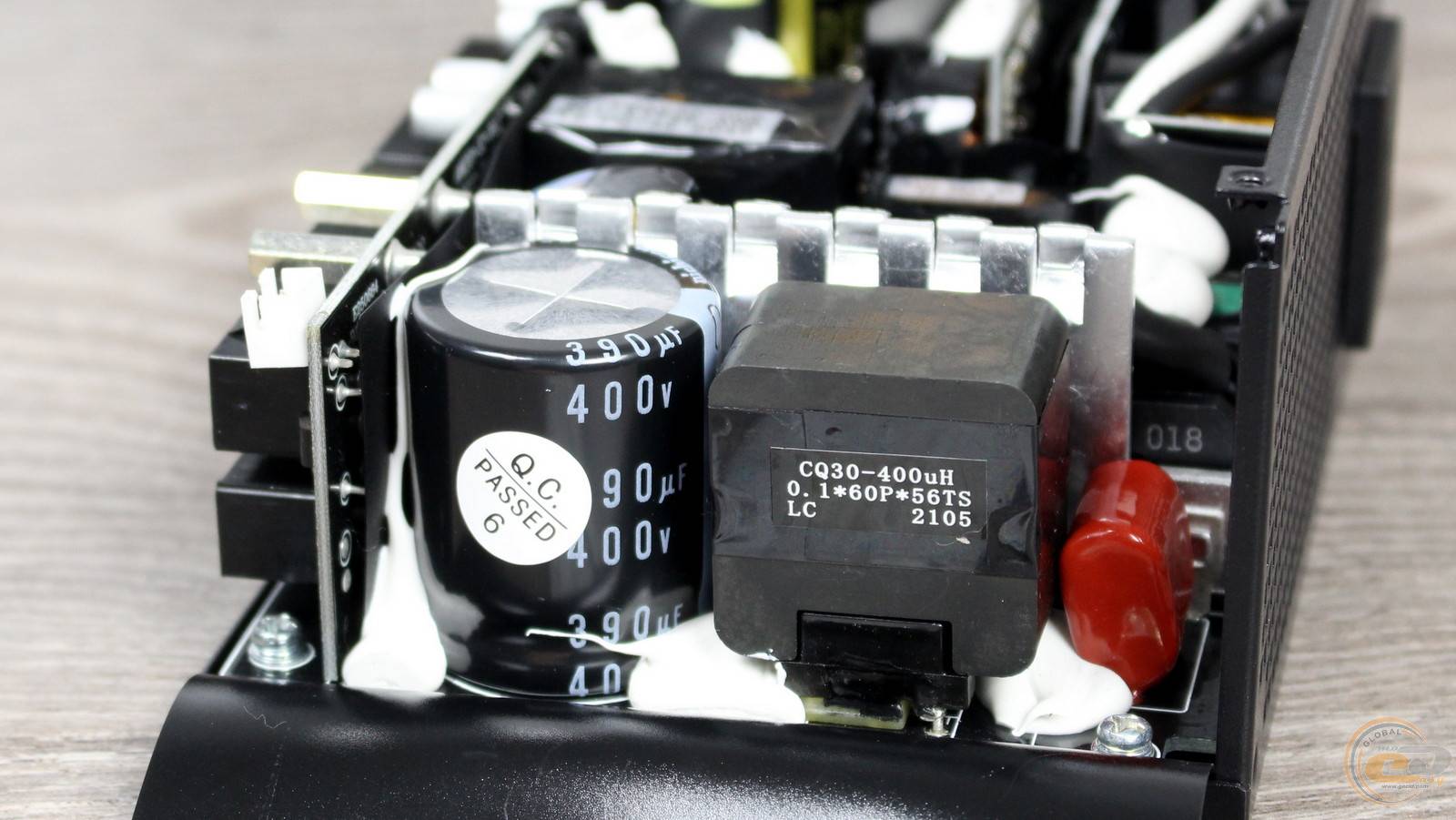
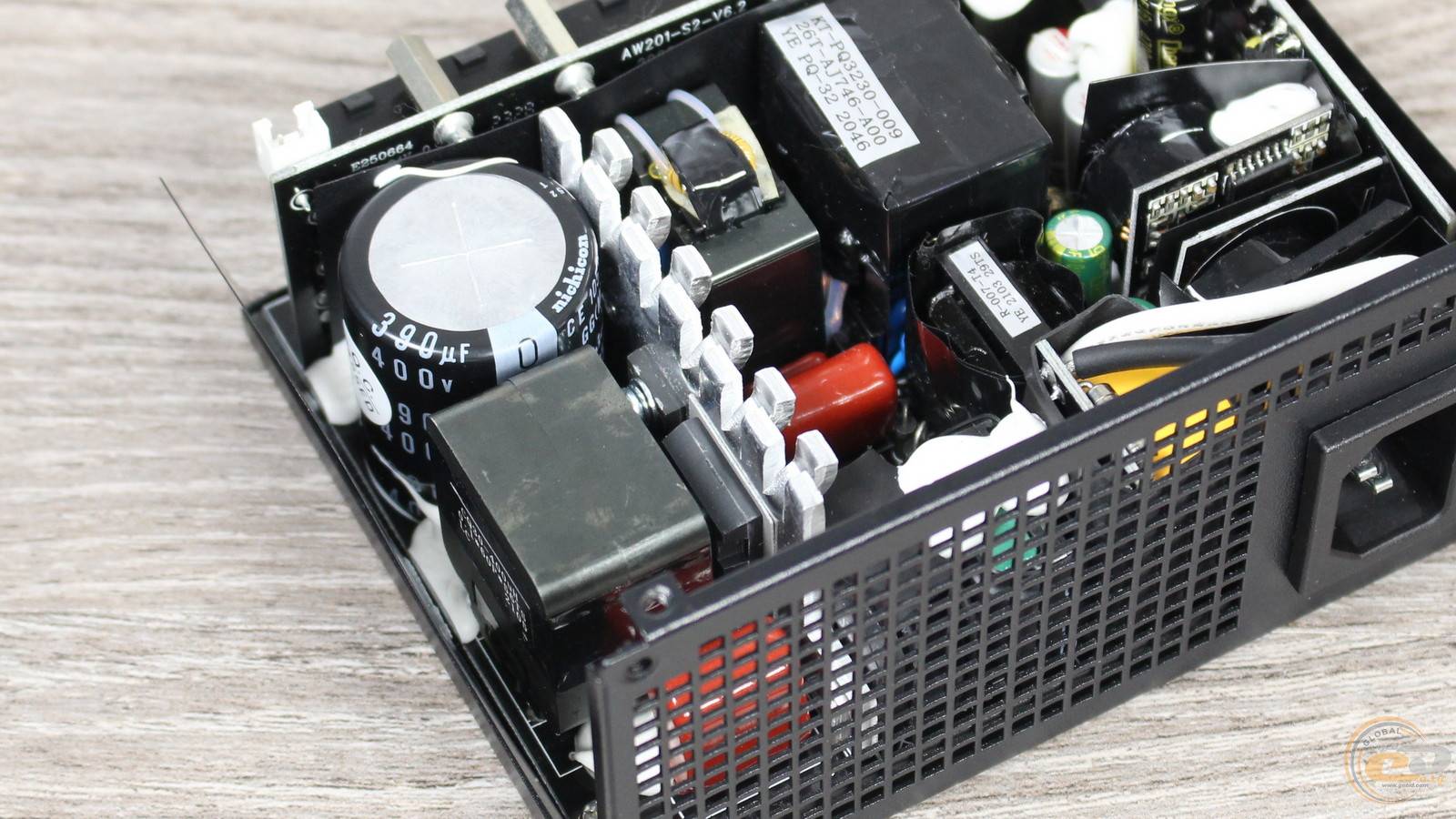
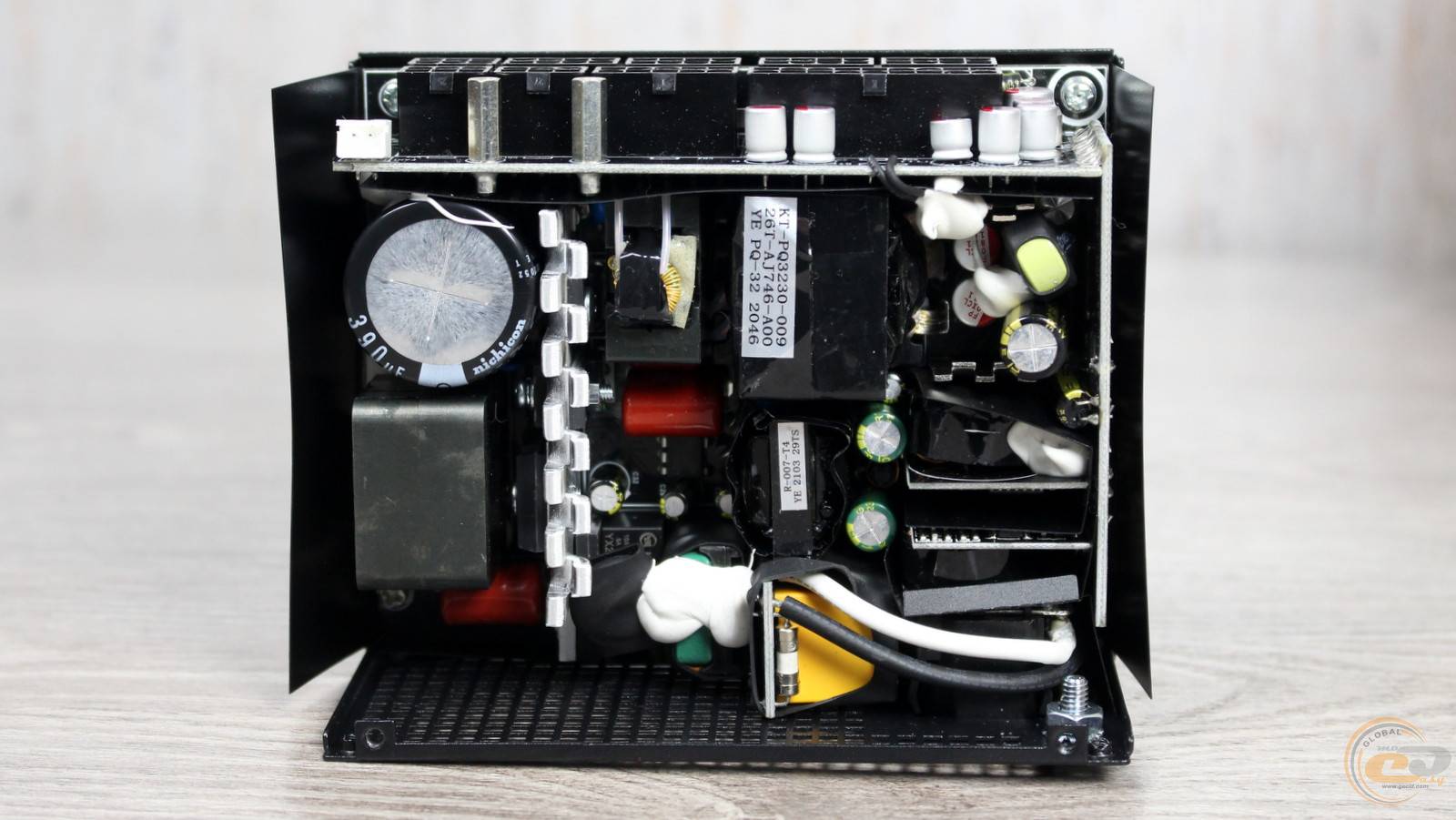
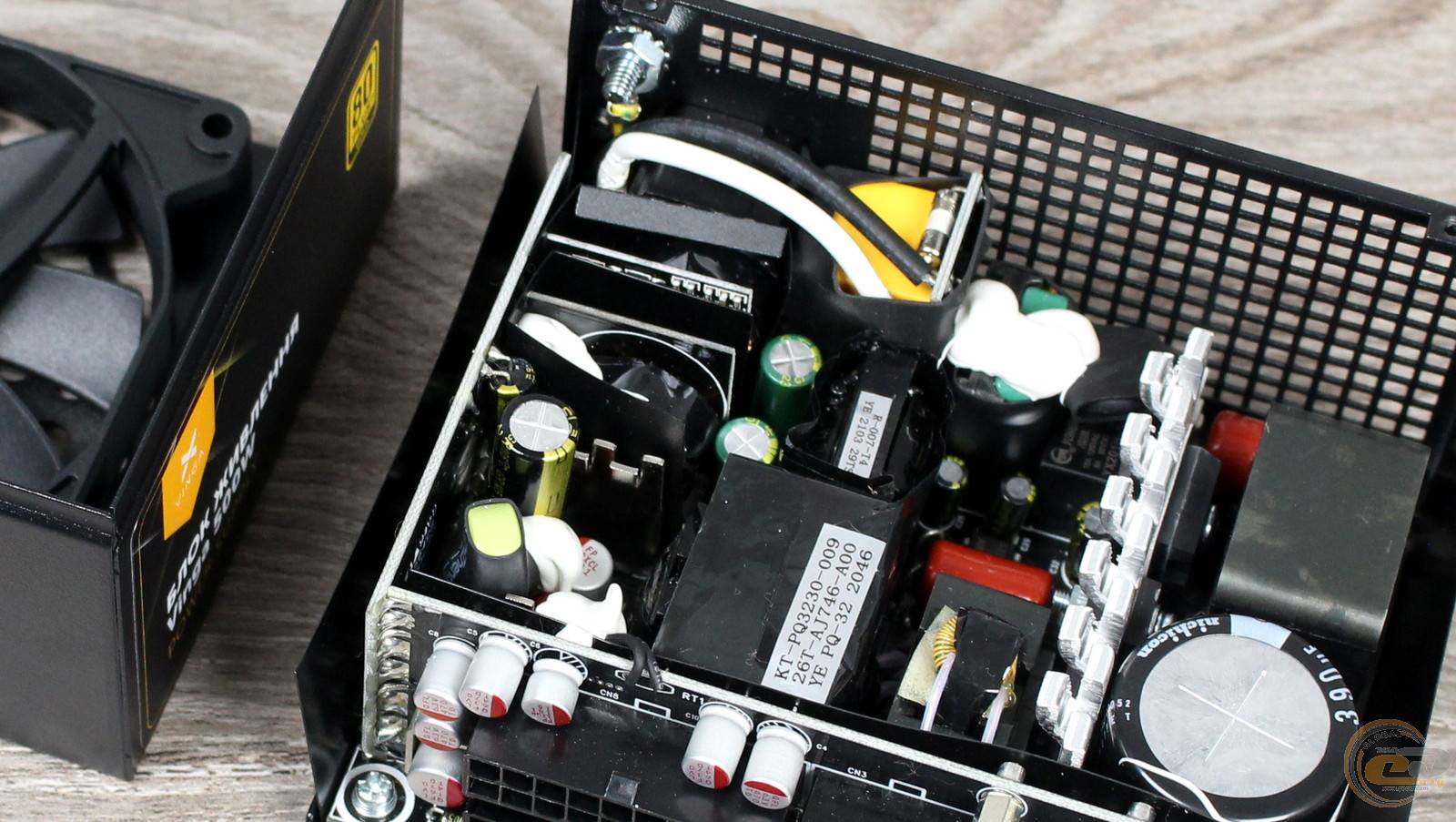
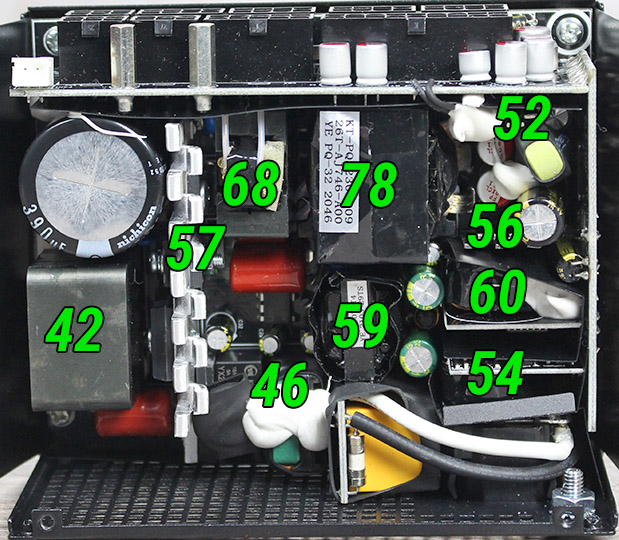
As for the heatsinks, there are three. The larger one cools the power elements of the APFC module and the primary circuit, while the two smaller ones cool the components of the synchronous rectifier. Now to the details, although in SFX power supplies, they are not always easy to see.
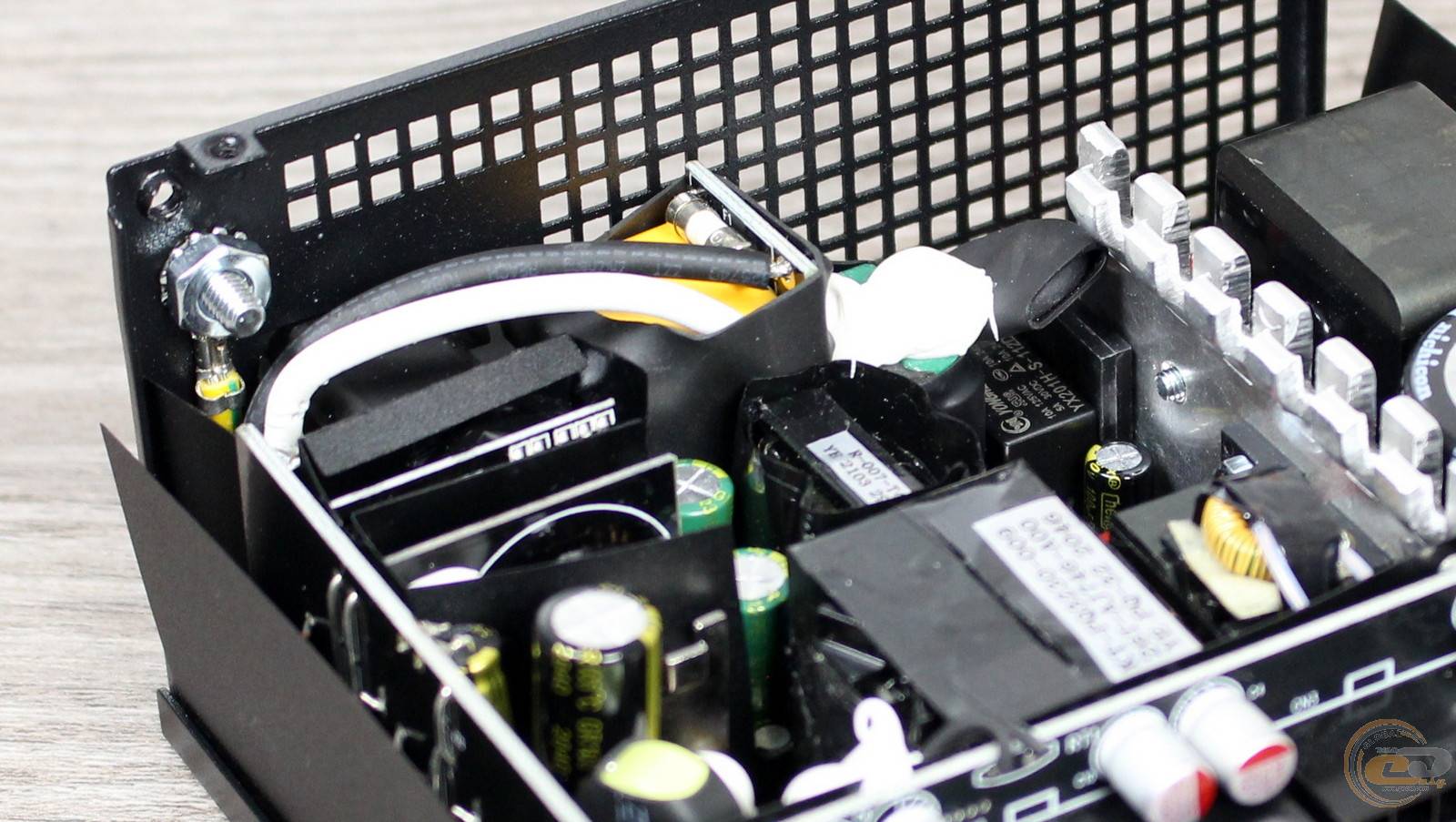
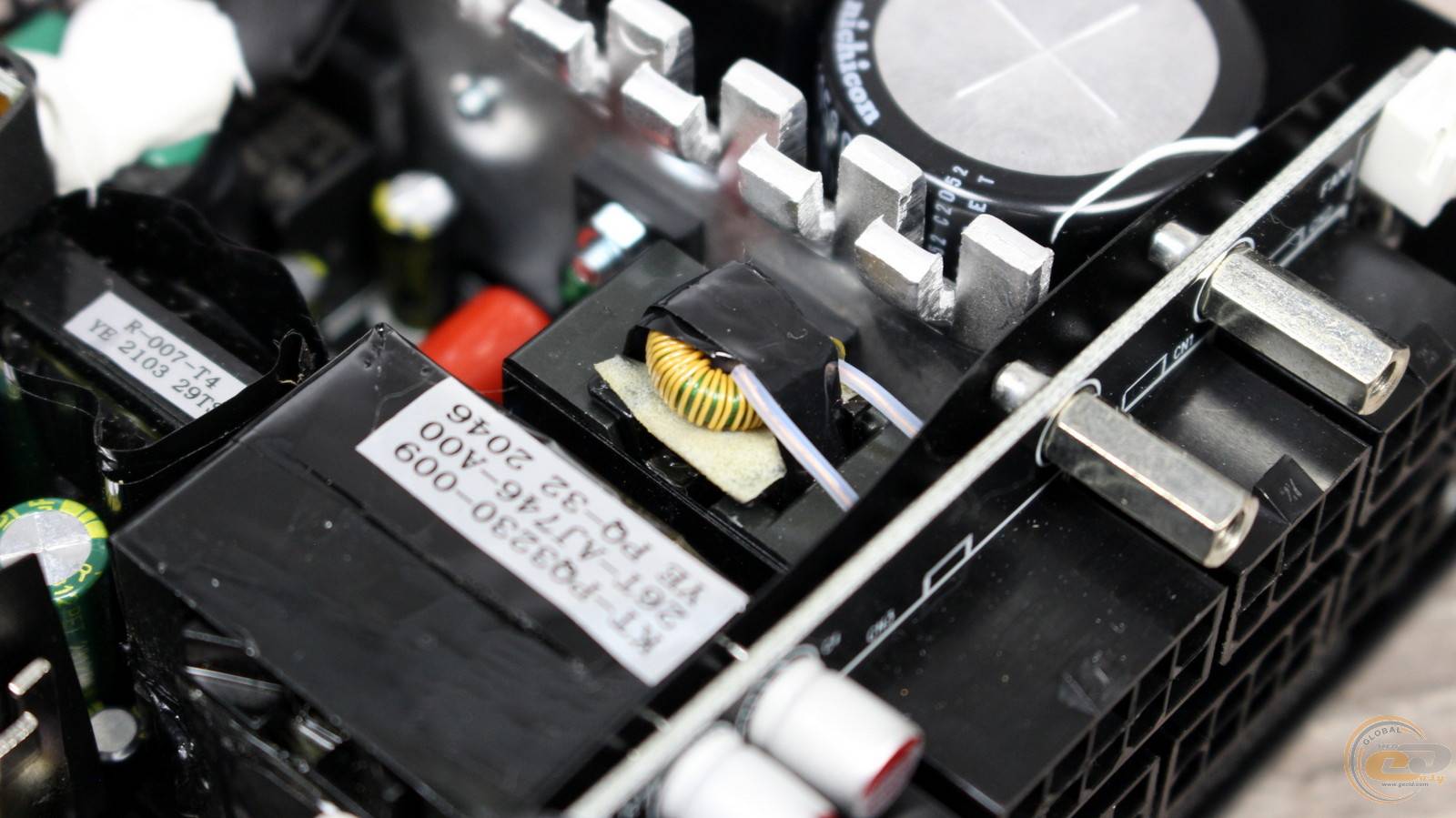
The input filter is in place, and in addition to the usual basic elements, it includes a thermistor with a relay from the Chinese company YONGNENG for protection against high inrush currents. A fuse is also visible, which should trigger in case of a short circuit.
Overall, the diode assembly is cooled by a heatsink, but a small part of it does not contact the heatsink. Nearby, closer to the edge of the board, you can see the large APFC choke and the input capacitor.
The electrolytic capacitor is manufactured by the Japanese company Nichicon, has a substantial capacity of 390 µF, and belongs to the high-temperature series — clearly, no expense was spared on this component.
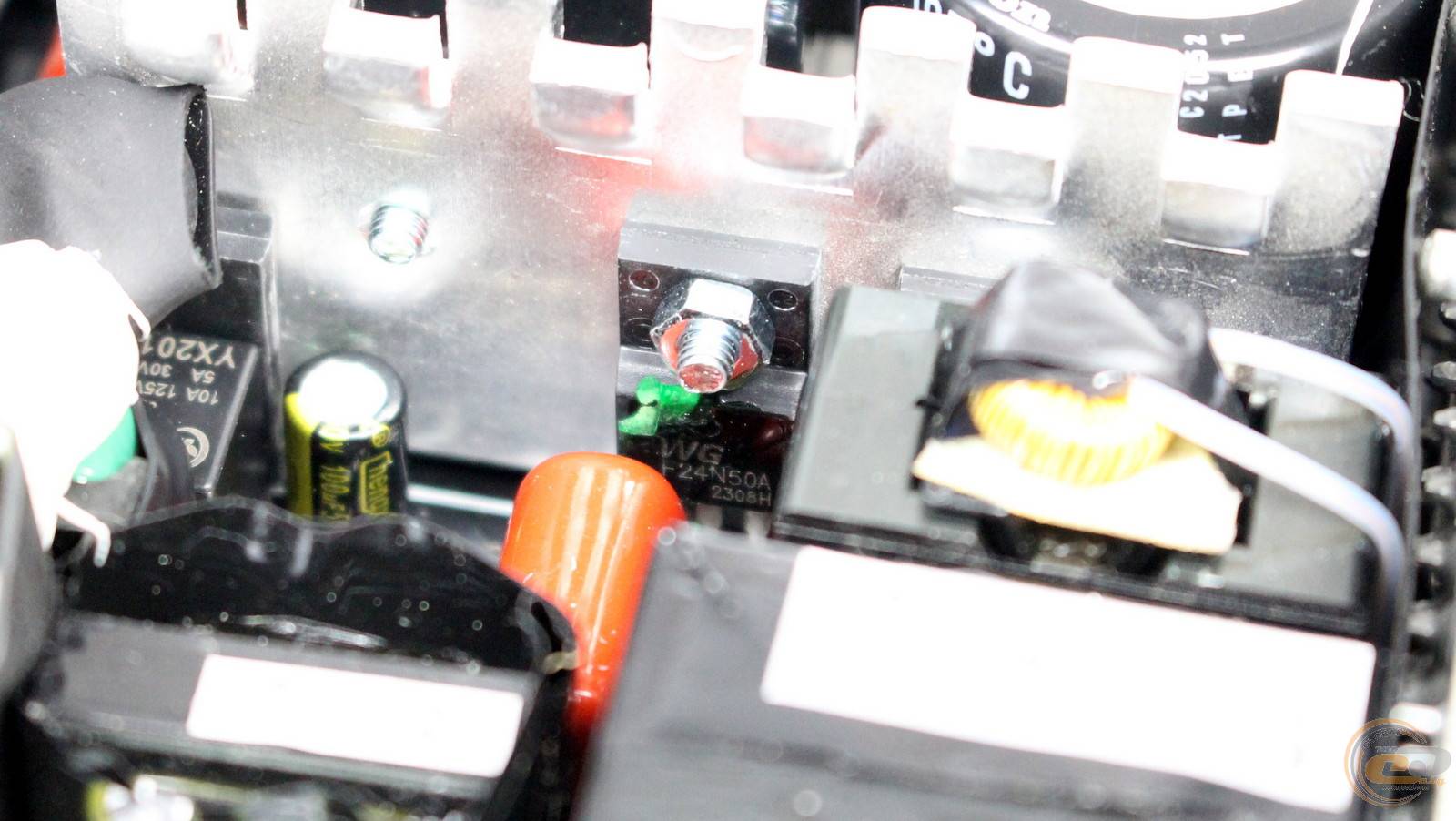
As for the MOSFETs, at least in the primary circuit, they are manufactured by the Chinese company Wild Goose Semiconductor.
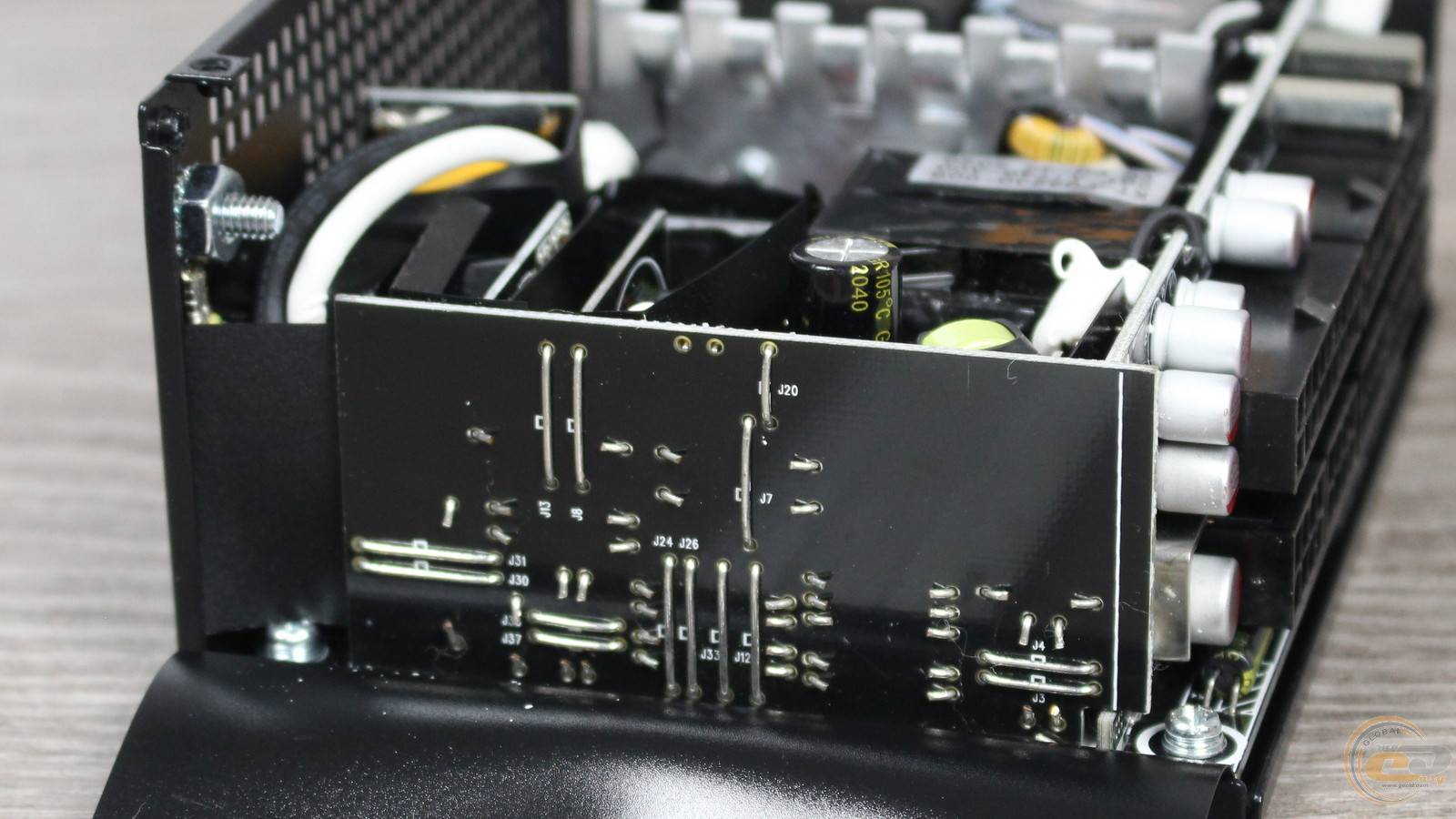
The Vinga 500W (SFX-500G) is based on a highly efficient half-bridge (judging by the pair of transistors) resonant circuit. The elements of the synchronous rectifier, which form the +12V voltage, are soldered on the back of the board. On top, only the combs of their heatsinks are visible.
Note that the layout of SFX power supplies is traditionally very dense, which is why some elements are located in rather unusual places.
For forming the +5V and +3.3V voltages, DC-DC converters are used, the components of which are soldered on a daughter board.
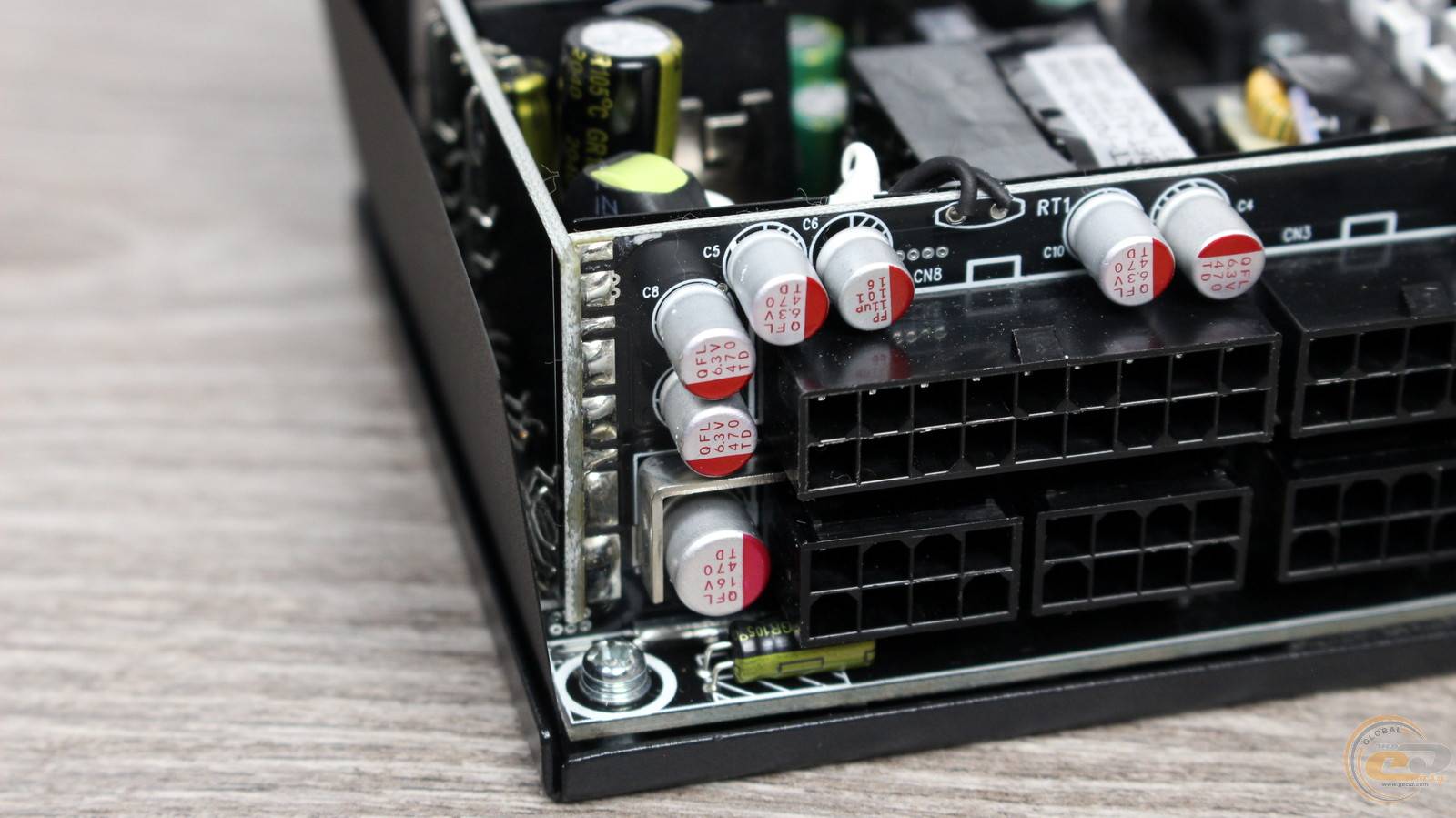
Another vertical board is responsible for transferring the formed voltages to the output connectors.
The latter are supplemented with a small number of filtering polymer capacitors, which are known for their high reliability.
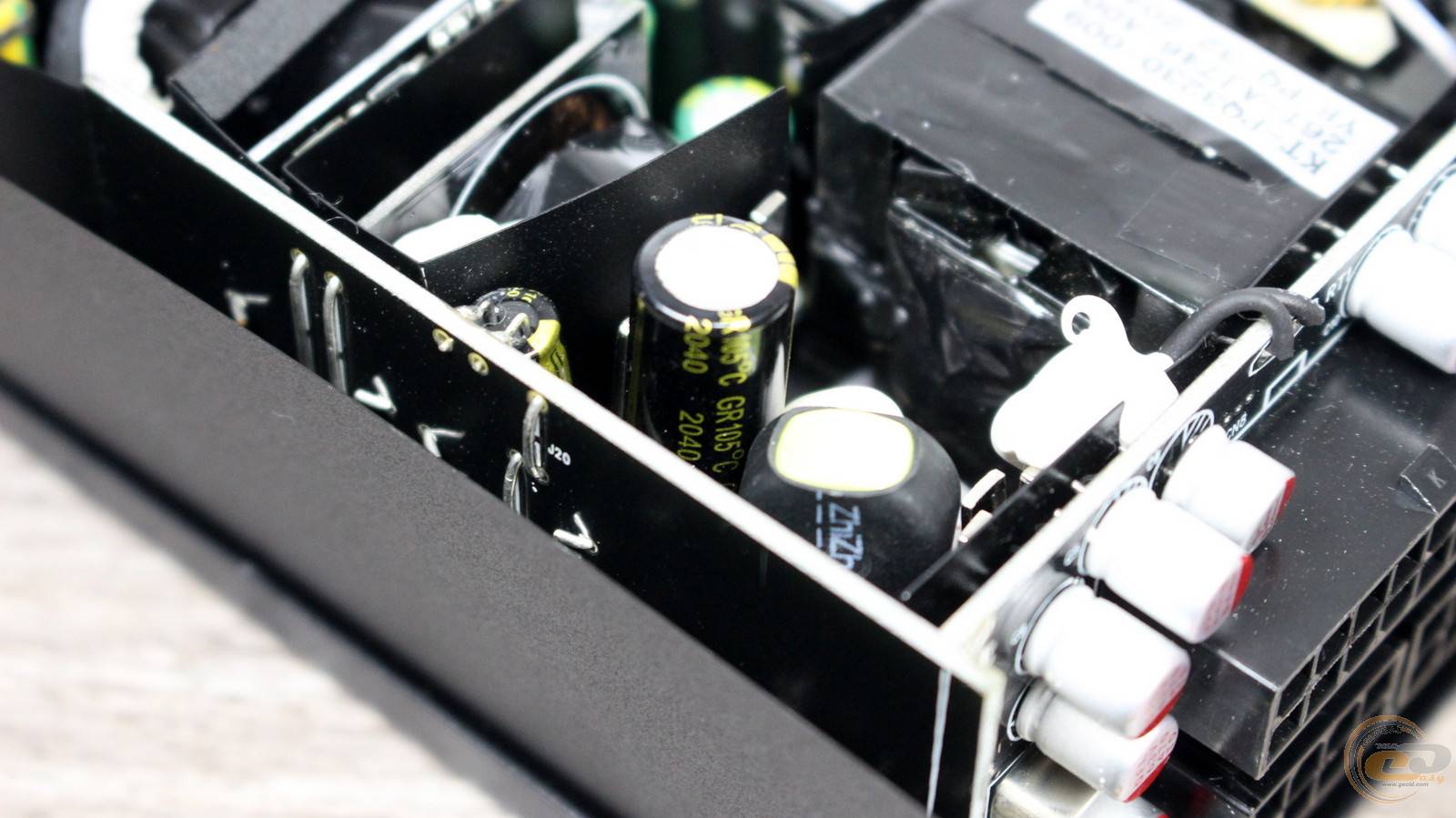
However, high-temperature electrolytes from ChengX, also from China, are often encountered.
Unfortunately, the manufacturer does not mention the available protections, although we have already seen the implementation of at least two. So let's move on to the tests. Cross-load characteristics Recall that the ATX12V standard allows for permissible voltage deviations for all power lines of ±5% from their nominal value.
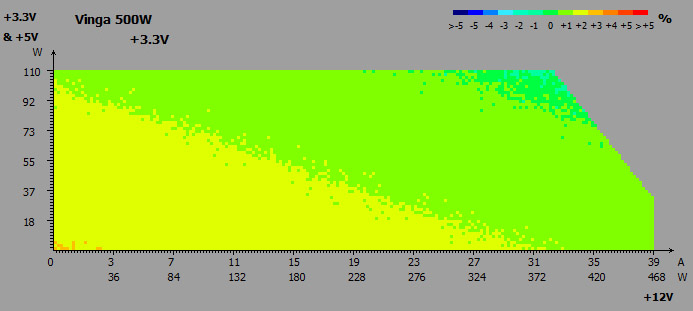
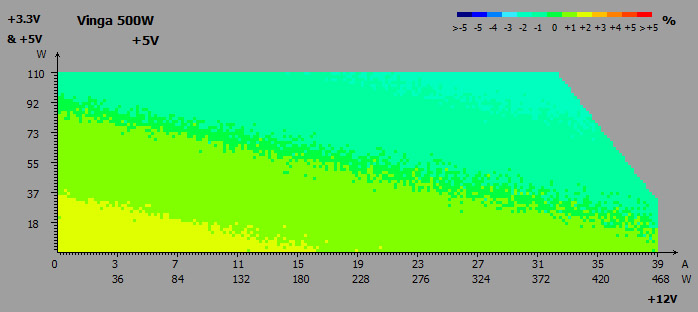
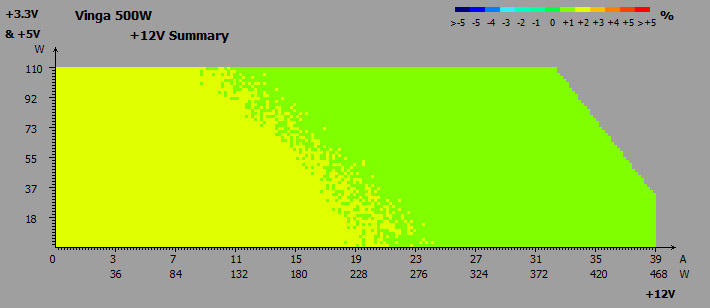
During cross-load tests on the main power lines of the Vinga 500W (SFX-500G), the following deviations were recorded:
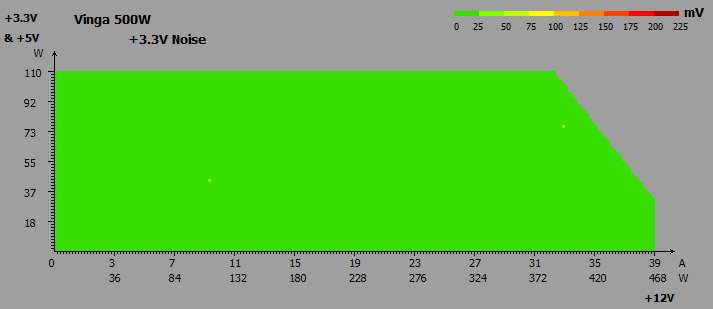
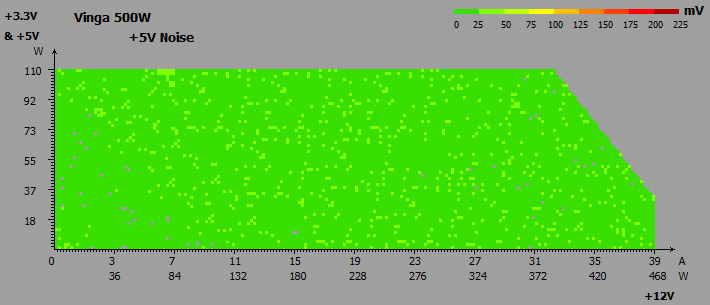
The DC-DC converters performed excellently — the voltage values on all three channels remained within ±2%. Particularly impressive was the condition of the most heavily loaded +12V line, which remained practically unchanged. Noise and ripple across the entire voltage range The ATX12V standard provides the following permissible ripple (peak-to-peak) levels:
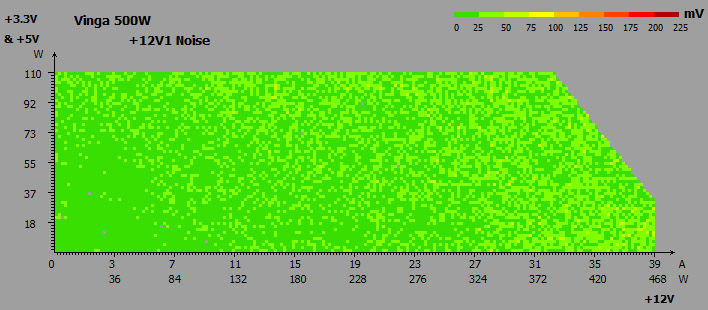
The ripple is also fine — on the two lower channels, they did not exceed 50 mV, and on +12V, we occasionally saw 75-100 mV. Standby Power Line +5VSB
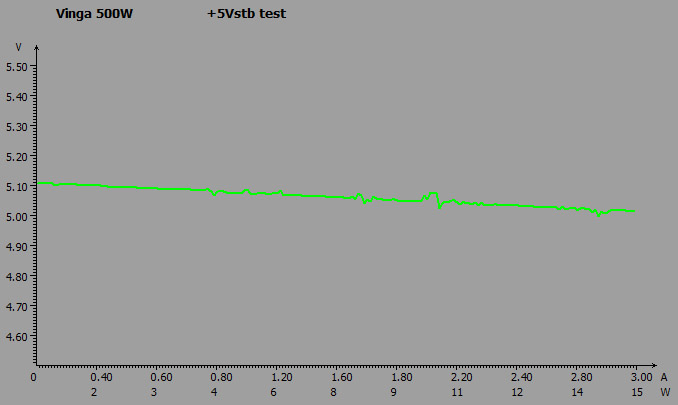
Let's move on to the state of the standby power line. The voltage deviates by a maximum of +2.2%, and there were no drops below the nominal. So everything is within the permissible limits of ±5%. PFC Table showing the change in PFC depending on the load of the power supply:
Load* – load as a percentage of the nominal power of the power supply unit. The APFC module also did not disappoint. At a power consumption of 150 W, the PFC coefficient reached 0.9, and the maximum value was at 0.98. Efficiency
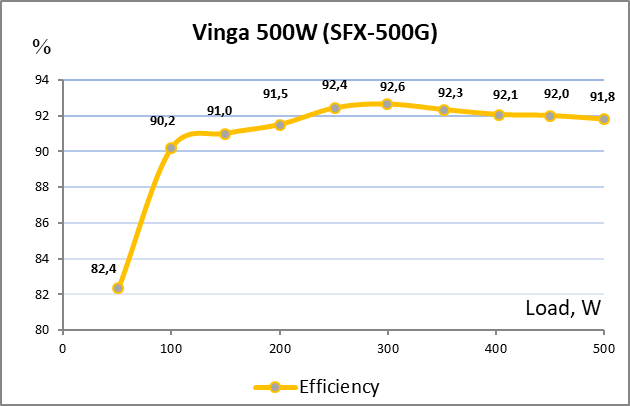
The energy efficiency of Vinga 500W (SFX-500G) is excellent. Our test confirmed that at 20%, 50%, and 100% load, the efficiency of the power supply exceeded the required 80 PLUS Gold levels of 90%, 92%, and 89%, respectively. Cooling System and Temperature Mode As for cooling, it is usually a weak point of SFX power supplies. But not in this case!
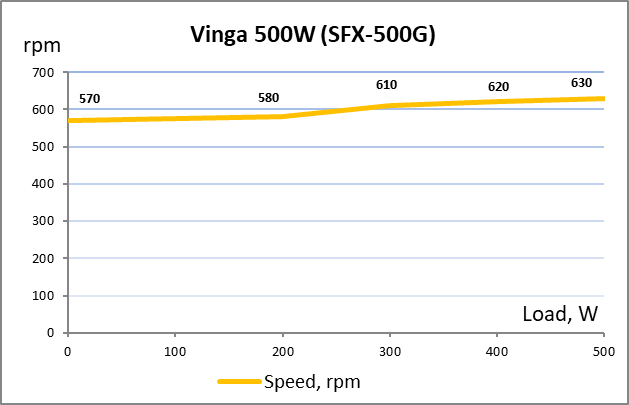
Across the entire load range, the fan spins very quietly at a speed of 570-630 RPM. So from an acoustic point of view, everything is at the highest level. And what about the heating of internal components?
There were no issues — the maximum temperature of the main transformer after 15 minutes of 500-watt load was only 78°C, while other components were even cooler. Once again, the "little one" pleasantly surprises us. OverLoad The overload test was also passed with flying colors. When the load was briefly increased to 600 W, all output voltages remained within the norm. Practical Tests on a Real Configuration And as a "dessert," as always, tests on a real system. For its construction, we used a 12-core 24-thread AMD Ryzen 9 7900X and a 160-watt ASUS GeForce RTX 4060 Ti Dual OC Edition.
Measurements were taken in two modes: "Idle" and "Maximum Load," created using the AIDA FPU test and the FurMark Donut (GK) test for loading the graphics card in the MSI Kombuster utility. System power consumption was measured using a Seasonic PowerAngel wattmeter, and voltages on the three main lines were measured with a MASTECH MY64 multimeter.
The following values were obtained as a result of the measurements:
The use of DC-DC converters not only kept the voltages within the norm but also completely avoided their drop below the nominal. Moreover, the change in load hardly affects the values at the line outputs. Thanks to the "golden" efficiency of the device, the system with AMD Ryzen 9 7900X + GeForce RTX 4060 Ti on board consumed 344 W from the socket. This means that in practice, this unit can also be used to power more powerful components. Of course, if there is space for their placement and proper ventilation in the compact case. Power Consumption in Idle and Off State In addition to all of the above, this power supply will please its owner with very low power consumption in the off state (2 W) of the computer and in sleep mode (3 W).
The power supply unit Vinga 500W (SFX-500G) is an excellent choice for powering a compact computer with not the hottest components. For example, a system based on a 12-core AMD Ryzen 9 7900X processor and a 160-watt GeForce RTX 4060 Ti graphics card consumed only 344 W from the socket. So there is a good reserve up to the nominal 500 W. Can the device deliver the claimed power? Of course, yes, otherwise, it would not have received the 80 PLUS Gold certification. Moreover, even at nominal load, the 92-mm fan remains very quiet, and there is no question of overheating the "innards". The pleasant impression of the Vinga 500W (SFX-500G) is complemented by fully modular cables, an input Japanese capacitor, and an affordable price tag. However, the latter was made possible by certain savings, including the use of some Chinese components inside. Advantages:
Features:
Author: Oles Paholok | ||||||||||||||||||||||||||||||||||||||||||||||||||||||||||||||||||||||||||||||||||||||||