First Impressions
For the test, I received three wired models (HSM035GR, HSM040WG, WereWolf), as well as one wireless (HBT050BR). All models are full-fledged headsets, not just classic headphones. This is encoded in the markings themselves, along with the color: HSM - headset mobile, HBT - headset bluetooth, GR - green, WG - white-green, and BR - brown (although the color is more like dark gold).
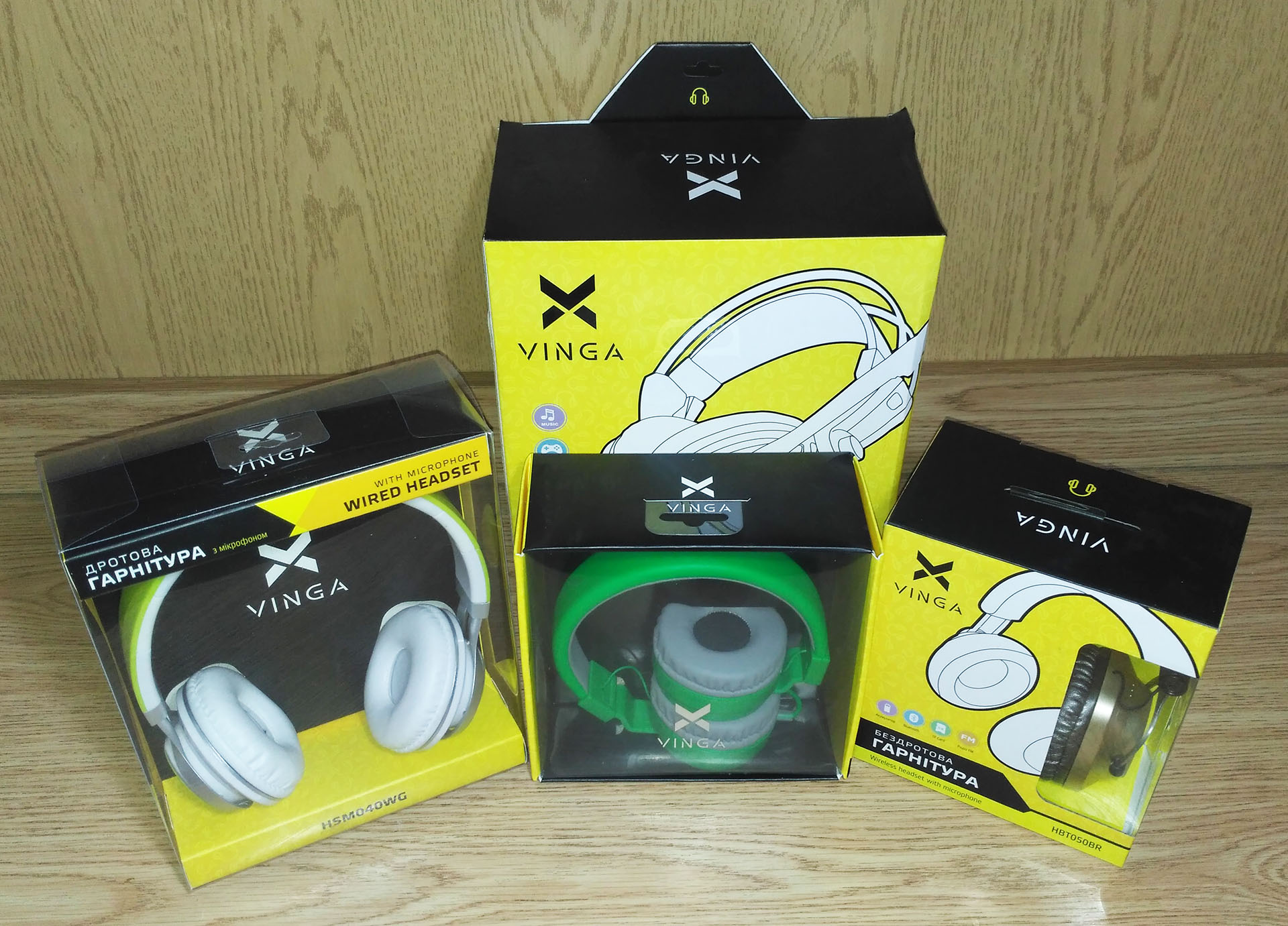
Even before unpacking, the first thing that caught my eye was the packaging design: black and yellow tones with a characteristic pattern in the background and transparent window inserts. It looks noticeable and attractive and immediately sets a positive mood. The HSM035GR, HSM040WG, and HBT050BR models are very compact and have foldable headband designs, hinting at their outdoor use. Additionally, such positioning is likely to reflect in the characteristics for comfortable use with portable players and smartphones.
To avoid being unfounded in my subjective interpretations, I found a number of synthetic tests online that allow checking the headset characteristics. I highlighted the most interesting ones:
* Determining the lower and upper limits of the frequency range
* Determining the real impedance value
* Determining the lower limit of the dynamic range
* Driver identity
* Build quality of internal components
* Point sound reproduction quality
The first two points are aimed at verifying the accuracy of the values specified by the manufacturer. The dynamic range, considering the first two points, allows reasoning about the positioning of the headphones/headsets. The remaining tests are aimed at a comprehensive check of the quality and correctness of assembly, which also affects the quality of the reproduced sound.
HSM035
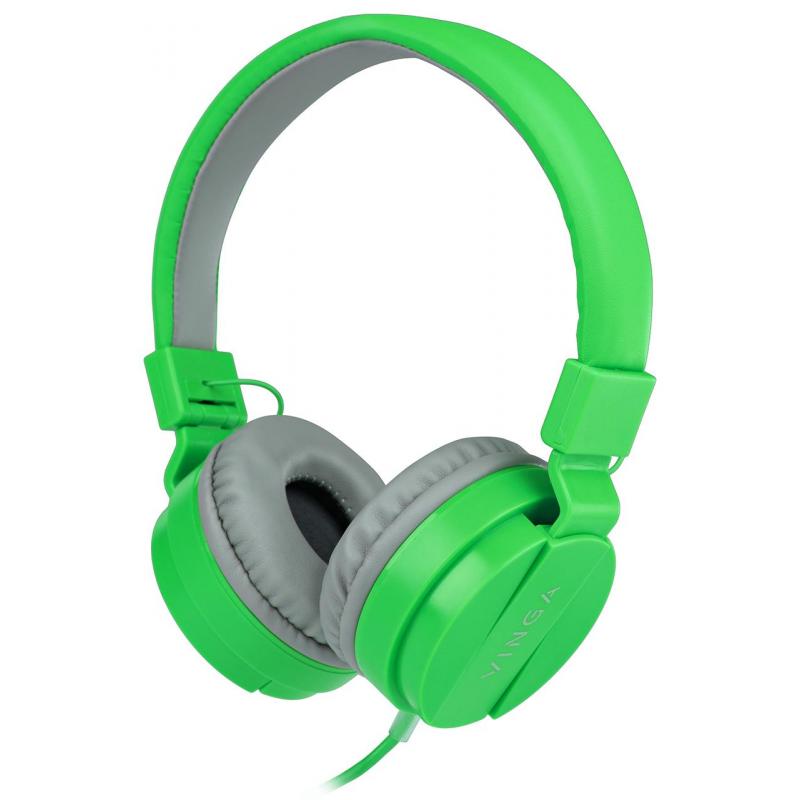
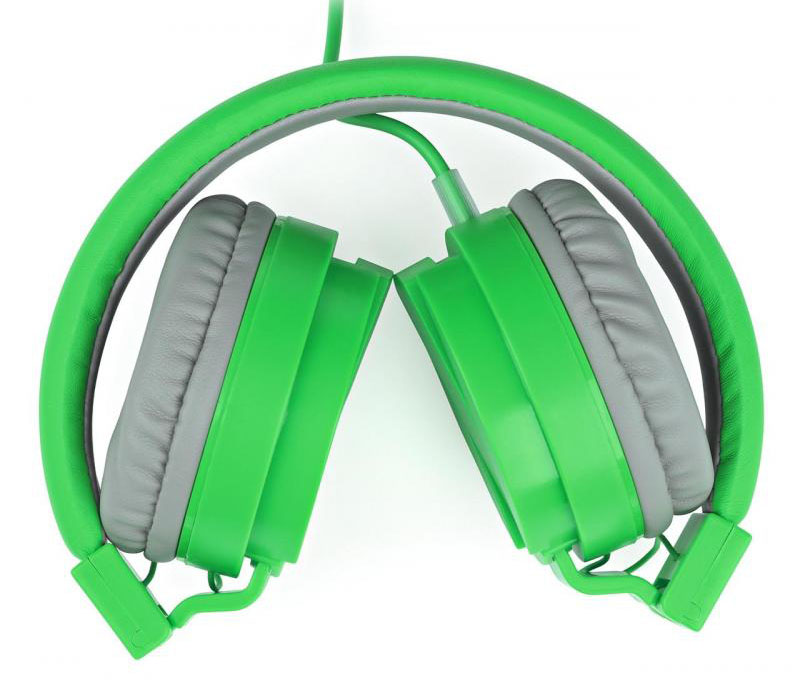
If you conduct a survey among people and ask which color they associate with the arrival of spring, the majority's answer would probably be "green." Opening the box with the HSM035GR model, I strangely felt the emotions inherent in us in spring when everything begins to bloom. The headset is very light and small (in the folded state, it easily fits in the palm), which is a great option for the city. Height adjustment is done directly on the headphones, not on the headband. The headphones have a slight free movement to fit more comfortably to the ears.
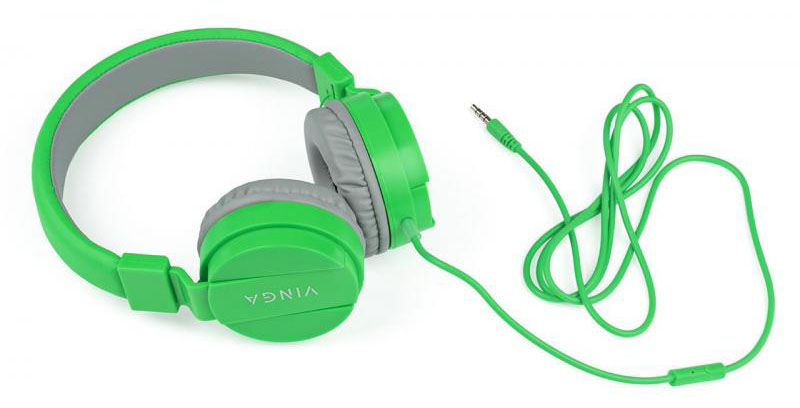
The microphone is located on the wire, approximately at mouth level. Next to the microphone is a small button. A short press on my phone launched the music player, while a long press initiated voice control. A convenient solution, especially considering that the latter can be set to work even when the phone is locked. In conversation mode, one press of the button on the headset mutes the microphone, and a long press ends the call.
The wire itself is of the same bright green color, 1.5 meters long, which should be enough for comfortable placement of the sound source even behind in a backpack. By the way, at the point where the wire connects to the headphones, there is a centimeter-long transparent "sleeve" that prevents the wire from bending at the very base.
Among the characteristics, I note a microphone with greater sensitivity than other test models. Combined with the noise-canceling system, this should provide good audibility even with strong external interference.
| Specifications | Value |
| Driver Diameter | 40 mm |
| Impedance | 32 Ohm+-15% |
| Frequency Range | 20-20000 Hz |
| Sensitivity | 103+-3 dB |
| Microphone Sensitivity | 54+-3 dB |
| Connection Interface | mini-jack 4-pin |
| Cable Length | 1.5 meters |
During the tests, I was pleasantly surprised by the lower limit of the dynamic range - in this regard, the HSM035 turned out to be one of the best among the tested models. The results of the binaural test were also good.
| Testing | Score |
| Frequency Range (subjective) | 15 Hz - 19000 Hz |
| Impedance | 36 Ohm |
| Lower Limit of Dynamic Range | ~78 dBFS |
| Driver Identity | OK |
| Binaural Test (subjective) | 4/5 |
Overall conclusions on the model will be summarized at the end.
HSM040
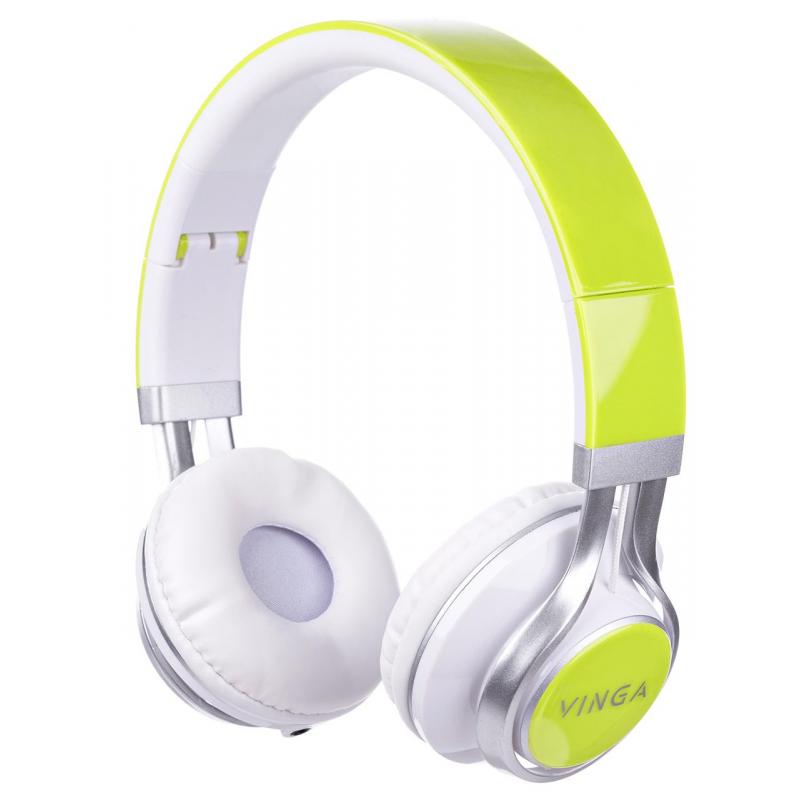
Looking at the model indices HSM035 and HSM040, I had the thought that these are two variations of the same headset, one of which has more advanced features and offers slightly more possibilities. In reality, these are two completely independent models, each interesting in its own way.
In my version of the HSM040, the first eye-catcher was the color - a bright lime top and a white bottom with gray mounts resembling polished metal. An association with ... [Lamborghini] "Legend under the sign of the bull" immediately flashed, as such a color combination makes an already cool supercar even better. Besides the beautiful color scheme, the headset's design is also elegant. The roundedness at the bottom of the mounts creates the impression that the headphones are floating inside them. By the way, the contact to the headphones is made using wires with a braided sheath. I've always liked such solutions because this small improvement is not only more pleasing to the eye but also better protects the wires inside from unnecessary bends.
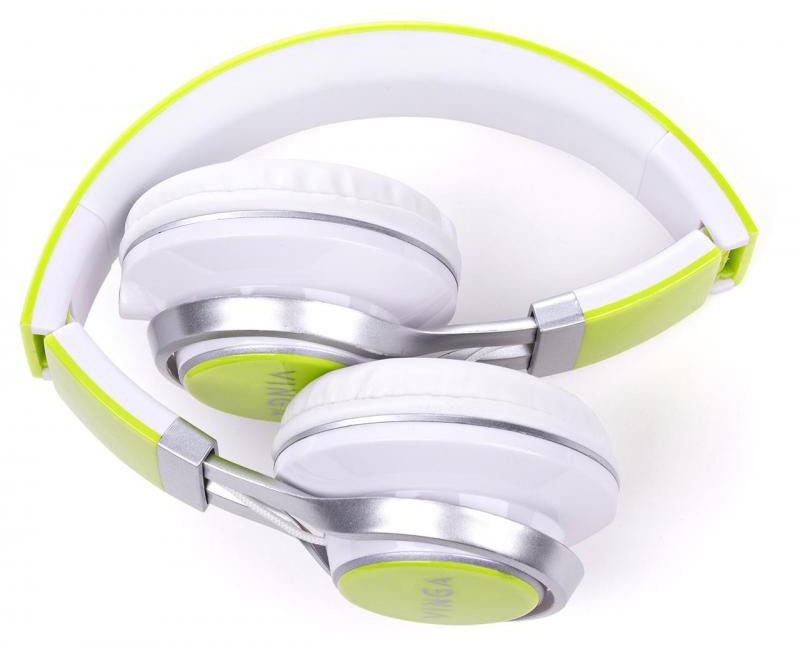
An interesting nuance of the design is the folding mechanism. Due to the high placement of the "break" hinges, the headphones fold not at 120 degrees, so the ear pads face outward, but only at 90, meaning one headphone is under the other, as if pressing it. But the interesting part here is that to fold or unfold the headphones, you need to apply a little effort to overcome the resistance of the latch that fixes the mount in the "combat" state. This also plays a role in creating a good springy effect, which in turn allows the headphones to sit almost perfectly on the ears. Additionally, extra comfort is provided by a slight degree of freedom of the headphones in the vertical plane.
As in the HSM035, the microphone here is located on the wire, but the button is located on the reverse side of the pad. Another difference is that the wire here is "detachable." An interesting observation is that the mini-jack on the headphone side is 3-contact, while the connecting side is 4-contact.
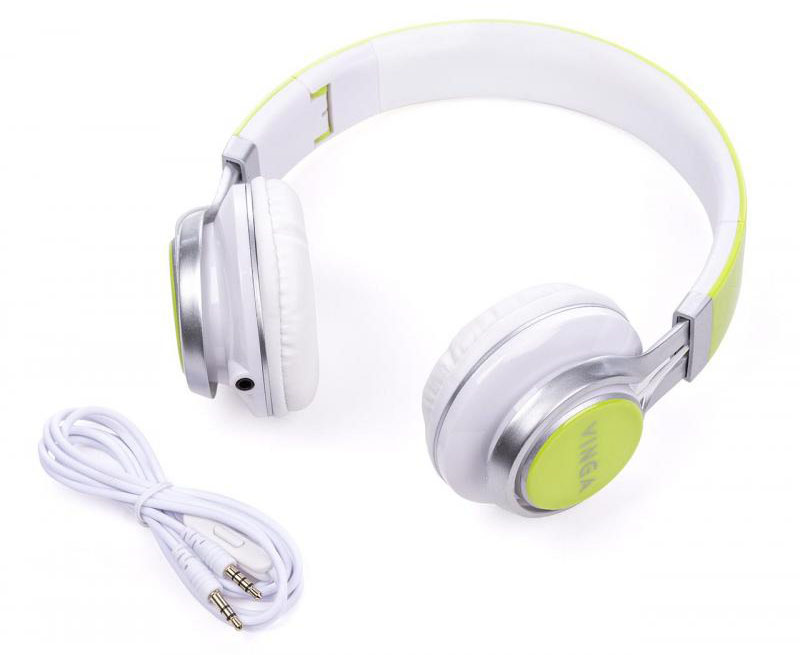
| Specifications | Value |
| Driver Diameter | 40 mm |
| Impedance | 32 Ohm+-15% |
| Frequency Range | 20-20000 Hz |
| Sensitivity | 100+-3 dB |
| Microphone Sensitivity | 54+-3 dB |
| Connection Interface | mini-jack 4-pin |
| Cable Length | 1.5 meters |
----
| Testing | Score |
| Frequency Range (subjective) | 15 Hz - 19000 Hz |
| Impedance | 35 Ohm |
| Lower Limit of Dynamic Range | 78 dBFS |
| Driver Identity | OK |
| Binaural Test (subjective) | 5/5 |
The test results pleasantly surprised me. Honest frequency range, good build quality (no extraneous noises or play inside the headphones during playback), the lower limit of the dynamic range was clearly audible. The binaural test did not disappoint either - the sound was clear, rich, and there was an illusion of a real knock on the door.
HBT050
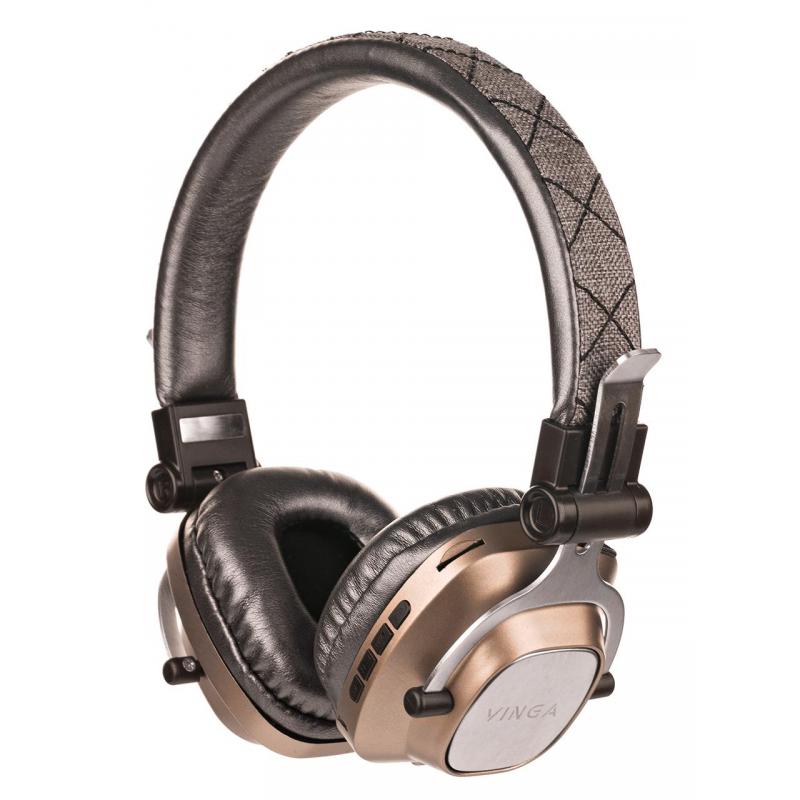
The headset looks very stylish - dark gold plastic headphone body with polished metal side inserts, soft headband with fabric insert and cross pattern, soft ear cushions. As in the HSM040 model, the connection to the headphones is made using wires with a rope braid. The attachment of the headphones to the headband is made using a Y-shaped metal plate on a movable connection. In the folded state, the headphones fit in the palm, which can be useful when placing them in a narrow bag or suitcase. And in everyday use, they won't take up much space in a backpack either.
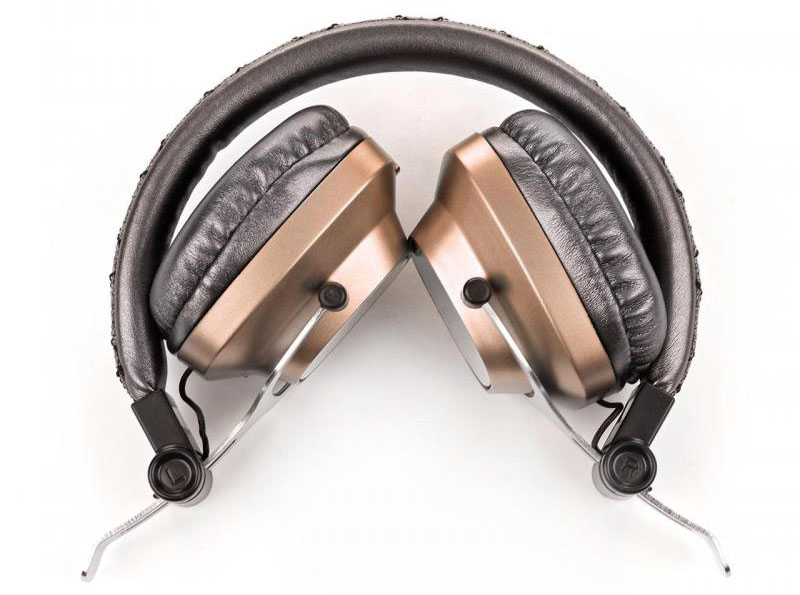
Functionally, the main load is on the left earphone - all the controls, connectors, and indicators are located on it. On the upper edge - a slot for a TF card. In front - power, playback, and volume control buttons. On the lower edge - a Bluetooth operation indicator. Below - microUSB and mini-jack 3.5 mm power connectors. I can definitely say that for me, as a left-handed person, this arrangement of controls is very convenient.
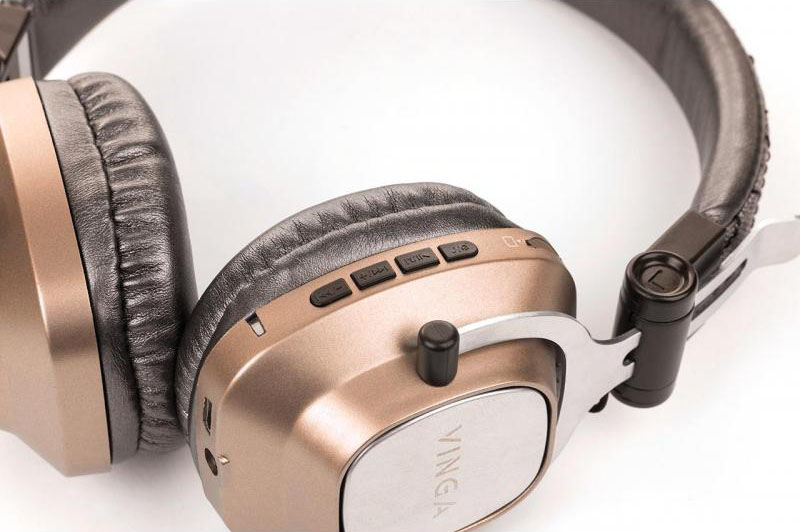
The dry technical specifications of the headset are decent:
| Specifications | Value |
| Driver diameter | 40 mm |
| Impedance | 32 Ohm+-15% |
| Frequency range | 20-20000 Hz |
| Sensitivity | 110 dB |
| Microphone sensitivity | 38+-2 dB |
| Nominal power | 0.25 W * 2 |
| Battery | 300 mA |
| Working time (music playback mode) | up to 4 hours |
| Working time (standby mode) | 120-200 hours |
| Profile support | A2DP, AVRCP, HSP, HFP |
| Frequency | 87.5 MHz - 108 MHz |
| Wireless chip model | Jieli V2.1 |
After turning on the headphones, I was greeted by a girl's voice speaking broken English with some Chinese accent. This same voice announced the successful connection of the headphones to the phone. The wireless connection worked well with both the smartphone and the computer. For me, this was a plus because one of my NoName headsets flatly refused to play anything from the computer. The Bluetooth range turned out to be as stated - about 10 meters. At the same time, the signal held confidently until the end - only when exceeded did interference and playback skipping begin.
As for the sound itself, overall, it was enough for me. The bass was not very deep, but quite distinct, and the high notes did not blur into an incomprehensible noise in the background. For a wireless headset, very decent. The volume reserve is large - even in a crowded place, the level is always enough not to be distracted by extraneous noises. The phone mode did not cause complaints, the Bluetooth channel consistently maintained the connection, as well as when listening to music, the audibility on both ends was also good, although it depended on the coverage quality.
The headset also has a built-in FM radio and supports TF / MicroSD cards. Interestingly, if the radio mode is turned on with a separate button, playback from TF / MicroSD is automatically turned on when the card is inserted into the slot. At the same time, the mode for switching to the card is also added automatically.
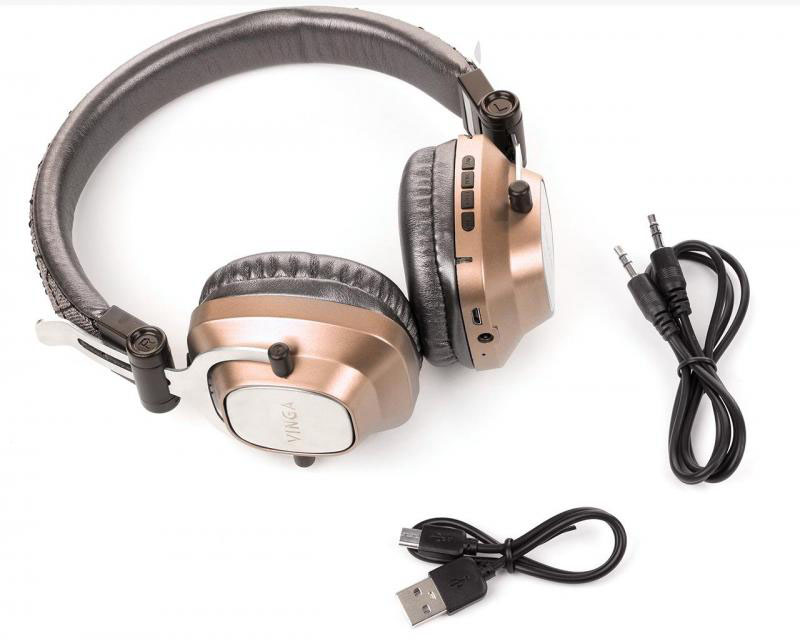
The headset comes with a mini-jack-mini-jack cable 75 cm long. It can be used to connect the headphones directly to the sound source. "What's the trick?" you ask. The fact is that in this mode, the headphones work as a regular wired headset. So it turns out that even if there is no charging cable at hand, but there is a mini-jack cable, the headset's working resource automatically extends to infinity :) As for me, a cool solution. Surprisingly, not all manufacturers provide such a feature in similar models.
I was disappointed by the weak autonomy: with a battery capacity of 400 mA, 4 hours in music listening mode is a rather modest result. I was also upset by the intrusive voice of the girl, who reminded me of the low battery charge and the need for charging every 30 seconds. At the same time, the headset completely discharged only 40-50 minutes after the start of the voice notifications. In the end, it's easier to put the headset on charge than to listen to such reminders.
| Testing | Rating |
| Frequency range (subjective) | 15 Hz - 19000 Hz |
| Impedance | 36 Ohm |
| Lower limit of dynamic range | 66 dBFS |
| Driver identity | OK |
| Binaural test (subjective) | 4/5 |
The results showed that the HBT050 coped well with the test program, including the binaural test. A full illusion, as in closed headphones, did not work out, but the sound was confident.
WereWolf
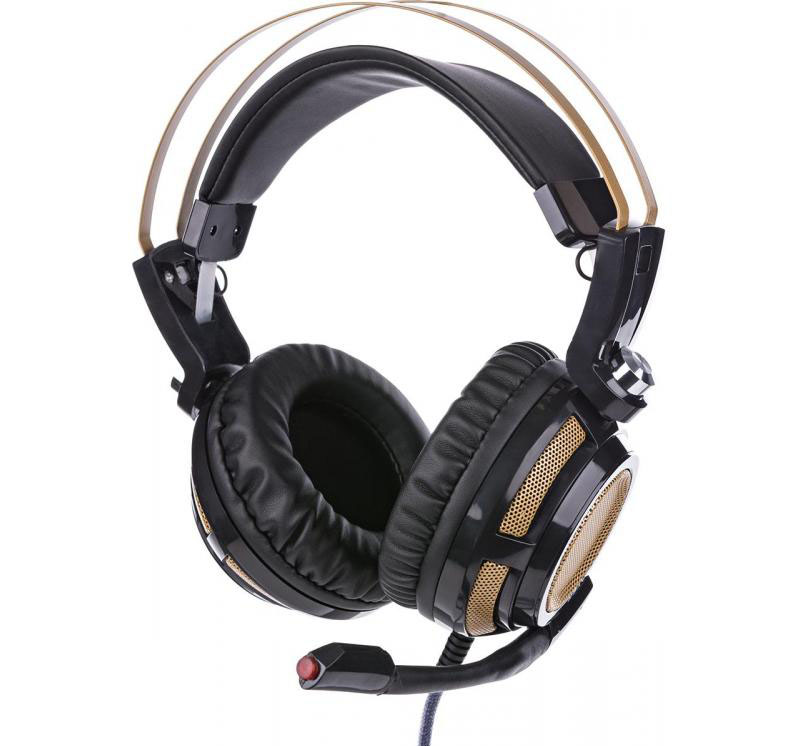
WereWolf is the most powerful headset of the tested quartet and looks solid. I got a black and gold color option, but it is worth noting that the alternative (white and gold) also looks very good. WereWolf is the only headset of the whole quartet that is clearly oriented towards gamers, i.e., for use with a computer. This is evident from the form factor, the presence of three separate mini-jack plugs, and USB.
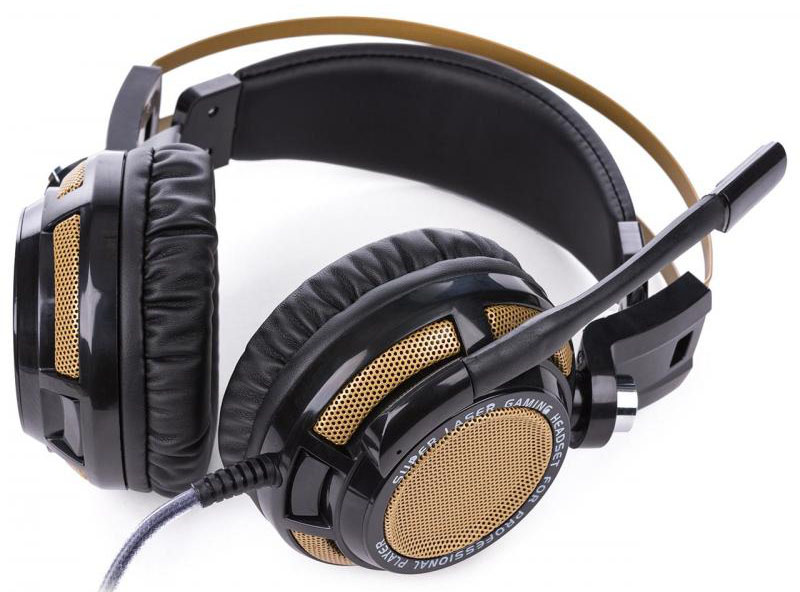
Plus, the microphone is essentially a separate element, not integrated into one of the headphones. In appearance, the headset resembles other headphones from Vinga - HSC060 Gaming Black. But, if in the latter the microphone is made in the form of a bulge on the body, then in WereWolf the microphone is on a flexible movable leg. Moreover, the attachment itself is made more elegantly and fits into the overall design of the headphones.
The headset's construction is made of a metal frame and a soft headband. Both parts are connected together with overlays, to which the headphones are attached in turn. The headphone attachment is movable, allowing them to rotate a few degrees. A comfortable position on the head is ensured by the self-adjusting depth of the headphones. Thus, there is no need to adjust the height of each headphone - they always sit on the head perfectly. The headset cable is not only long - 2.2 meters, but also thick, thanks to the transparent sheath, similar to silicone. Jumping ahead, I will say that its presence is very appropriate because it protects the cable from mechanical damage and unnecessary bends. The only moment - for me, it very much liked to spontaneously twist into loops. There is no ferrite ring on the wire, but no interference was noticed during the entire operation.
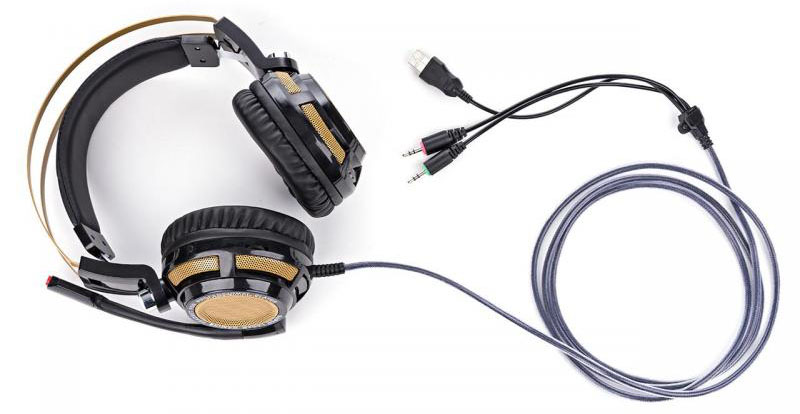
The dry technical specifications of the headset:
| Specifications | Value |
| Driver diameter | 40 mm |
| Impedance | 32 Ohm+-15% |
| Frequency range | 20-20000 Hz |
| Sensitivity | 105+-3 dB |
| Microphone sensitivity | 38+-3 dB |
| Connection interface | 2 x mini-jack (headphones, microphone), USB (backlight, vibration) | Cable length | 2.2 meters |
| Weight | 405 grams |
The first thing you feel when putting on the headset is the very soft ear cushions: they "envelop" the ears and block out external sounds, creating an immersive atmosphere. Moreover, the WereWolf has another feature - vibration. After pressing a special button, a slight 3D effect appears in the headphones, which you don't feel when the sound is low. But if you increase the volume and bass, the headphones start to gently "dance on your ears" in time with the music. The vibration nicely emphasizes the gradual increase in sound, various transitions, and also the percussion. The headphones sound the coolest, of course, in games. The sensations are quite interesting when the joystick vibrates from maneuvers on the road, and the headphones shake from the roar of the engine and music.
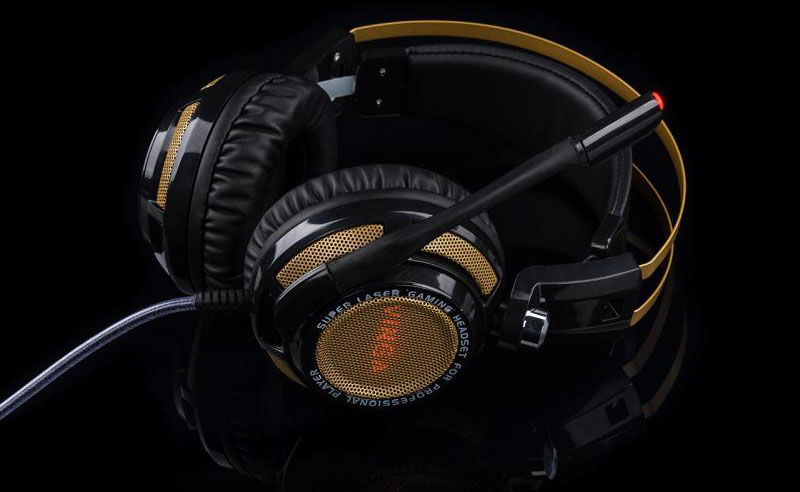
By the way, besides the vibration, the headset also has red backlighting on the edges of the headphones and on the microphone. It turns on together with the vibration via USB, and every time I wore the headset in the dark, I felt like a fighter pilot during an air battle.
Sound characteristics testing:
| Testing | Rating |
| Frequency range (subjective) | 15 Hz - 19000 Hz |
| Impedance | 41 Ohms |
| Lower dynamic range limit | 72 dBFS |
| Driver identity | OK |
| Binaural test | 4/5 |
The tests showed that the reproduced frequency range does not differ from other models, but the dynamic range limit is lower, which should positively affect sound quality. Testing with a gradual increase in sound frequency allowed us to check the quality of the internal components assembly. The result is worthy - nothing rattles, wobbles, or clatters. I note that despite the almost identical characteristics of all headsets, the WereWolf, due to the semi-closed design of the headphones, has a slightly more lively and rich sound. I think the presence of vibration is justified specifically for headsets or headphones in this form factor.
Conclusions
So, testing four models brought a lot of positive emotions and at the same time posed the problem of choosing the right headset. Moreover, concepts that are not entirely clear to the average user and a large number of numbers can be quite confusing. It's time to bring clarity.
The frequency range test was conducted to check the real frequency values. Here all models showed the same result (subjectively): 15 Hz - 19 kHz. It is worth noting that the ideal human ear perceives the standard frequency range, the same 20 Hz - 20 kHz that many manufacturers indicate on the boxes. In the case of Vinga, all models honestly (considering measurement errors) operate within the specified range, and the amplitude-frequency characteristic is not blurred at the edges of this range. This is good.
The lower dynamic range limit was measured to understand the maximum possible difference in volume between the loudest and quietest sounds. Why is this needed? For example, so that you don't have to strain to hear the lyrics of a song after a loud musical break, or to hear sounds during a distant shootout in a game, or (most importantly) to hear the footsteps of an enemy sneaking up from behind during an active firefight. In this test, the HSM040 and HSM035 models turned out to be the best (in that order).
The real impedance values were considered with sensitivity in mind. These two characteristics are used both for calculating the maximum volume that headphones can develop when using a specific amplifier and for calculating power consumption. Without delving into mathematical calculations, as a rule, high sensitivity and low resistance give higher volume. Therefore, to achieve optimal sound, the WereWolf is better used in conjunction with a computer, while other headsets are equally suitable for both computers and portable devices. Based on technical data, the "mobile" headsets promise to be not very power-hungry.
All models coped with the binaural test to some extent. Here I would like to highlight two models: HSM040 and WereWolf, which, in my opinion, reproduced the most realistic sound of a knock on the door.
So, what to choose? If you love high-quality sound without any frills - take a look at HSM035 and HSM040. If, in addition to high-quality sound, you value mobility and additional functionality - you will be satisfied with HBT050. And if you need a reliable partner for long multi-hour battles or a quiet guide for accurate shooting at targets from ambush - consider the WereWolf.
As a summary, I can say that the best tester is your ears. Since each of us has different sound perceptions, as well as our individual tastes and preferences, the best option for comparing and further choosing headphones and headsets is to select interesting models and listen to them live directly in the store.
Thanks to the store BRAIN for kindly providing the headsets for review.
Source https://mister-gold.pro/