Gradually, the world is transitioning to 4K resolution, for which more and more content and displays are becoming available. However, it is not yet mainstream, so the cost of transitioning is higher than when purchasing a Full HD format TV or monitor. In this review, we offer to get acquainted with the 32-inch TV Vinga L32FHD20B, which was kindly provided for testing by the company BRAIN Computers.
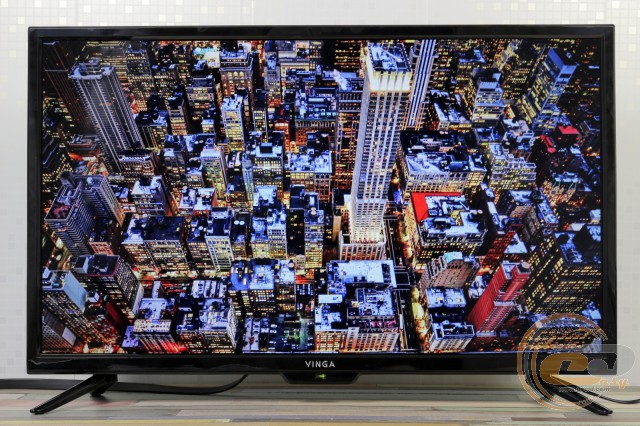
The price of this model at the time of writing the review was ₴6599 ($253). In addition to the Full HD panel, it offers built-in analog and digital tuners, including the relevant DVB-T2 for us, a pair of 6-watt speakers, and an extended set of external interfaces. Smart TV support is absent, but it can easily be added with an external set-top box, such as Vinga 021. Is everything as good as it seems at first glance? Let's find out.
Specification
|
Model |
Vinga L32FHD20B |
|
Panel Type |
LCD with Direct LED backlighting |
|
Diagonal, inches |
32 |
|
Aspect Ratio |
16:9 |
|
Maximum Resolution |
1920 x 1080 |
|
Response Time GtG, ms |
8 |
|
Brightness, cd/m2 |
200 |
|
Static Contrast |
1200:1 |
|
Horizontal / Vertical Viewing Angles, ° |
170 / 170 |
|
Support for Color Television System Standards |
SECAM, PAL |
|
Video Signal Support |
1080i, 1080p, 480i, 480p, 576i, 576p, 720i, 720p |
|
Tuner Type |
Analog, Digital (DVB-C, DVB-S2, DVB-T2) |
|
Smart TV Support |
Absent |
|
Built-in Speaker Power, W |
12 (2 x 6) |
|
Interfaces |
1 x CI+ 2 x 3.5mm audio 1 x RF (S2) 2 x USB 3 x HDMI 1 x D-sub 1 x SCART 1 x Component In (Y/Pb/Pr) 1 x Coax |
|
Typical Power Consumption in Active Mode, W |
65 |
|
Vertical Refresh Rate, Hz |
60 |
|
VESA Mount Support, mm |
200 x 100 |
|
Dimensions with Stand / without Stand, mm |
730 x 234 x 470 / 730 x 77 x 429 |
|
Weight with Stand, kg |
3.95 |
|
Manufacturer's Website |
|
|
Product Page |
|
|
Purchase Page |
Packaging and Delivery Set
The Vinga L32FHD20B TV comes in a regular cardboard box with good informativeness but without colored printing. On its sides, you can find the key technical characteristics of the novelty, and the holes on the sides significantly facilitate the transportation process.
In the box, we found only the user manual, a pair of legs and screws for their attachment, as well as a remote control with a pair of batteries.
Thanks to its ergonomic design, the remote control is comfortable to hold in hand. It has familiar functionality, allowing not only to switch channels but also to conveniently navigate the menu and control playback parameters from an external multimedia content storage device. By the way, the remote does not necessarily need to be pointed towards the TV to activate the selected option. Even at a distance of 5 meters, it performed its duties reliably.
Appearance and Operating Features
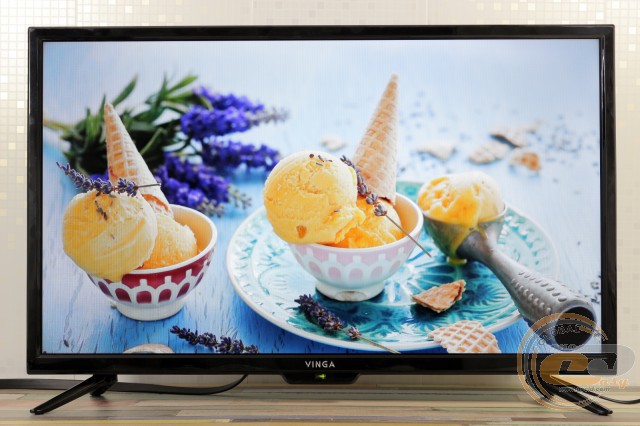
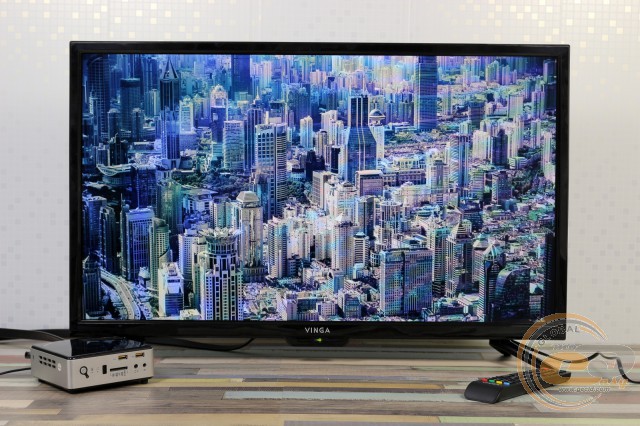
In terms of external design, the Vinga L32FHD20B TV looks quite attractive and presentable. The bezels around the screen have a moderate thickness, so they do not distract attention. In turn, the stand confidently and reliably holds the screen. However, this came at the expense of ergonomics, as its position cannot be changed. Although it is rare to find TVs with a multifunctional stand.
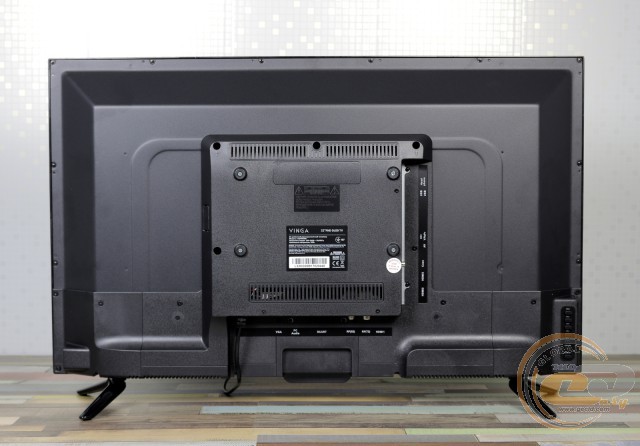
All interfaces and control elements are located on the back side of the TV. In the center, you can see a sticker that provides useful technical information, such as the screen diagonal, model name, and power supply parameters (100 – 240 V at 50 − 60 Hz).
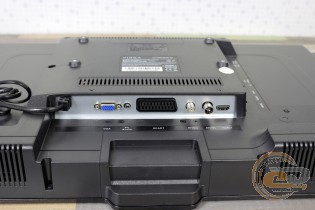
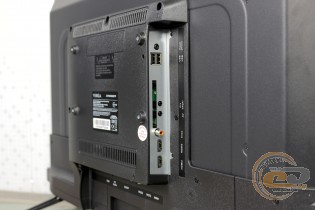
The interface connectors are directed downwards or sideways, providing convenient access to them even in the case of wall mounting using a VESA bracket (200 x 100 mm). Moreover, all of them are labeled, allowing easy orientation when searching for the desired connector. It is pleasing to have a D-Sub (VGA) port, three HDMI, two USB for connecting external drives or peripheral devices, two 3.5-mm audio for connecting a microphone and headphones or external speakers, as well as SCART, YPbPr, CI+, and Coax ports. Two connectors are provided for connecting antennas: «RF (S2)» is used for a satellite antenna, and «RF (T2)» – for a regular TV antenna.
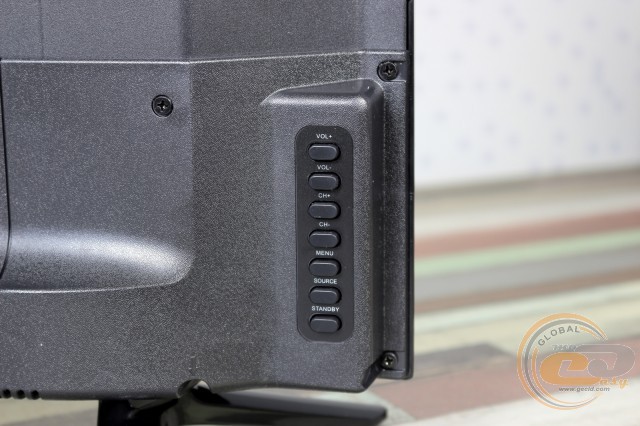
In the lower right corner of the back panel, there are several control elements. With their help, you can adjust the volume of the built-in speakers, switch channels, access the menu, select the video signal source, and put it into standby mode. Of course, all these actions are more conveniently performed with the remote control.
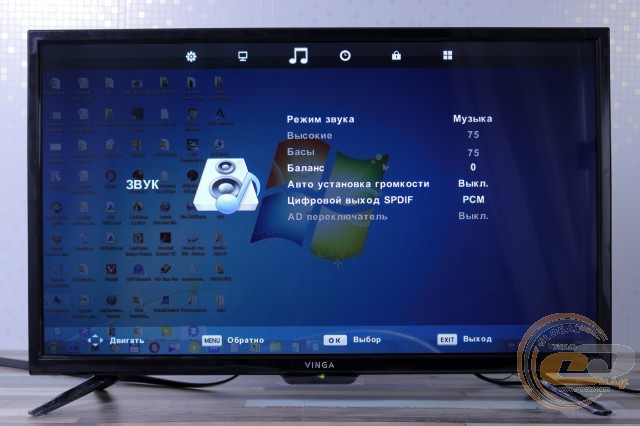
The total power of the two built-in speakers is 12 W. They are characterized by a good volume reserve and standard medium sound quality in such cases, without lows. Although in the settings you can try to adjust the balance manually or choose one of several modes («Standard», «Music», «Cinema», «Sport», or «User»). For an undemanding user, their capabilities will be sufficient, while movie enthusiasts will definitely look for higher-quality external acoustics.
Thanks to the built-in analog and digital tuner (including support for the DVB-T2 standard relevant for our country), when connecting a TV antenna, you can watch terrestrial or digital TV channels. An additional set-top box will not be needed.
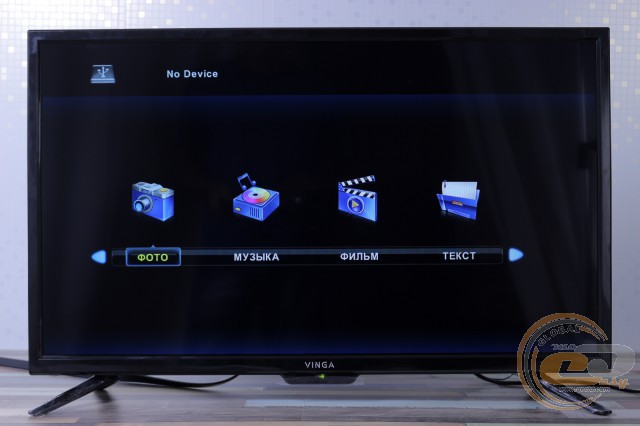
And when connecting an external USB drive, you can watch movies (MKV, AVI, MPEG2, TTS with AAC and AC-3 sound), photos, and text documents or listen to music.
On-Screen Menu

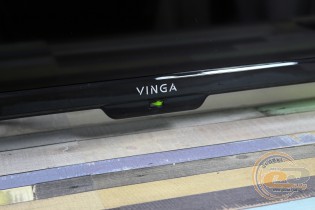
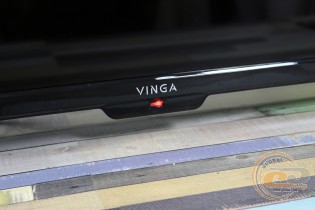
The activity indicator of the Vinga L32FHD20B TV is located in the central lower area, not in the right corner, as in most monitors. It lights up either green (when the device is active) or red (when in standby mode). It is noticeable when viewing but does not distract attention.
To access the menu and configure parameters, you can use the control elements on the back panel or the remote control. Unlike regular computer monitors, here we see fewer image settings but more activation points for built-in functionality. For example, you can select the input signal source, one of the image profiles, HDMI interface operating mode, set the time and sleep timer, enable channel blocking, set the image format, and much more. The presence of a high-quality Ukrainian language localization in the menu was pleasing.
Testing
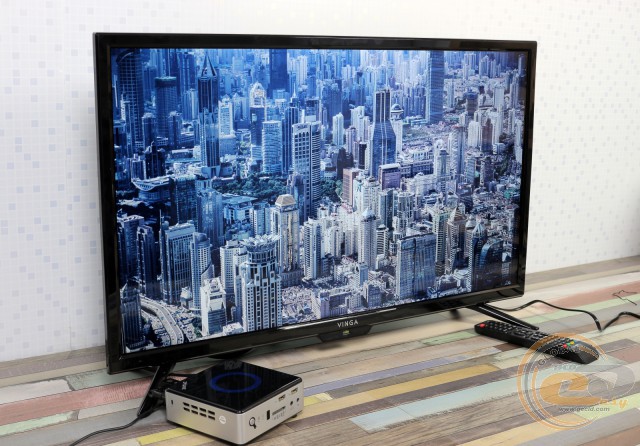
The hardware platform during the testing of the Vinga L32FHD20B TV was the ZOTAC ZBOX nano ID65 PLUS mini-computer. A full description of the methodology for researching characteristics can be found in the relevant material.
The display has four color profiles: «Dynamic», «User», «Standard», and «Mild». For convenience, we have compiled all their parameters in a single table:
|
|
«Dynamic» |
«User» |
«Standard» |
«Mild» |
|
Brightness of white field, cd/m2 |
175 |
156.2 |
156.1 |
147.2 |
|
Brightness of black field, cd/m2 |
0.529 |
0.4883 |
0.4875 |
0.4621 |
|
Contrast ratio |
331:1 |
320:1 |
320:1 |
319:1 |
|
Color temperature of white point, K |
9240 |
9292 |
9261 |
9281 |
|
Color space compliance with sRGB standard, % |
89.2 |
89.1 |
89.1 |
89.0 |
|
Compliance with Adobe RGB color space standard, % |
65.1 |
65.0 |
65.1 |
65.0 |
|
Average deviation dE*94 (∆E) |
0.63 |
0.66 |
0.66 |
0.67 |
|
Maximum deviation dE*94 (∆E) |
4.22 |
4.4 |
4.37 |
4.27 |
|
Average gamma |
1.93 |
1.97 |
1.97 |
2.0 |
|
Power consumption, W |
35 |
35 |
35 |
35 |
The manufacturer claims a maximum brightness level of 200 cd/m2. During testing, it did not exceed 175 cd/m2, which can be considered an acceptable figure. However, the static contrast disappointed: with a claimed 1200:1, we got a maximum of 331:1. And although the picture remained pleasant to the eye, it would have been desirable to see this figure at least at the level of 800 – 900:1.
Color Coverage
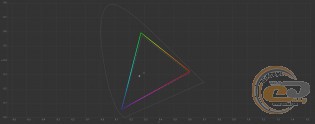
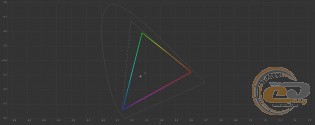
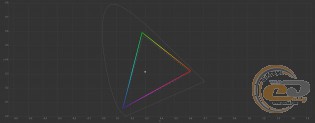
CIE diagrams of the "Dynamic" profile for sRGB and Adobe RGB spaces
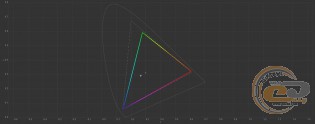
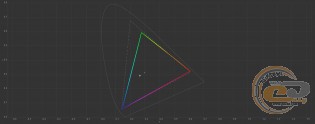
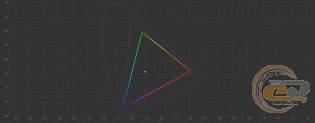
CIE diagrams of the "Custom" profile for sRGB and Adobe RGB spaces
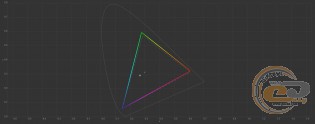
CIE diagrams of the "Standard" profile for sRGB and Adobe RGB spaces
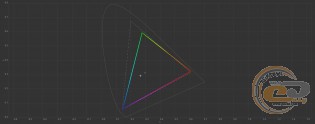
CIE diagrams of the "Moderate" profile for sRGB and Adobe RGB spaces
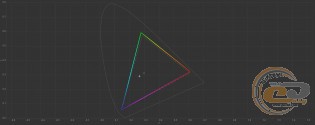
The color space coverage of sRGB in the Vinga L32FHD20B TV slightly exceeded 89%, and Adobe RGB – 65%. Figures of 90% and 65% respectively are considered sufficient for non-professional solutions. Therefore, the overall results can be considered normal.
As for the CIE diagrams themselves, the situation is approximately the same in all modes: for the sRGB space, there is a slight oversaturation in the blue, green, yellow, and orange areas, as well as a minimal deficiency in the red and pink segments. When switching to Adobe RGB, a deficiency is observed in the blue, cyan, green, yellow, and red areas.
Color Accuracy
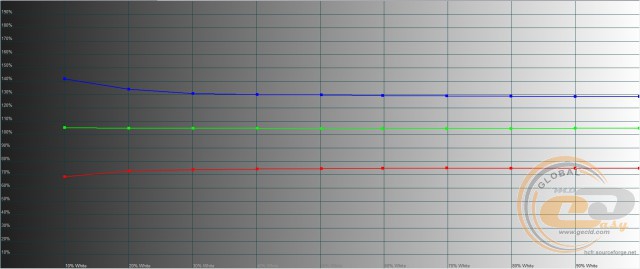
Diagram of deviation of primary colors and shades from standards in the "Dynamic" profile
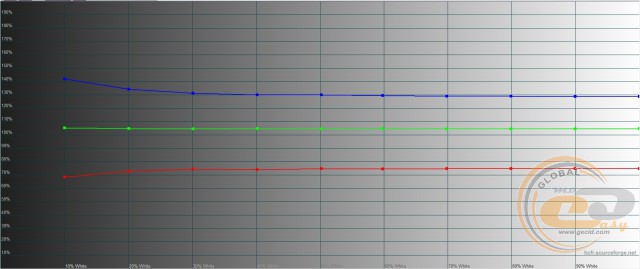
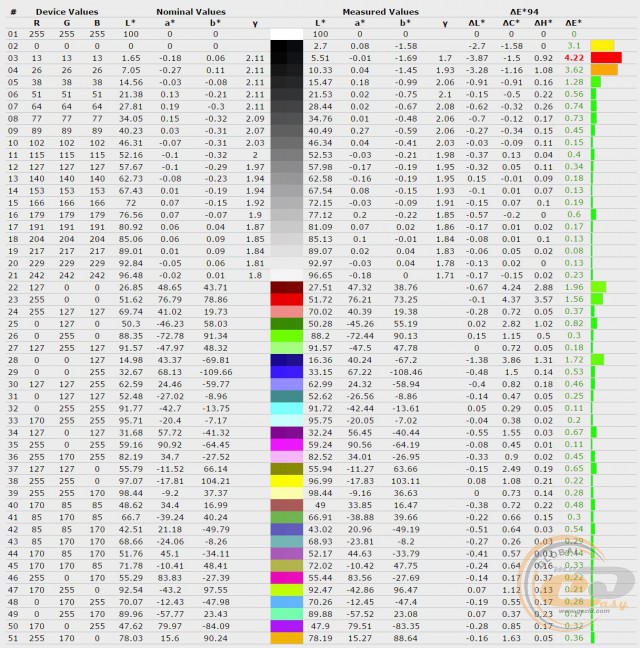
Diagram of deviation of primary colors and shades from standards in the "Custom" profile
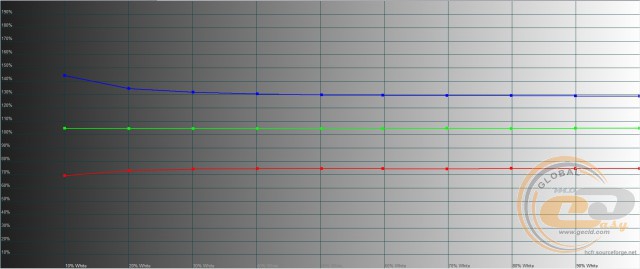
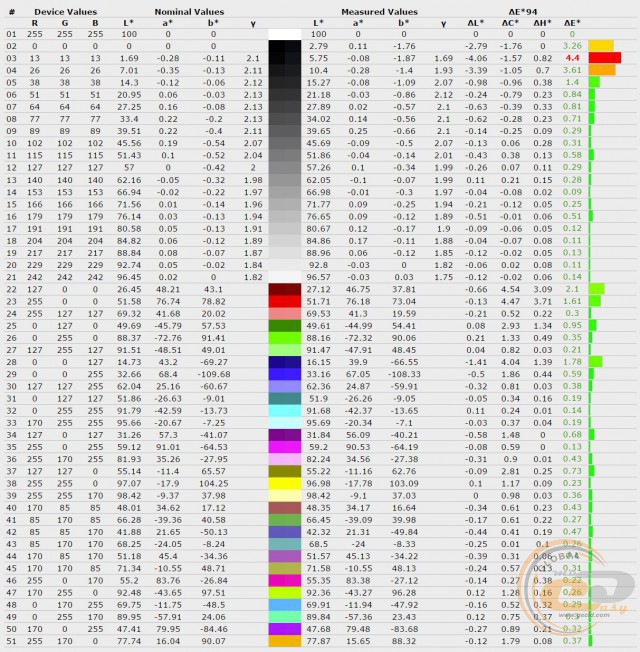
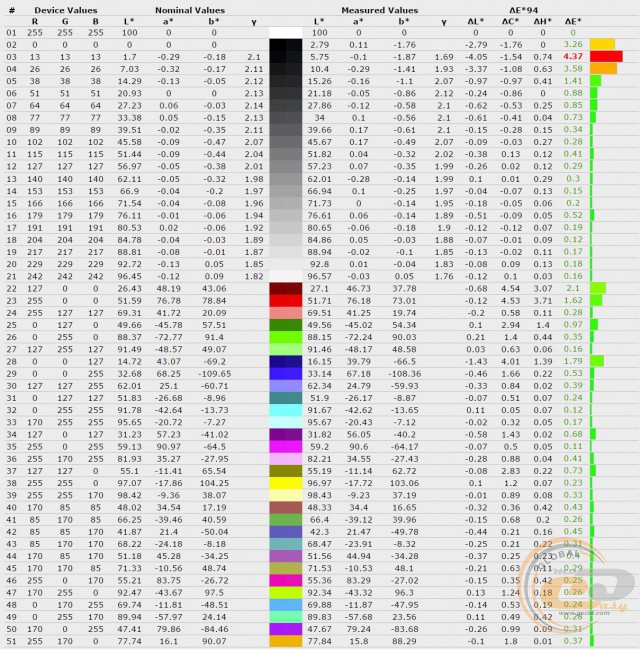
Diagram of deviation of primary colors and shades from standards in the "Standard" profile
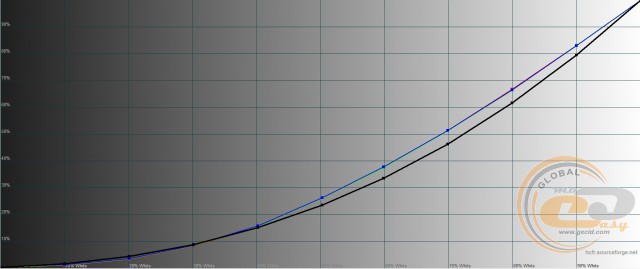
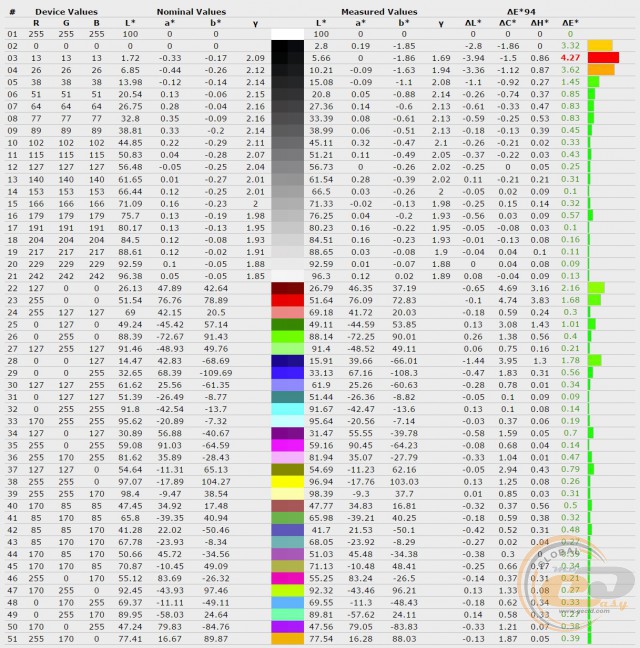
Diagram of deviation of primary colors and shades from standards in the "Moderate" profile
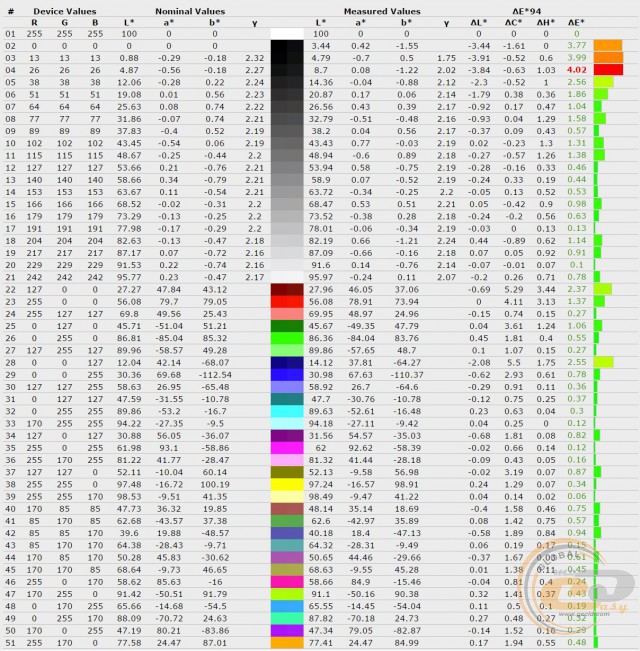
The color accuracy overall was pleasing: in all four cases, the average deviation ΔE is much lower than the allowable figure of 1.5. And although the maximum value (4) is exceeded in all profiles, only 1 out of 51 shades turned out to be problematic, which can be considered good calibration for a non-professional model.
RGB Levels
RGB level graph of the "Dynamic" profile
RGB level graph of the "Custom" profile

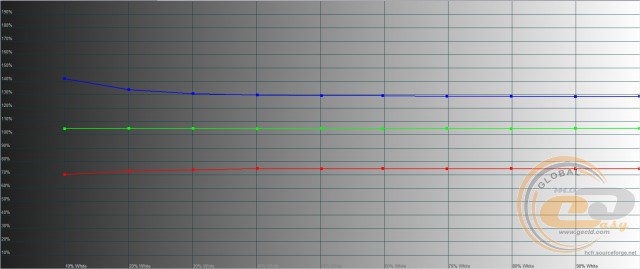
RGB level graph of the "Standard" profile
RGB level graph of the "Moderate" profile
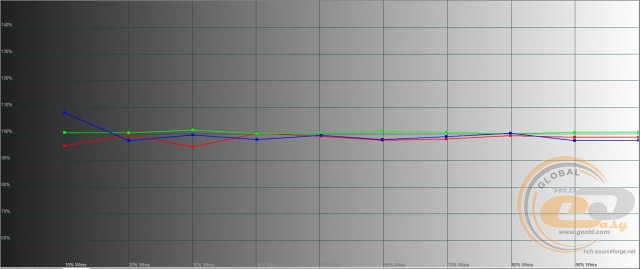
In the ideal scenario, RGB levels should be on the reference line of 100%. A deviation within ± 10% of the reference figure is considered acceptable. However, in this case, all four profiles show a lowered red component and an elevated blue one. As a result, the picture will be more "cold" and better suited for displaying the sky, water, snow, etc.
Gamma
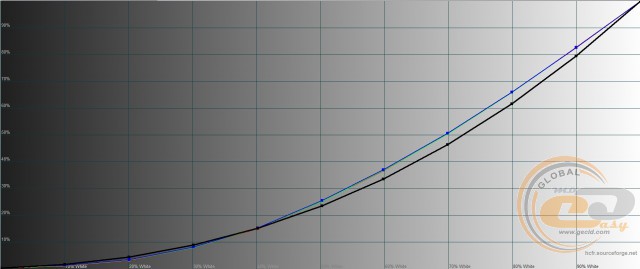
Gamma curve graph in the "Dynamic" profile
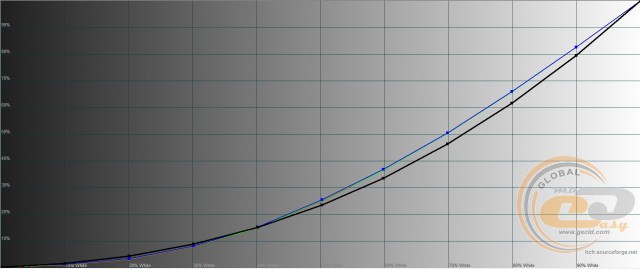
Gamma curve graph in the "Custom" profile
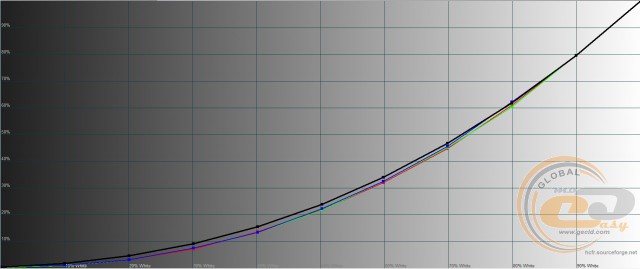
Gamma curve graph in the "Standard" profile
Gamma Curve Chart in "Moderate" Profile
Again, in all cases, we see the same picture: the gamma curves are generally slightly above the reference black line. This may cause overexposure of mid-tones and loss of detail in the bright areas of the image.
Brightness Range
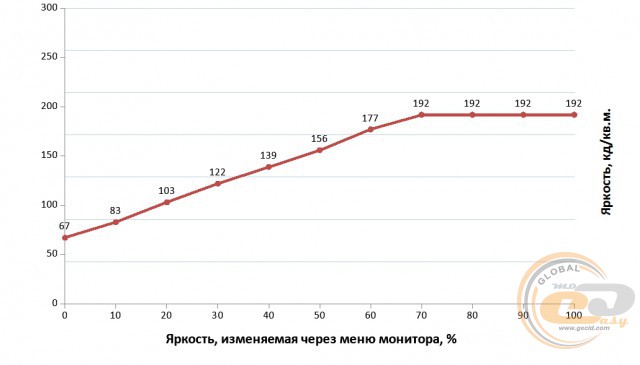
According to the test results, the most balanced profile in the Vinga L32FHD20B TV is "User," so further research was conducted based on it.
The brightness range was from 67 to 192 cd/m2. The minimum brightness level may be somewhat excessive for viewing in the dark, while the upper limit should be sufficient for working in bright sunlight.
Monitor Calibration
CIE Diagrams of Calibrated Profile for sRGB and Adobe RGB Spaces
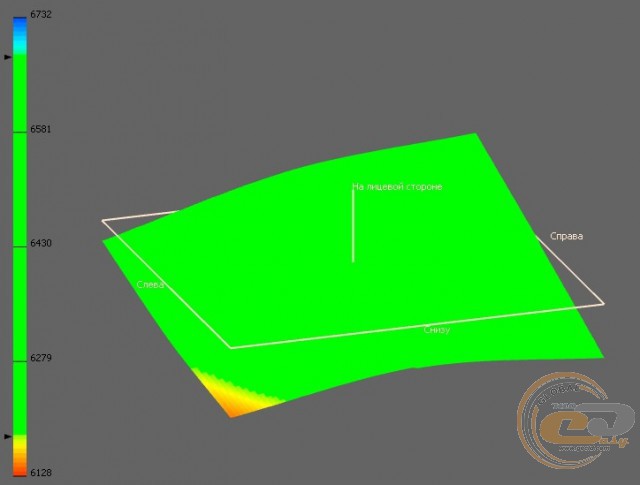
Diagram of Primary Colors and Shades Deviation from Standards in Calibrated Profile

RGB Levels Chart of Calibrated Profile
Gamma Curve Chart of Calibrated Profile
The results obtained before and after hardware calibration are summarized in the table.
|
|
"User" |
Calibrated |
|
White Field Brightness, cd/m2 |
156.2 |
100.5 |
|
Black Field Brightness, cd/m2 |
0.4883 |
0.3836 |
|
Contrast Ratio |
320:1 |
262:1 |
|
White Point Color Temperature, K |
9292 |
6496 |
|
sRGB Color Space Coverage, % |
89.1 |
98.5 |
|
Adobe RGB Color Space Coverage, % |
65.0 |
73.5 |
|
Average dE*94 (∆E) Deviation |
0.66 |
0.91 |
|
Maximum dE*94 (∆E) Deviation |
4.4 |
4.02 |
|
Average Gamma |
1.97 |
2.17 |
Thanks to manual calibration, it was possible to significantly expand the coverage of sRGB and Adobe RGB color spaces, normalize the white point temperature, and improve the positioning of RGB levels and gamma curves. However, static contrast slightly decreased, and the accuracy of color and shade reproduction did not change much.
Screen Backlight Uniformity
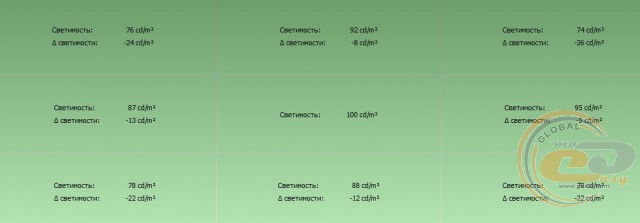
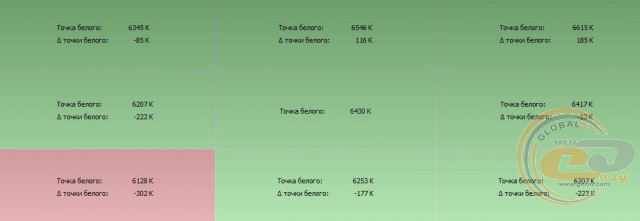
The maximum brightness deviation relative to the central area does not exceed 26 cd/m2, which is an acceptable result.
The deviation of the white point temperature in 8 out of 9 zones fits within the permissible range of ± 250 K. Only in the lower left corner does it slightly exceed this, which is clearly visible on the 3D diagram.
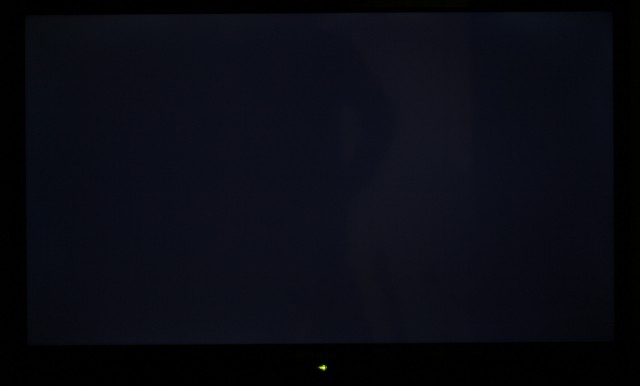
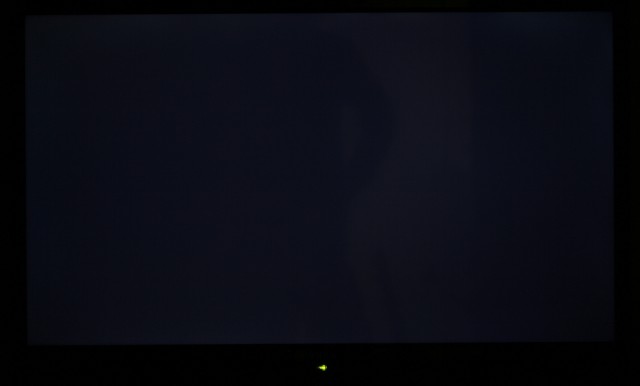
The fill test was pleasing: despite the rather large diagonal, no issues with backlighting on white and black backgrounds were detected.
Matrix Speed and PWM
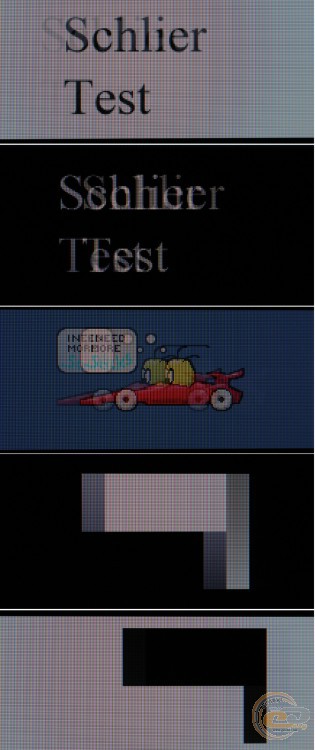
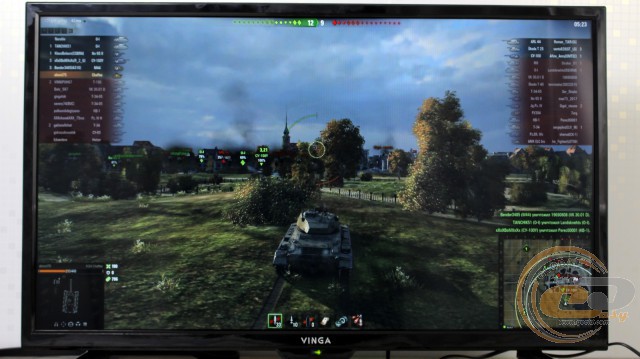
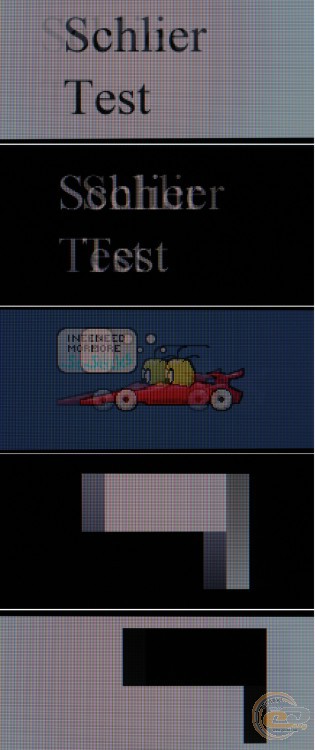
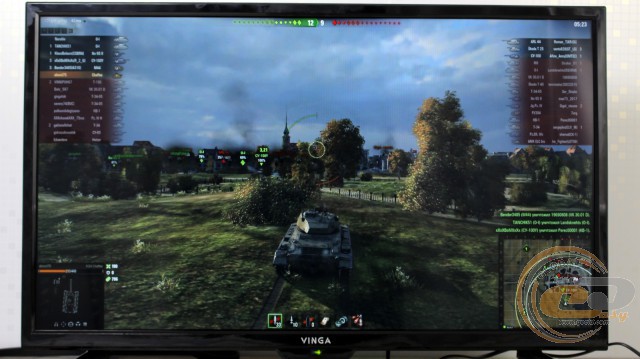
The matrix response speed in the Vinga L32FHD20B TV is stated to be 8 ms. The captured images show trails from moving objects, but during actual viewing, even dynamic scenes do not lose clarity. Therefore, the TV is suitable not only for watching videos but also for casual gamers.
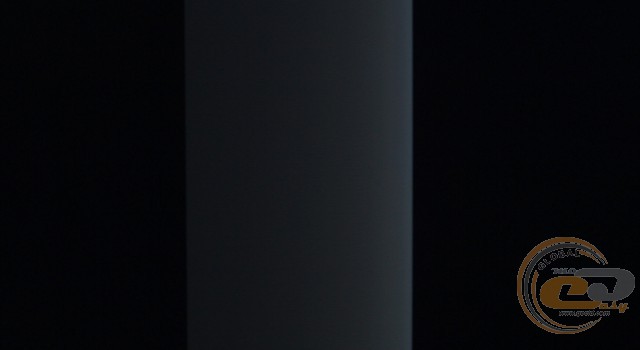
Brightness – 25%, Exposure – 1/15
The manufacturer does not claim the integration of Flicker Free technology, but we see a solid front in the image, indicating the absence of visible backlight flicker. This should reduce eye strain and increase comfort during prolonged screen time.
Viewing Angles
A pleasant surprise was the wide viewing angles in the Vinga L32FHD20B TV. The manufacturer specifies 170°, so initially, we expected to see figures at the level of TN panels, but in reality, there is no inversion or color distortion, as if it were an IPS or VA matrix. Given the lack of an ergonomic stand and the functional purpose of the device, the result can be considered simply excellent.
Conclusions
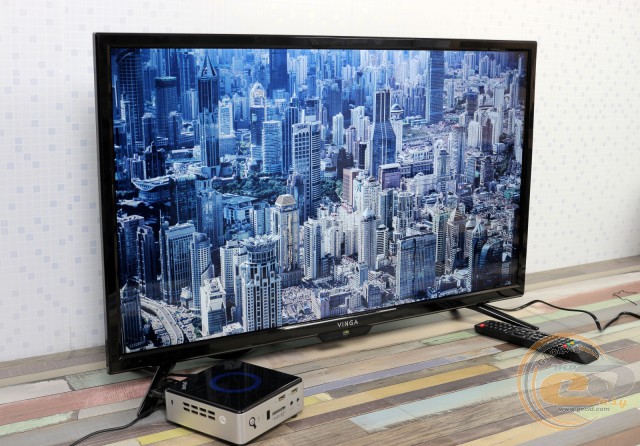
The acquaintance with the 32-inch TV Vinga L32FHD20B has come to an end, which is available on the domestic market with a price tag of ₴6599 ($253). It is a very affordable product in its category, so it has a number of positive aspects and its own features.
Among the advantages of the novelty, one can note the attractive and well-thought-out design, functional and well-localized menu, eye-pleasing picture, the presence of a built-in analog and digital tuner (including DVB-T2 support), an extended set of external interfaces, and a pair of 6-watt speakers.
The factory calibration offers four profiles, but all of them have very similar parameters, especially regarding color space coverage, shade accuracy, RGB level settings, and gamma curves.
The quality of the screen backlighting implementation in the Vinga L32FHD20B TV was also pleasing, with no visible flickering and wide viewing angles. The matrix response speed is far from record-breaking, but quite acceptable even for dynamic games. The only disappointment was the low static contrast, although this may be a feature of the test sample.
As a result, the Vinga L32FHD20B is suitable for watching terrestrial, digital, or satellite broadcasts, playing text or multimedia content from an external USB drive, or for use with a PC, game console, or media player.
Advantages:
- 32-inch panel with Full HD resolution;
- decent factory calibration of parameters;
- attractive and functionally well-thought-out body design;
- easy-to-use remote control;
- extended set of interfaces;
- ability to play multimedia or text content from an external USB drive;
- convenient interface orientation for wall mounting;
- presence of a pair of built-in speakers with a total power of 12 W;
- functional menu with Ukrainian localization;
- wide viewing angles;
- support for wall mounting.
Disadvantages:
- the actual static contrast turned out to be much lower than stated.
Author: Serhiy Budilovskyi
Translation: Yuriy Koval
We express our gratitude to BRAIN Computers, the official representative of Vinga, for providing the TV for testing.
We express our gratitude to ZOTAC for providing equipment for the test bench.