We have already become acquainted with the quite affordable "gold" power supply units Vinga with a capacity of 750 W and 1000 W — these are models with Japanese electrolytic and reliable polymer capacitors, modular cable connection, and PCIe 5.0 (12VHPWR) connector. At the same time, the cost-saving is reflected in the use of a sleeve bearing in the fan and some power elements of Chinese origin.
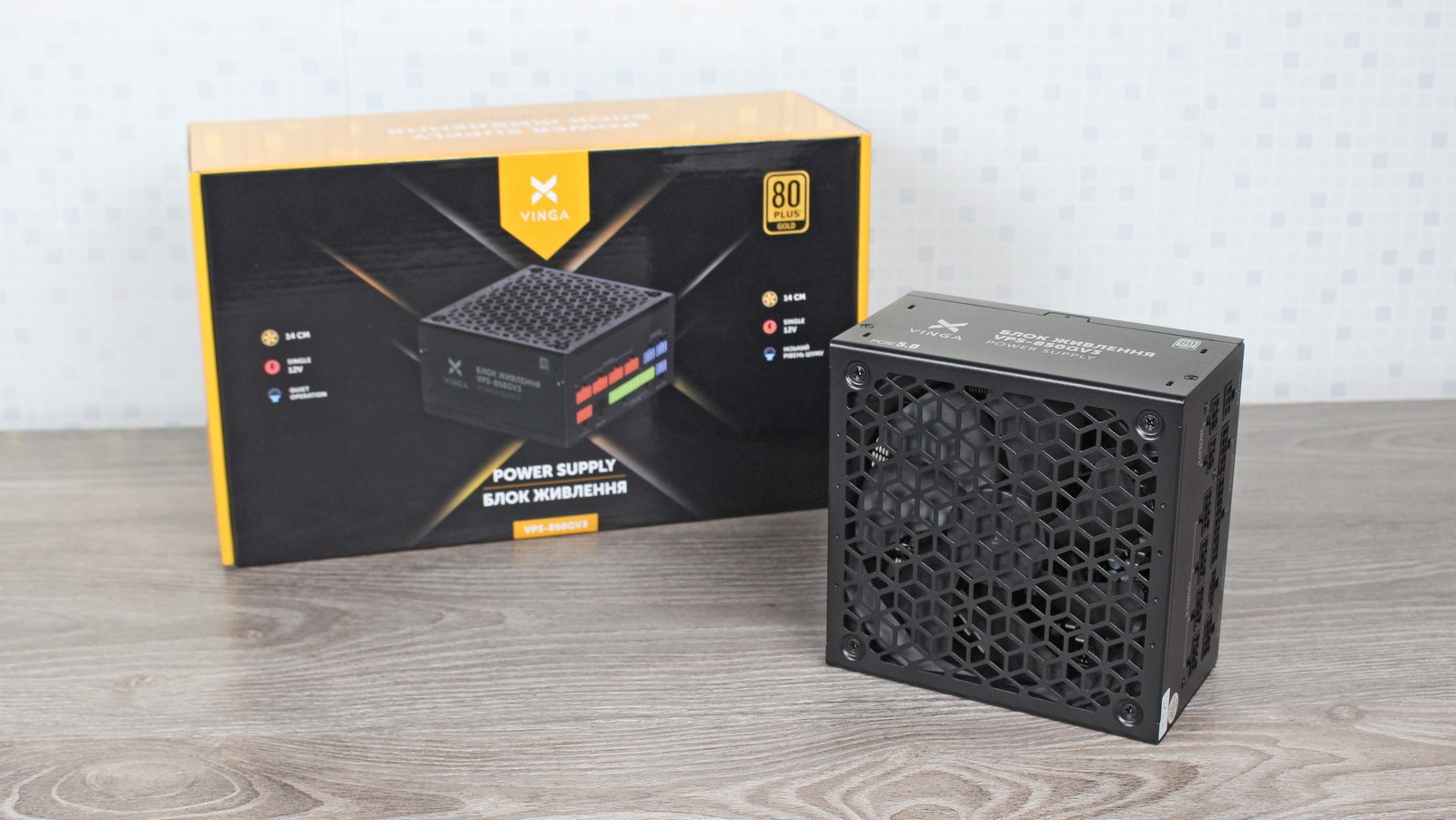
It is not surprising that all of the above also applies to the intermediate model with a capacity of 850 W, Vinga 850W (VPS-850GV3), priced at ₴4389 (about $98). How noisy it is, how well it cools, what output indicators it has, and whether it hides any surprises — we will tell you more about this further.
Specification
|
Model |
Vinga 850W (VPS-850GV3) |
|
Type |
ATX12V 3.0 |
|
Maximum power, W |
850 |
|
Power on +12V rail, W |
849.6 |
|
Power on +3.3V and +5V rails, W |
100 |
|
Number of +12V rails |
1 |
|
Maximum current on +3.3V rail, A |
20 |
|
Maximum current on +5V rail, A |
20 |
|
Maximum current on +12V rail, A |
70.5 |
|
Maximum current on -12V rail, A |
0.4 |
|
Maximum current on +5Vsb (standby power) rail, A |
3.0 |
|
Input voltage, V |
100 − 240 |
|
Input current, A |
10 |
|
Efficiency, % |
≤93 |
|
80 PLUS certification |
Gold |
|
Power factor correction method |
Active |
|
Power factor (PF), % |
≤98 |
|
PCIe connectors |
3 (6+2-pin) |
|
PCIe 5.0 (12VHPWR) connector |
1 (600 W) |
|
Modular |
Yes |
|
Fan dimensions, mm |
140 × 140 × 25 |
|
Fan bearing type |
Sleeve |
|
Protections |
OVP, UVP, OCP, OTP, SCP |
|
Dimensions (L × W × H), mm |
150 × 150 × 86 |
|
Warranty, years |
3 |
|
Device page |
|
|
Purchase page |
Packaging and Supply Kit
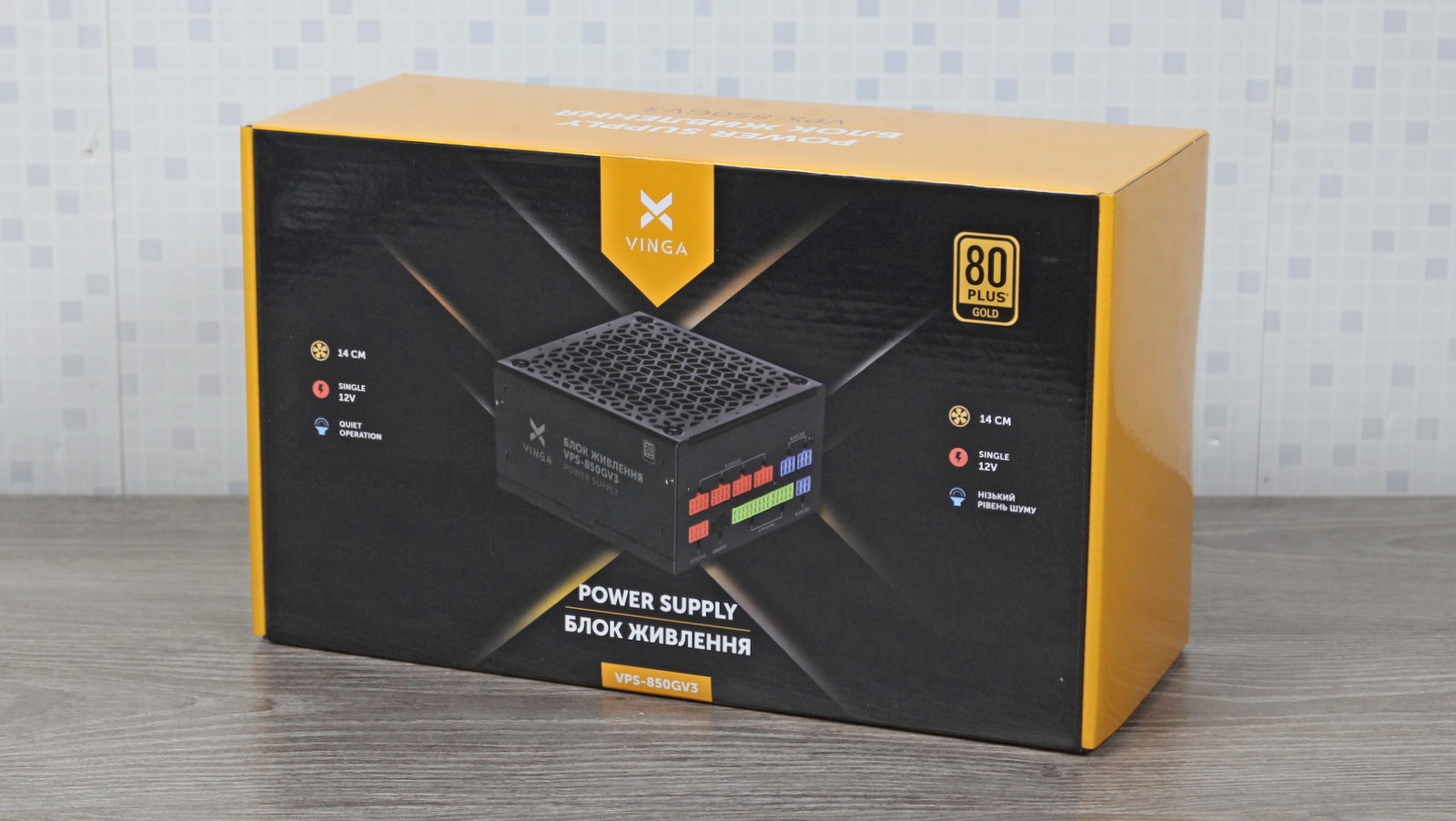
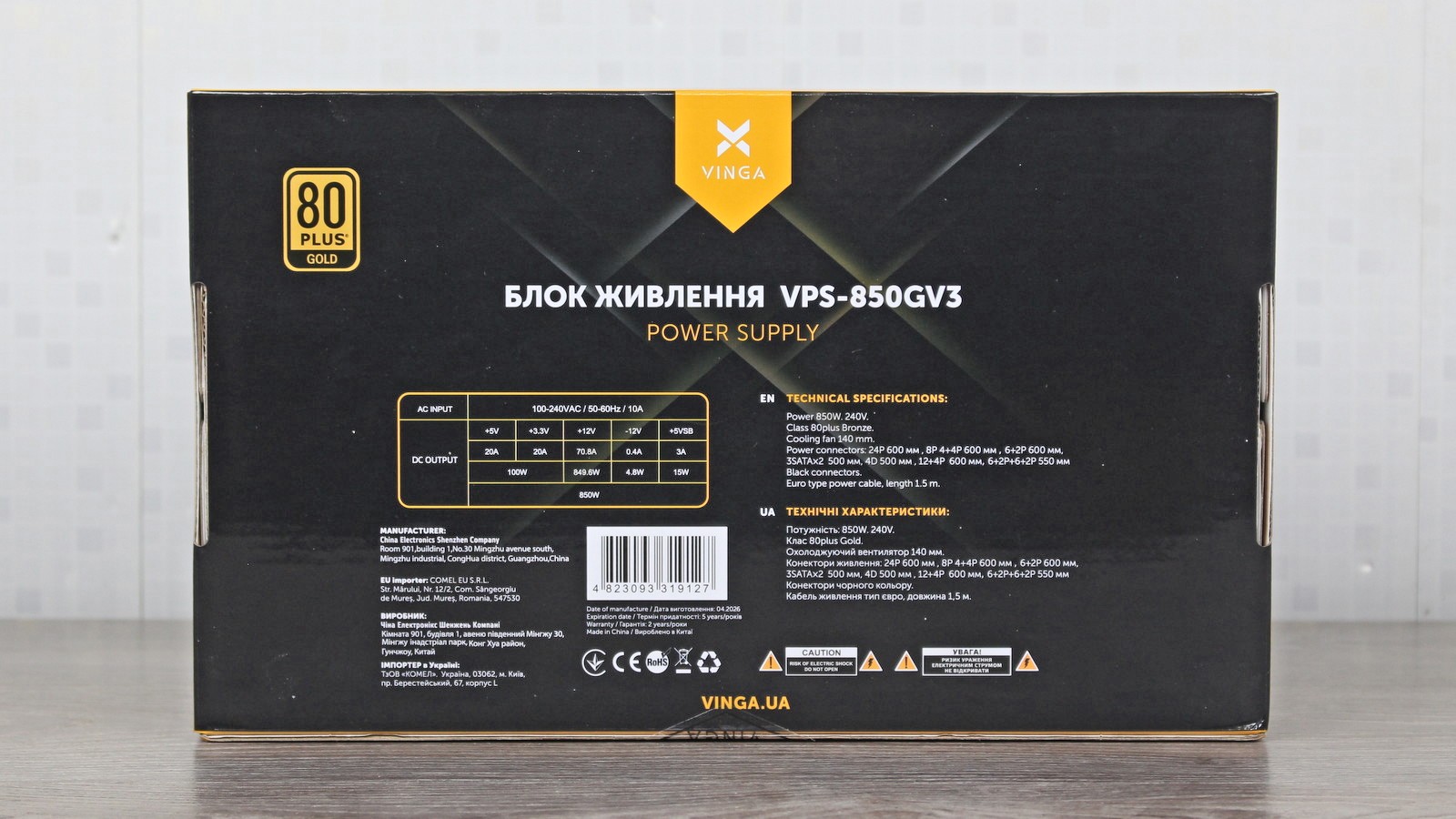
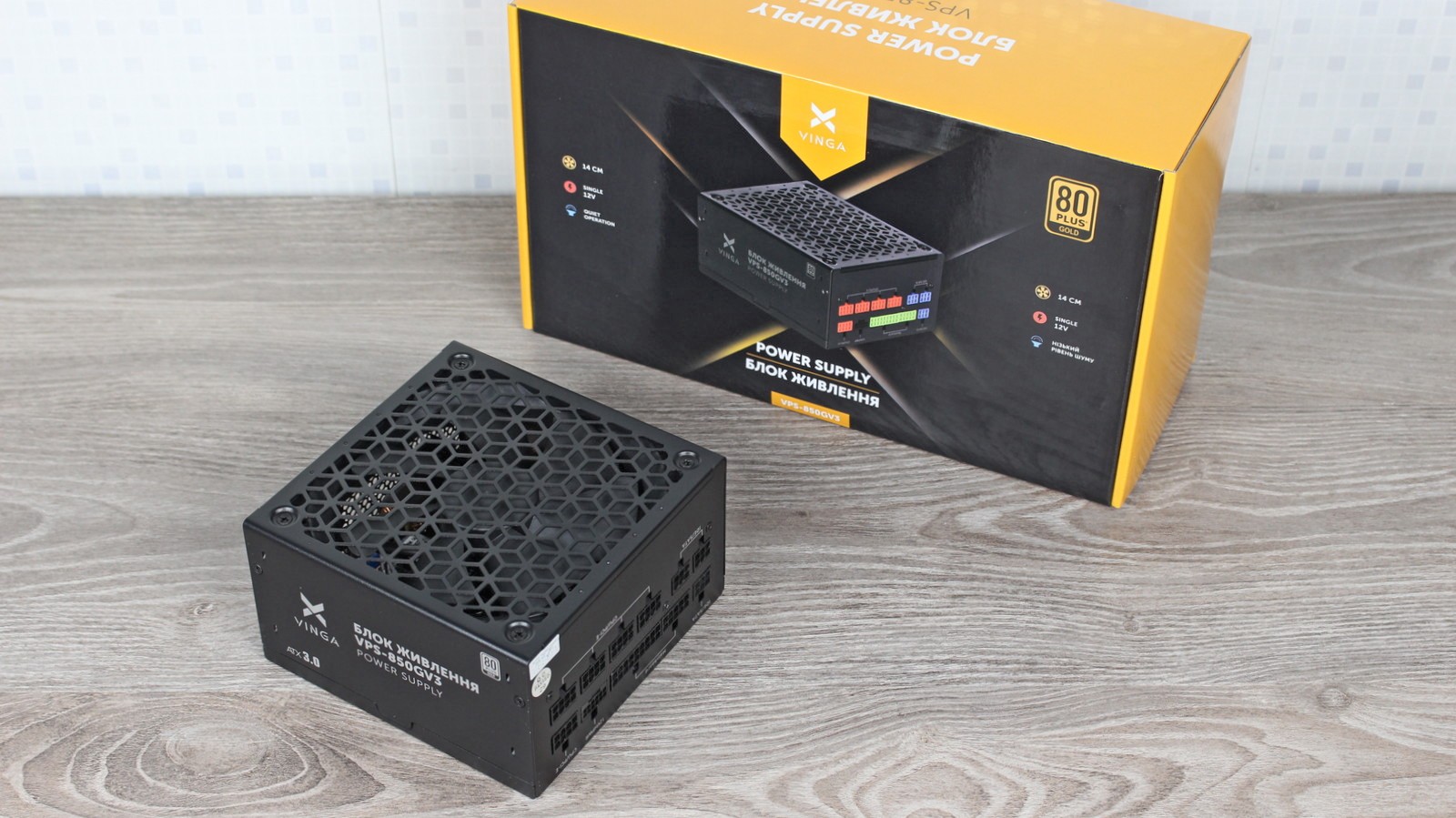
The quite informative box with Ukrainian translation still contains a number of inaccuracies.
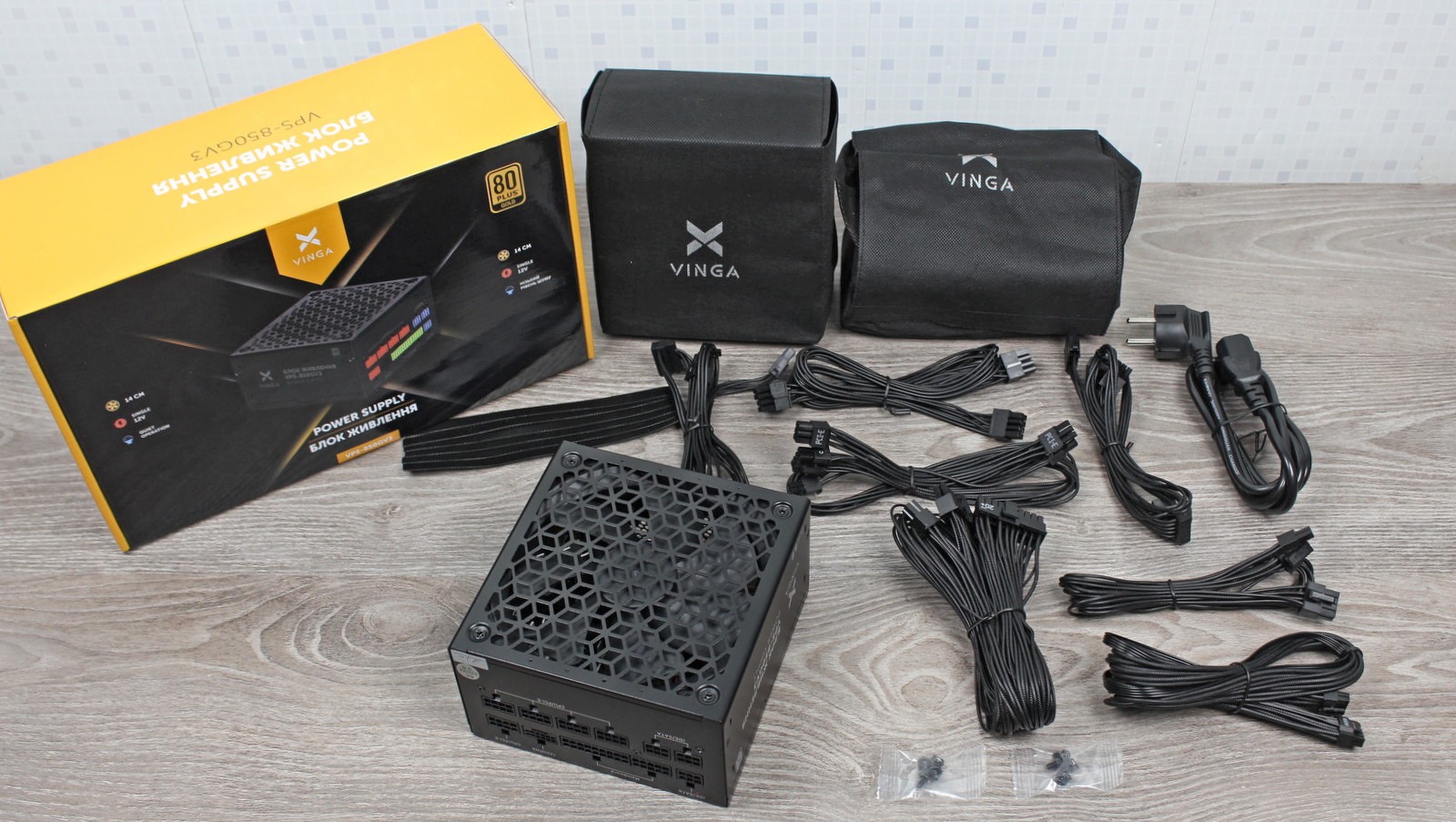
The package is similar to the younger and older models: in addition to the power cable and modular cables, mounting screws, Velcro ties, and even two covers are included.
Appearance
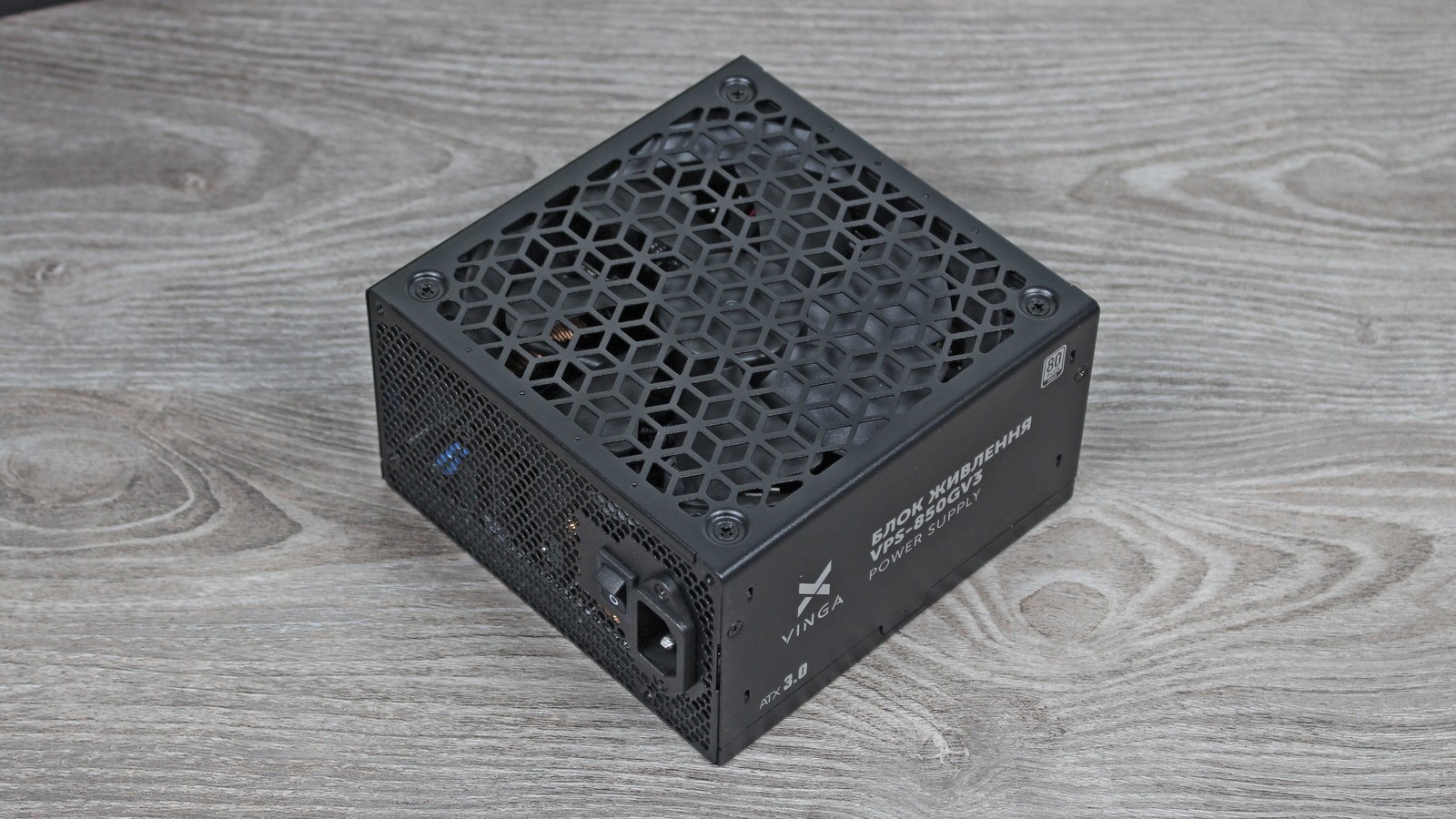
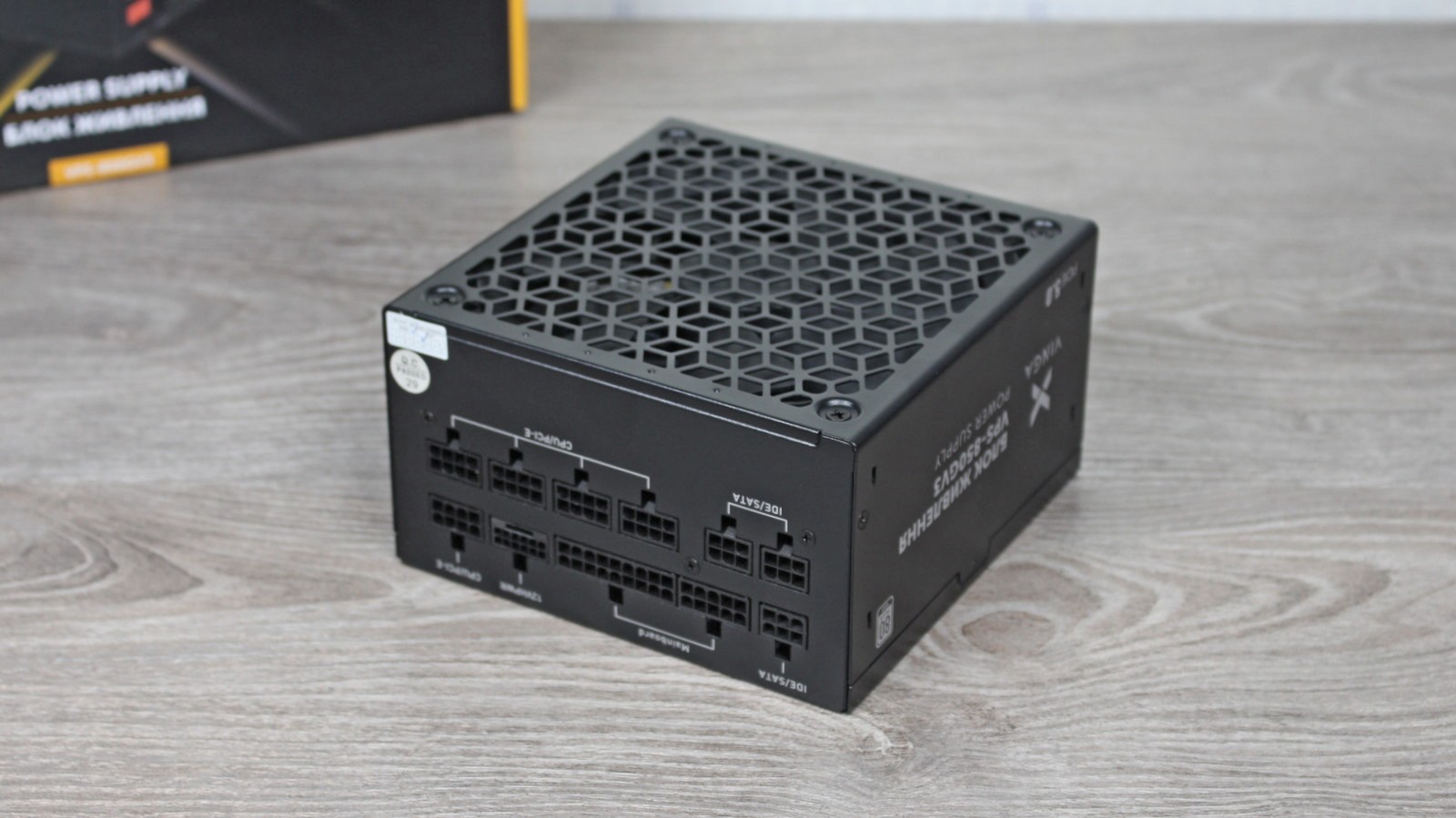
The design of Vinga 850W (VPS-850GV3) is fresh and moderately original. The black matte case will fit into both dark and light builds, and good compatibility is facilitated by the compact dimensions of 150 × 150 × 86 mm.
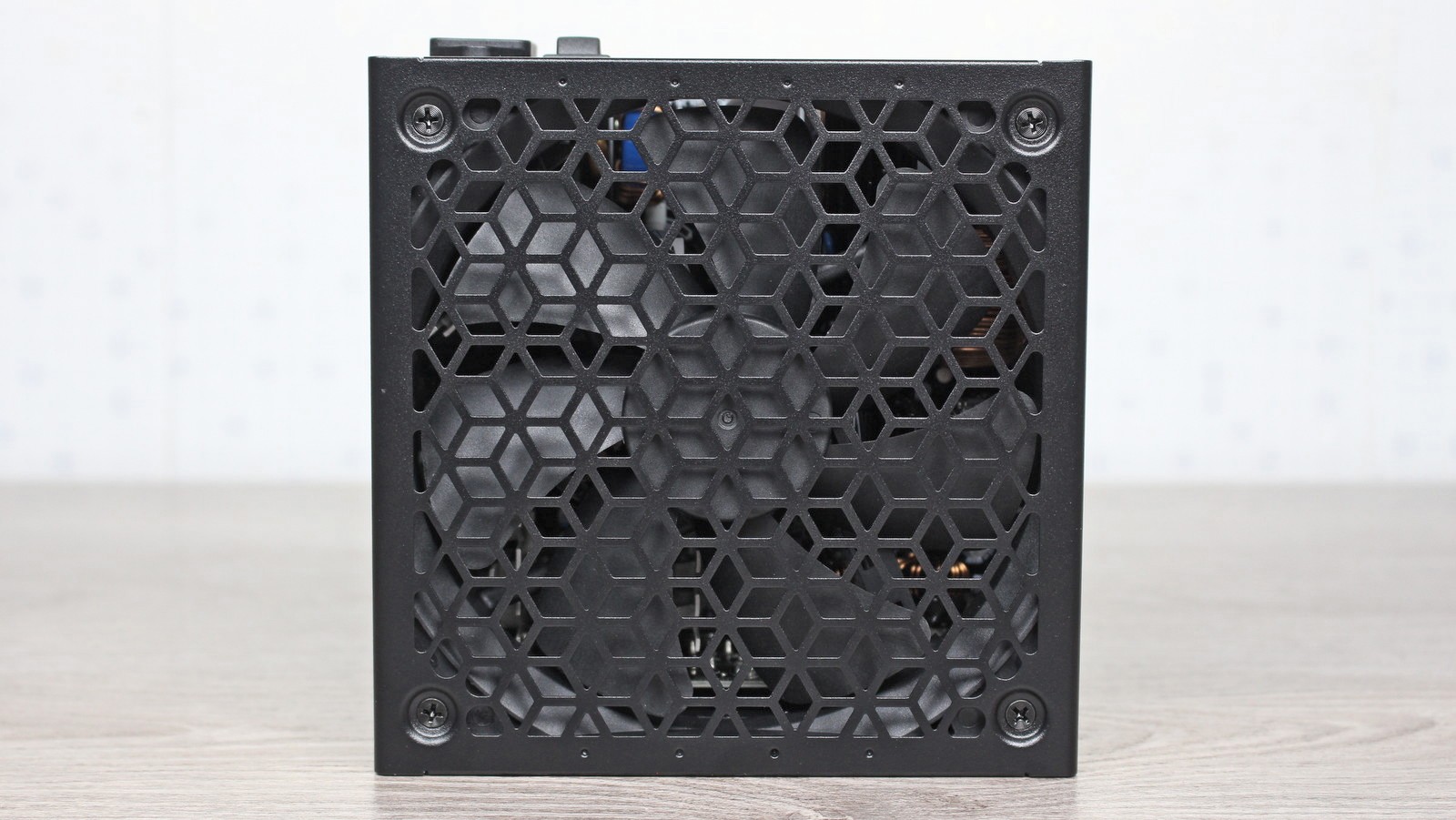
Under the diamond-shaped openings hides a large 140-mm fan — a nice and effective solution.
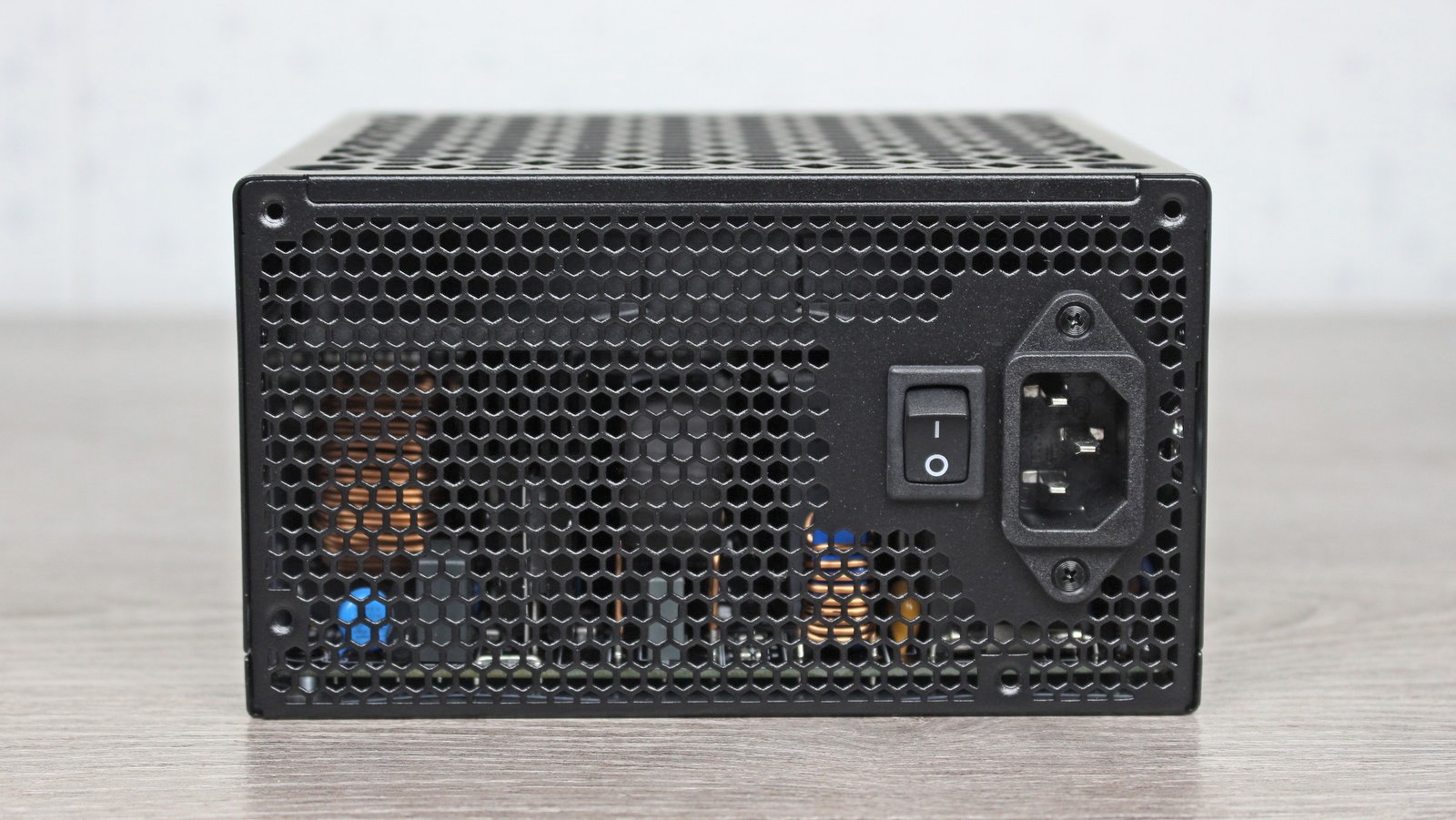
However, the back is quite familiar — honeycomb holes surround the power connector and switch.
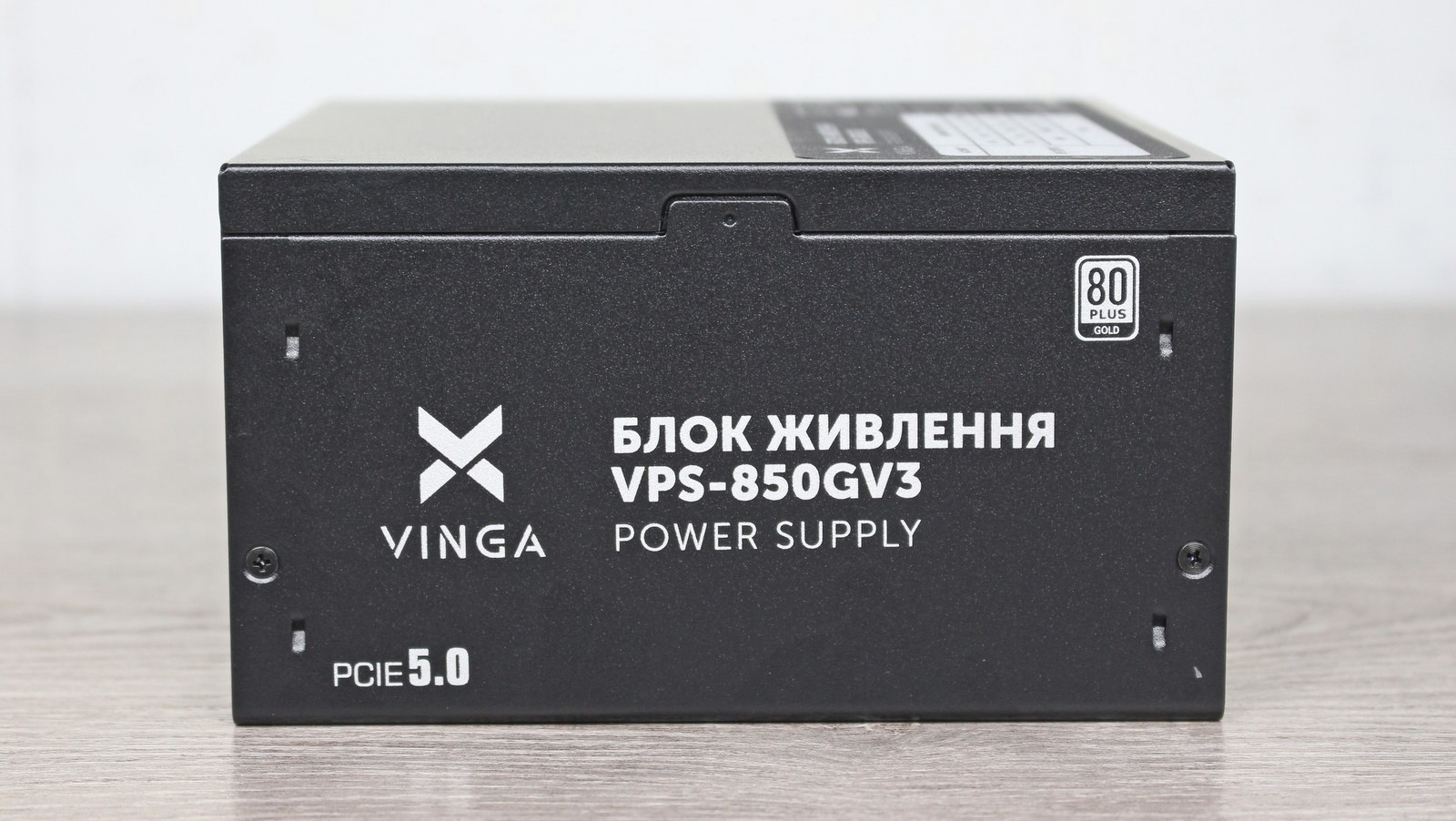
The sides contain a mention of the device model, 80 PLUS Gold certification, and the presence of a PCIe 5.0 power connector for video cards. It's a pity that this is not the latest PCIe 5.1, but thanks for that.
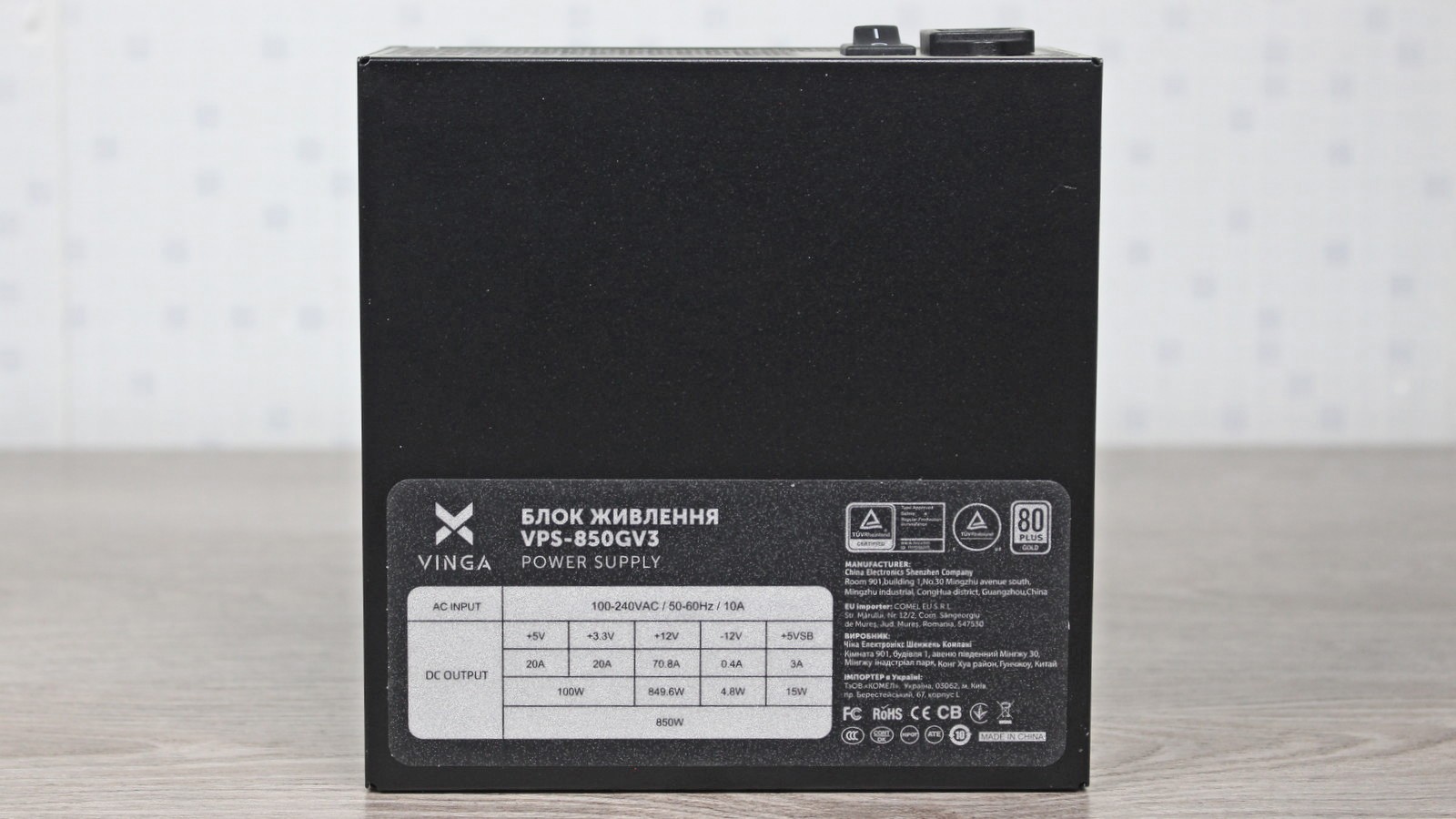
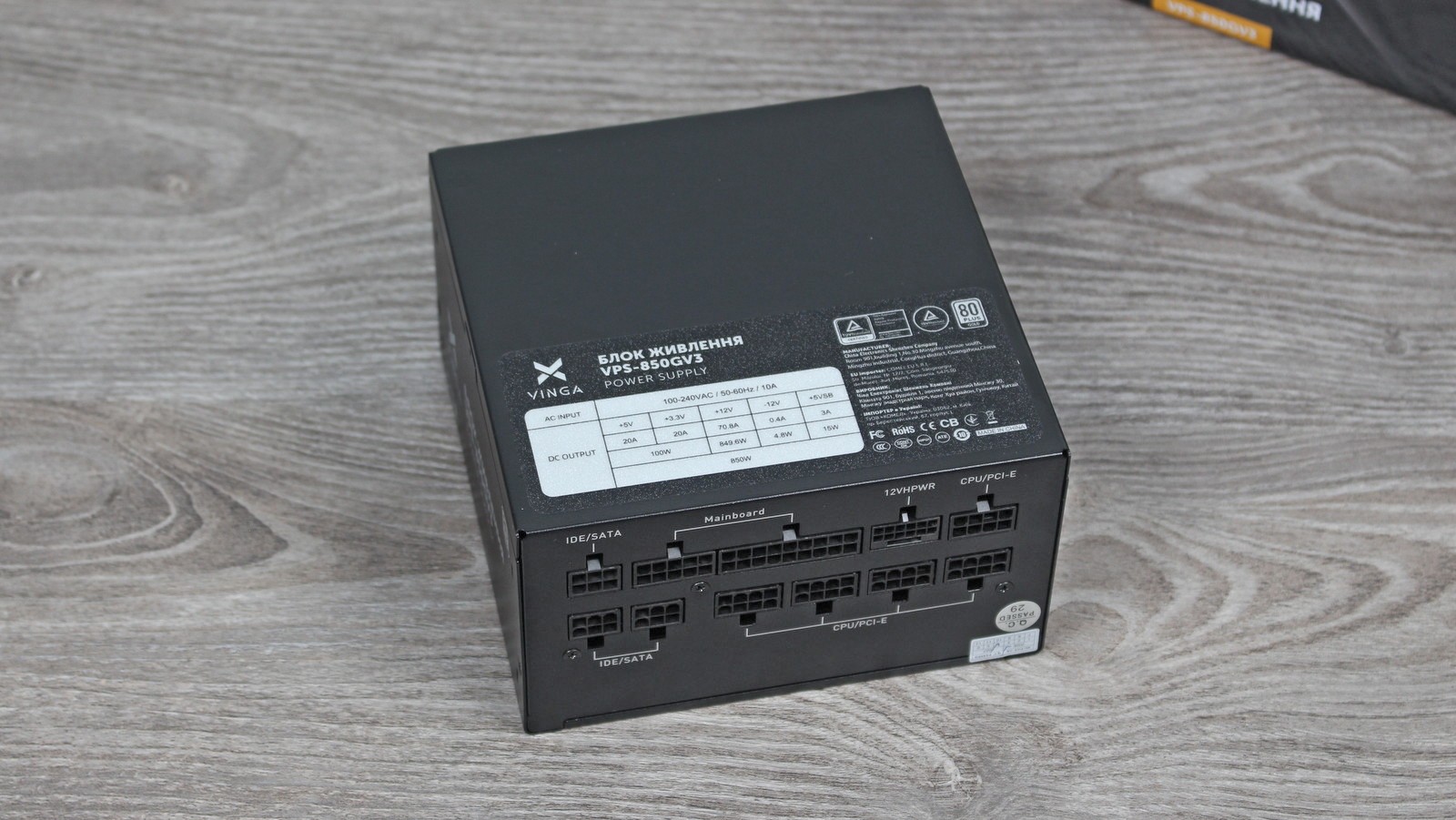
The electrical performance is quite decent. The power of the single +12V rail is 849.6 W, which is very good for an 850-watt unit. The lower +3.3V and +5V channels can deliver 100 W or 20 A each. And, not surprisingly for a "gold" power supply, there is support for a wide voltage range — from 100 to 240 V.
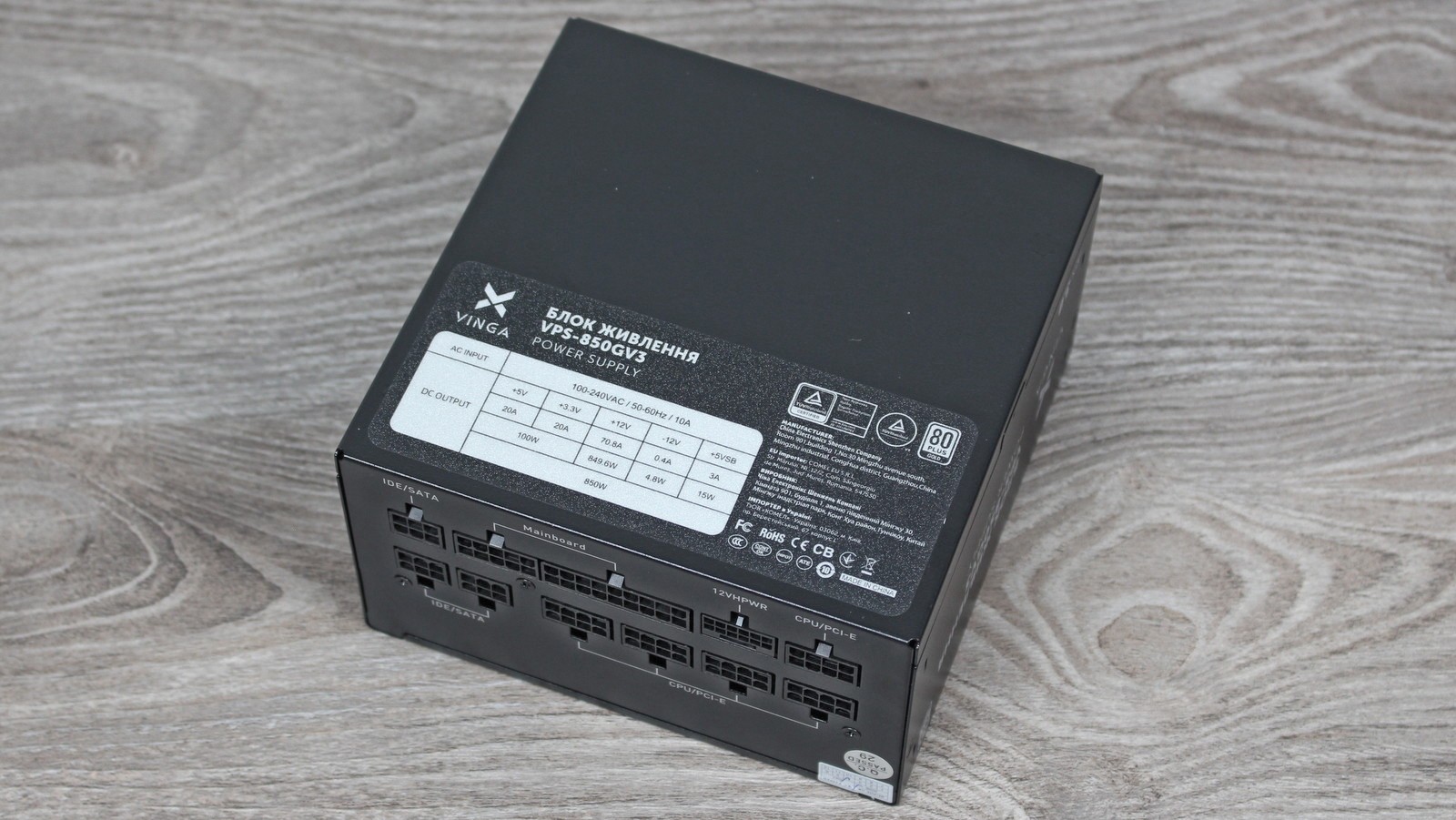
Next to the output connectors of the Vinga 850W (VPS-850GV3) is a warranty sticker that will be valid for 3 years from the date of purchase — not the longest term for a device of this class.
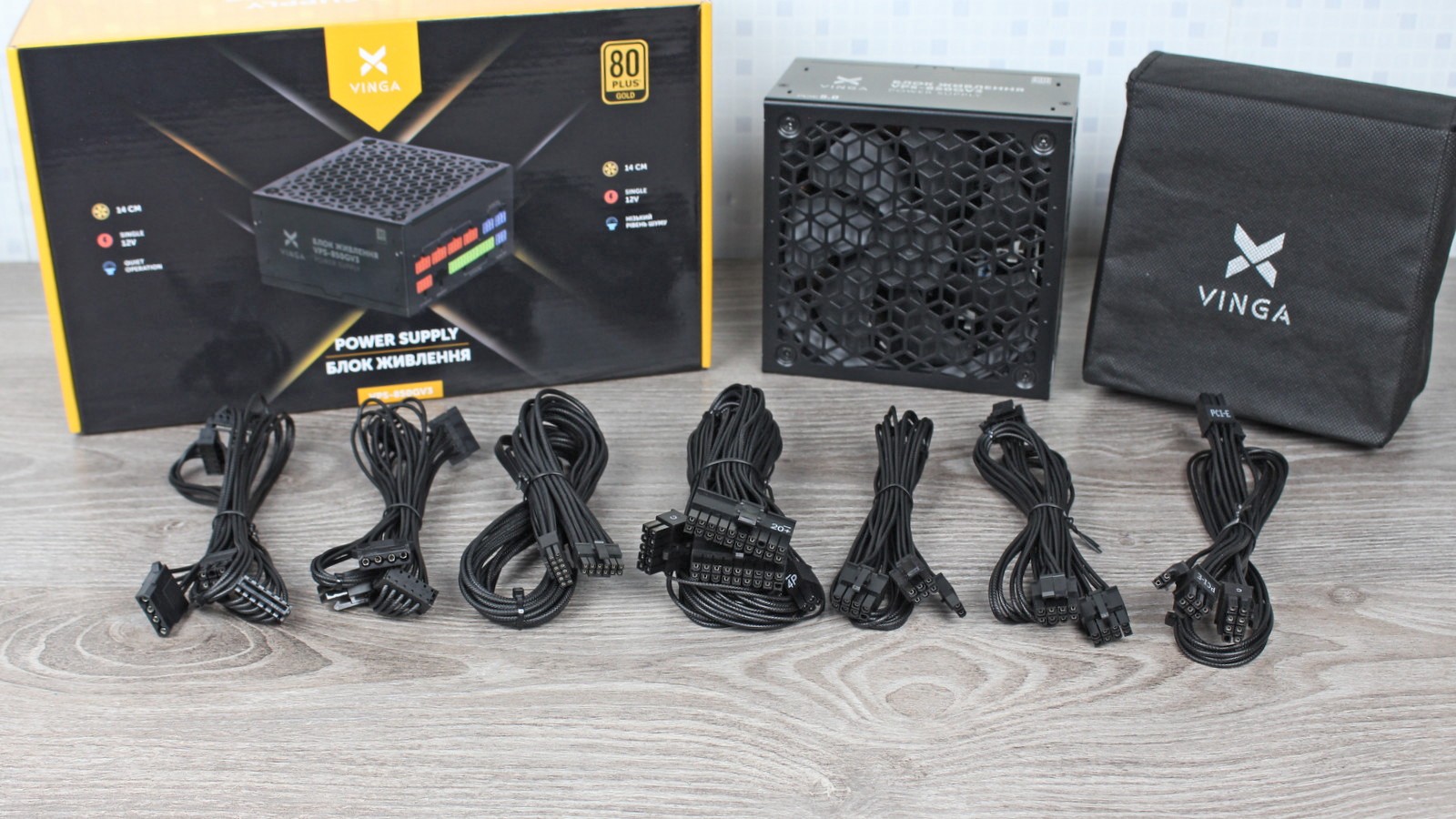
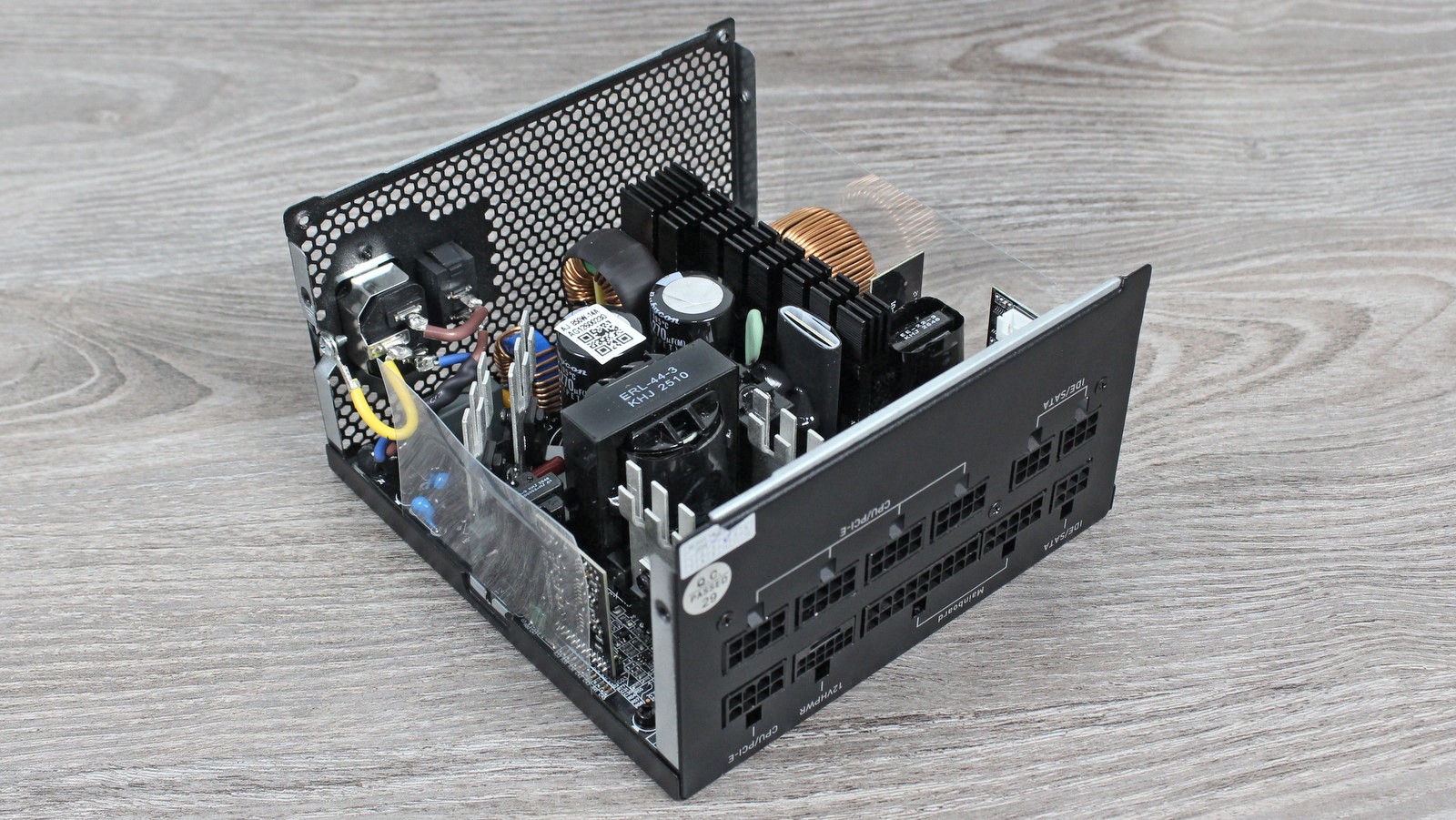
The modular cables in individual nylon braiding have the usual 18 AWG gauge, and only PCIe 5.0 received thicker 16 AWG conductors. The set of connectors is quite extensive:
|
Connectors |
Quantity |
Cable length, cm |
|
20+4-pin ATX |
1 |
60 |
|
two 4+4-pin ATX12V |
1 |
60-75 |
|
6+2-pin PCIe |
1 |
60 |
|
two 6+2-pin PCIe |
1 |
55-70 |
|
PCIe 5.0 (12VHPWR) |
1 |
60 |
|
three SATA + one PATA |
2 |
45-60-75-90 |
The traditional 20+4-pin ATX and two 4+4-pin ATX12V are complemented by three 6+2-pin PCIe and a 600-watt PCIe 5.0 (12VHPWR) for video cards. And to power drives and other peripherals, there are six SATA and two PATA.
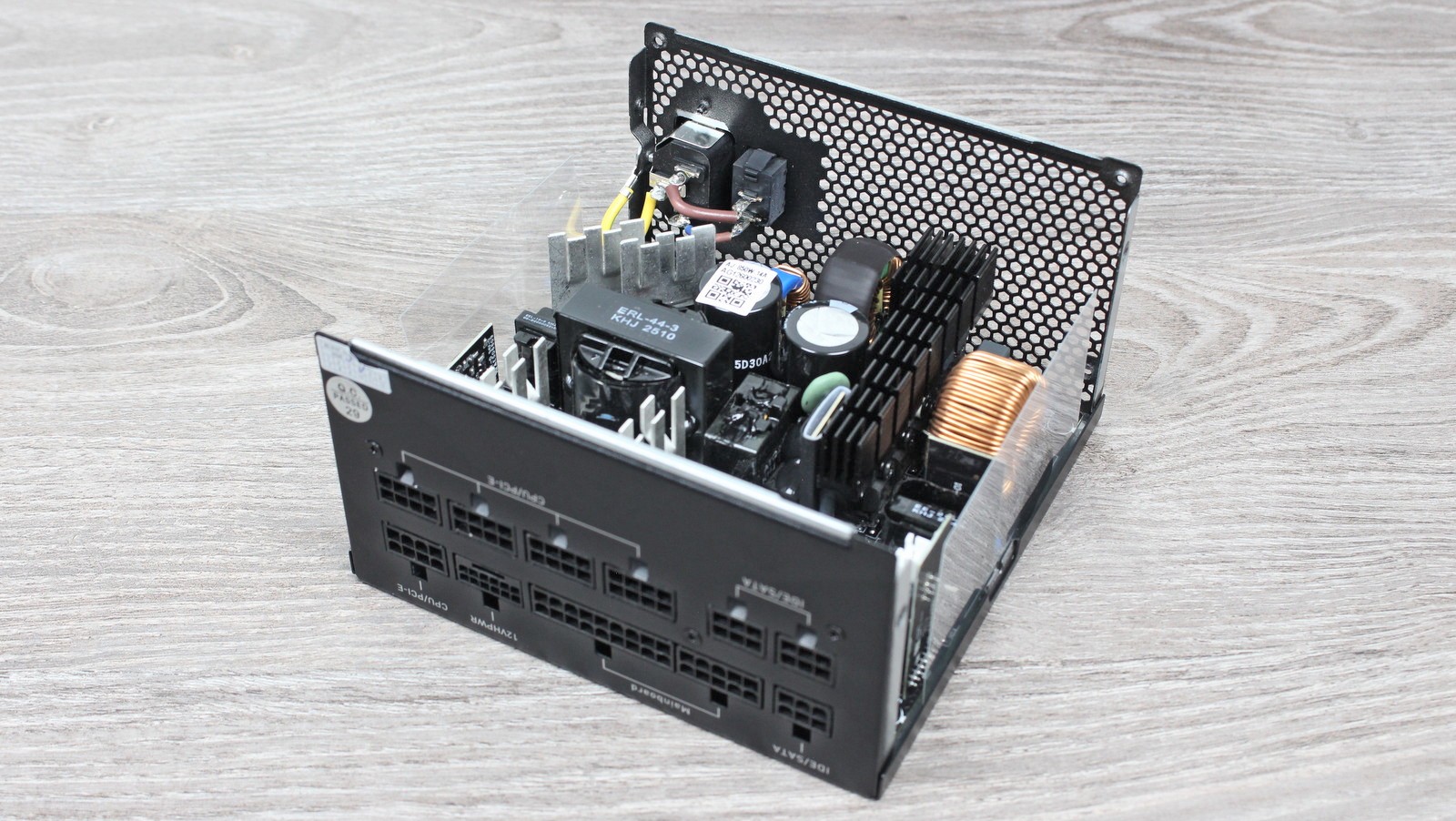
Connecting the output cables will not be difficult, as all connectors have appropriate labels and different connector shapes.
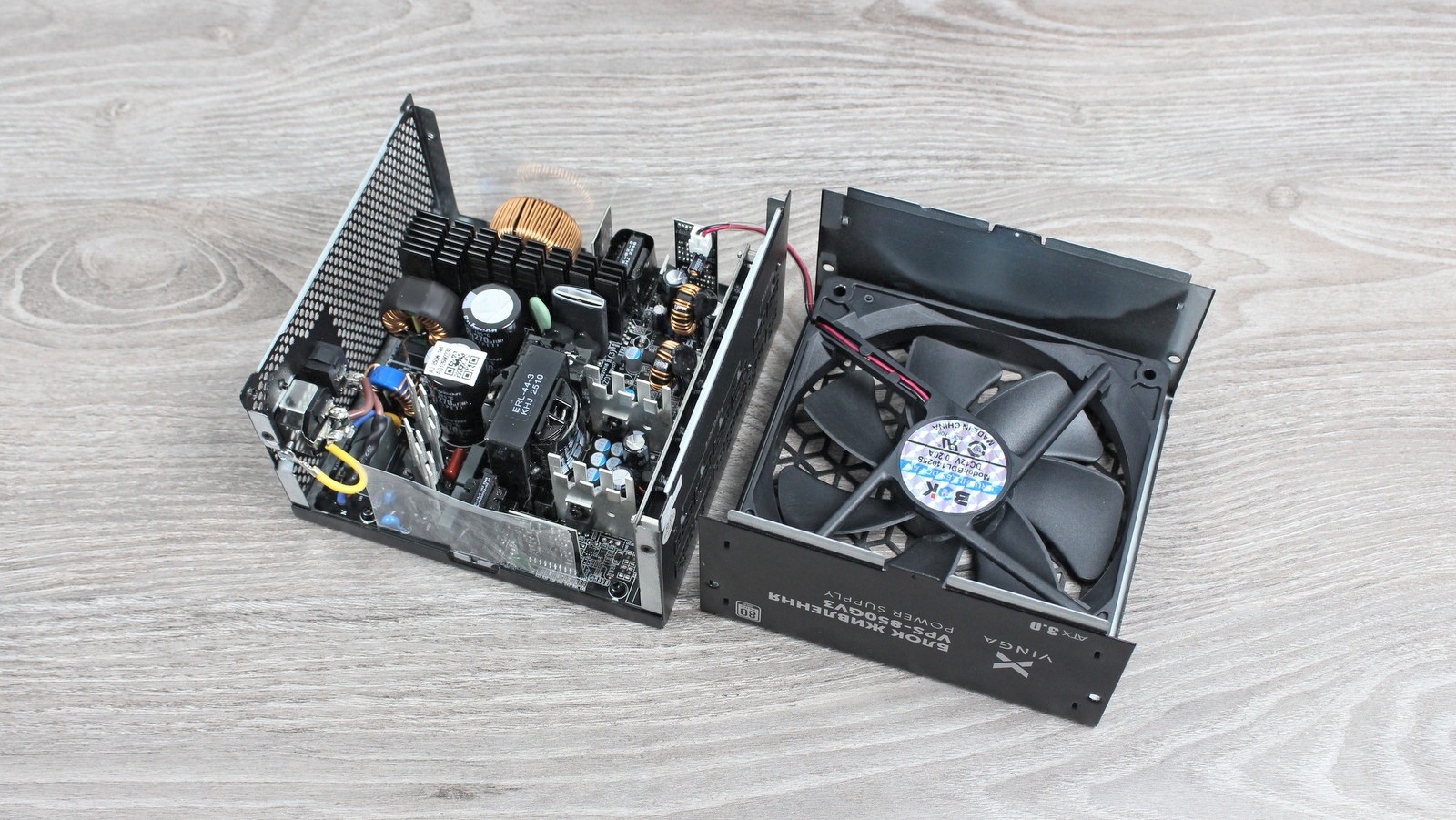
Internal Structure
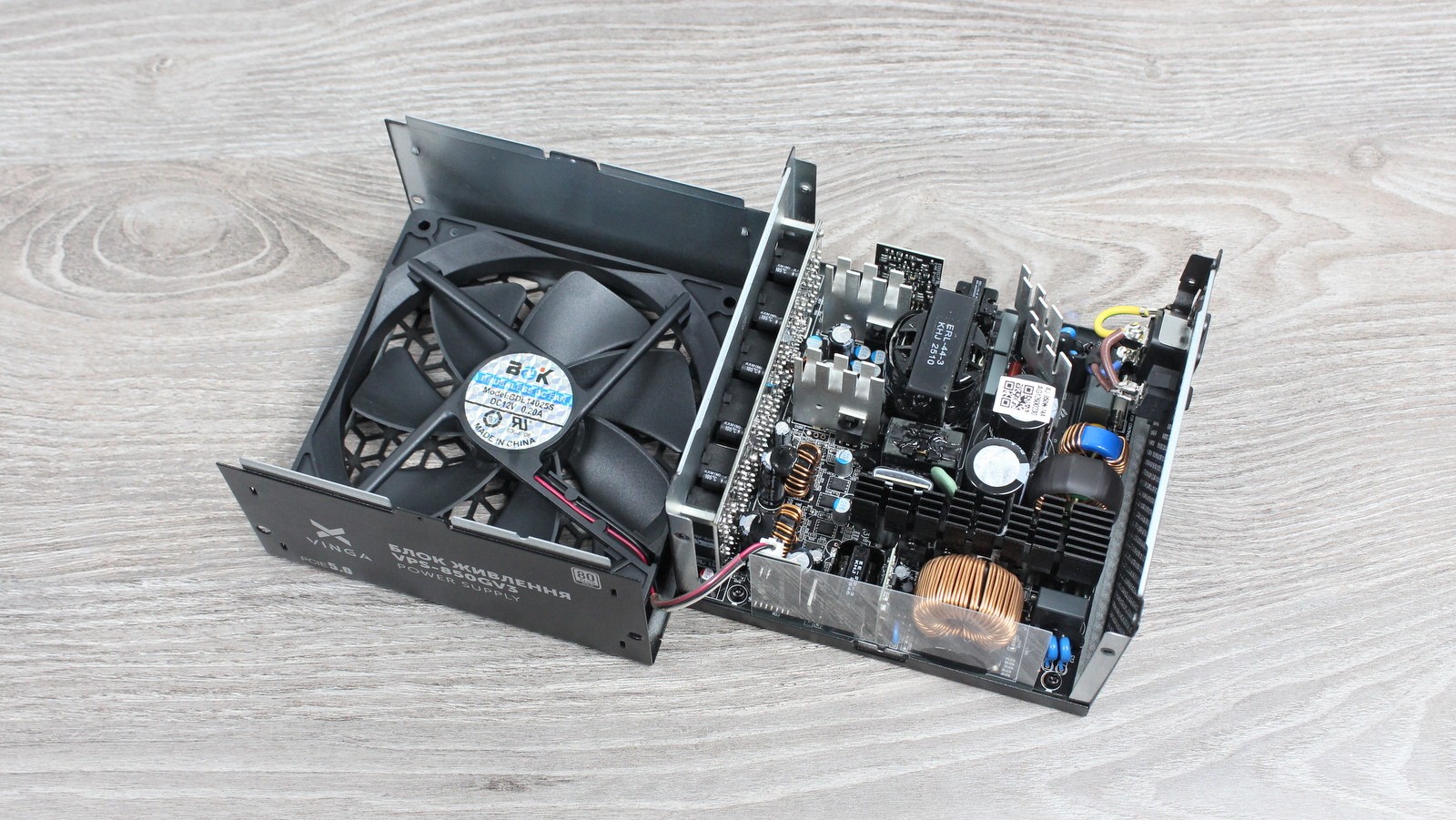
Now it's time to open the case and see which components are working inside the power supply unit.
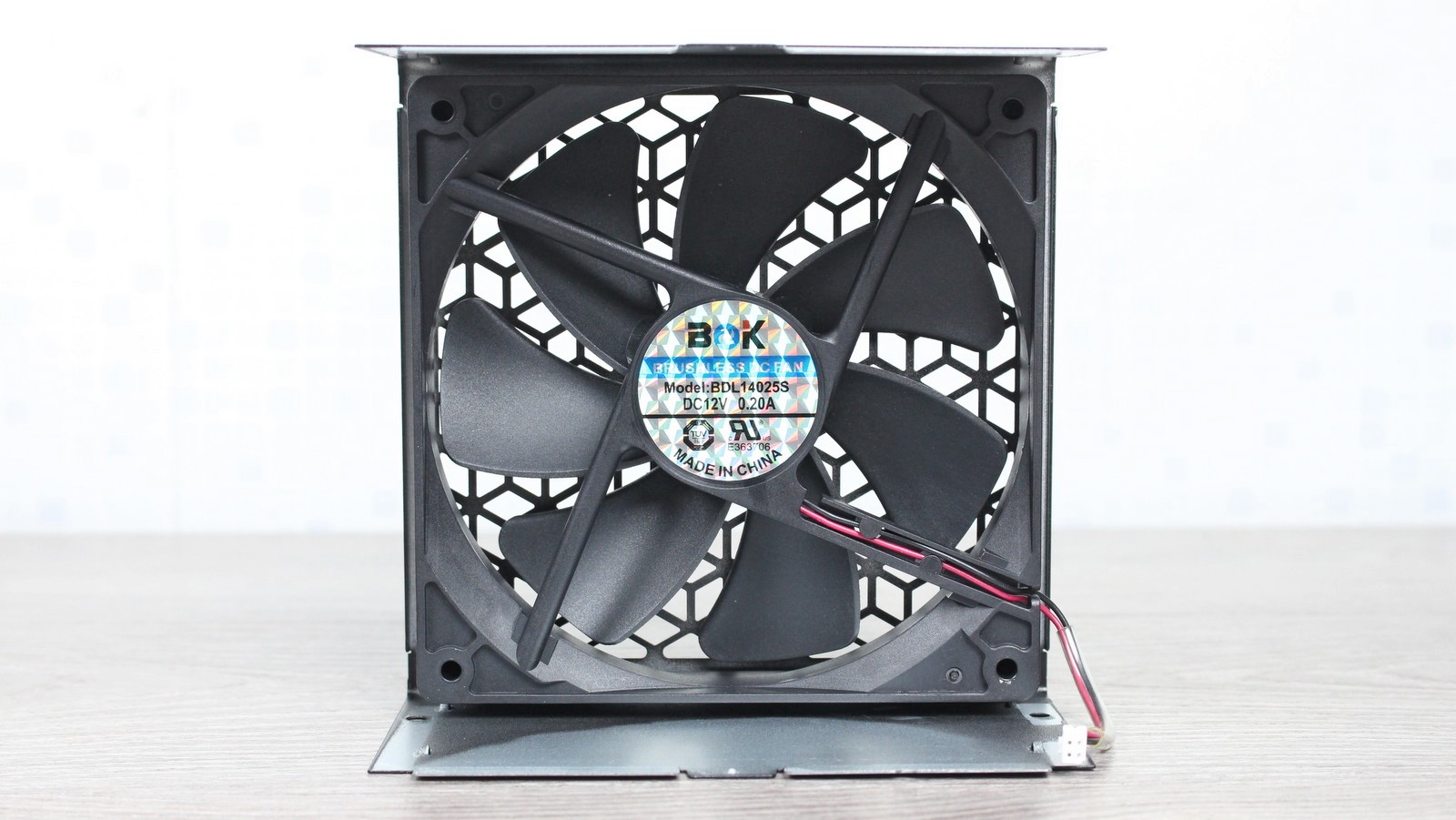
The 140mm BDK BDL14025S fan is similar to the one used in the 750W unit - it consumes no more than 2.4W (12V at 0.2A). There is no information about the bearing at its core, but the letter "S" in the marking most likely hints at the use of a budget sleeve bearing.
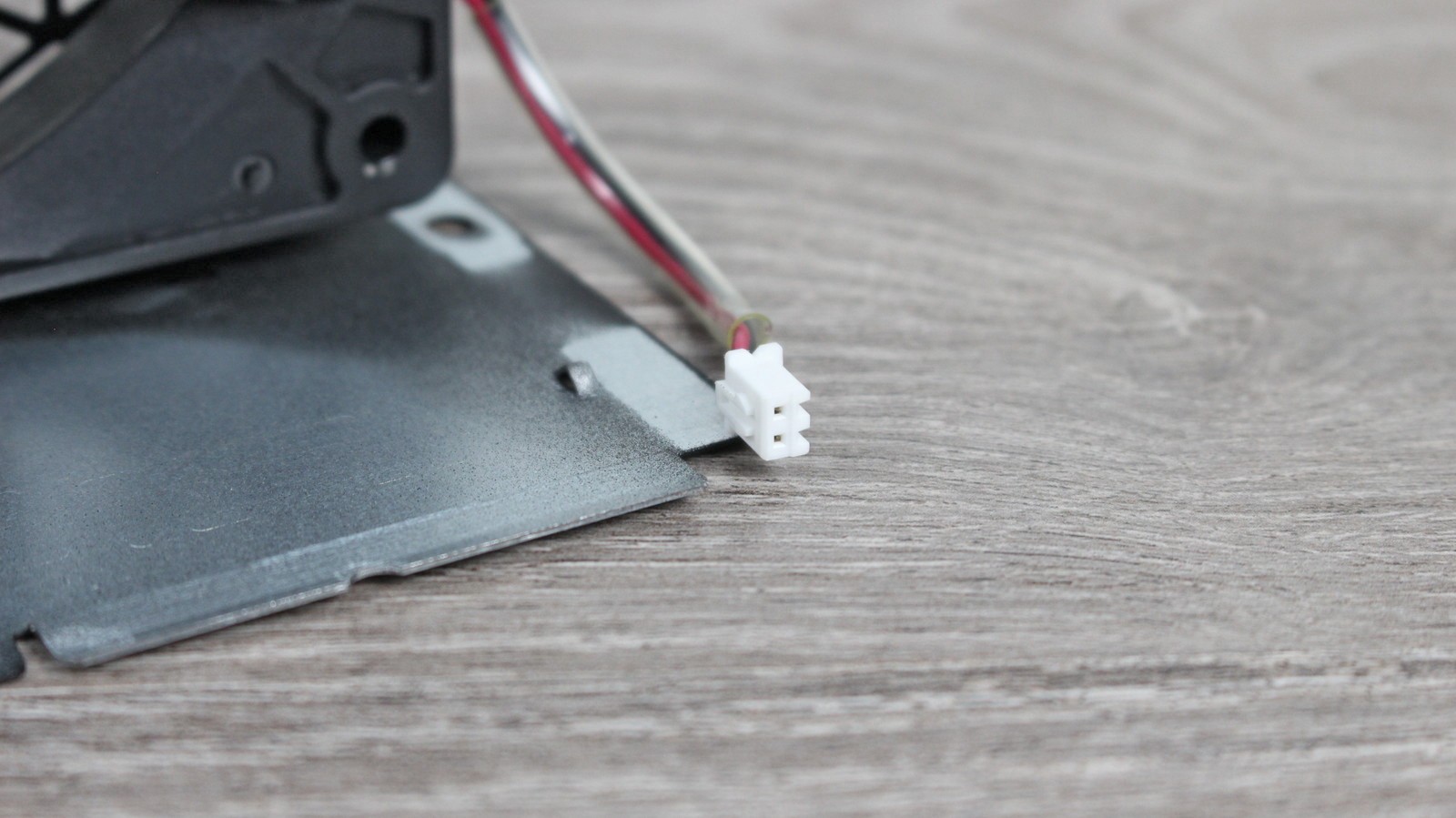
Power is supplied to it through a removable 2-pin connector.
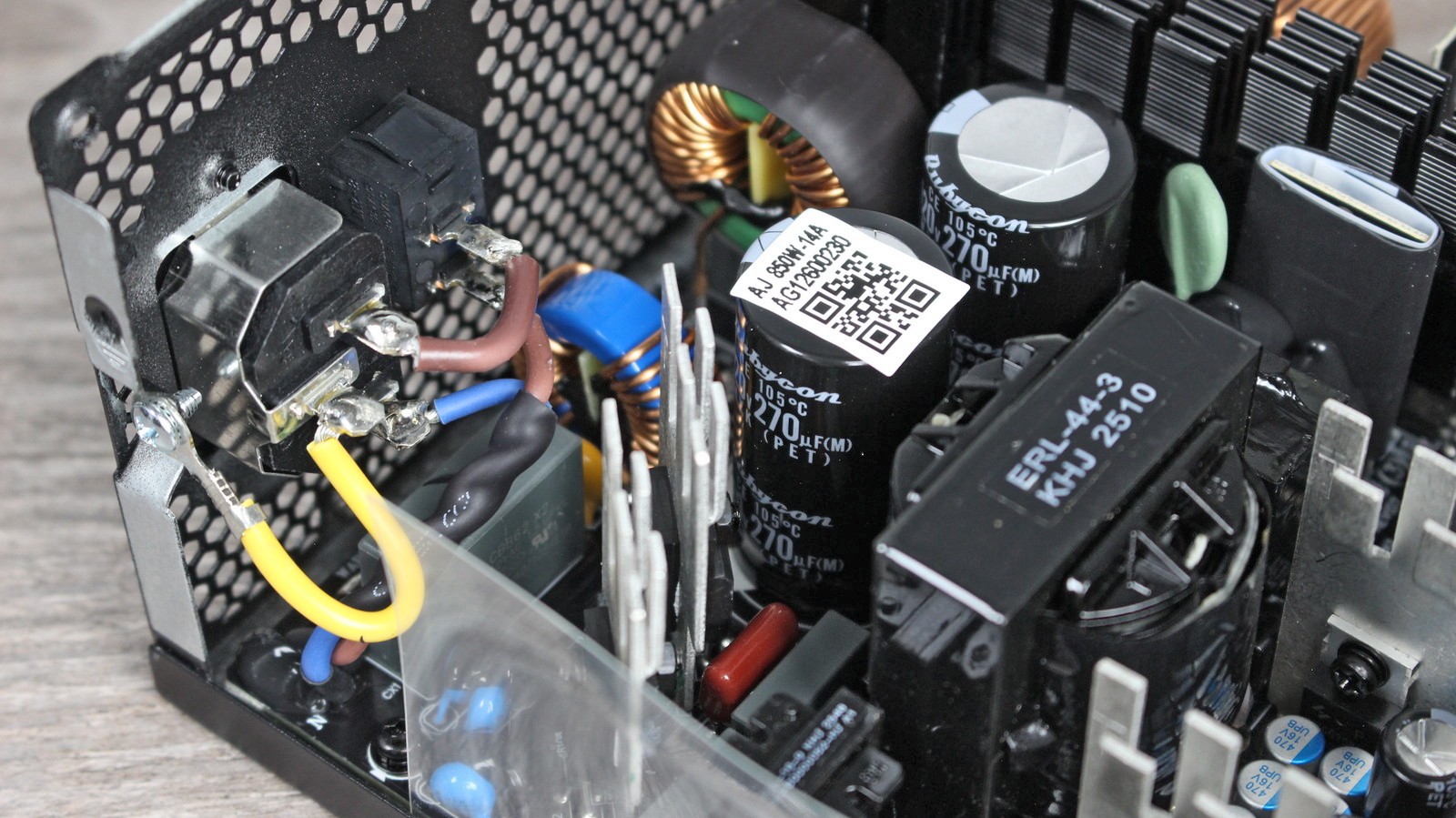
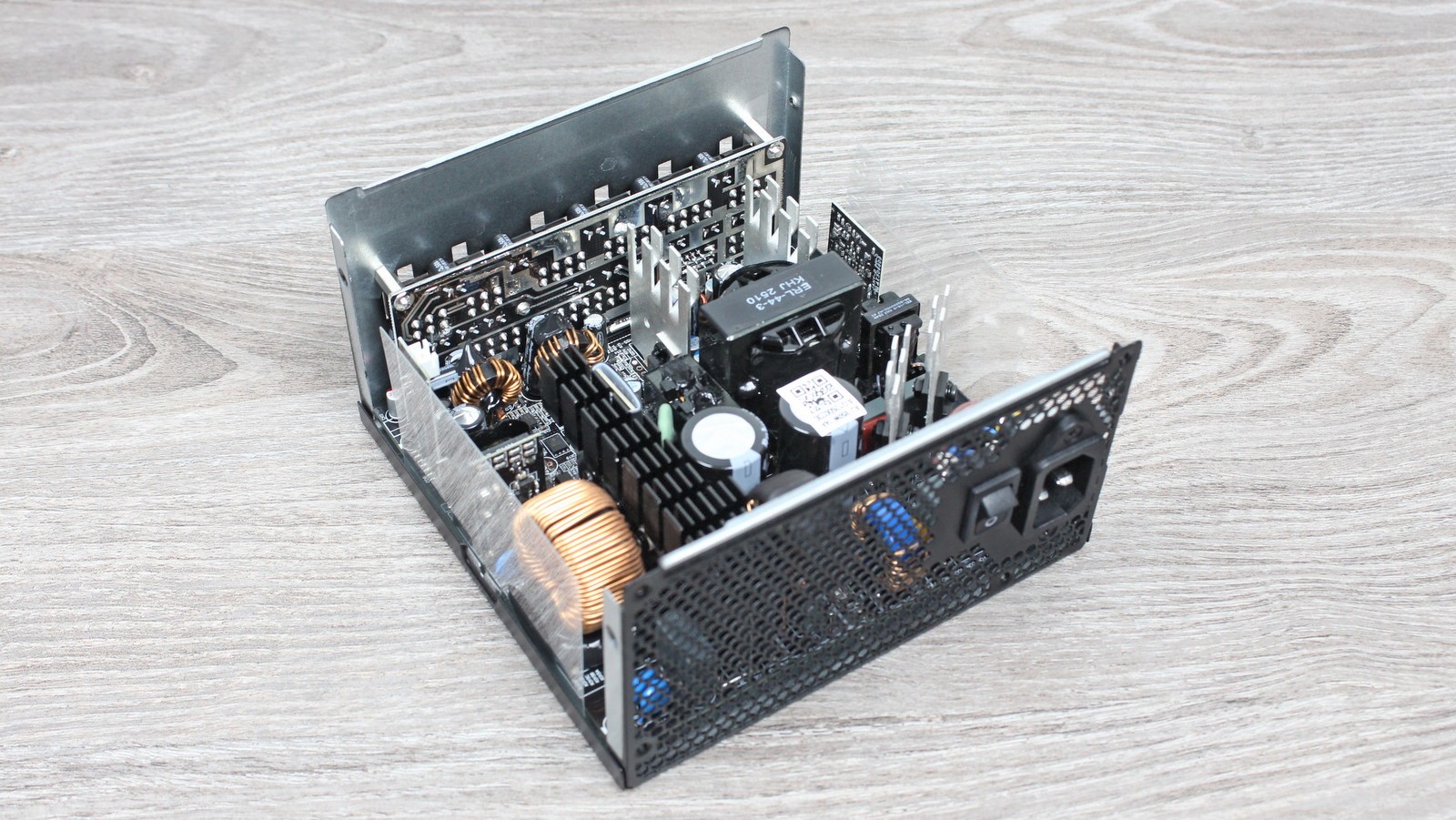
Now about the circuitry of Vinga 850W (VPS-850GV3). The EMI filter includes all necessary components: a pair of chokes, X and Y capacitors, a varistor, and a fuse. The device also includes a thermistor for protection against high inrush currents.
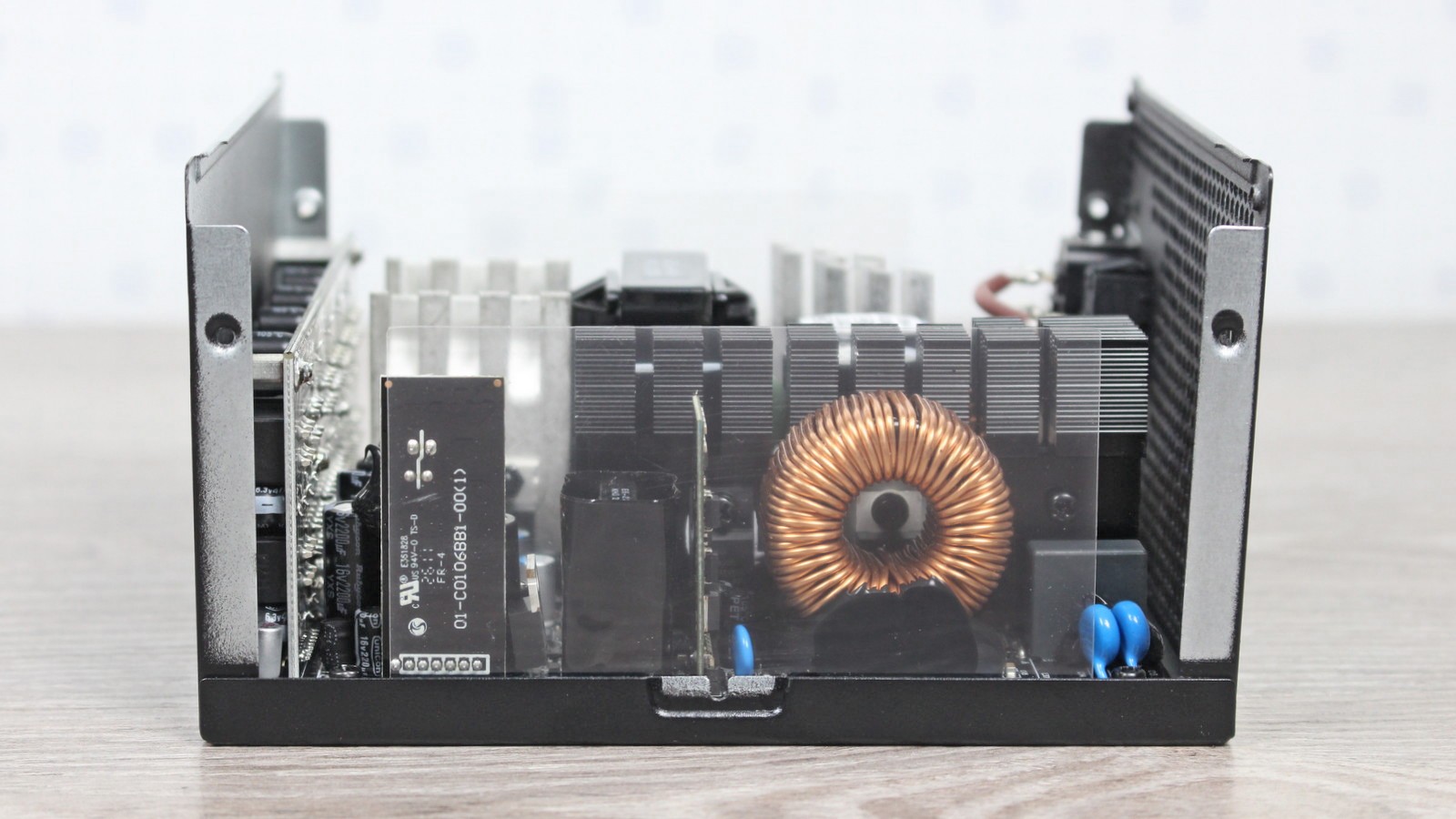
The black heatsink cools the diode assemblies and power elements of the active power factor correction (APFC). The latter also includes a large choke.
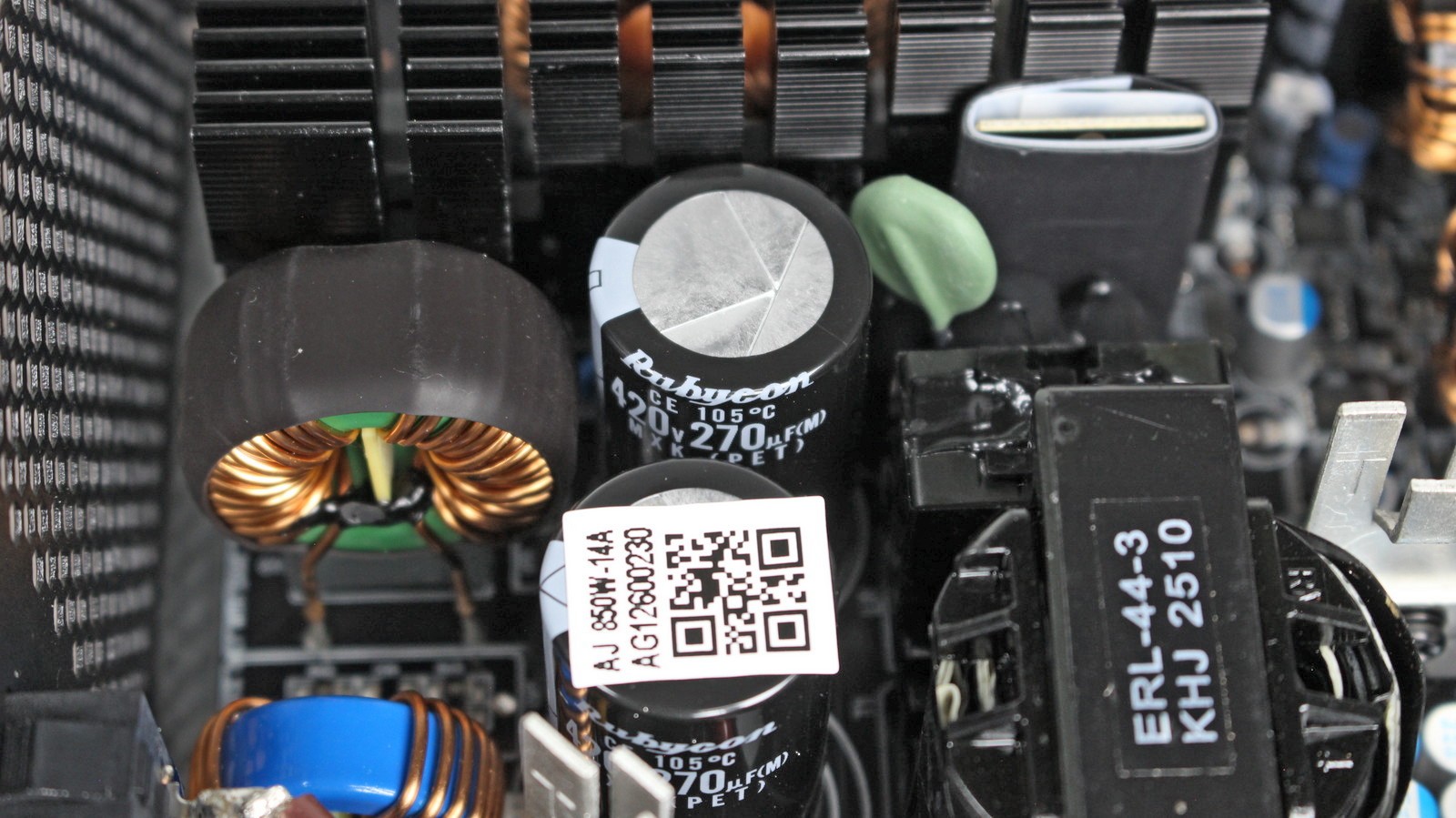
The two input capacitors have a capacity of 540 µF (2 × 270 µF), which is not much for an 850W unit. On the other hand, these are high-temperature Japanese Rubycon electrolytes, known for their high quality.
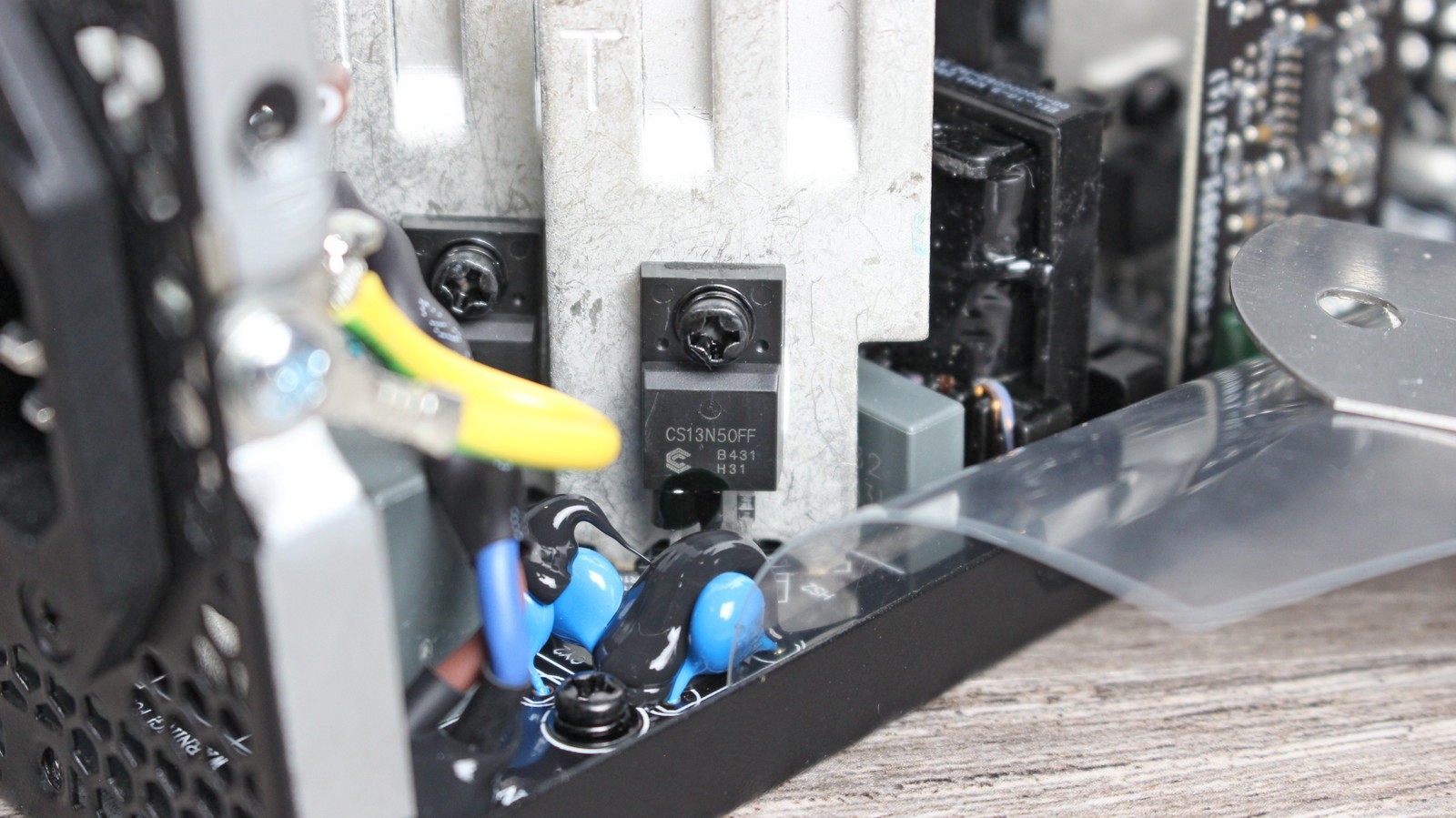
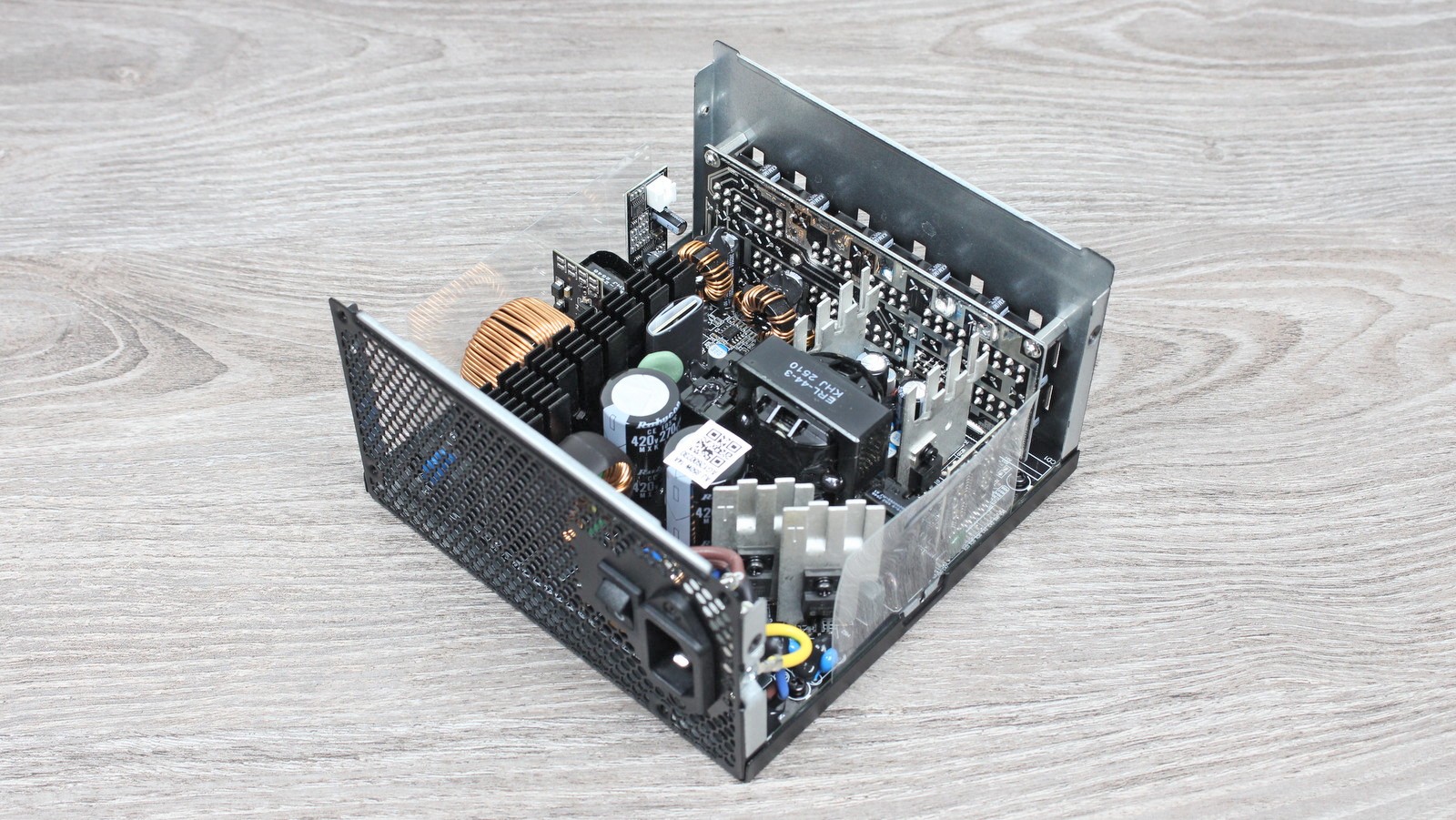
The Half Bridge circuit is disguised as a Full Bridge due to doubled keys on a pair of comb heatsinks. The four CS13N50FF transistors of Chinese origin used here are identical to those in the 750W model.
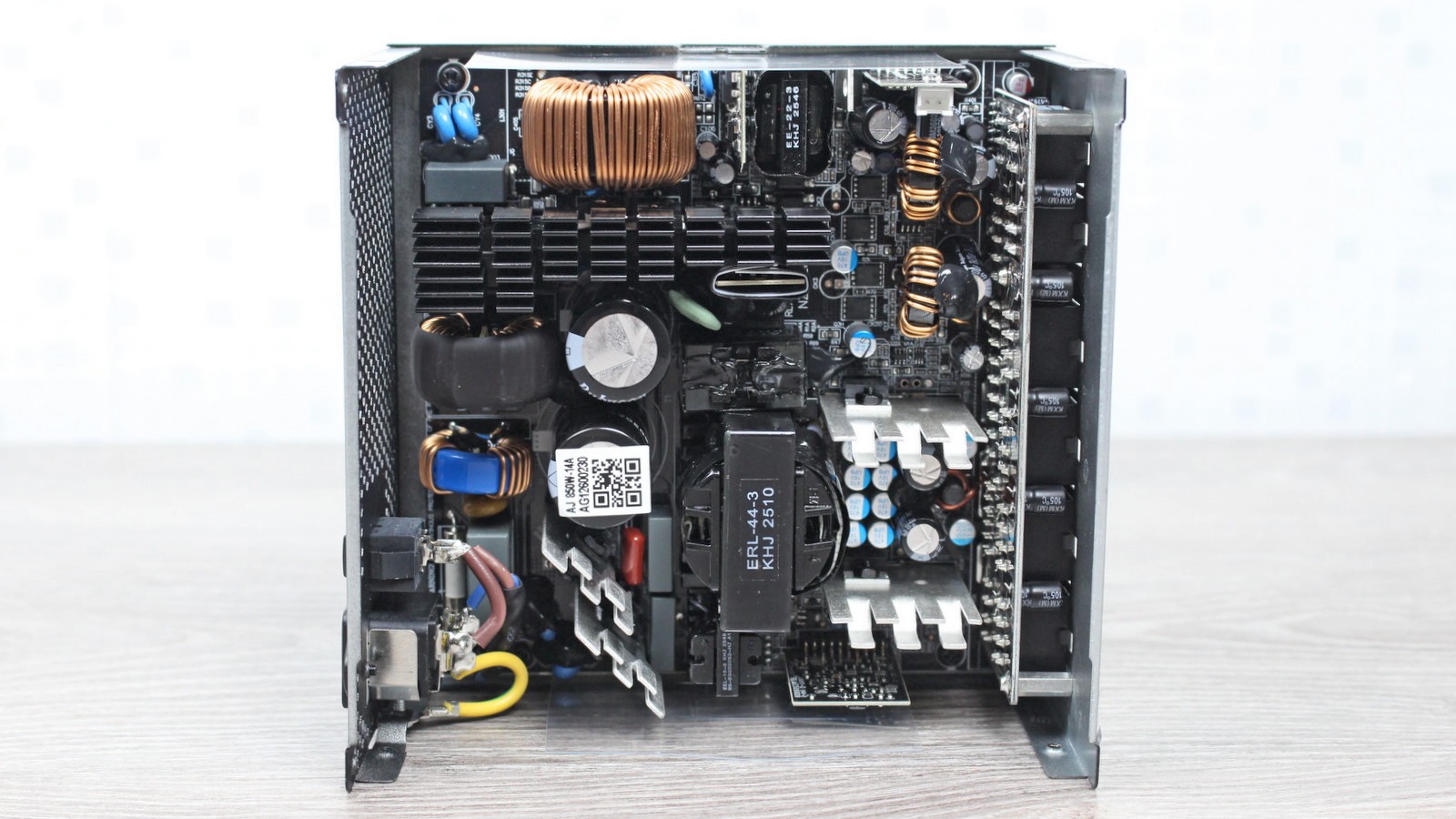
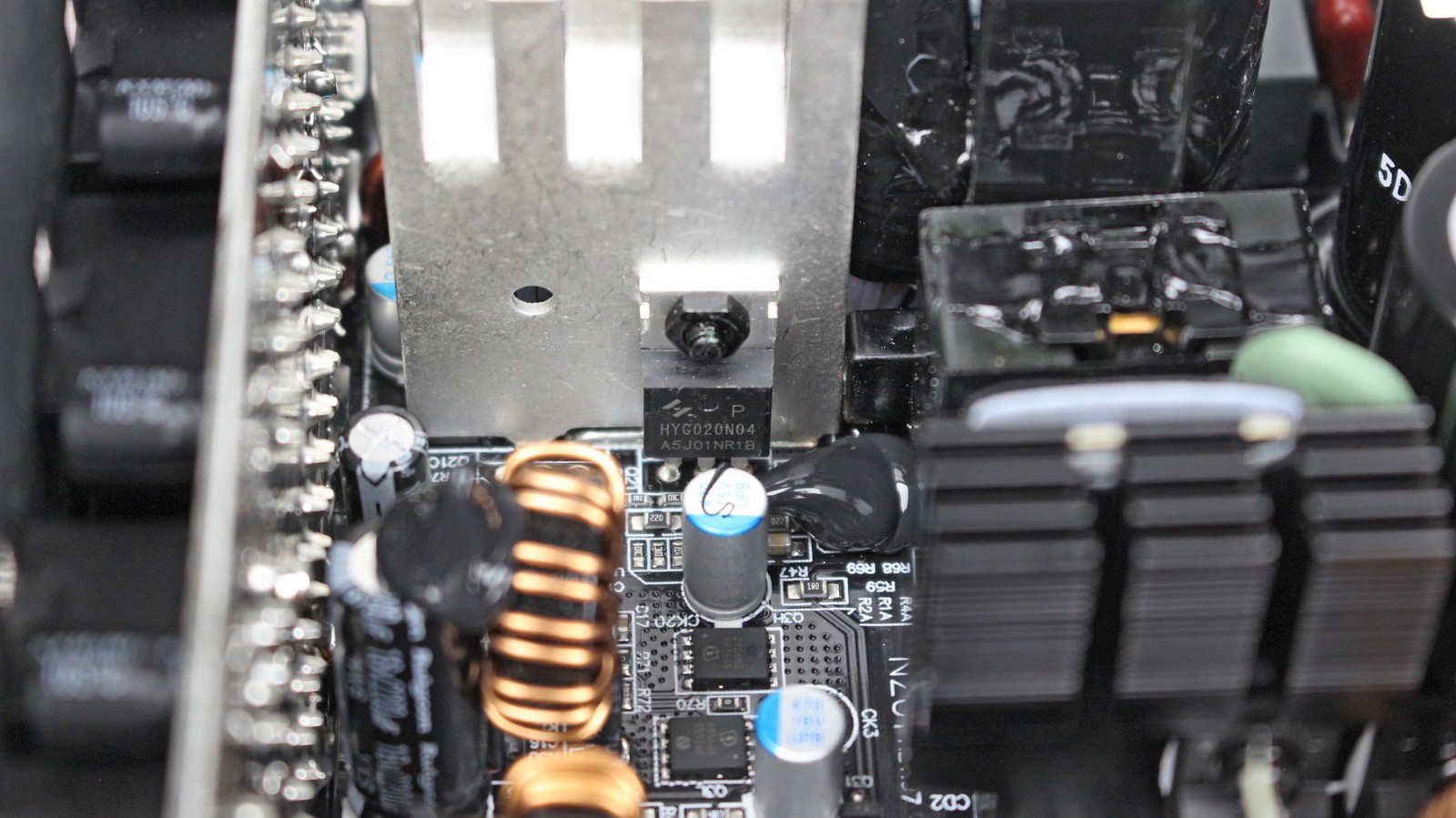
The synchronous rectifier, in turn, consists of Chinese HUAYI Semiconductor HYGO20N04 MOSFETs of medium quality. They are used in other models of this line, with four in the 750W and 850W units, while the kilowatt unit has six.
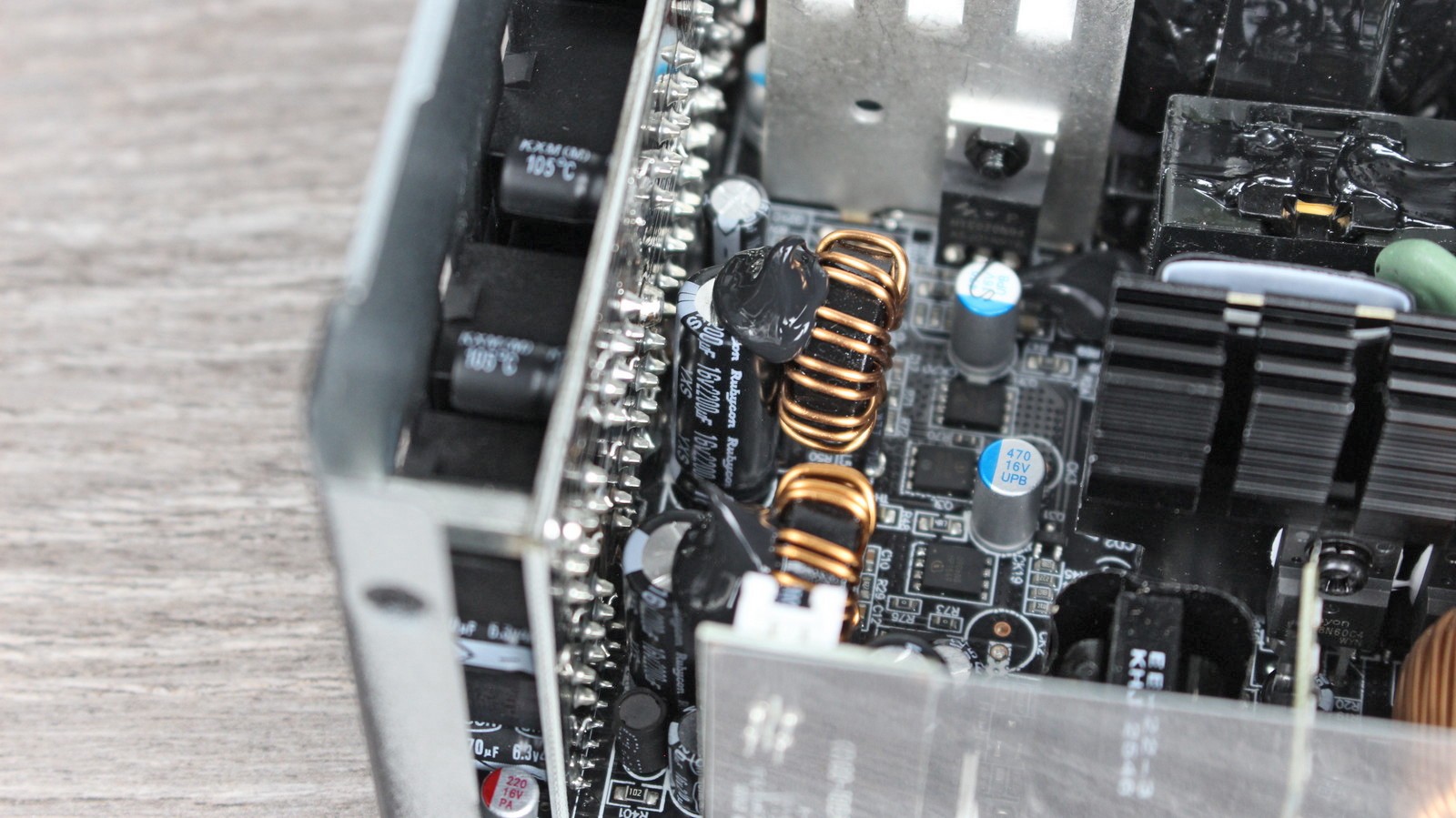
The mentioned elements form the +12V voltage, while the components of the DC-DC converters that form the lower +3.3V and +5V channels are soldered on the main PCB.
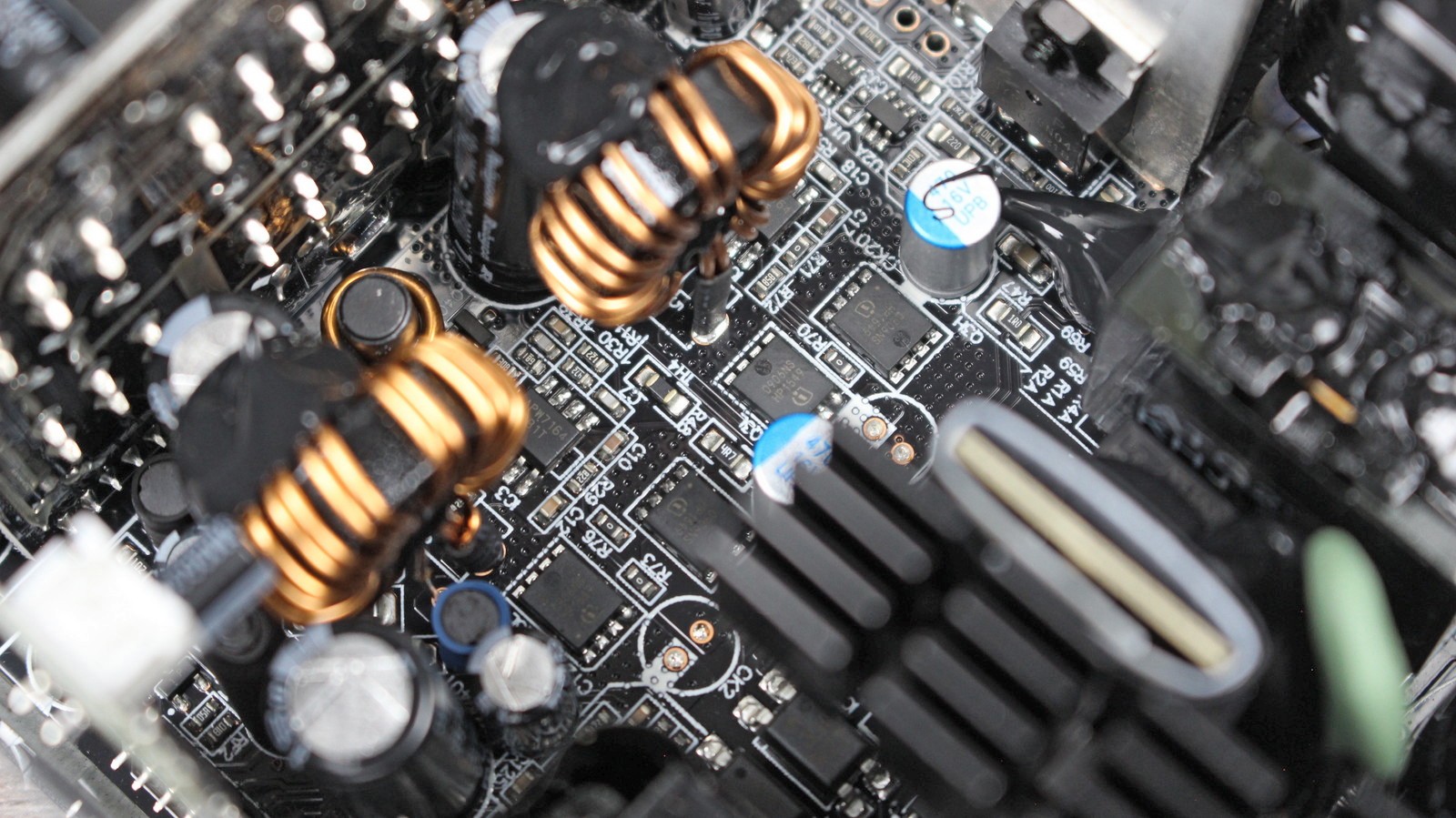
Here you can also see MOSFETs from German Infineon and reliable solid capacitors.
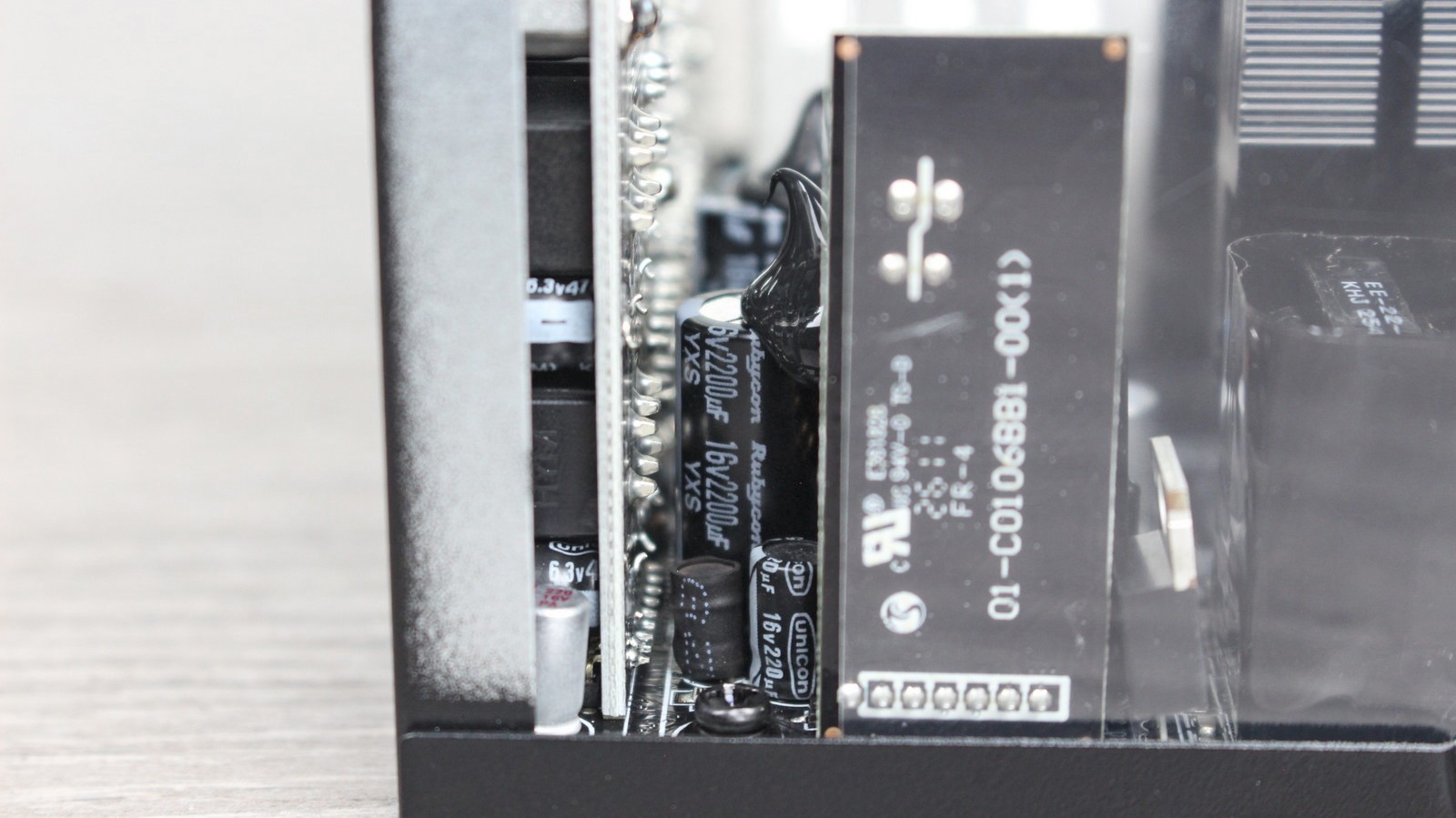
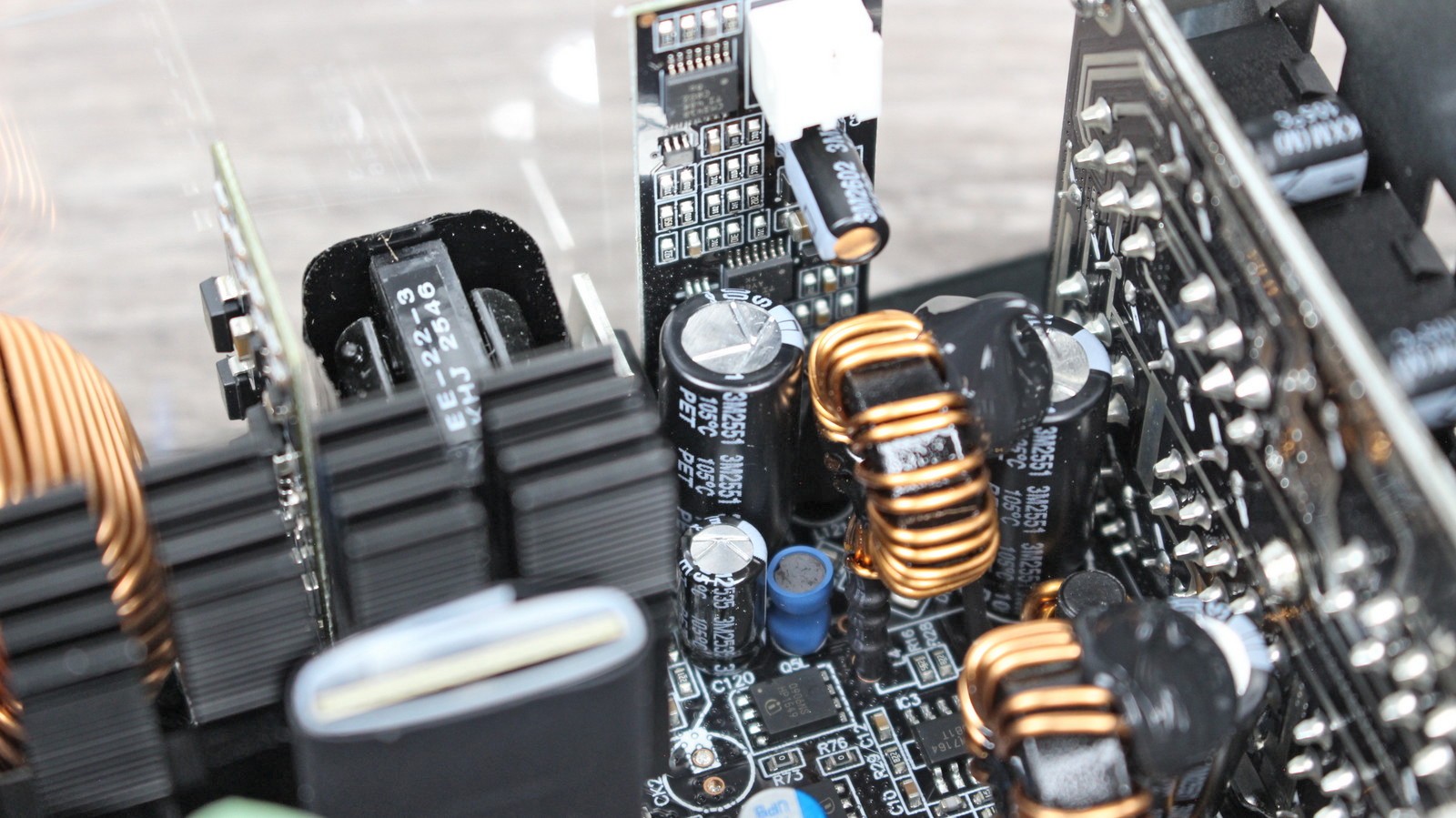
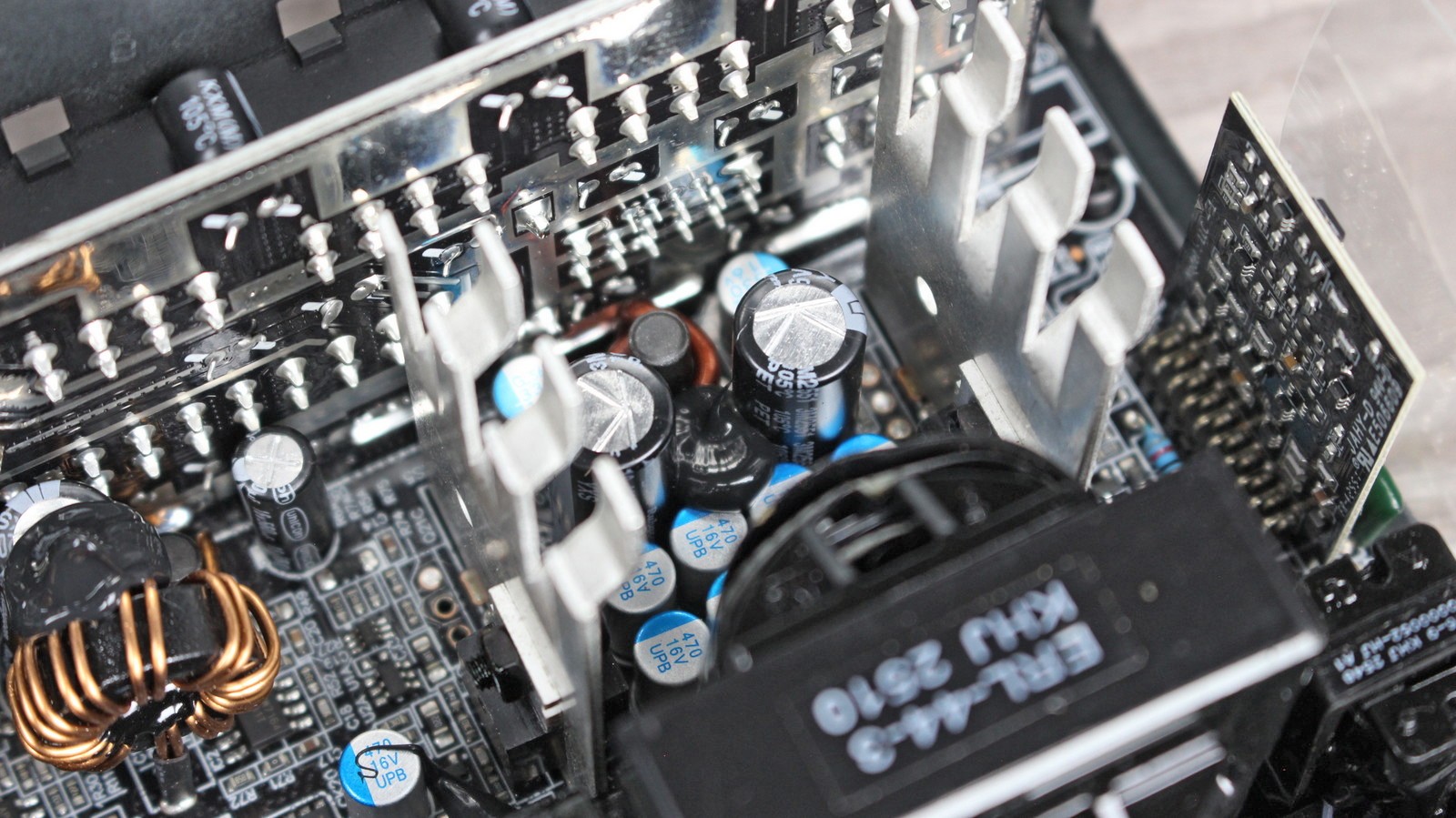
Polymer capacitors are also present in other nodes of Vinga 850W (VPS-850GV3), complemented by electrolytes from Japanese companies Rubycon and Unicon.
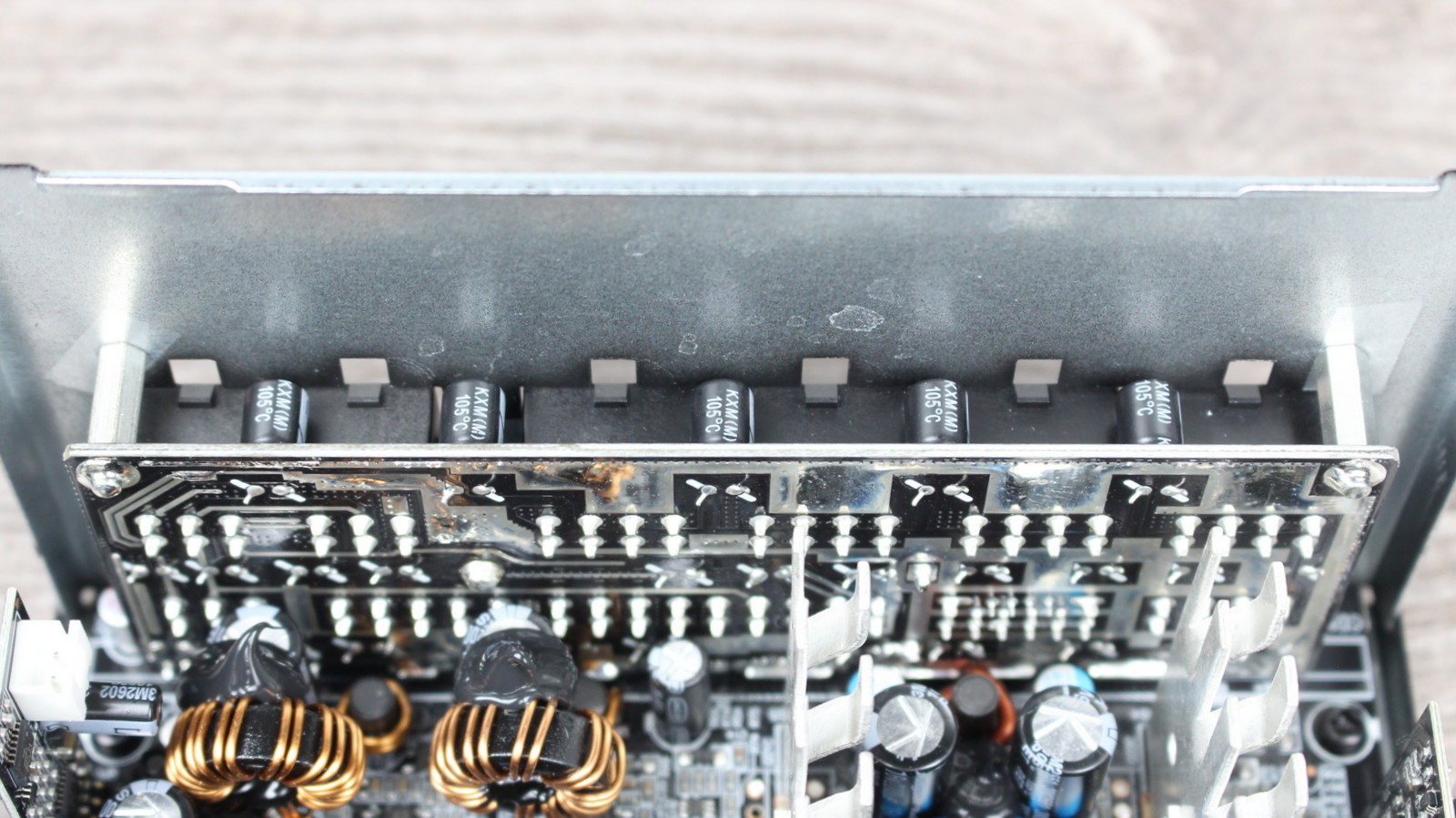
Current to the board with output connectors is supplied through conductive tracks. It also contains many capacitors from Unicon.
The tested power supply unit is equipped with several protections:
- overvoltage protection (OVP);
- undervoltage protection (UVP);
- short circuit protection (SCP);
- overcurrent protection for each channel (OCP);
- overtemperature protection (OTP).
Only OPP - overload protection by power - is not mentioned here.
Testing
Time to test the capabilities of Vinga 850W (VPS-850GV3) in practice.
Cross-load Characteristics
Let's start with the cross-load characteristics of the three main lines, where the ATX12V standard allows voltage deviations within ±5% of the nominal.
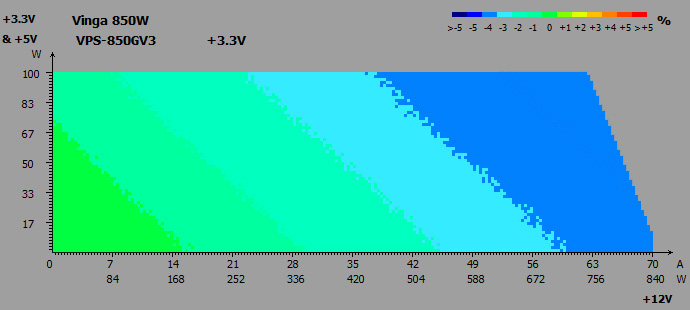
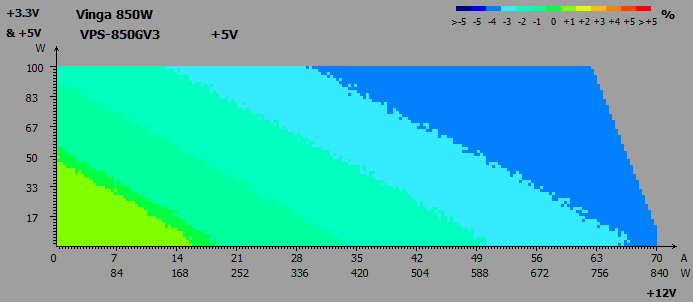
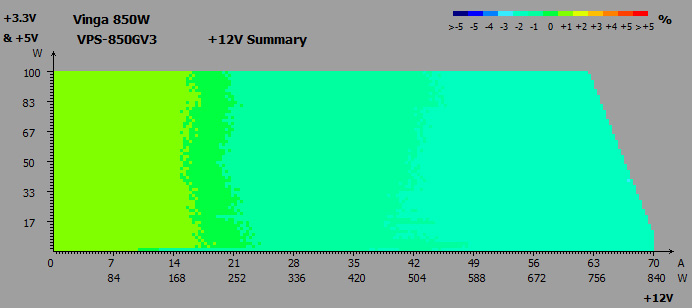
The following deviations were recorded during testing:
- +3.3V line: from -4% to 0%;
- +5V line: from -4% to +1%;
- +12V line: from -2% to +1%.
All obtained values are within the norm, and the most demanded 12V channel pleased with minimal deviations from the nominal.
Standby Power Line +5VSB
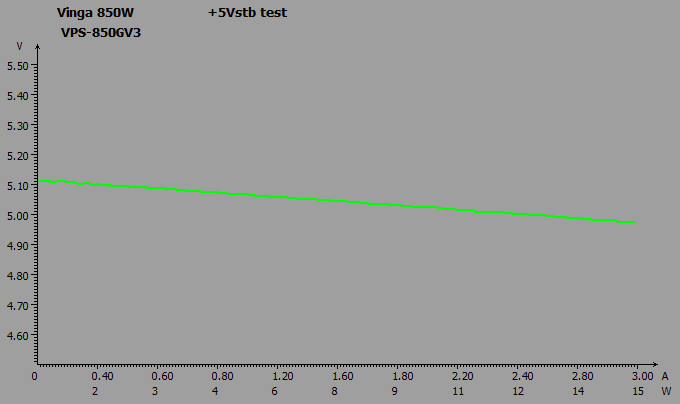
The voltage on the standby power line also deviated within a narrow range - from 5.11 to 4.98 V (from +2.2% to -0.4%).
Noise and Ripple
The ATX12V standard provides for the following permissible norms (peak-to-peak):
- +3.3V and +5V lines: 50 mV;
- +12V line: 120 mV.
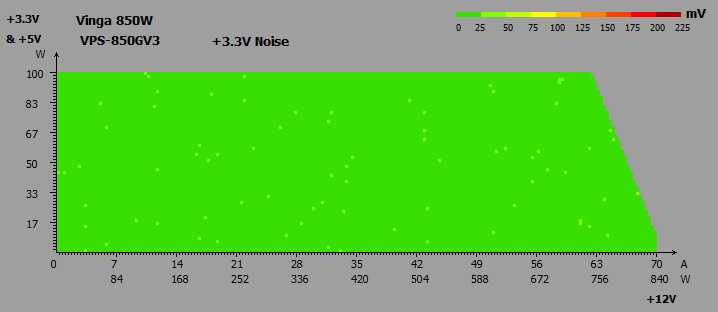
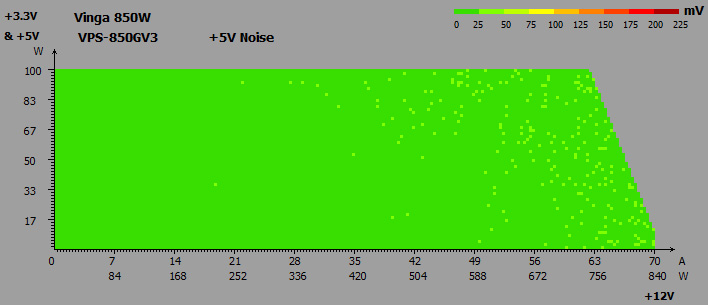
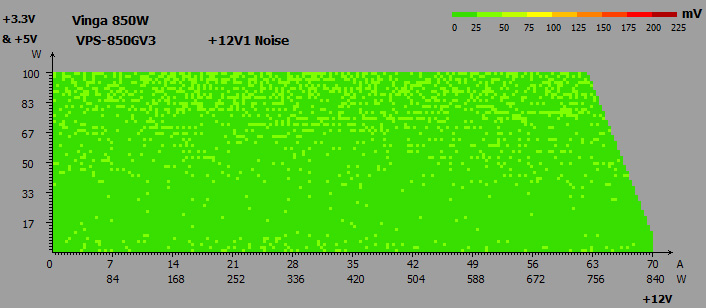
Ripple on the three main lines was within 50 mV - this is a good indicator for the lower channels and excellent for +12V.
PF
Table showing PF change depending on the load of the power supply:
|
Load, W |
90 |
170 |
250 |
330 |
380 |
430 |
530 |
600 |
700 |
850 |
|
Load*, % |
11 |
20 |
29 |
39 |
45 |
51 |
62 |
71 |
82 |
100 |
|
PFC |
0.76 |
0.88 |
0.93 |
0.95 |
0.96 |
0.96 |
0.96 |
0.97 |
0.98 |
0.98 |
Load* - load as a percentage of the nominal power of the power supply unit.
The PF coefficient is quite high: already at a 250W load, it reaches 0.93, and at 700W - 0.98.
Efficiency
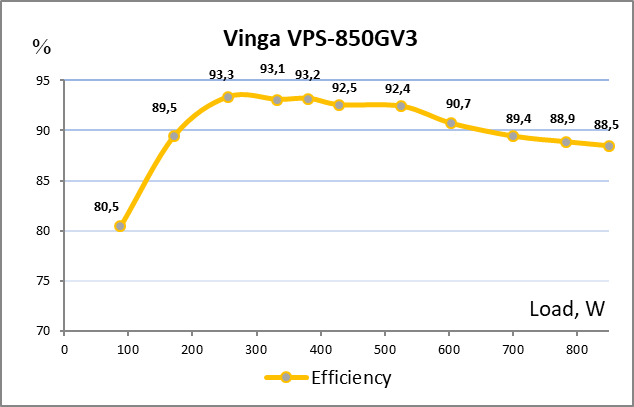
At loads of 20%, 50%, and 100% of the nominal, the efficiency exceeded 88%, 92%, and 88%, respectively, confirming compliance with the 80 PLUS Gold certificate. And in the load range from 250 to 380 W, it exceeded 93%.
Cooling System
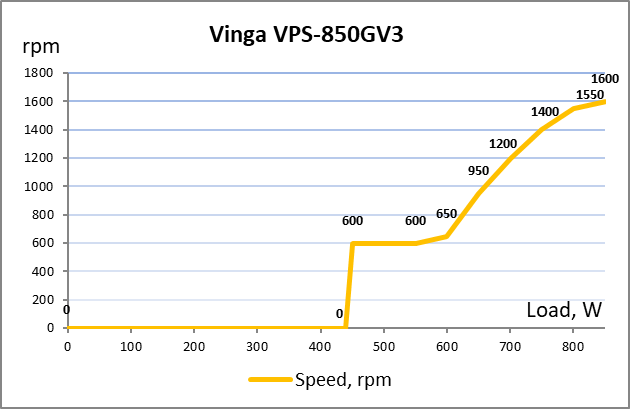
The cooling system algorithm of the Vinga 850W (VPS-850GV3) power supply is very similar to that of the 750W and 1000W models. Thus, at a load of up to 450W, the fan did not rotate, then quietly started at a speed of 600 rpm. Up to 650W, it is very quiet, up to 750W - quiet, and up to 850W, the noise from the propeller is below average.
Temperature Mode
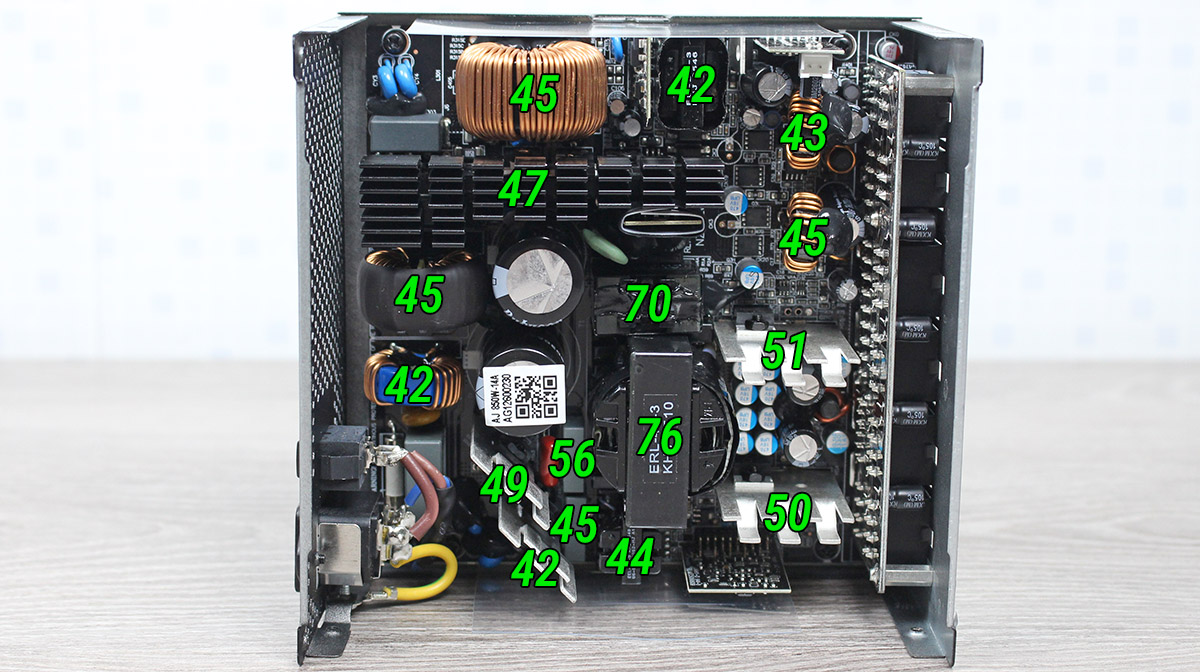
The temperature map was obtained under a load of 800 W for 15 minutes. The hottest element traditionally was the main transformer, however, it only heated up to 76°C - an excellent indicator. Other components were even cooler.
During these measurements, the room was quite warm — +26°C.
Testing on a Real Configuration
|
Component |
Model |
|
Processor |
AMD Ryzen 9 5900X (Socket AM4, 12 / 24 x 3.7 – 4.8 GHz, TDP 105 W) |
|
Cooler |
ASUS TUF Gaming LC II 360 ARGB |
|
Motherboard |
MSI MEG X570 GODLIKE (AMD X570, Socket AM4, DDR4, ATX) |
|
RAM |
2 x DDR4-3600 16 GB Kingston FURY Beast RGB (KF436C18BBAK2/32) |
|
Graphics Cards |
ASUS ROG STRIX GeForce RTX 3090 Ti ASUS ROG STRIX GeForce RTX 2080 Ti |
|
SSD |
Kingston KC600 512 GB (SKC600/512G) |
|
Wattmeter |
Seasonic PowerAngel |
|
Multimeter |
MASTECH MY64 |
We tested the capabilities of Vinga 850W (VPS-850GV3) on a system with a 105-watt processor and a pair of graphics cards with TDPs of 450 and 250 W. Measurements were conducted in "Idle" and "Maximum Load" modes (using the FurMark Donut (GK) test in the MSI Kombuster utility). The following values were obtained:
|
Mode |
Value, V |
Deviation, % |
|
+12V |
||
|
Idle |
12.28 |
+2.3 |
|
Burn |
12.17 |
+1.4 |
|
+5V |
||
|
Idle |
5.08 |
+1.6 |
|
Burn |
5.08 |
+1.6 |
|
+3.3V |
||
|
Idle |
3.32 |
+0.6 |
|
Burn |
3.33 |
+0.9 |
|
Input Power Consumption, W |
||
|
Idle |
108 |
|
|
Burn |
833 |
|
The voltage deviations were within very modest limits — from 0.6% to 2.3%, which is an excellent result. The difference between the values in idle and under load was also minor — up to 0.9%. Overall, the output indicators deserve high praise.
Power Consumption in Idle and Off States
Additionally, the tested device consumes a modest 3 W in the off state of the computer and 4 W in sleep mode.
Summary
In summary, Vinga 850W (VPS-850GV3) is very reminiscent of the 750- and 1000-watt models we tested earlier. Here we have the same Japanese electrolytic and polymer capacitors in all key nodes, modular cables in braiding, and, although not the freshest, still relevant PCIe 5.0 standard.
We also liked the cooling system: under a small load, the fan does not operate, with the passive mode covering about half of the entire load range. Meanwhile, during operation, the unit demonstrates low heating, which positively affects both acoustics and the operating conditions of internal components.
However, there were some savings. Among the power elements, there are components from German manufacturers and renowned Chinese companies, as well as parts whose manufacturer we could not determine at all. And the fan most likely uses a simple sleeve bearing. Perhaps that is why the manufacturer limited it to a three-year warranty, although for units of this class, it is not uncommon to find five or more years.
Overall, Vinga 850W (VPS-850GV3) combines a sufficiently high-quality component base with modern capabilities and thoughtful cooling, but it also has some quite understandable compromises. Thus, it is another representative of the Vinga lineup, where the manufacturer tried to maintain a good balance between equipment, characteristics, and final price.
Advantages:
- high efficiency level (80 PLUS Gold);
- DC-DC converters in the secondary circuit;
- use of Japanese high-temperature electrolytic capacitors and polymer elements;
- good voltage stability;
- no voltage drops even when connected to a powerful configuration;
- ability to operate in a wide range of network voltage;
- three 6+2-pin PCIe connectors and one 600-watt PCIe 5.0 (12VHPWR);
- fully modular cables;
- efficient and quite quiet cooling system;
- silent operation up to 450 W load;
- compact size;
- affordable price.
Features:
- use of PCIe 5.0 (12VHPWR) connector instead of the more modern PCIe 5.1 (12V-2×6);
- fan based on sleeve bearing.