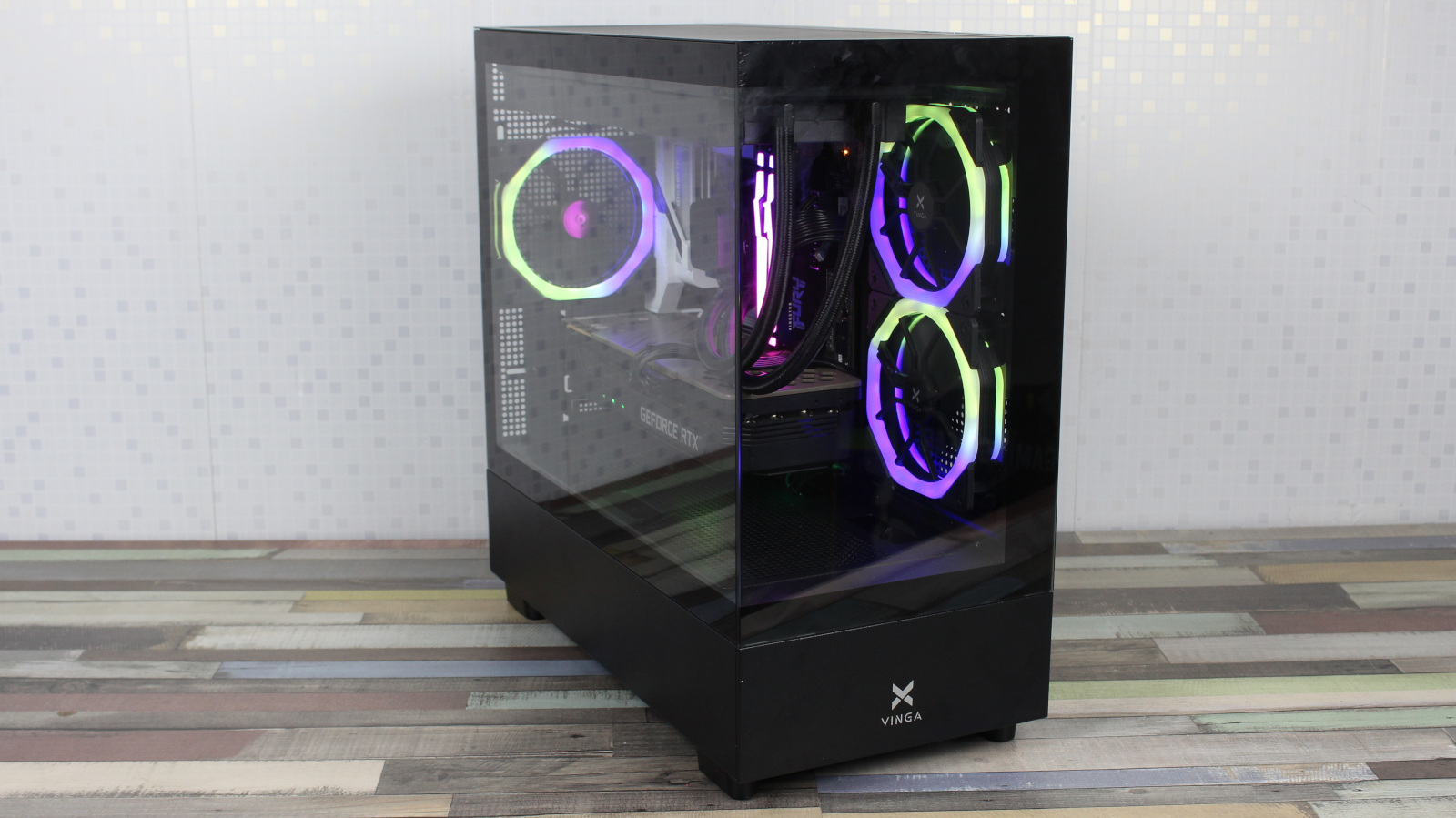
Today we will review a very affordable "aquarium" case with a panoramic glass design without stands from the Ukrainian brand Vinga.
Somewhat unusual for the average user may be the fact that in terms of dimensions, Vinga Basalt belongs to the most common Middle Tower size, but accommodates only motherboards in microATX and Mini-ITX form factors. This means that when using a relatively compact board, the manufacturer offers minimal restrictions on the dimensions of the graphics card and CPU cooling.
At the same time, in terms of visual design, the case is almost on par with renowned competitors, and the presence of an easy-to-remove side panel has been taken care of.
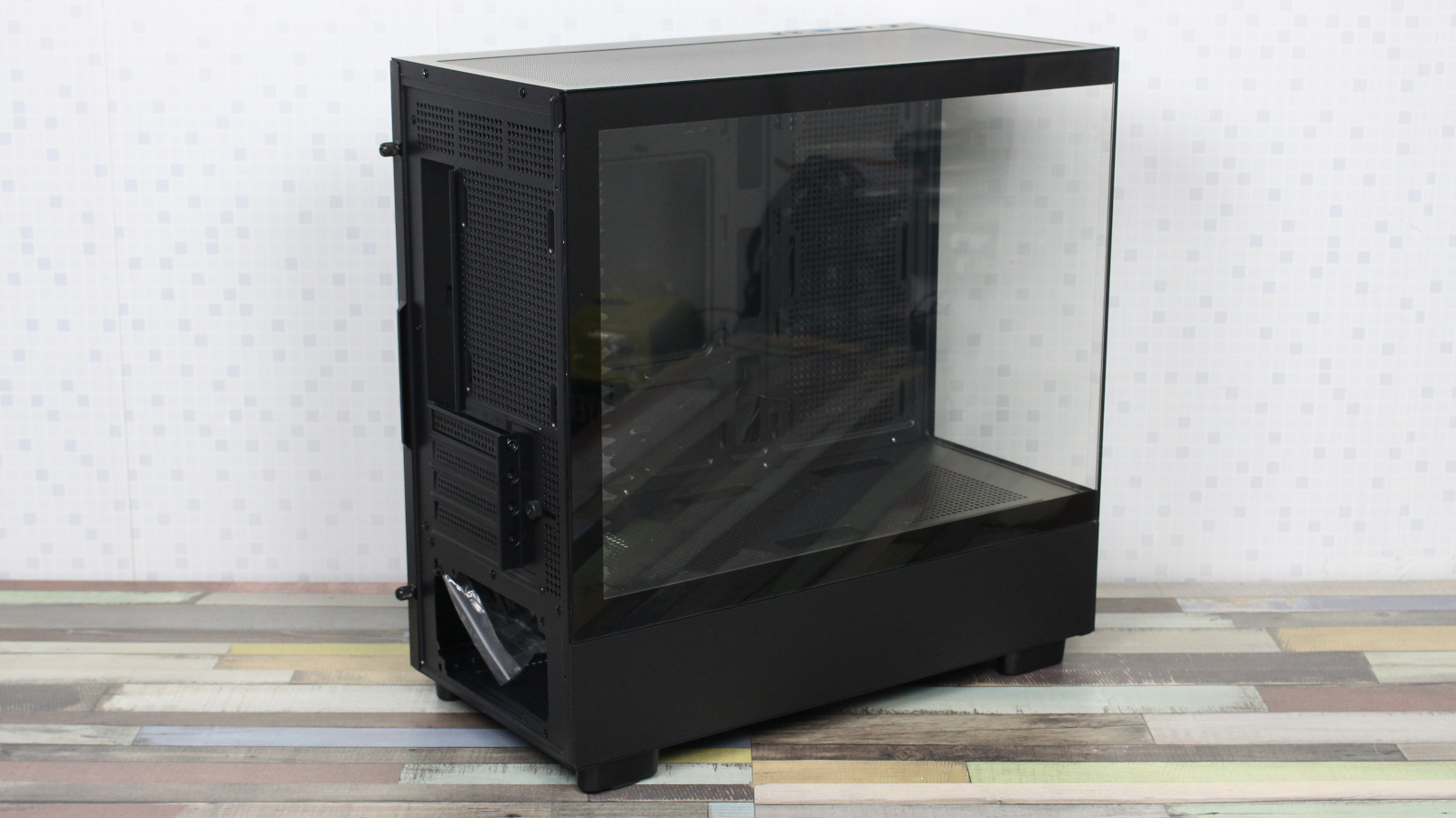
We draw your attention to the fact that, as is traditional for Vinga cases, the Basalt model lacks fans. However, its price at ₴1299 (~$30) allows the user to save on the initial configuration and independently purchase fans to their taste and according to their needs.
Specification
|
Model |
Vinga Basalt |
|
Case size |
Middle Tower |
|
Supported motherboard form factors |
microATX / Mini-ITX |
|
Color |
Black |
|
External bays |
None |
|
Internal bays |
1 x 2.5″ and 1 x 3.5″ or 2 x 3.5″ |
|
Expansion slots |
4 |
|
Maximum GPU length |
420 mm |
|
Maximum CPU cooler height |
165 mm |
|
Maximum PSU length |
200 mm |
|
Ports |
1 x USB 2.0 1 x USB 3.0 Type-A 1 x combined audio jack |
|
Pre-installed fans |
None |
|
Power supply |
None |
|
Total fan installation capability |
|
|
On the top panel |
3 x 120-mm / 2 x 140-mm |
|
On the rear panel |
1 x 120-mm |
|
On the side panel |
2 x 120-mm |
|
On the PSU shroud |
3 x 120-mm |
|
Liquid cooling installation capability |
|
|
On the top panel |
120-mm / 140-mm / 240-mm / 280-mm / 360-mm |
|
Materials |
|
|
Front panel |
Tempered glass 4 mm thick and steel 0.56 mm thick |
|
Chassis |
Steel 0.6 mm thick |
|
Left removable side |
Tempered glass 4 mm thick |
|
Right removable side |
Steel 0.59 mm thick |
|
Case dimensions |
435 x 215 x 435 mm |
|
Weight |
5 kg |
|
Warranty, years |
1 |
|
Product page |
|
Packaging and Delivery Set
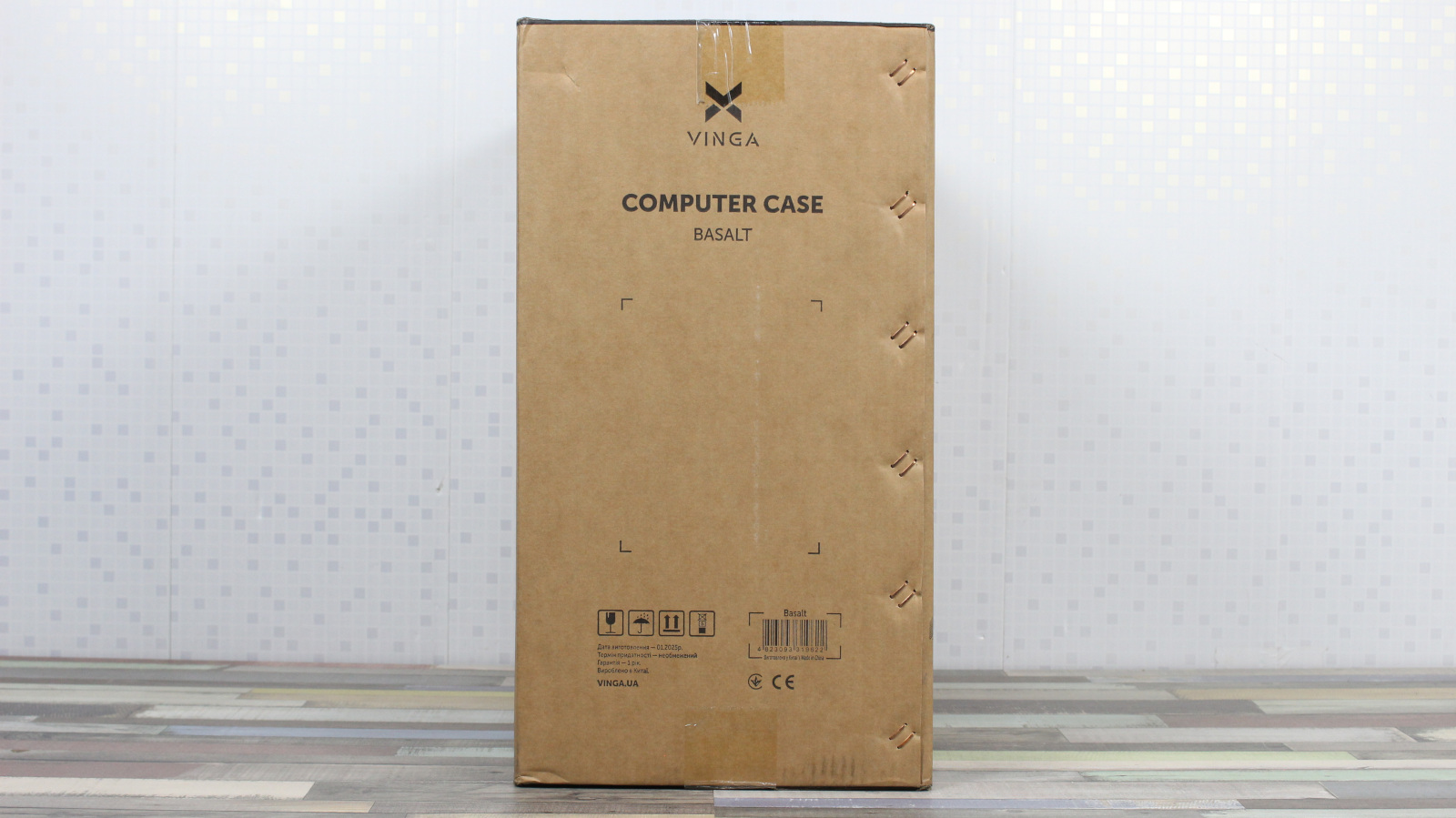
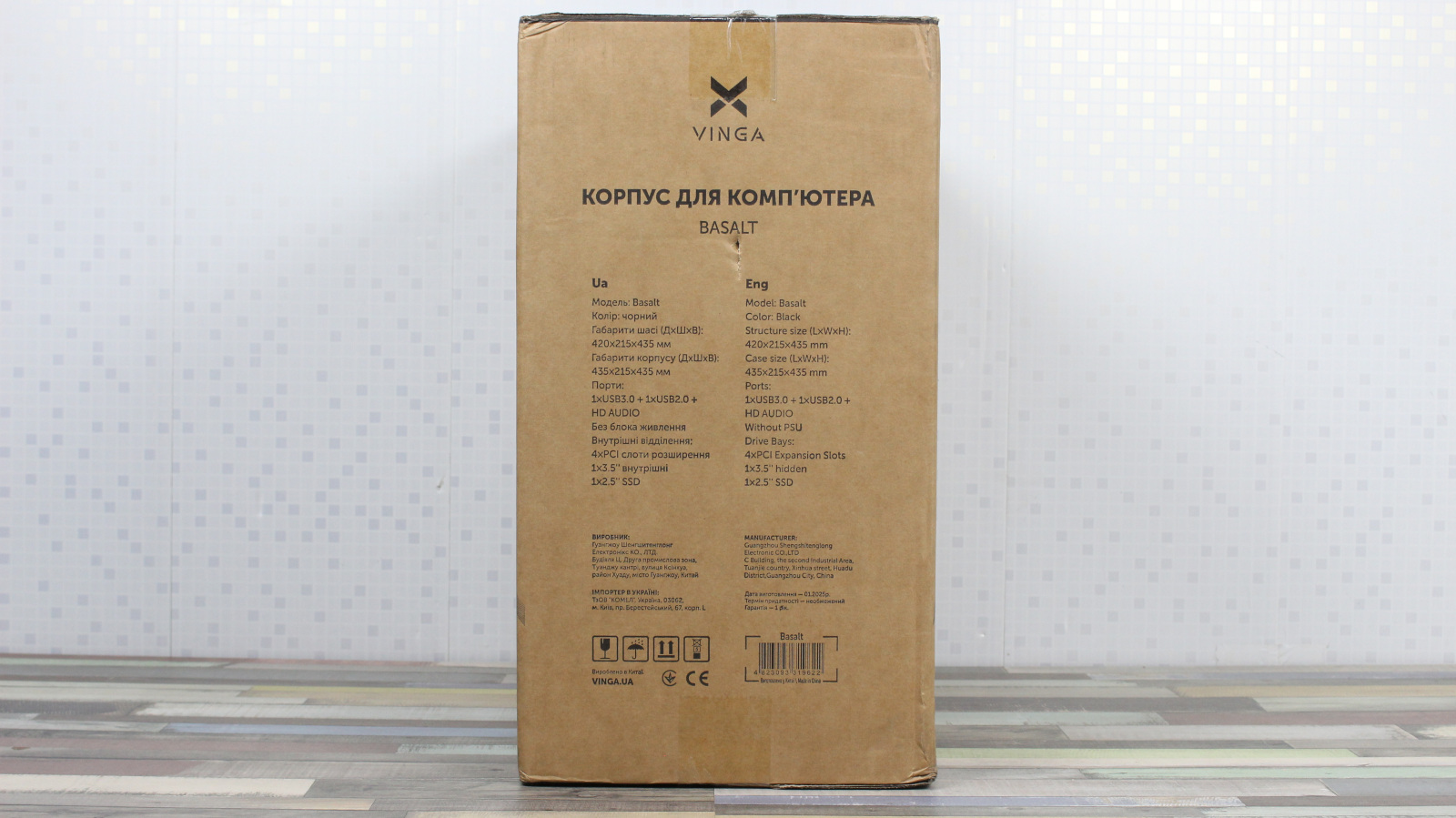
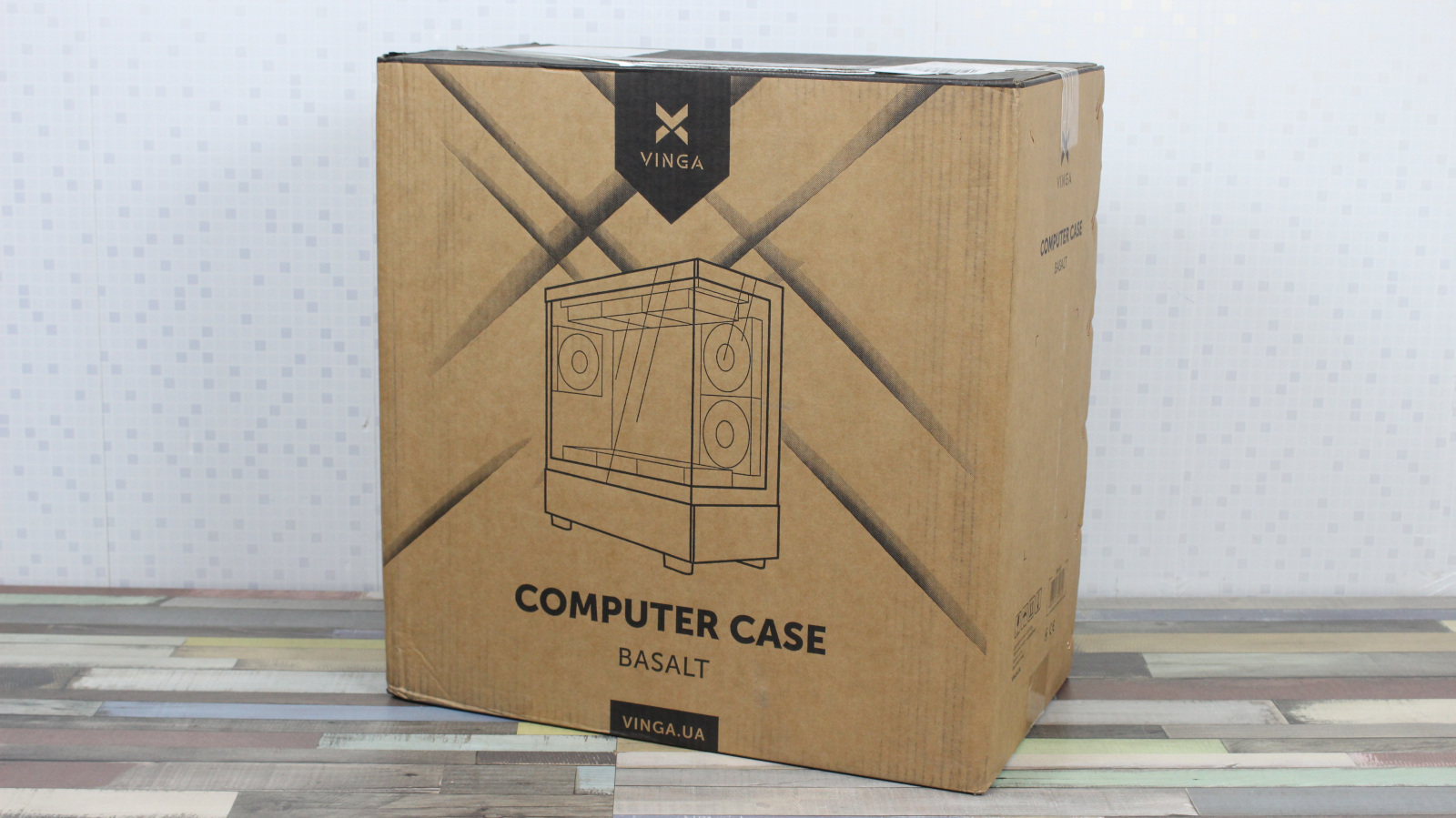
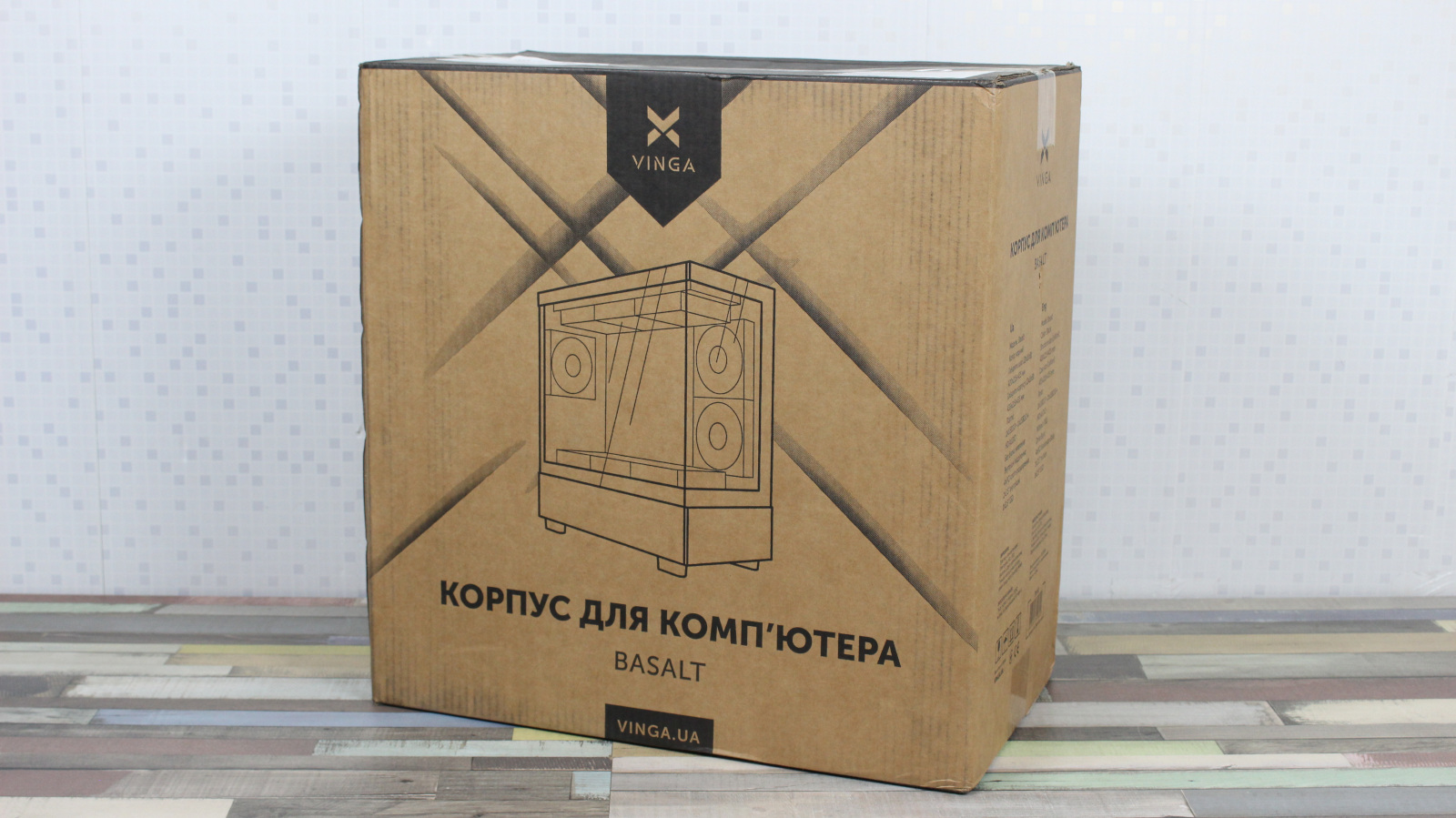
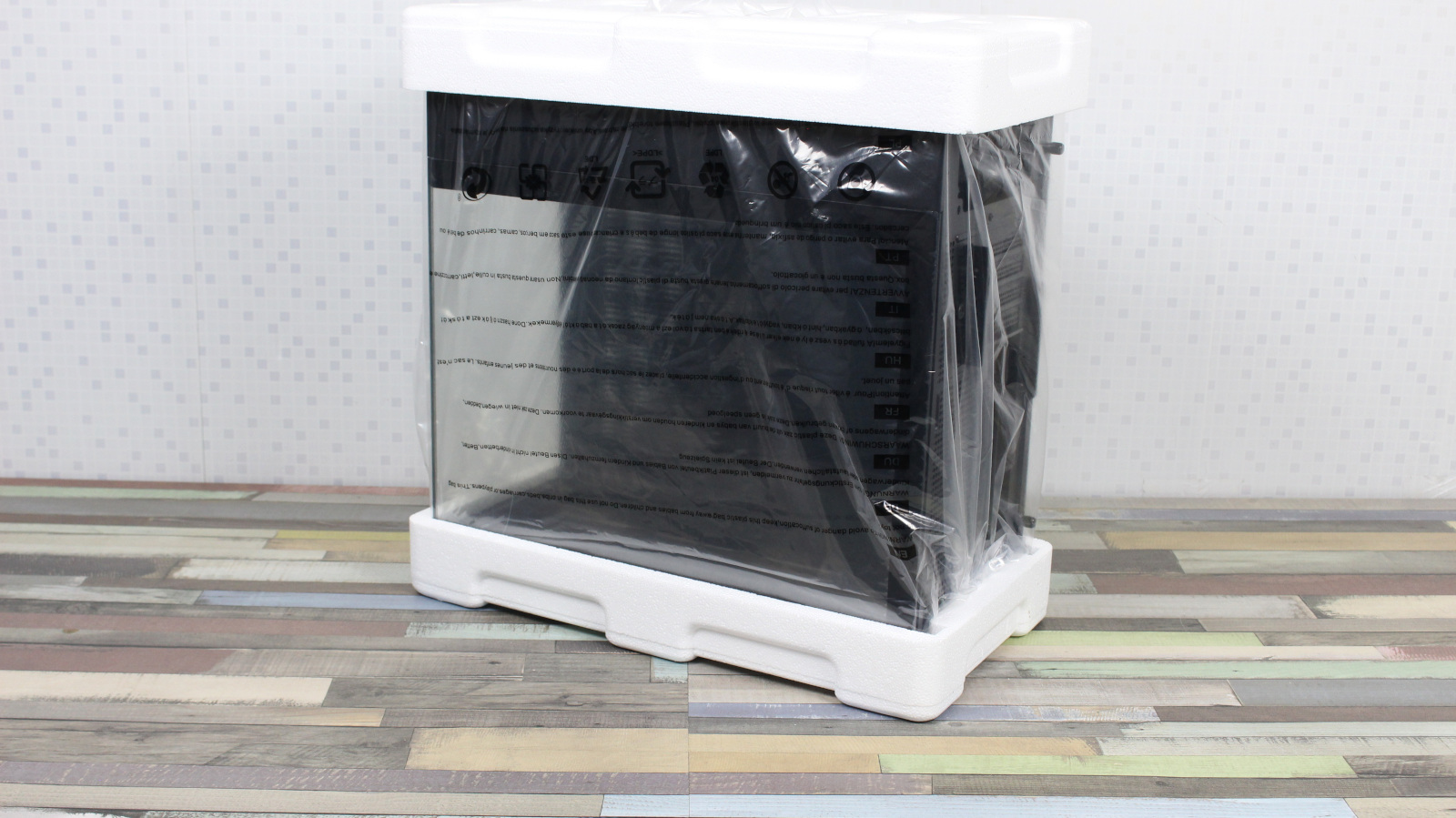
On the front of the cardboard box, there is a schematic image of the Vinga Basalt, and on the side, there are brief specifications in two languages. There are no cutouts for easier transportation.
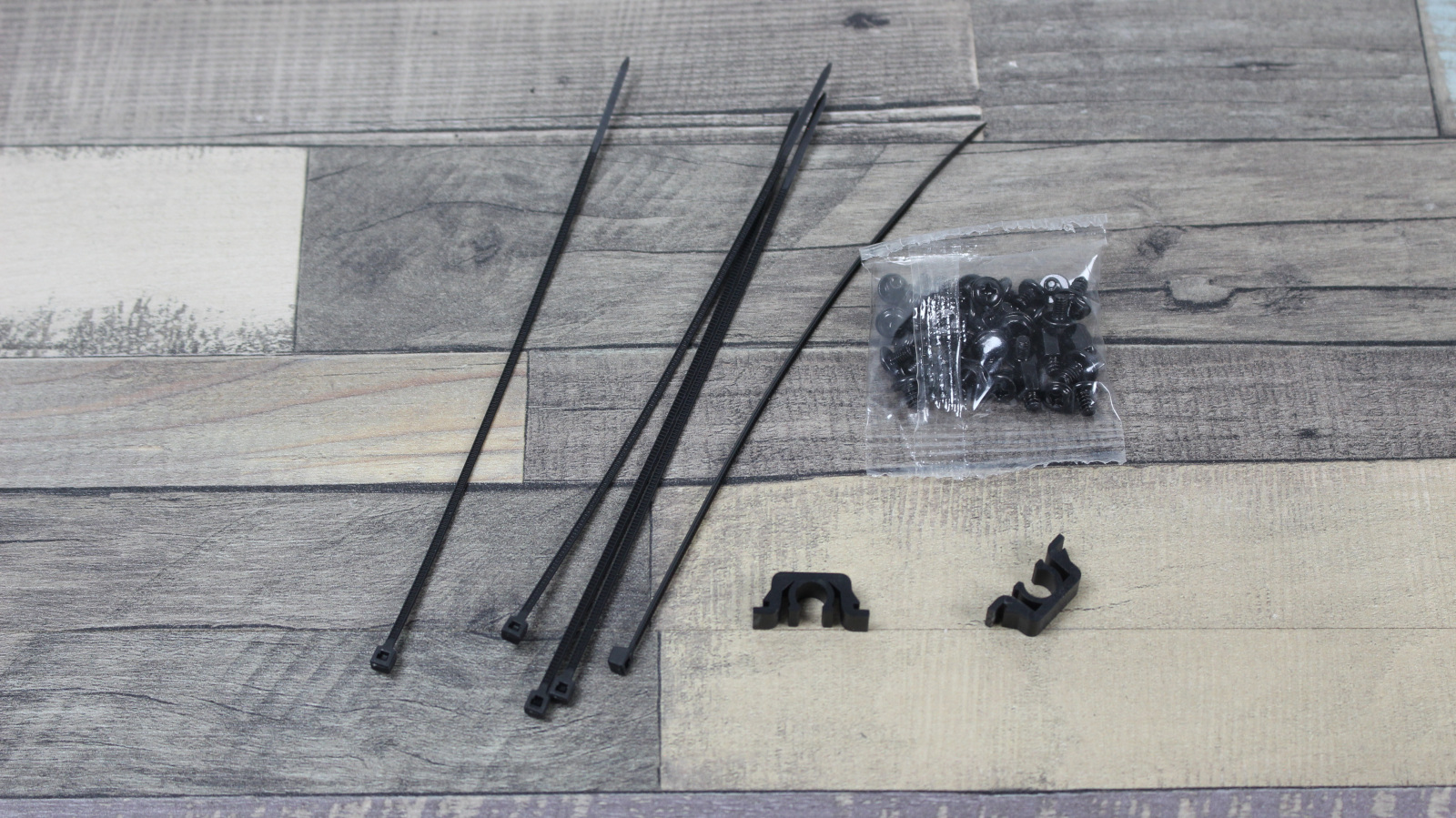
The delivery set of this model includes:
- five disposable plastic cable ties;
- screws for securing the power supply, motherboard, and drives;
- additional supports for the motherboard;
- two spare mounts for the removable case panel.
Appearance
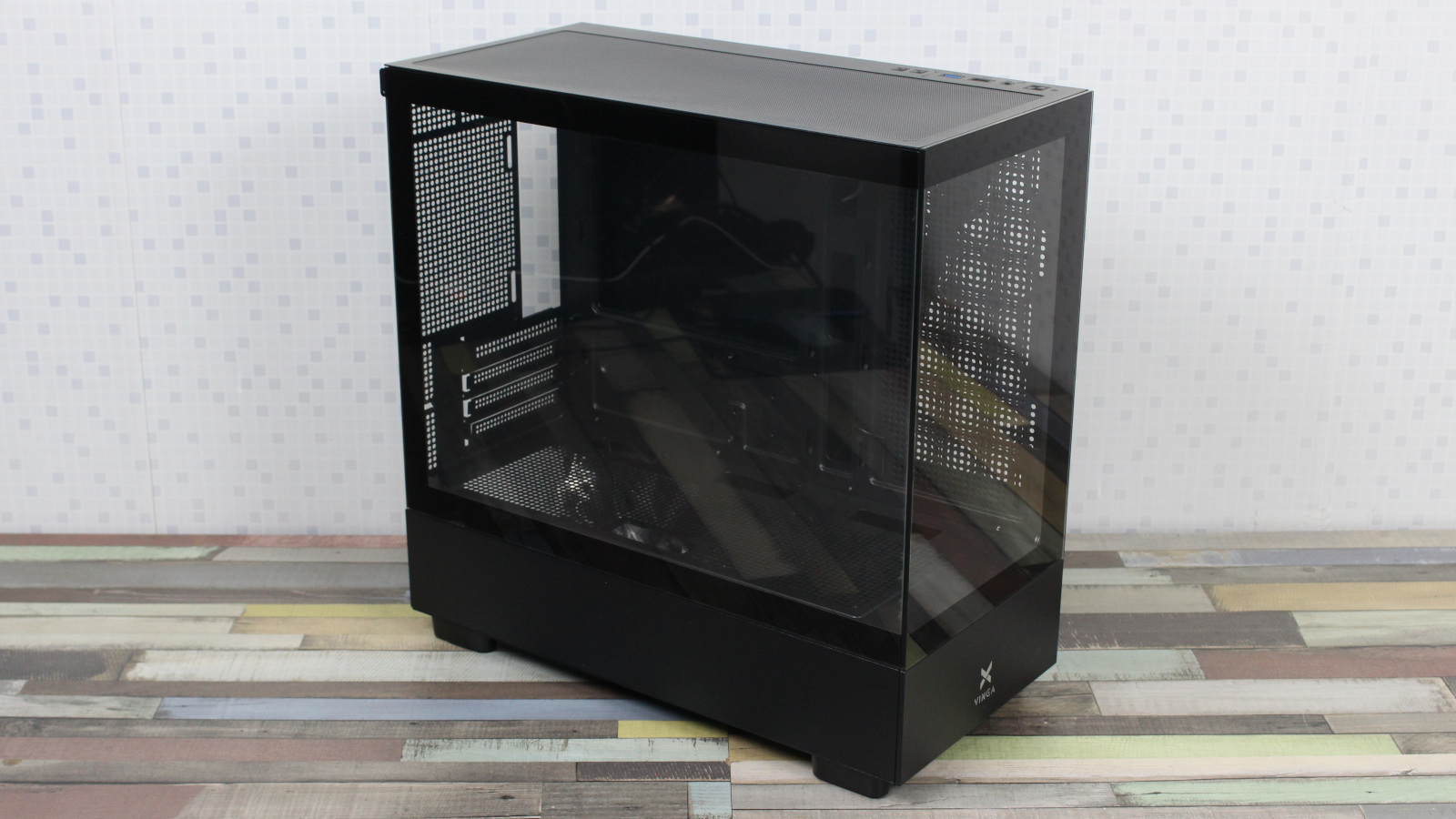
As we mentioned, the manufacturer positions the Vinga Basalt as a Middle Tower case, but due to compatibility with compact motherboards, it can easily be mistaken for Mini Tower representatives. Despite the noticeably lower cost, the review's hero visually does not lag behind typical "aquariums" with panoramic panels.
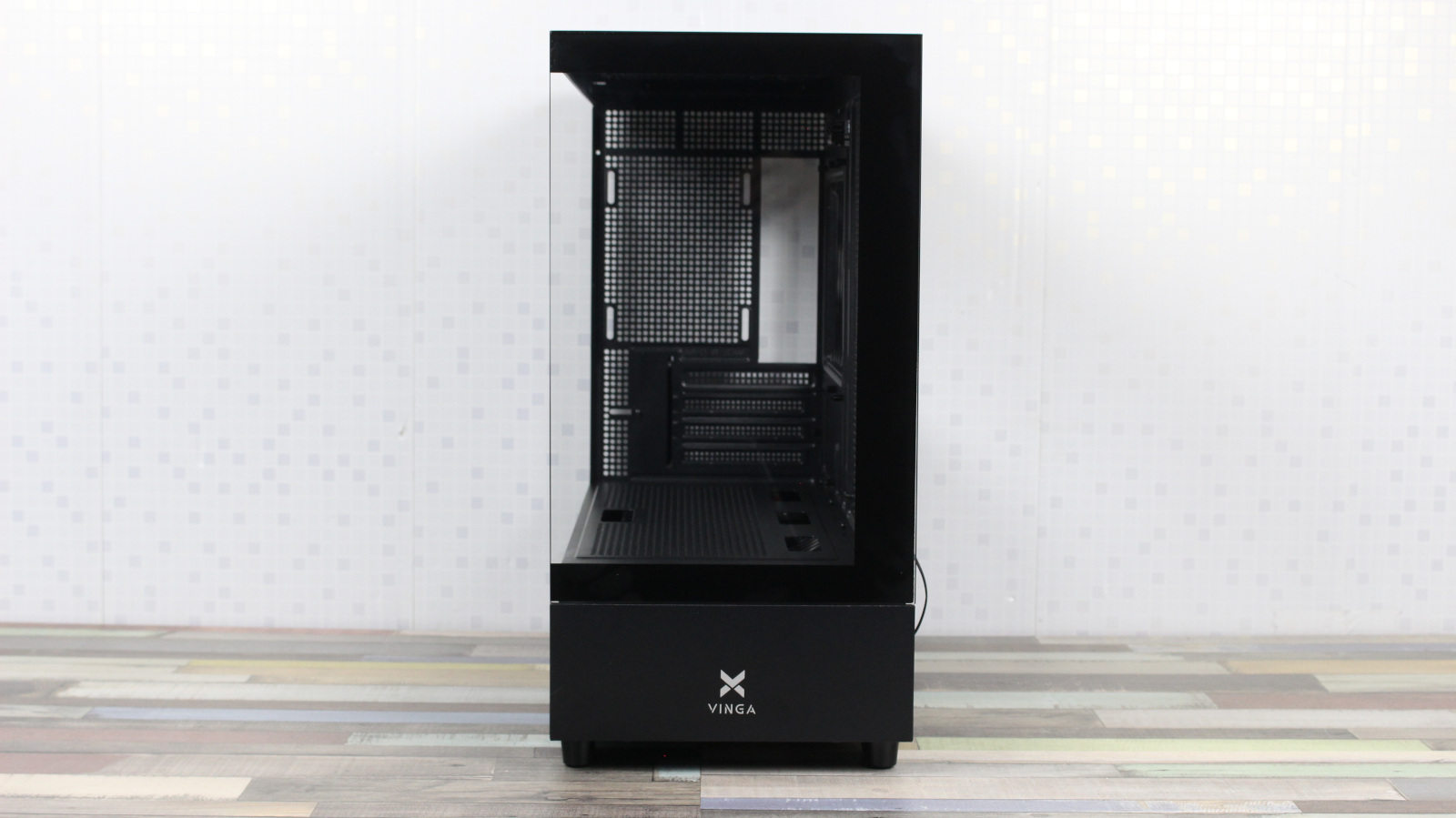
Even removing the tempered glass at the front is quite feasible.
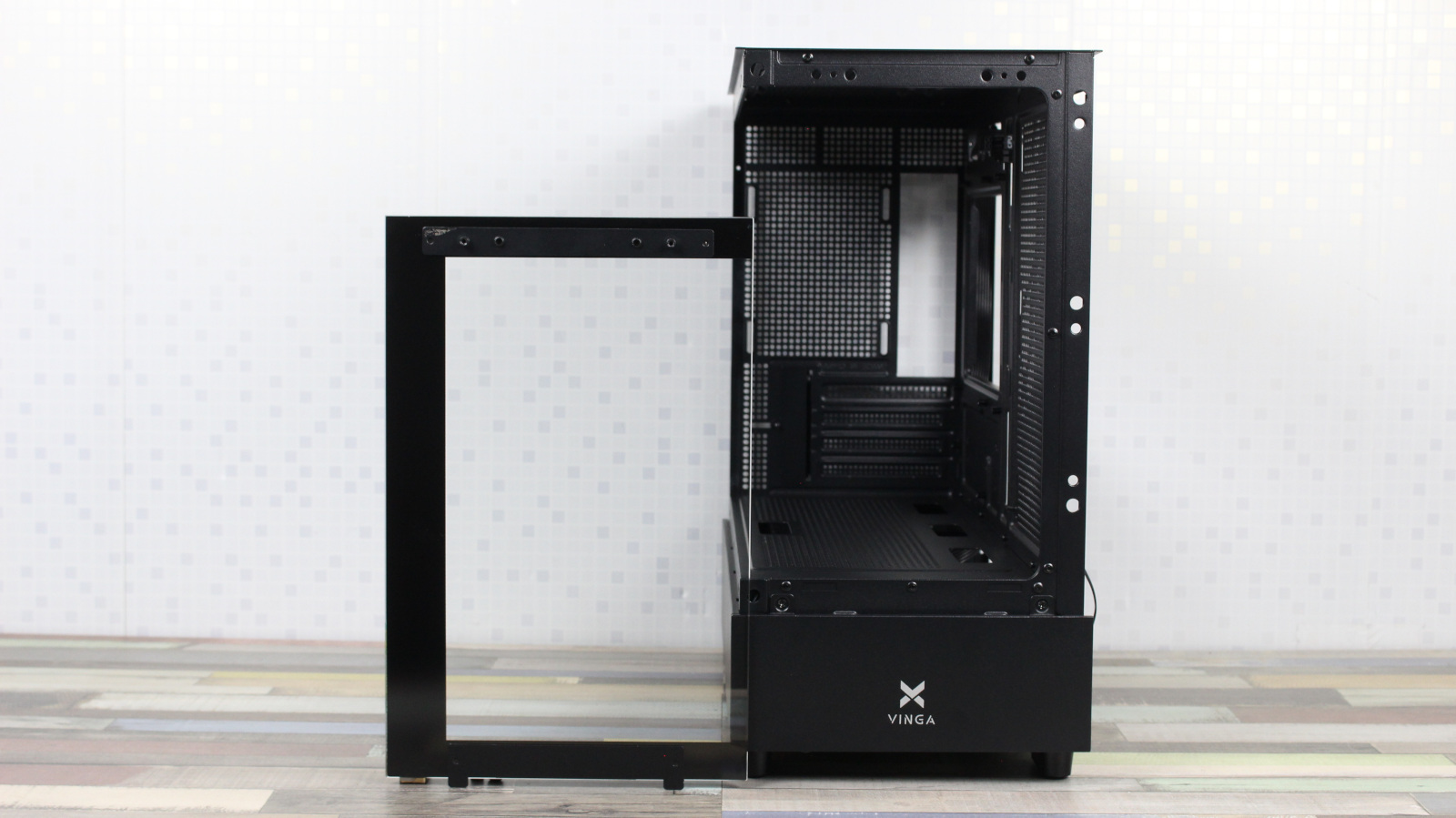
However, unlike competitors, it is held by two screws at the top and two metal tabs at the bottom. On the lower element of the front panel, the user will only see the centrally located white manufacturer logo.
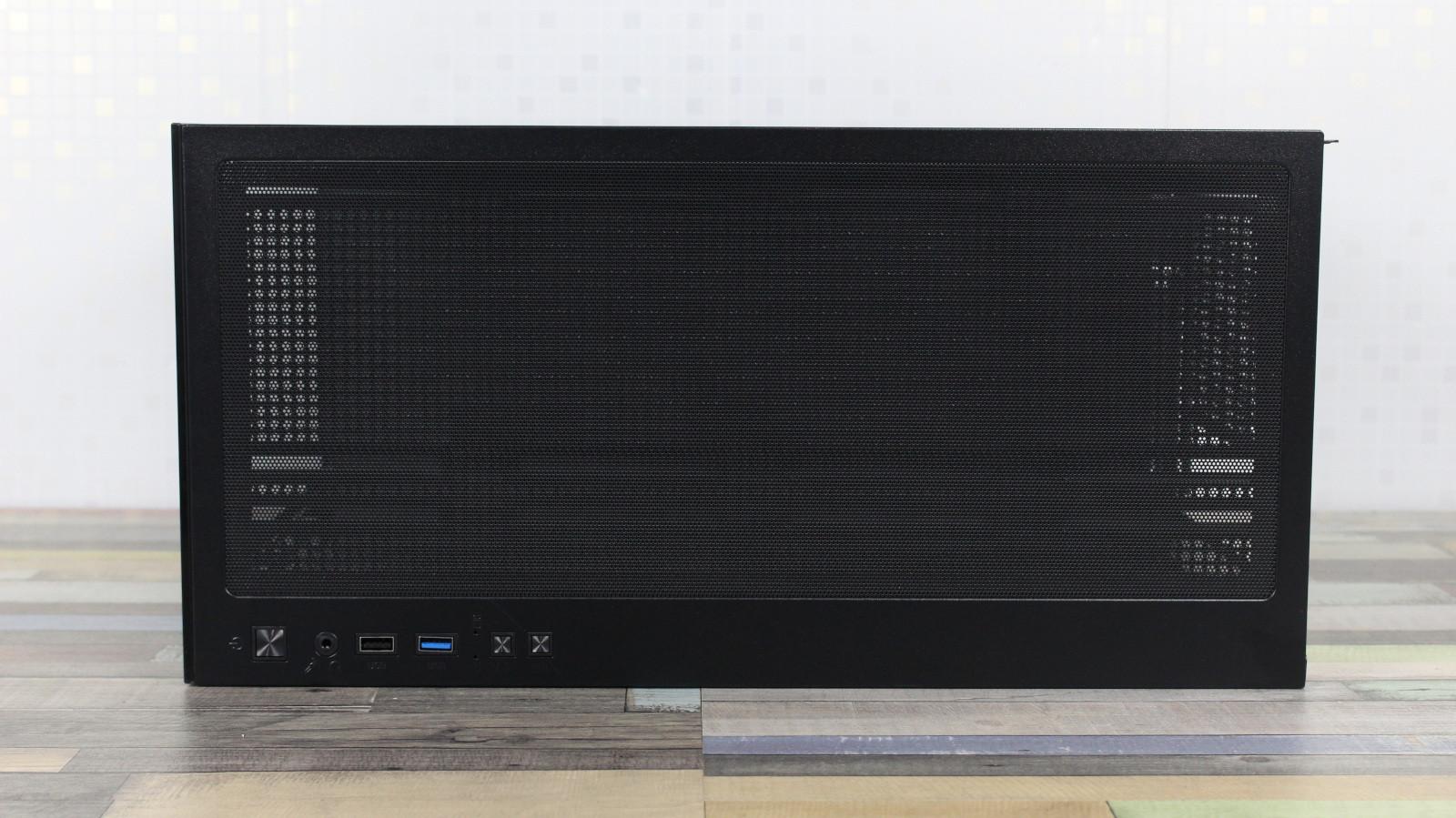
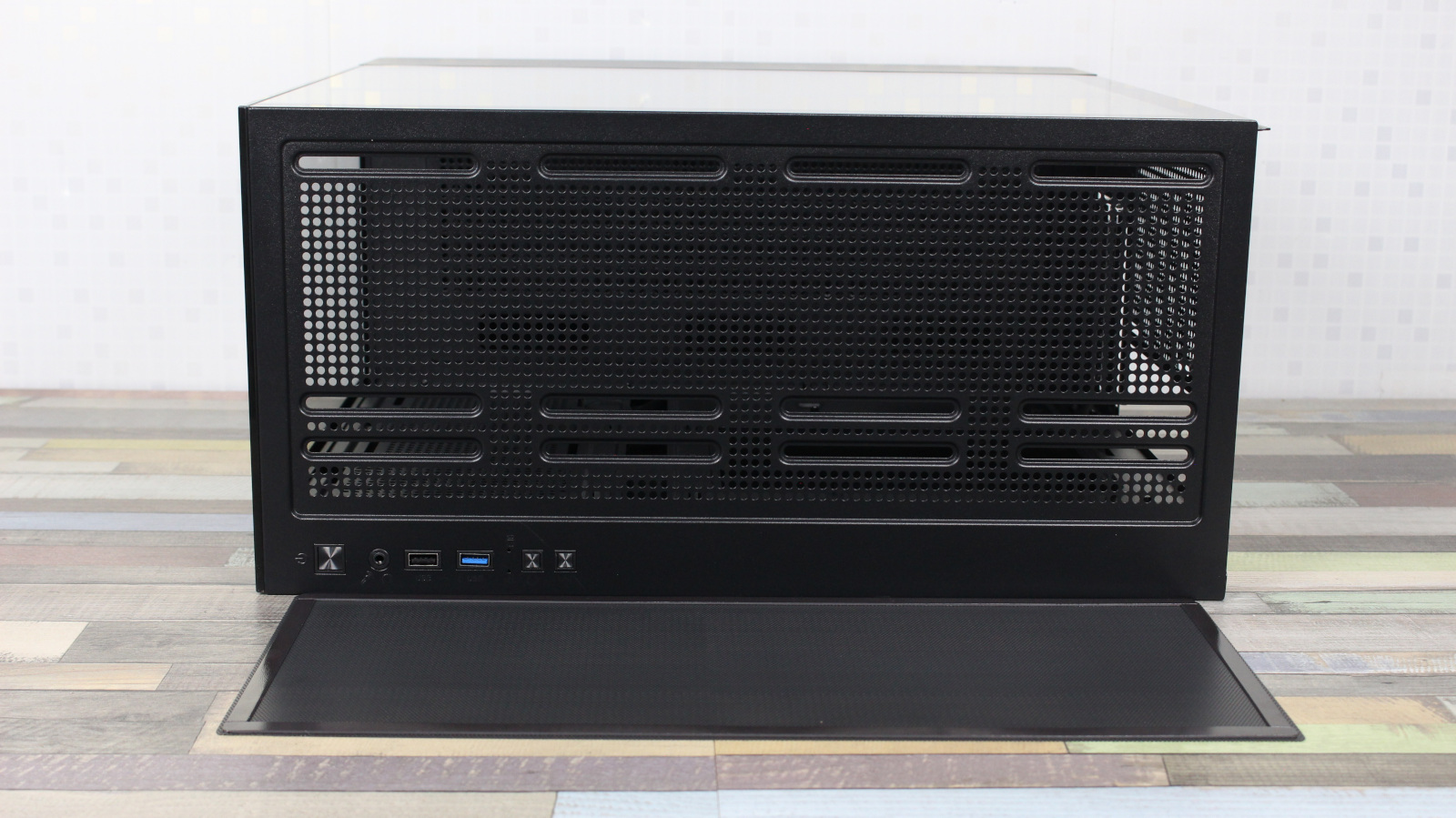
The top panel of the Vinga Basalt is made of steel and is non-removable. It features an area measuring 380 x 150 mm with perforation and is covered by a standard dust filter with magnetic attachment.
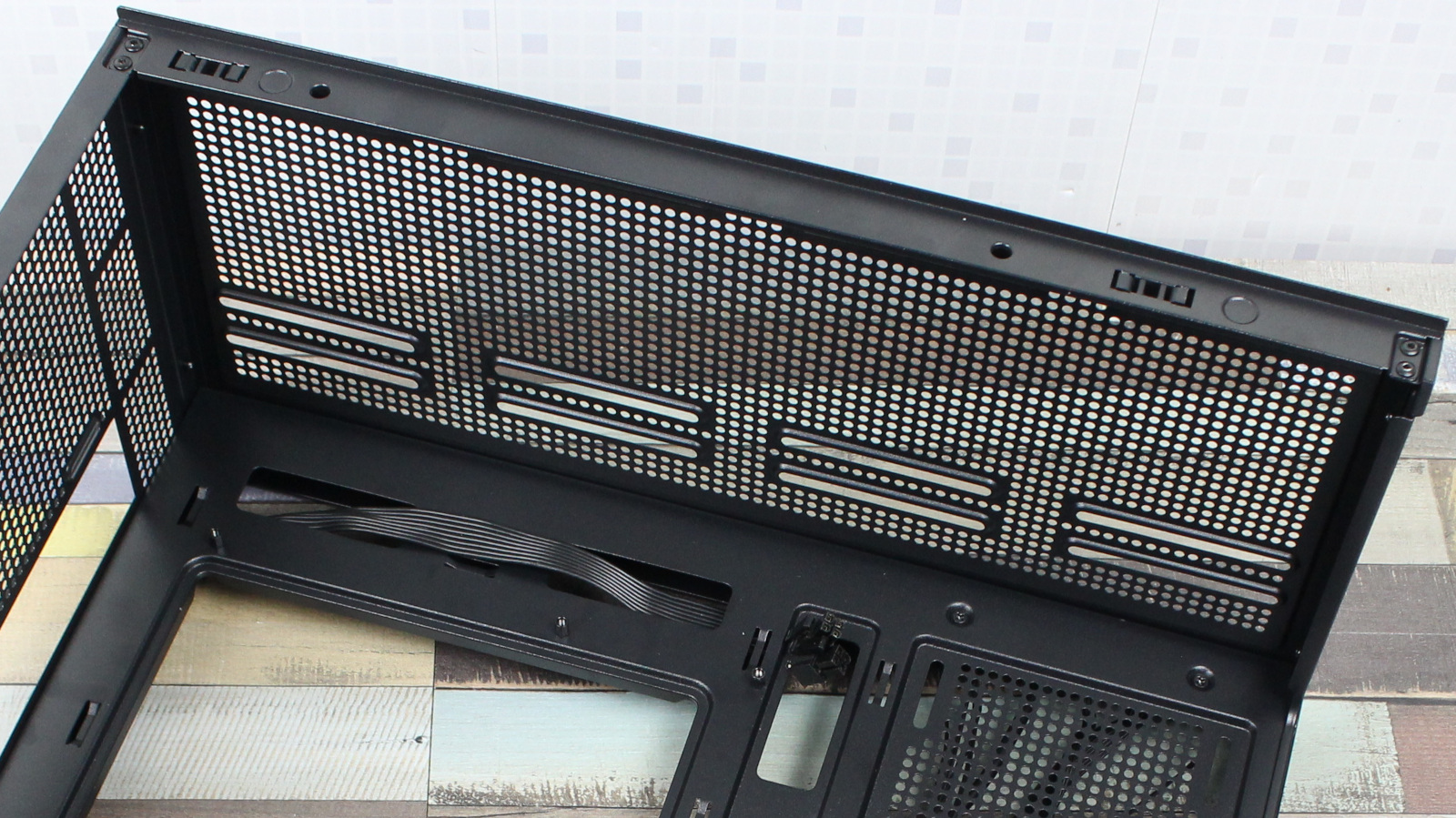
Inside the case, on this panel, Vinga has provided the possibility of mounting three 120-mm or two 140-mm fans. Alternatively, a 360-mm radiator of a liquid cooling system can be installed here.
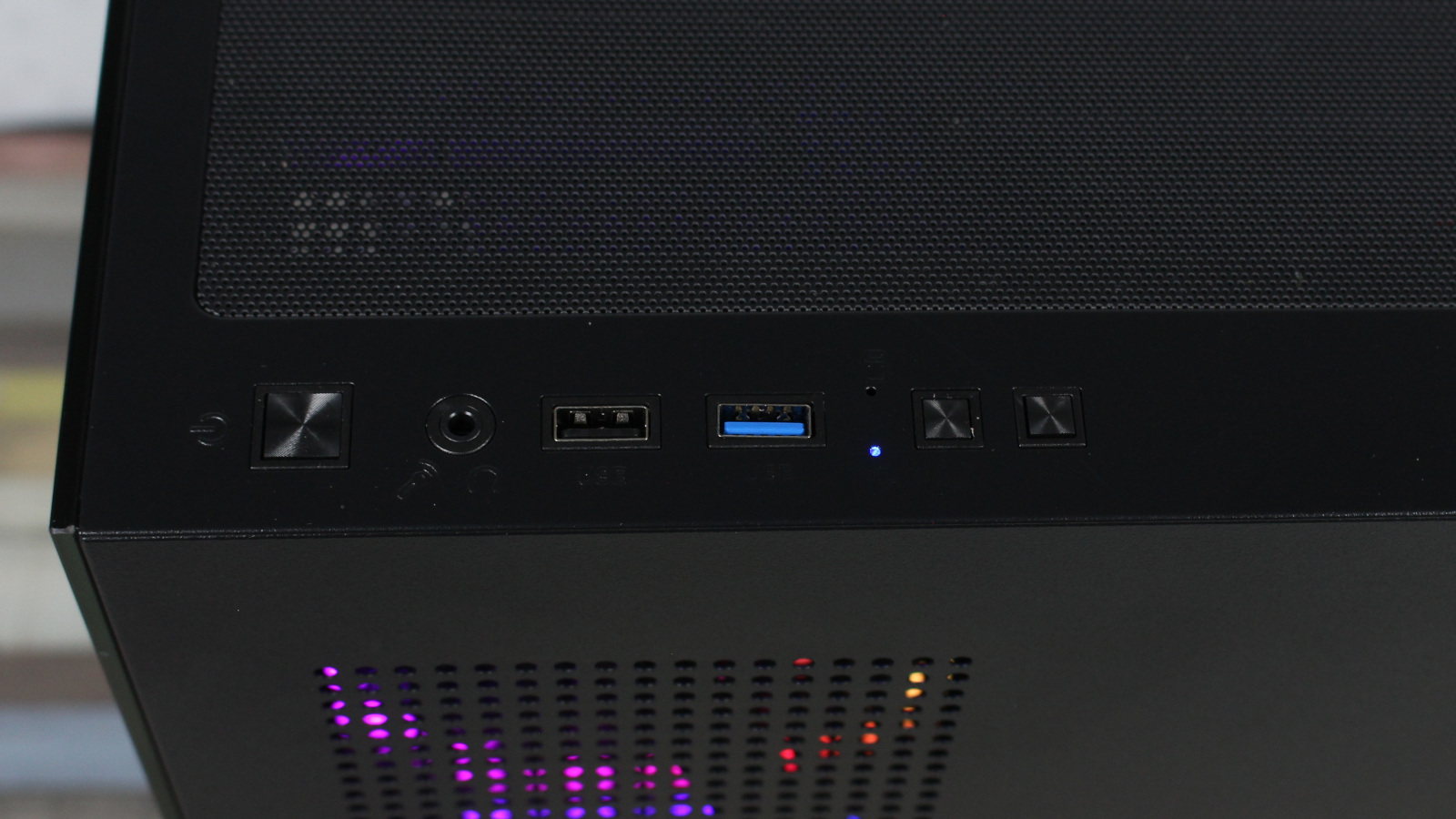
The set of ports near the front right corner is quite austere by modern standards. The user is offered one USB 2.0 and one USB 3.0 Type-A. However, there is a separate button for controlling the illumination (requires the presence of fans with ARGB lighting). The PC power (blue) and device activity (red) indicators are located separately from the buttons and have a subdued glow.
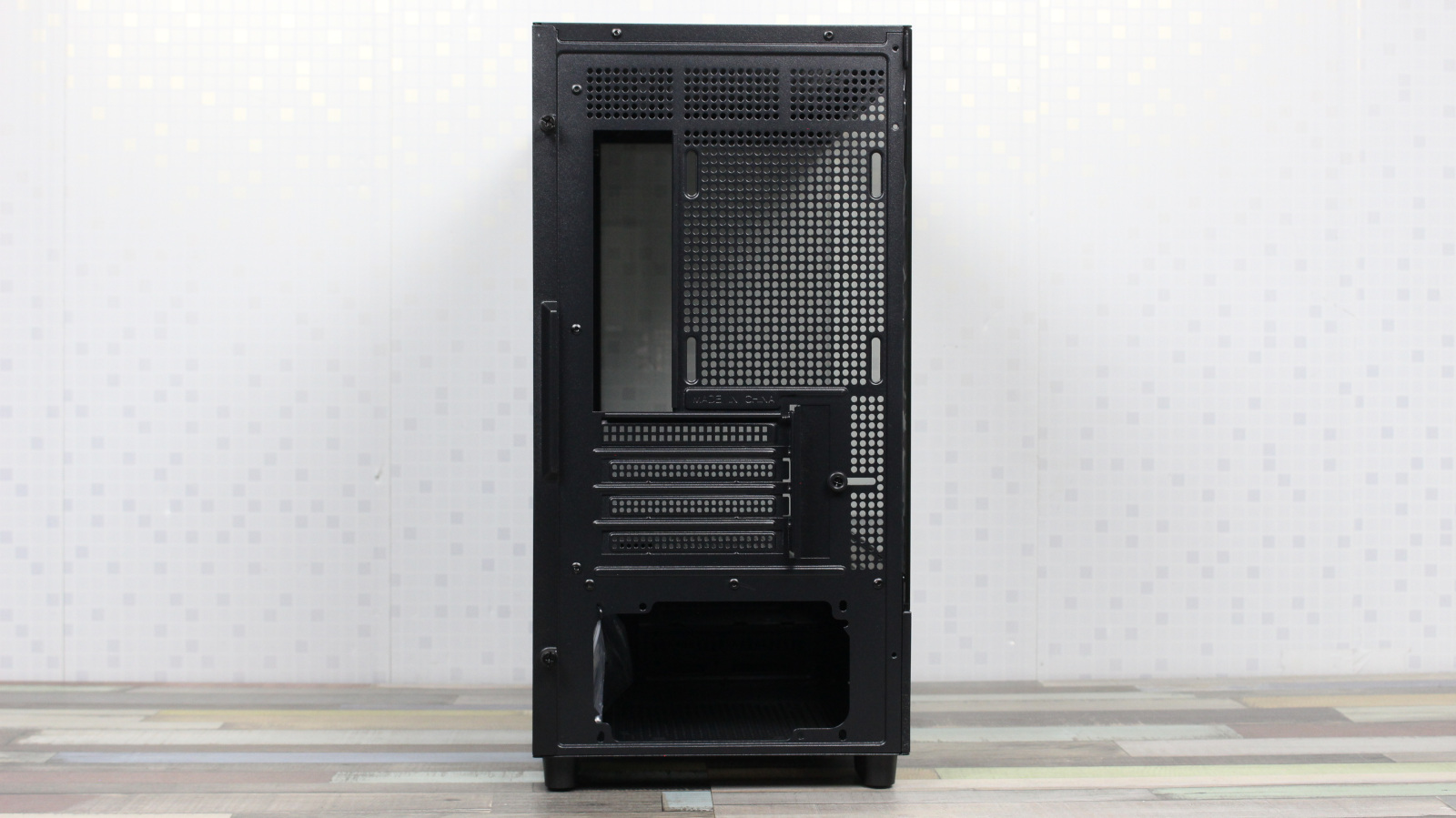
The rear part of the review's hero is generously perforated.
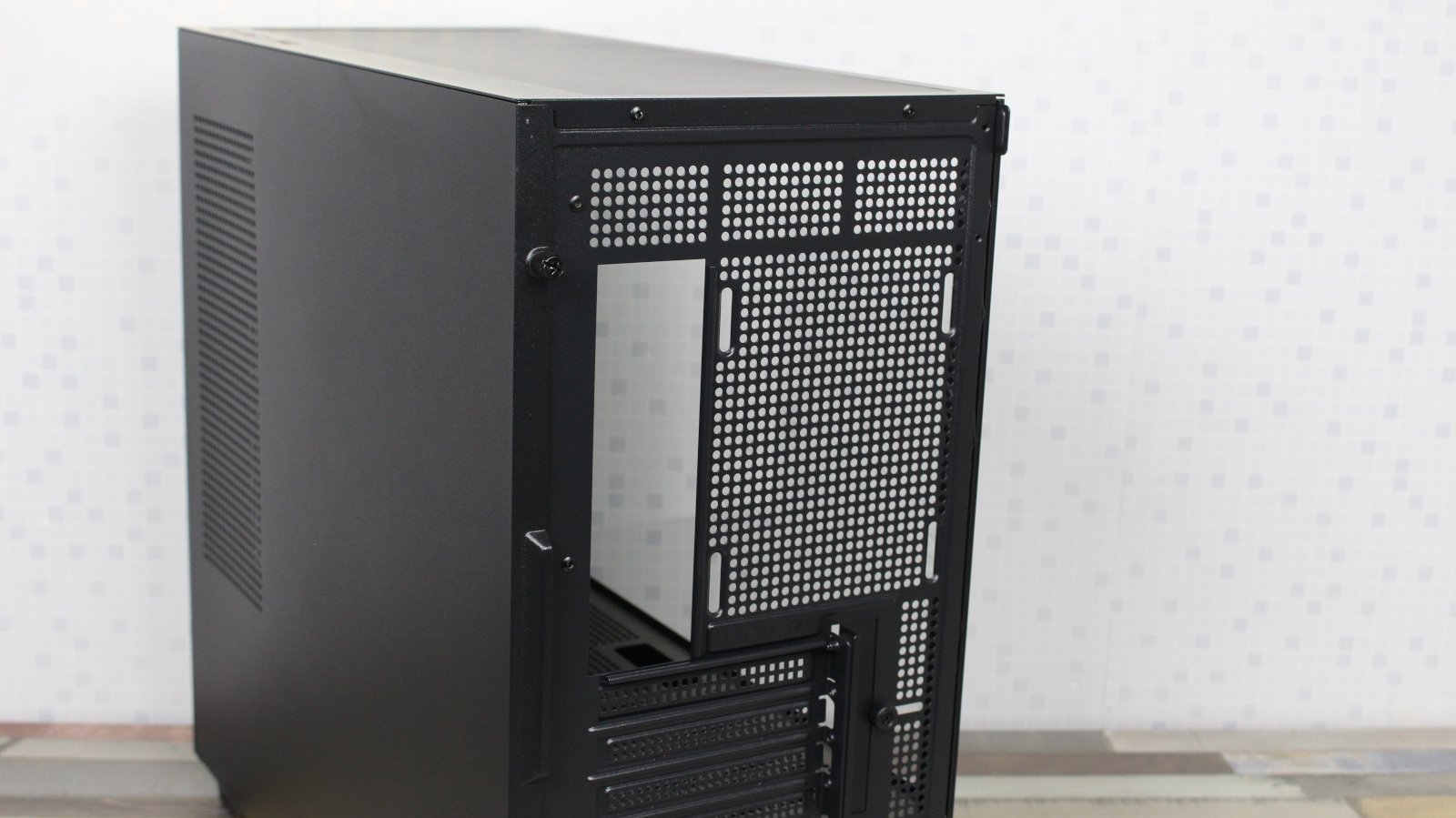
On the right, one 120-mm fan can be installed, with its position adjustable in height.
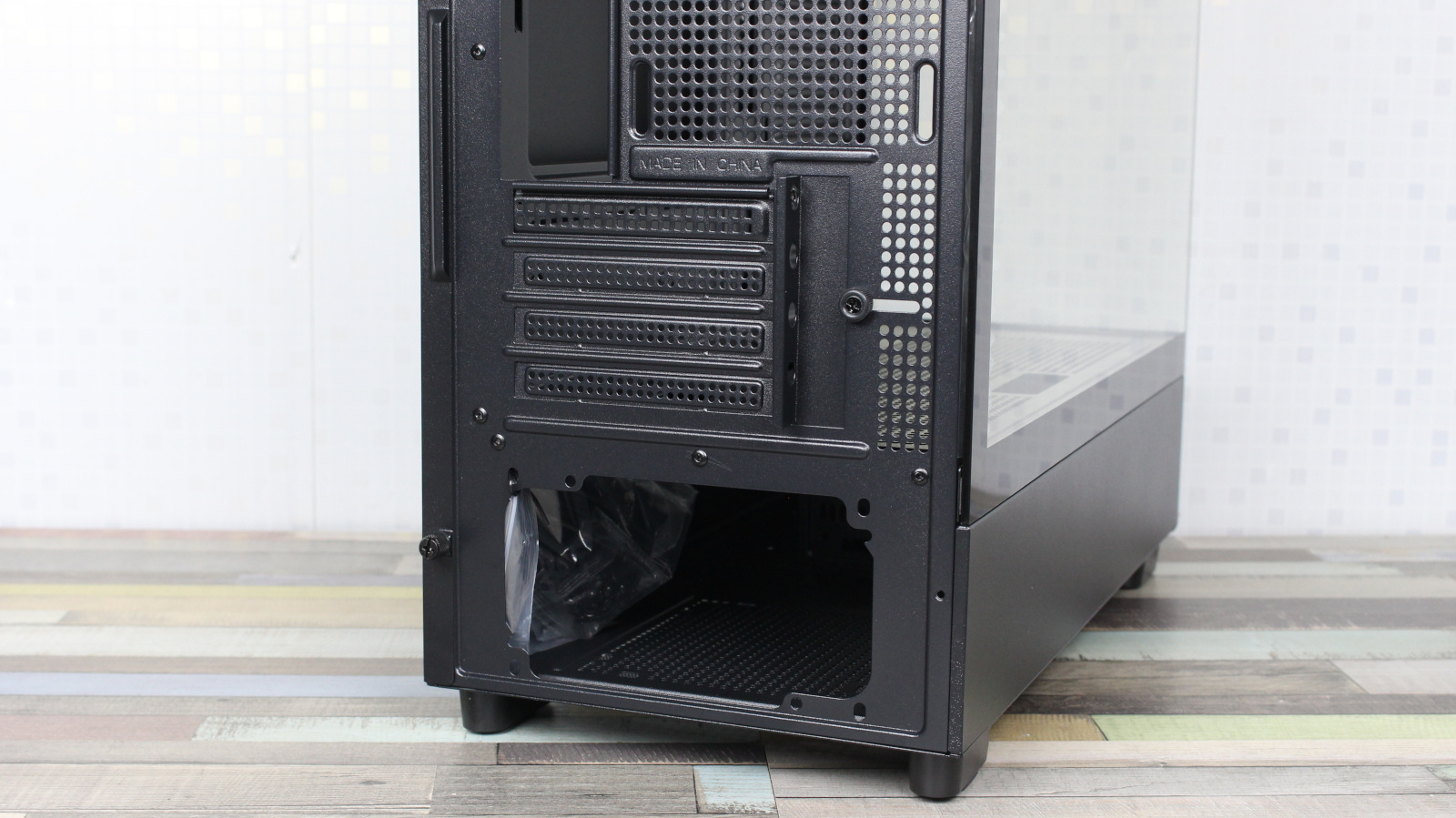
Below are four expansion slots. They are covered with ventilated plugs, only the top one of which is reusable. The possibility of vertical GPU installation is not provided here.
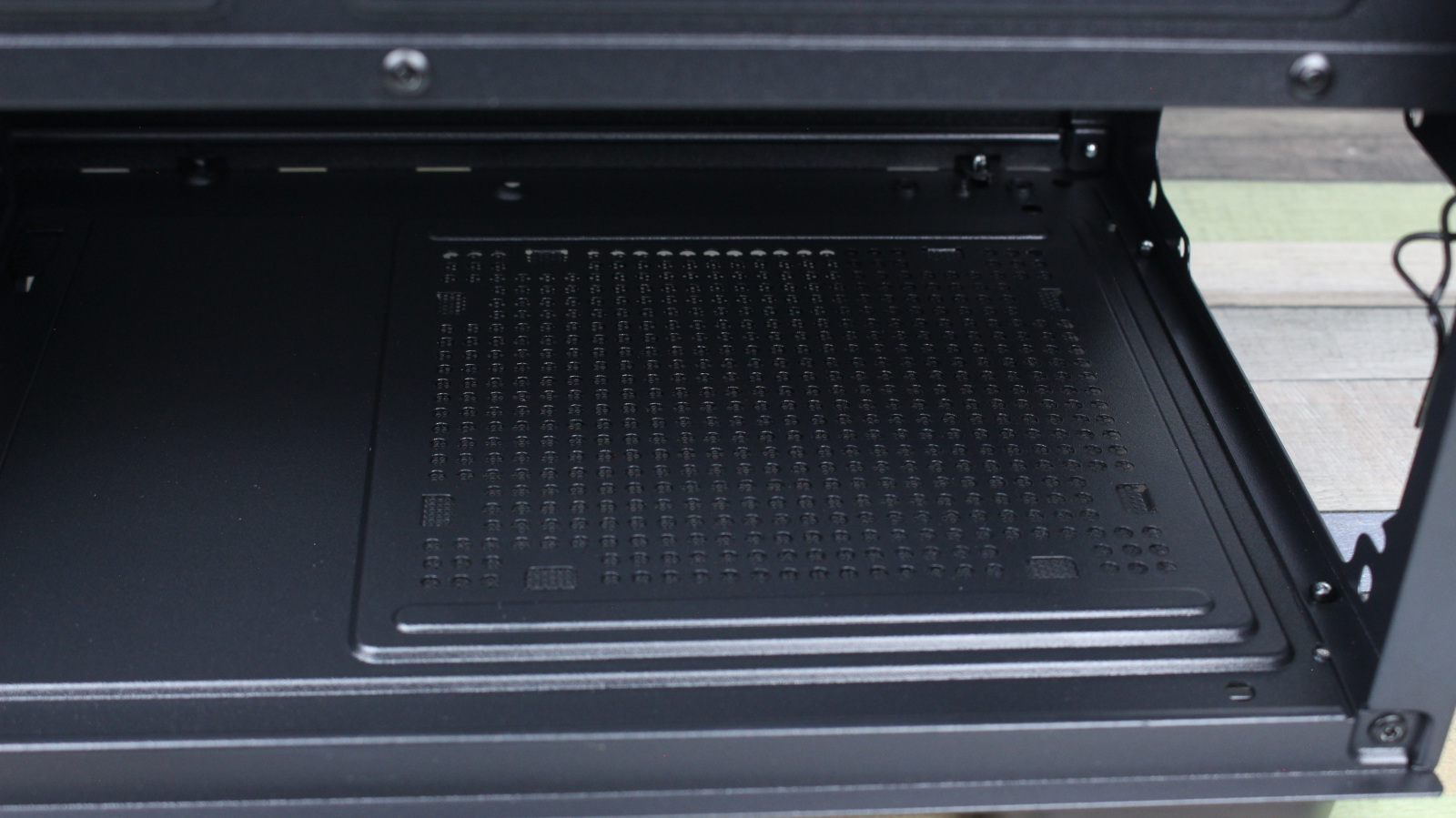
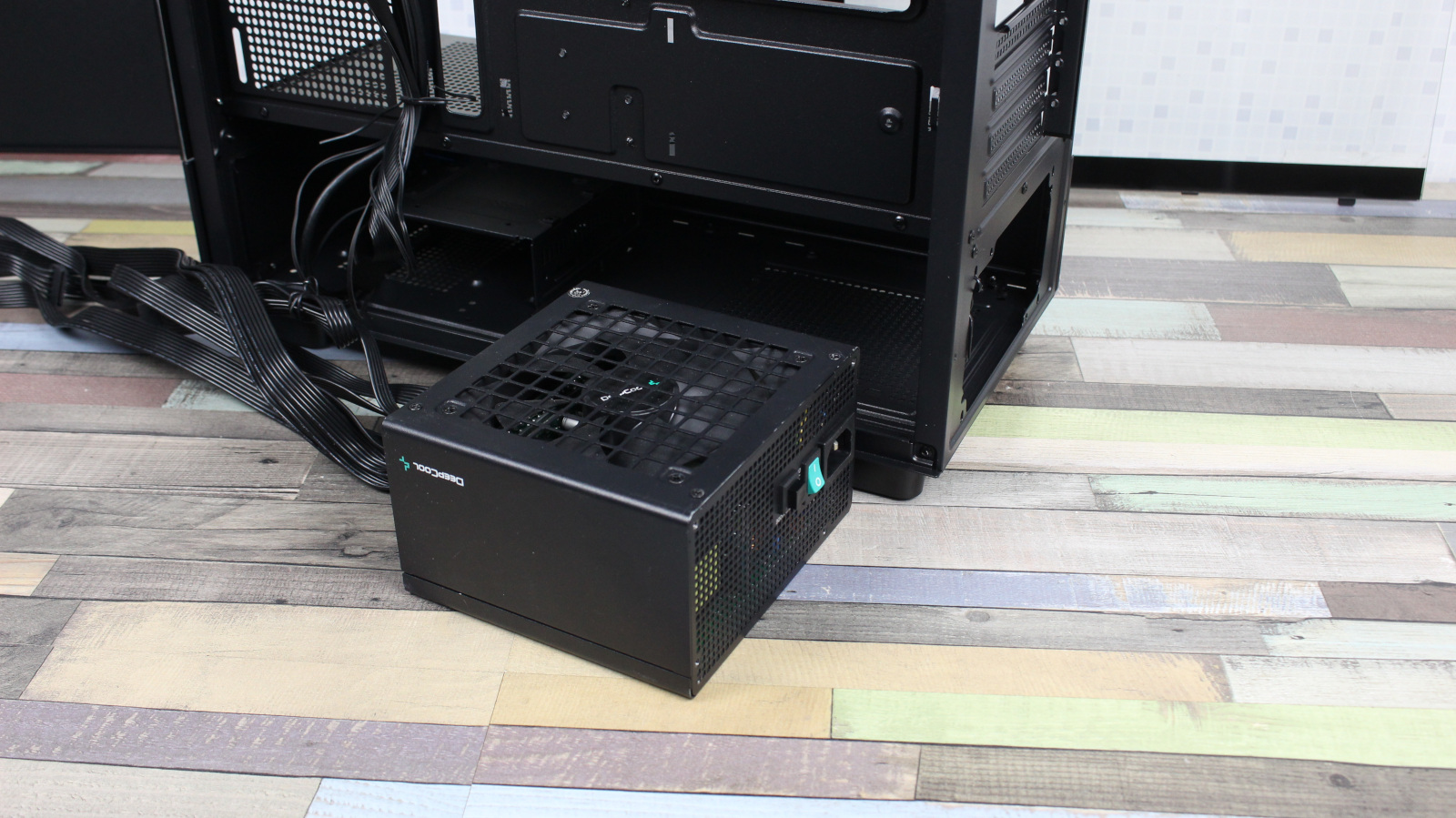
The power supply mounting location has classic mounts and allows for the installation of PSUs up to 200 mm in length.
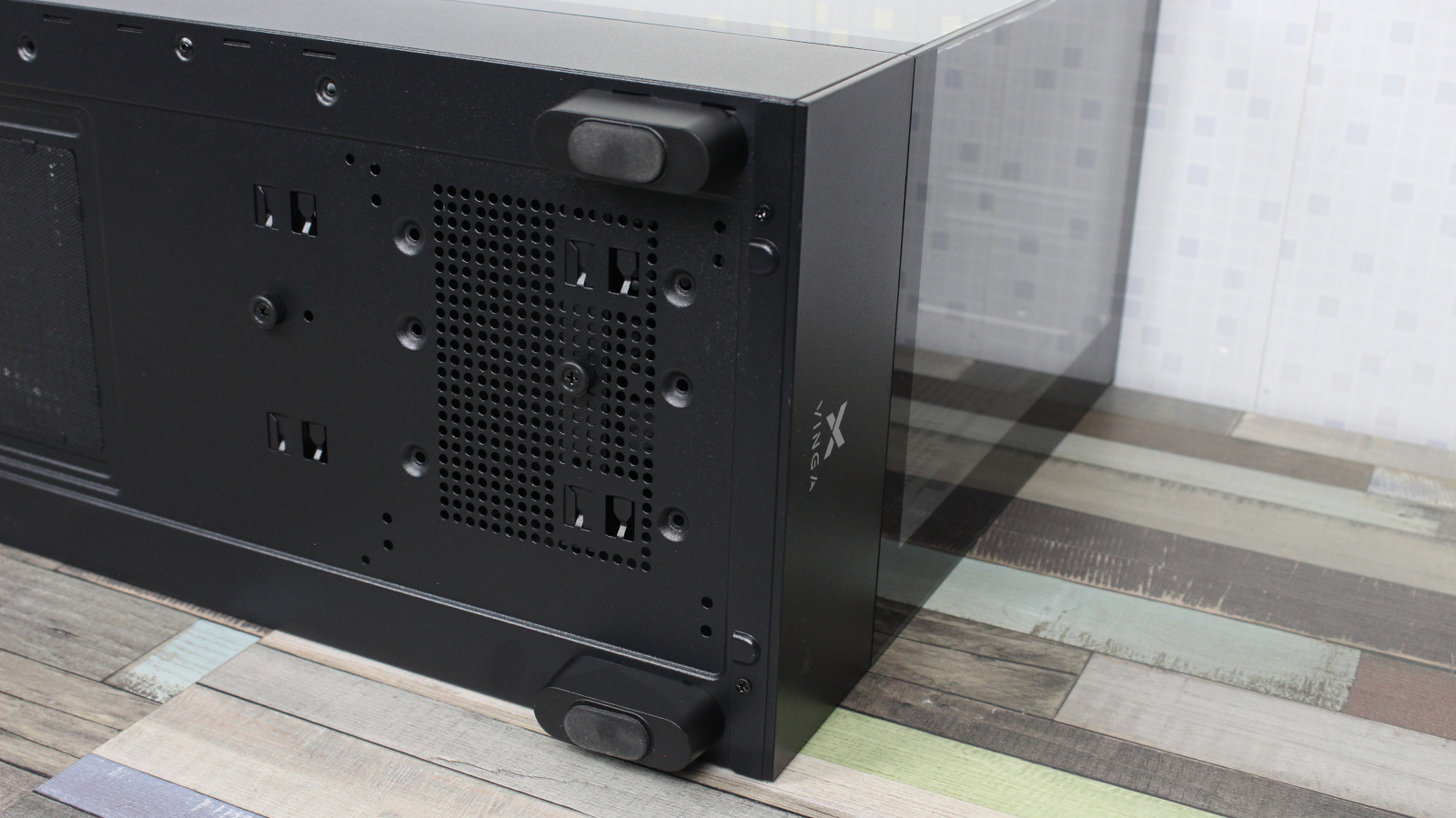
At the bottom of the Vinga Basalt, there are four oval plastic feet with a height of 22 mm. They have miniature anti-slip pads.
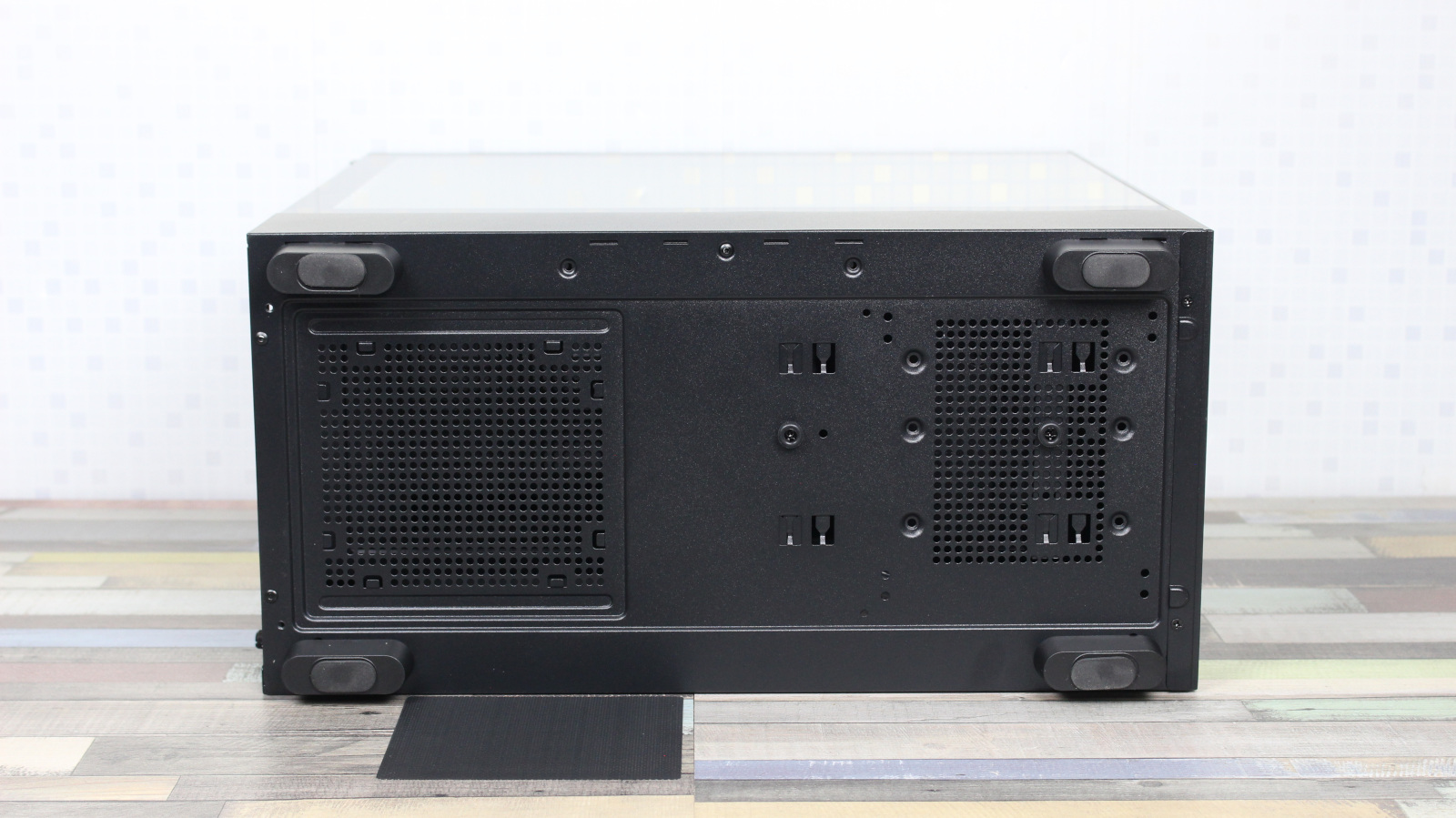
At the PSU mounting location, the bottom of the case has perforation covered by a budget dust filter.
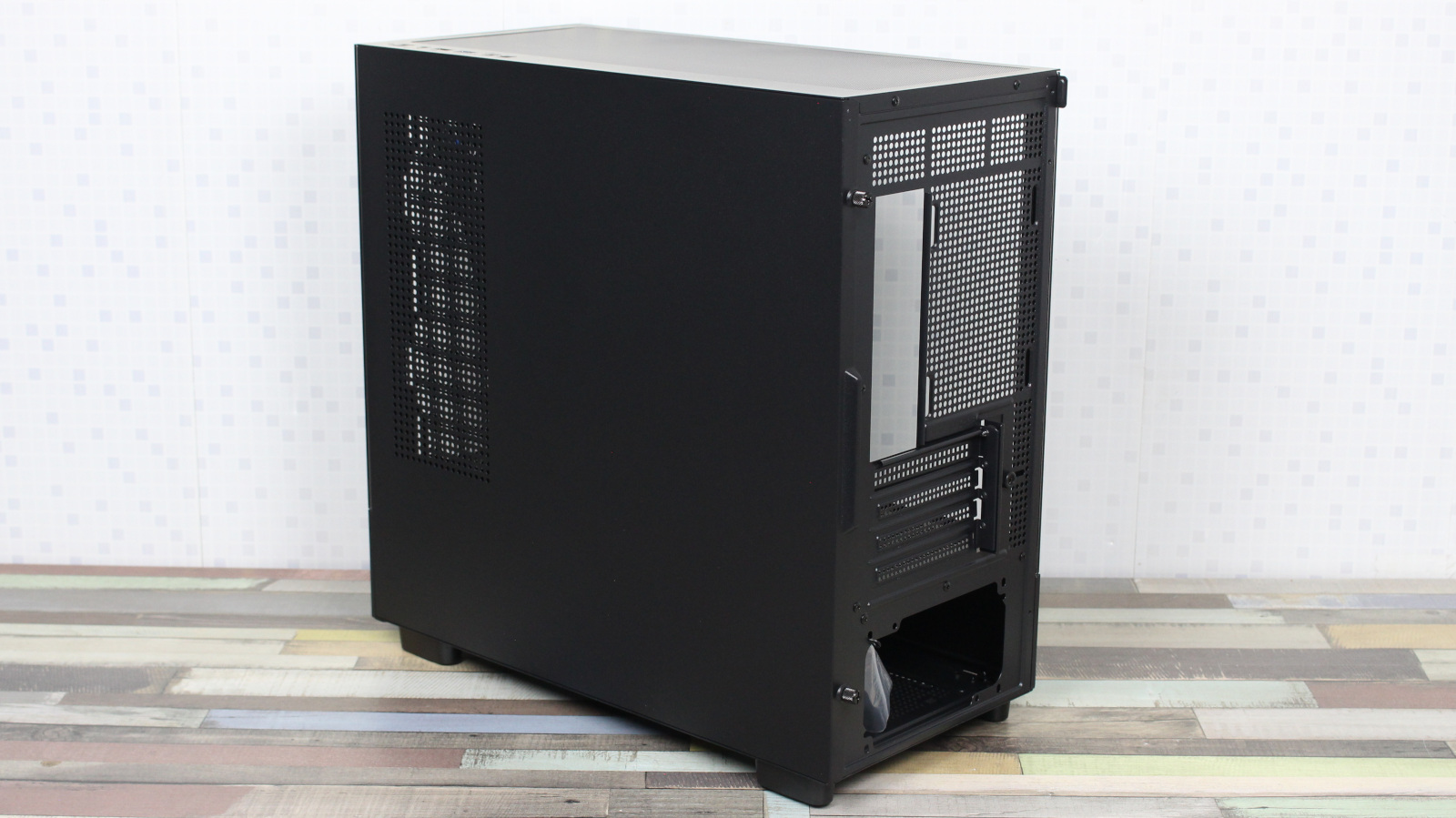
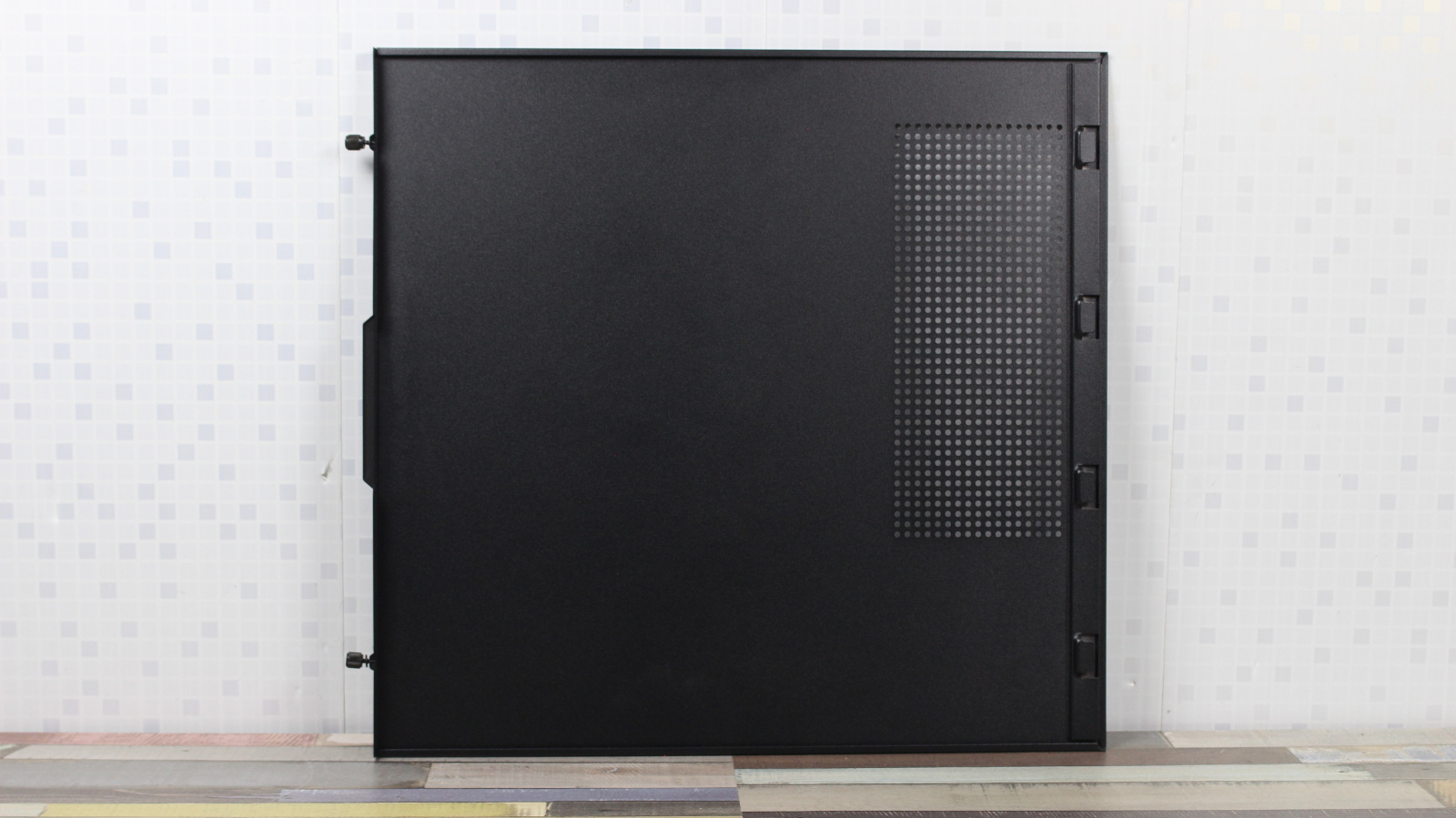
The right cover is made of steel with a thickness of 0.59 mm. It features a perforated area measuring 100 x 240 mm. Unfortunately, there is no dust filter here. It is secured to the case with two thumb screws and is removed by sliding it backward.
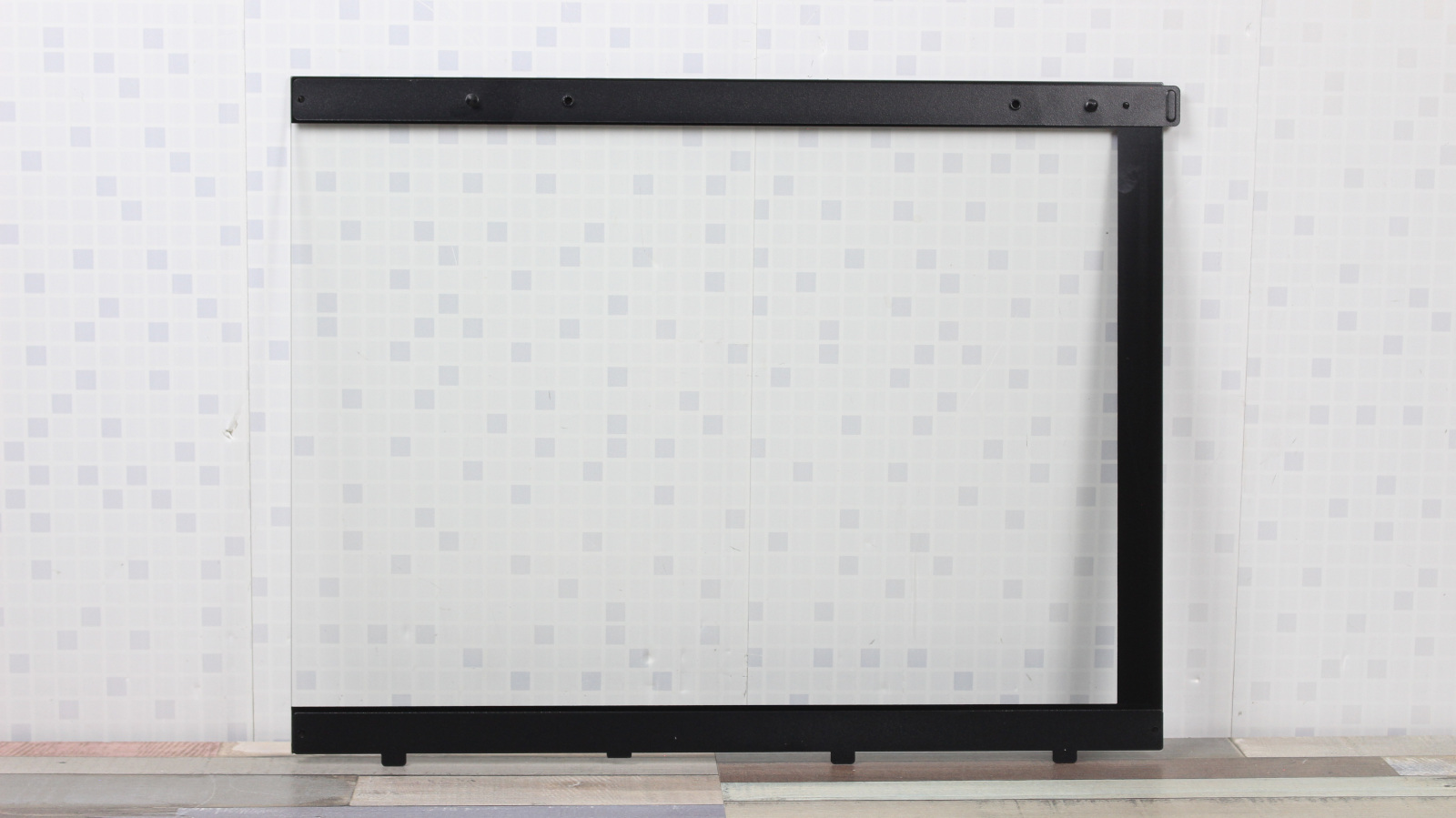
The left side panel is made of 4 mm thick tempered glass and is held in place by two "mushroom" fasteners that fit into plastic clips, as well as four metal tabs at the bottom.
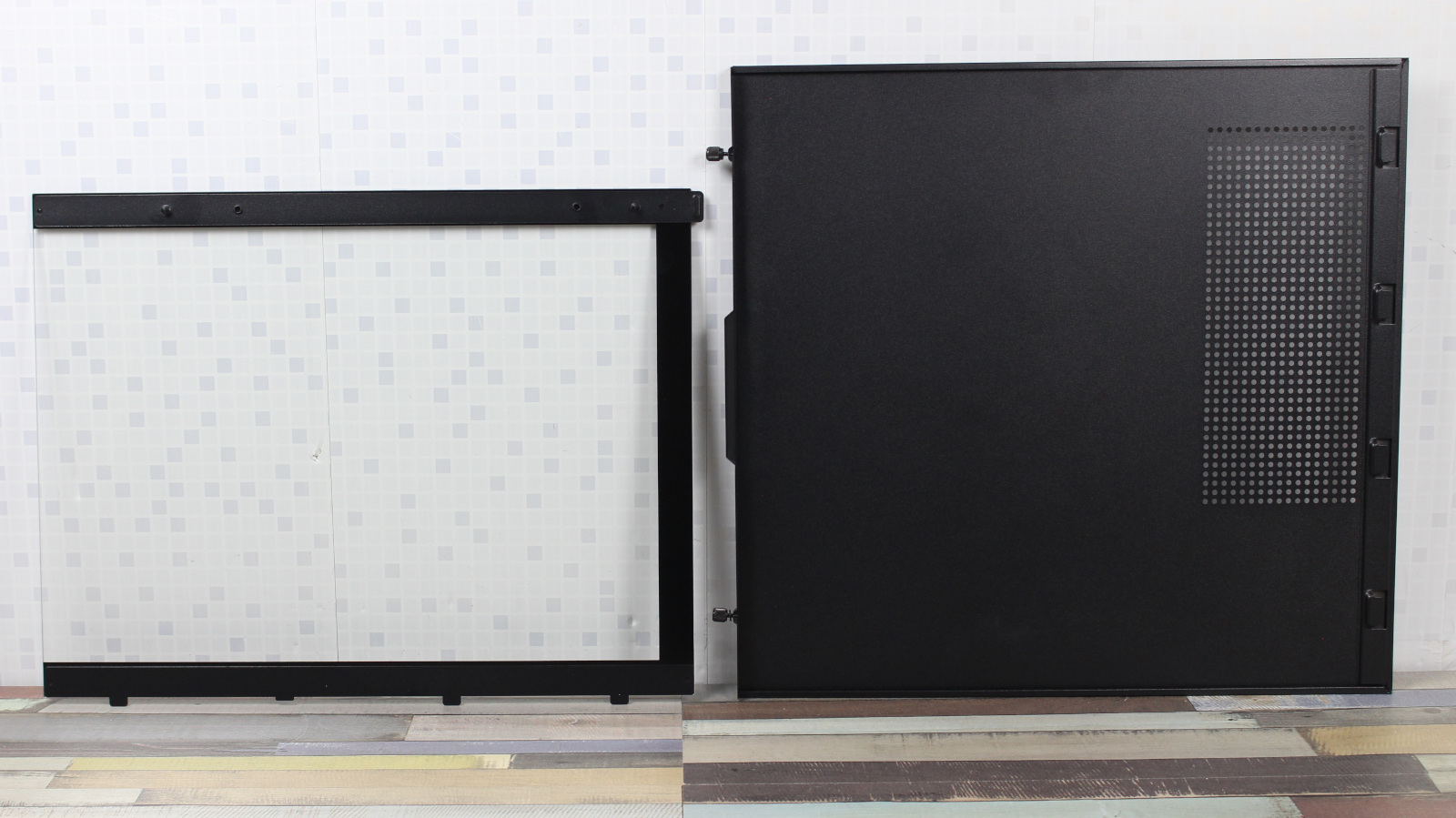
As you can see, its front edge lacks a metal frame, and the dimensions have been reduced for the sake of overall design.
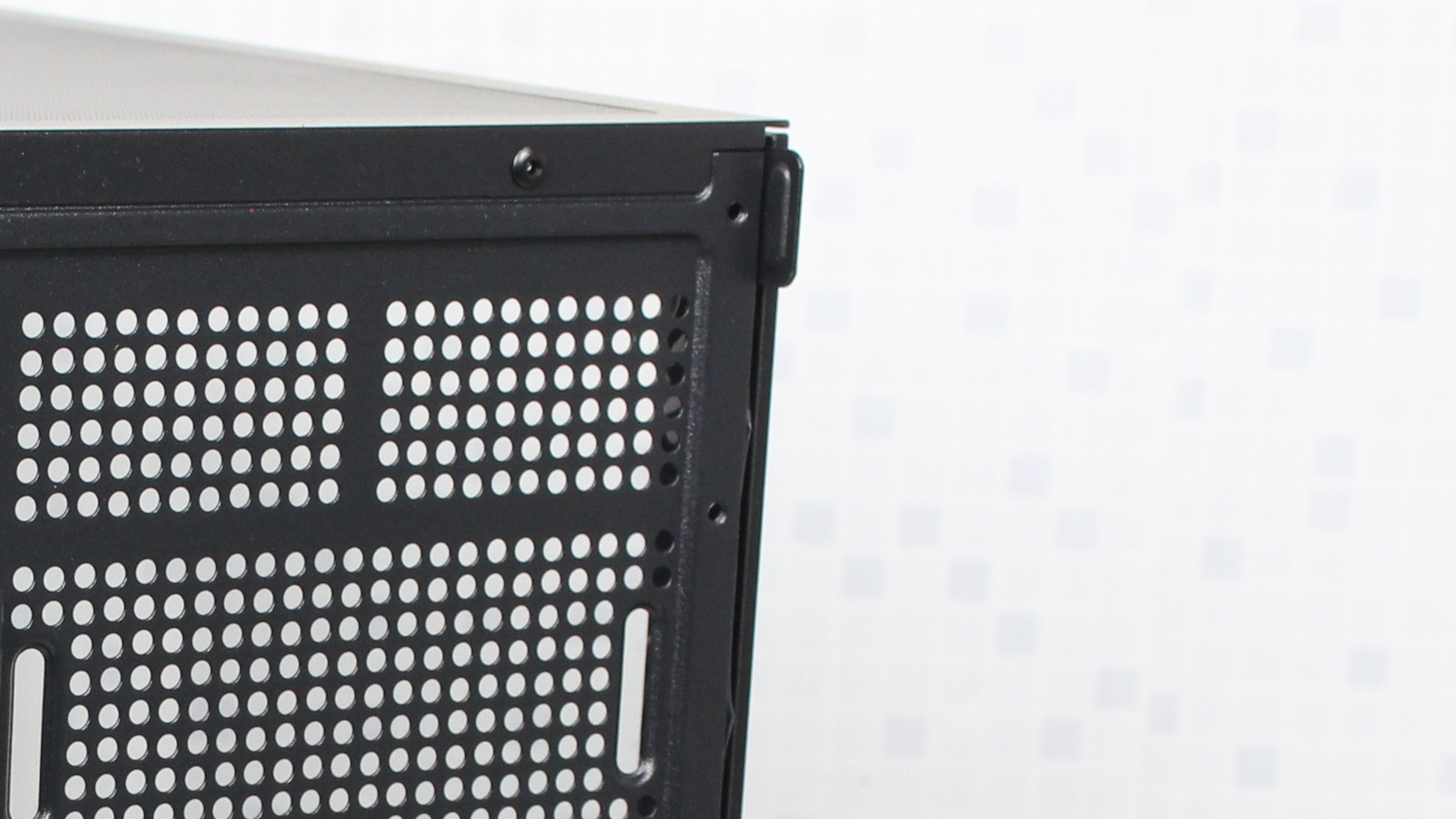
To remove it, simply pull the panel by the tab in the rear corner towards you and lift slightly.
Internal Structure
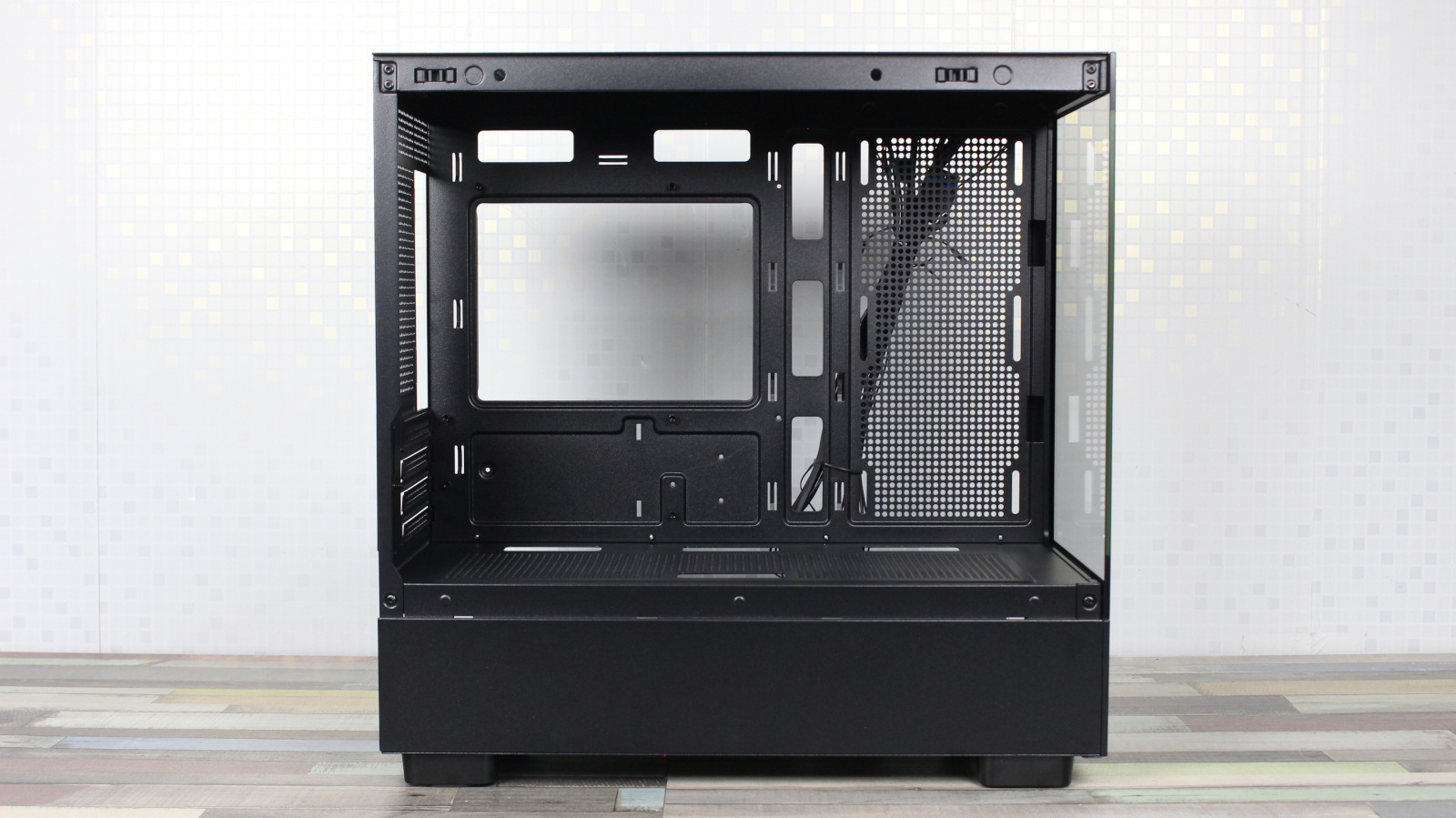
Vinga Basalt offers users a classic internal layout with a bottom-mounted power supply and storage drives.
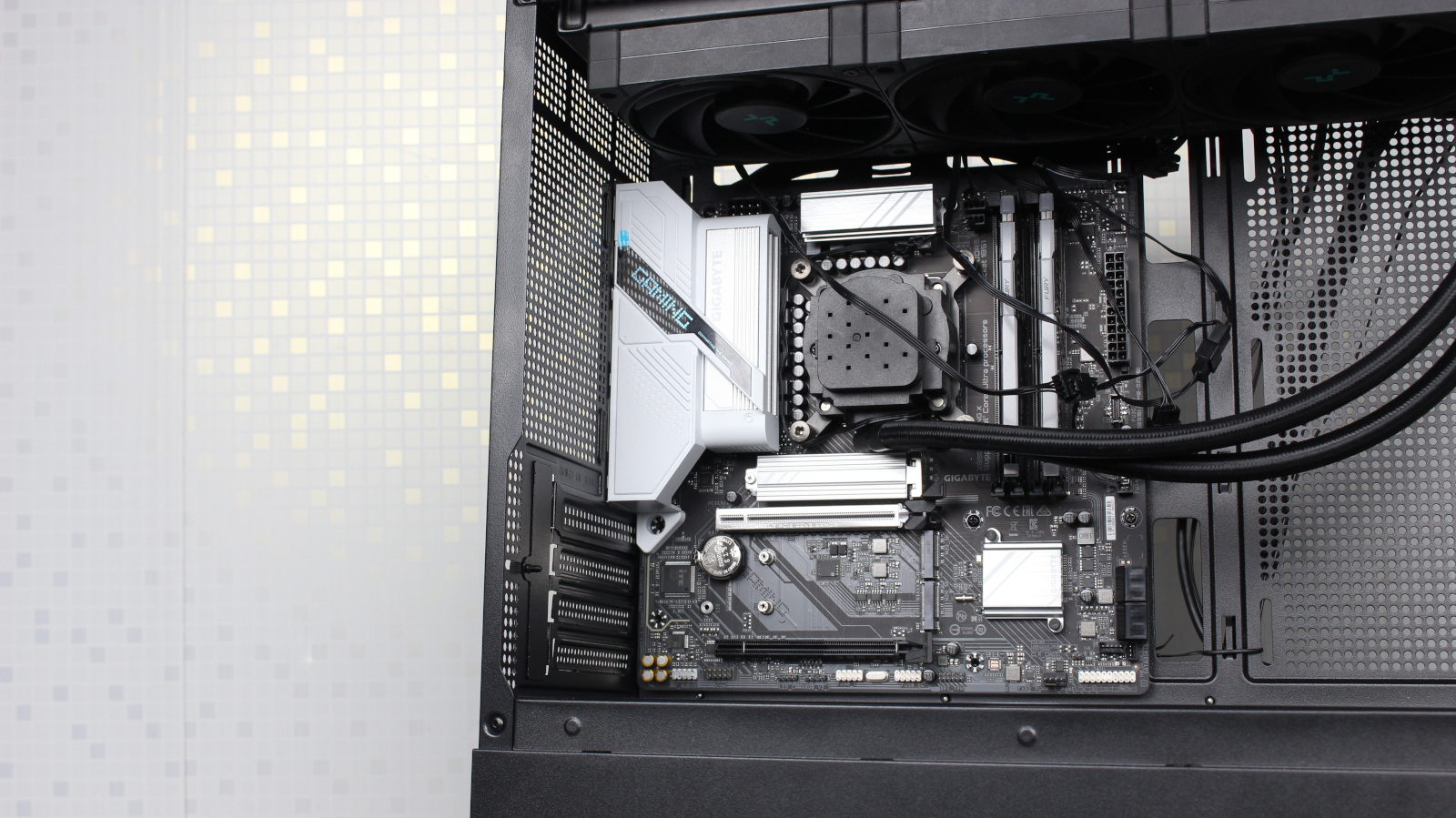
The case is compatible with motherboards in microATX and Mini-ITX form factors. Note that this model does not support boards with rear connectors. Inside, you can fit a CPU cooler up to 165 mm in height.
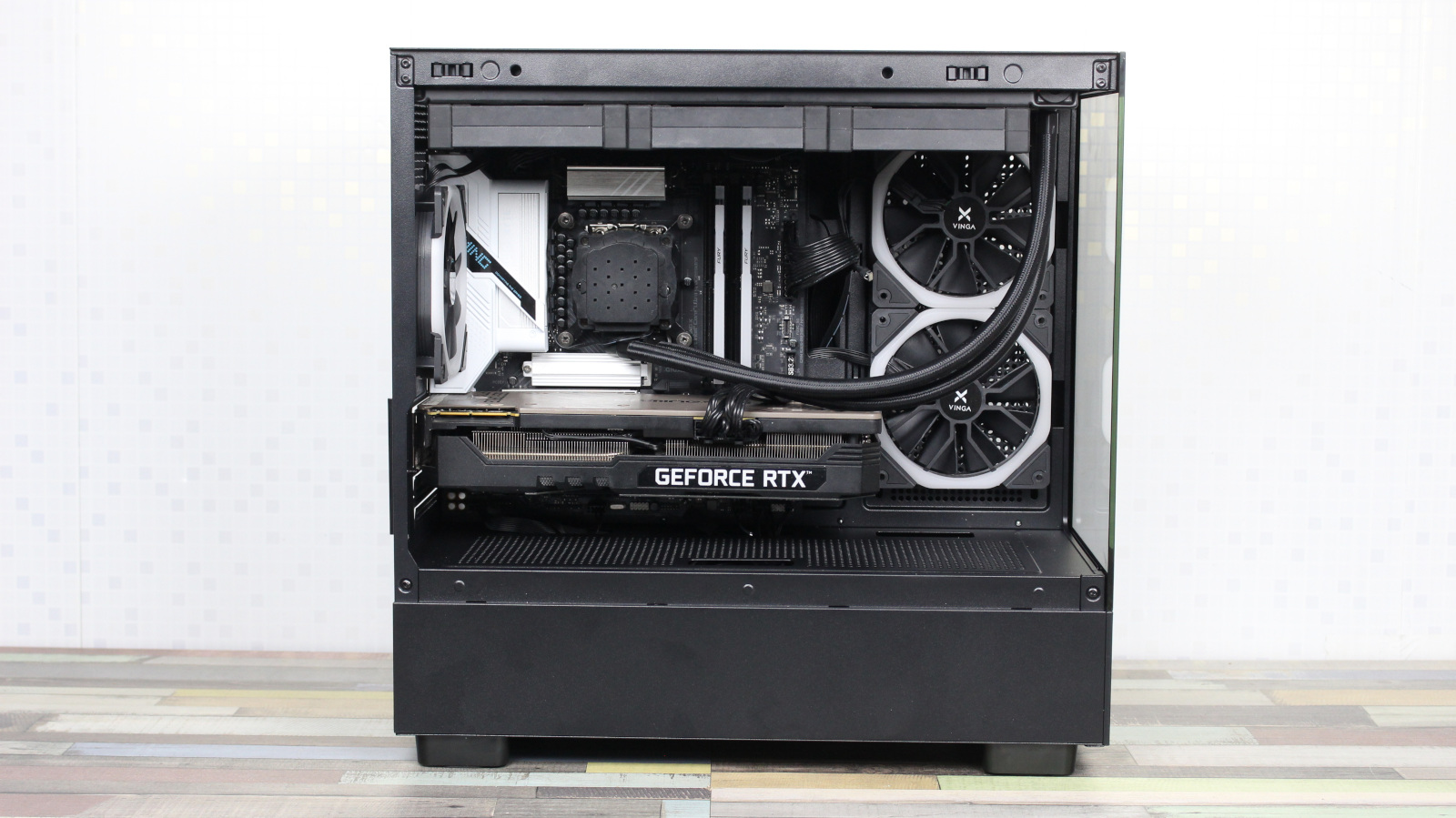
The length of the installed graphics adapter can reach up to 420 mm.
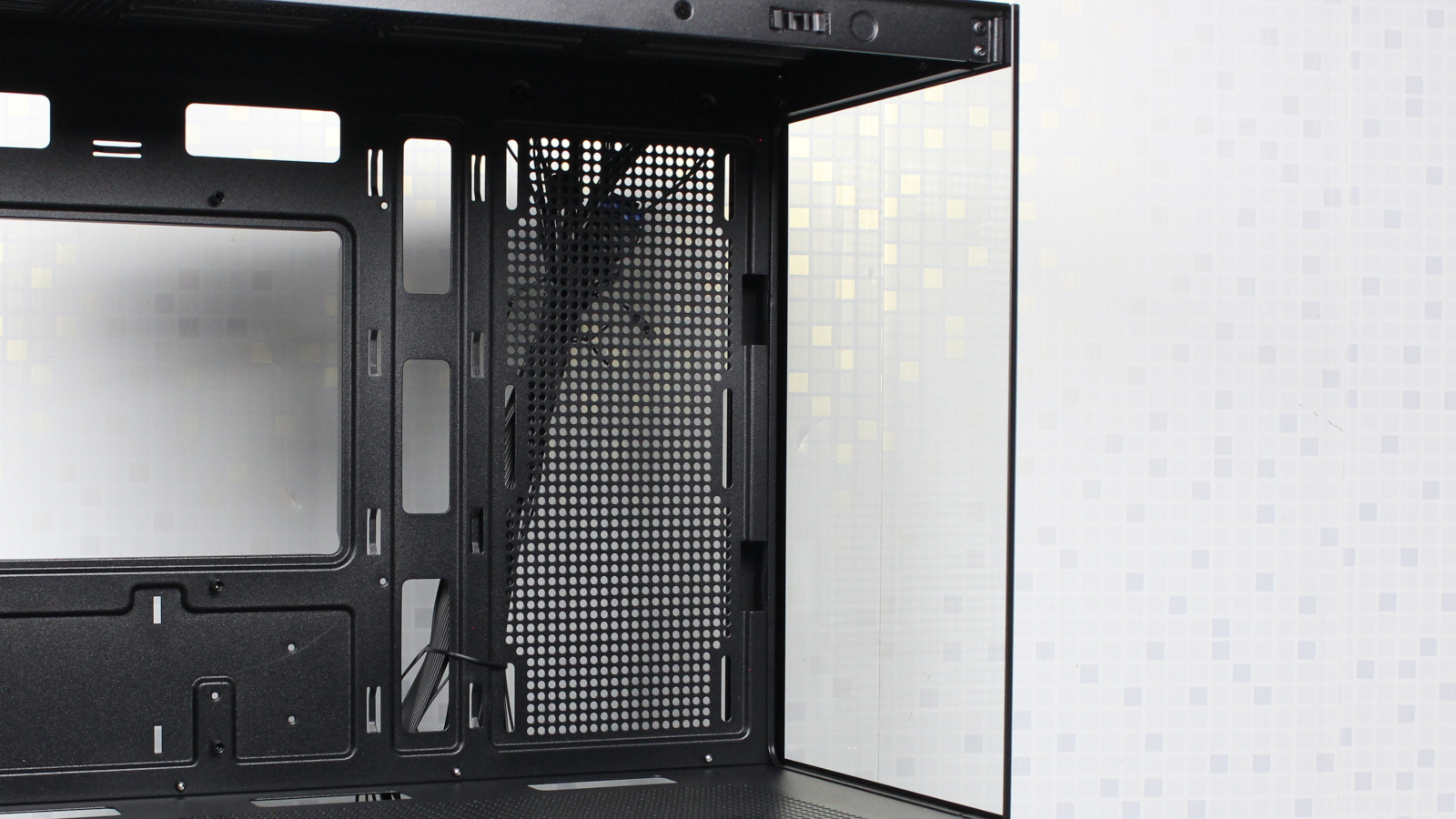
The side panel near the motherboard has perforation and allows for the installation of two 120-mm fans. Other options are not available due to limited space.
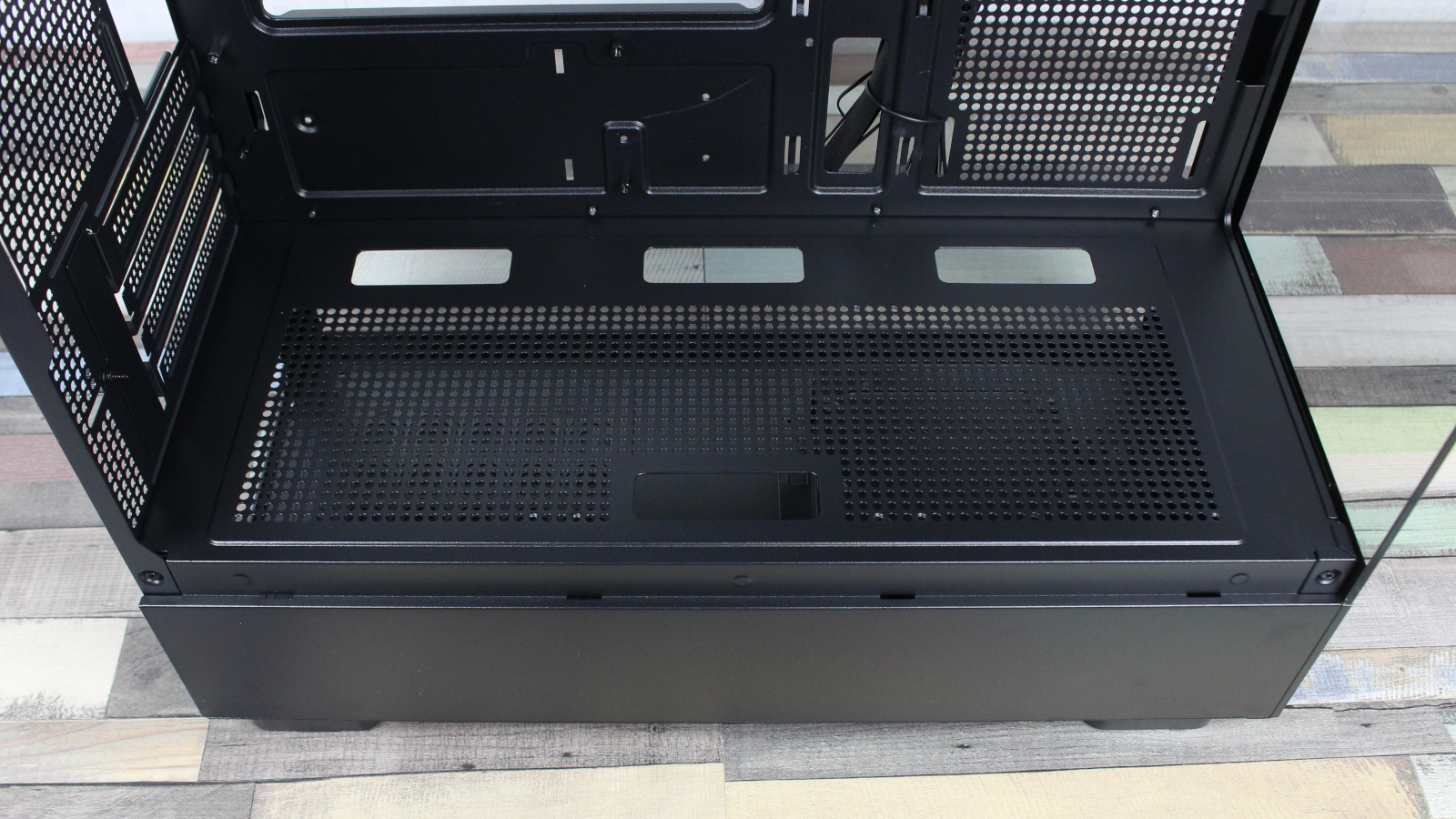
Three more 120-mm fans can be installed on the shroud above the power supply. Closer to the center, there is a separate hole for convenient routing of the additional power cable for the graphics card.
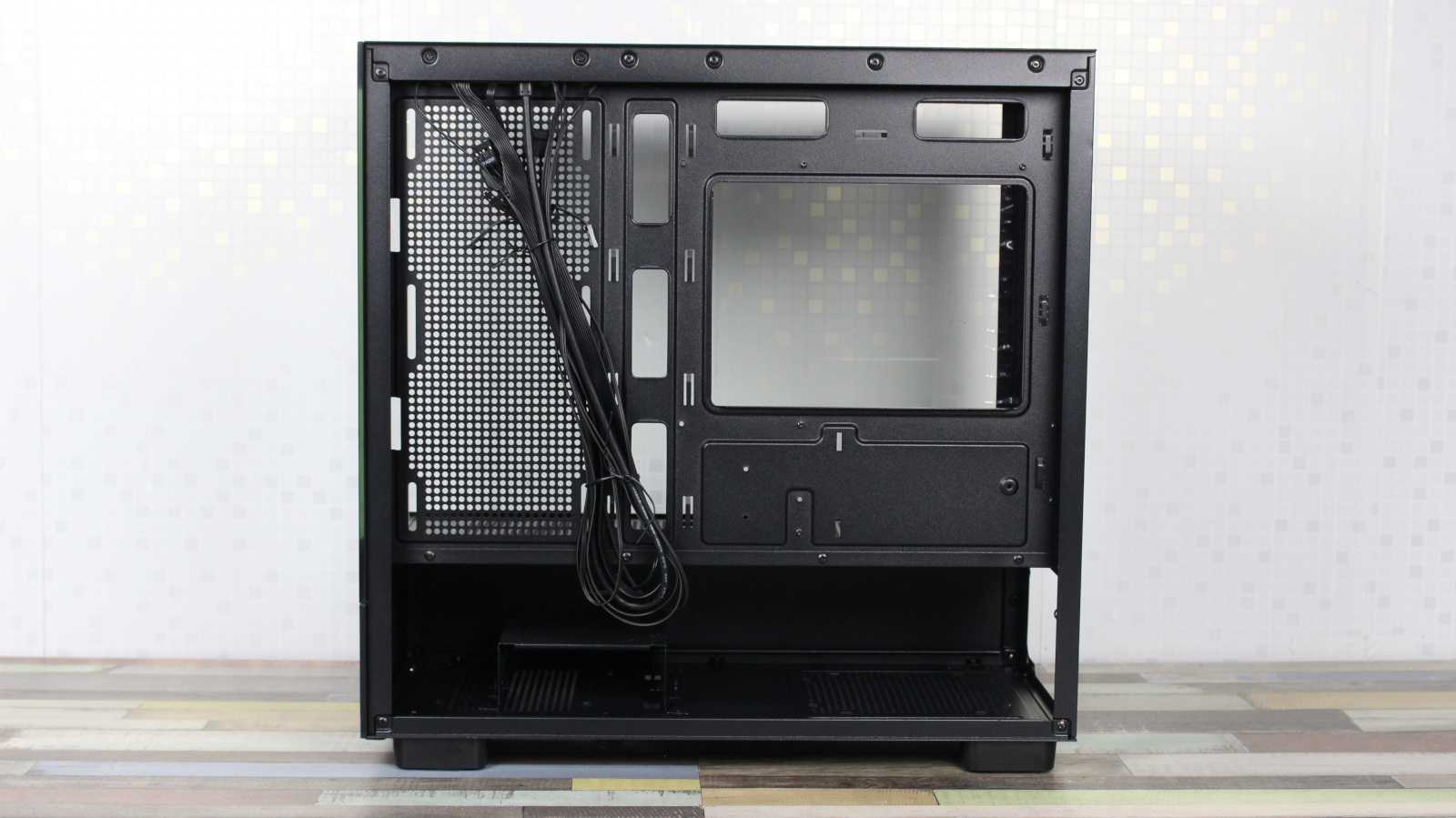
The manufacturer has provided for Vinga Basalt the ability to accommodate only two drives simultaneously.
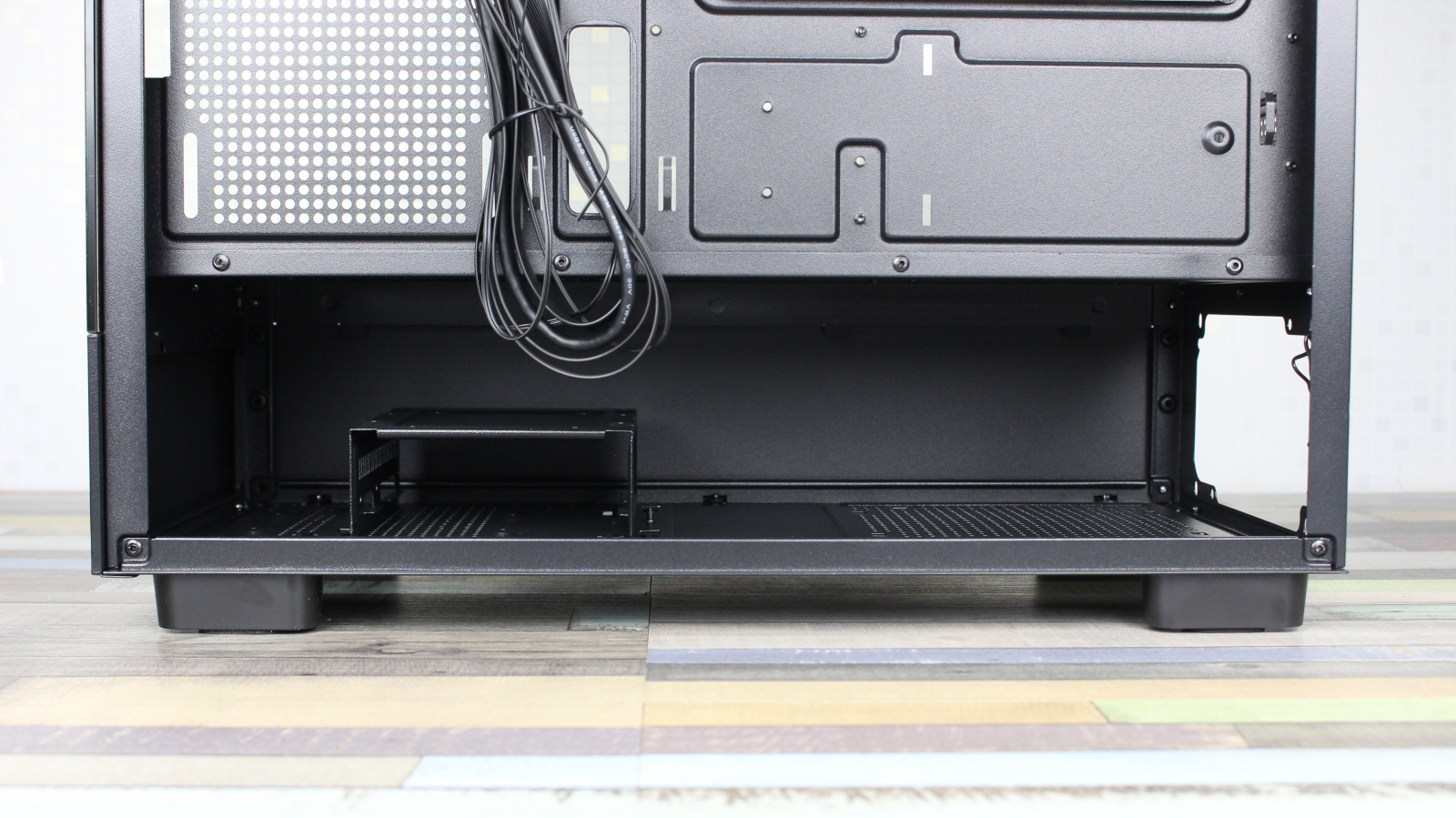
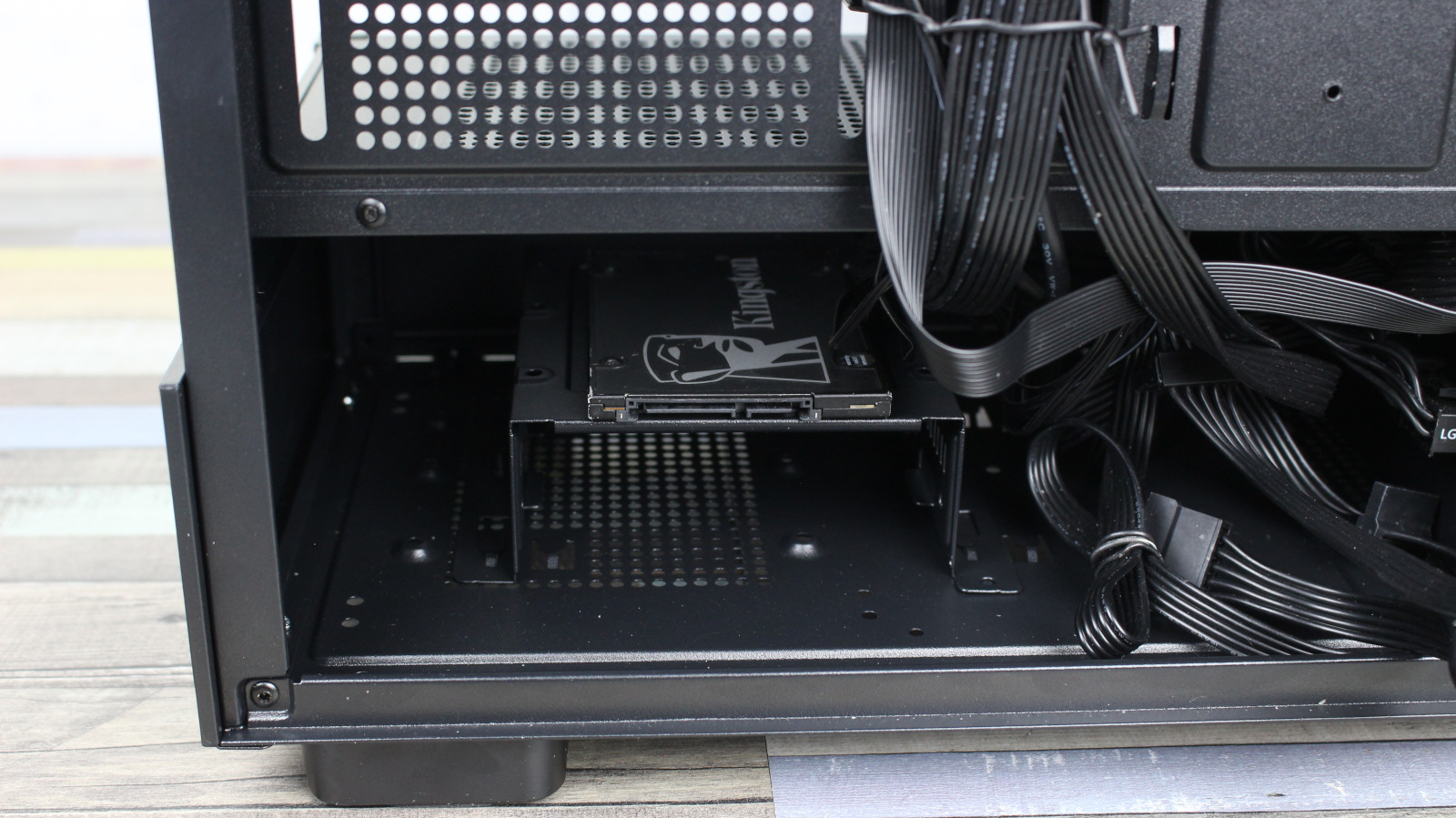
The removable cage located under the lower shroud can be installed in two positions. It is secured with two knurled head screws through the bottom and creates mounting spaces for two 3.5" drives or one SSD and a hard drive.
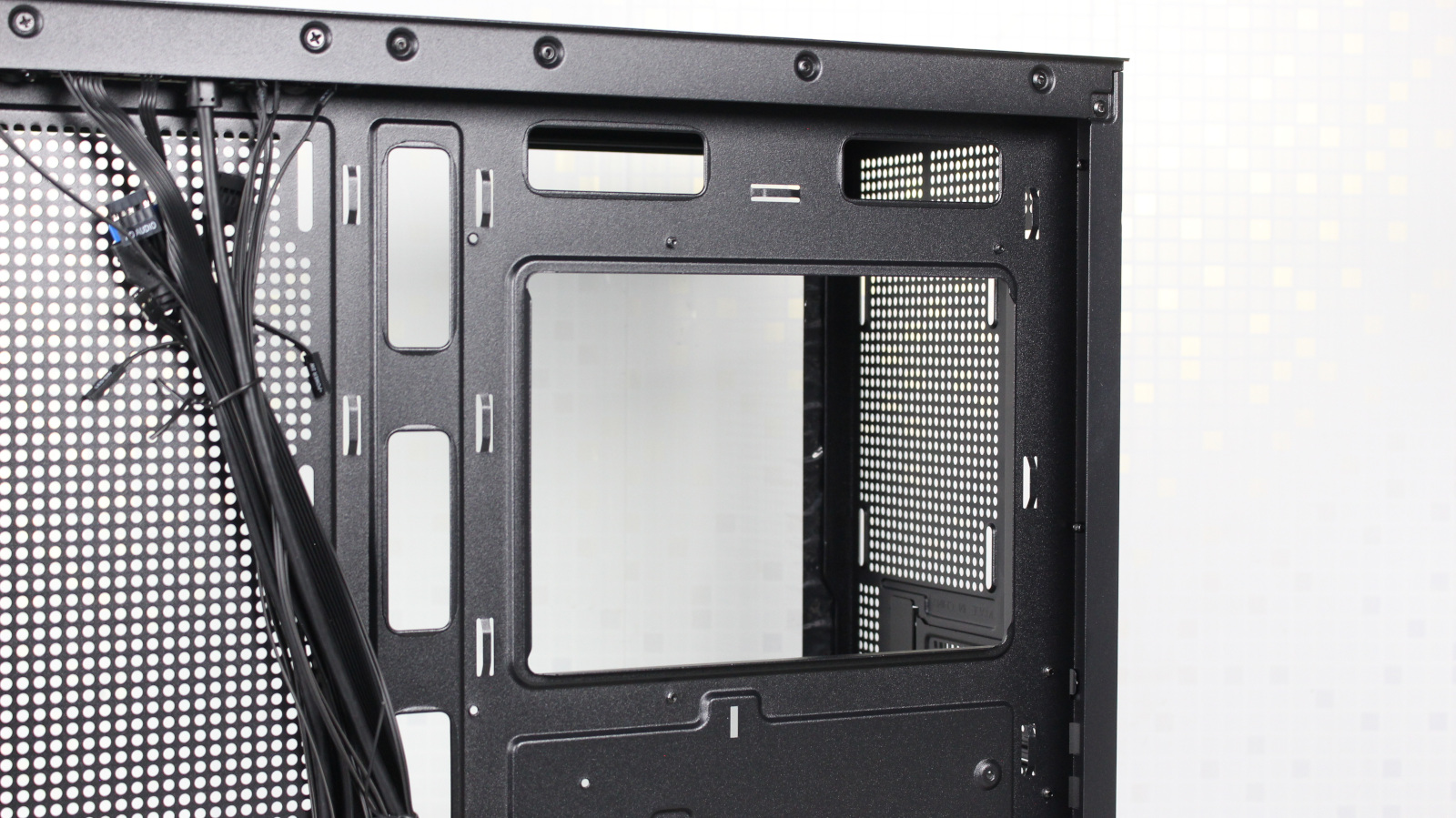
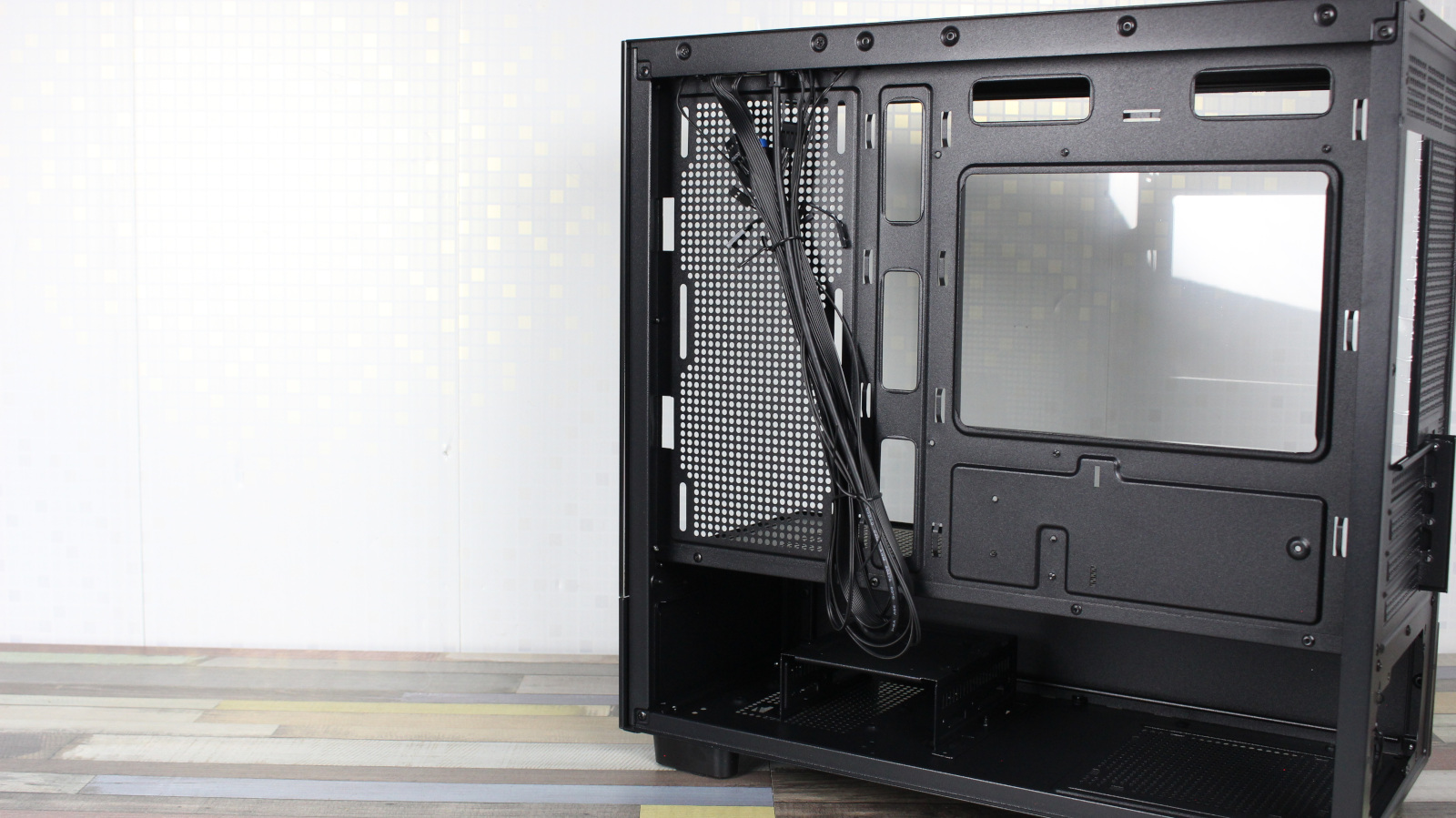
For hidden cable management behind the motherboard tray, Vinga Basalt has a reasonable space allowance of 20 mm in width. Neatly arranging the wires will be aided by the included zip ties.
Regarding the overall build quality of the case, we had no issues: there were no rattles or vibrations during operation.
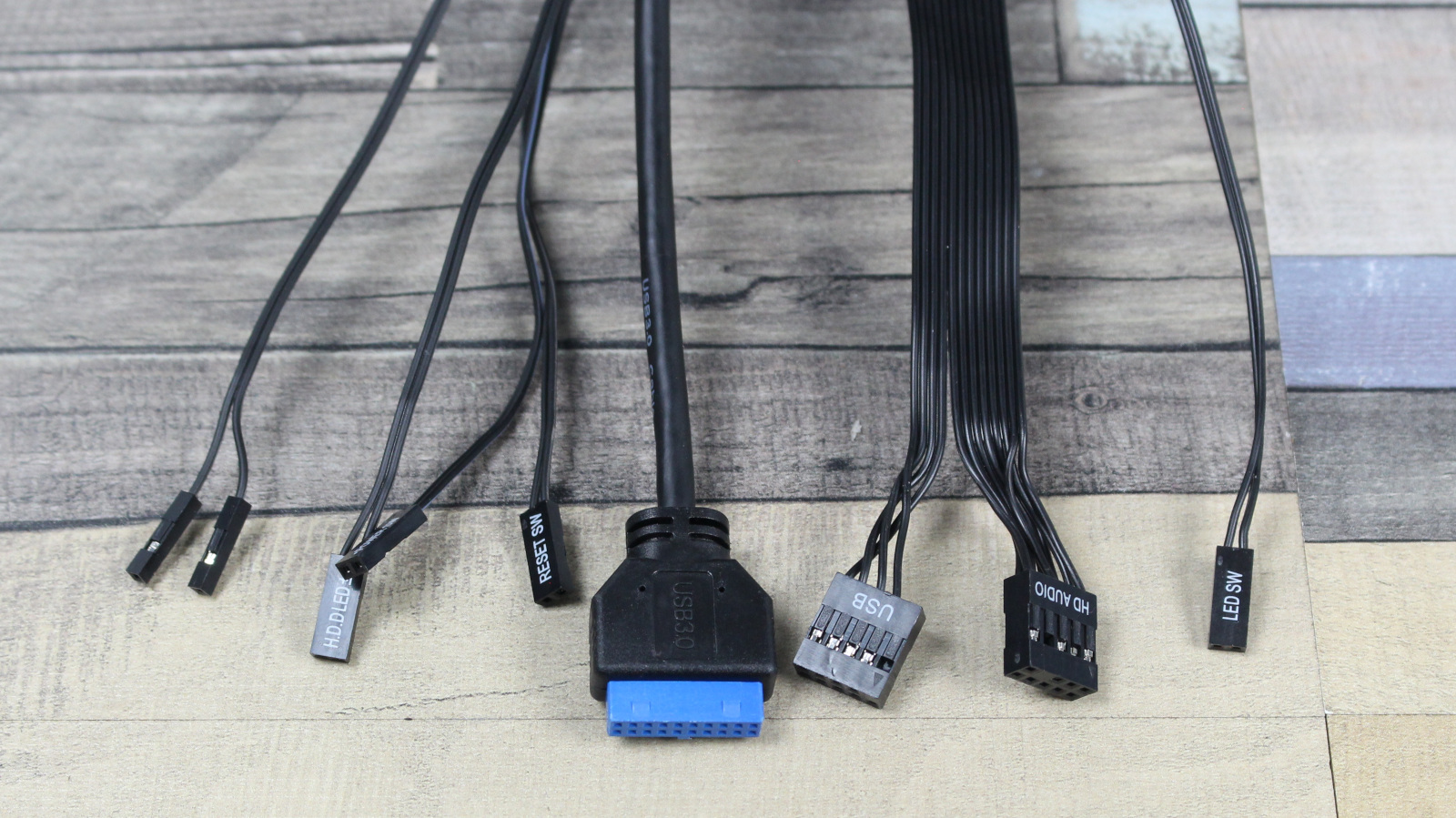
The cables from the interface panel have the following lengths:
|
Name |
Length, cm |
|
USB 2.0 |
60 |
|
USB 3.0 Type-A |
60 |
|
HD AUDIO |
60 |
|
Buttons and indicators |
60 |
|
Illumination control button |
60 |
Testing
|
Component |
Model |
|
Processor |
Intel Core Ultra 5 245K (Socket LGA 1851, 14/14, 6 x 4.2 – 5.2 GHz + 8 x 3.6 – 4.6 GHz, 24 MB L3, TDP 125 W) |
|
Cooler |
DeepCool LT720 |
|
Motherboard |
GIGABYTE Z890M GAMING X (LGA1851, Z890, microATX) |
|
RAM |
2 x 16 GB DDR5-6000 Kingston FURY Beast Black RGB (KF560C40BBAK2-32) |
|
Graphics Card |
Palit GeForce RTX 3090 GamingPro OC 24 GB DDR6X (cooling speed 70%) |
|
SSD |
Kingston KC600 512 GB SSD (SKC600/512G) |
|
Power Supply |
DeepCool PN1000D, 1000 W |
|
Thermal Paste |
GD 900 |
The ambient temperature during our testing was 26°C.
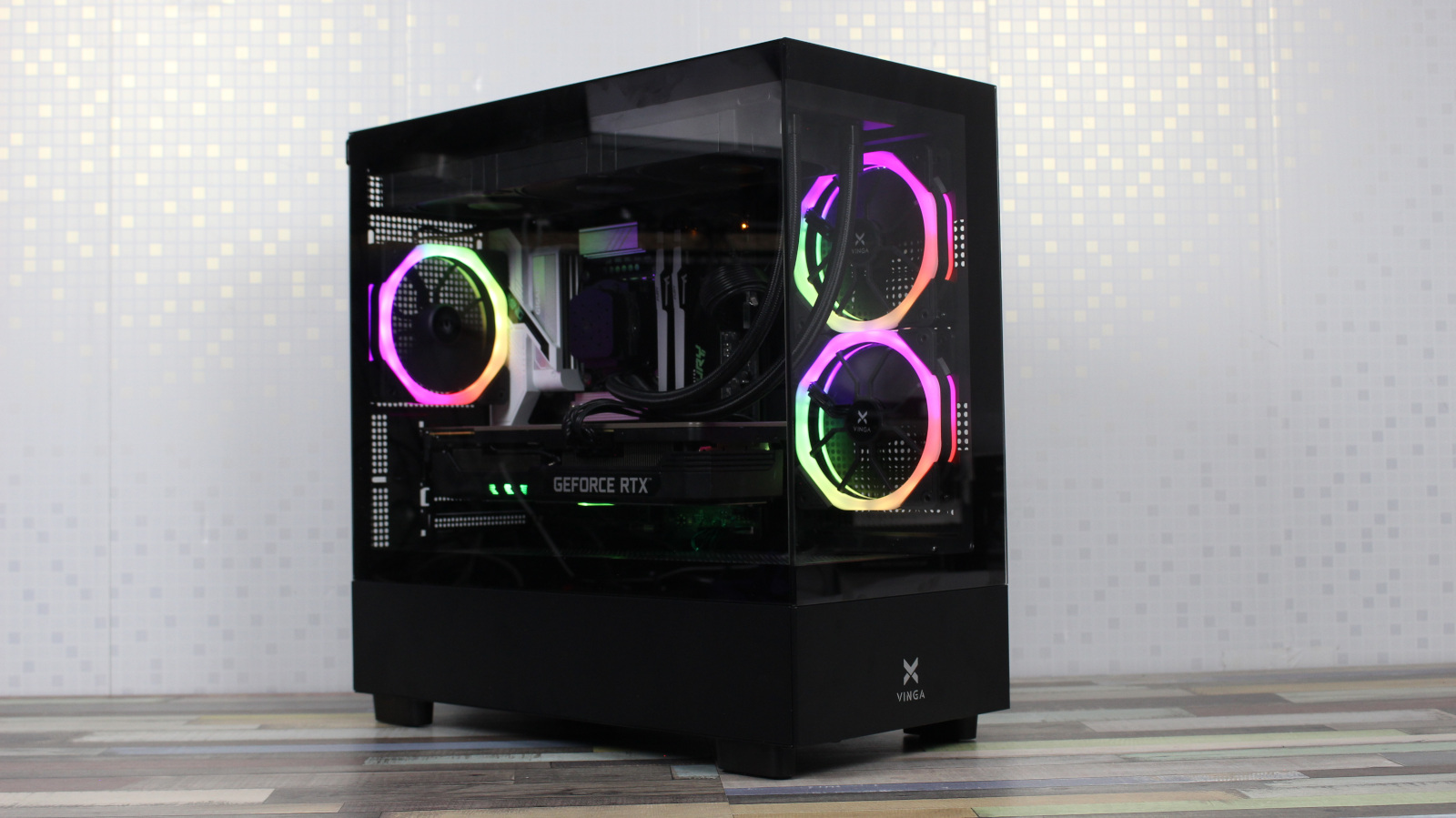
The cooling of the components inside the Vinga Basalt was handled by three 120-mm Vinga RGB FAN-06 fans and a 360-mm CPU cooler DeepCool LT720. The aforementioned case fans operated at 1100 RPM. The fans on the CPU cooler radiator were set to a speed of 2100 RPM.
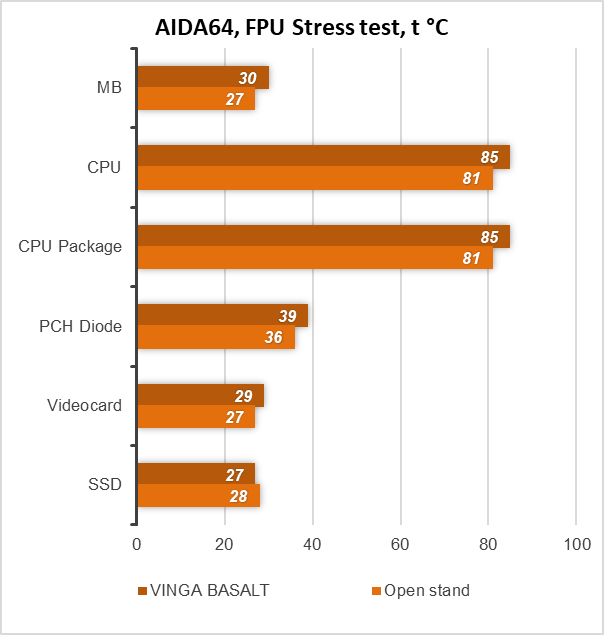
For the processor, temperatures under Stress FPU load in AIDA 64 software differed by 4°C between placement inside the case and on an open stand. Meanwhile, the temperature differences for most components were even less noticeable, with a maximum difference of 3°C.
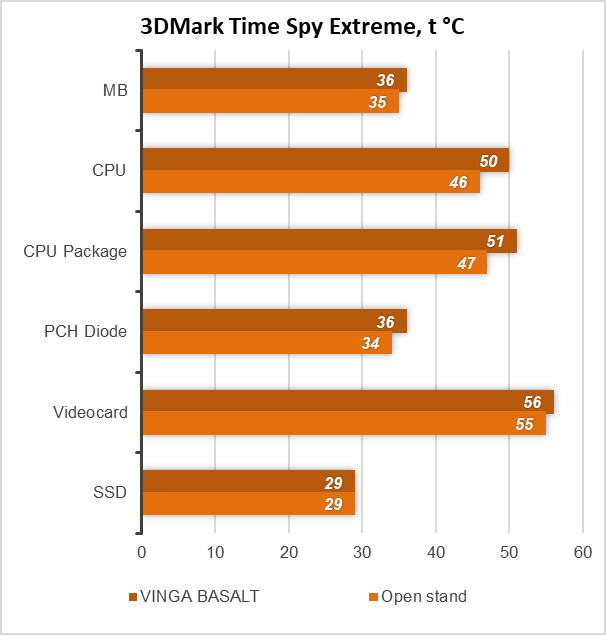
The same pattern was observed when running the 3DMark Time Spy Extreme benchmark. The CPU temperature in the Vinga Basalt was 51°C, while on the open stand it was 47°C. The temperature readings for the graphics card were also quite indicative: the temperature difference between its placement in the case and on the open stand was only 1°C. Therefore, there should be no issues with cooling most graphics adapters in this case.
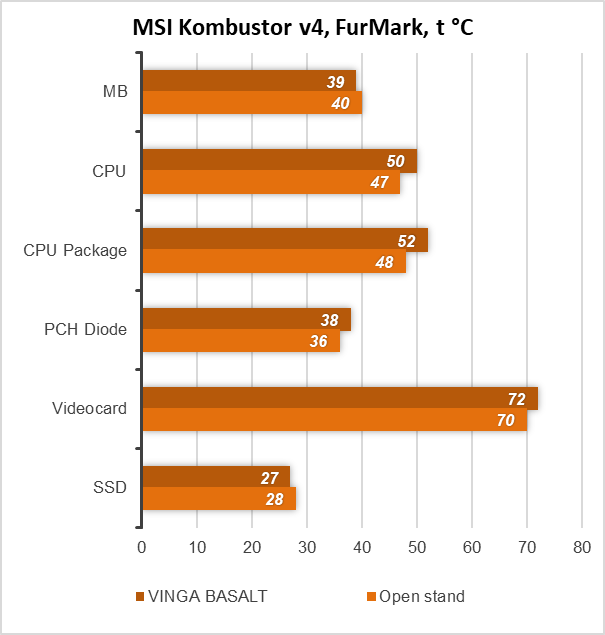
MSI Kombustor v4 with its FurMark test increased the discrepancy between the graphics card temperatures by only 2°C. The CPU temperature, although quite low, consistently differed by 4°C again.
Installing three fans with an acceptable airflow of 32 CFM (54.4 m3/h) on the available perforated areas of the case proved to be quite sufficient for effective cooling of all components. Considering that purchasing such fans will require minimal expenses from the user, this can be considered another unobvious advantage of the already maximally cheap Vinga Basalt.
Conclusions
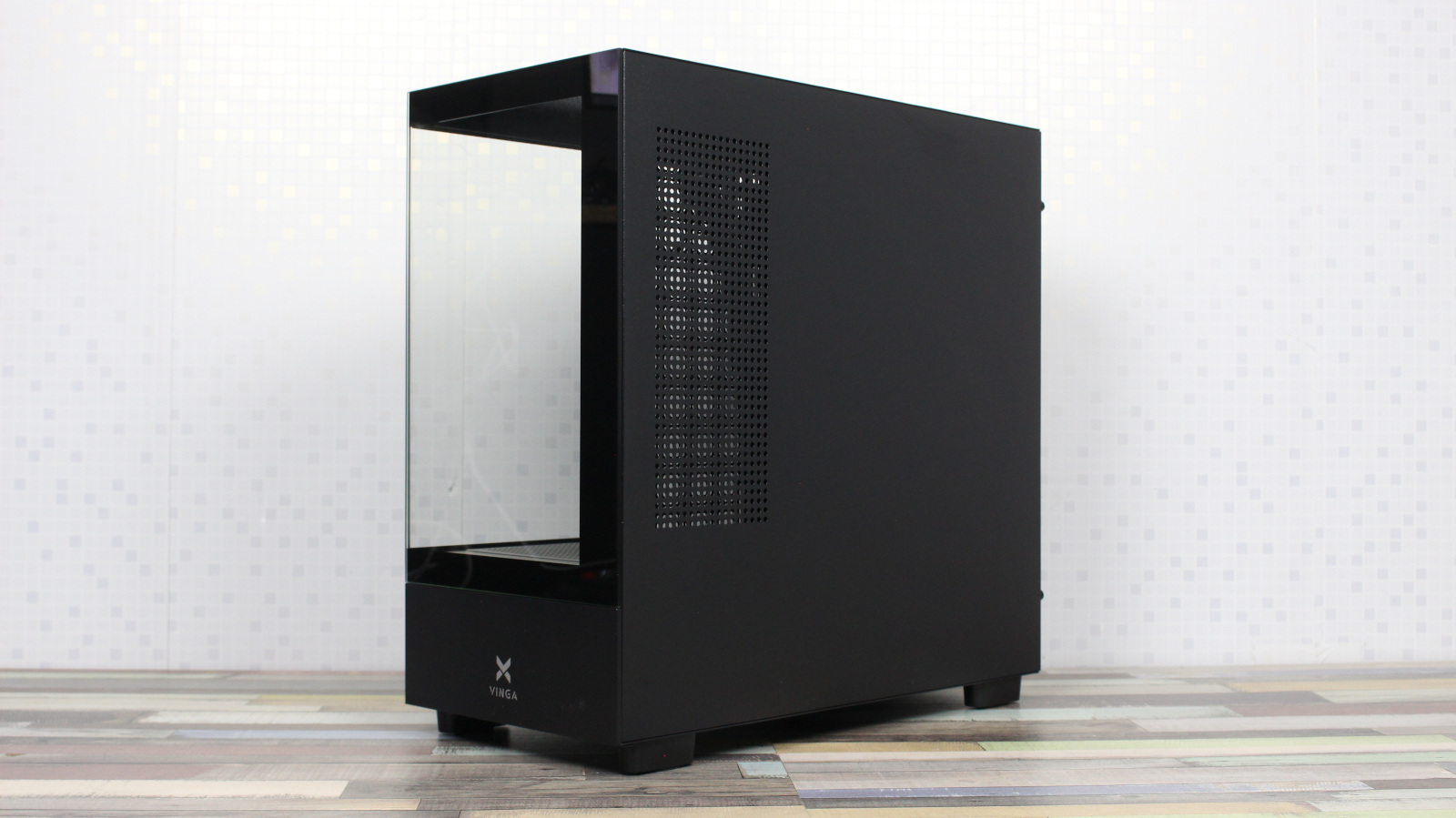
Budget-friendliness was not a verdict for Vinga Basalt. We have an average "aquarium" case with typical metal thickness on the elements, but at least twice as cheap as its market counterparts. It allows for the placement of a CPU "tower" with a height of 165 mm or a single 360-mm LCS inside. At the same time, the graphics card can be quite large. The ATX form-factor power supply is also not limited in size.
As we have already noted, fans can be installed at your discretion. You can either focus on improving airflow inside the case or ensure maximum quiet operation. In any case, the fans you choose will be much better than the solutions usually offered by manufacturers "out of the box."
We also had no questions about the design of the review hero. Except that the fixation of the right cover with thumb screws looks somewhat simpler, rather than using easy-to-remove "mushrooms" like the left one. But from a technical point of view, this is a minor issue, as you definitely won't need to open it often.
The only thing we didn't like about this model is the possibility of placing only two drives simultaneously.
On the other hand, the absence of USB Type-C ports is an obvious compromise in favor of reducing the product's cost.
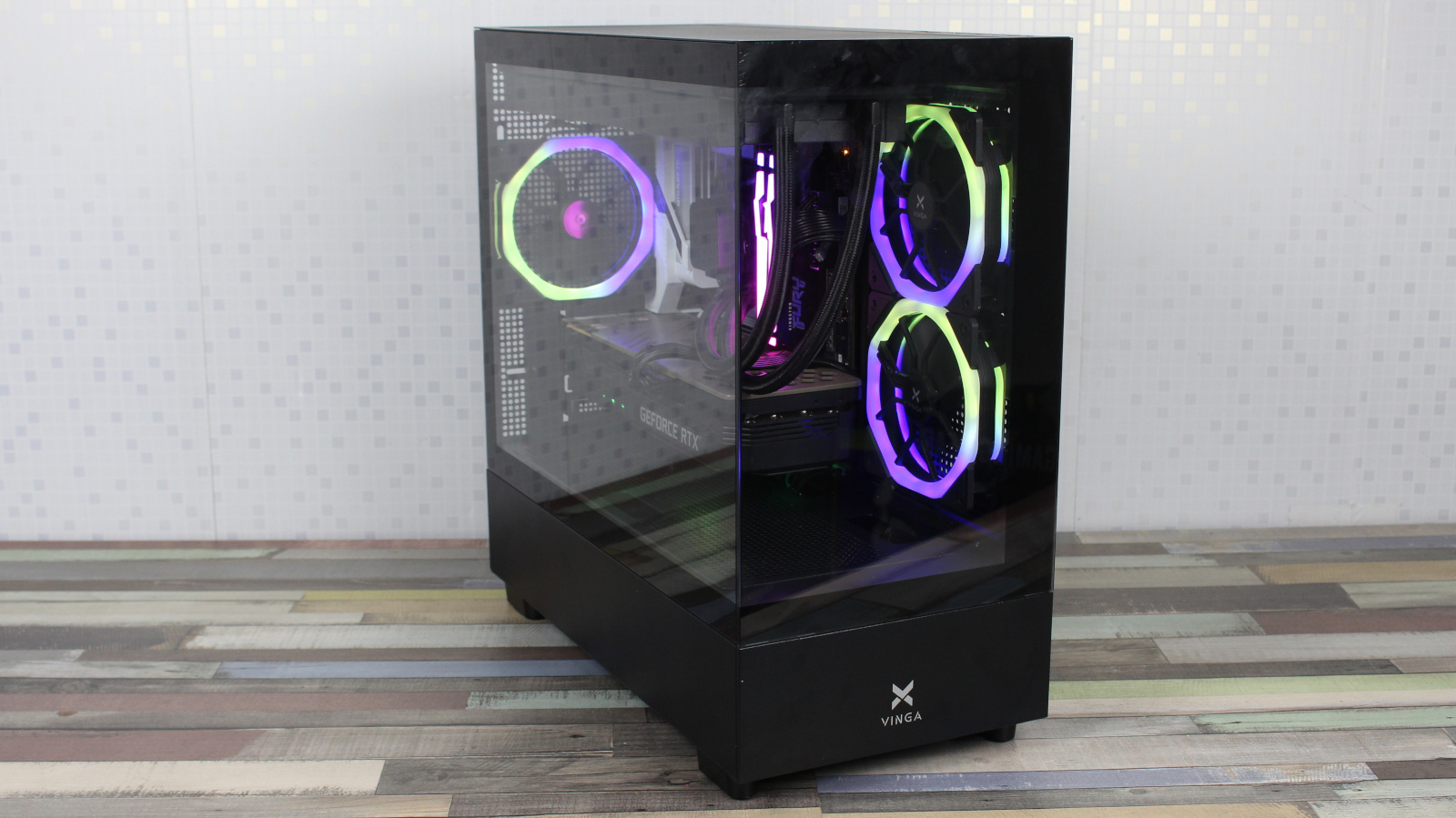
In the end, Vinga Basalt allows you to save significantly without sacrificing the same "aquarium" aesthetics. The manufacturer really tried to ensure that, in technical aspects, this model minimally lags behind competitors, and the existing simplifications do not cause significant discomfort to the user.
Advantages:
- "Aquarium" type case design;
- High build quality;
- Well-implemented airflow inside, ensuring effective cooling of the graphics card;
- Low price;
- Easy-to-remove left side panel;
- Excellent compatibility with large graphics cards, large CPU coolers, and ATX power supplies;
- Ability to mount nine 120-mm fans simultaneously;
- Dedicated button for lighting control;
- Compatibility with 360-mm LCS;
- Adequate space behind the motherboard tray for hidden cable management;
- Opening in the PSU shroud for routing the additional power cable for the graphics card.
Features:
- Classic internal case layout;
- No case fans included;
- Budget dust filters;
- No option for vertical GPU mounting;
- Compatibility exclusively with microATX and Mini-ITX motherboards.
Disadvantages:
- No USB Type-C ports;
- No dust filter on the perforated side panel area;
- Only two drives can be installed.