Today, the market is flooded with cases featuring glass panels, where aesthetics often outweigh practicality and cooling efficiency. However, a powerful gaming or workstation requires a different approach. You need a dual-chamber design with open space and maximum ventilation for stable operation of hot components.
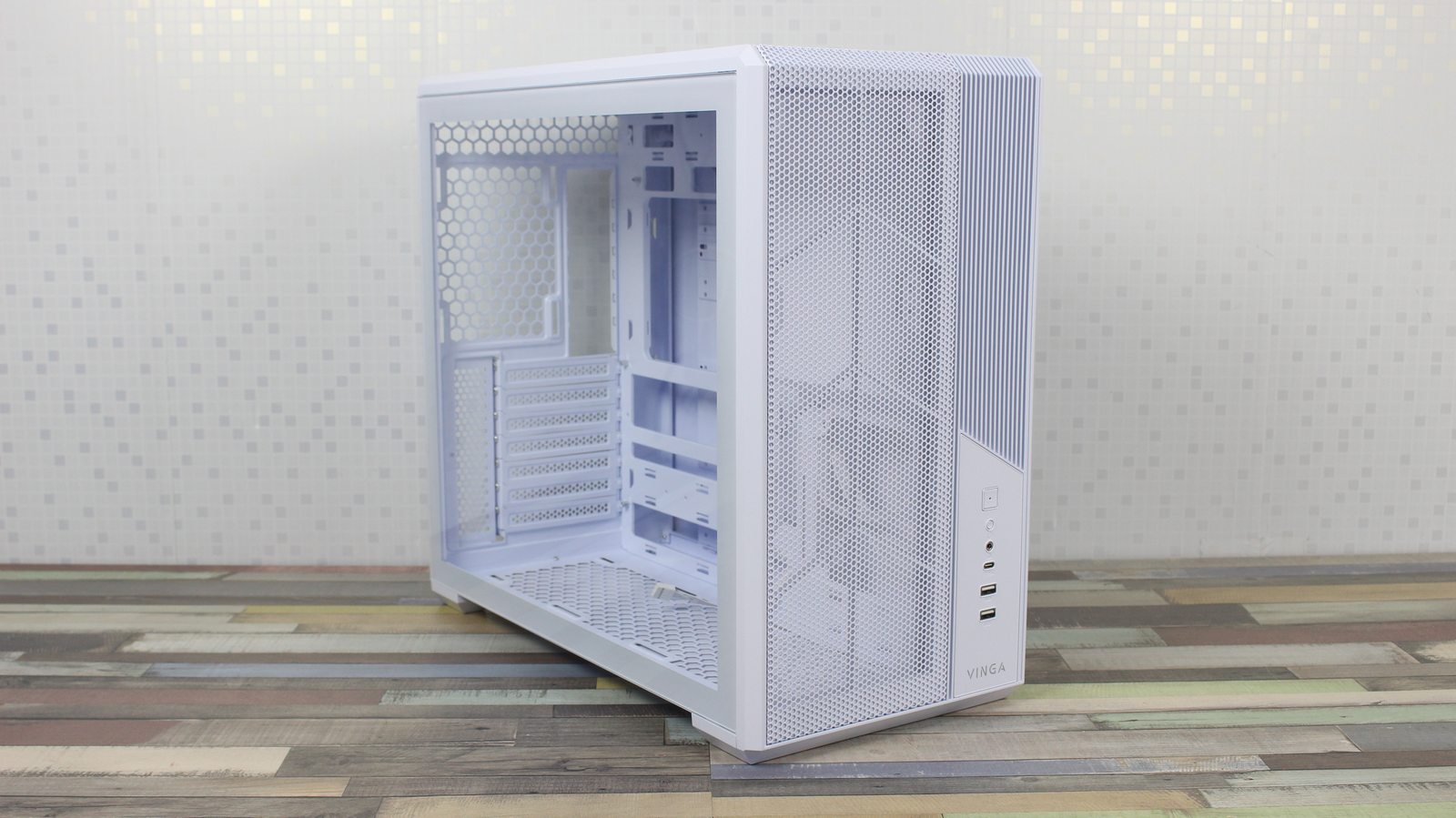
The Vinga Eclipse White is precisely such a solution. It successfully combines excellent visibility of internal components with high cooling efficiency. Its main advantage is the extensive perforation: metal mesh grids on the front and top panels ensure free airflow, which is critically important for a high-performance system. The glass side panel allows you to admire the build, but the main focus here is on cooling.
Steel over 0.8 mm thick adds the necessary rigidity to the structure. Thanks to the well-thought-out dual-chamber layout, space is optimized: the chassis allows for the installation of graphics cards up to 410 mm in length and supports BTF format motherboards with hidden connectors. The power supply and drives are placed in a separate chamber, freeing up the main compartment for unobstructed airflow and convenient cable management.
The manufacturer does not include cheap fans with the case, for which you have to overpay, so you choose the best cooling according to your own needs.
The case in white or black is available for order from the official distributor Vinga — the company BRAIN at a price of about 1819 UAH.
Is this chassis really as convenient during assembly and effective in operation as it seems at first glance? Let's take a closer look, starting with the technical specifications.
Specification
|
Model |
Vinga Eclipse White |
|
Supported motherboard form factors |
ATX / microATX / Mini-ITX |
|
Color |
White |
|
External bays |
None |
|
Internal bays |
2 x 3.5" / 4 x 2.5" |
|
Expansion card slots |
7 |
|
Maximum GPU length, mm |
410 |
|
Maximum CPU cooler height, mm |
165 |
|
Maximum PSU length, mm |
150 |
|
Ports, buttons |
2 x USB 3.0 1 x USB 3.1 Type-C 1 x combined audio jack LED power button reset button |
|
Pre-installed fans |
None |
|
Power supply |
None |
|
Power supply location |
Top |
|
Fan installation capability |
|
|
Front panel |
3 x 120-mm |
|
Top panel |
3 x 120-mm |
|
Rear panel |
1 x 120-mm |
|
Side panel |
1 x 120-mm |
|
Bottom panel |
3 x 120-mm |
|
Liquid cooling installation capability |
|
|
Front panel |
120 / 240 / 360 -mm |
|
Top panel |
120 / 240 / 360 -mm |
|
Materials |
|
|
Chassis front wall |
Steel 0.82 mm thick |
|
Chassis rear wall |
Steel 0.91 mm thick |
|
Chassis top wall |
Steel 0.81 mm thick |
|
Chassis bottom |
Steel 0.84 mm thick |
|
Motherboard tray |
Steel 0.82 mm thick |
|
Left side panel |
Glass 3.86 mm thick |
|
Right side panel |
Steel 0.81 mm thick |
|
Case dimensions (L x W x H), mm |
440 x 235 x 394.5 |
|
Chassis dimensions (L x W x H) (own measurements), mm |
471 x 235 x 430 (473 x 237 x 432) |
|
Weight (own measurements), kg |
6.50 (6.78) |
|
Warranty, months |
12 |
|
Product website |
|
Packaging and Supply Kit
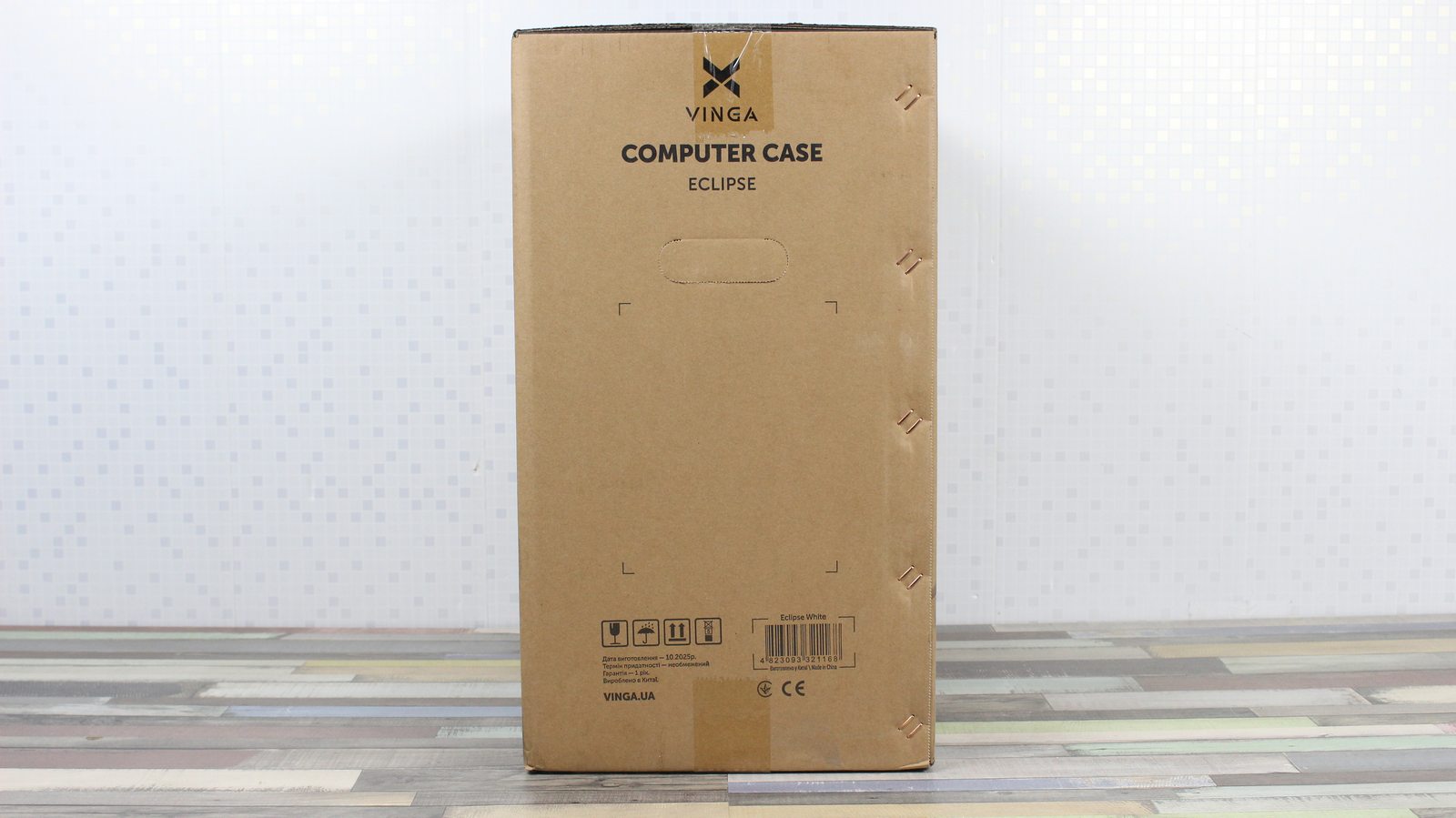
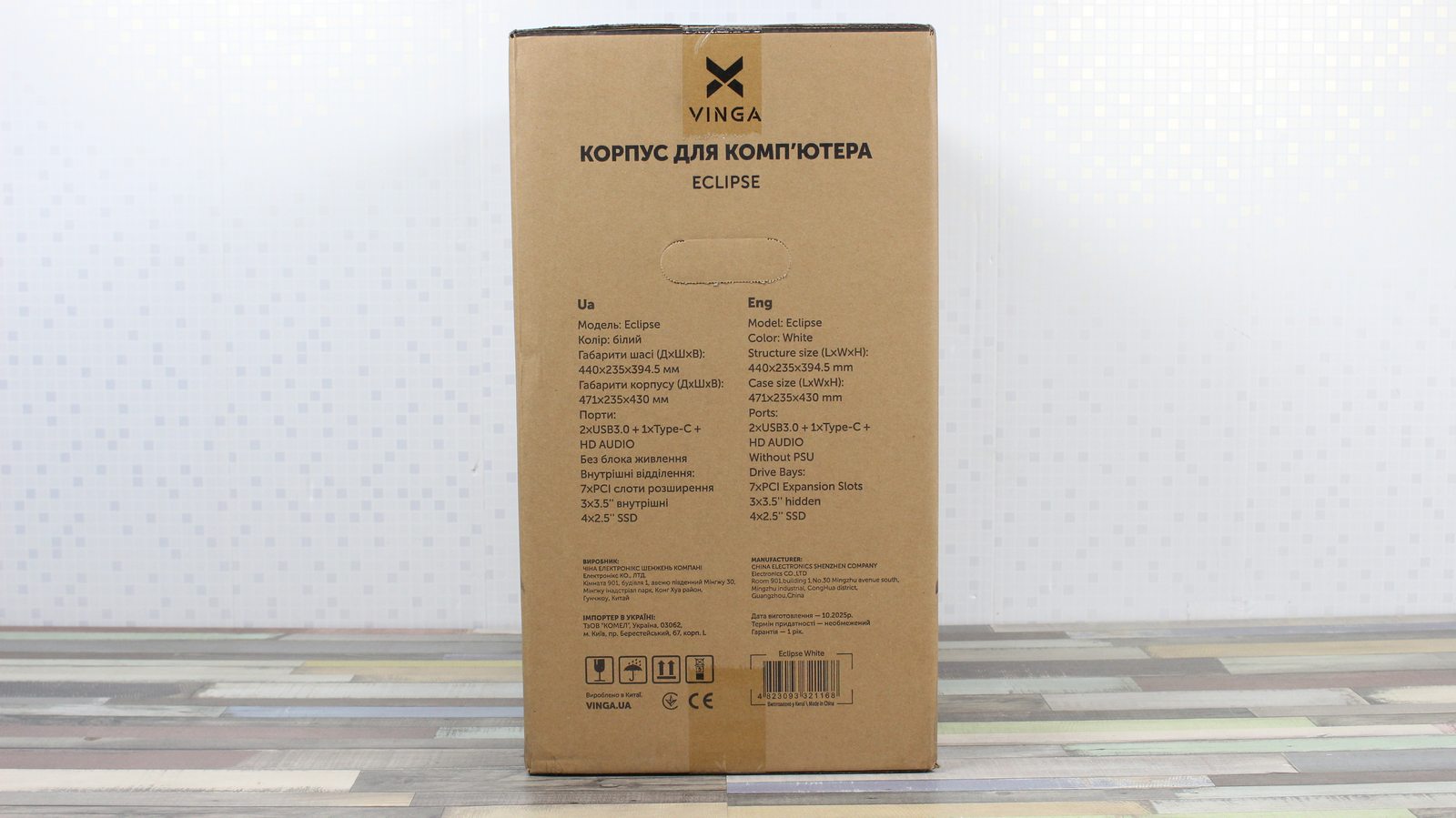
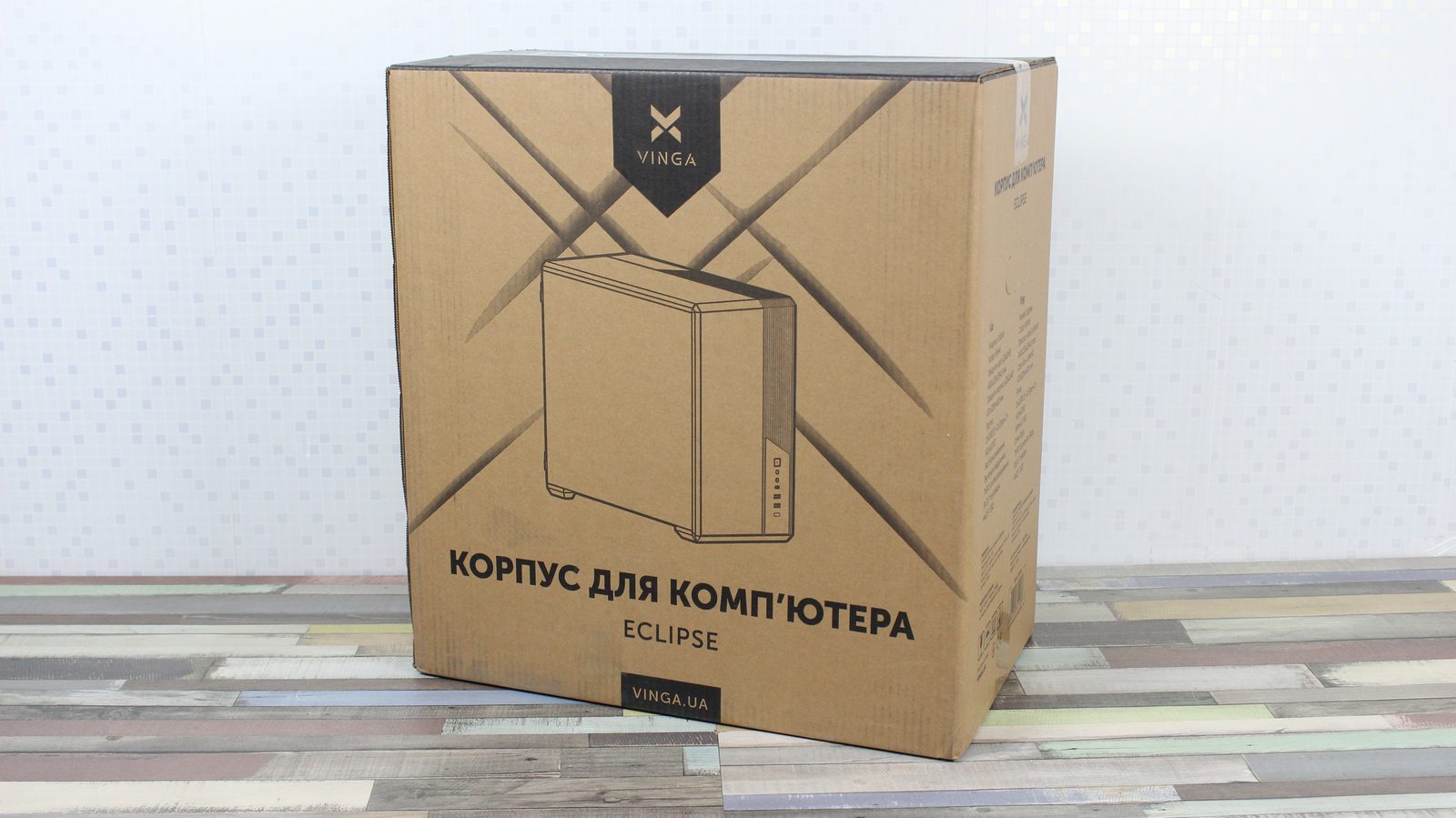
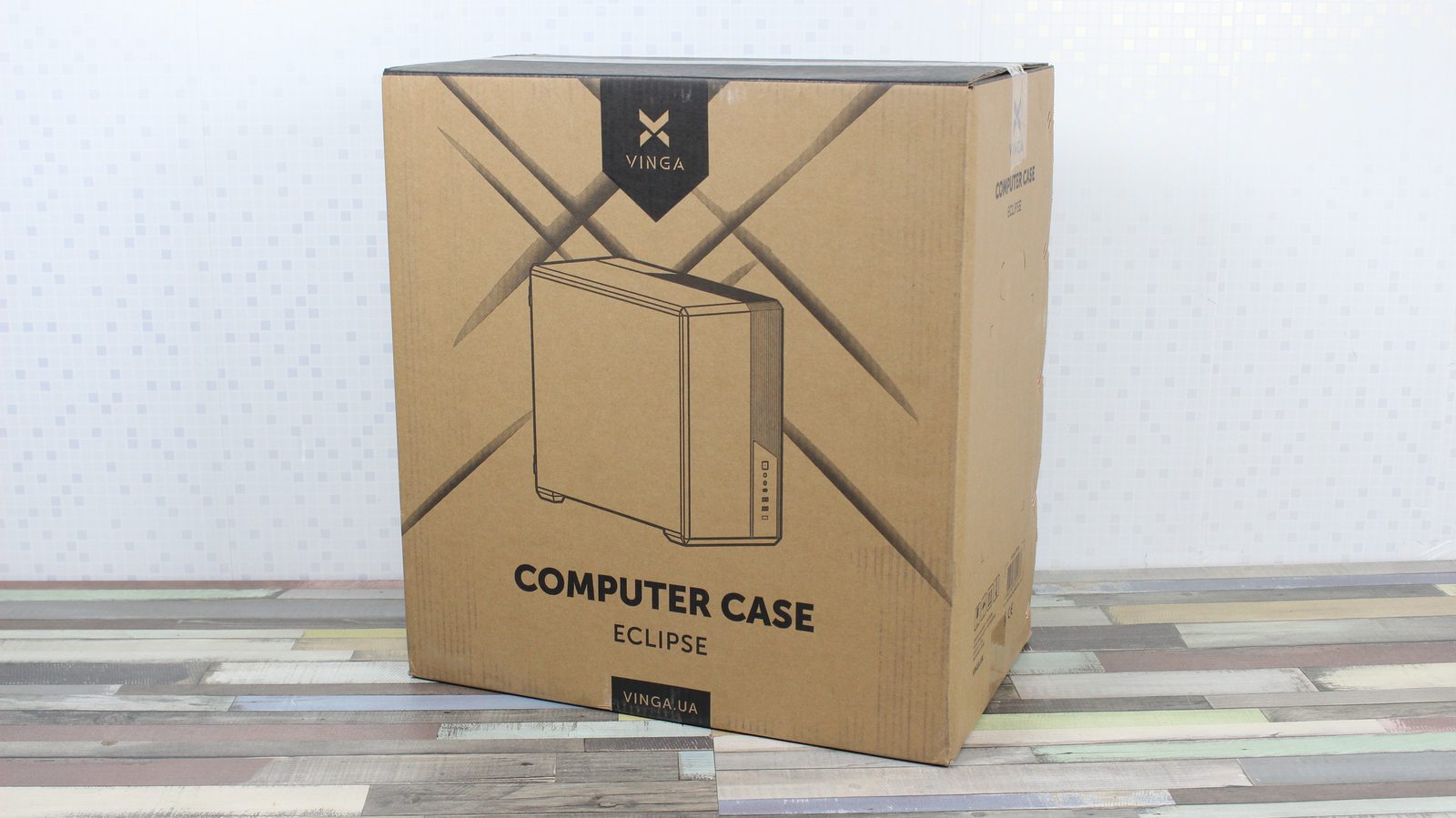
The Vinga Eclipse box does not try to "sell" itself with bright printing — it's just sturdy cardboard and a strict graphic silhouette of the case. An additional plus is the presence of handles on the ends: for a massive case, this is a necessary solution for convenient transportation.
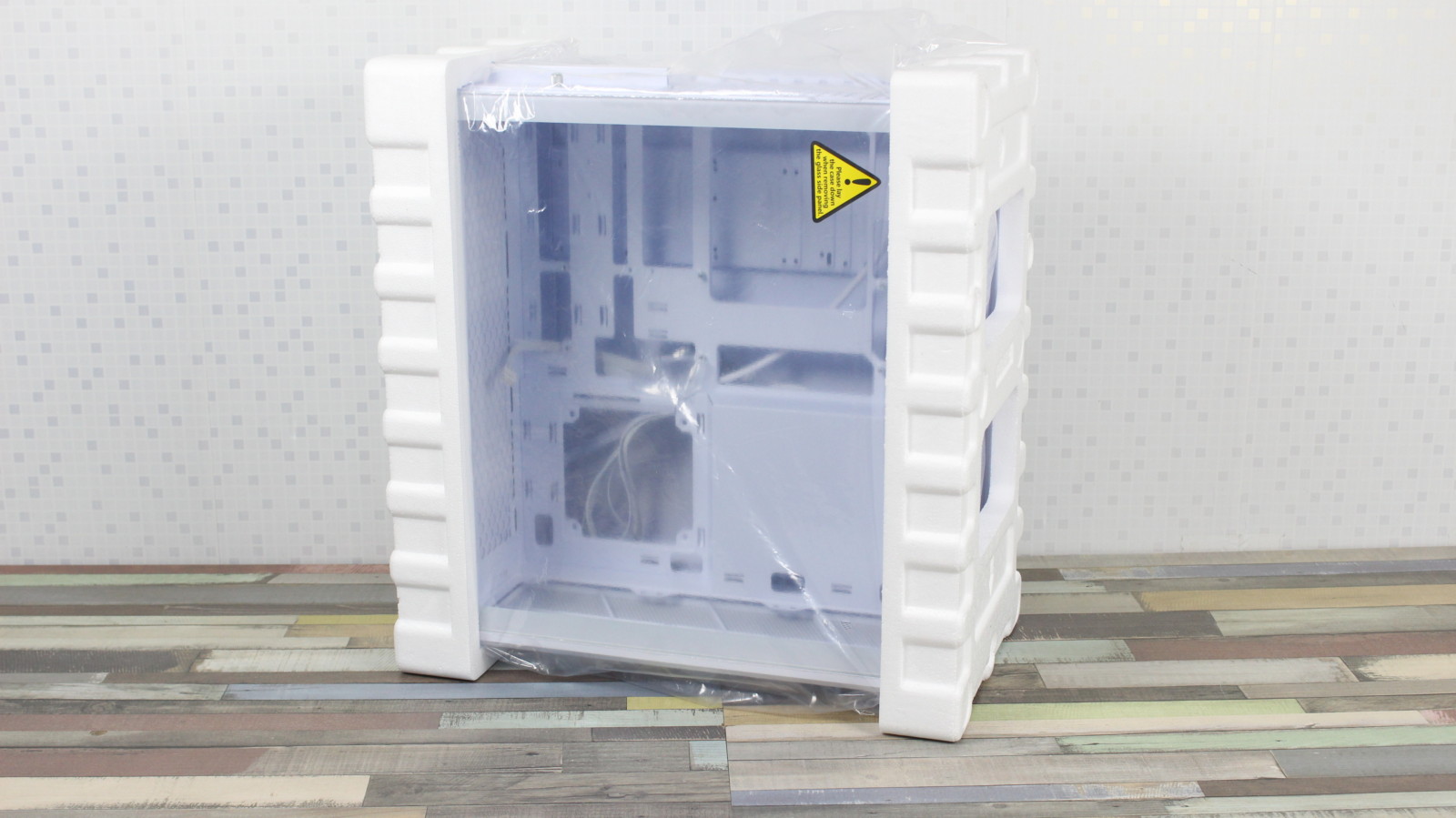
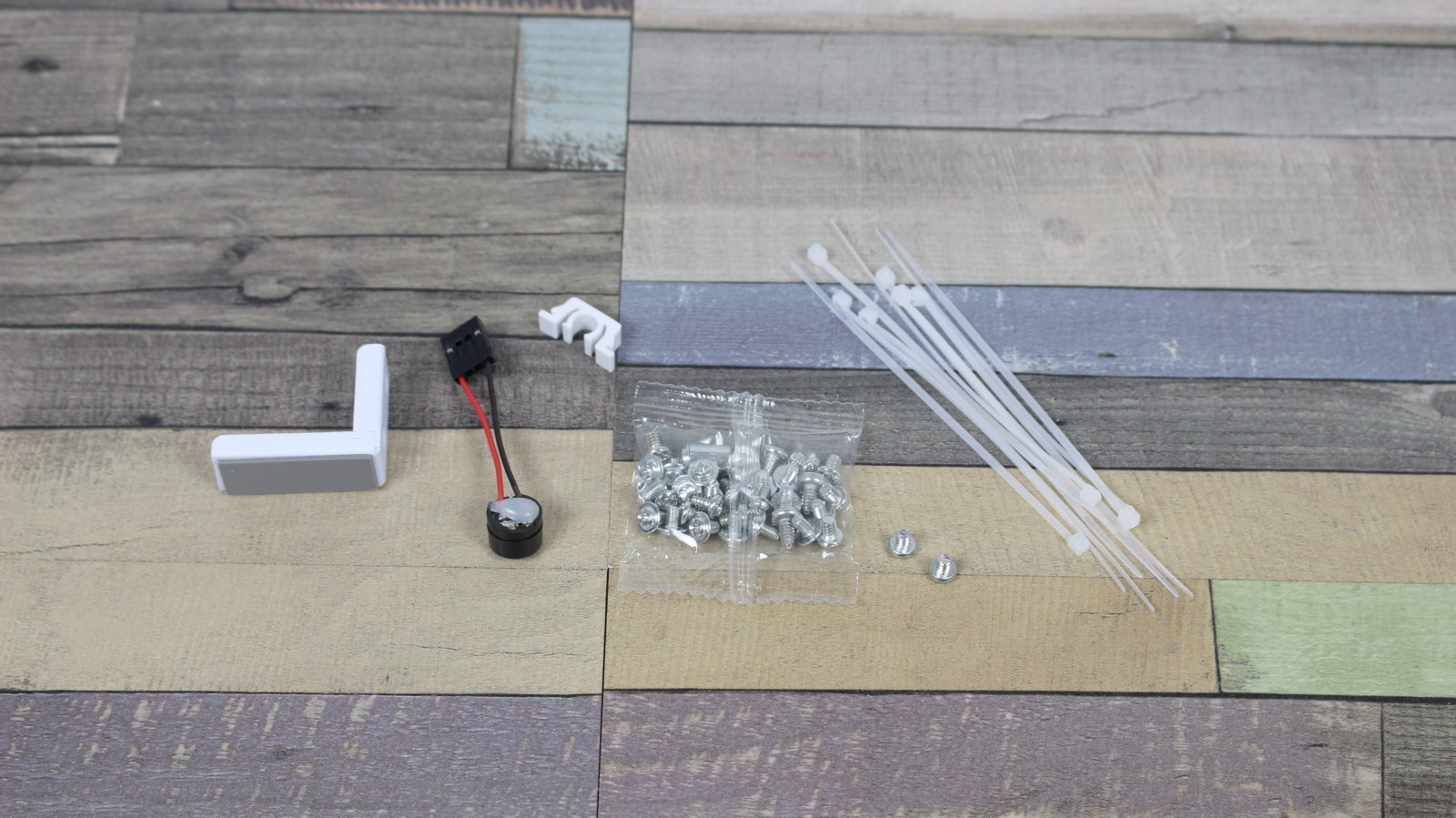
The supply kit matches the packaging — ascetic. Everything necessary to start assembling is included: an angled holder for the graphics card, a set of mounts, a spare "clip" for the panels, cable management ties, and even a system speaker.
Appearance
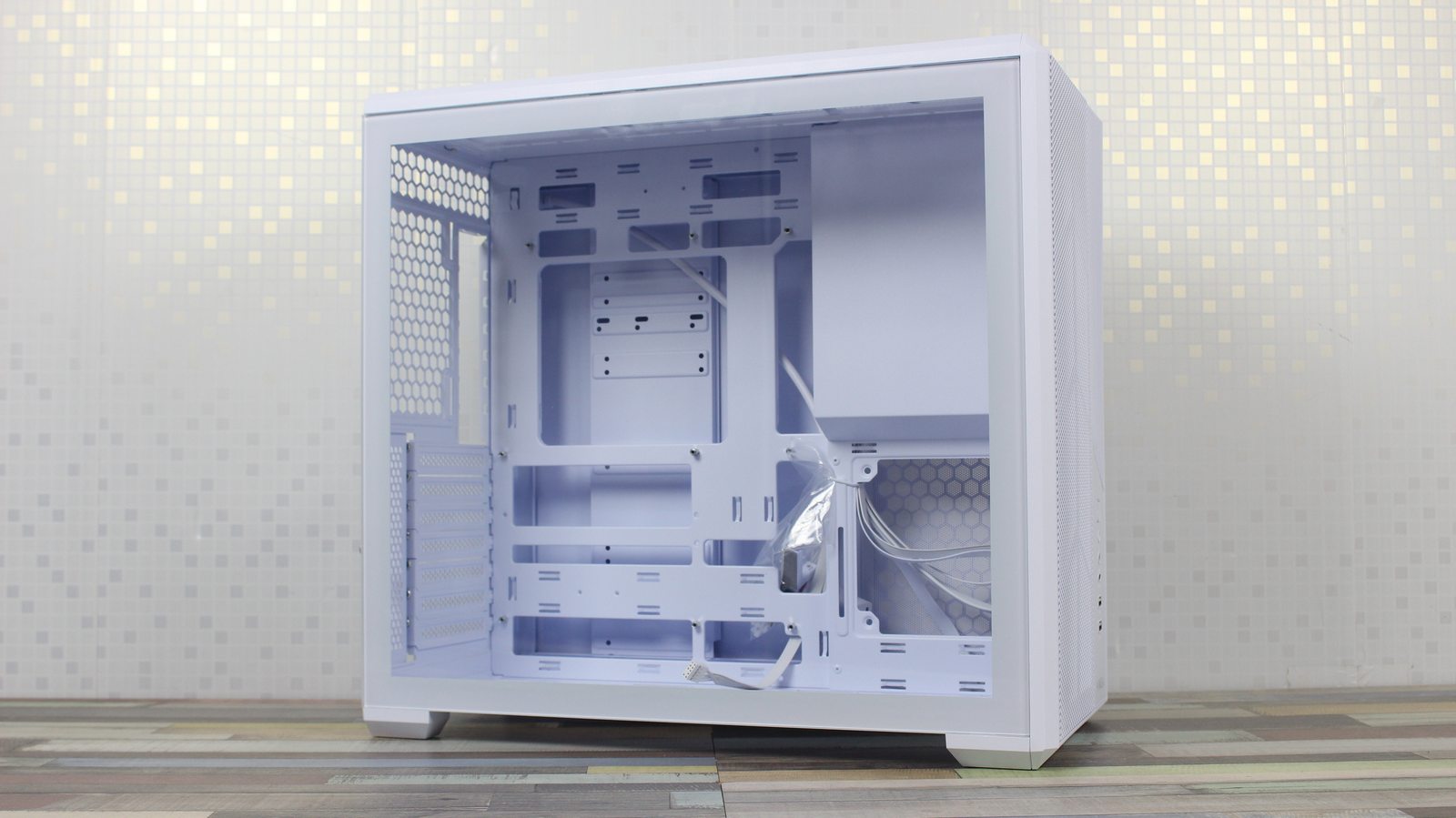
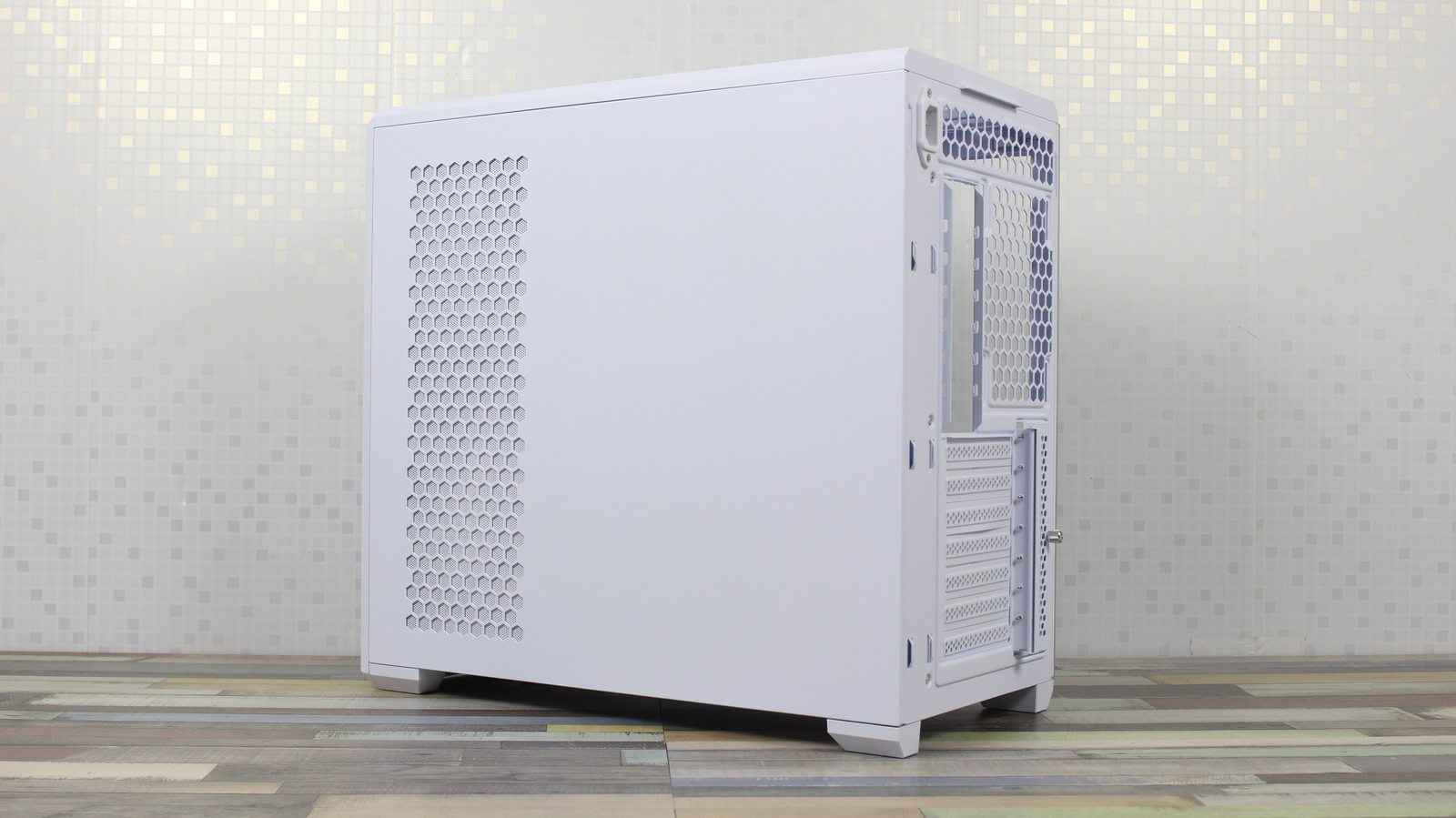
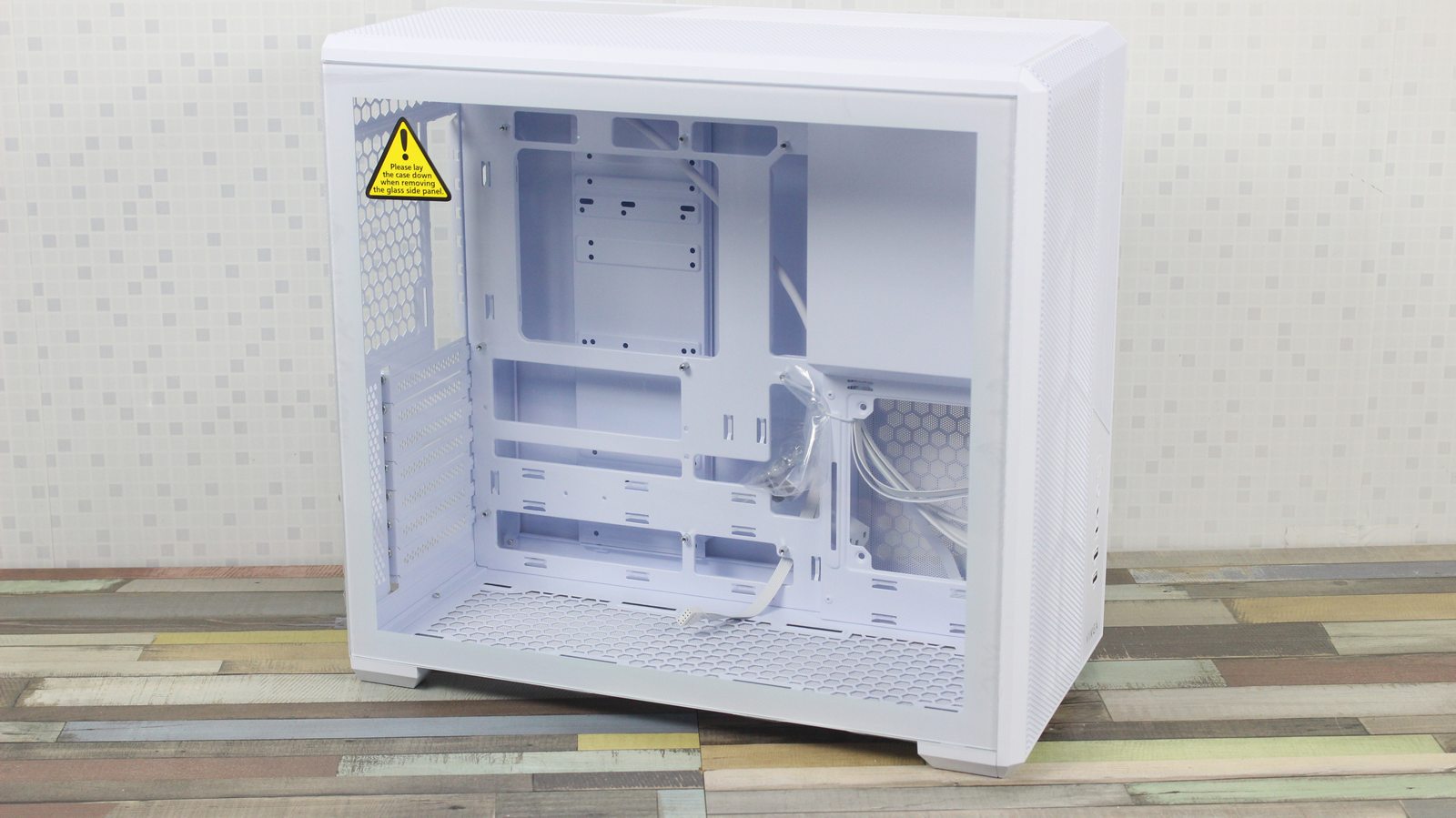
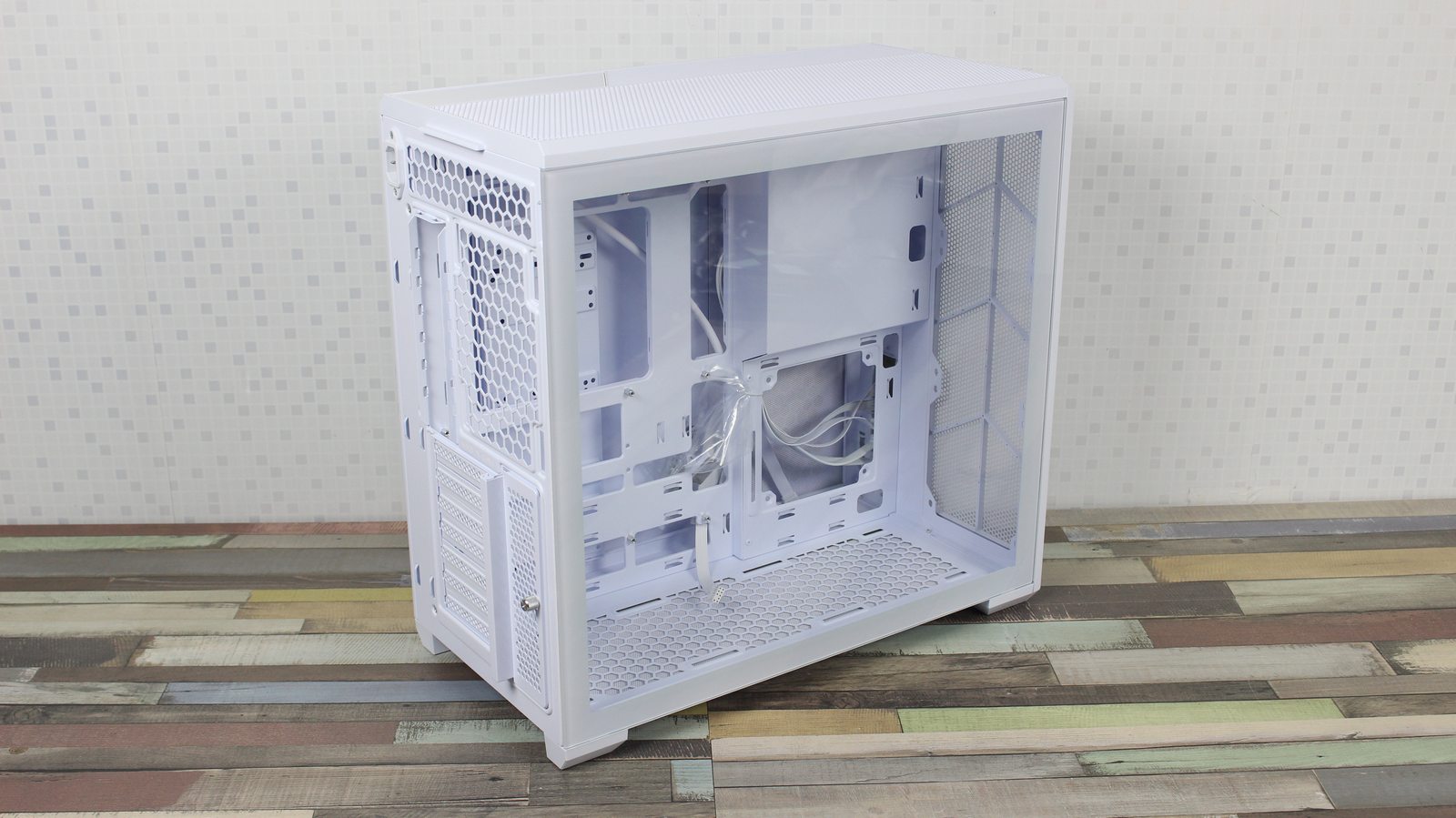
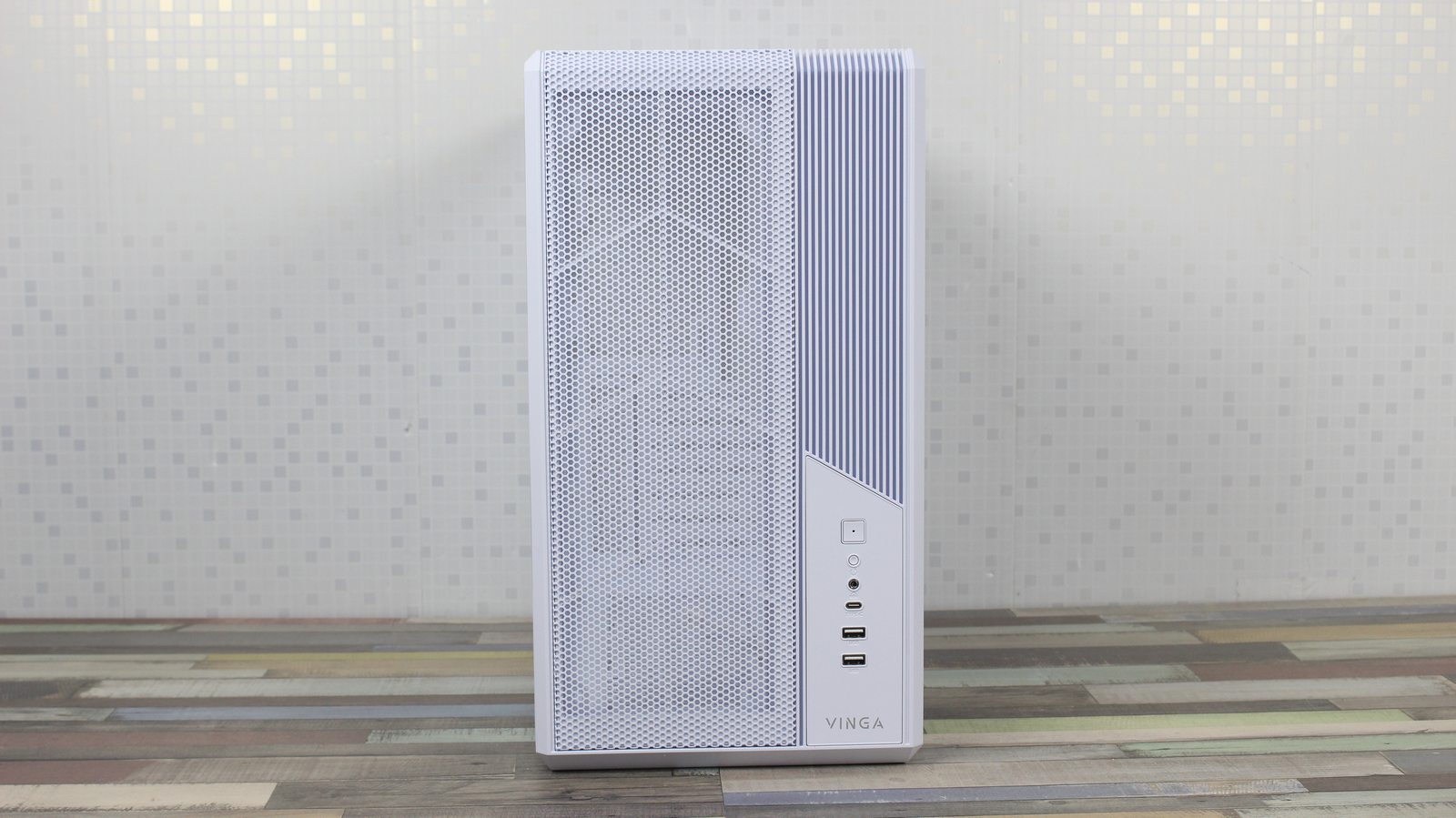
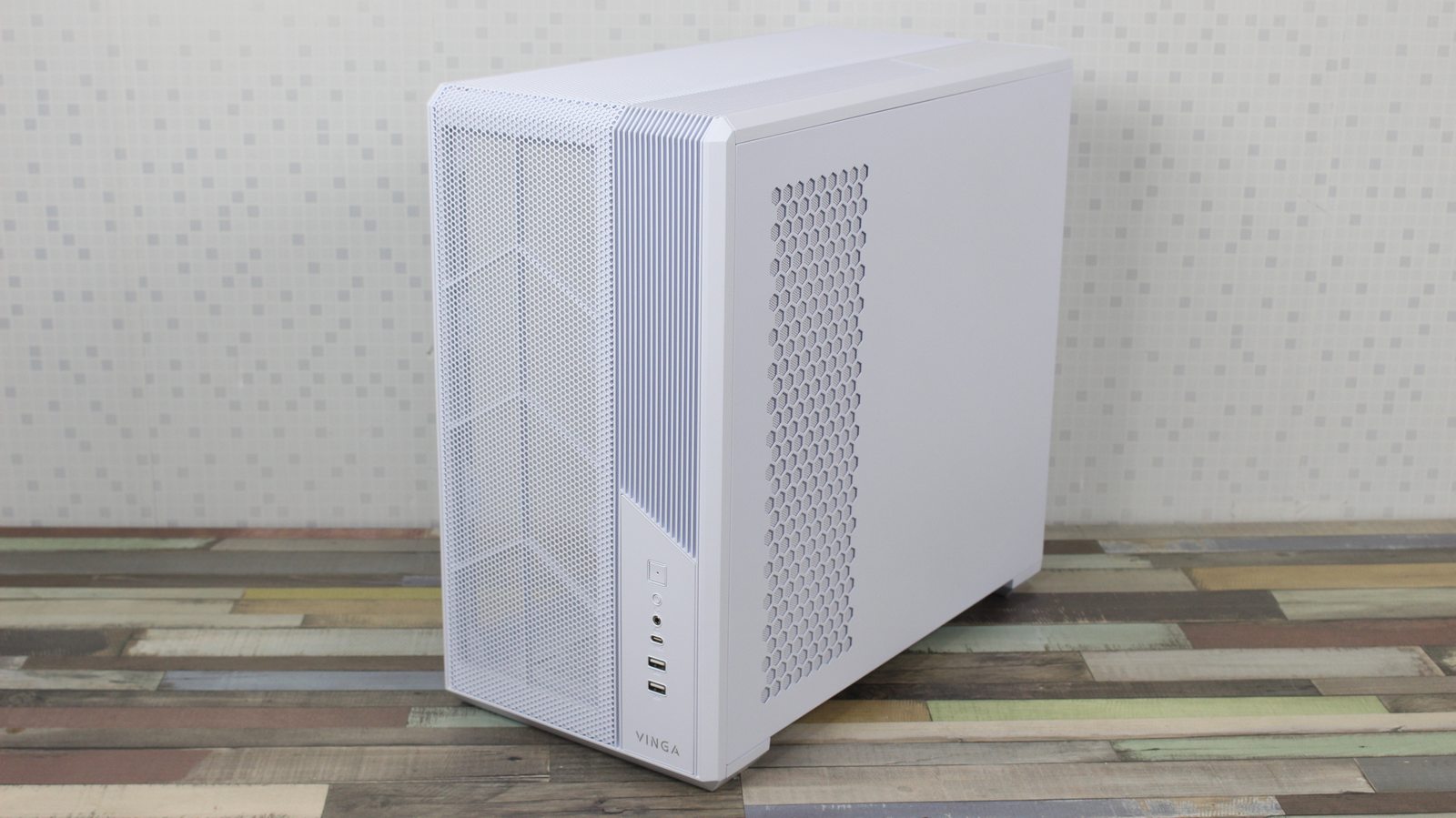
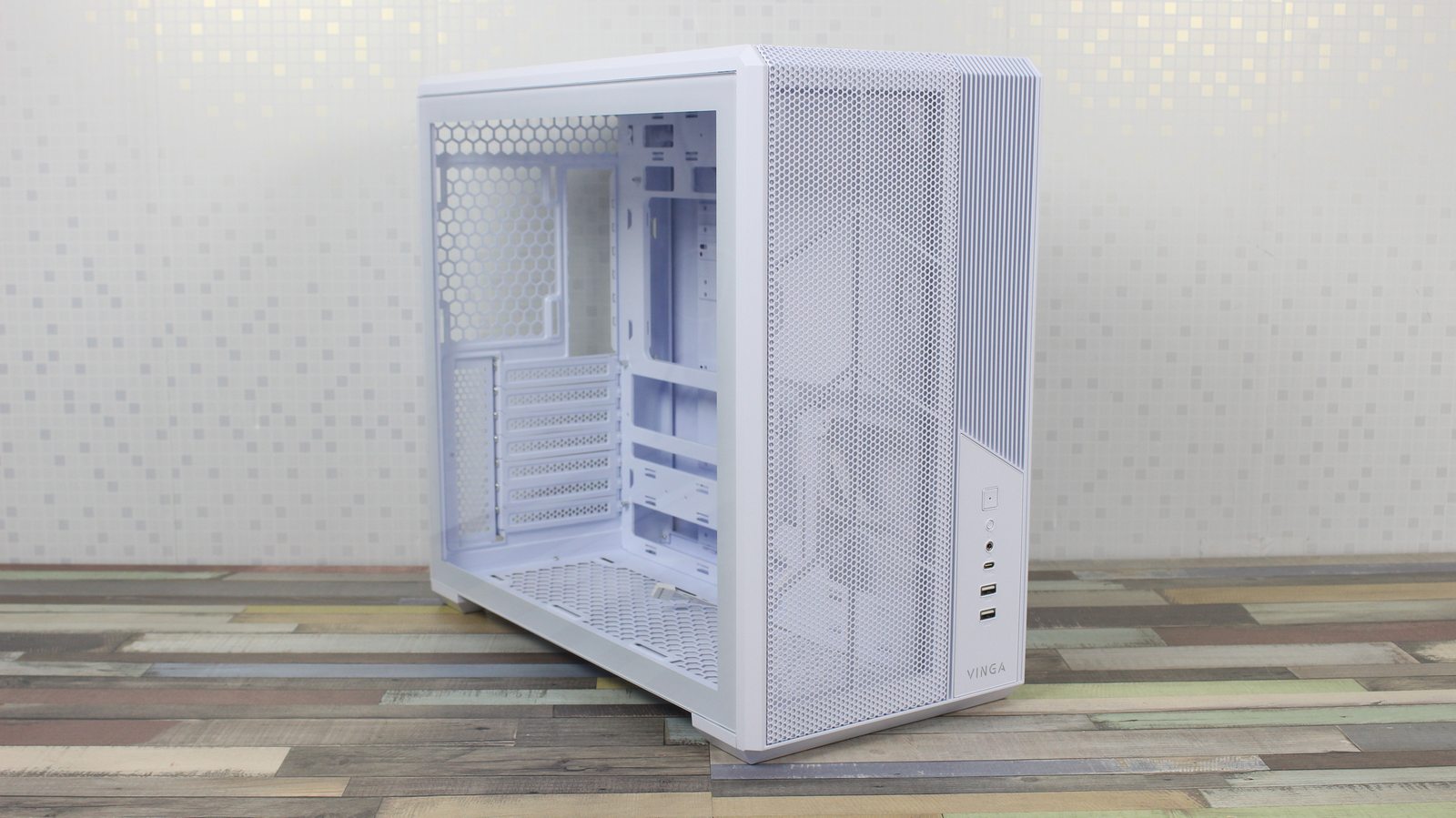
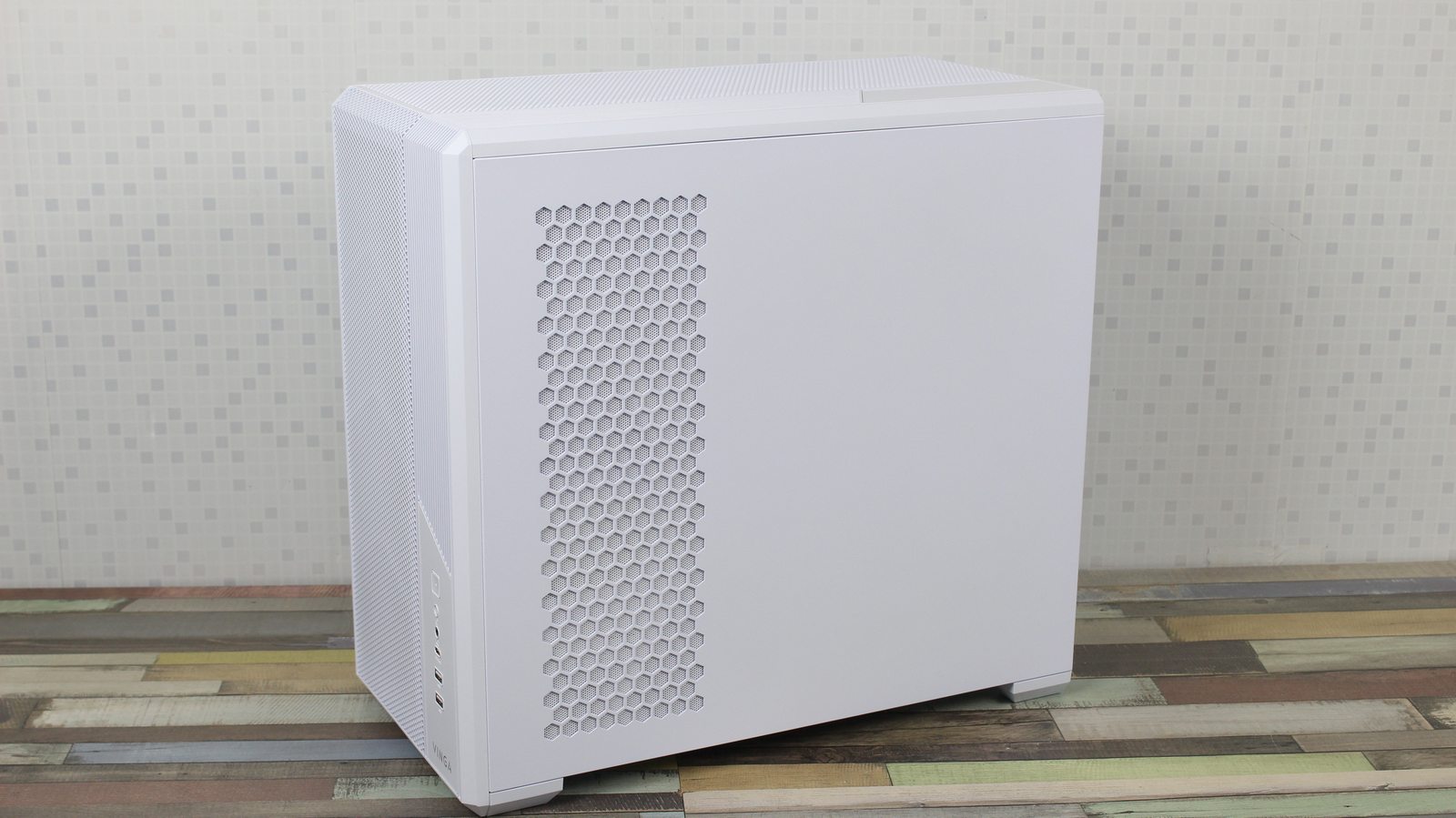
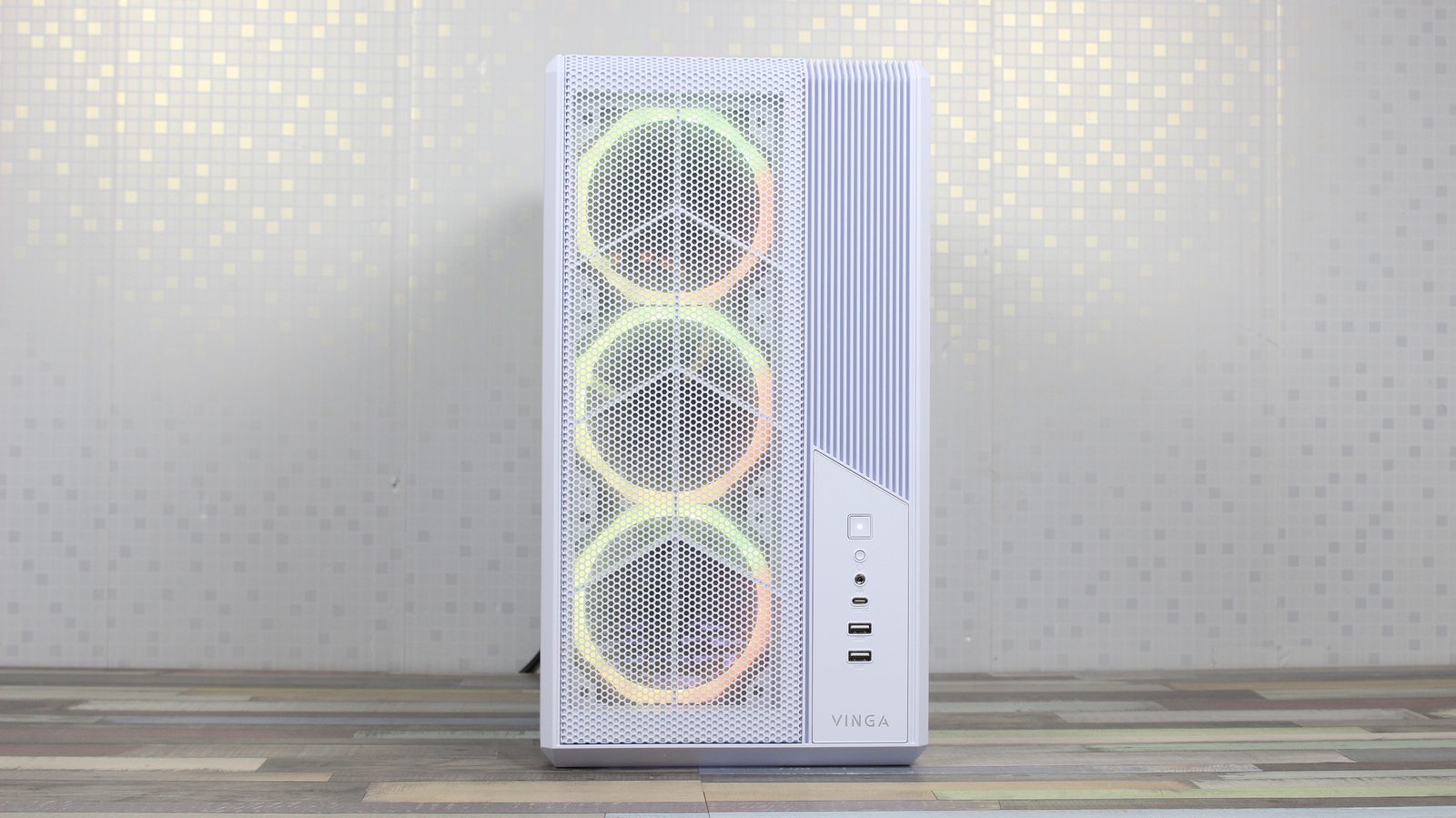
Vinga Eclipse is a snow-white dual-chamber Mid-Tower, where even the dust filters are kept in a single color. The case is made of high-quality steel with a thickness of 0.81–0.91 mm, and the left side panel is made of tempered glass with a thickness of 3.86 mm. The weight of the structure is about 6.5 kg. Thanks to the massive perforation of the panels, the chassis easily handles the ventilation of even hot "hardware," making it a practical choice for high-performance builds.
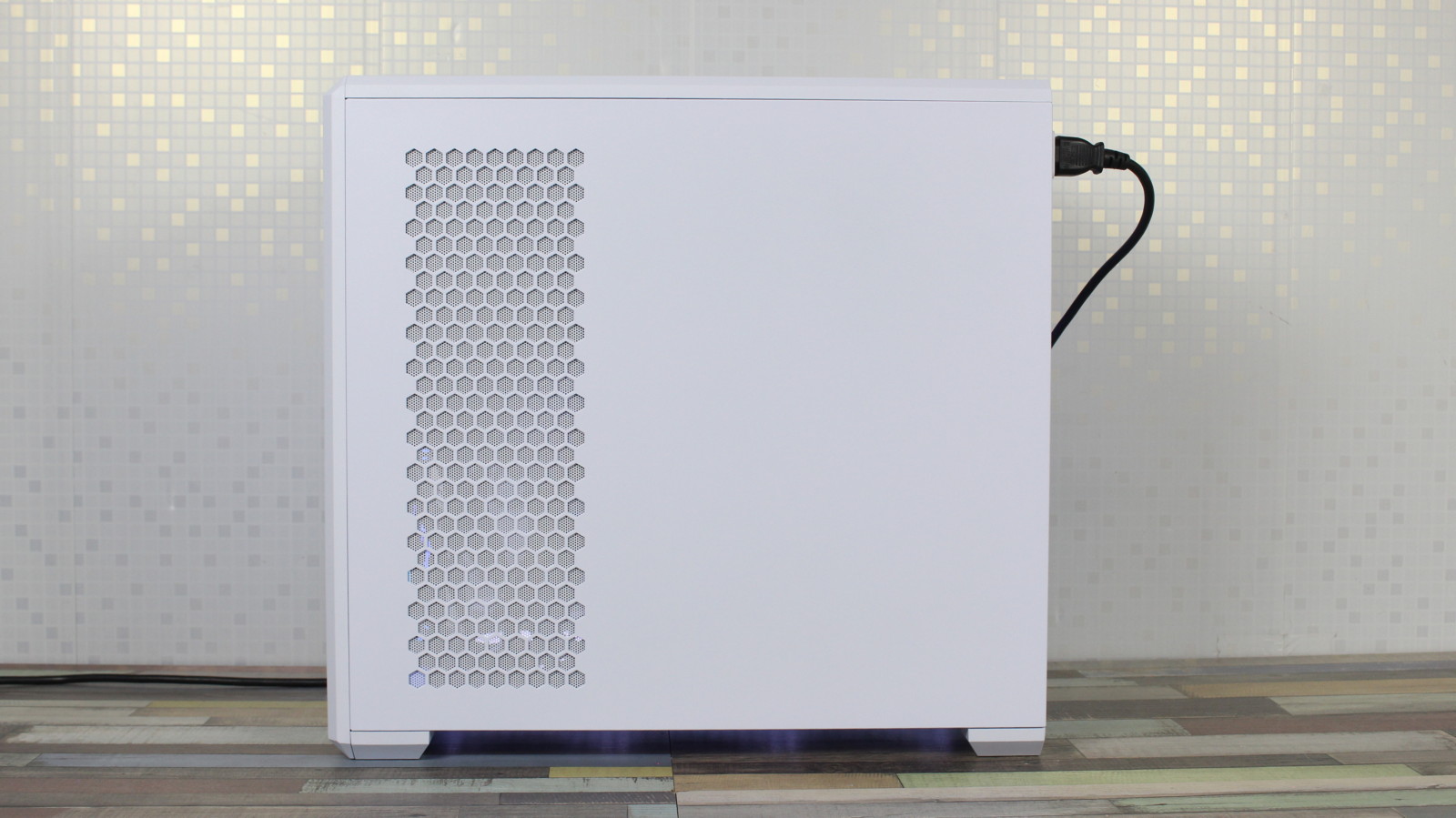
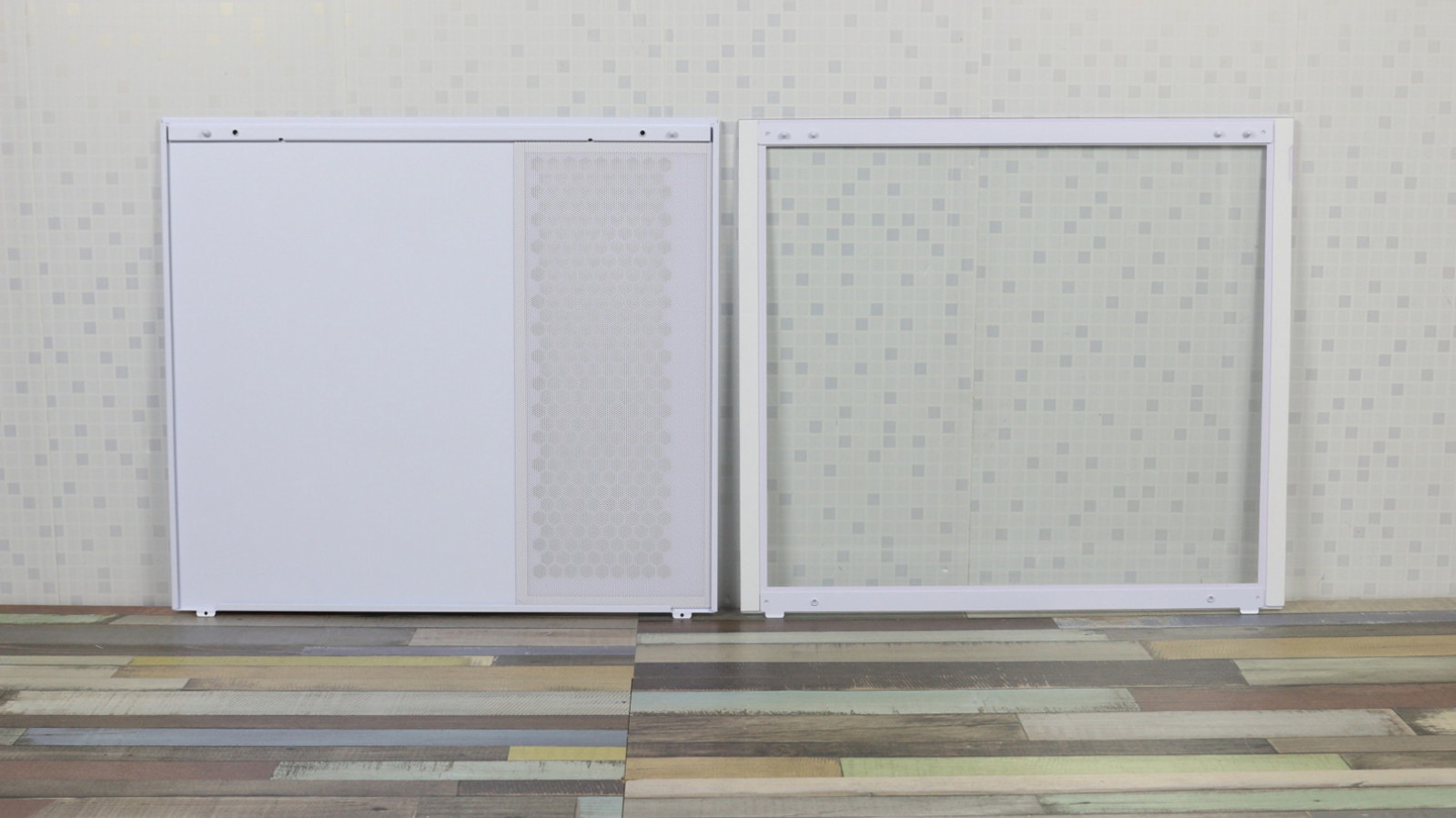
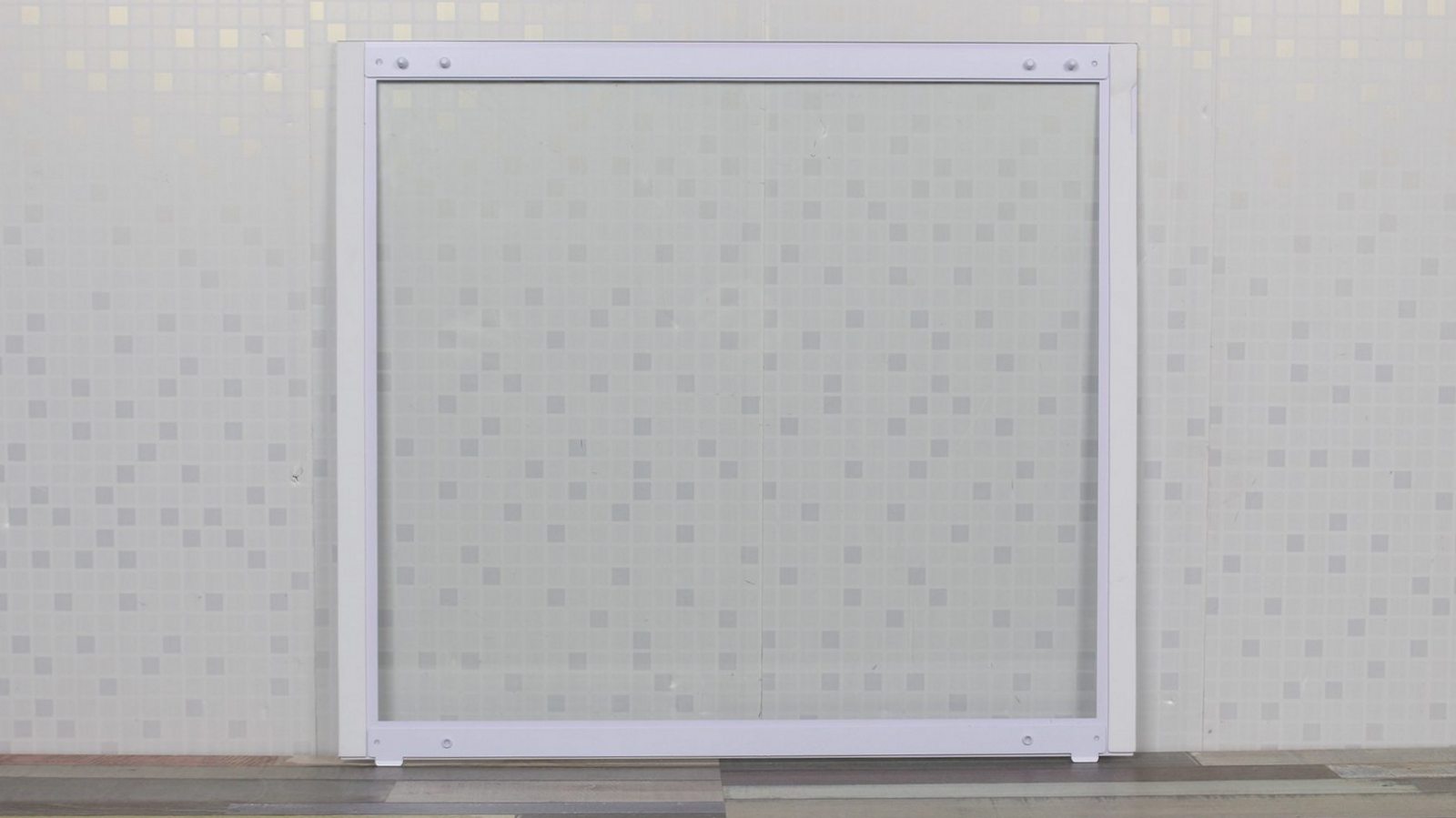
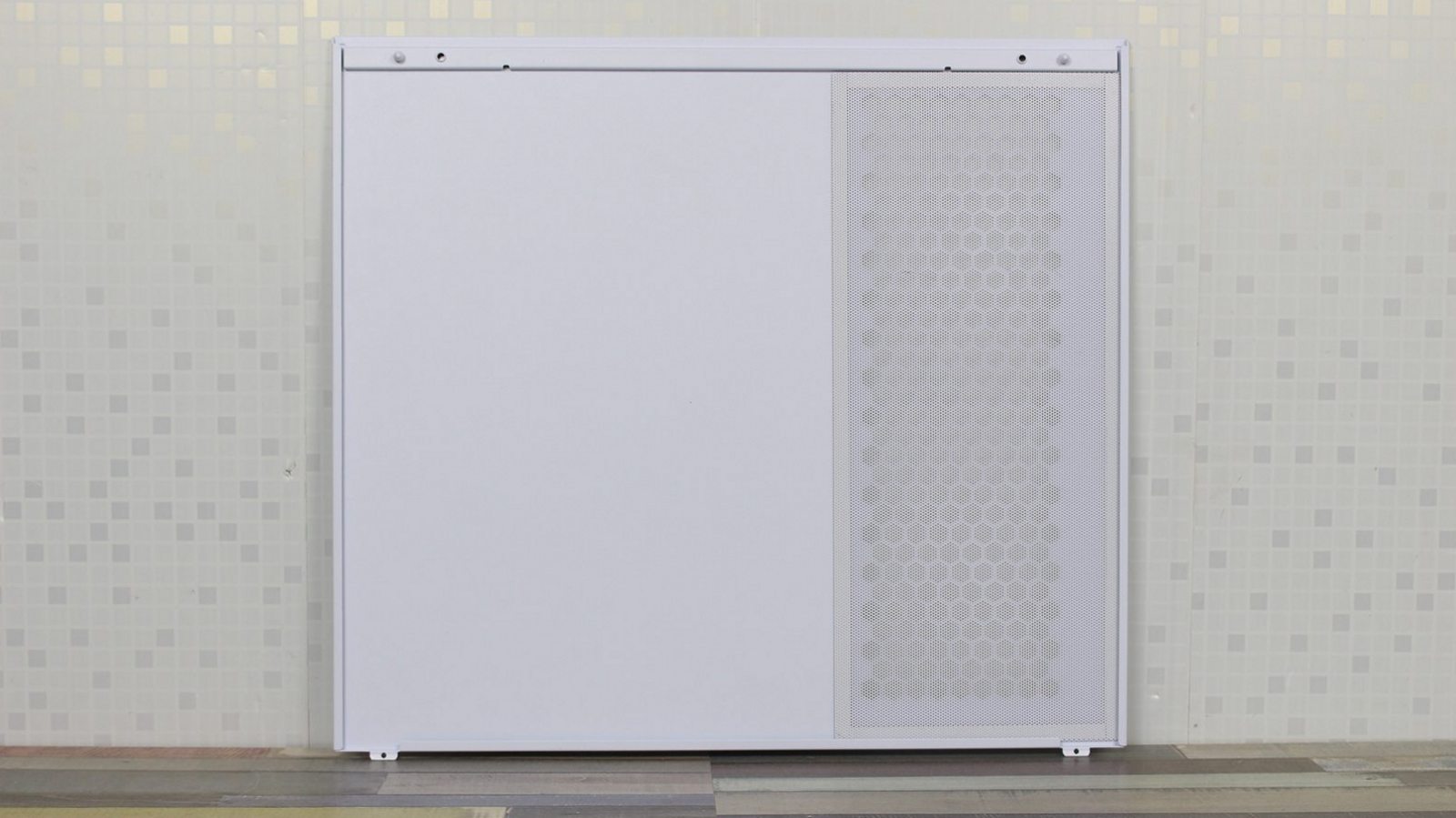
The side panels use a convenient screwless mounting system based on upper metal sleeves and lower hooks. For quick access to the interior, simply pull them towards you using the special groove at the top of the back side.
The left side panel is made of tempered glass in a metal frame, complemented by strips of rubber-like foam to prevent rattling. The right metal panel has a vertical ventilation zone in the form of honeycombs, which is covered on the inside by a removable magnetic nylon filter.
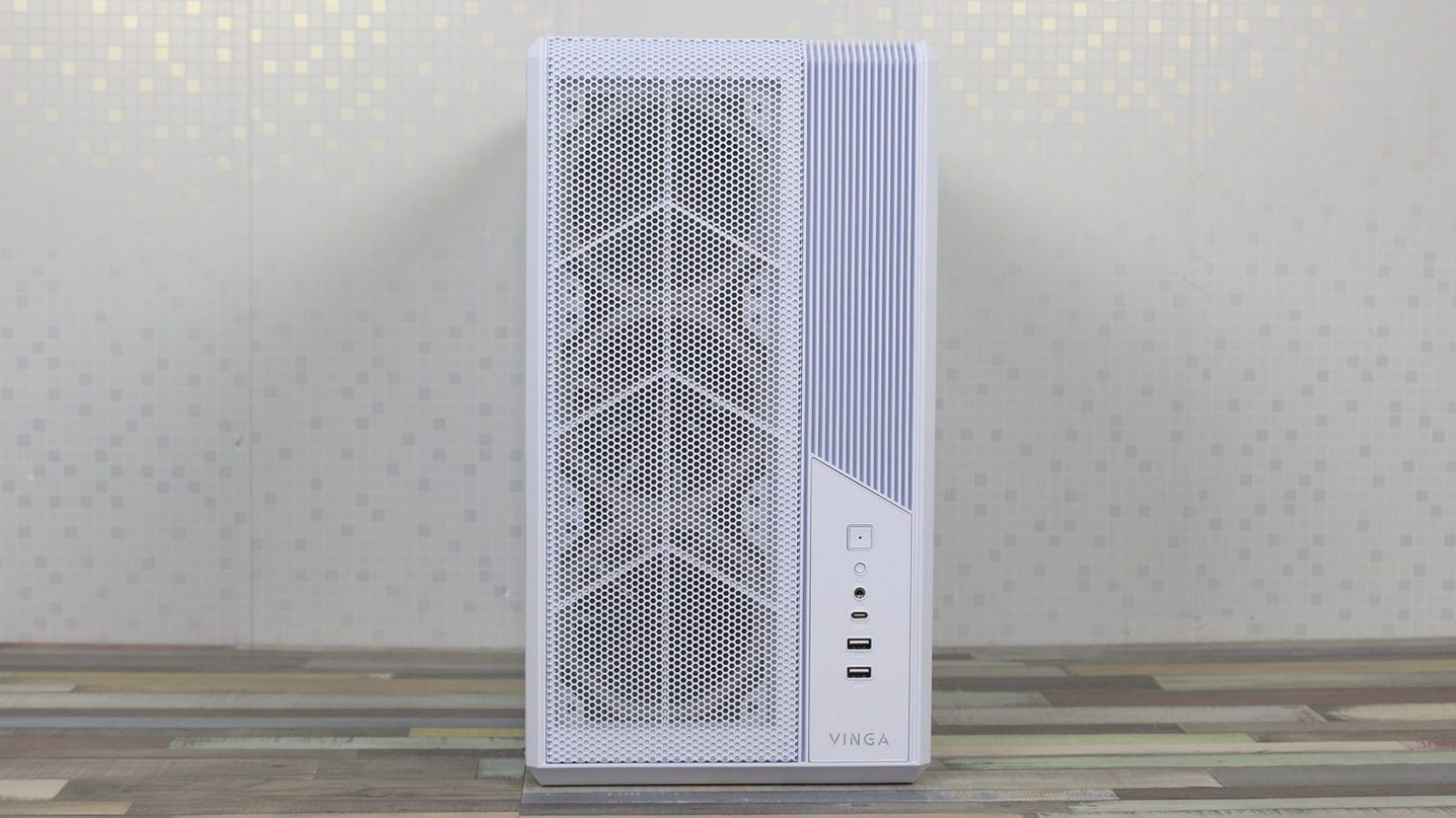
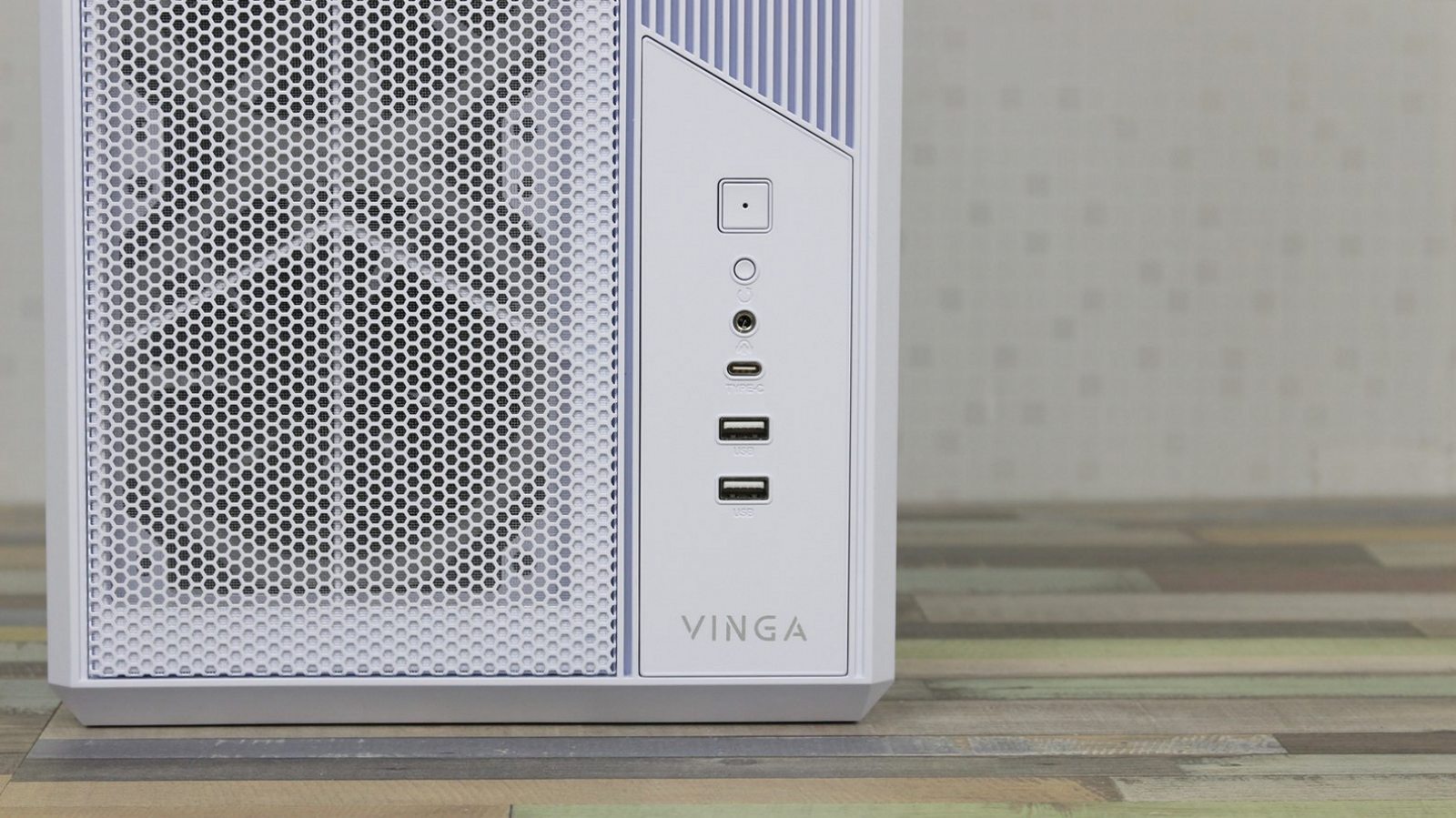
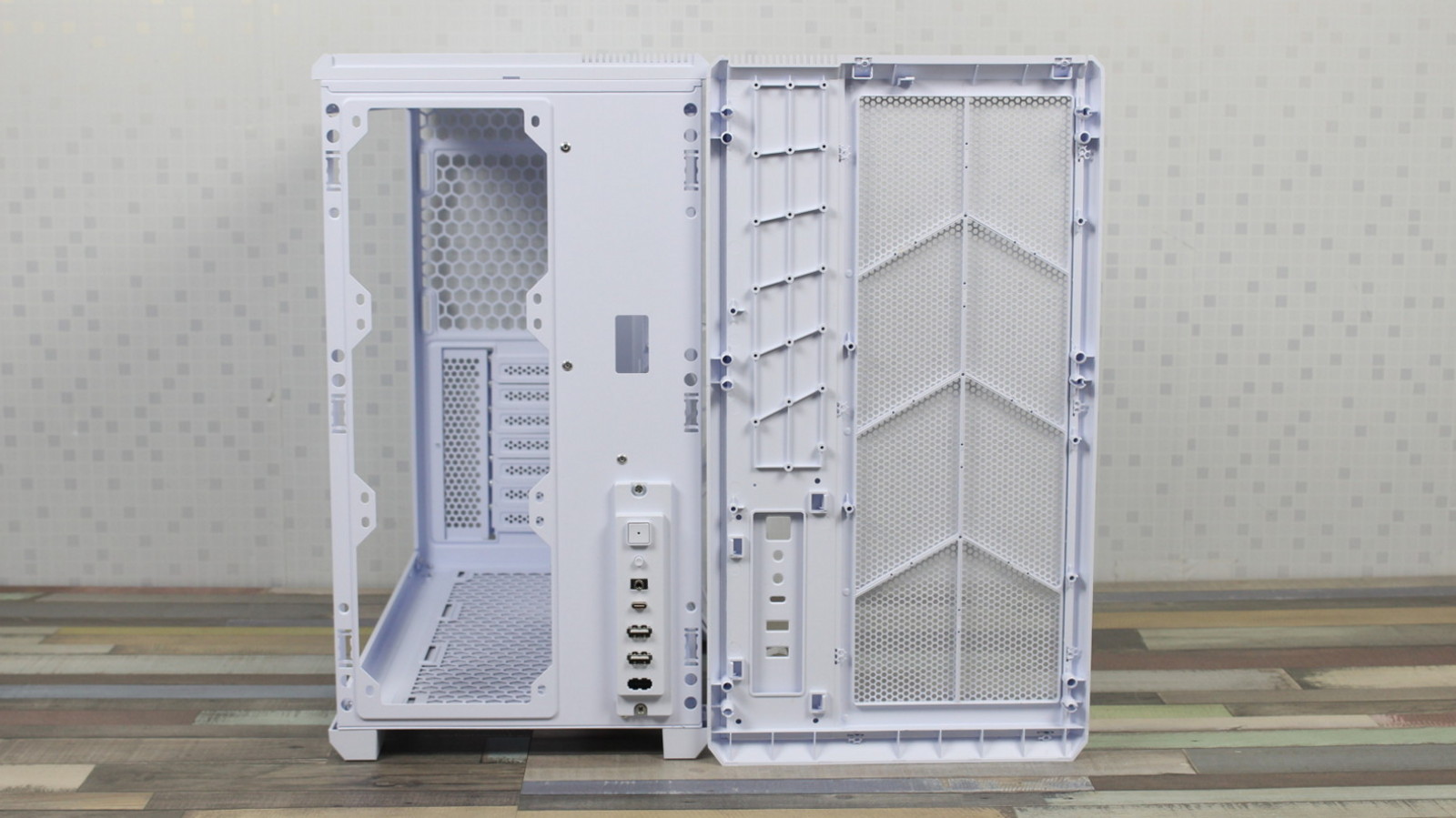
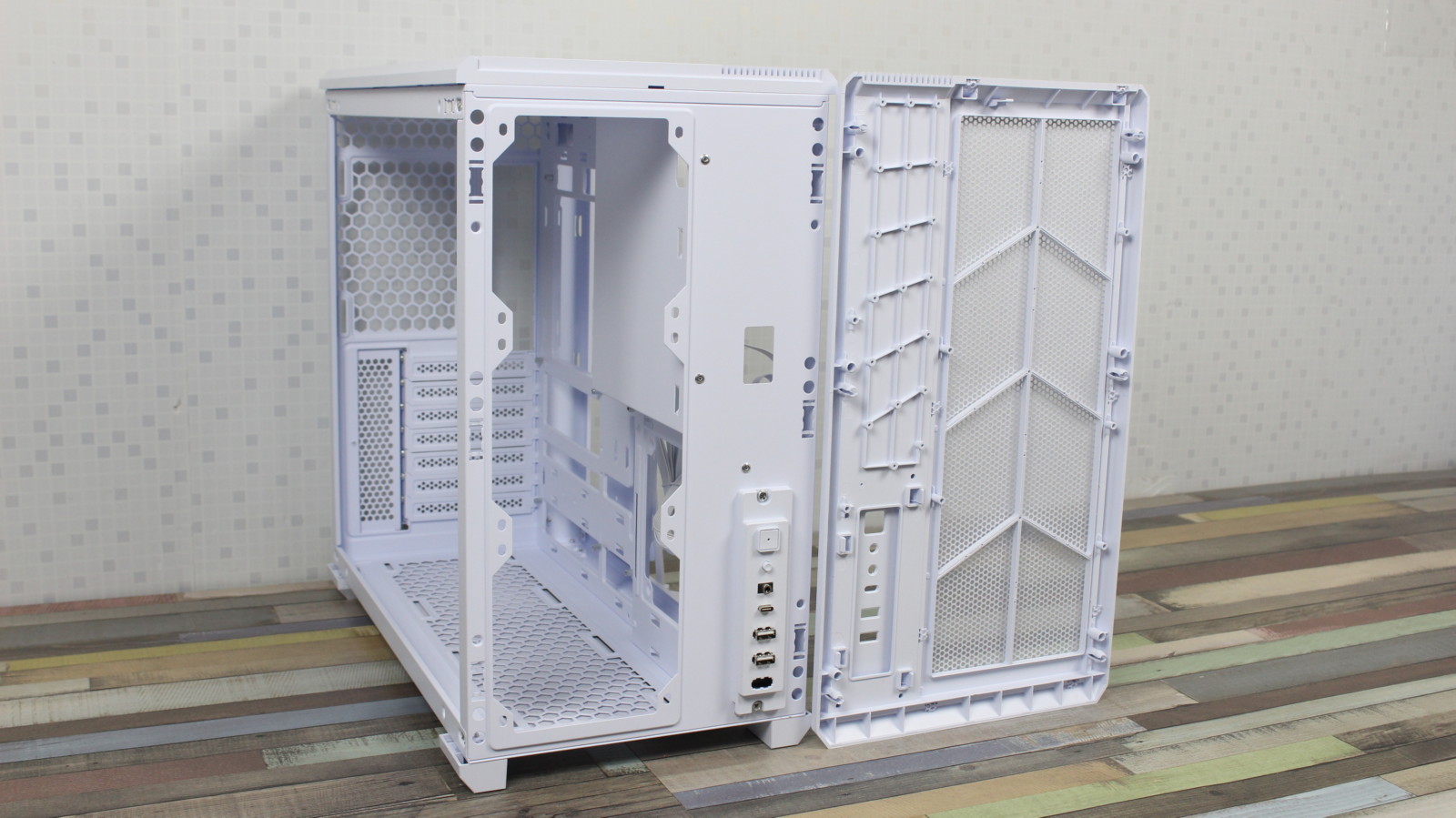
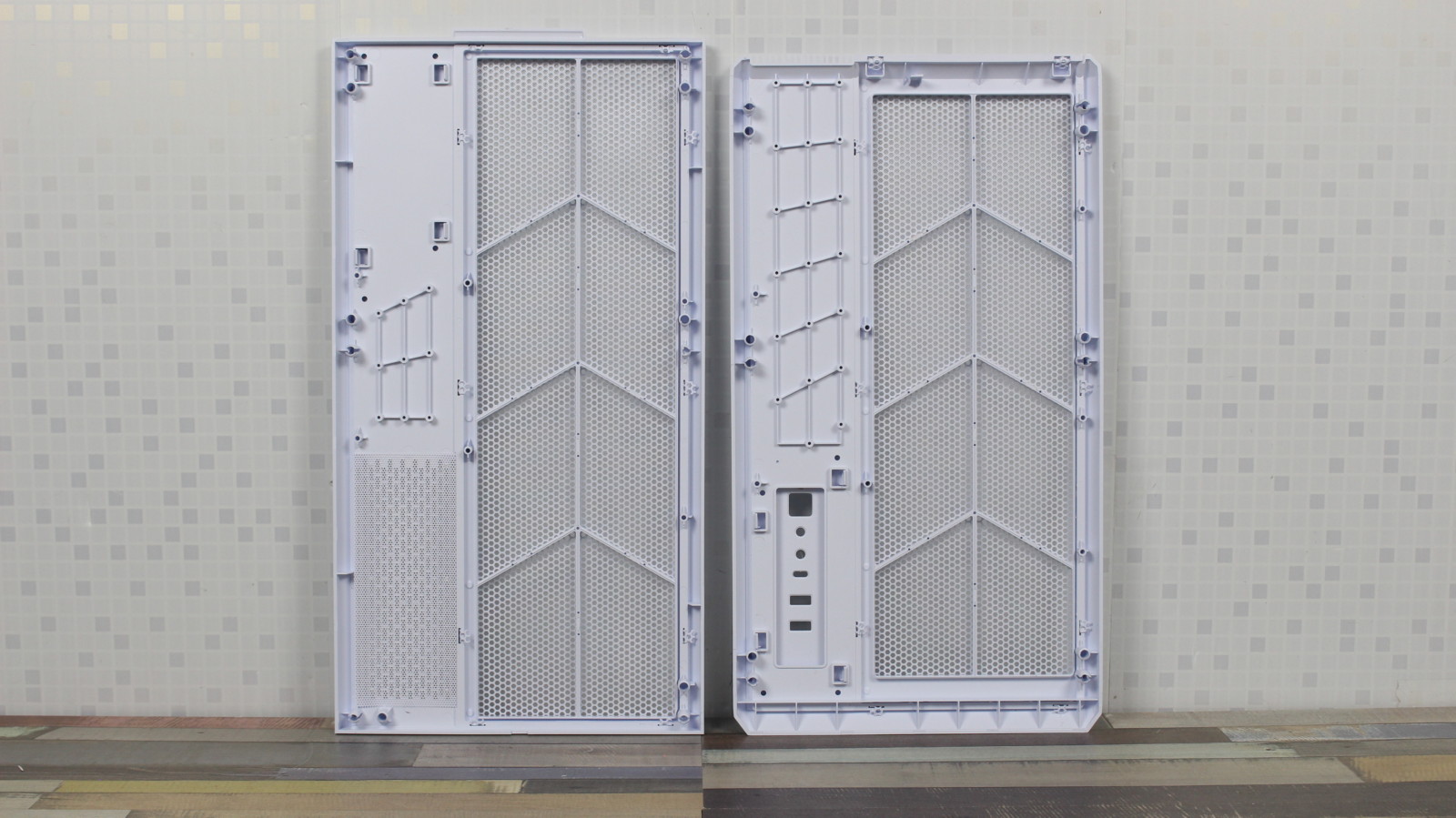
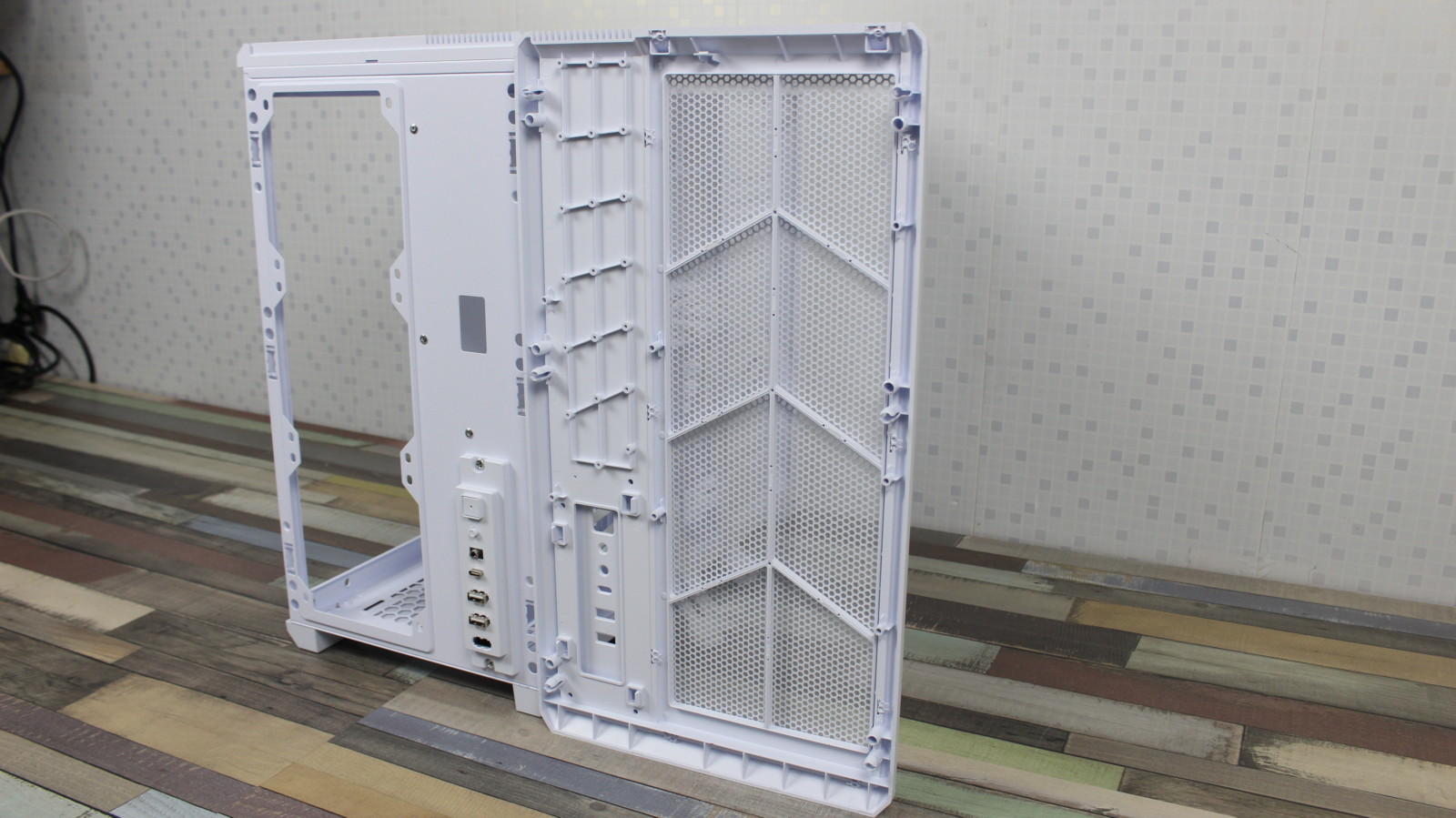
The front part of the case has a removable plastic panel, the main area of which is occupied by a metal mesh. The panel is fixed with plastic sleeves, so some effort is required for its removal, and it is equipped with a non-removable nylon dust filter on the inside.
The front of the chassis provides mounting locations for three 120-mm fans, as well as the possibility of installing a liquid cooling system with a radiator up to 360 mm in length.
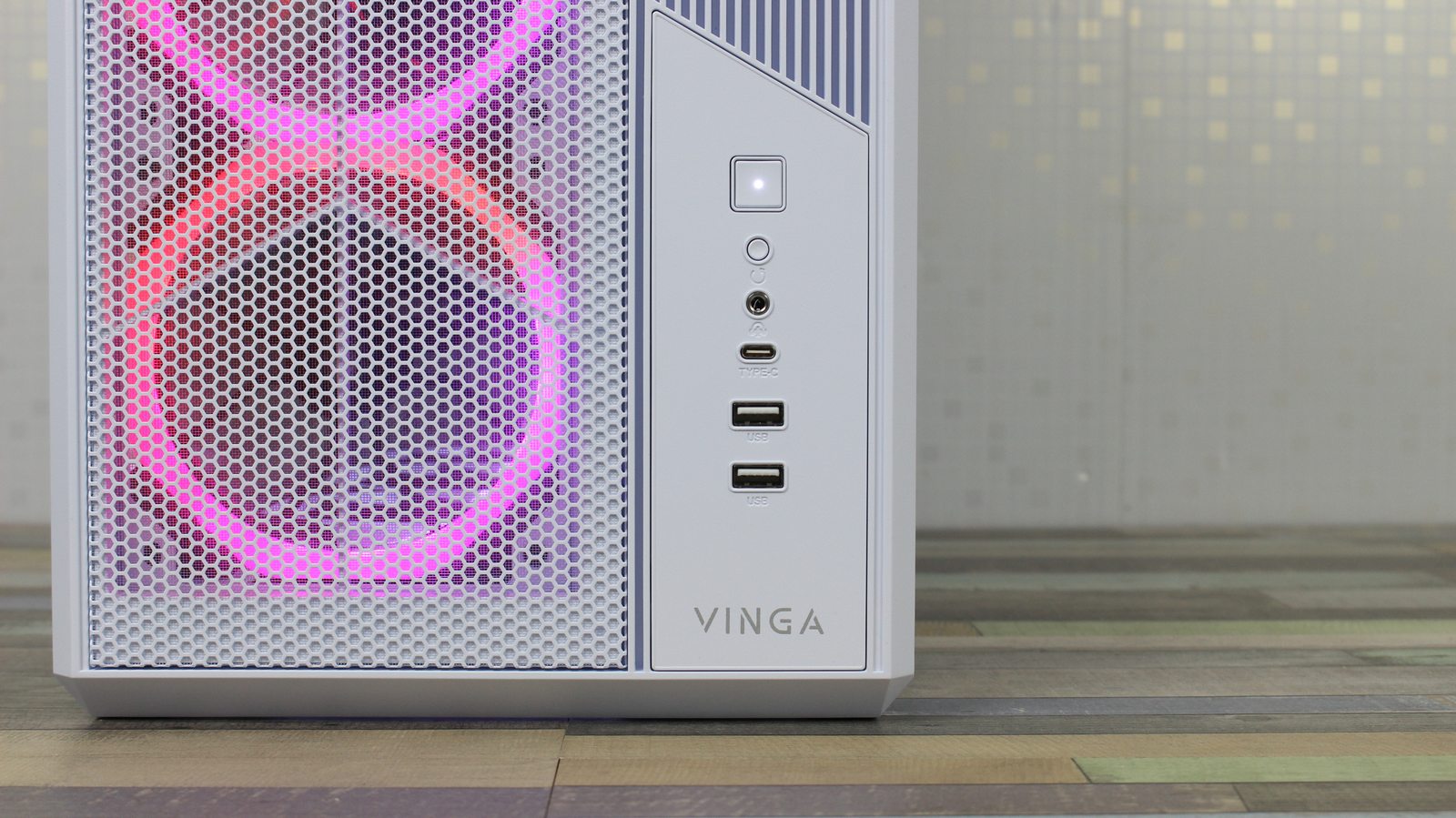
The interface block includes: two USB 3.0 ports, one modern USB 3.1 Type-C port, a combined audio jack, as well as reset and power buttons. The latter is equipped with white LED indication. Thanks to the different sizes of the buttons, they are easy to distinguish by touch, reducing the likelihood of accidental pressing.
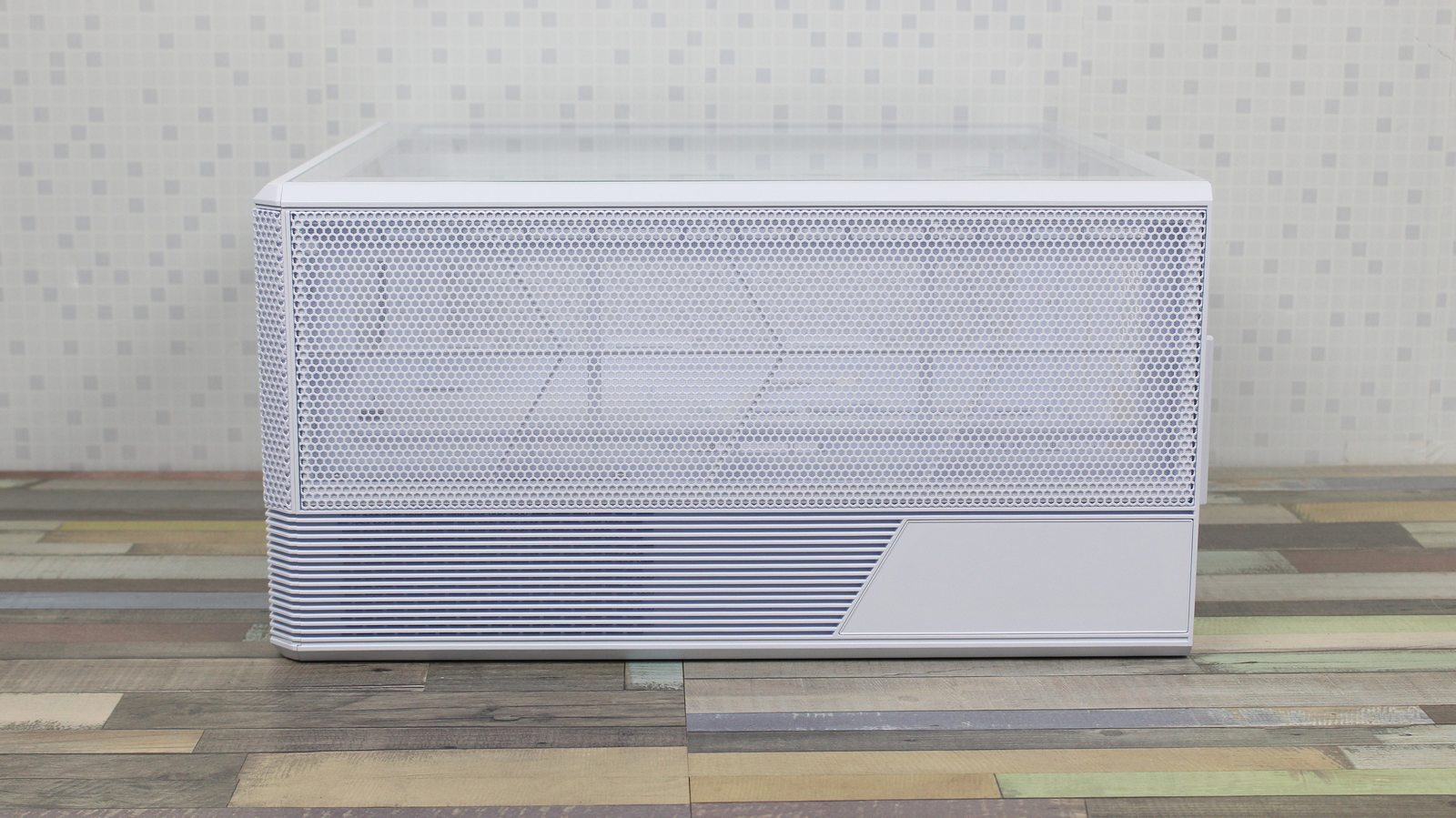
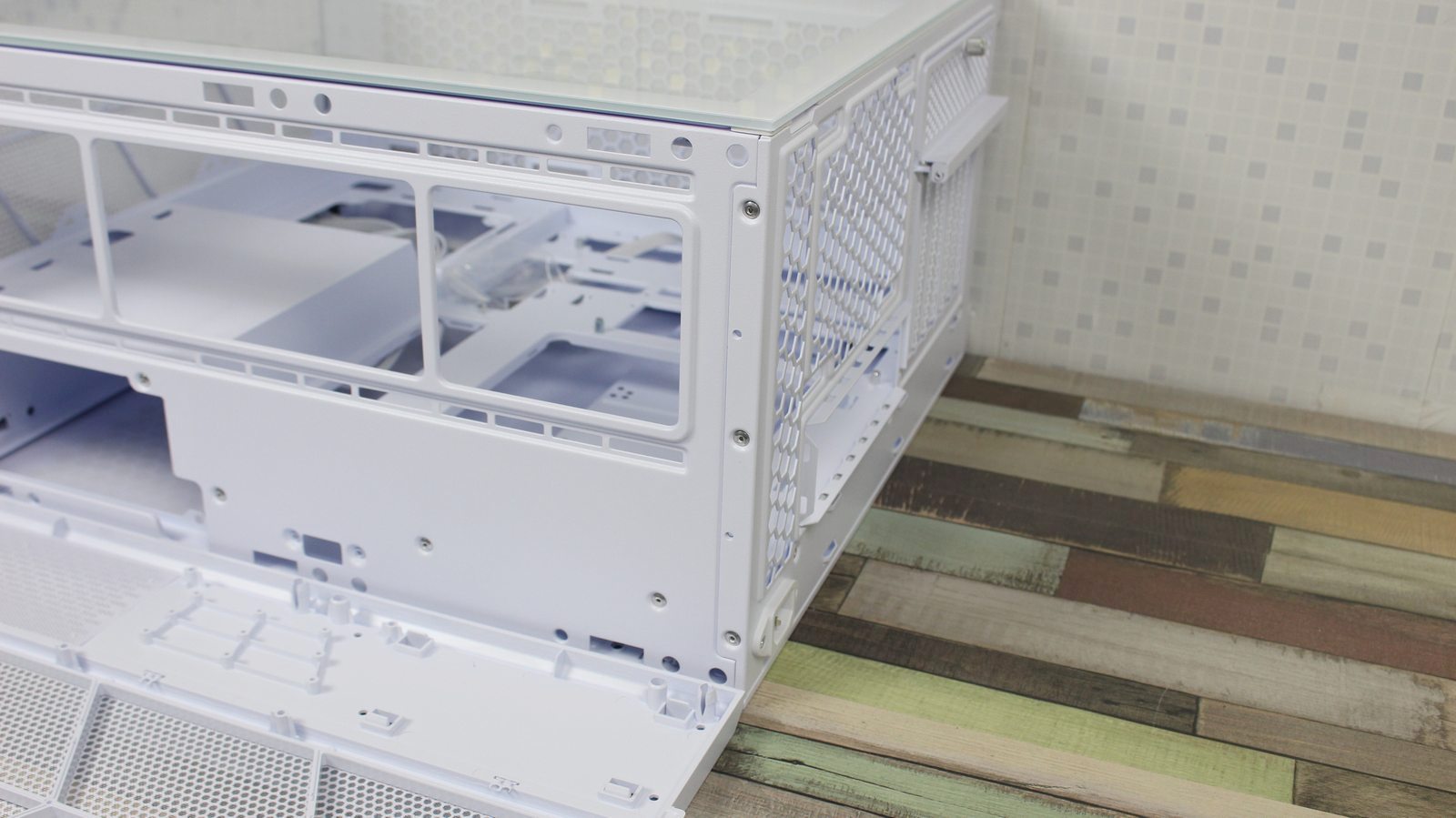
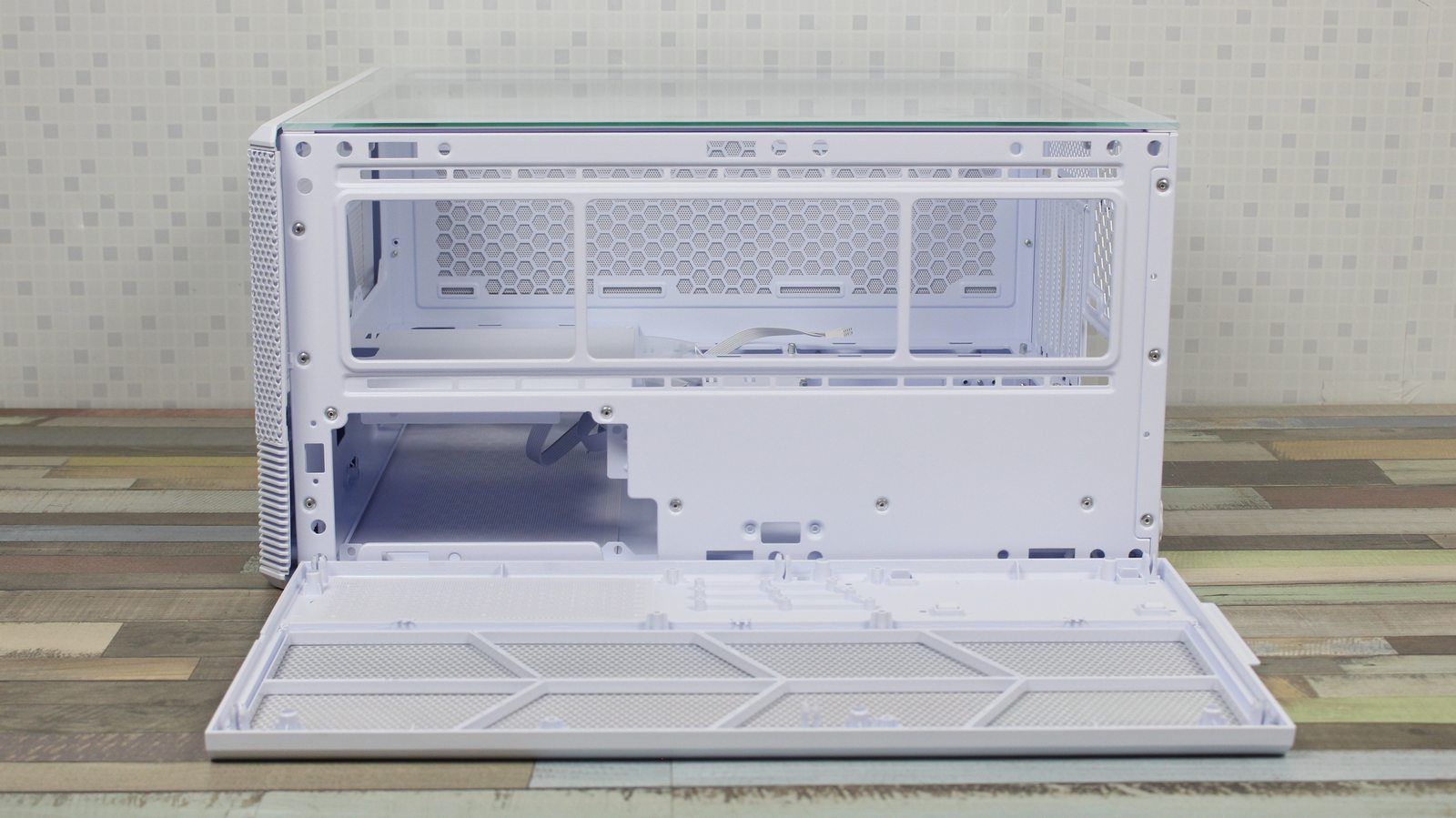
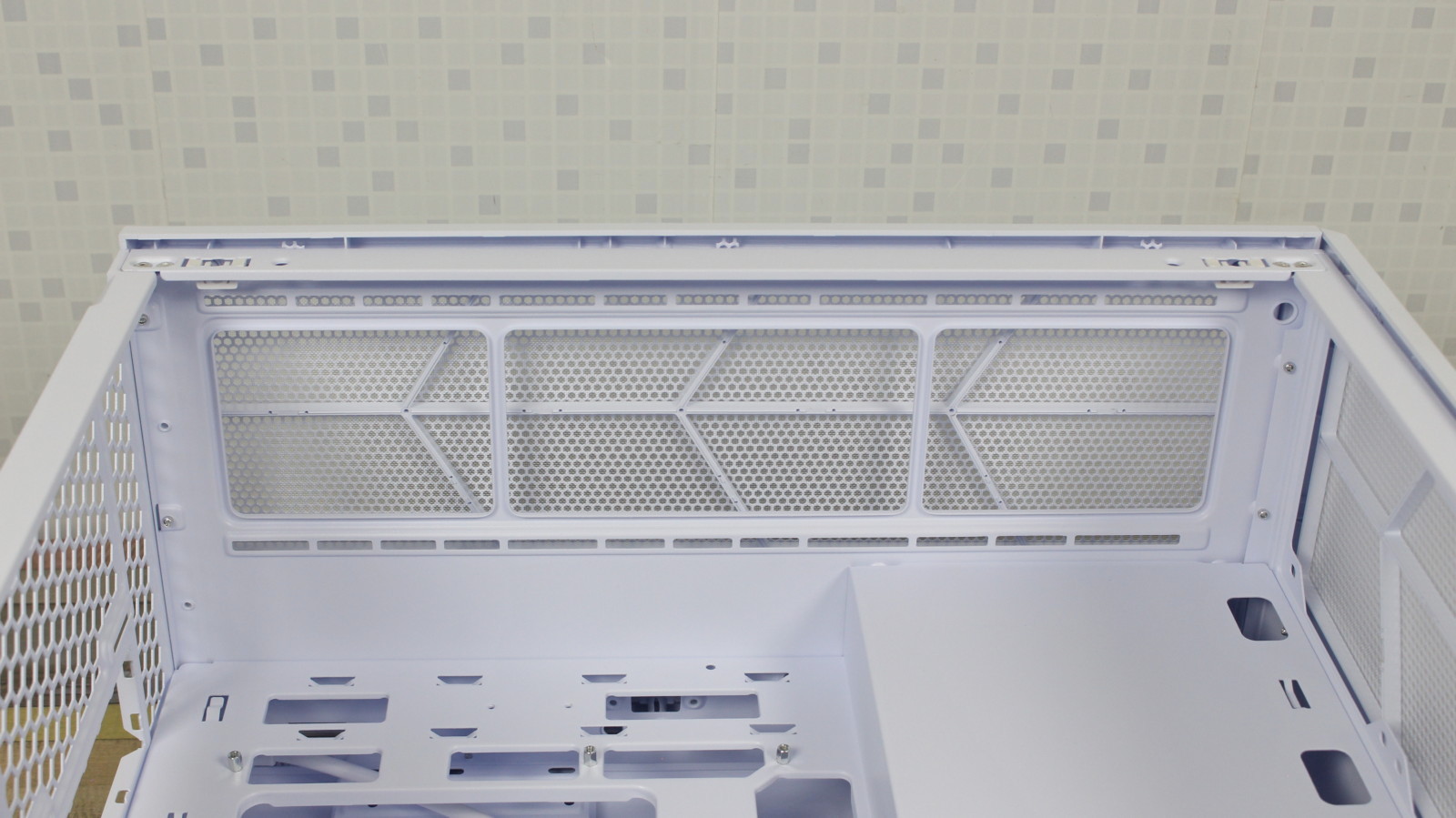
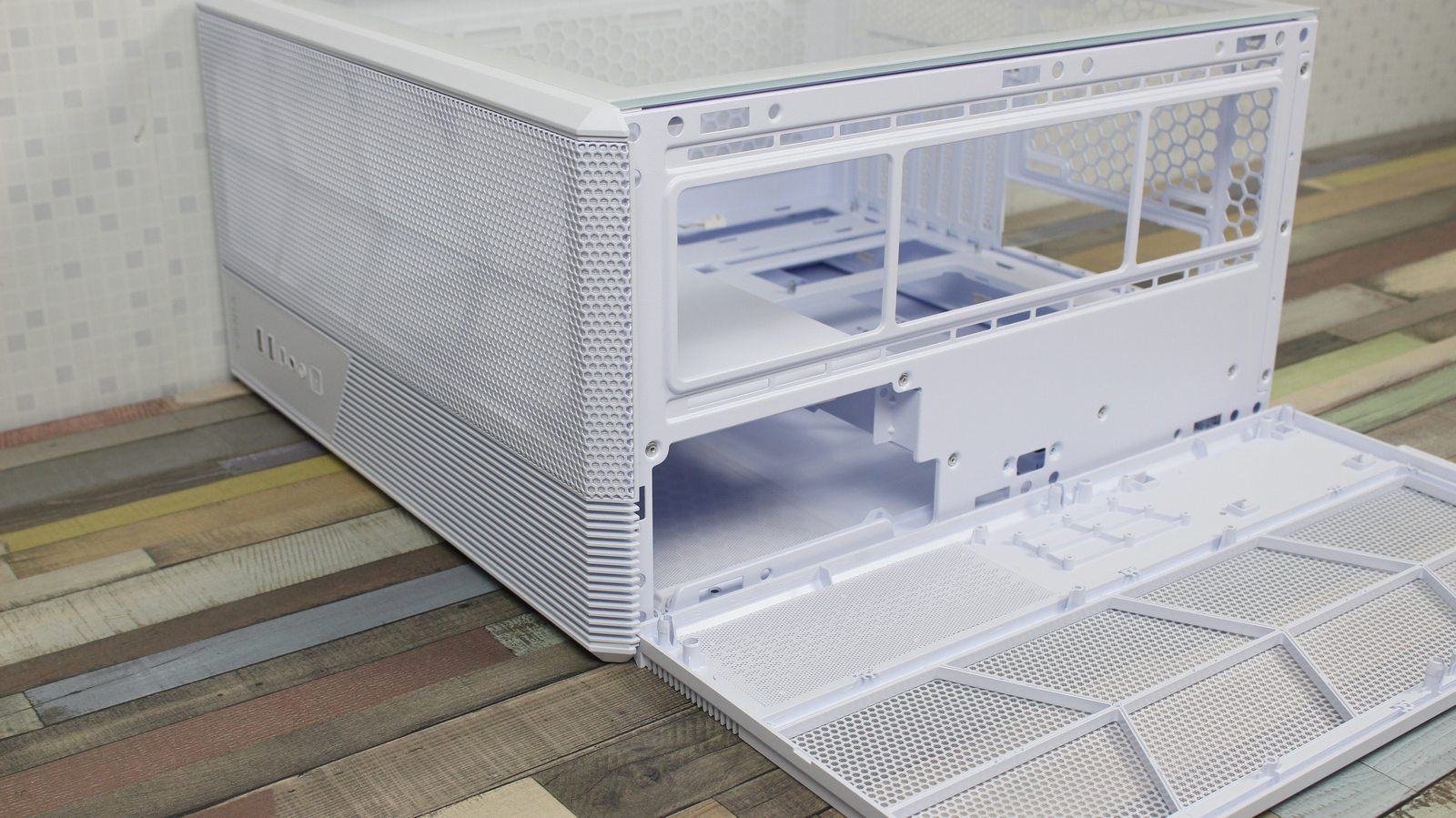
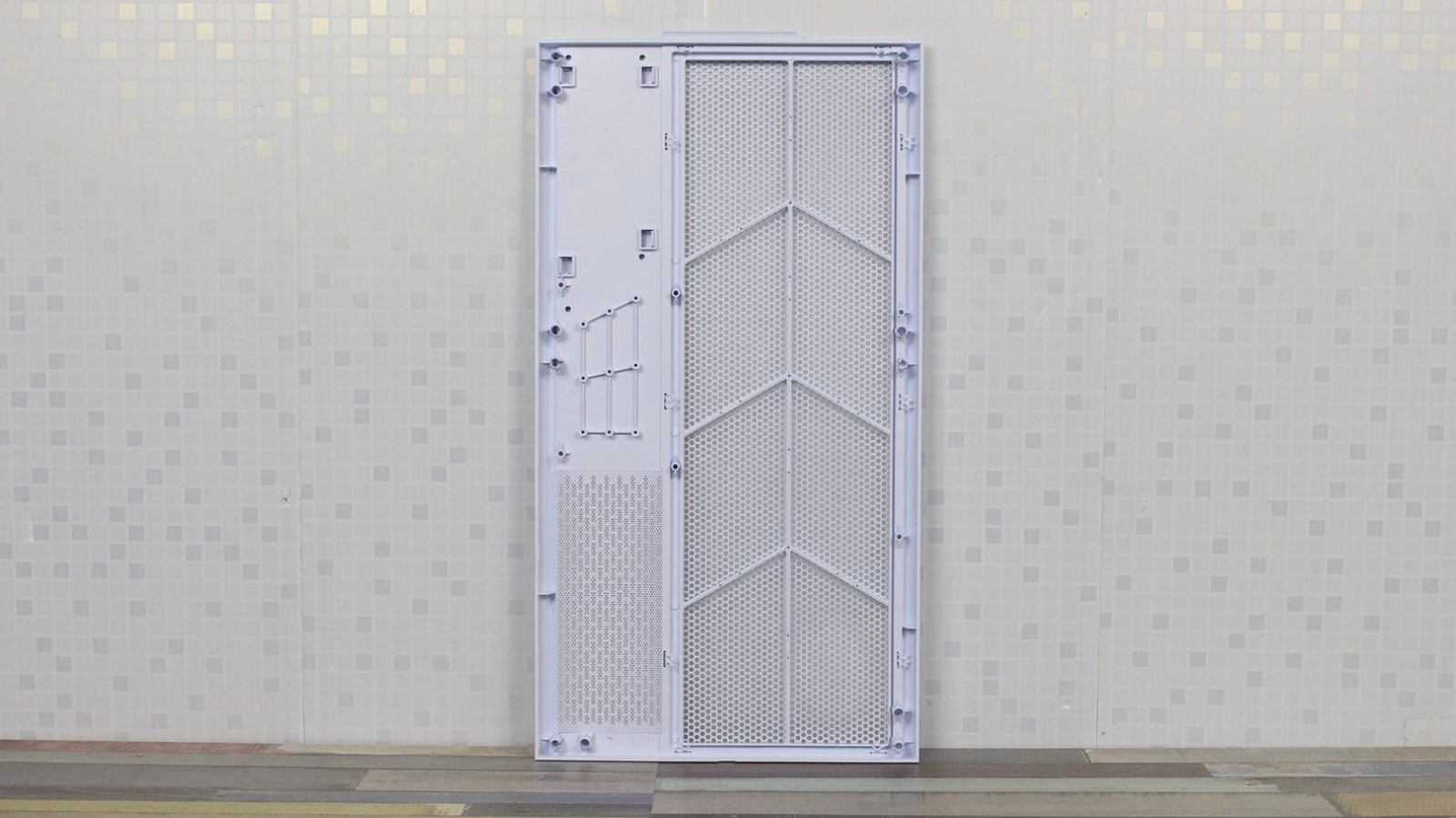
The top panel of the Vinga Eclipse is also designed as a removable plastic cover, the base of which is a large metal mesh. It is complemented on the inside by a non-removable nylon dust filter held by stiffening ribs.
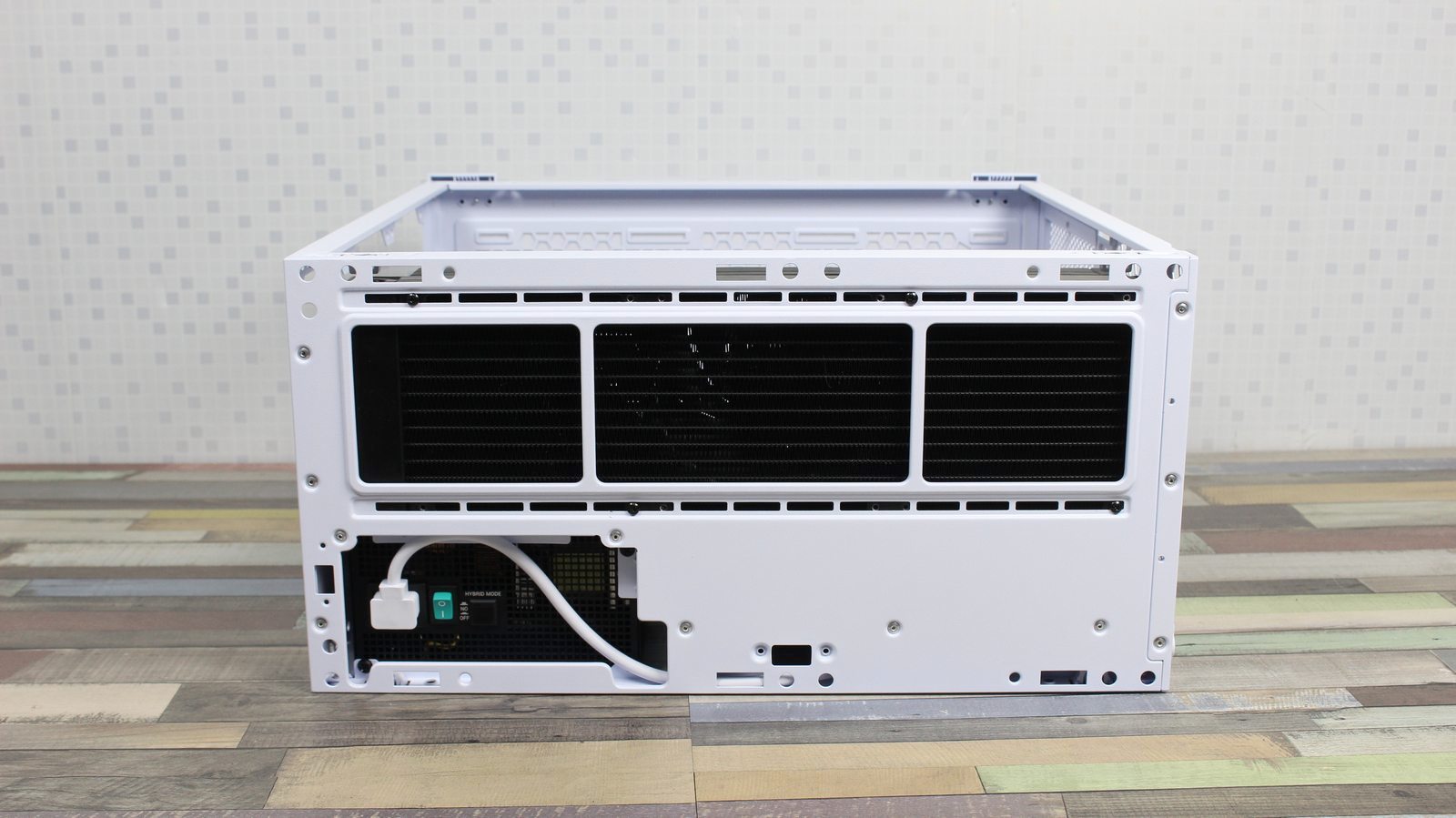
It is securely fixed to the chassis with plastic clips, and for maximum convenience of removal, a special handle is provided on the back. Directly on the top of the chassis, there are mounting locations for three 120-mm fans or a liquid cooling radiator up to 360 mm in length, as well as an opening for installing the power supply unit.
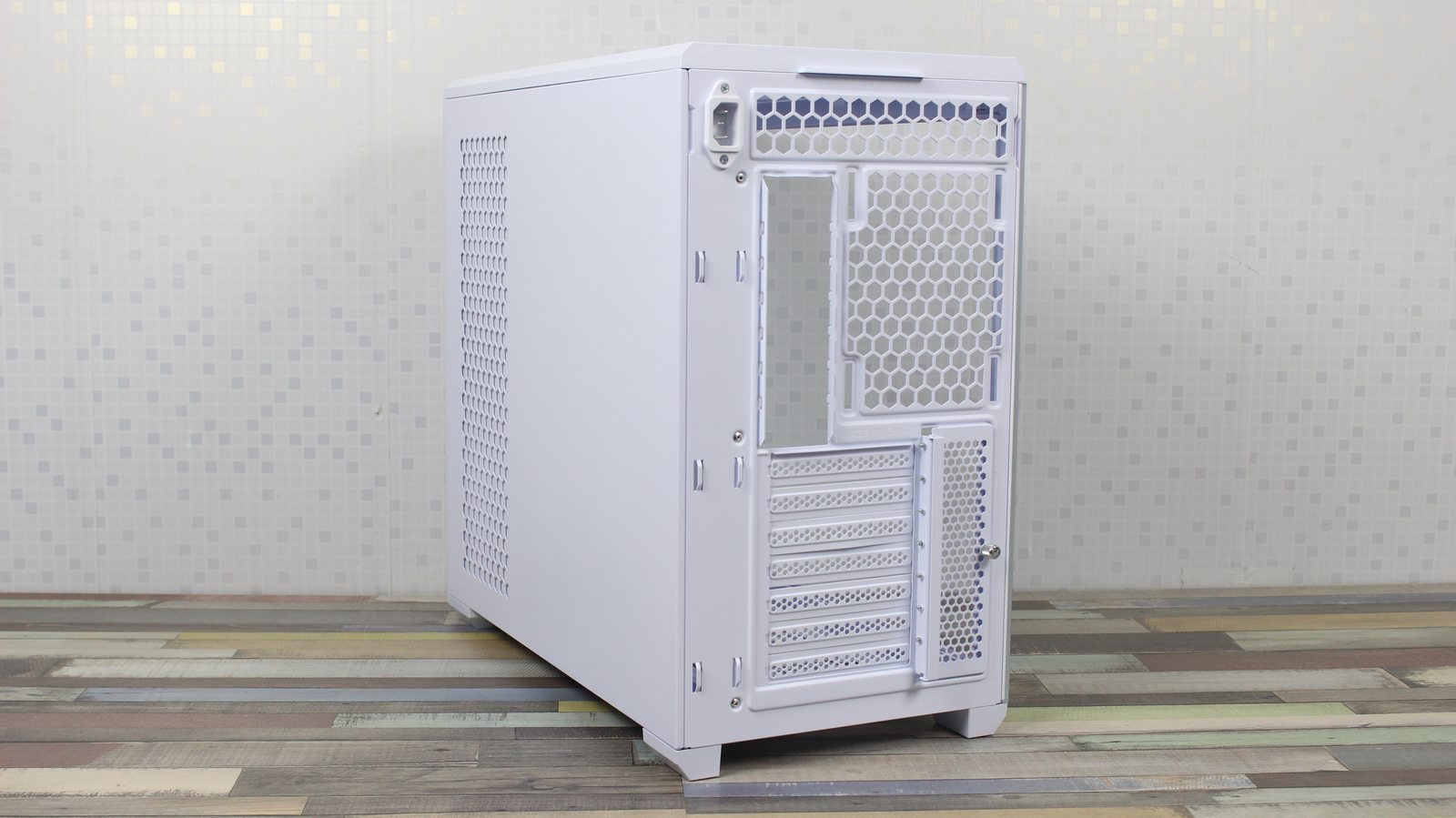
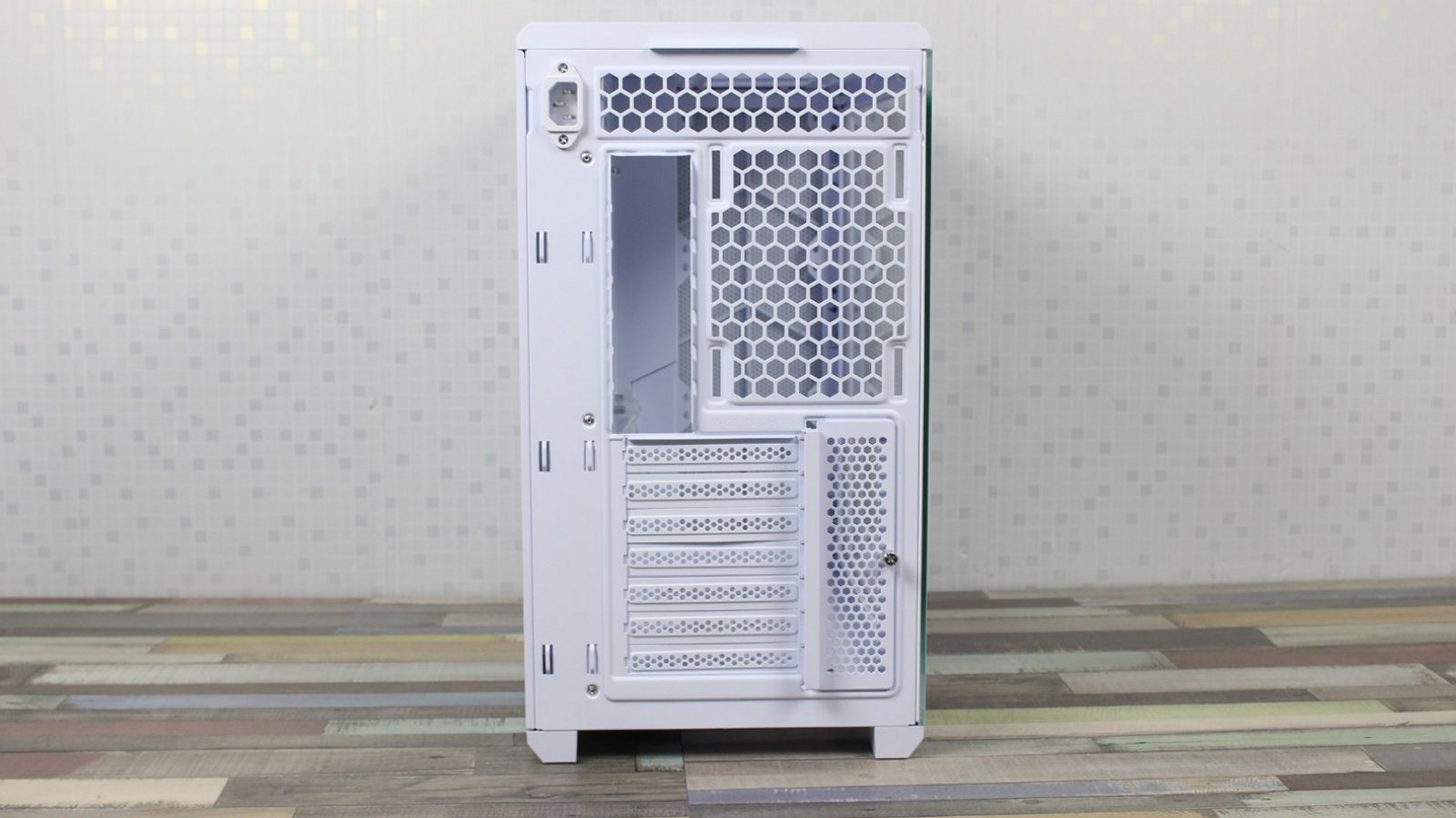
The back part features a cutout for the motherboard I/O shield, a mounting location for a 120-mm fan, and a power connector. The design includes seven expansion slots with reusable covers, covered by a door with a knurled screw. A significant area of the panel is occupied by extensive perforation, which contributes to effective hot air removal.
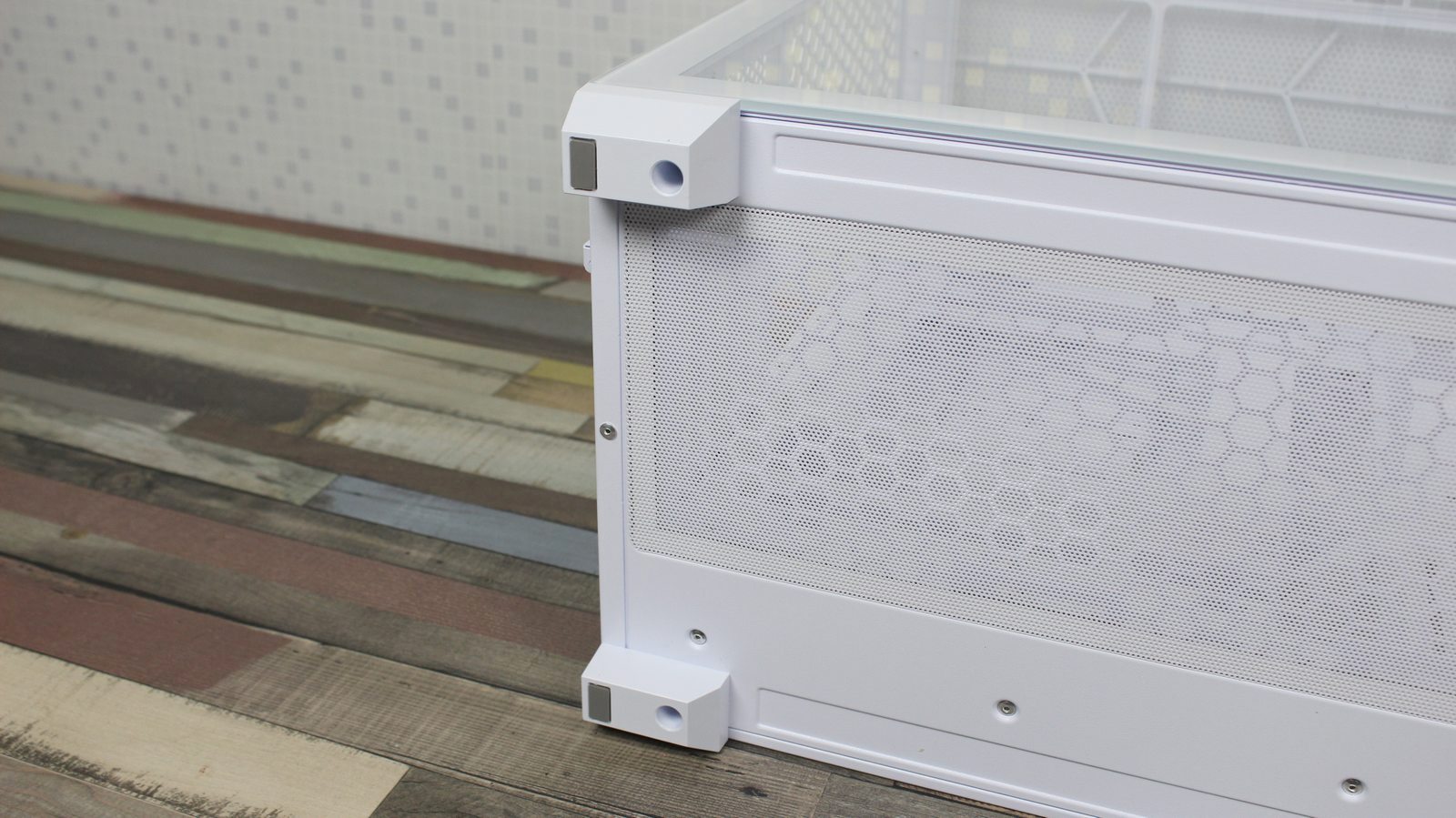
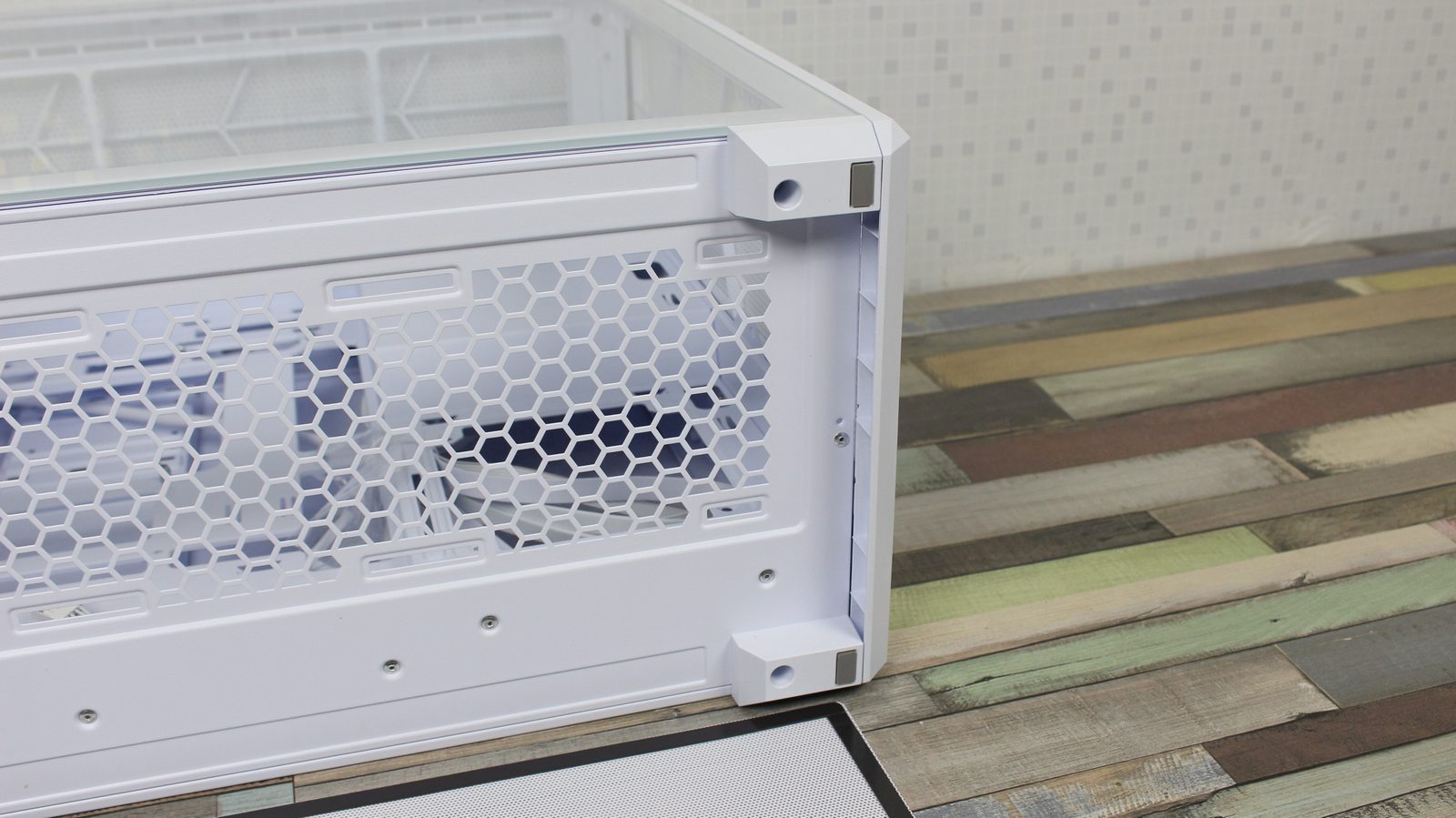
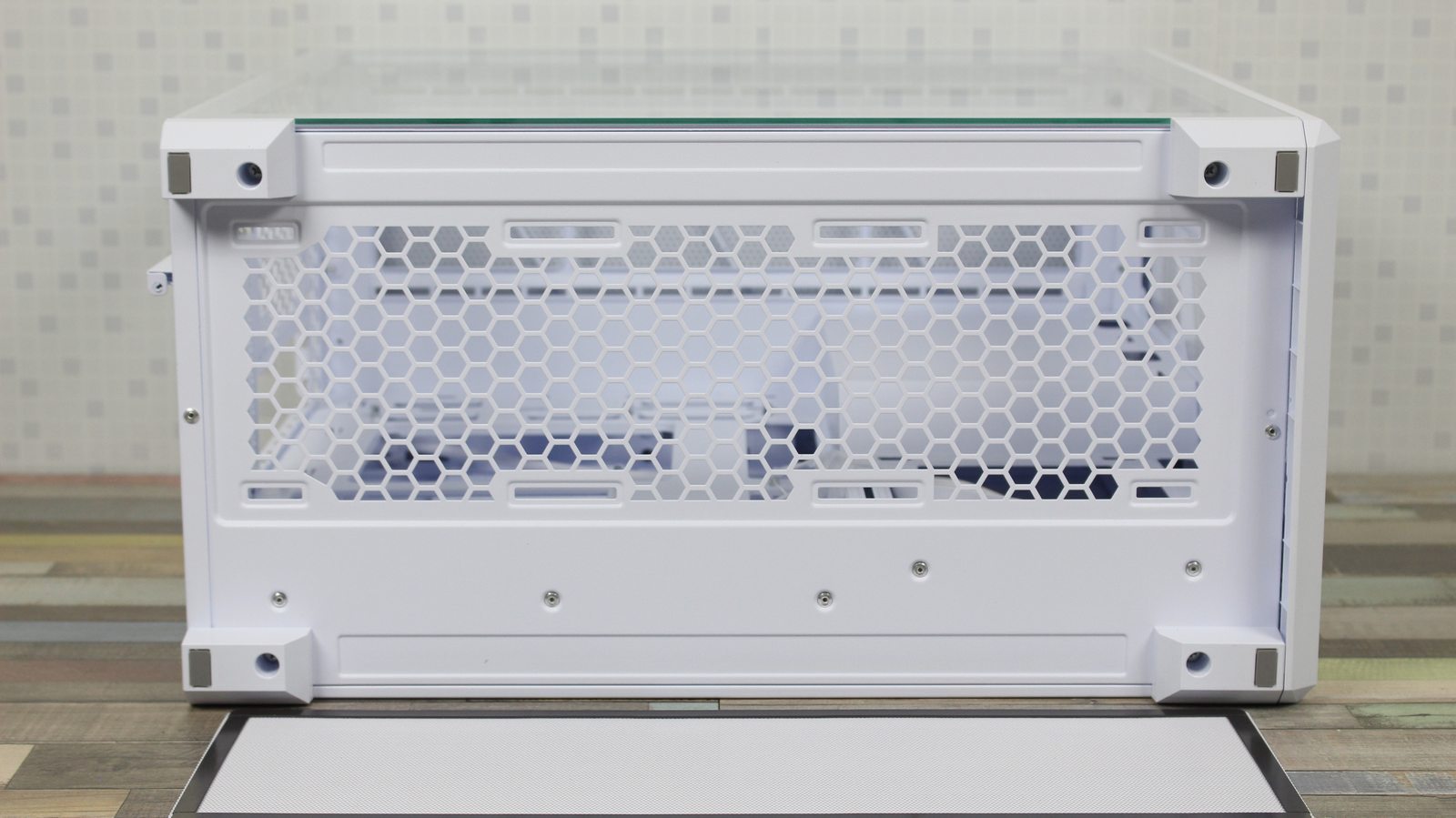
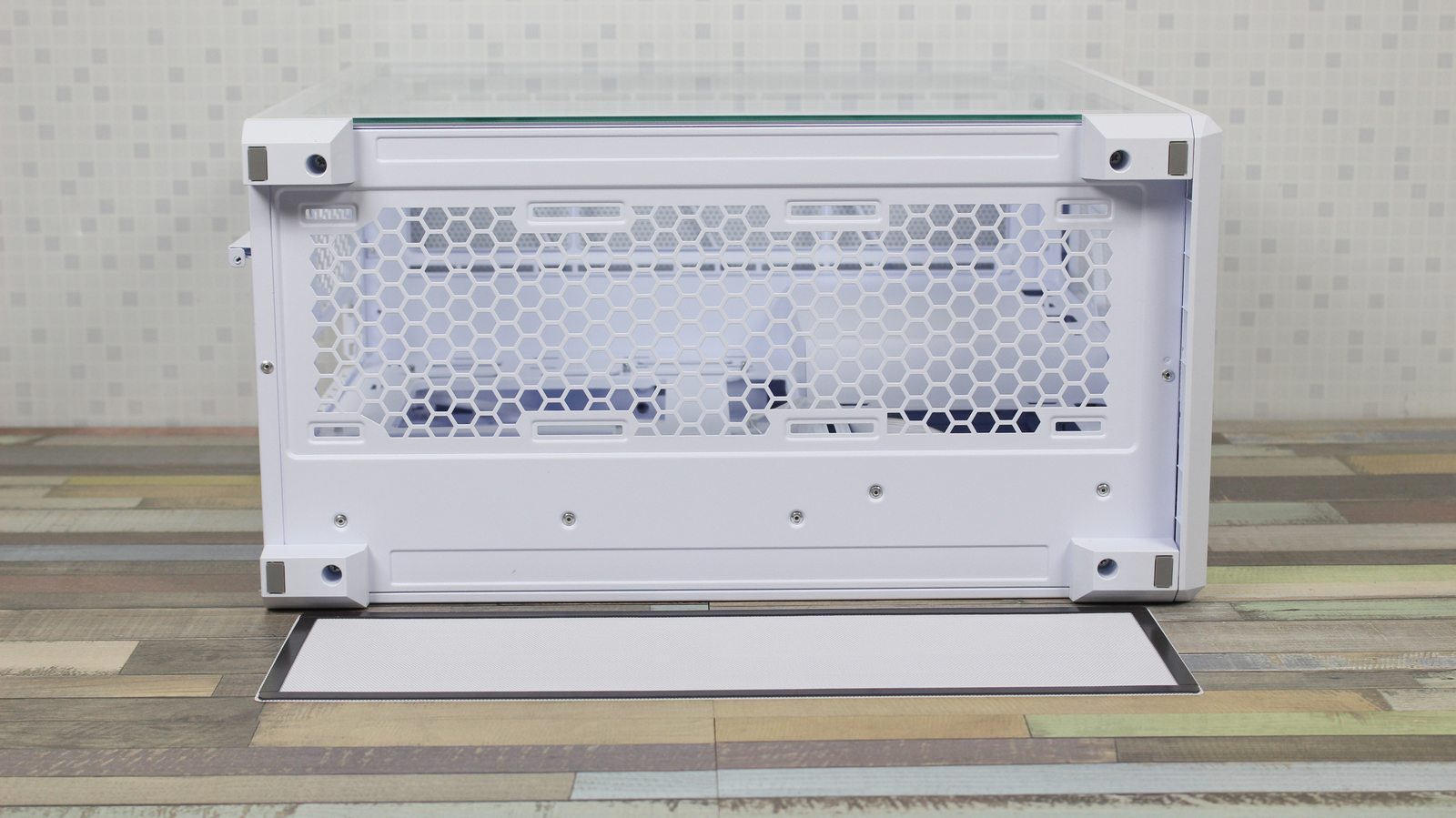
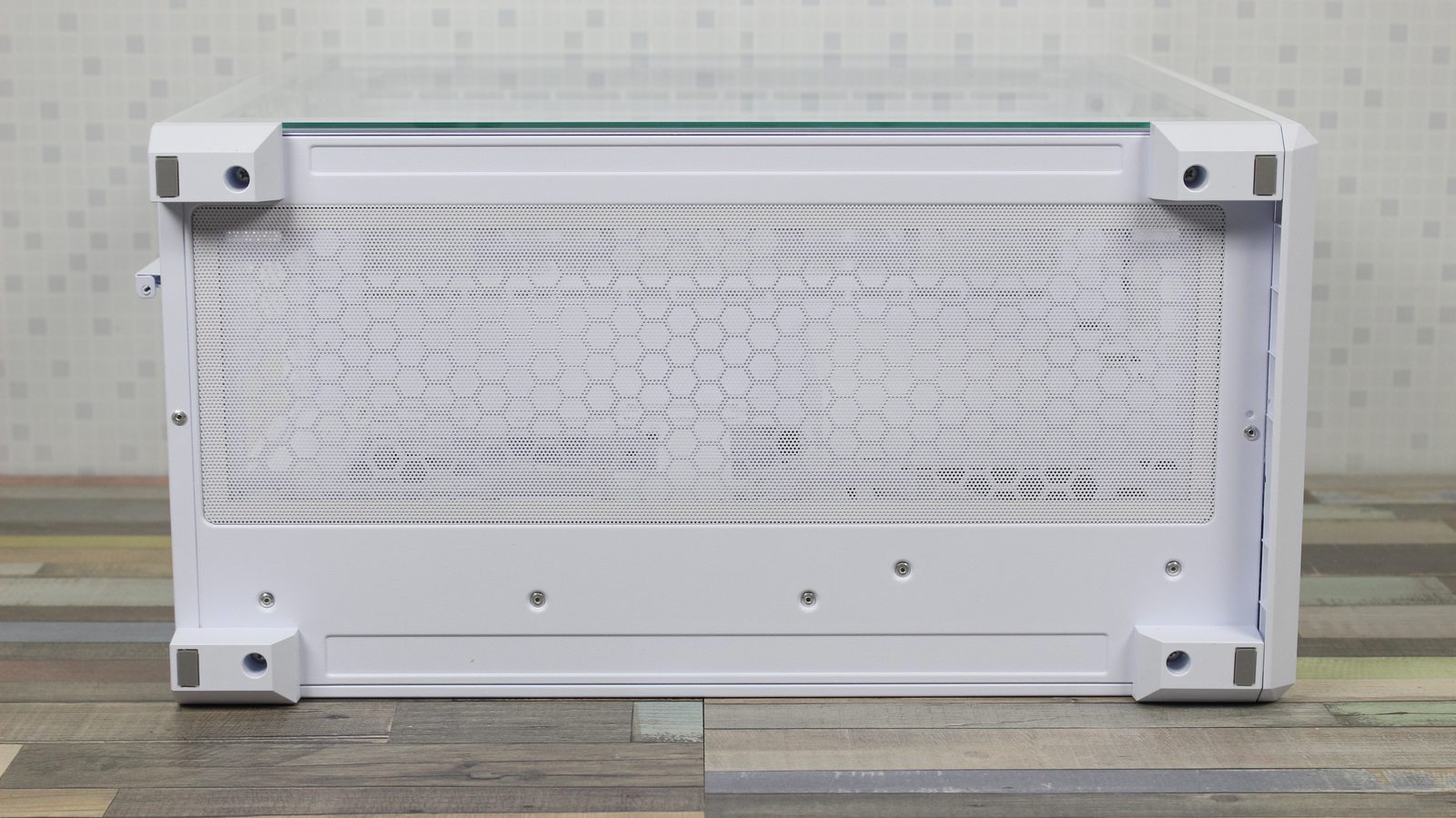
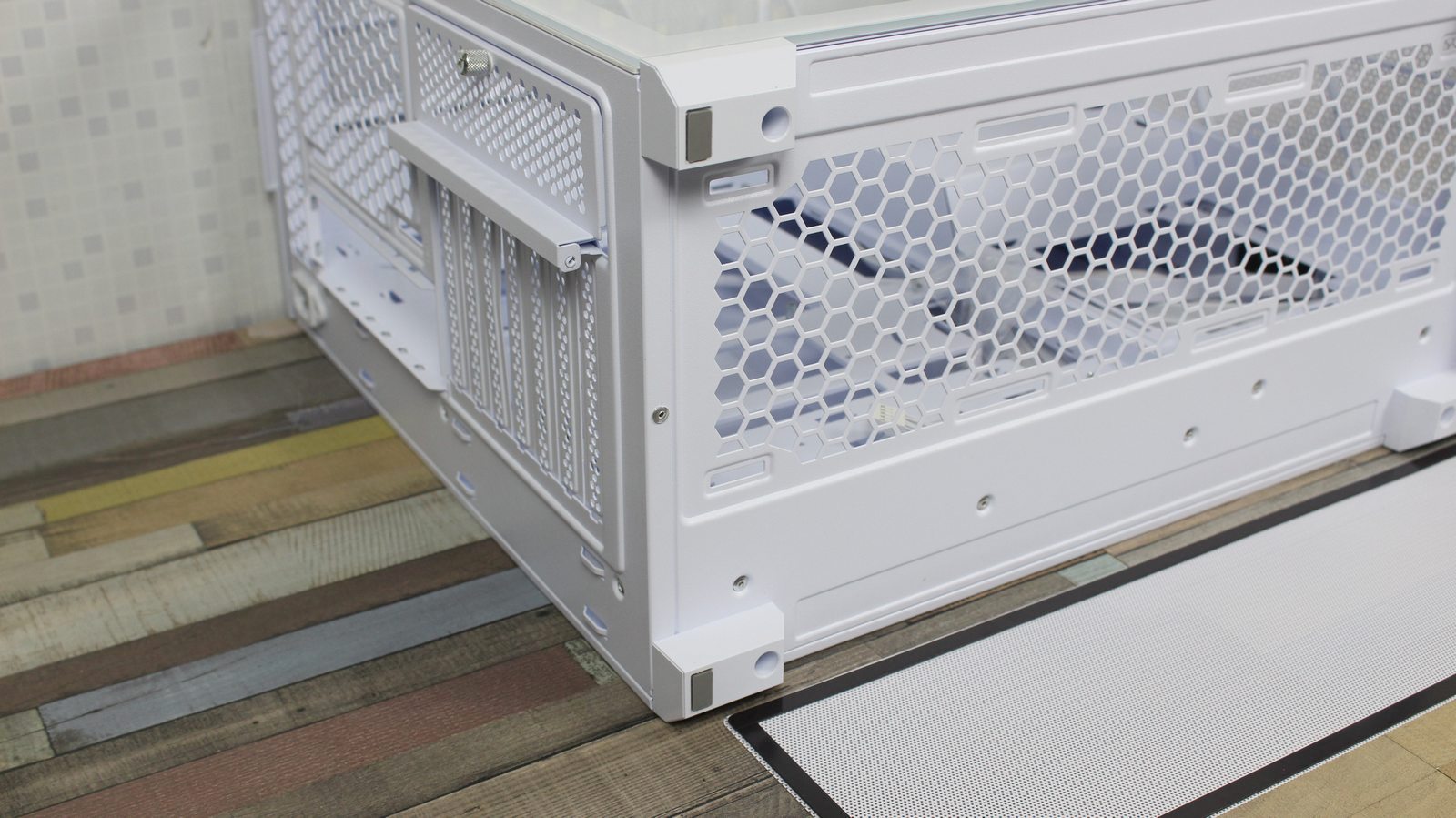
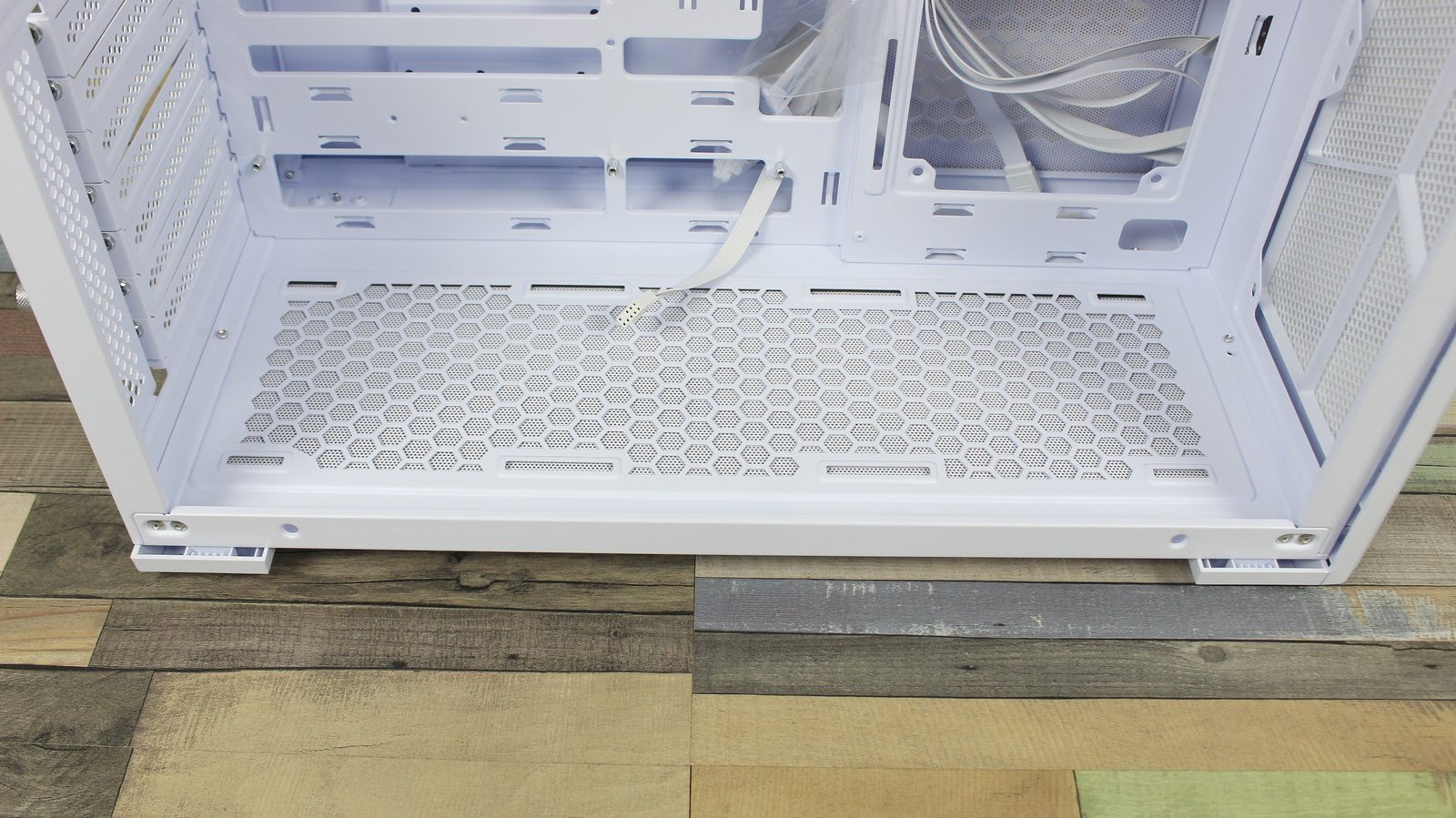
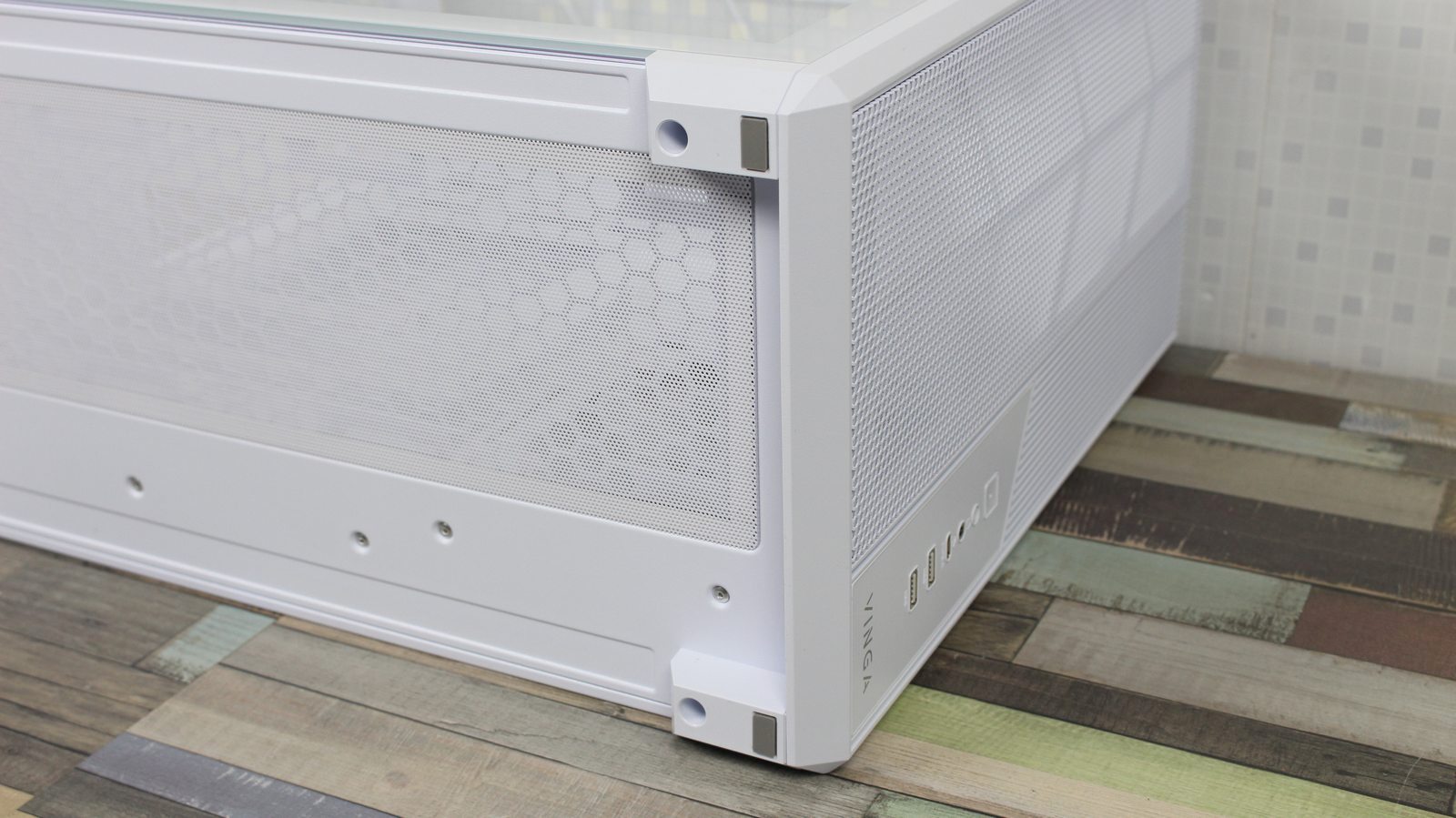
The bottom panel has a large perforated area for unobstructed airflow to the power supply and cooling system. The entire area is covered by a magnetic nylon filter, which is easy to remove for cleaning.
The bottom design allows for the installation of three 120-mm fans with the possibility of longitudinal adjustment for maximum effective cooling of the graphics card.
The case stands on four removable 20-mm feet with rubber inserts that dampen vibrations and provide sufficient space for ventilation.
Internal Structure
The internal layout of the case provides for two separate chambers.
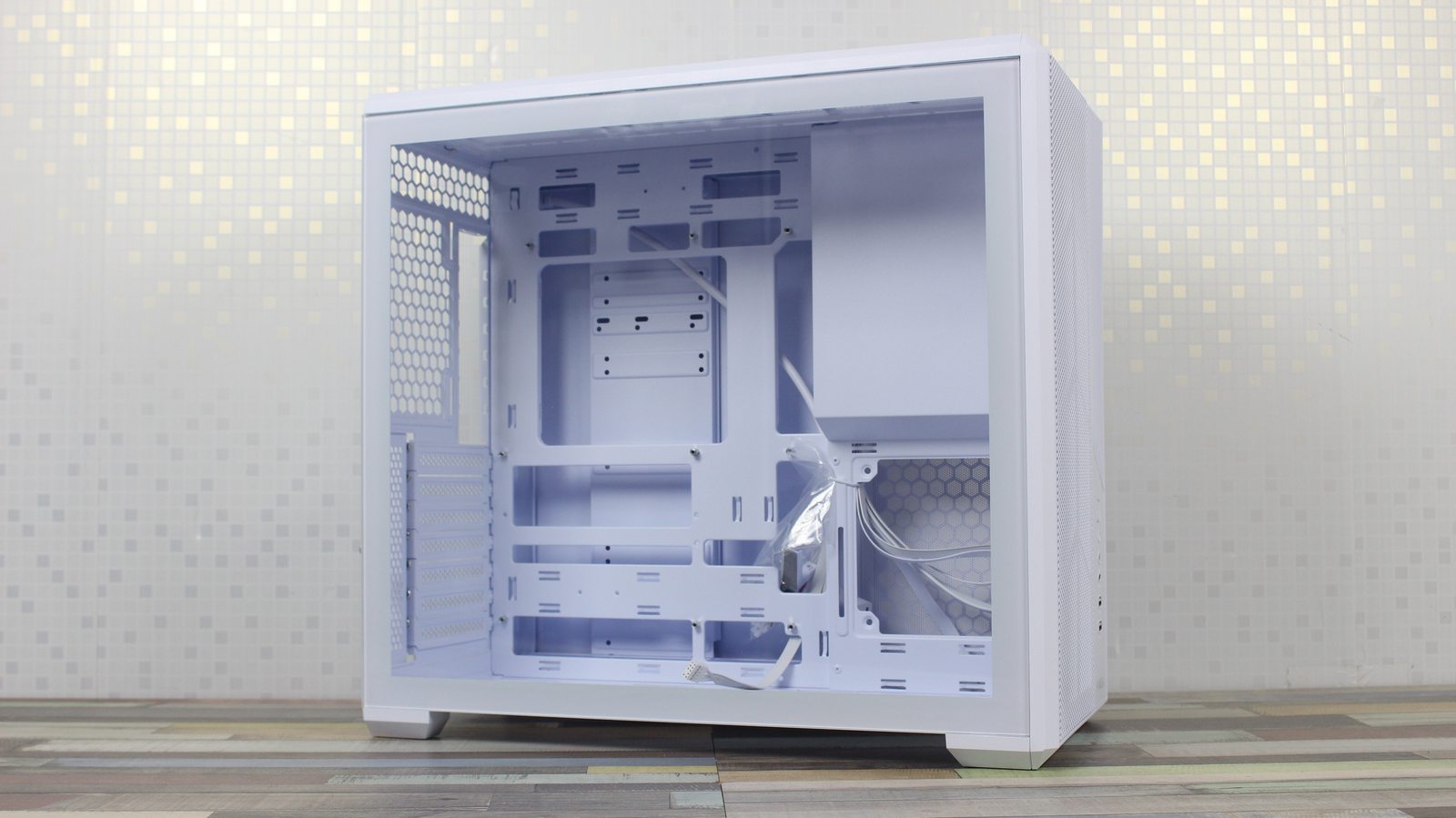
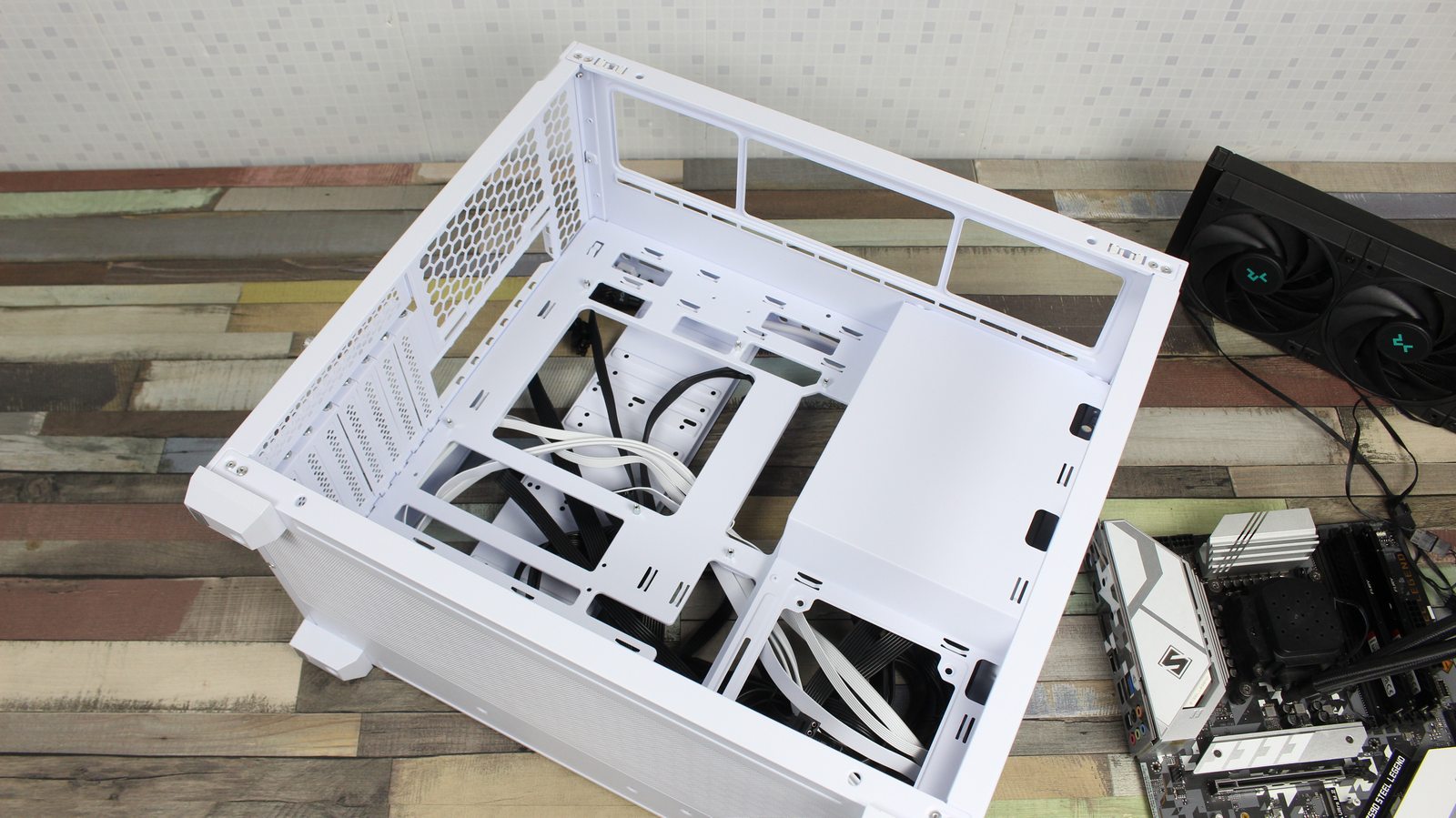
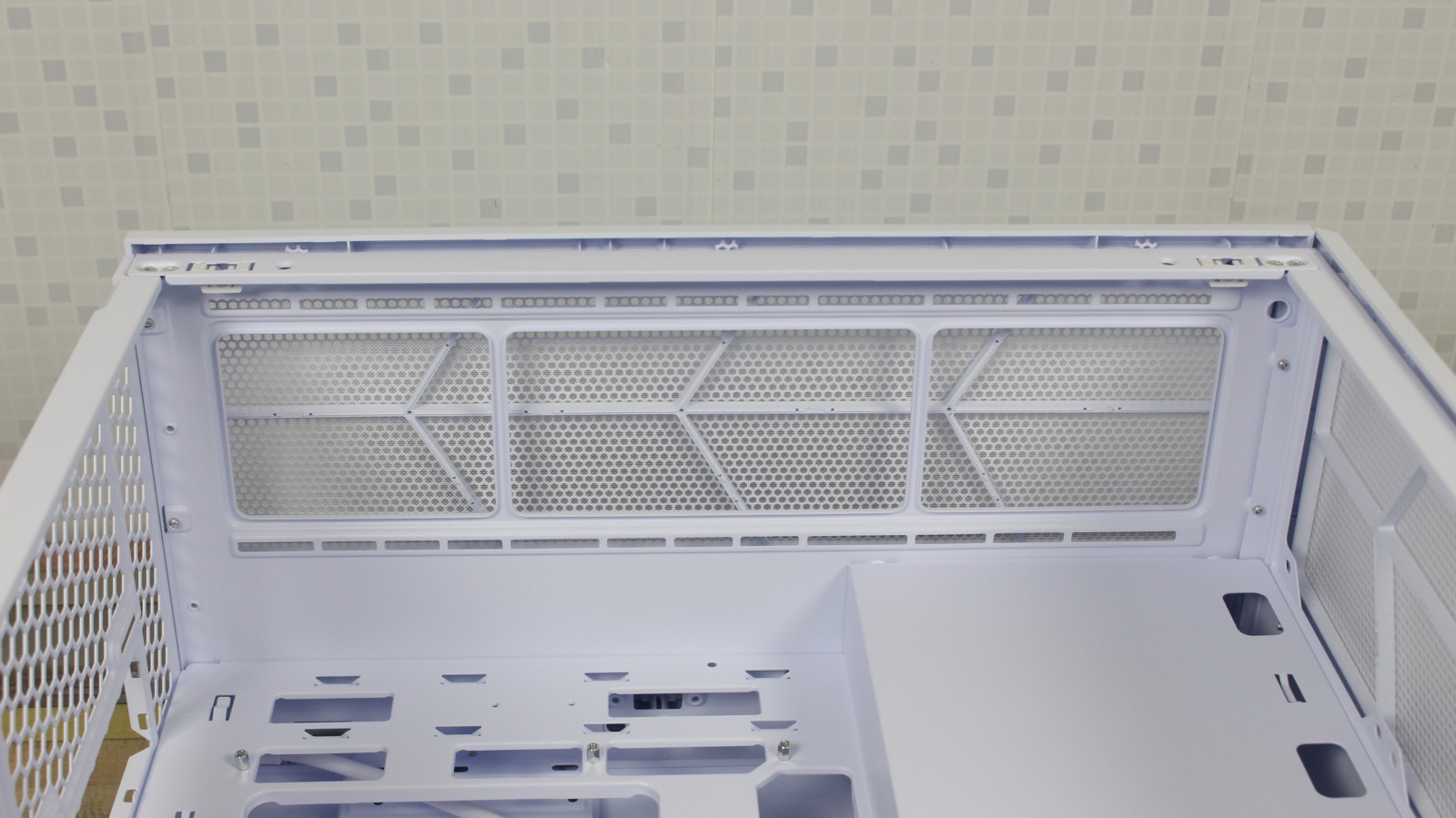
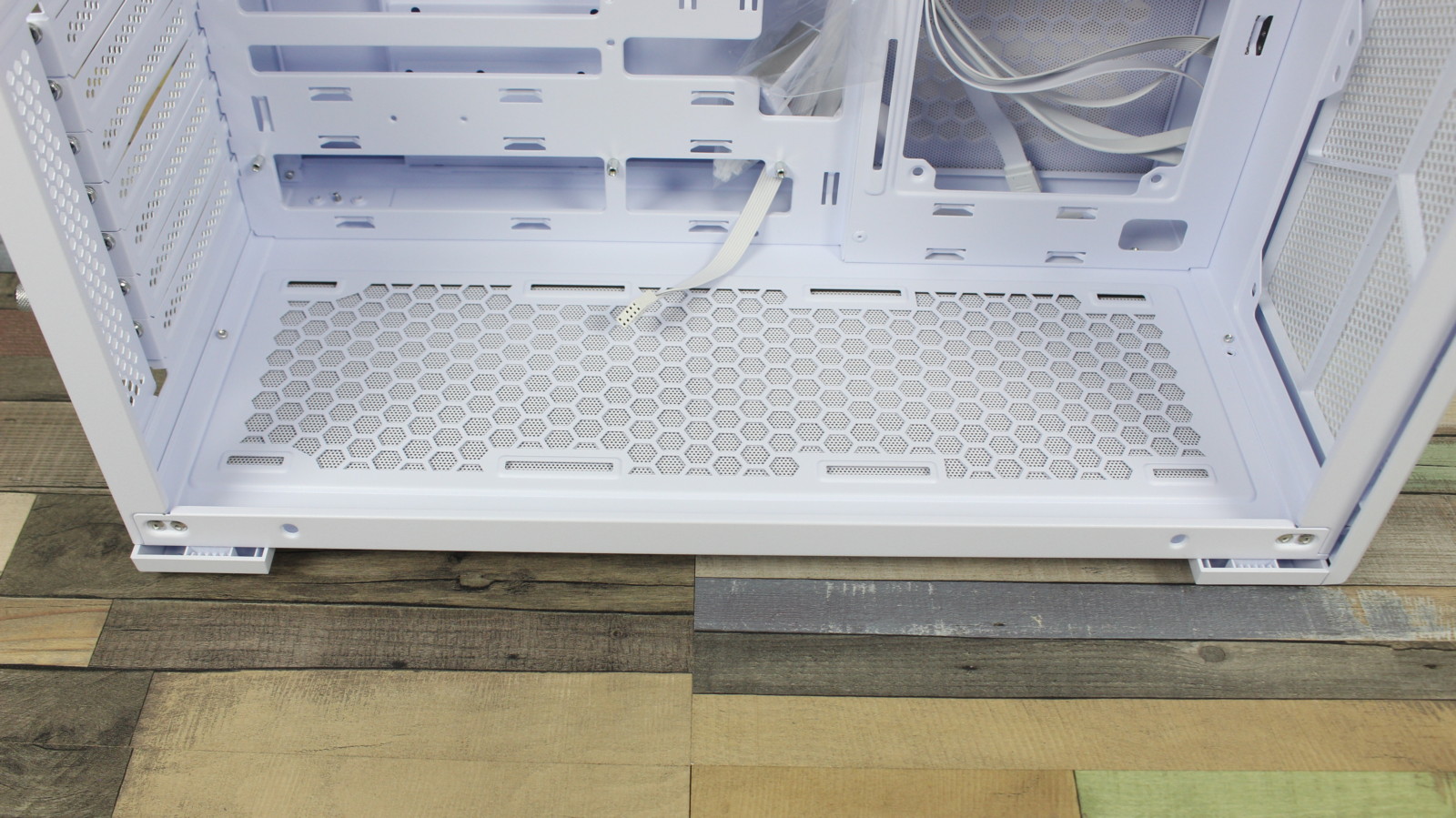
The main compartment is designed for installing motherboards in ATX, micro-ATX, Mini-ITX formats, graphics cards, and cooling systems. An important feature of the tray is the support for boards with hidden connector placement, such as ASUS BTF, Gigabyte Project Stealth, and MSI Project Zero. A series of specially positioned openings are provided for neat cable management.
Thanks to the significant internal width, the case supports air coolers up to 166 mm in height. There is 62 mm of free space between the top of the chassis and the edge of the motherboard. It is worth considering that installing a 360-mm radiator on top will occupy this space, so it is important to check compatibility with the height of the motherboard components before assembly.
Flexibility in choosing graphics cards is ensured by the large internal space: models up to 410 mm in length are supported, provided that the front placement of the radiator does not limit this indicator.
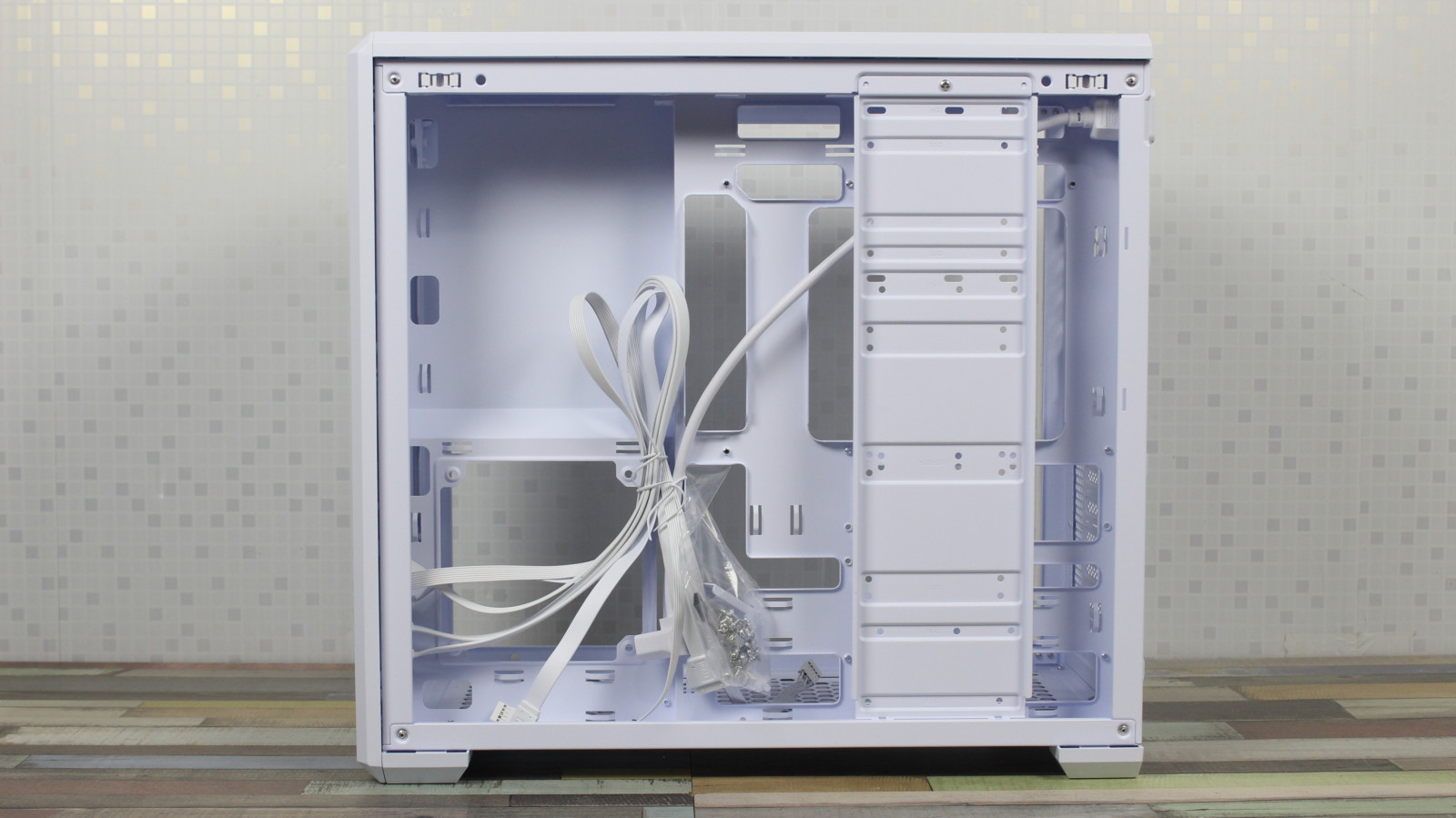
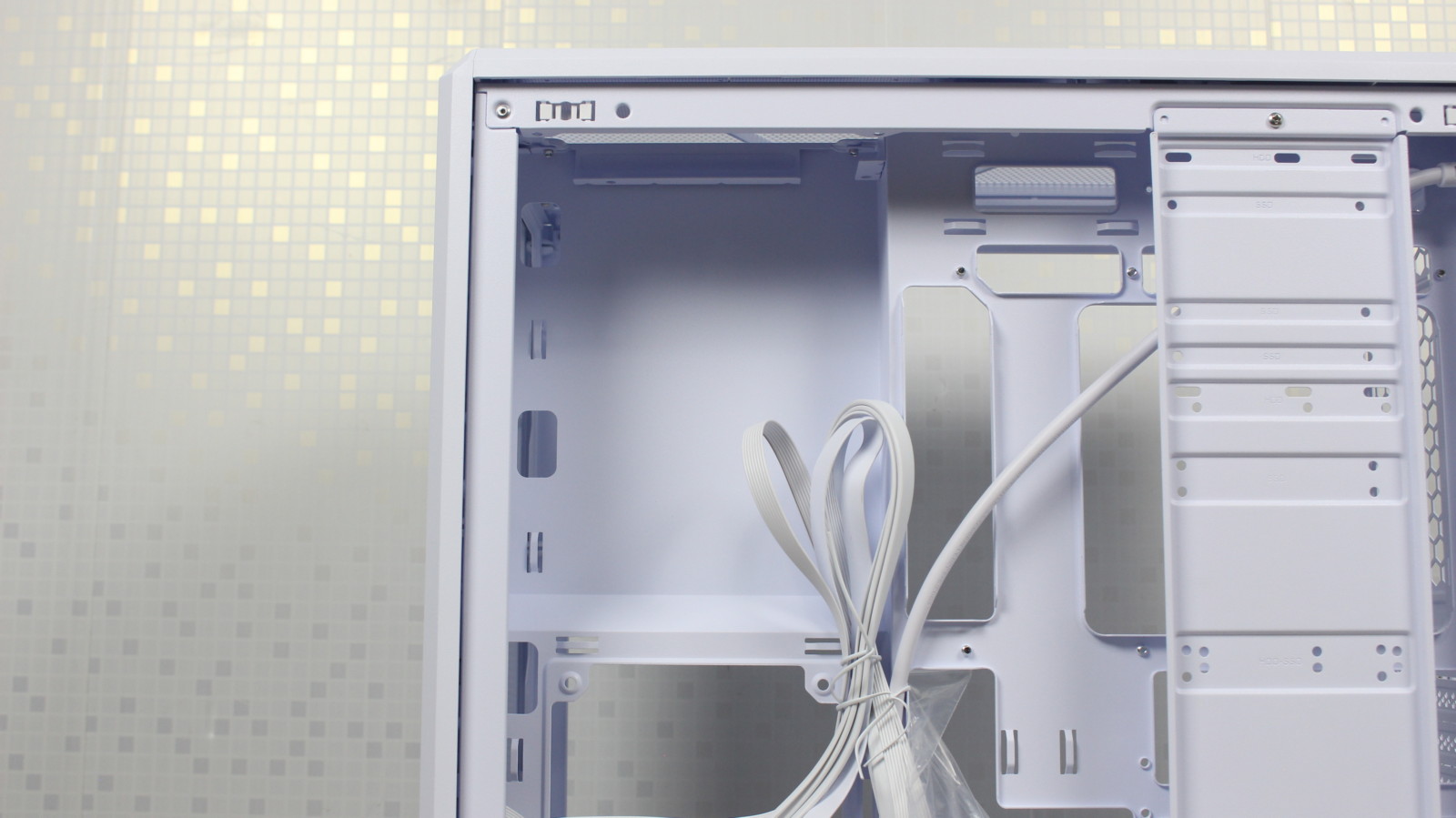
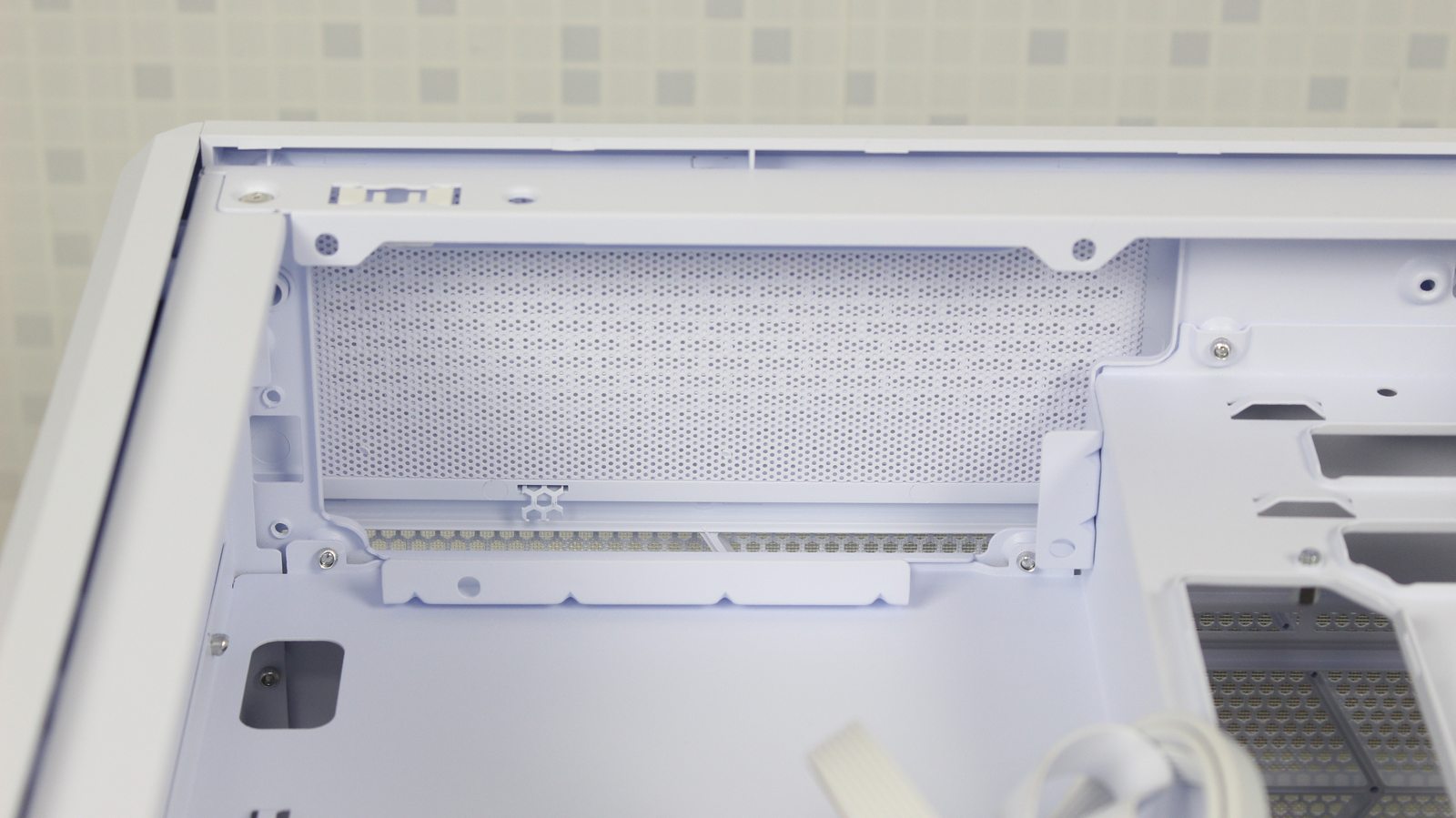
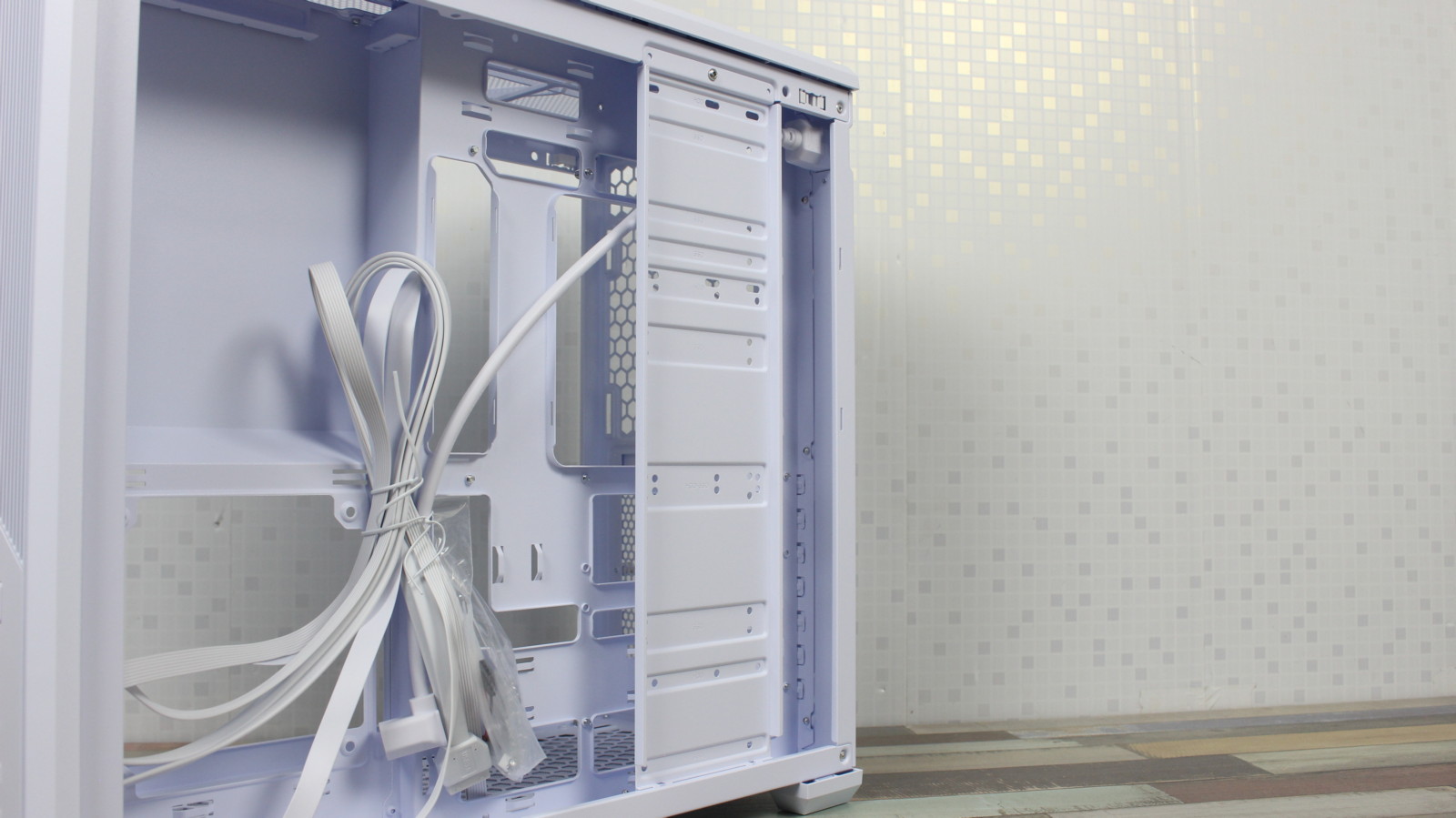
The space behind the tray is allocated for the power supply unit, drives, and cable management organization.
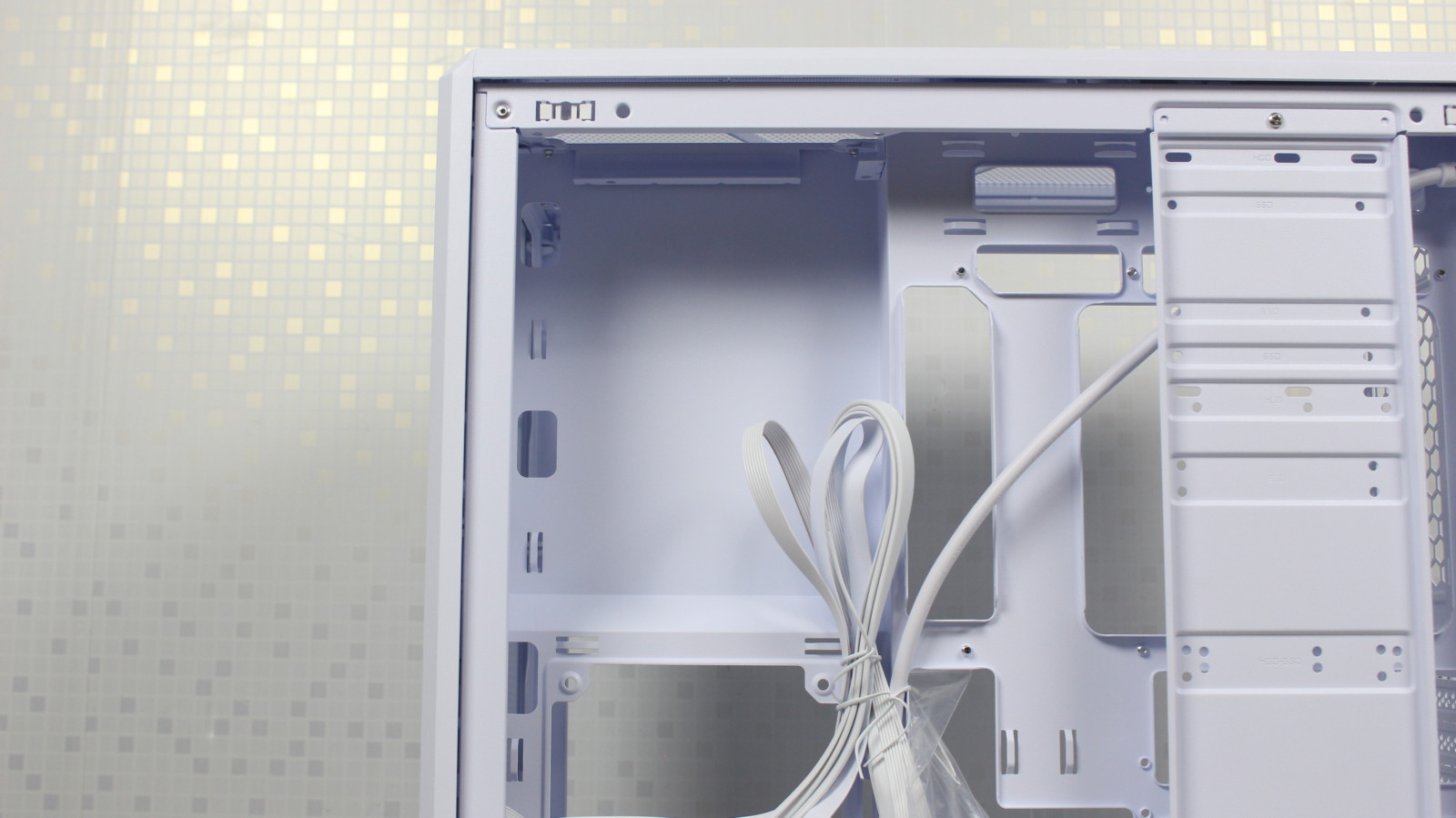
The upper part of the case has a special compartment for installing a model up to 150 mm in length.
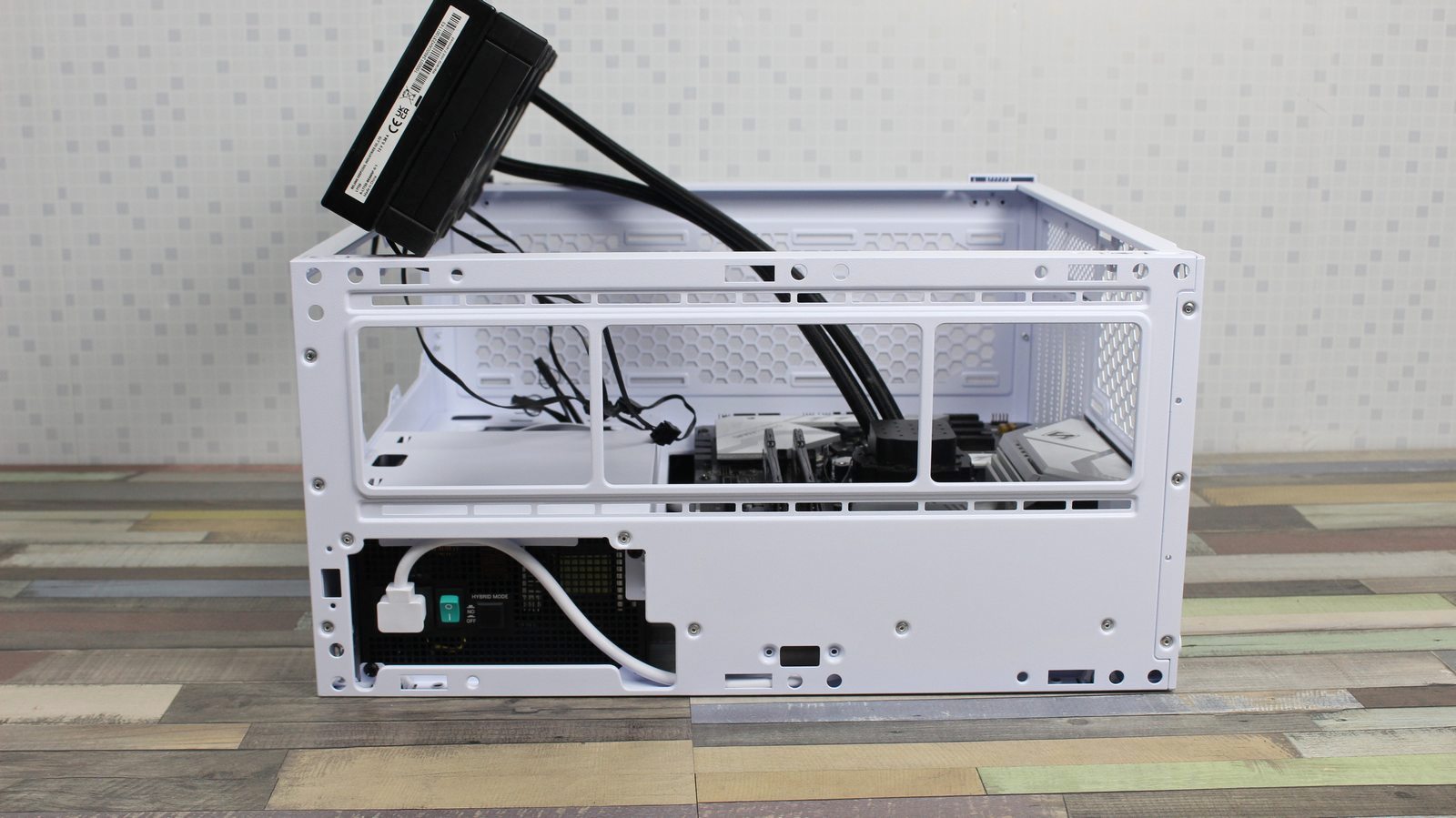
An important installation nuance: the internal extension cable must be connected to the power source before it is fixed in the compartment, as access to the connector will be extremely limited after installation. Its fan draws air through the perforation on the right side panel and expels the heated air outside through the openings in the top removable panel.
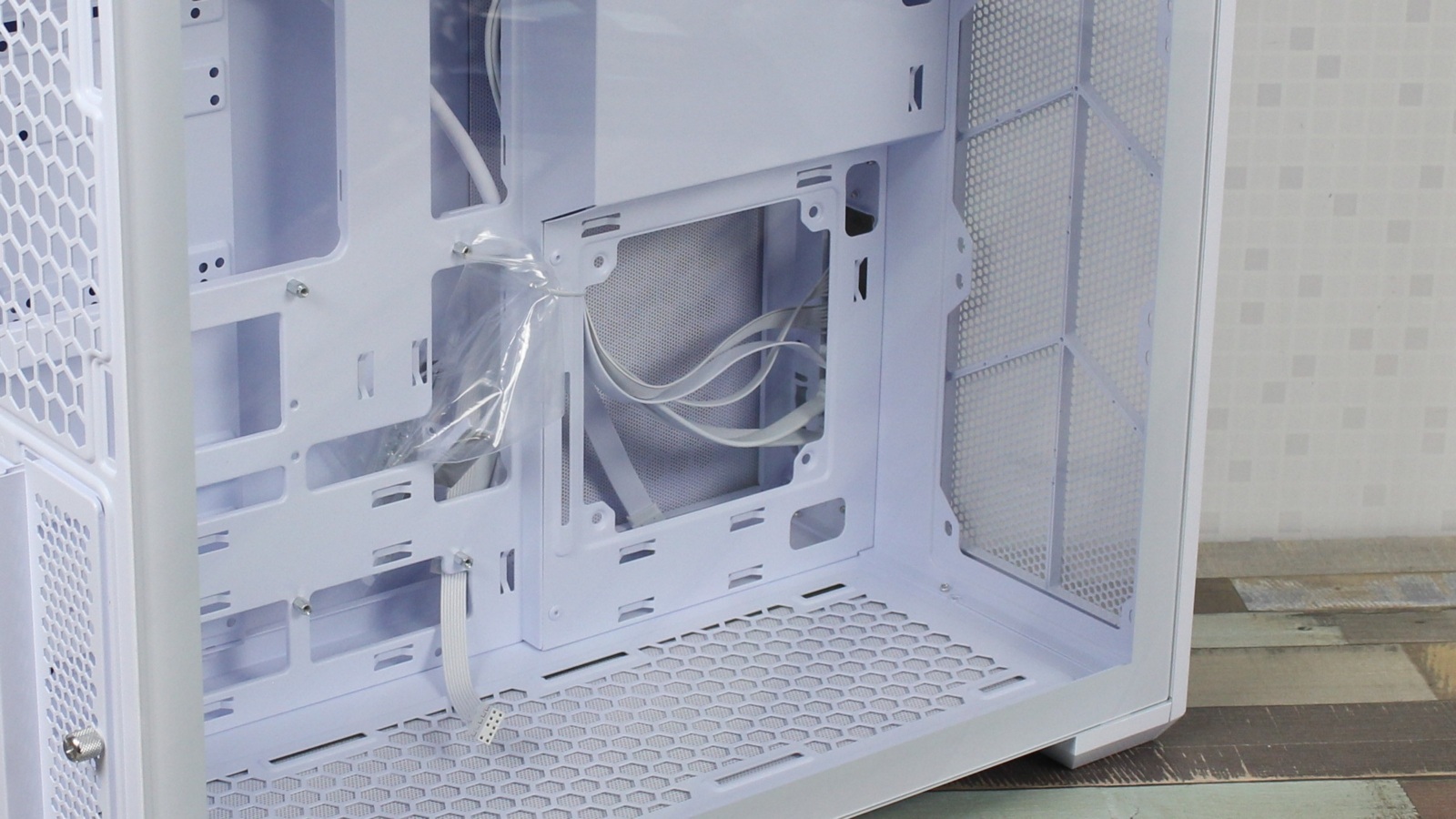
Directly under the PSU compartment is a mounting location for a 120-mm fan and a vertical slot for fixing the angled graphics card holder in the main chamber.
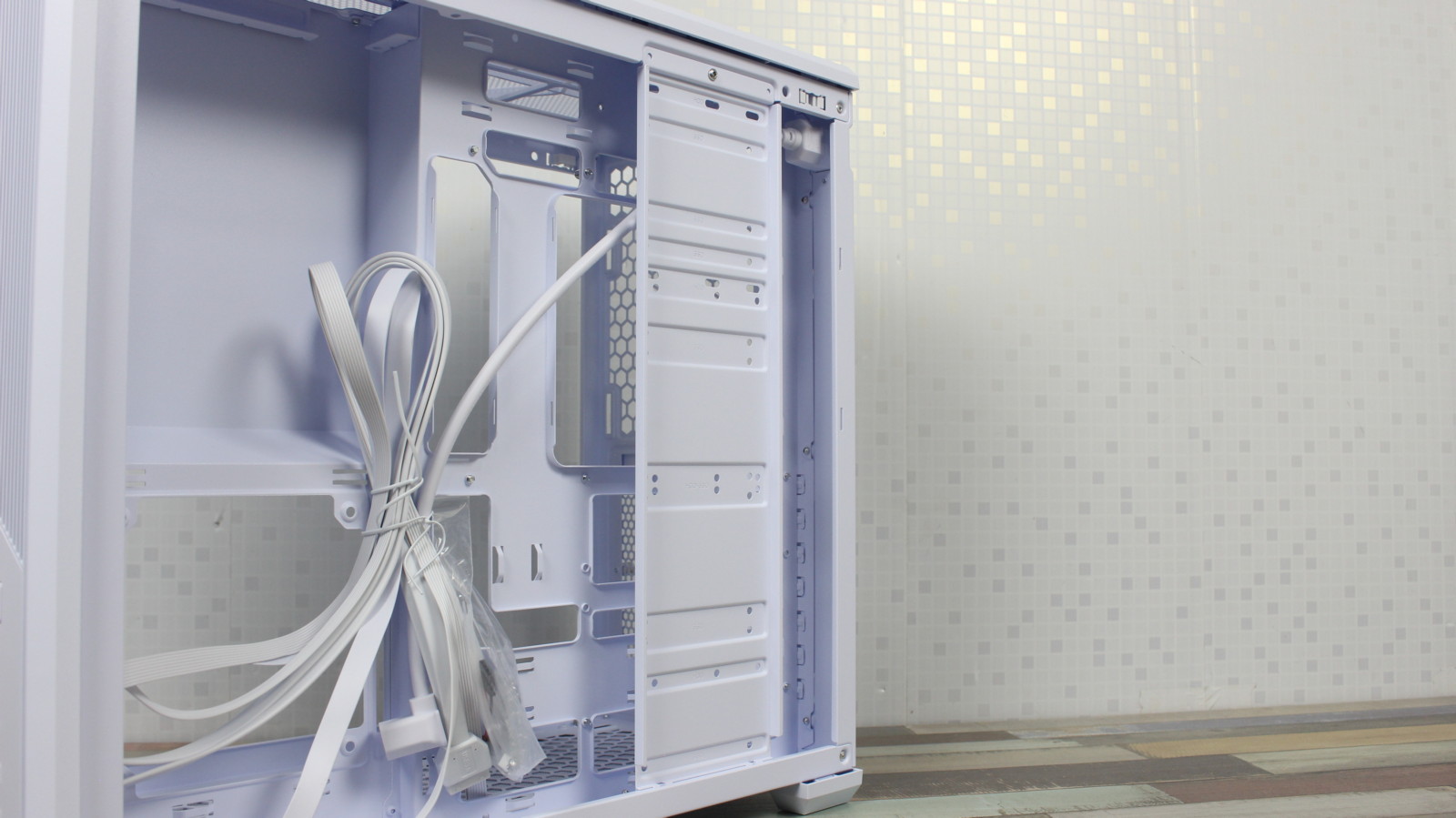
The 45 mm gap between the tray and the right panel, complemented by numerous stamped loops for ties, provides ideal conditions for convenient wire organization.
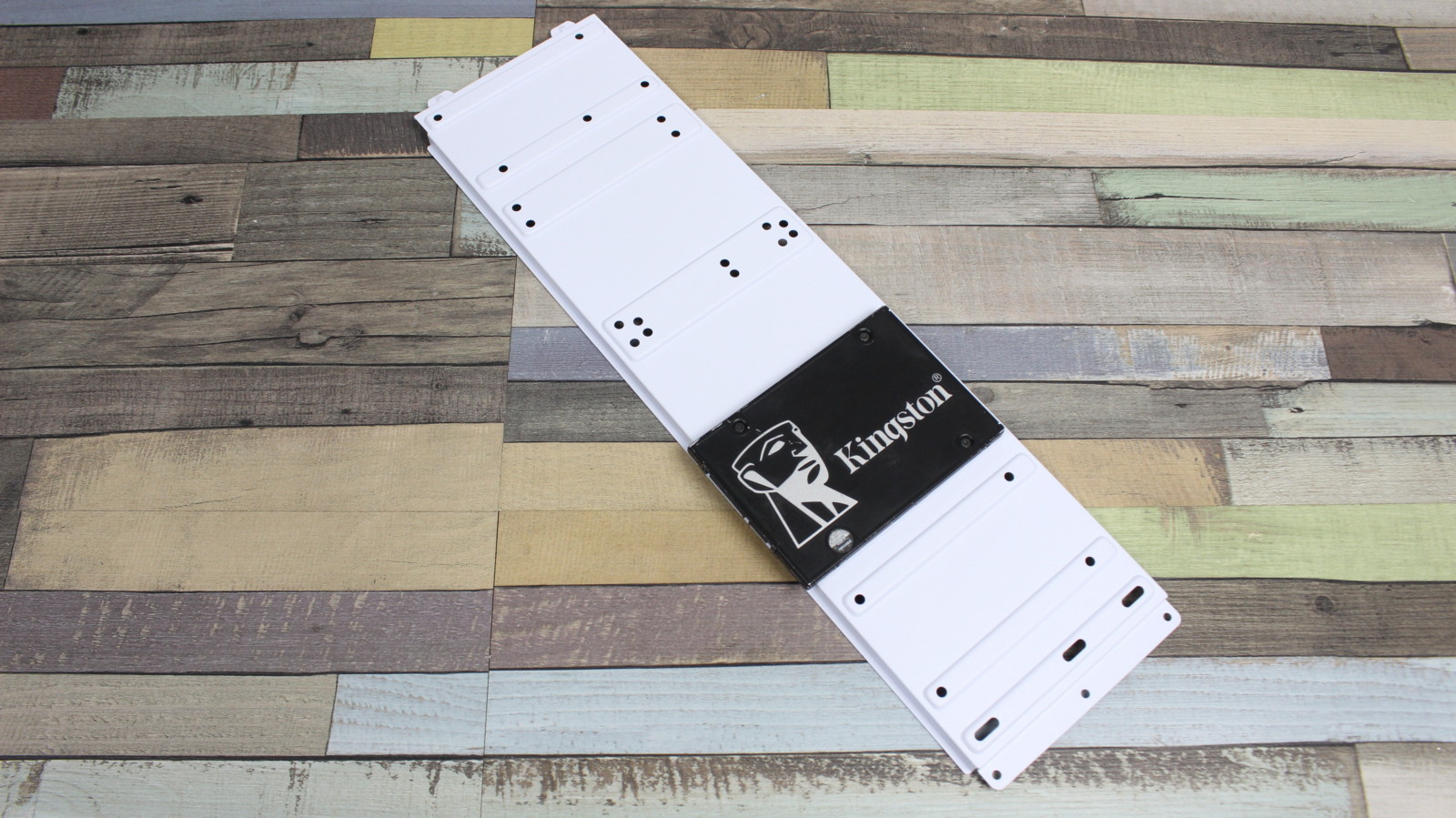
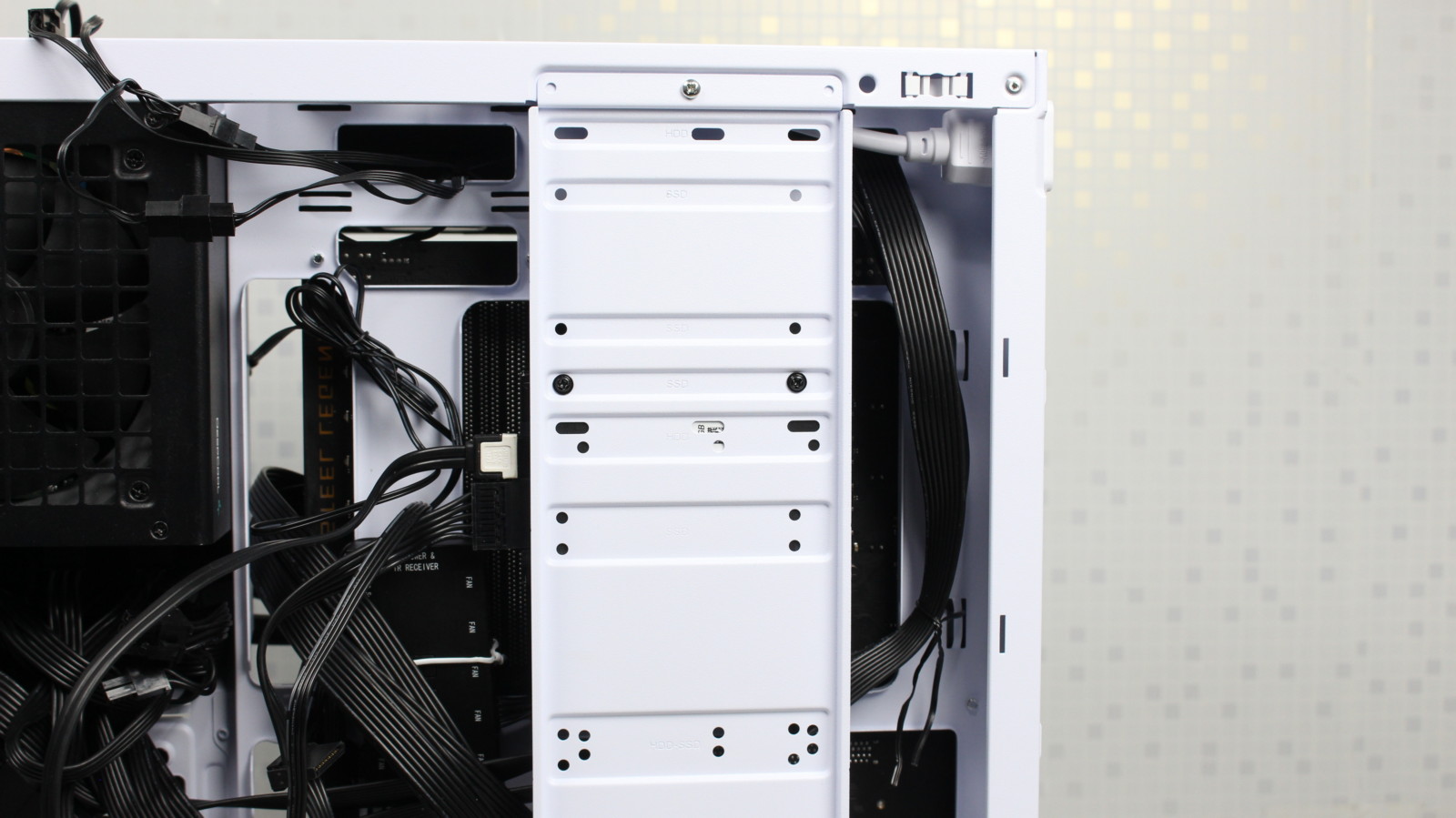
The vertical mounting plate, secured with a single screw, supports the installation of two 3.5-inch HDDs or four 2.5-inch SATA SSDs.
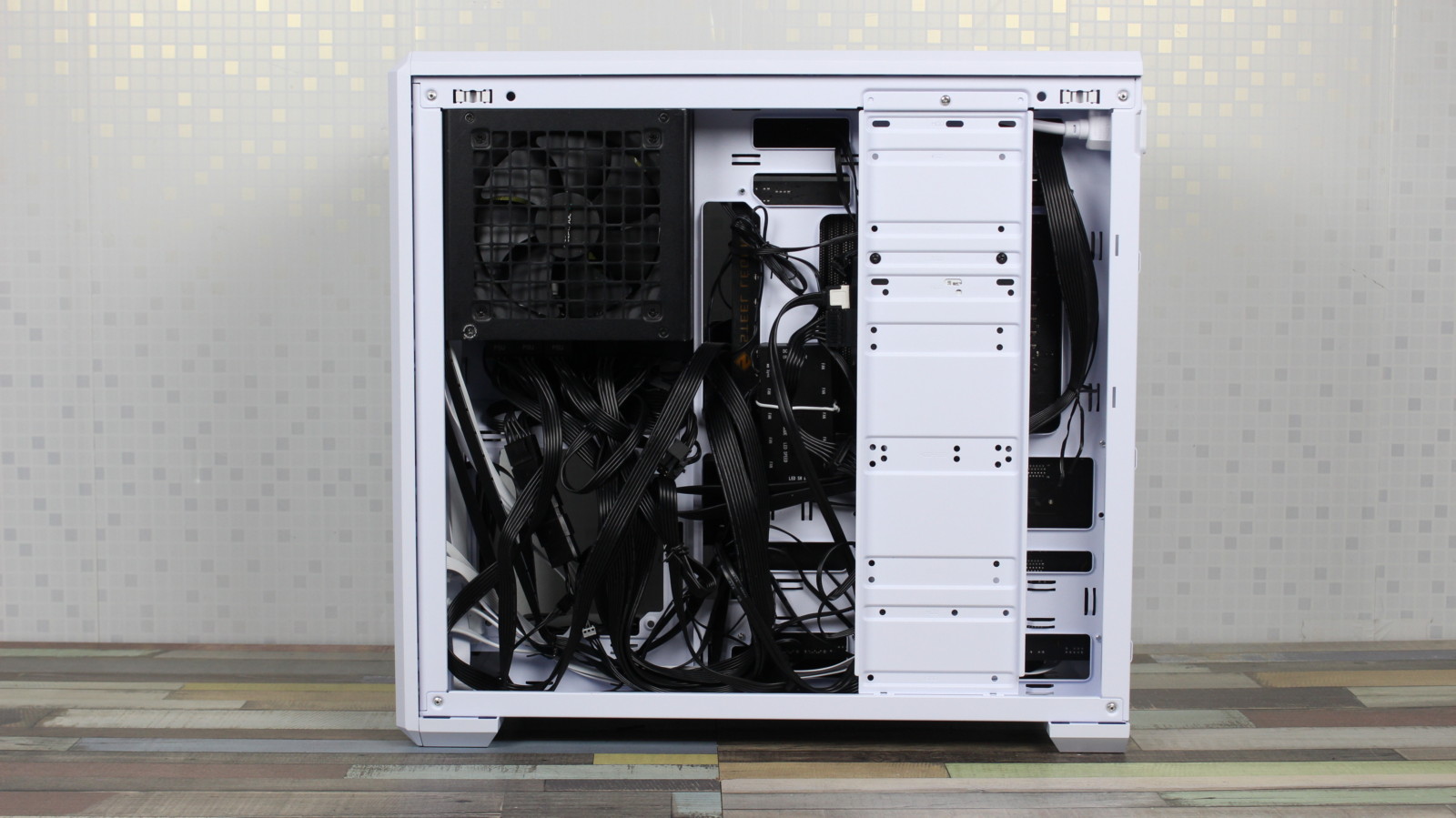
Placing the disks in the space between the tray and this plate allows them to be hidden from direct view, adding aesthetic appeal to the build.
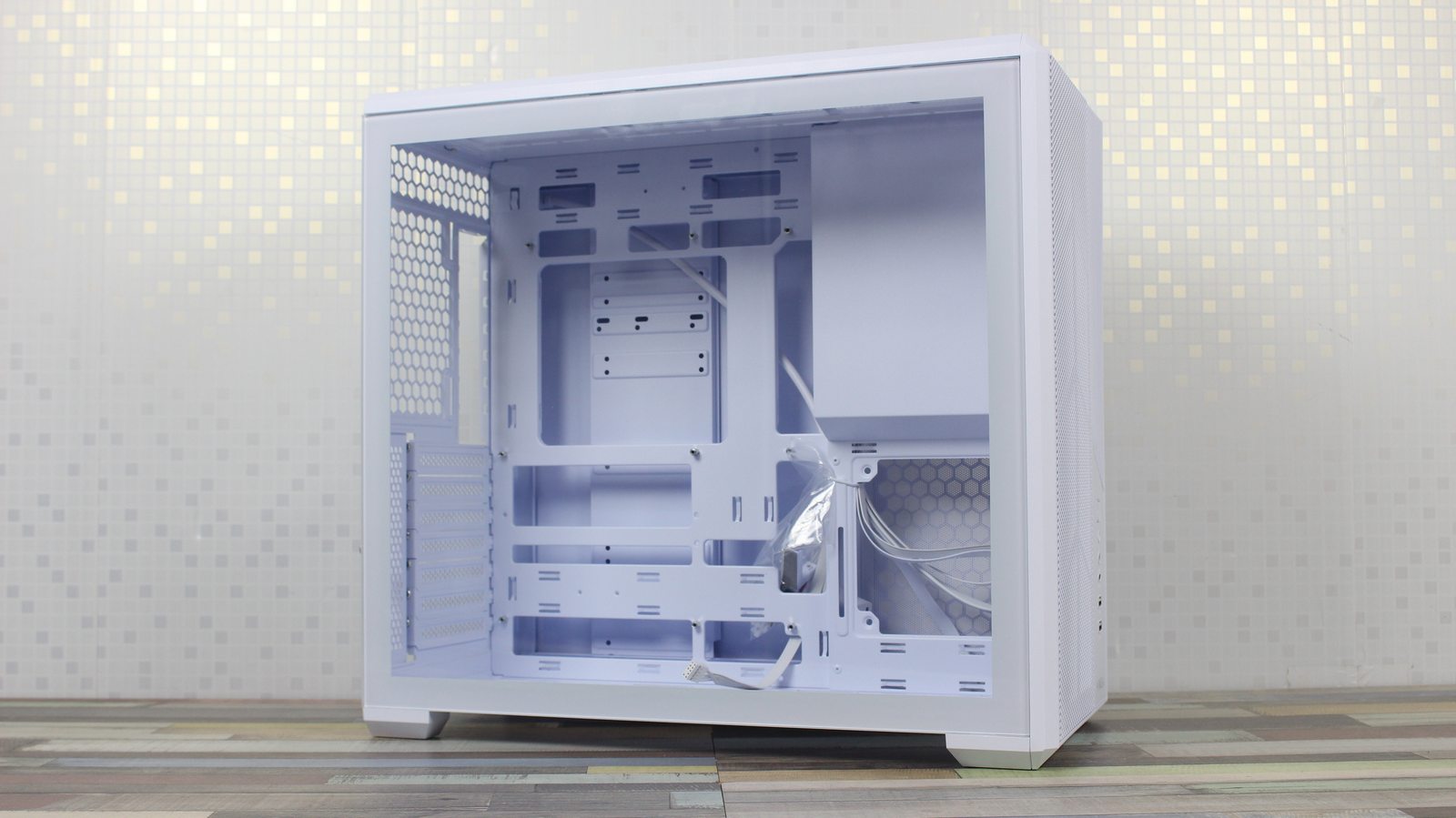
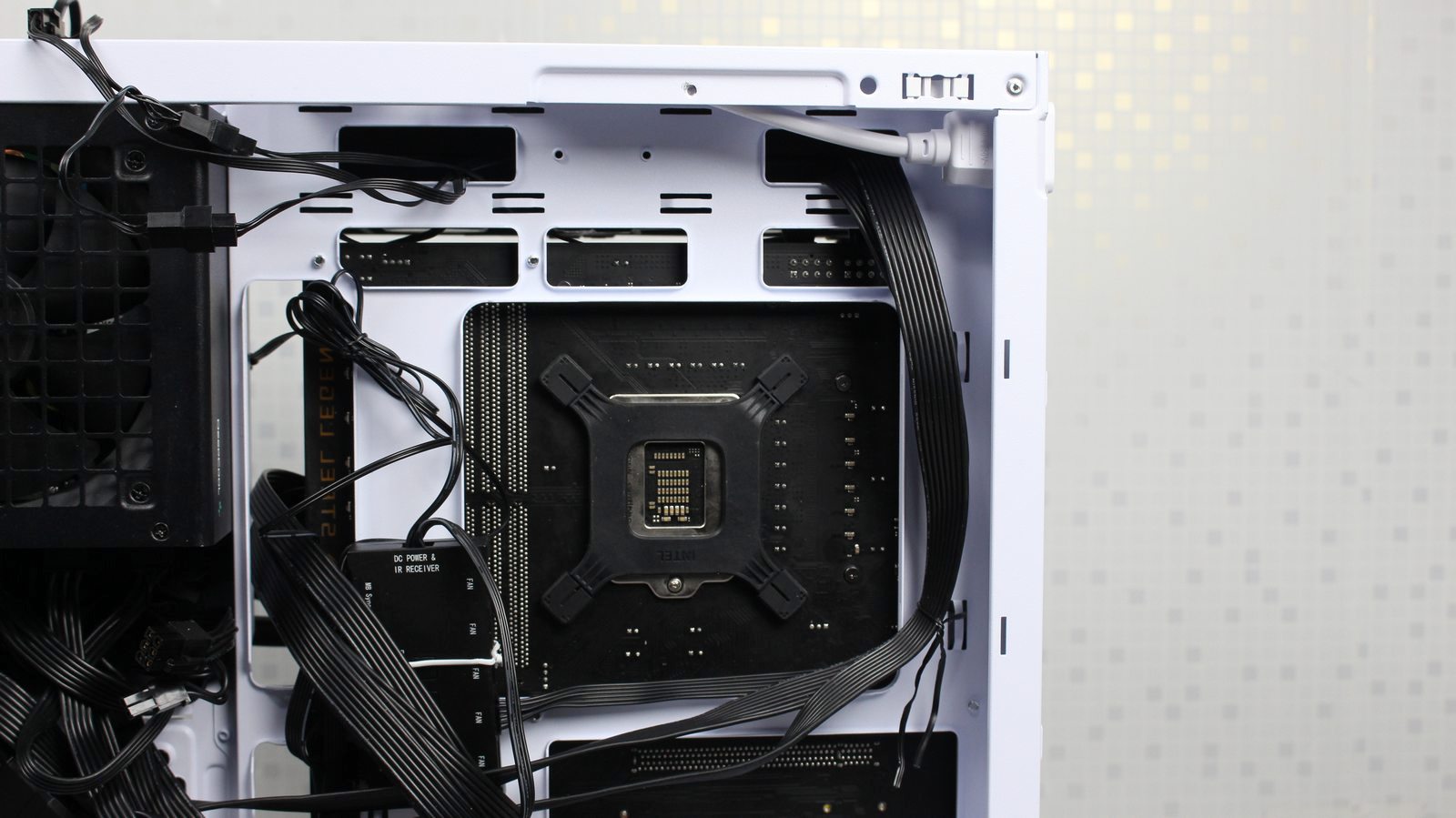
The motherboard tray has a large rectangular cutout that makes it easy to replace the CPU cooler without removing the board.
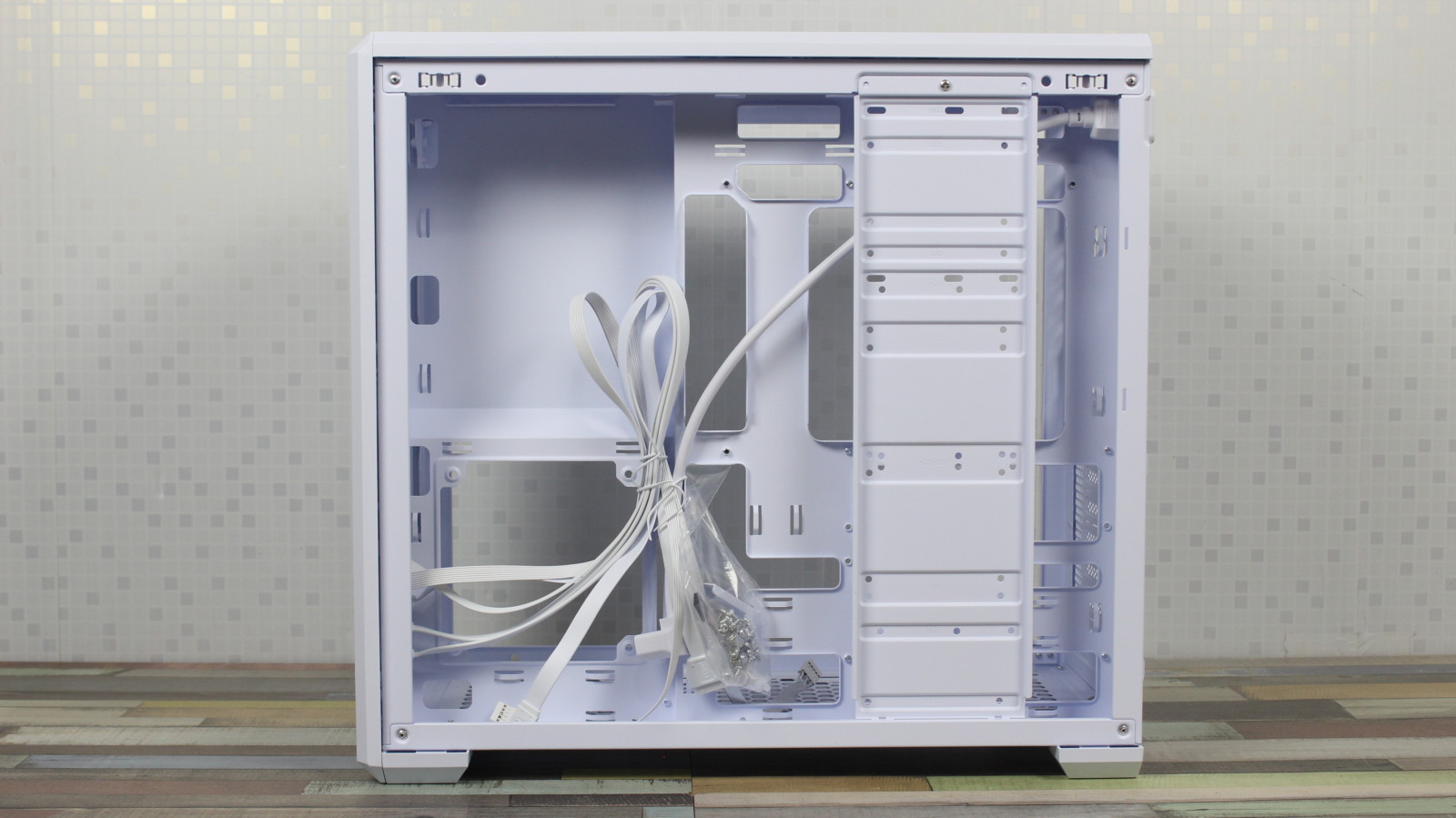
Safety during assembly is ensured by carefully rolled edges of all technical openings. Most operations are performed without a screwdriver — tools are only needed for mounting the motherboard, plugs, fans, or radiators.
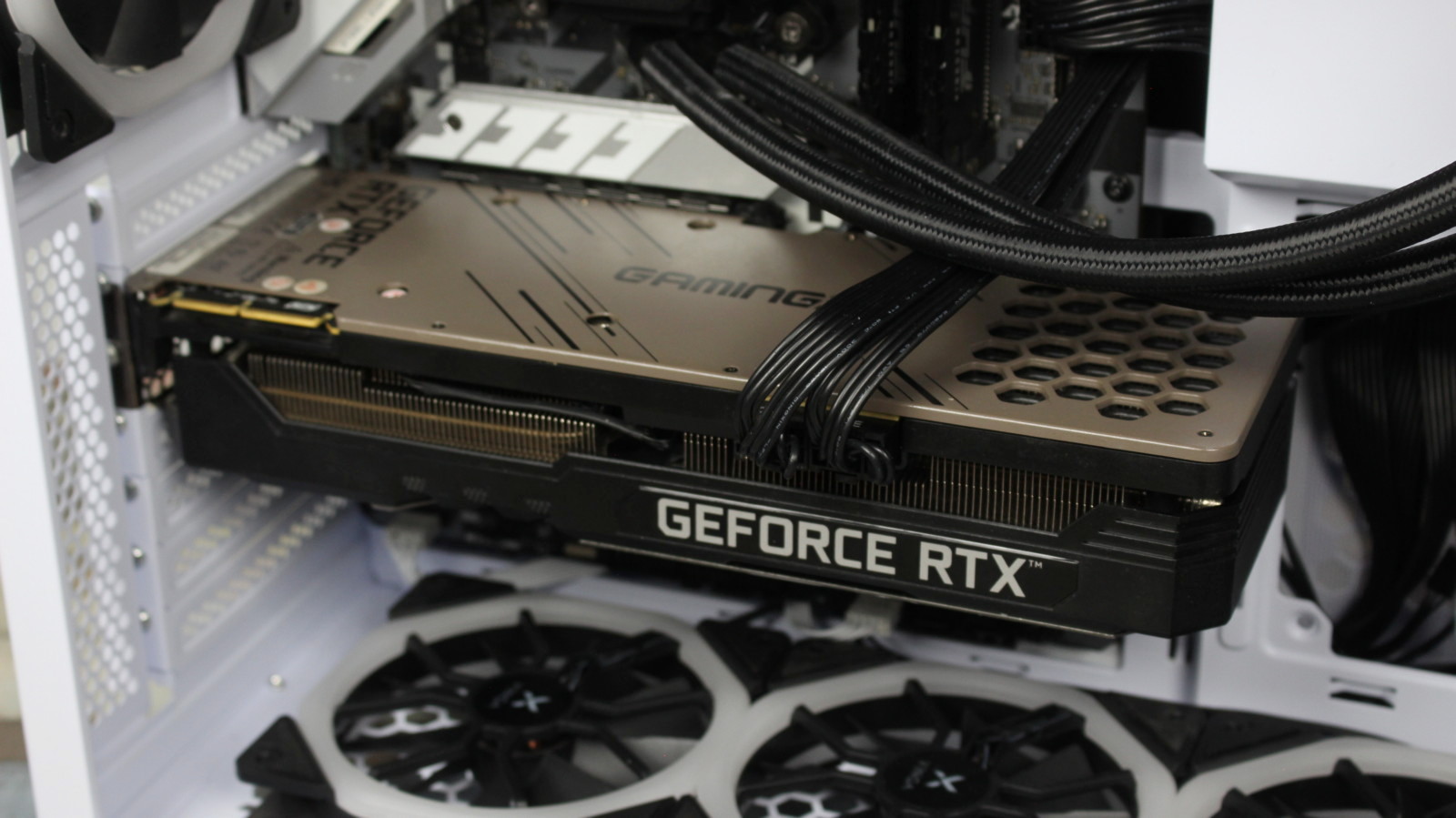
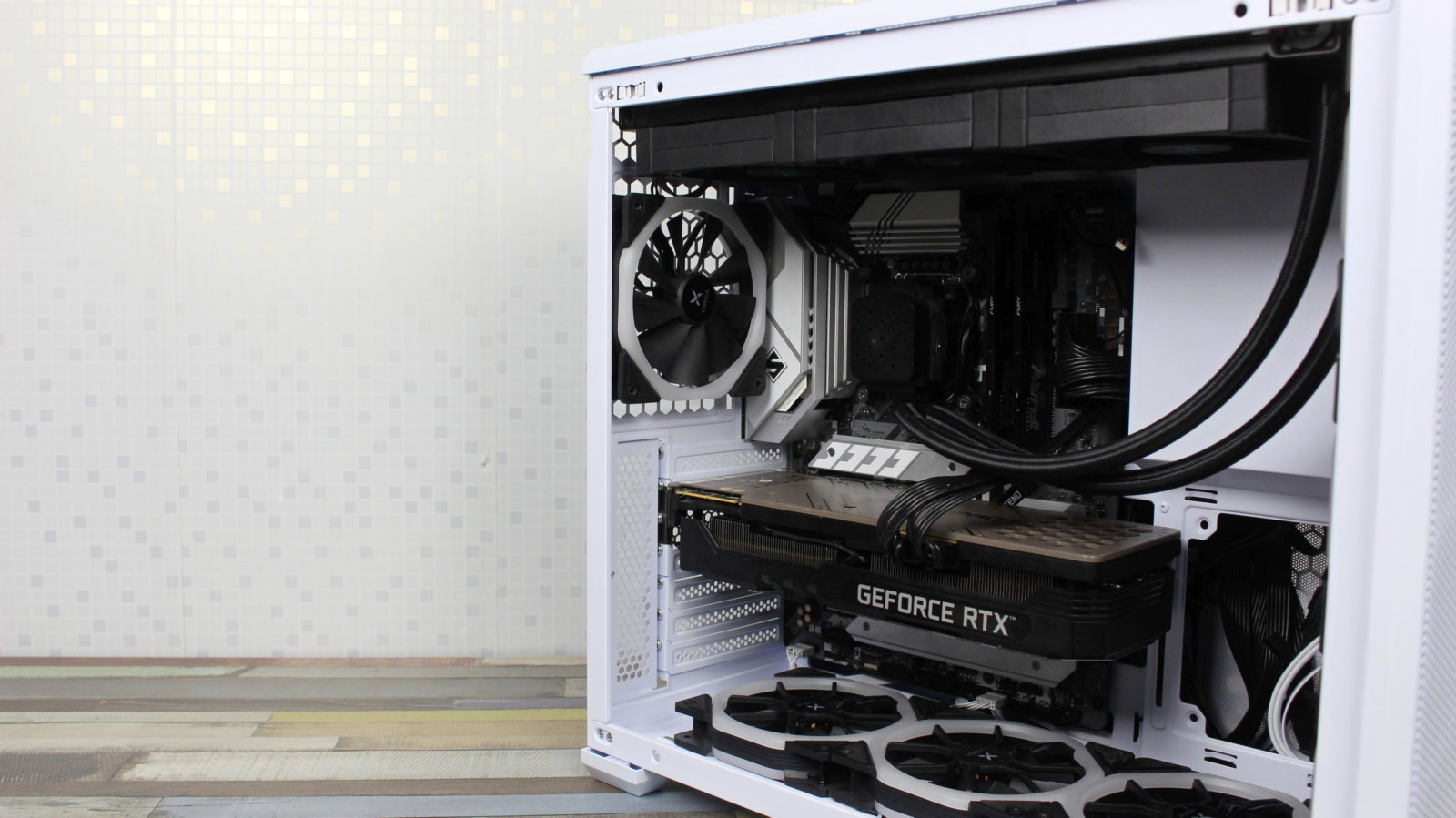
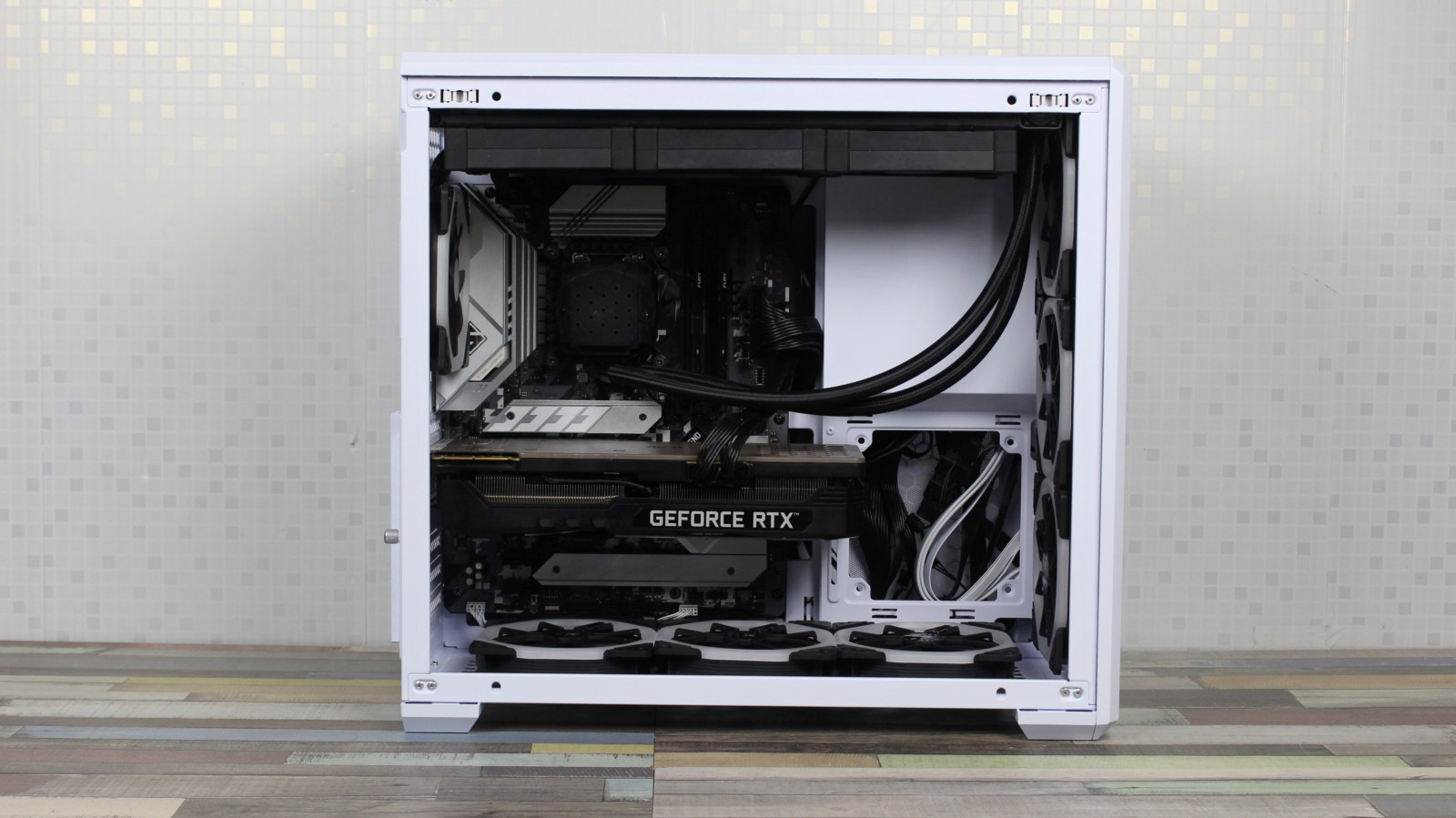
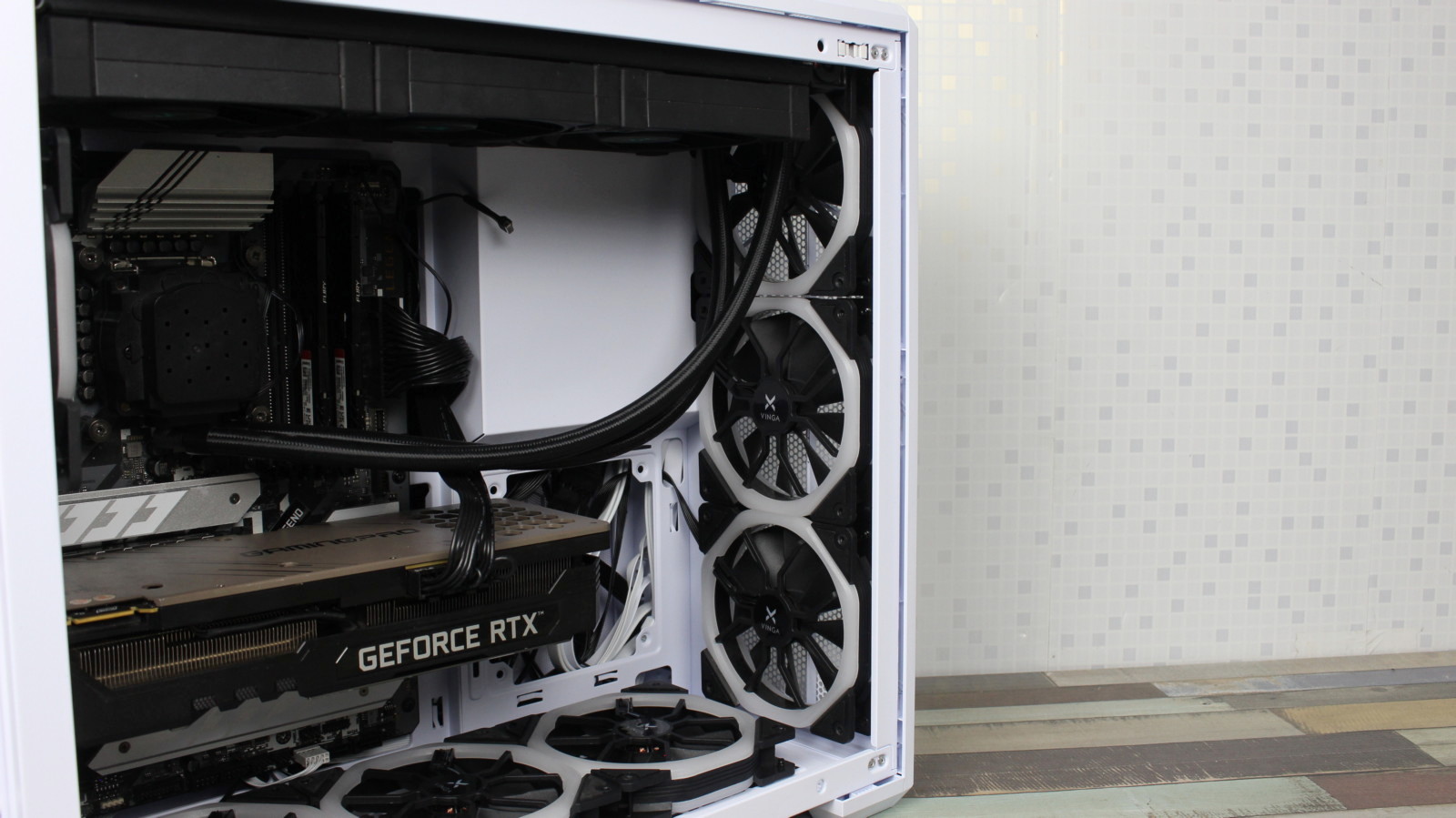
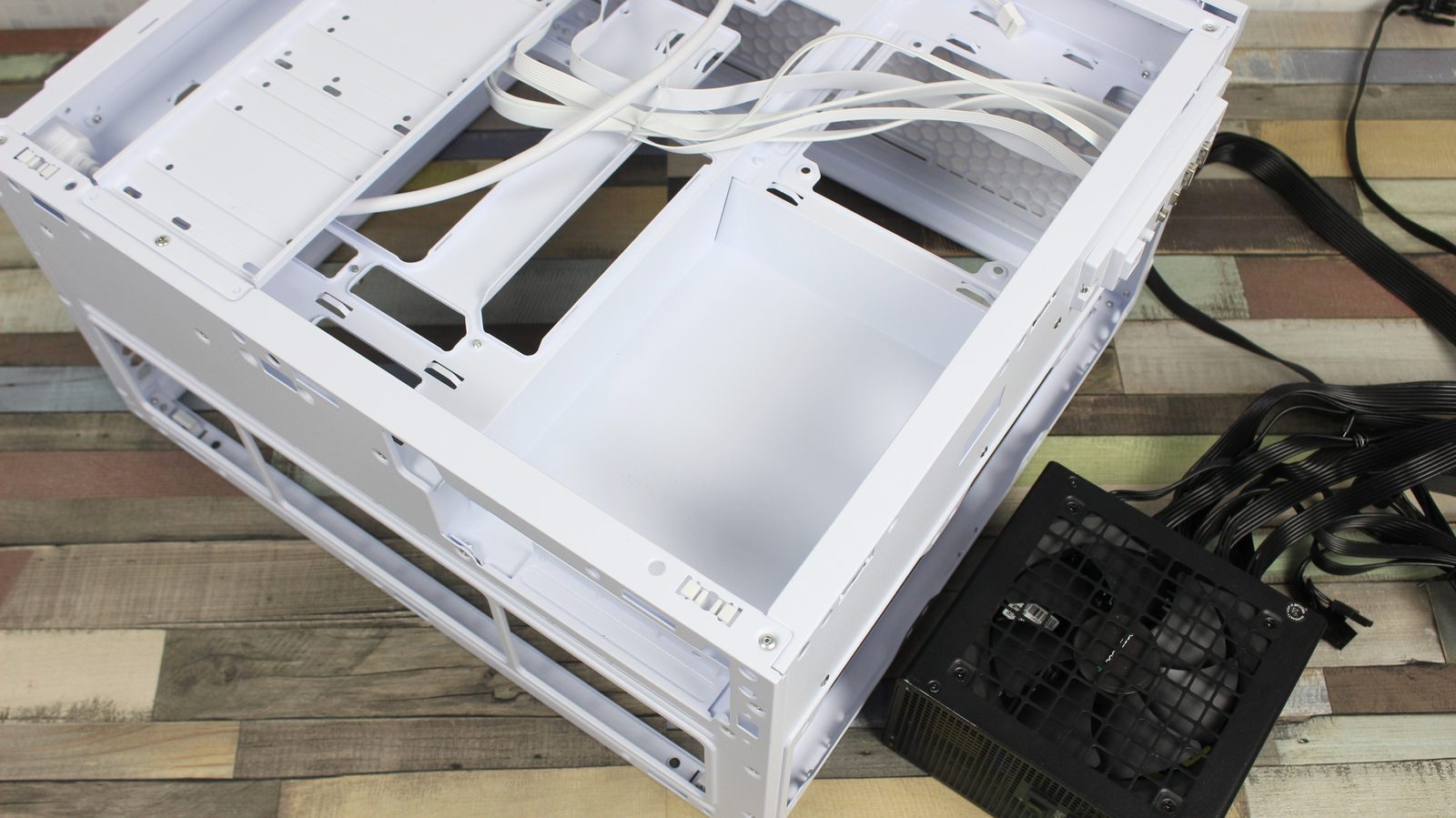
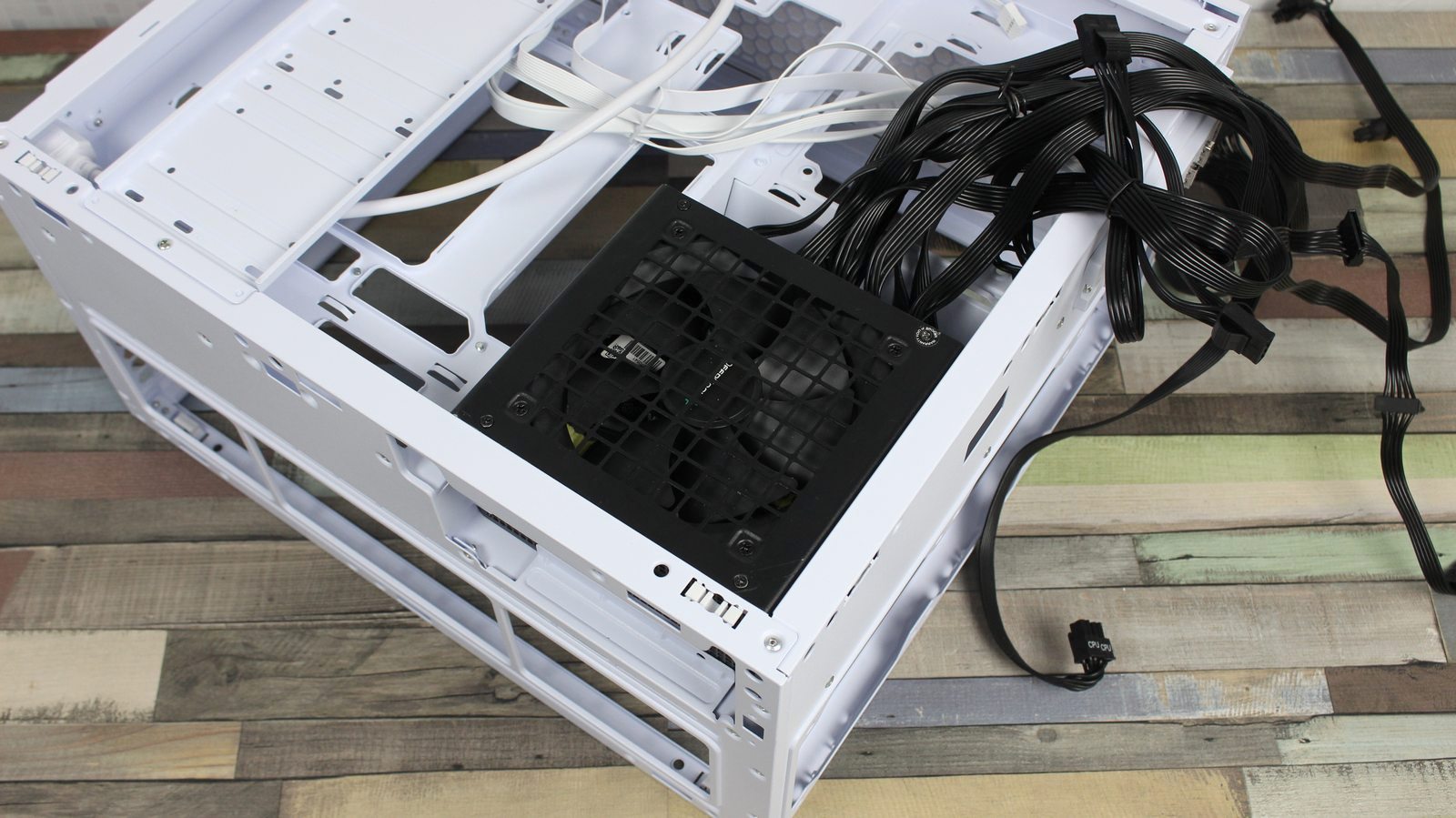
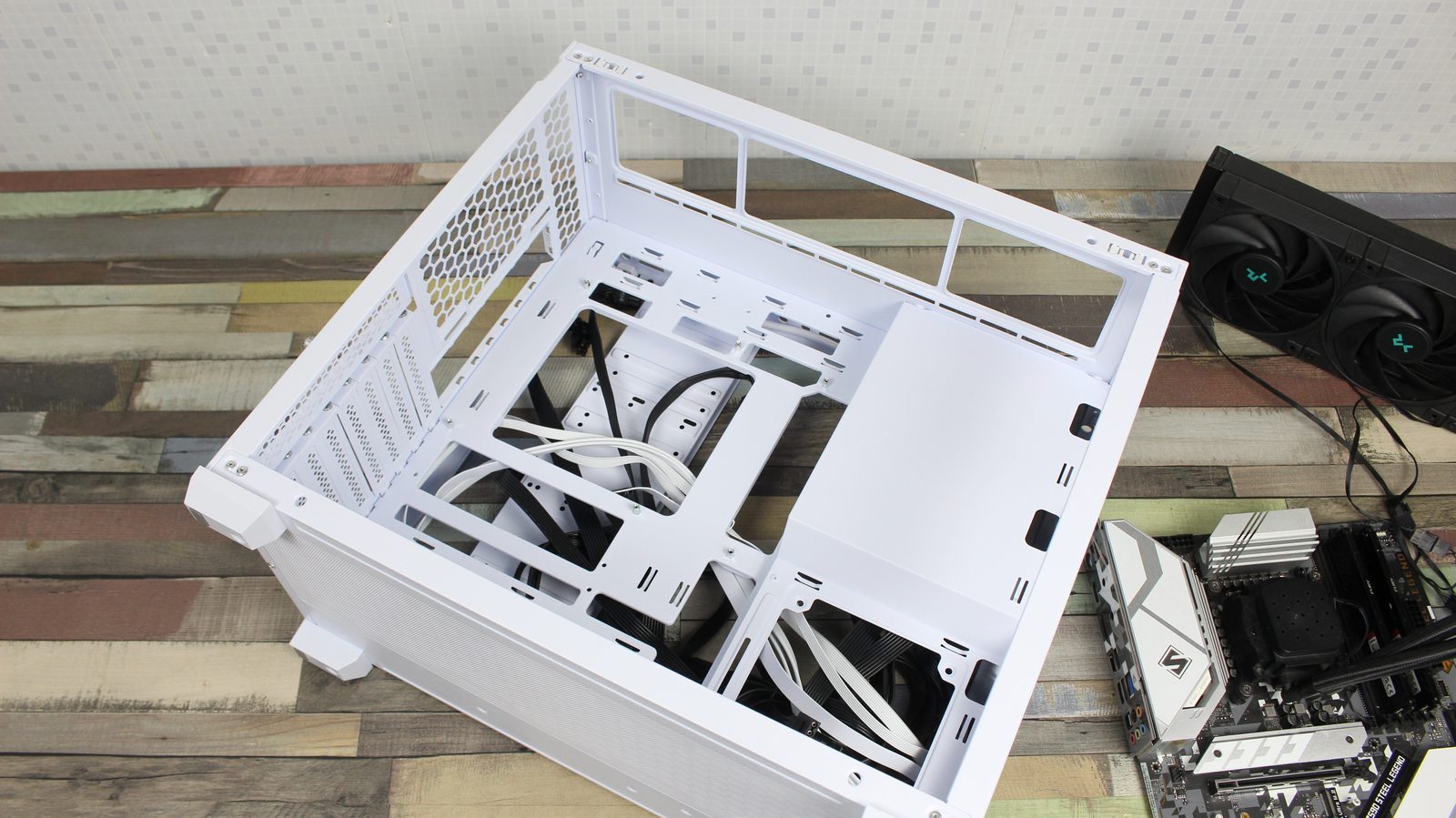
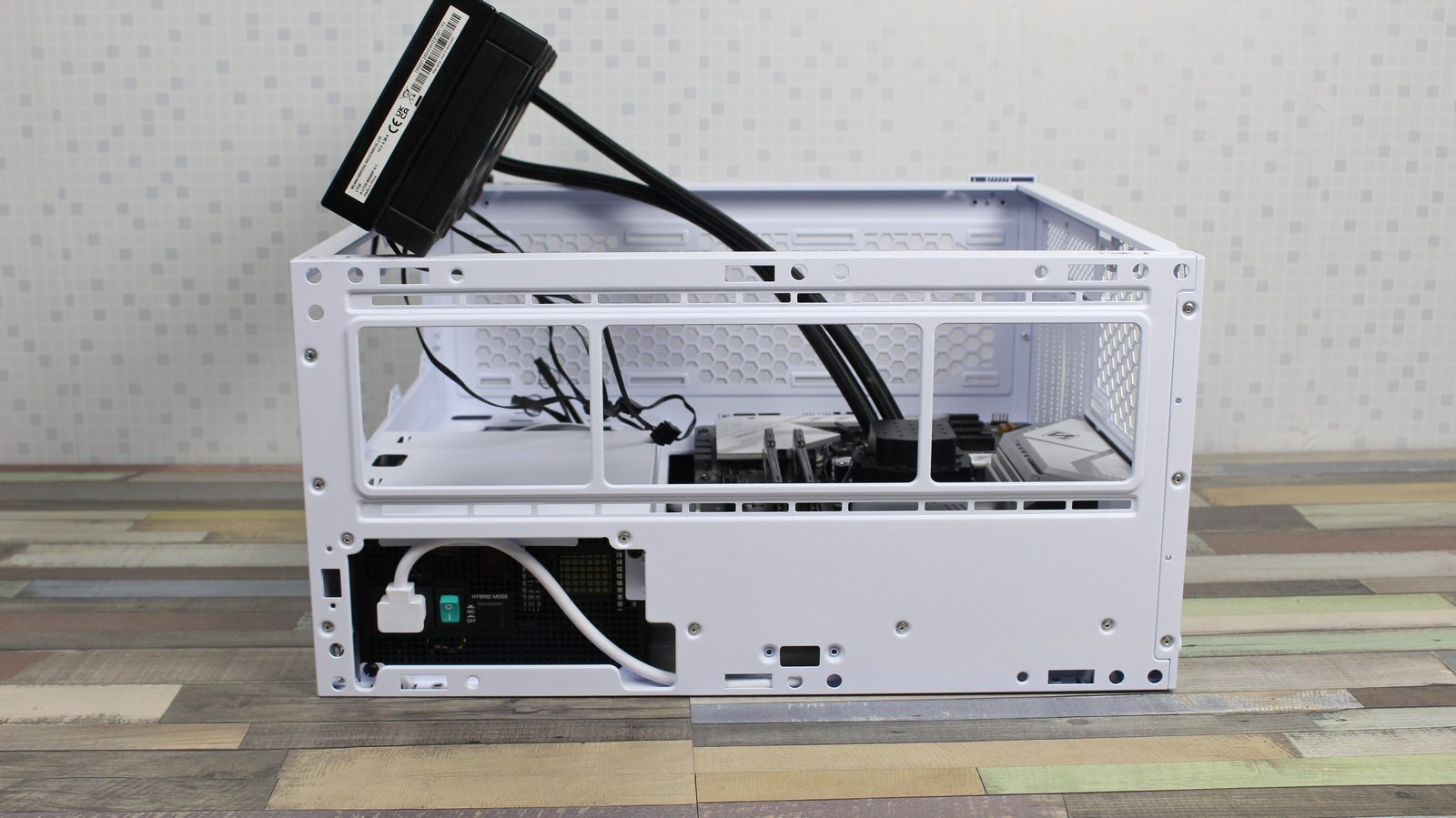
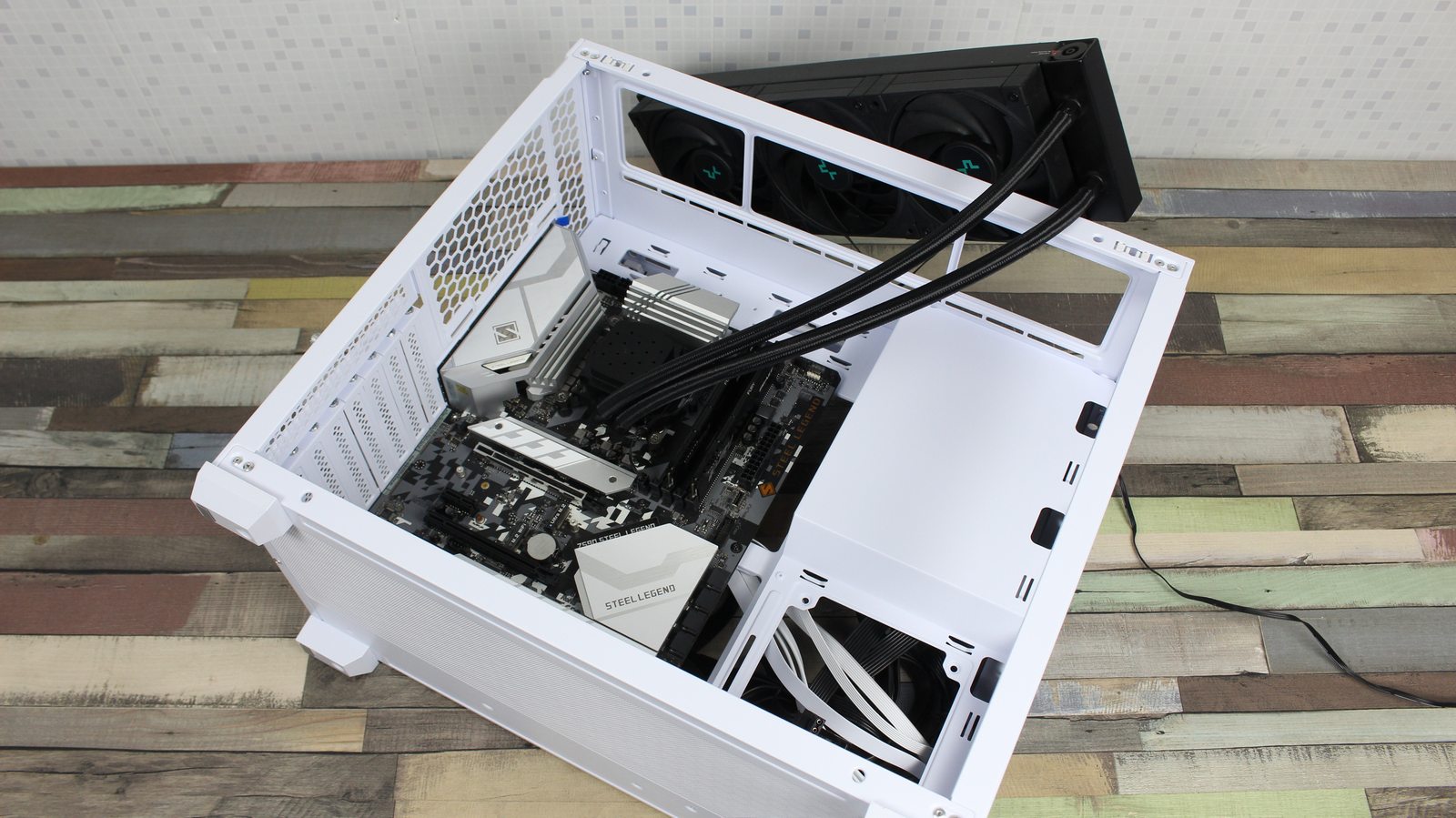
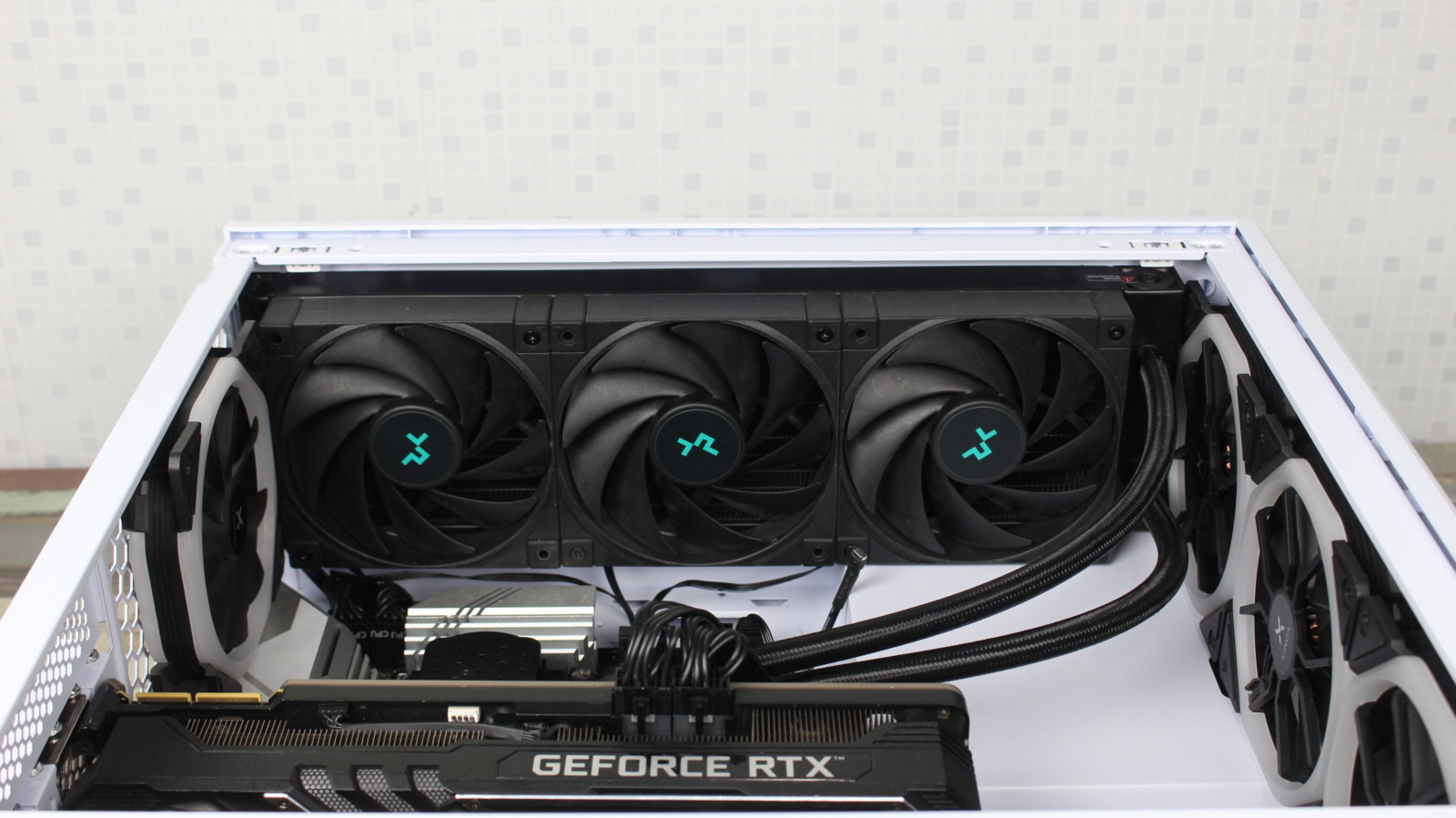
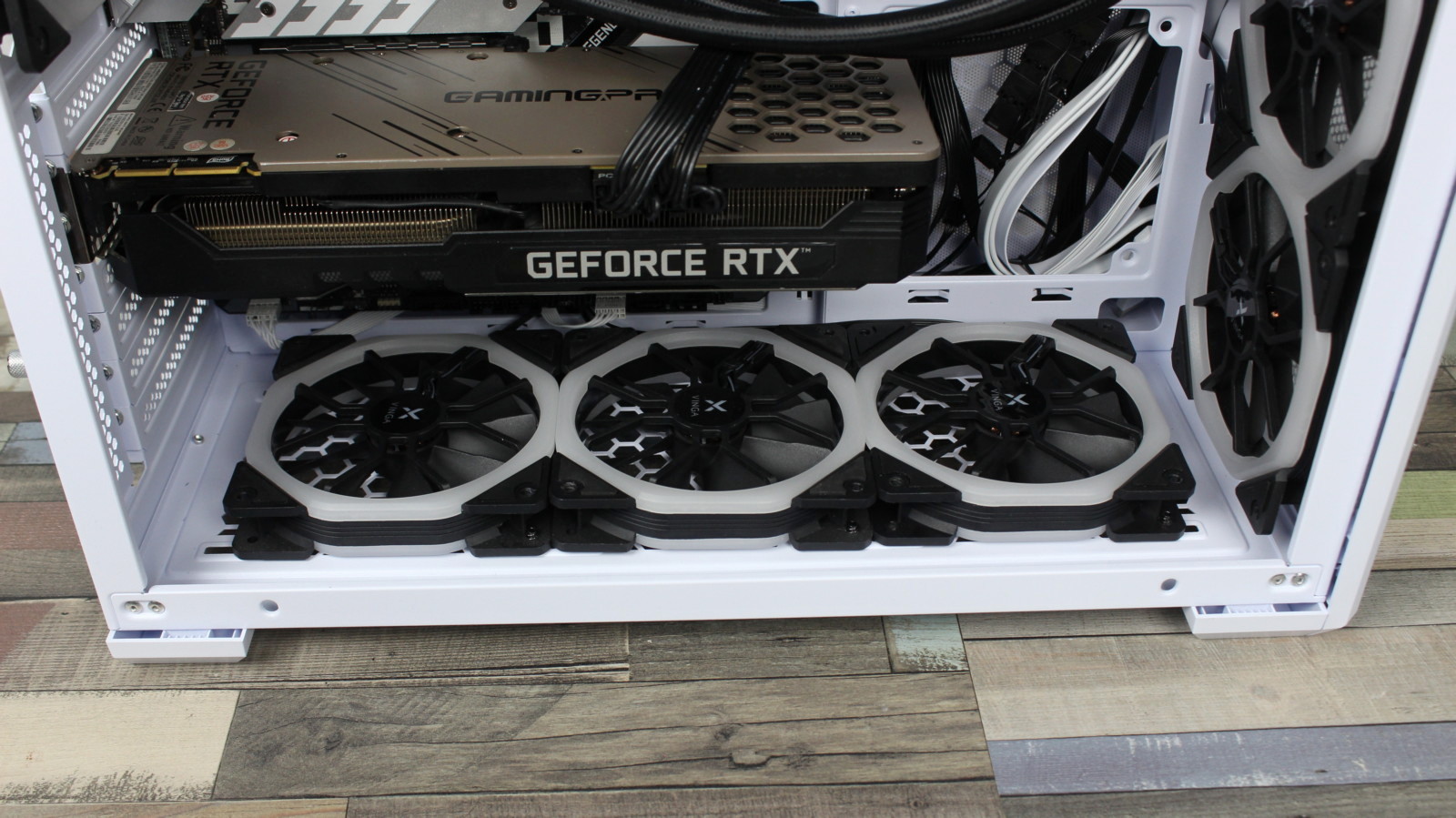
The assembly went without any issues. The case is distinguished by a sturdy construction, thick metal, and monolithic rigidity. The build quality is at a high level: there are no gaps, creaks, or gaps, and no vibrations or extraneous sounds are observed during operation.
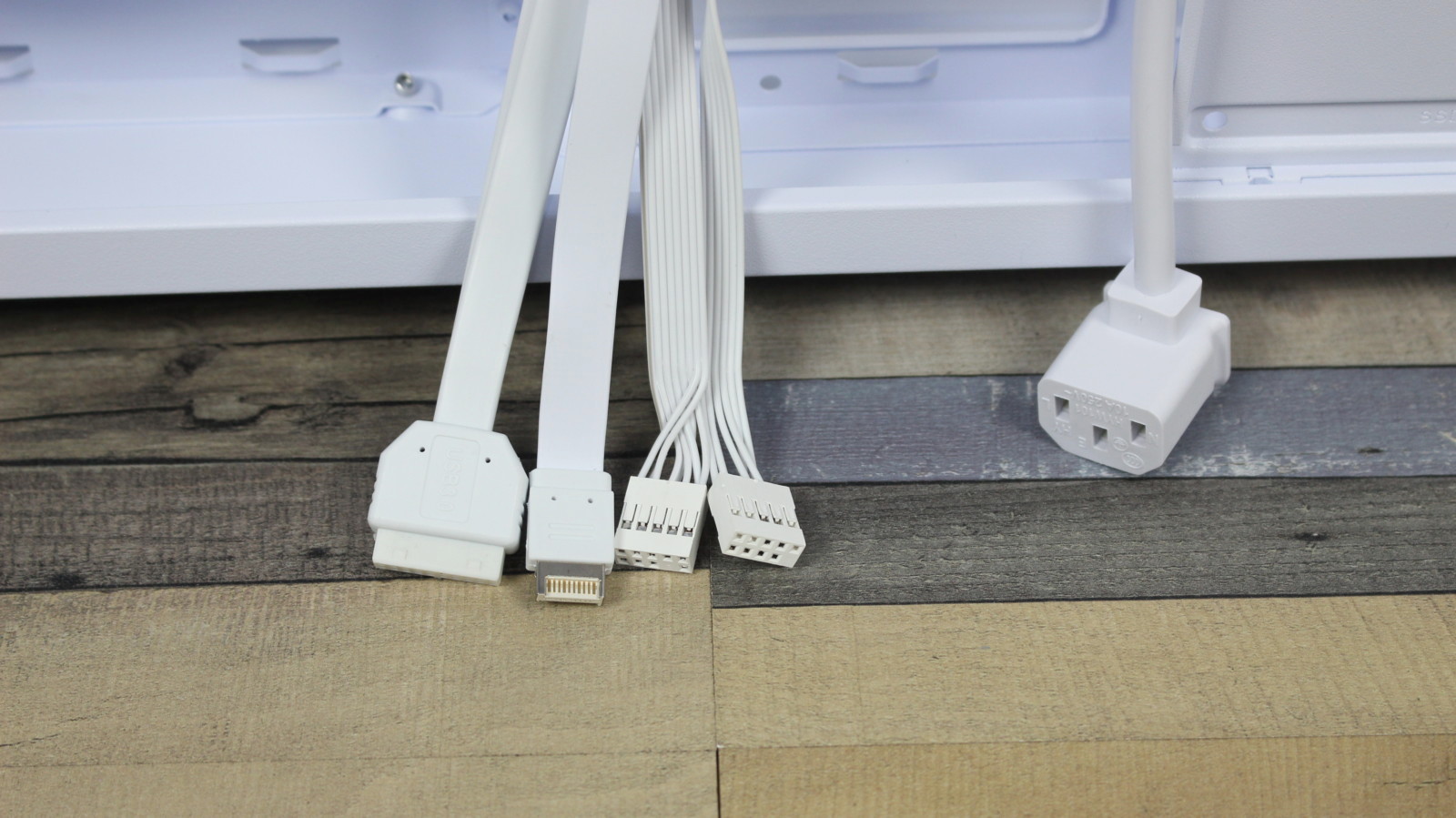
The cables from the interface panel have sufficient length for comfortable connection to the motherboard, regardless of its format. This eliminates potential difficulties during routing and simplifies cable management organization.
|
Name |
Length, cm |
|
USB 3.1 Type-C |
55 |
|
USB 3.0 |
55 |
|
HD Audio |
65 |
|
Buttons and indicators |
65 |
|
Power cable extender |
45 |
Testing
|
Name |
Model |
|
Processor |
Intel Core i7-11700K (Socket LGA1200, 8 cores, 16 MB cache, 3.6–5.0 GHz, TDP 125 W) |
|
Cooler |
DeepCool LP360 |
|
Motherboard |
ASRock Z590 STEEL LEGEND (Intel LGA 1200, Z590, ATX) |
|
RAM |
2 x DDR4-3600 16 GB Kingston Fury (KF436C18BBAK2/32 ) |
|
Graphics card |
Palit GeForce RTX 3090 24GB GDDR6x GAMINGPRO OC (fan speed 70%) |
|
SSD |
Kingston KC600 512 GB SSD (SKC600/512G) |
|
Power supply |
DeepCool PM800D |
|
Thermal interface |
GD900 |
The ambient temperature at the time of measurement was 26°C. We tested the Vinga Eclipse case with a 360-mm CPU cooler DeepCool LP360, which was installed at the top of the chassis.
Since the model comes without pre-installed fans, we used our own test models for cooling the components: four Vinga RGB Fun-06 fans and three Vinga RGB Fun-02 White. All of them were controlled by the lighting module Vinga RGB Control-02.
The fans operated at maximum speed: 2500 RPM for the CPU cooler and 1100 RPM for the case fans. The noise level exceeded the average indicator but remained relatively comfortable.
The fan speed of the graphics card was limited to 70%.
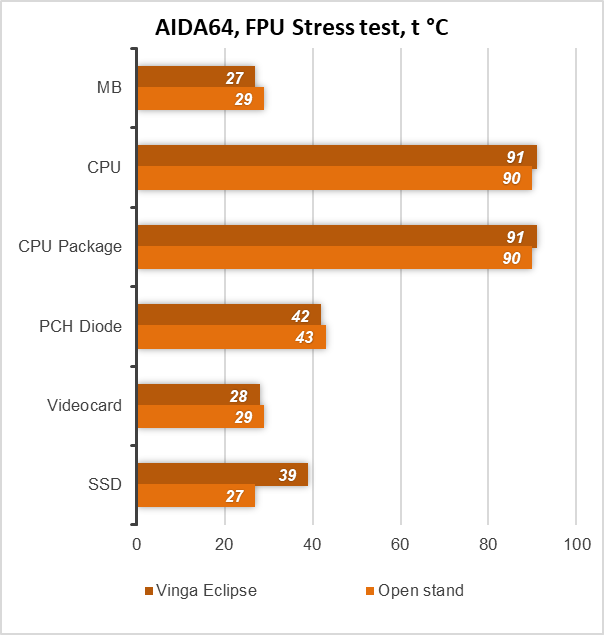
In the AIDA64 Stress FPU test, the processor reached a temperature of 91°C, which is only 1 degree higher than the open stand indicator. Such a difference is minimal and quite acceptable for a stress test that creates extreme load on the processor. The temperatures of other components — 27°C for the motherboard and 42°C for the PCH Diode — also remained within the norm, indicating effective air flow distribution and no overheating of key board nodes.
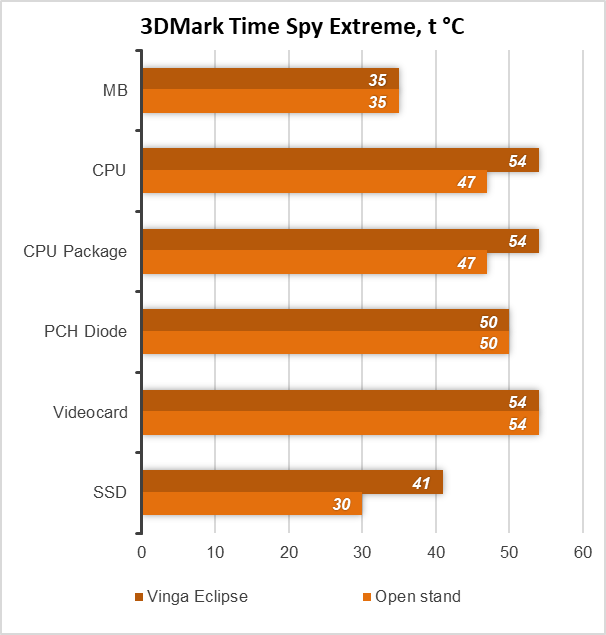
In the 3DMark Time Spy Extreme benchmark, which simulates gaming scenarios, the processor in the case reached 54 degrees, which is 7 degrees higher than the open stand. Although the difference is noticeable, the absolute value remains low, so there is no cause for concern. The graphics card, with a result of 54 degrees, demonstrates excellent temperature control, maintaining heating identical to the open stand indicators, confirming the effectiveness of heat dissipation from the graphics adapter.
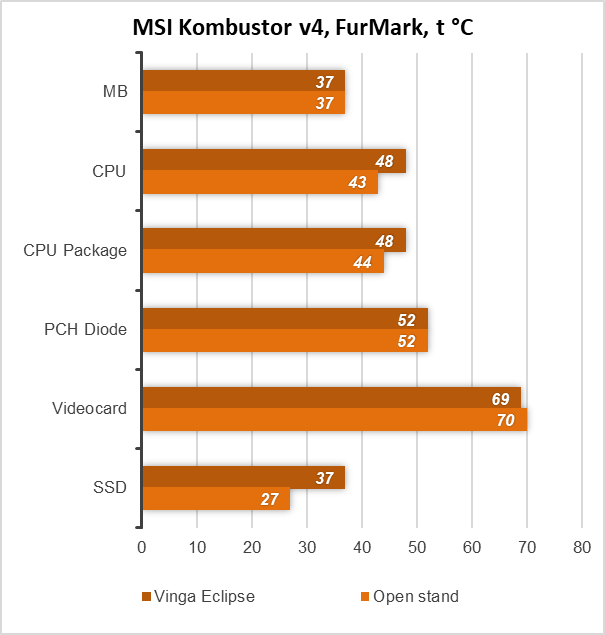
During testing in MSI Kombustor FurMark under maximum load on the graphics card, the result of 69 degrees indicates that the adapter's cooling system copes with the load regardless of the case, demonstrating even better results than on the open stand. The processor in this test heated up to 48 degrees, which is 5 degrees higher than the open stand, but this value is completely safe.
The stability of other components' temperatures confirms the effectiveness of our chosen ventilation configuration: three front and three bottom intake fans, also a rear exhaust fan, and a top-mounted radiator with three fans for exhaust, successfully expelling heated air out of the system, ensuring stable operation of components under maximum load.
Conclusions
Vinga Eclipse is a rare example of a quality case for reasonable money. It is a reliable base for building a powerful system where an ideal balance between functionality and aesthetics has been achieved. The case looks both impressive and restrained, and its snow-white finish gives the impression of a premium product.
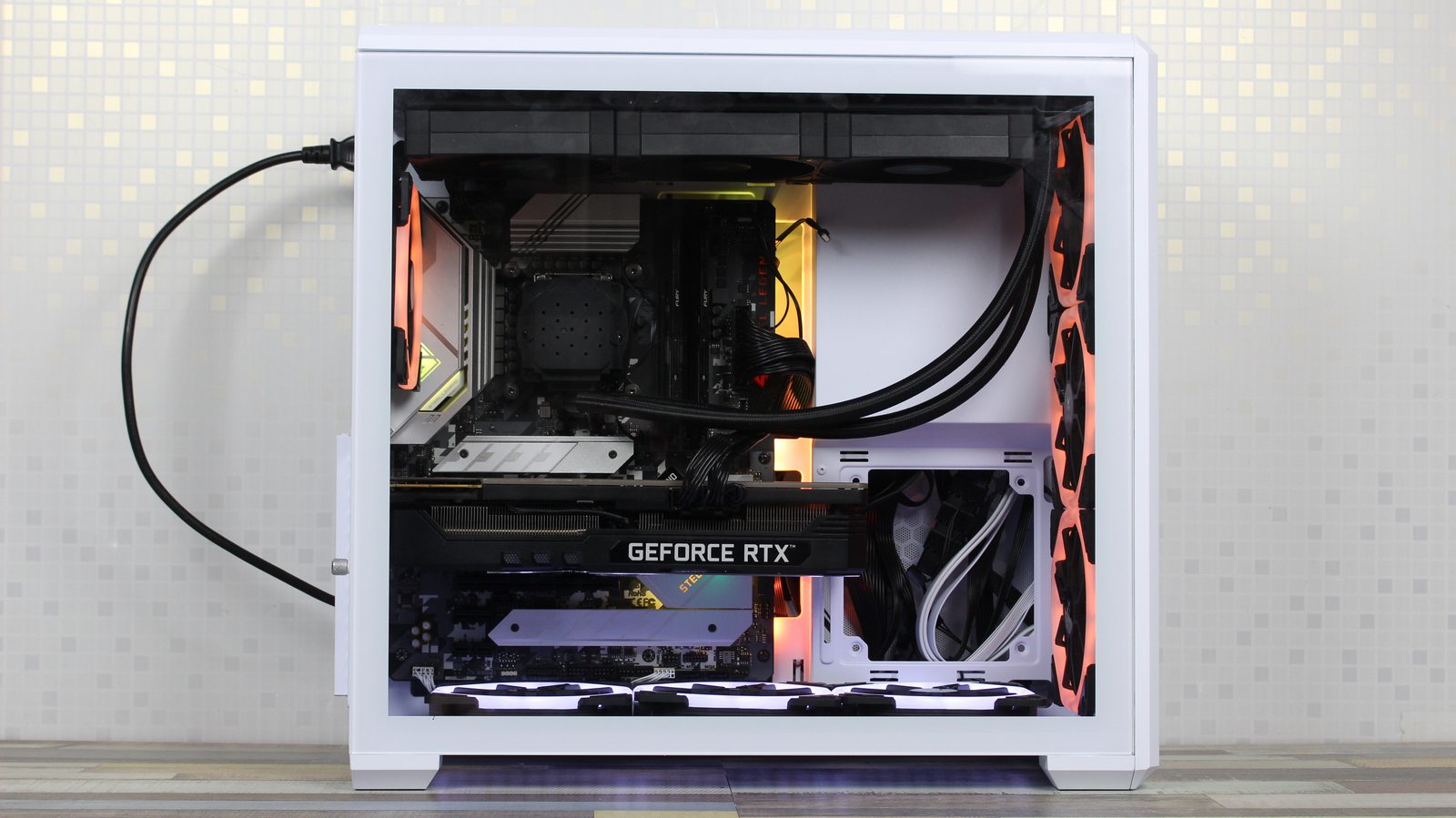
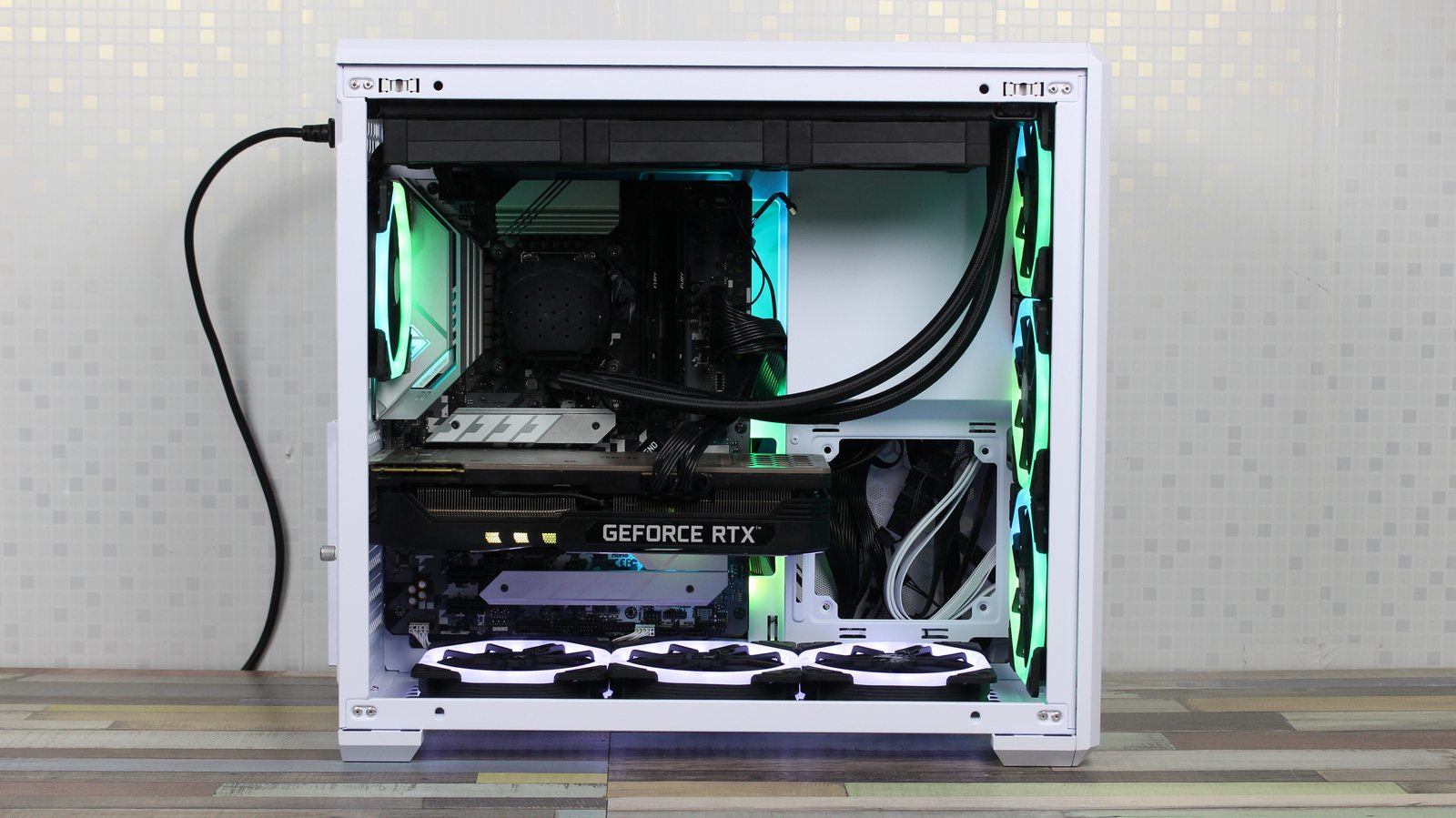
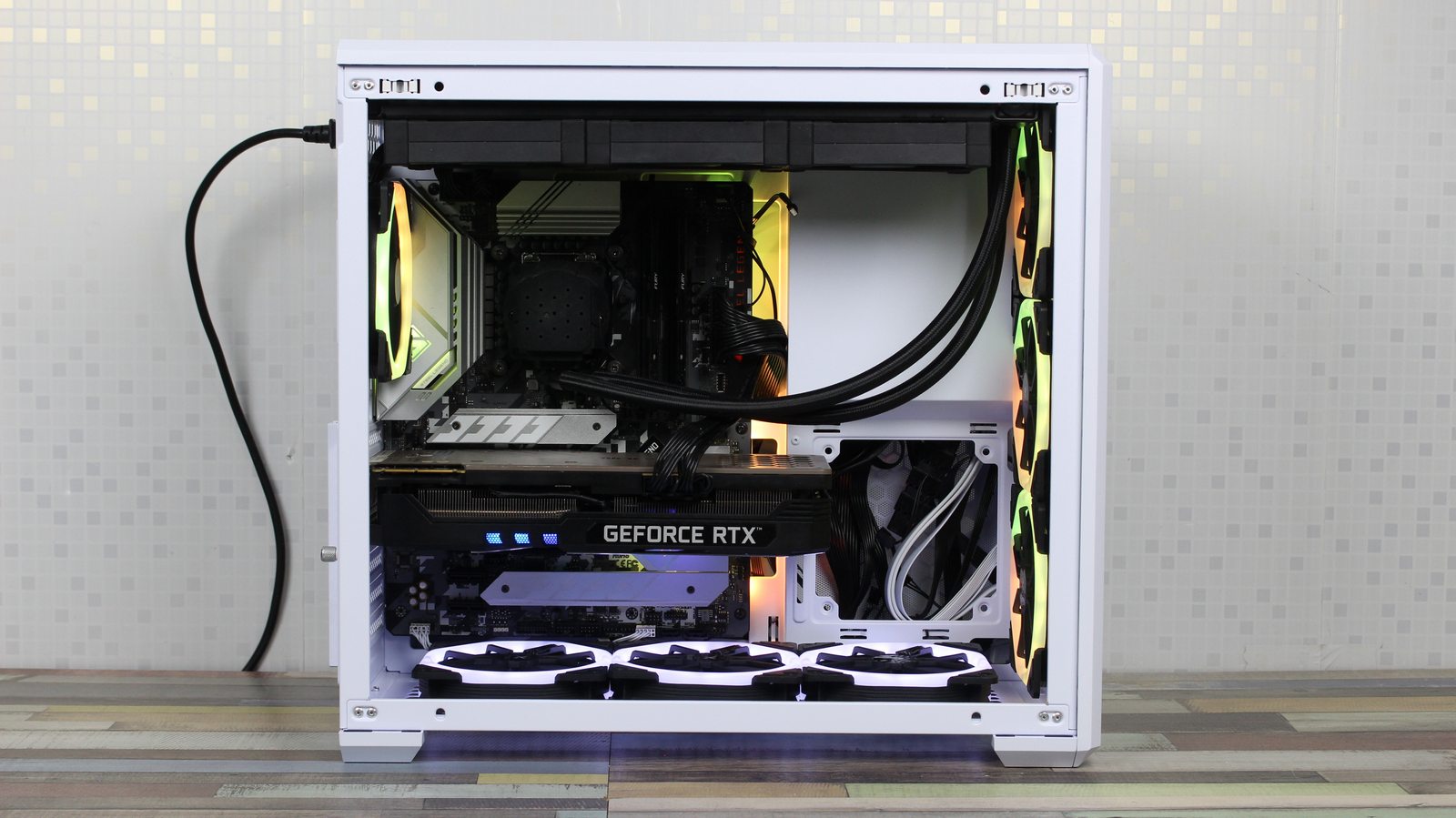
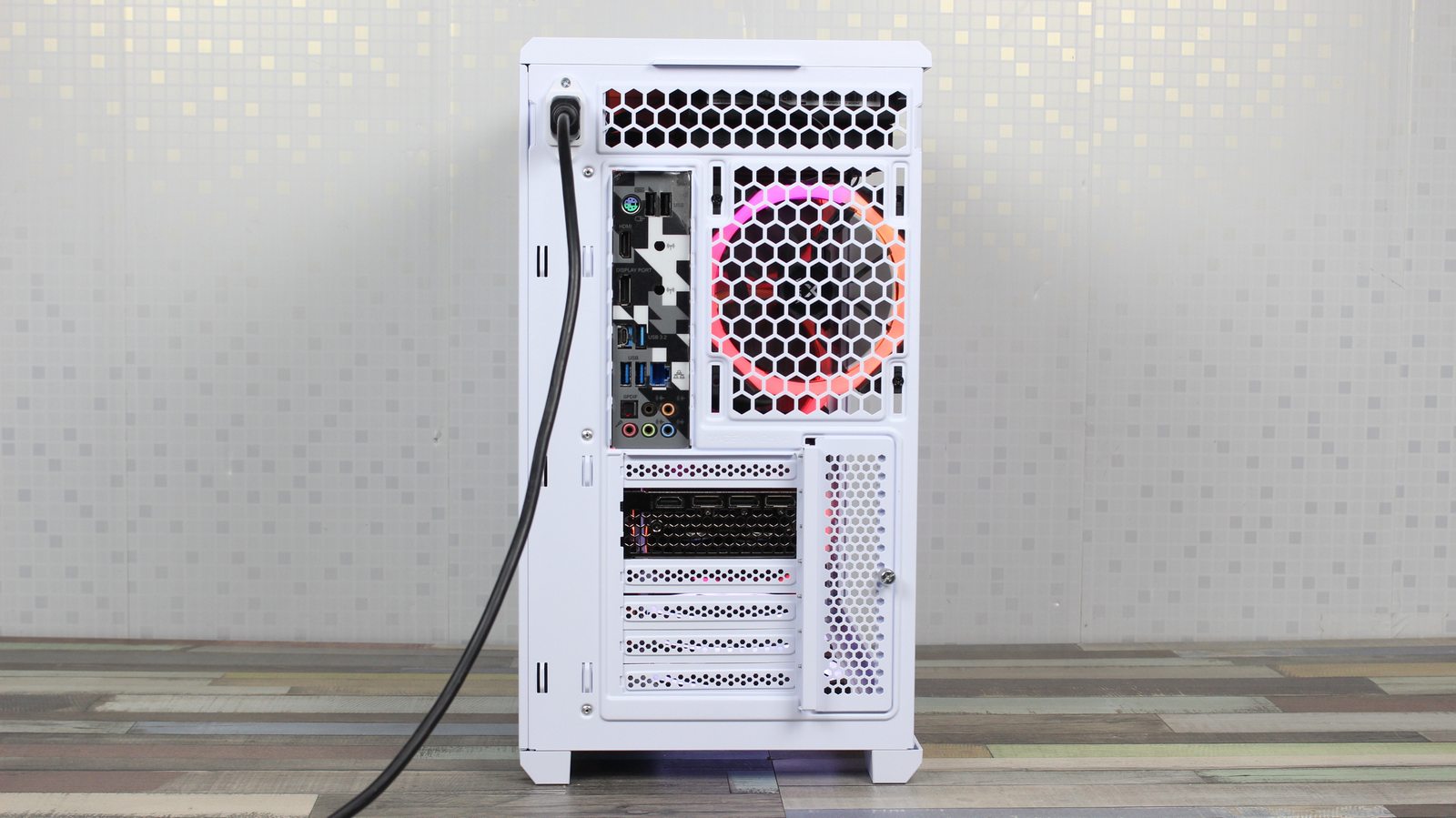
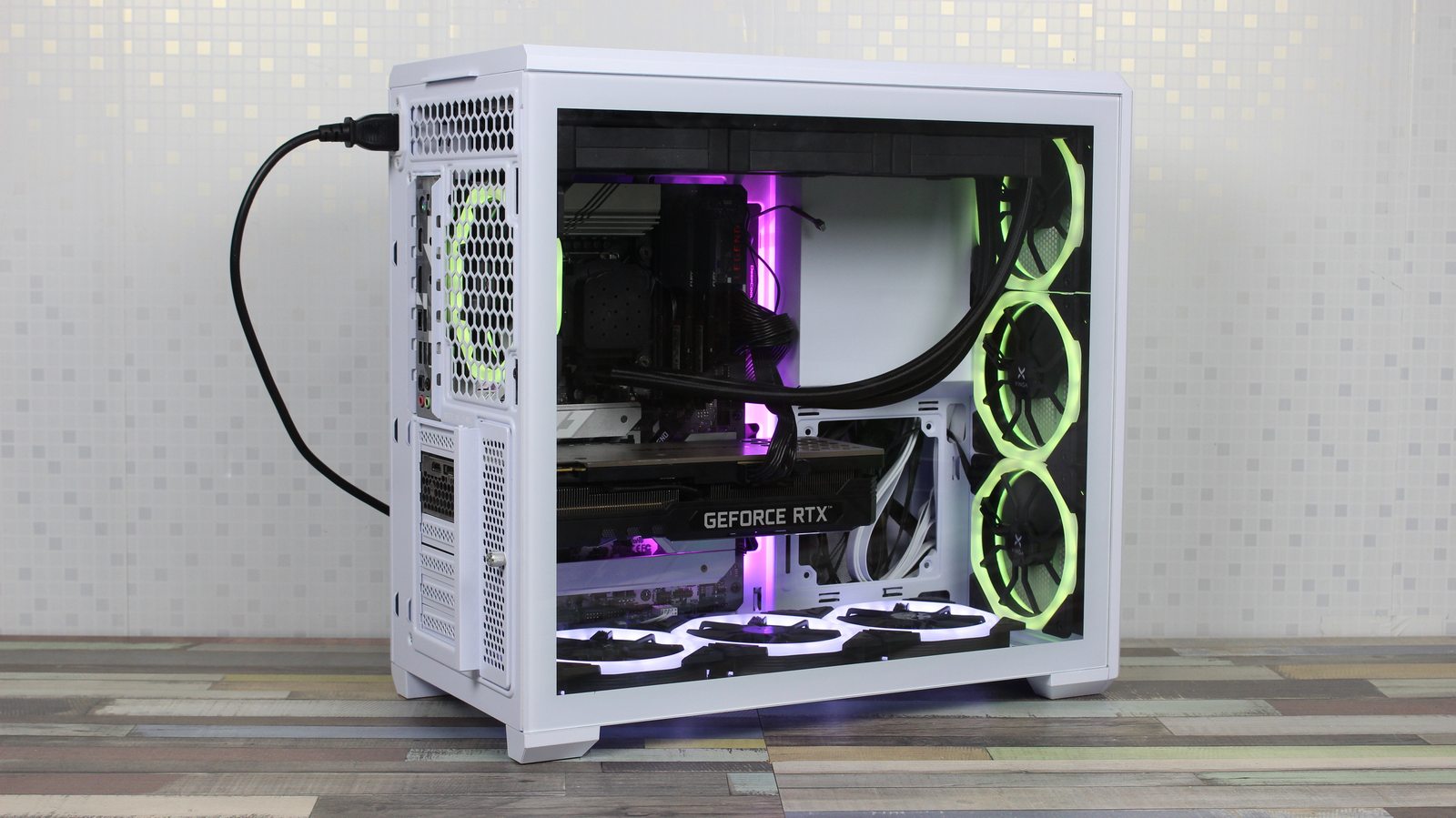
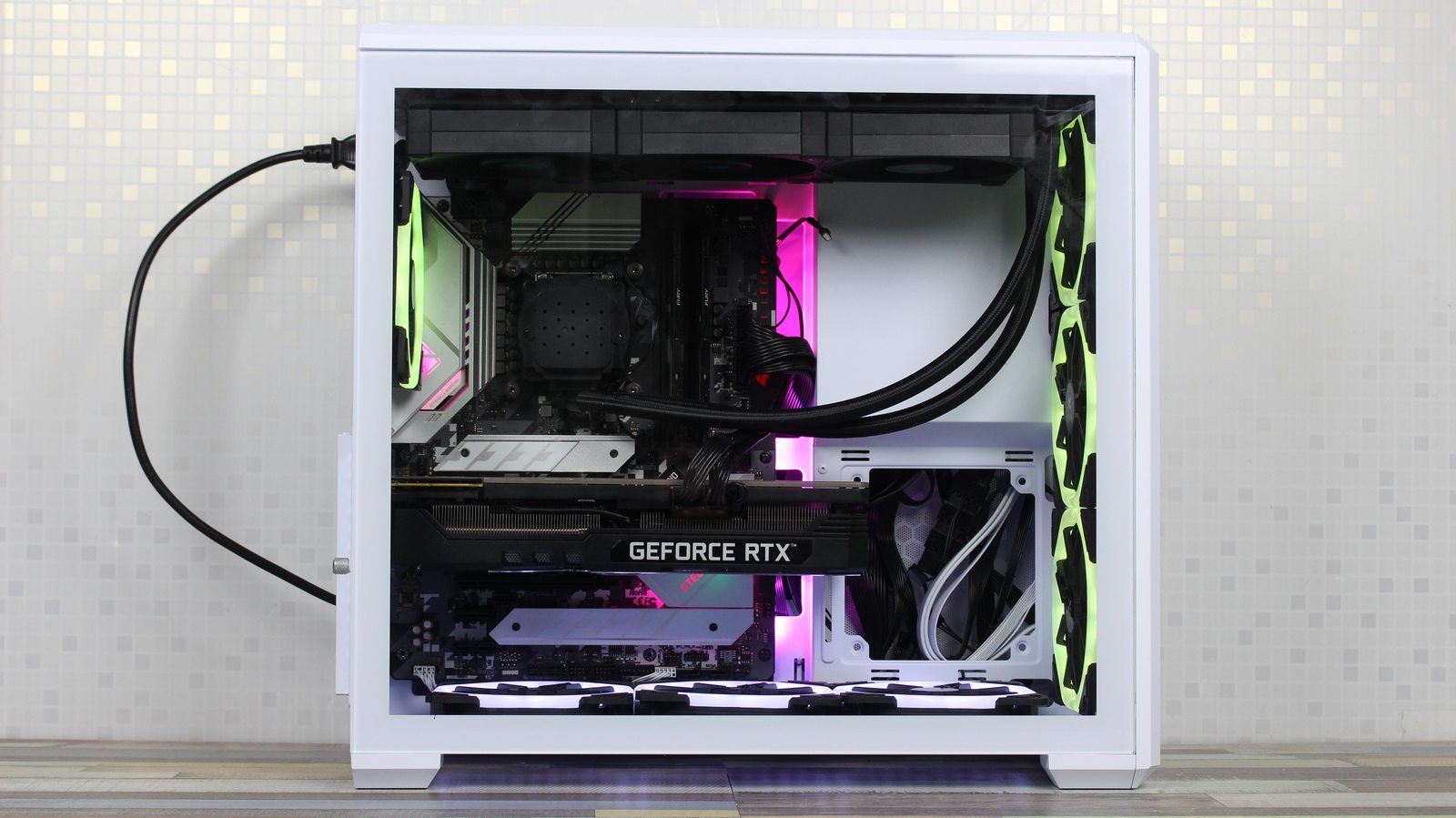
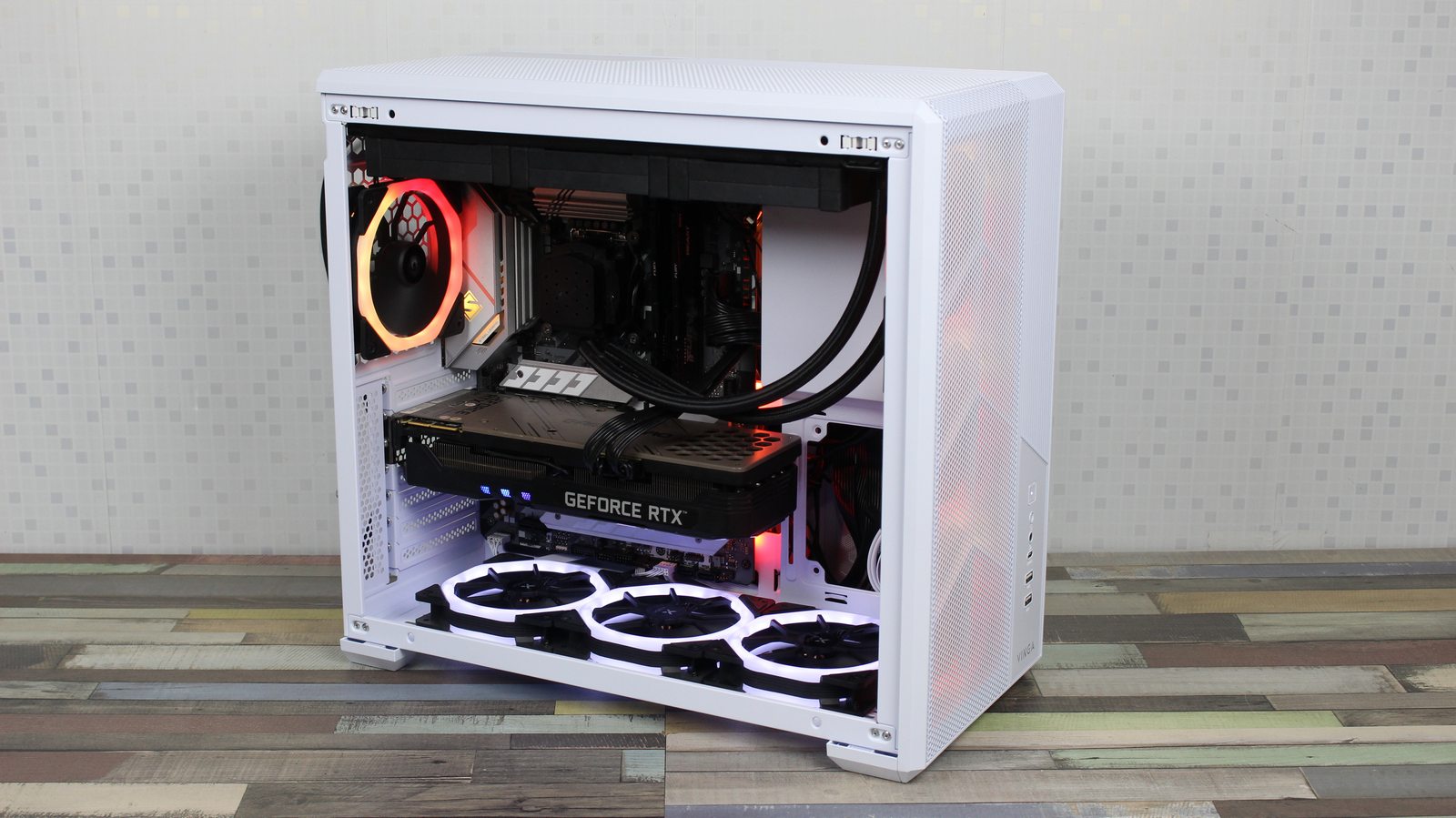
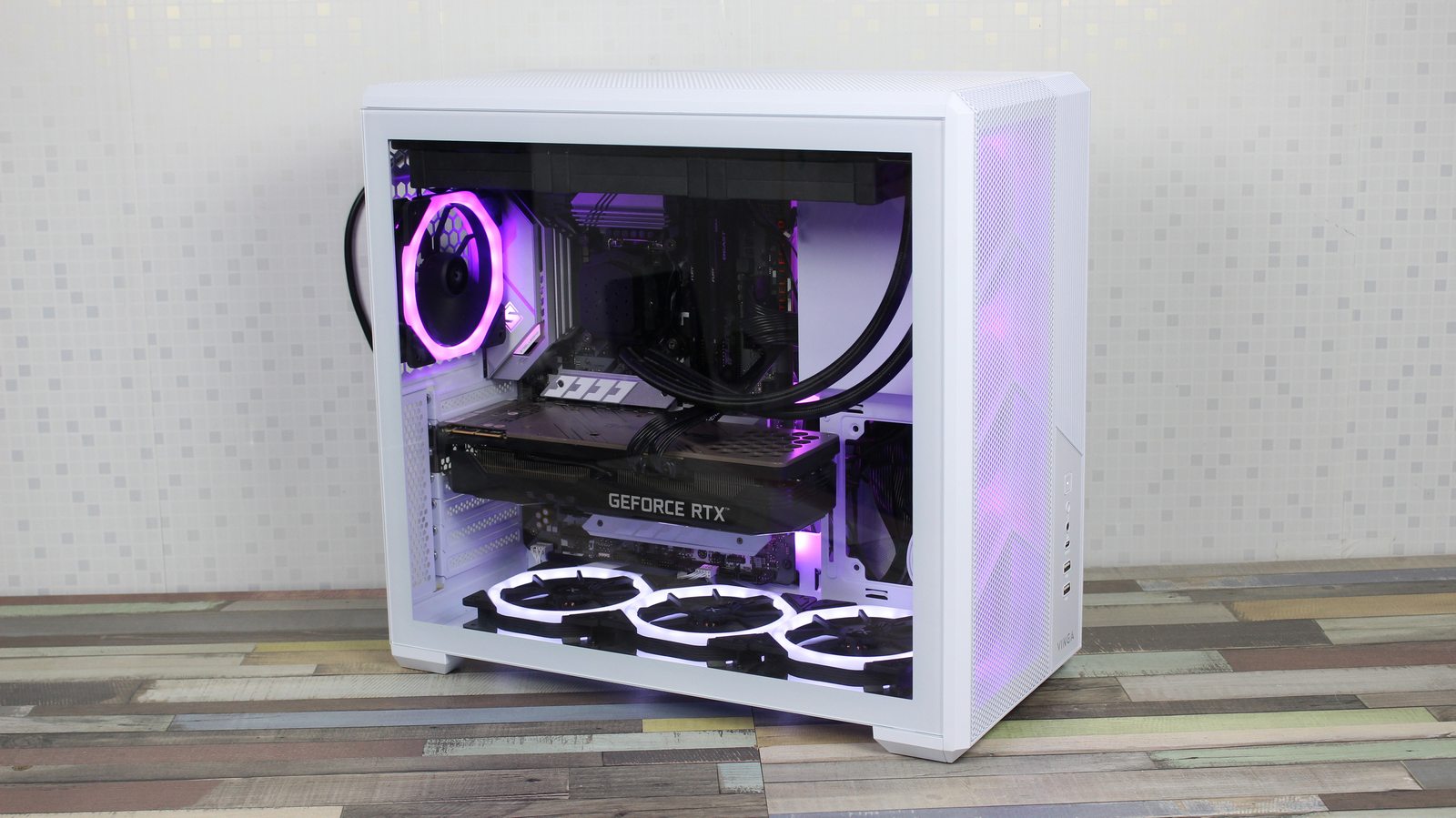
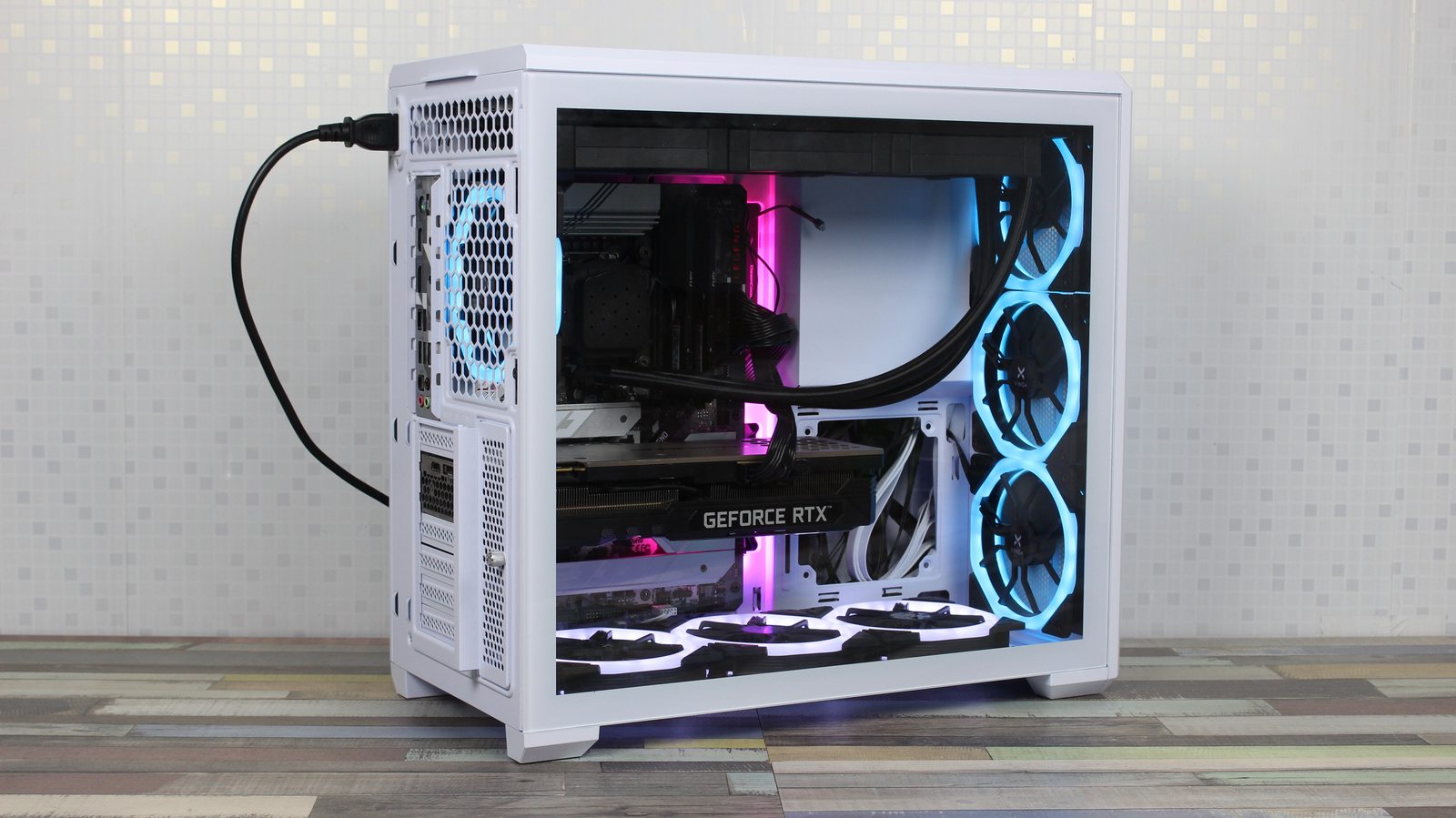
The monolithic construction does not bend in hands and does not vibrate under load. The case is perceived as a true engineering product, where every detail works for cooling: the power supply unit is positioned vertically with hot air venting upwards through the top panel, and numerous honeycomb openings provide excellent ventilation throughout the space. Plenty of space for cables behind the tray, logical placement of openings, and 11 fan slots make the assembly process a real pleasure.
Yes, the manufacturer saved a bit: the front and top dust filters are non-removable elements of the construction, while convenient removable nylon mesh filters on magnets are provided at the bottom and on the right panel. It is also worth remembering that you are limited to 120 mm fans only, and installing large radiators requires planning, as you cannot fit both a front and top-mounted liquid cooling system simultaneously. Additionally, the vertical placement of the power supply unit imposes restrictions on its length, so large models may simply not fit. But is this critical? Considering that any monster graphics card will fit inside, you get the freedom usually offered by cases three times more expensive.
Vinga Eclipse is a case for those who want to build a powerful, well-cooled system and no longer worry about whether all components will fit, whether cooling will be effective enough, and whether there will be any unnecessary vibrations. It is a solution that gives confidence in your build.
Advantages:
- high build quality: thick steel and rigid chassis;
- exemplary airflow: honeycomb perforation and well-thought-out flow configuration;
- aesthetic side panel: tempered glass allows you to enjoy the view of the internal components;
- graphics card length up to 410 mm: no restrictions for long graphics cards;
- scalability: 11 fan slots allow for an optimal airflow scheme;
- convenient cable management: large space in the rear chamber;
- versatility: presence of an angled mount for the graphics card holder;
- fair price: maximum functionality for its cost.
- color choice: available in white and black options.
Features:
- fan format limitation to 120 mm only;
- vertical power supply unit placement limits the use of long models;
- front and top dust filters are non-removable parts of the plastic panels.