Modern trends in the world of computer cases increasingly incline manufacturers towards gloss, glass "aquariums," and bright ARGB lighting. However, not all users need this light show in front of their eyes. Many are looking for a restrained and practical case capable of accommodating a powerful system, a large array of disks, and providing high structural rigidity.
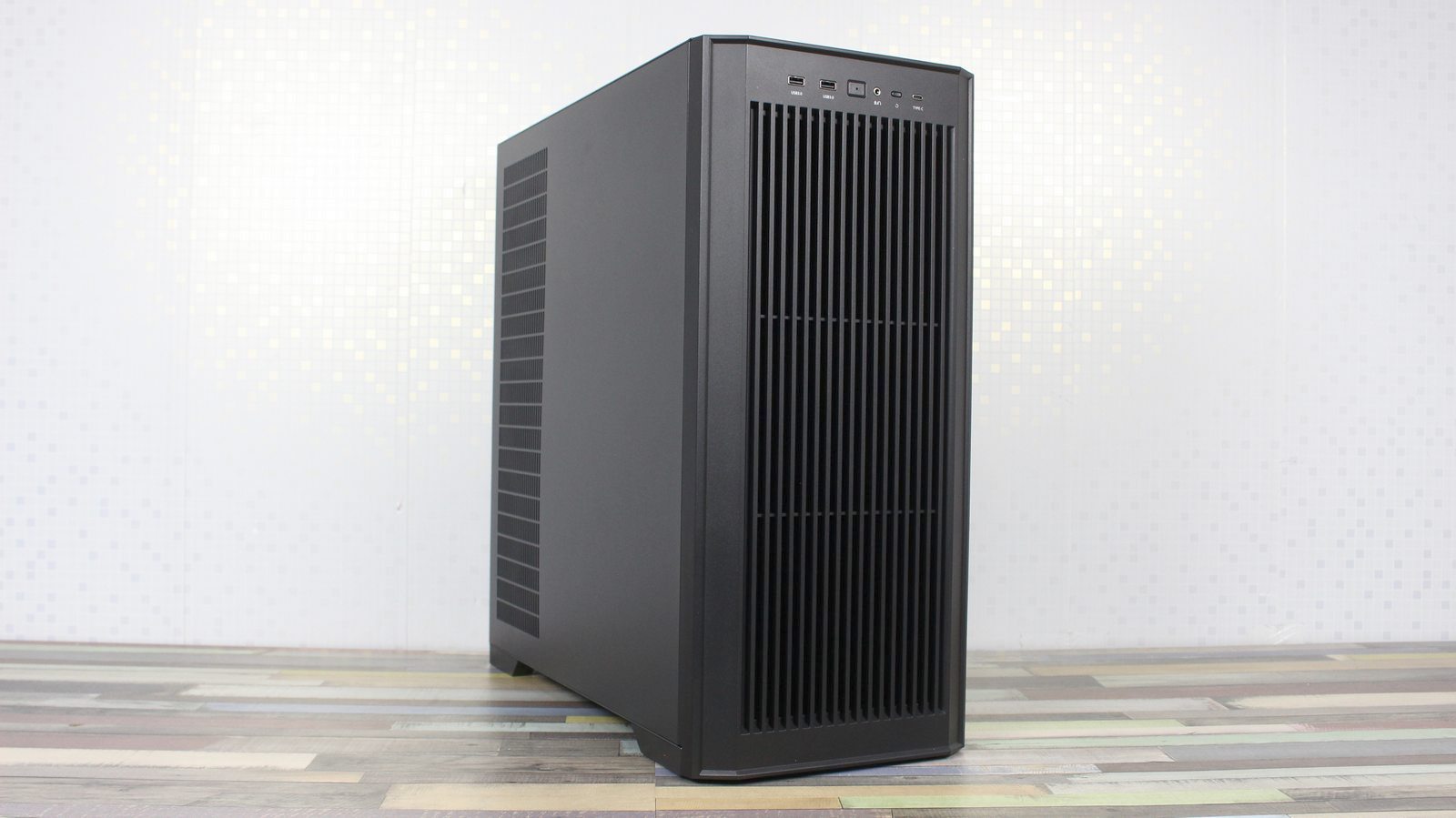
This is exactly what the Vinga Shatter offers. This Full Tower chassis is created according to the best classic canons: steel up to 0.93 mm thick, developed perforation for effective ventilation, and a complete absence of fragile glass and unnecessary decor.
The case easily adapts both as a NAS server and a gaming station with the longest graphics card and top water cooling. There are 10 slots for expansion cards, and massive graphics adapters are reliably supported by an adjustable vertical stand. The manufacturer does not impose bundled fans, allowing you to freely choose the cooling system: from 120/140-mm fans to massive AIO radiators.
The case is currently available for order from the official distributor of Vinga — Brain company.
But is this case worth attention? We will find out in the review, but first, let's get acquainted with its detailed specifications.
Specification
|
Model |
Vinga Shatter |
|
Supported motherboard form factors |
ATX / microATX / Mini-ITX |
|
Color |
Black |
|
External bays |
None |
|
Internal bays |
6 x 3.5″ / 3 x 2.5″ |
|
Expansion card slots |
10 |
|
Maximum graphics card length (own measurements), mm |
340 (430, without drive cage opposite) |
|
Maximum CPU cooler height (own measurements), mm |
185 (187) |
|
Maximum PSU length (own measurements), mm |
175 (200 mm and more) |
|
Connectors |
2 x USB 3.2 Gen1 1 x USB 3.2 Gen2 Type-C 1 x combined audio jack LED control button |
|
Pre-installed fans |
None |
|
Power supply |
None |
|
Fan installation capability |
|
|
On the front panel |
3 x 120-mm / 3 x 140-mm / 2 x 160-mm |
|
On the top panel |
3 x 120-mm / 3 x 140-mm |
|
On the rear panel |
1 x 120-mm / 1 x 140-mm |
|
On the bottom panel |
2-3 x 120-mm / 2 x 140-mm |
|
AIO installation capability |
|
|
On the front panel |
120 / 140 / 240 / 280 / 360 -mm |
|
On the top panel |
120 / 140 / 240 / 280 / 360 -mm |
|
On the rear panel |
120-mm / 140-mm |
|
Materials |
|
|
Front panel / Rear wall |
Steel 0.93 mm thick |
|
Top removable panel / Bottom |
Steel 0.77 mm thick |
|
Chassis / Motherboard tray |
Steel 0.93 mm thick |
|
Sides |
Steel 0.77 mm thick |
|
Case dimensions, mm |
545 x 526 x 245 |
|
Weight (own measurements), kg |
9.2 (9.295) |
|
Warranty, years |
1 |
Packaging and delivery set
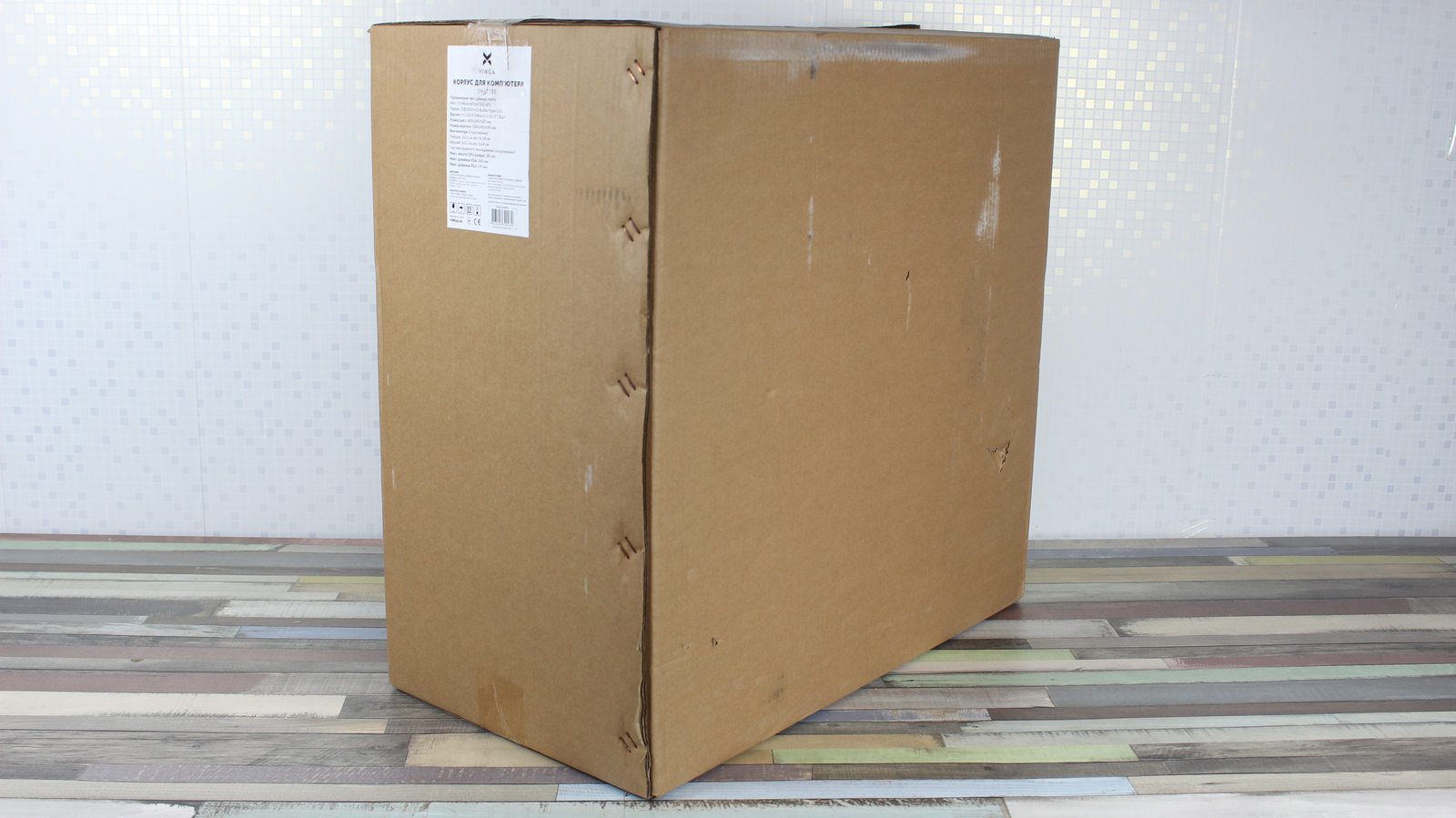
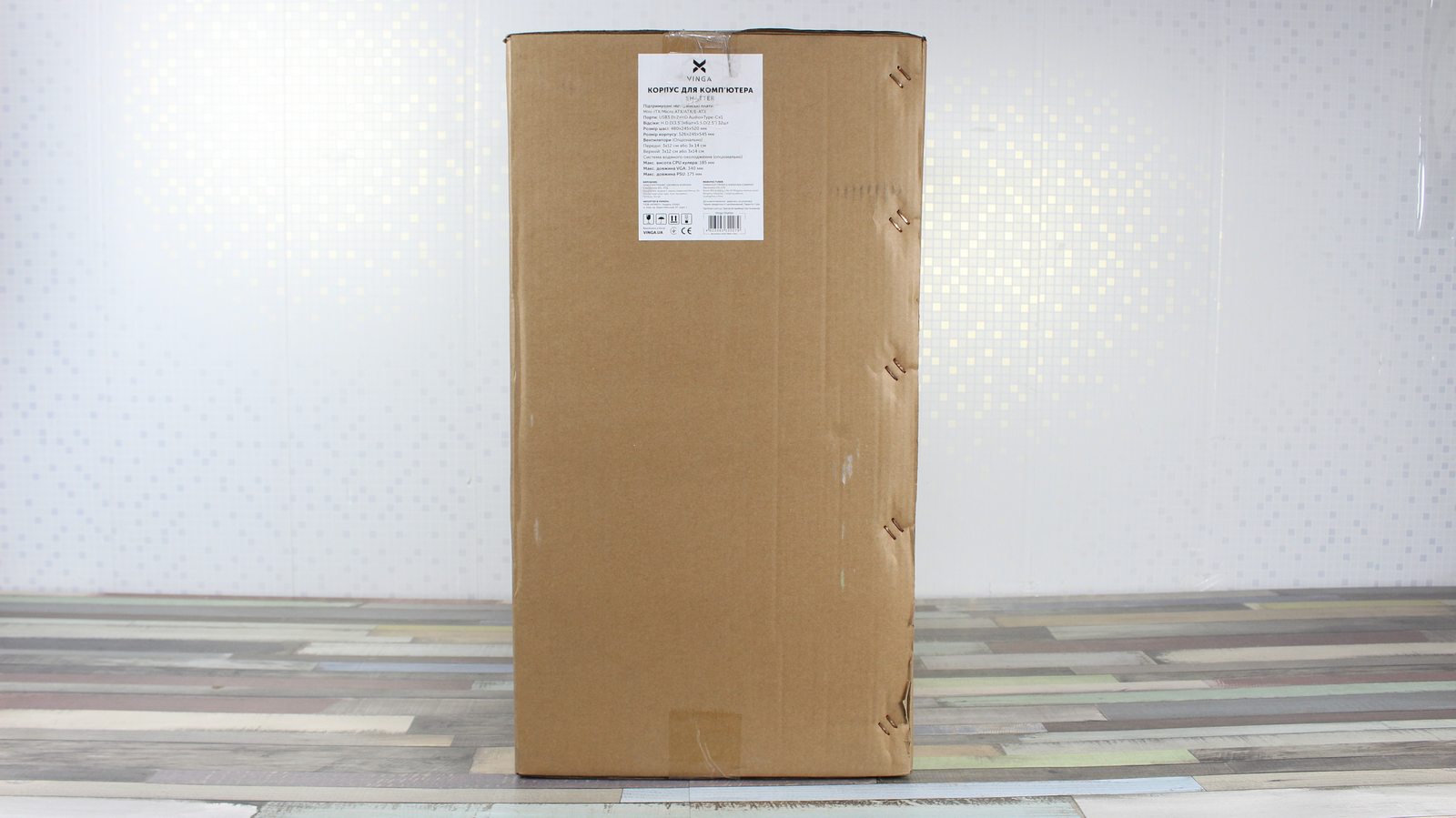
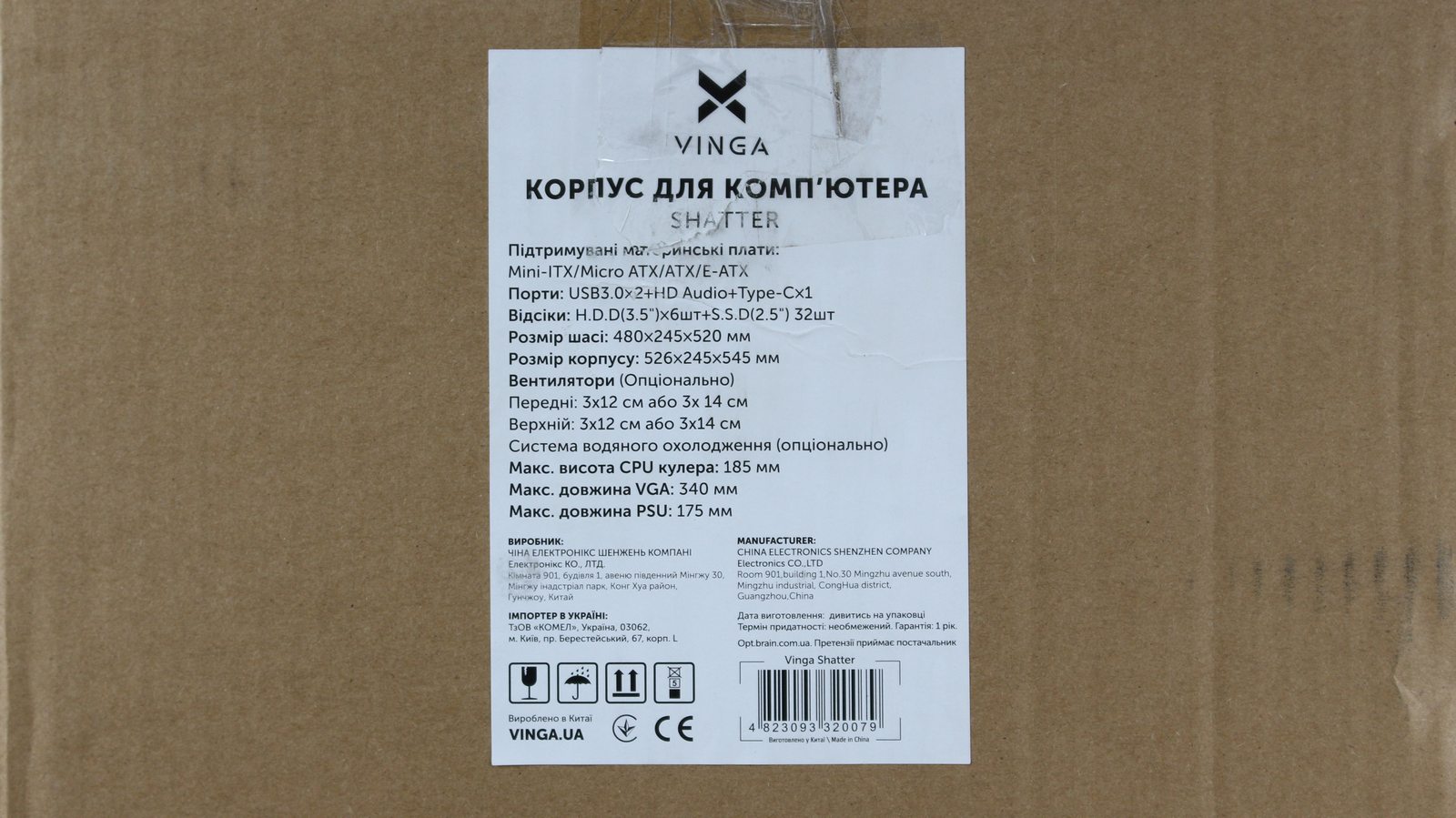
Vinga Shatter does not try to impress with its appearance even before opening the box. The packaging is as simple as possible: plain cardboard and a minimalist sticker with specifications — no colorful printing. The protection is standard but reliable: foam inserts and film hold the structure well. However, we have a serious remark: the absence of handles on the box for such a "heavyweight" is a real discomfort during transportation.
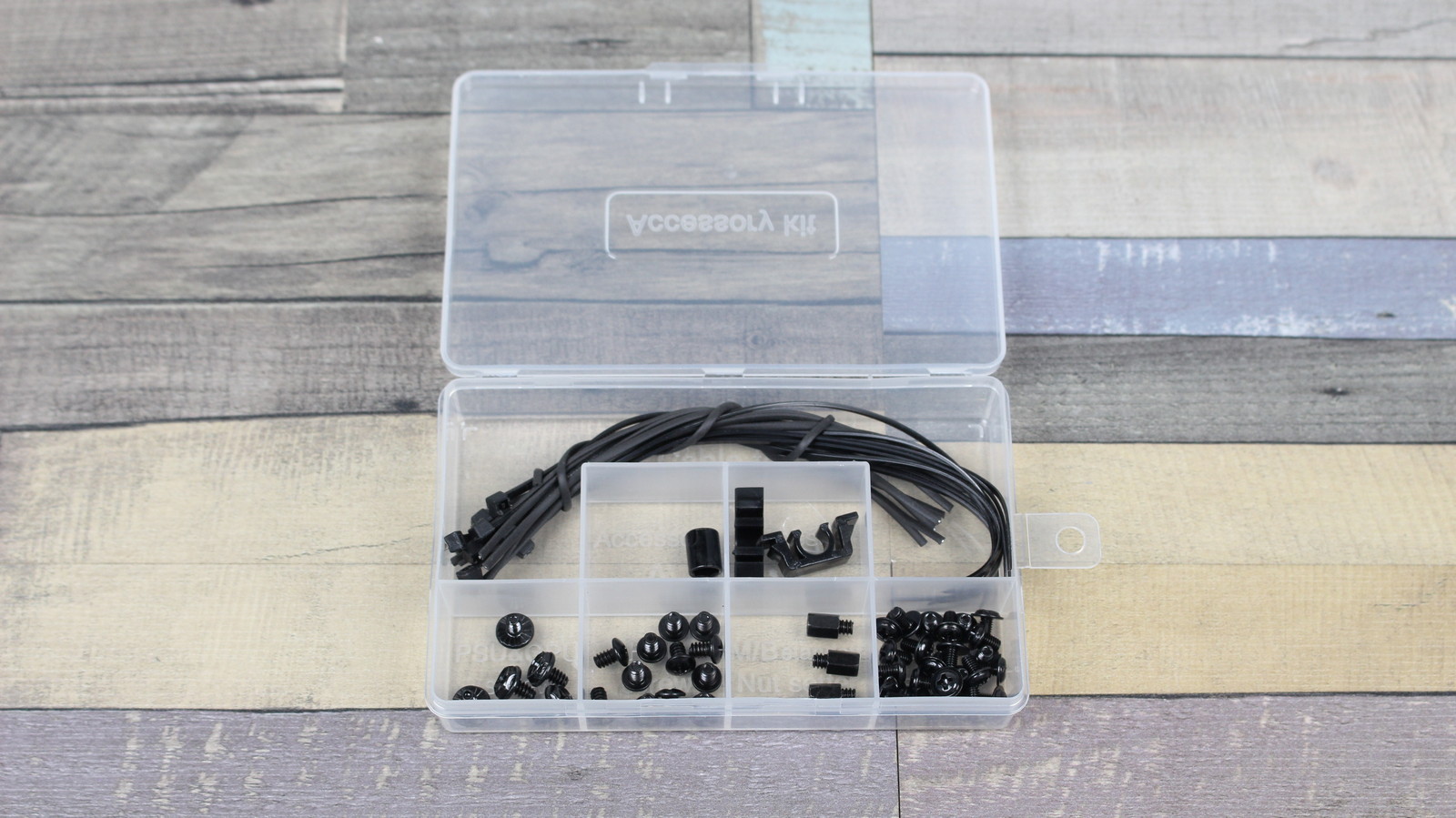
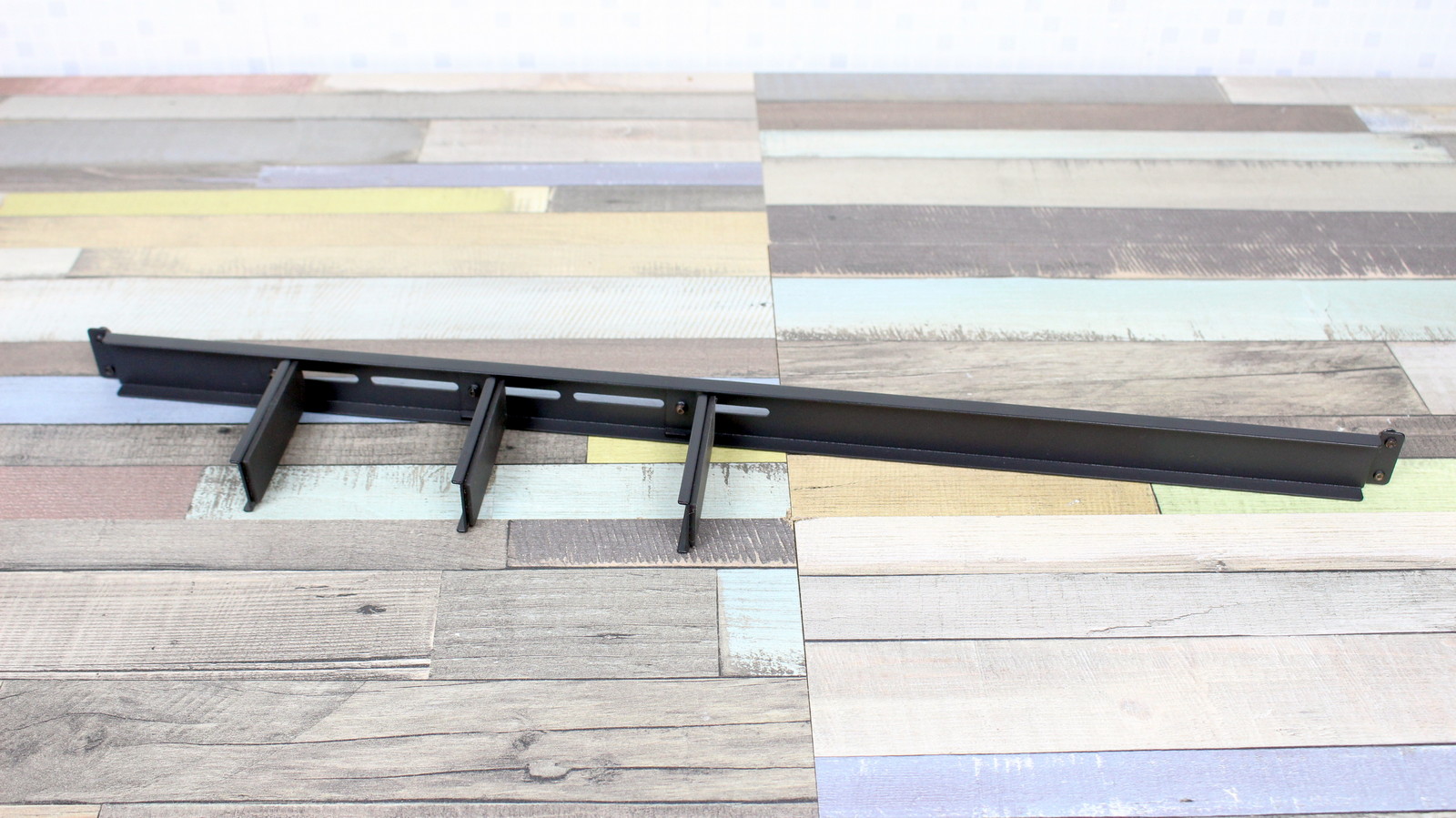
The set matches the packaging — ascetic. There is no paper manual, and all screws and ties are neatly arranged in a convenient plastic box. All other elements, such as the graphics card stand and drive cages, are already integrated into the case. This is true pragmatism: you pay only for quality metal and thoughtful design, without overpaying for marketing bonuses.
Appearance
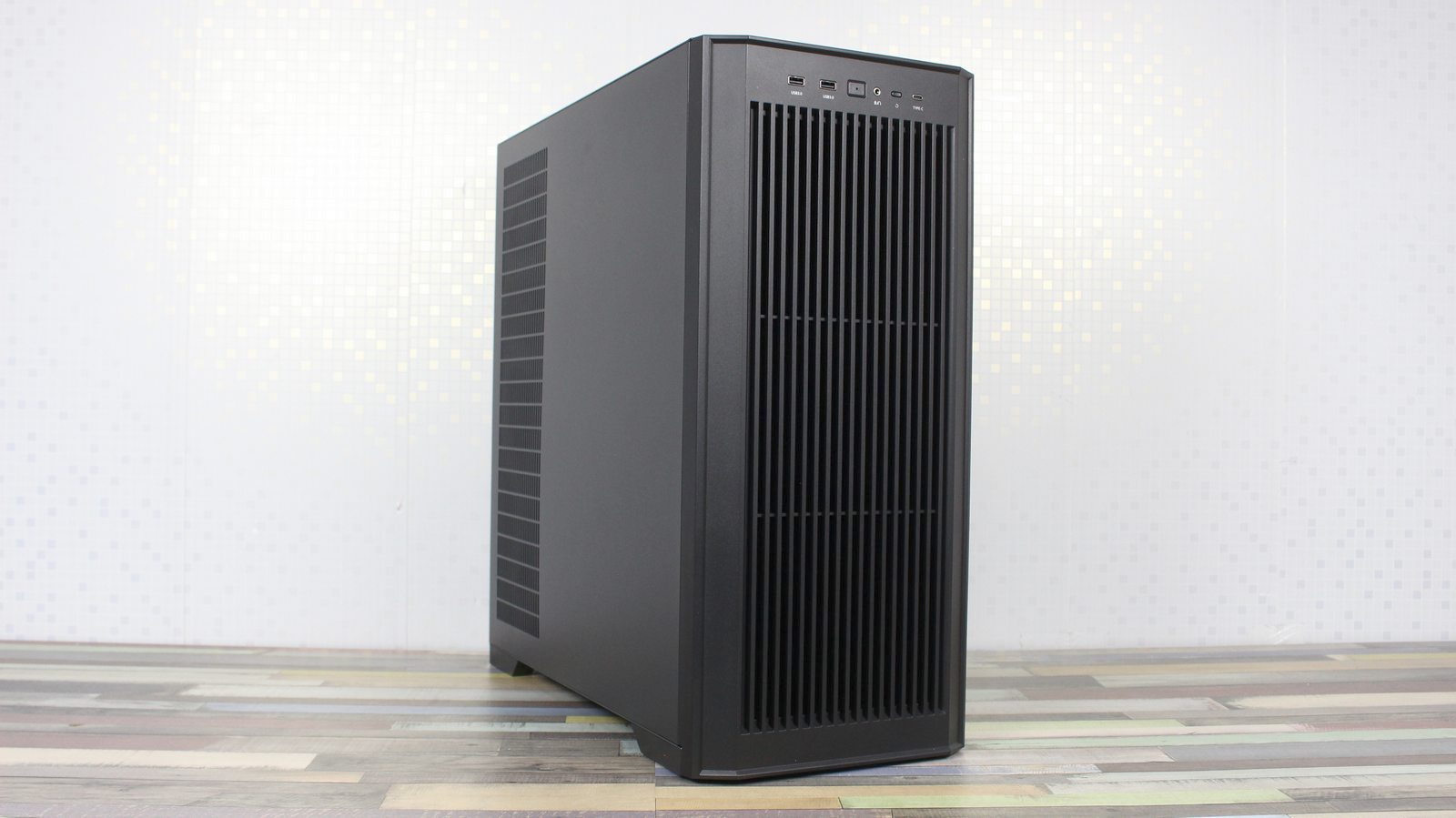
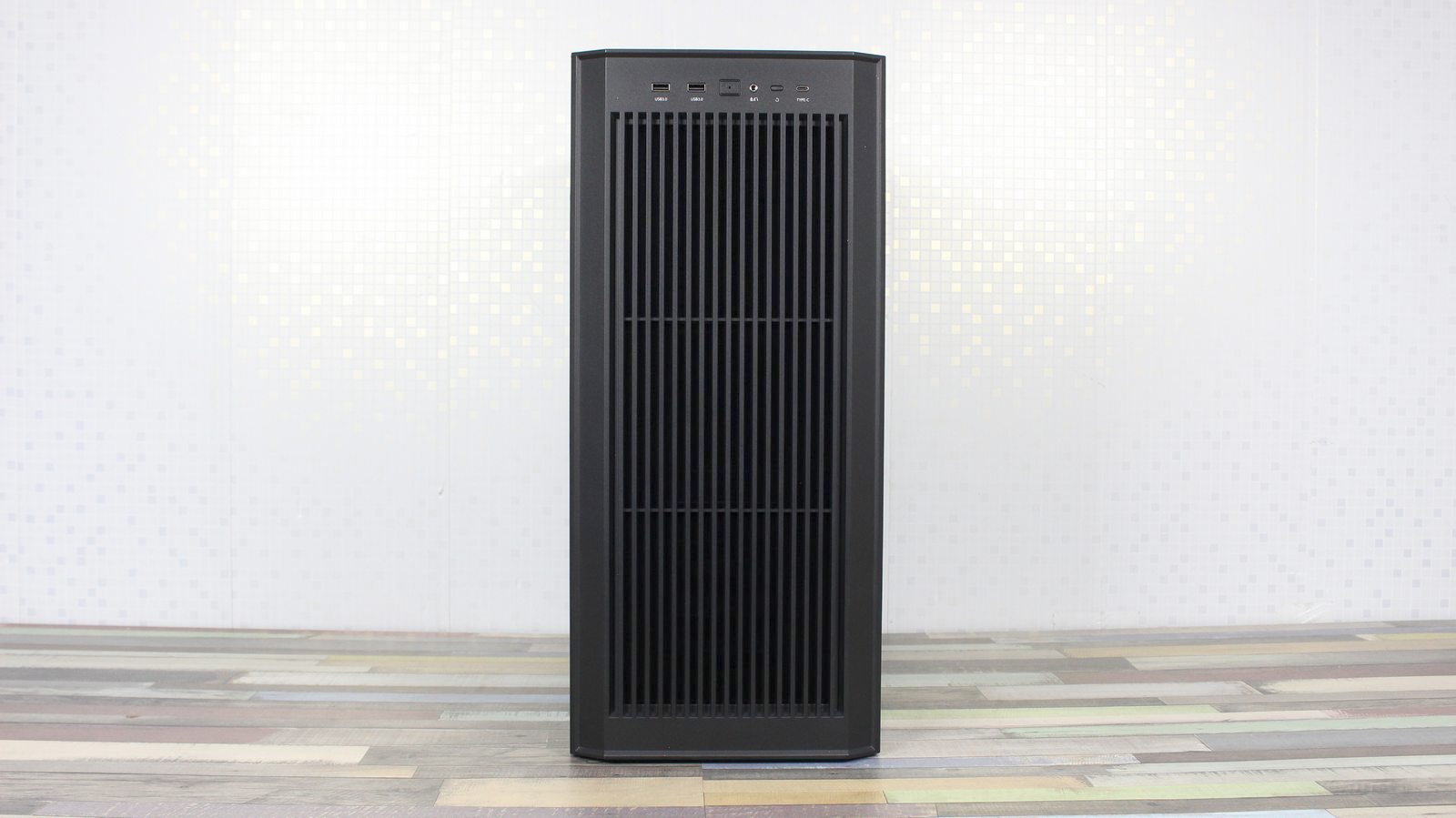
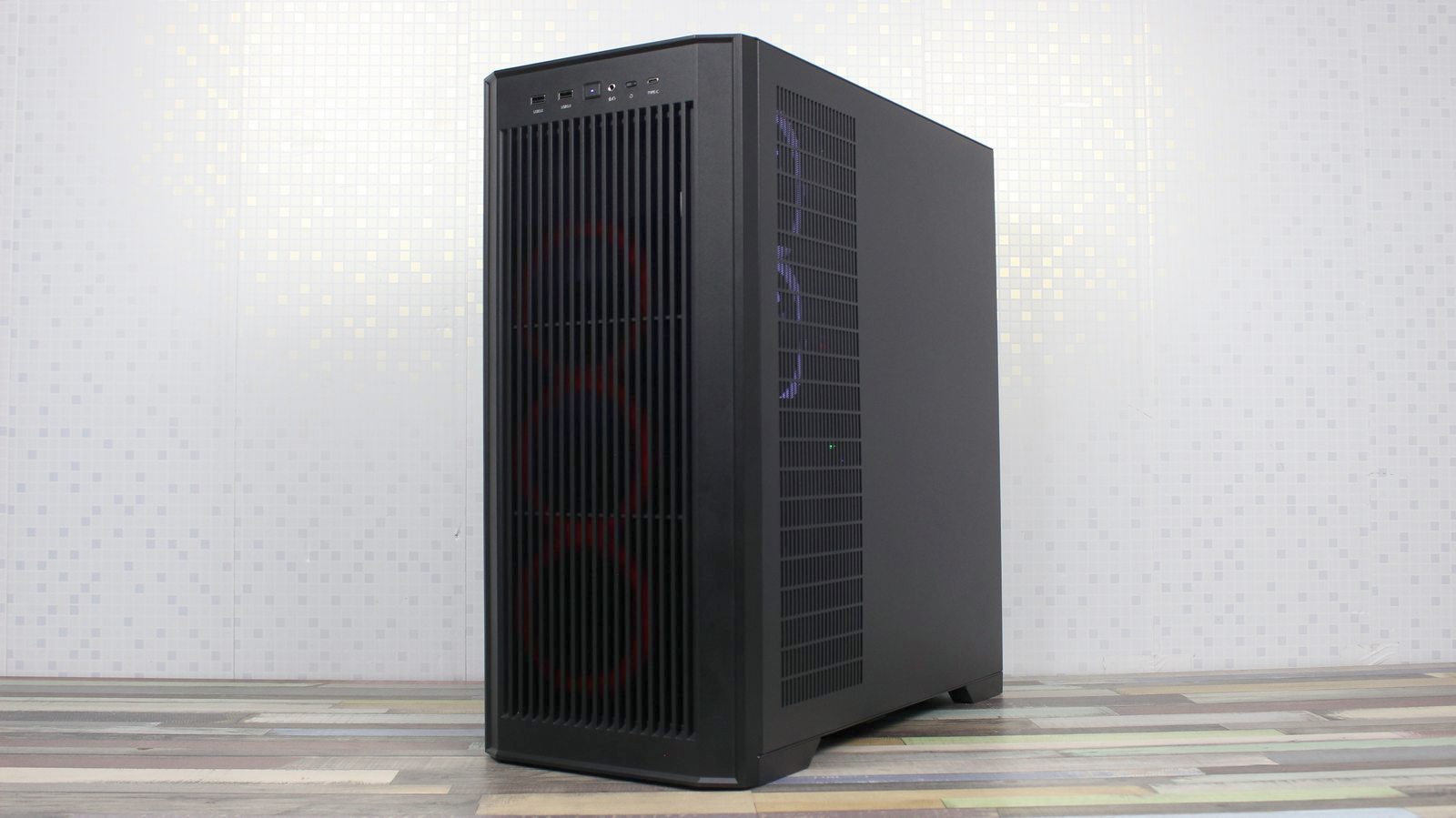
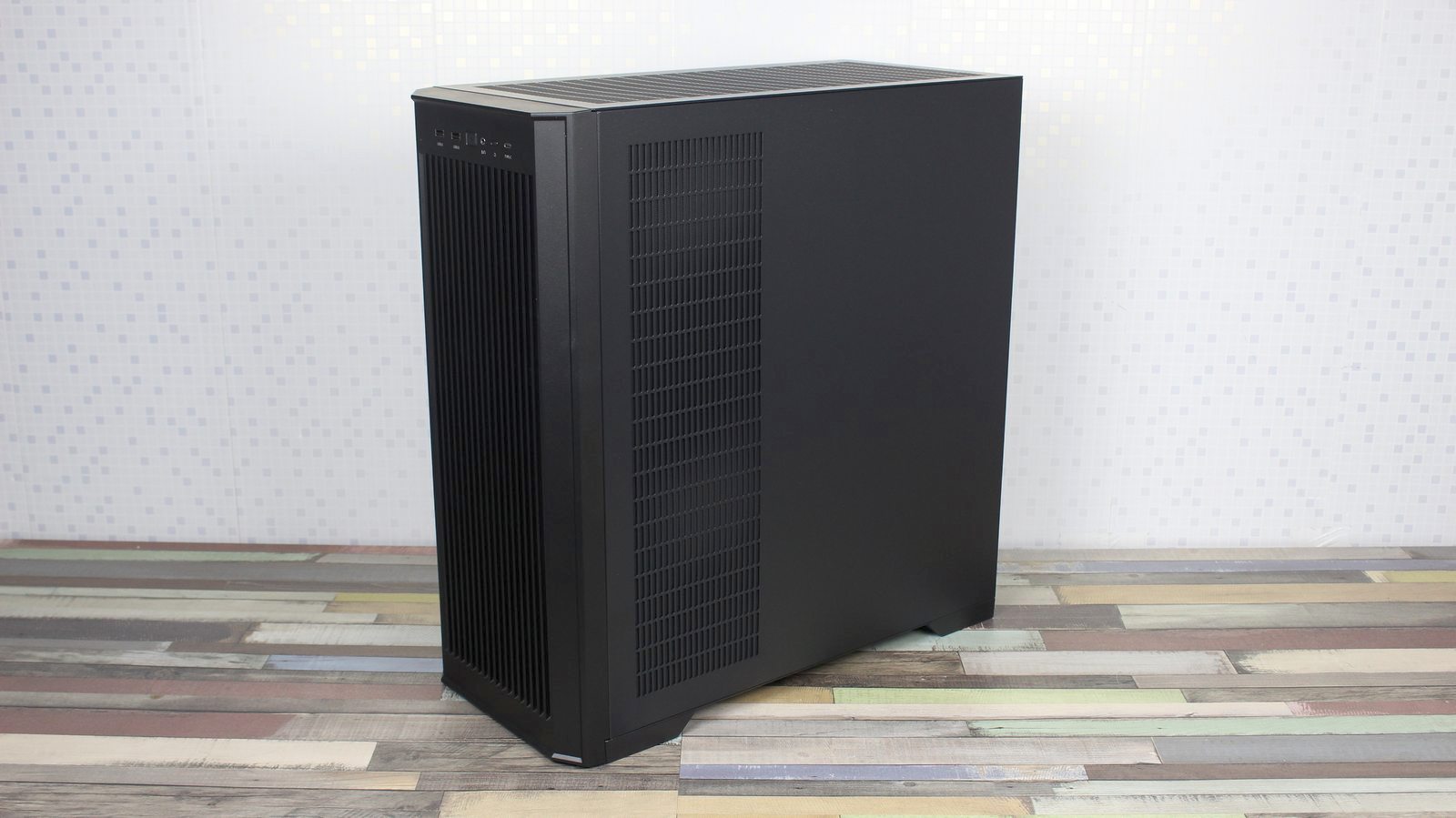
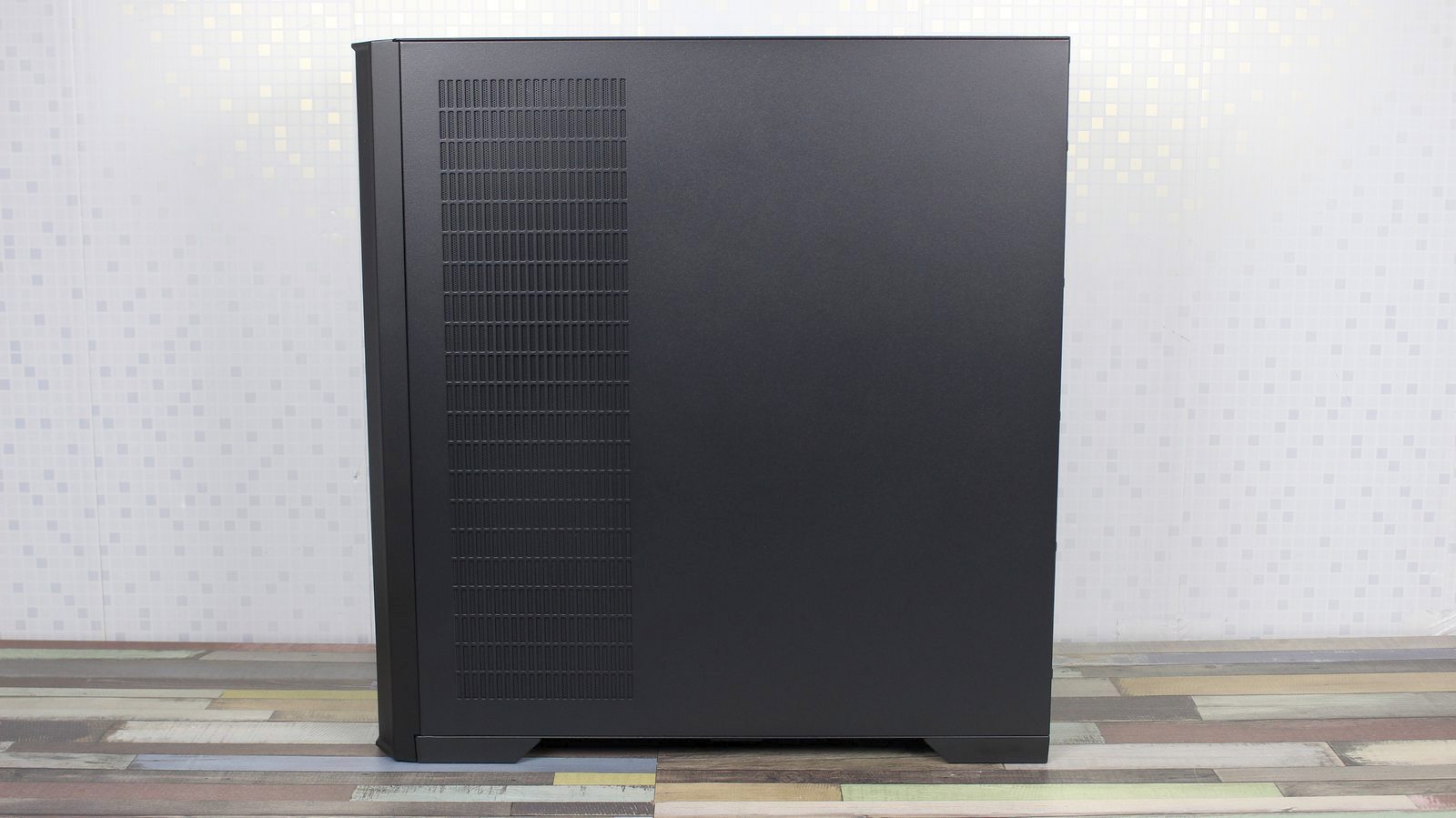
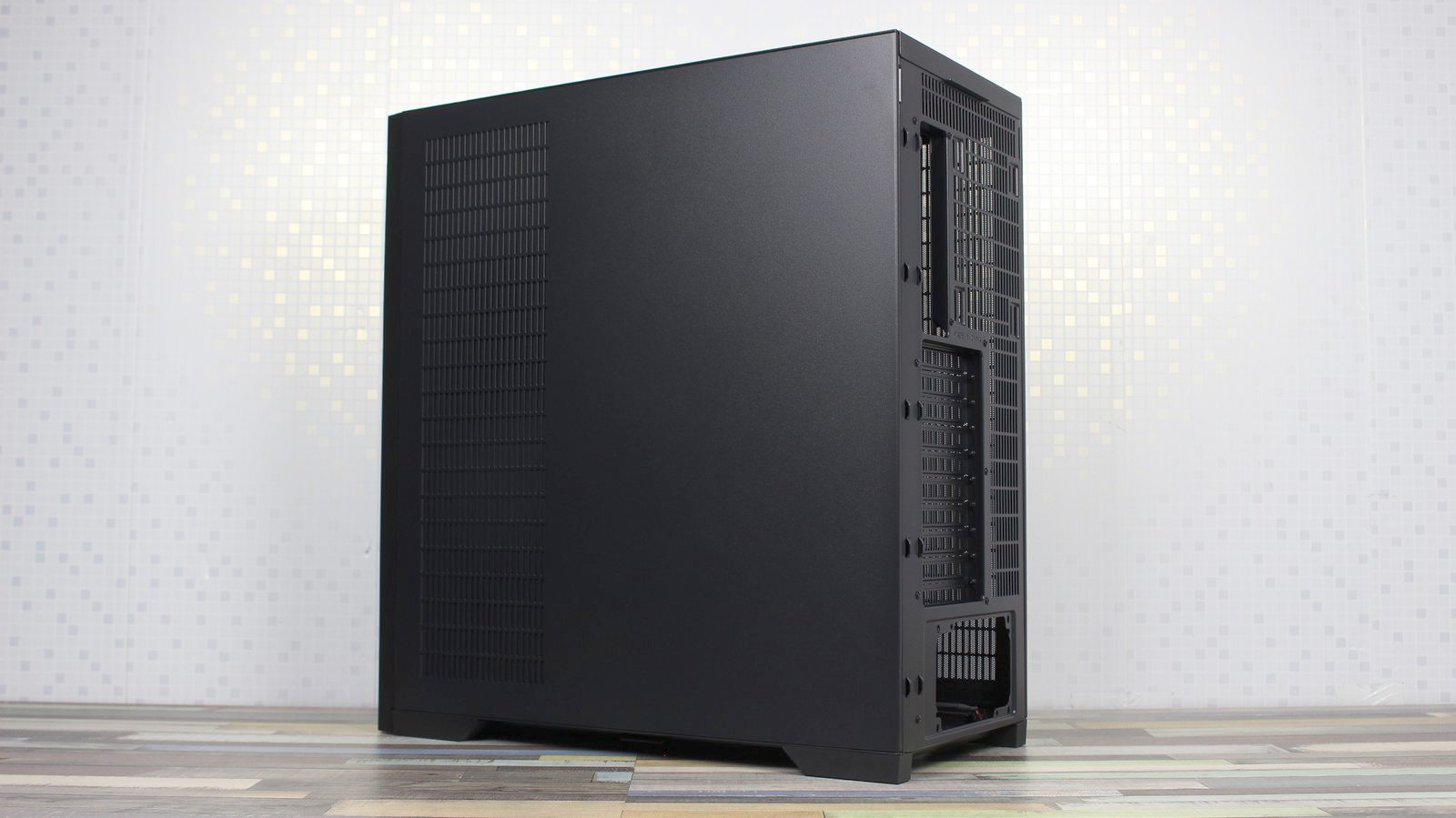
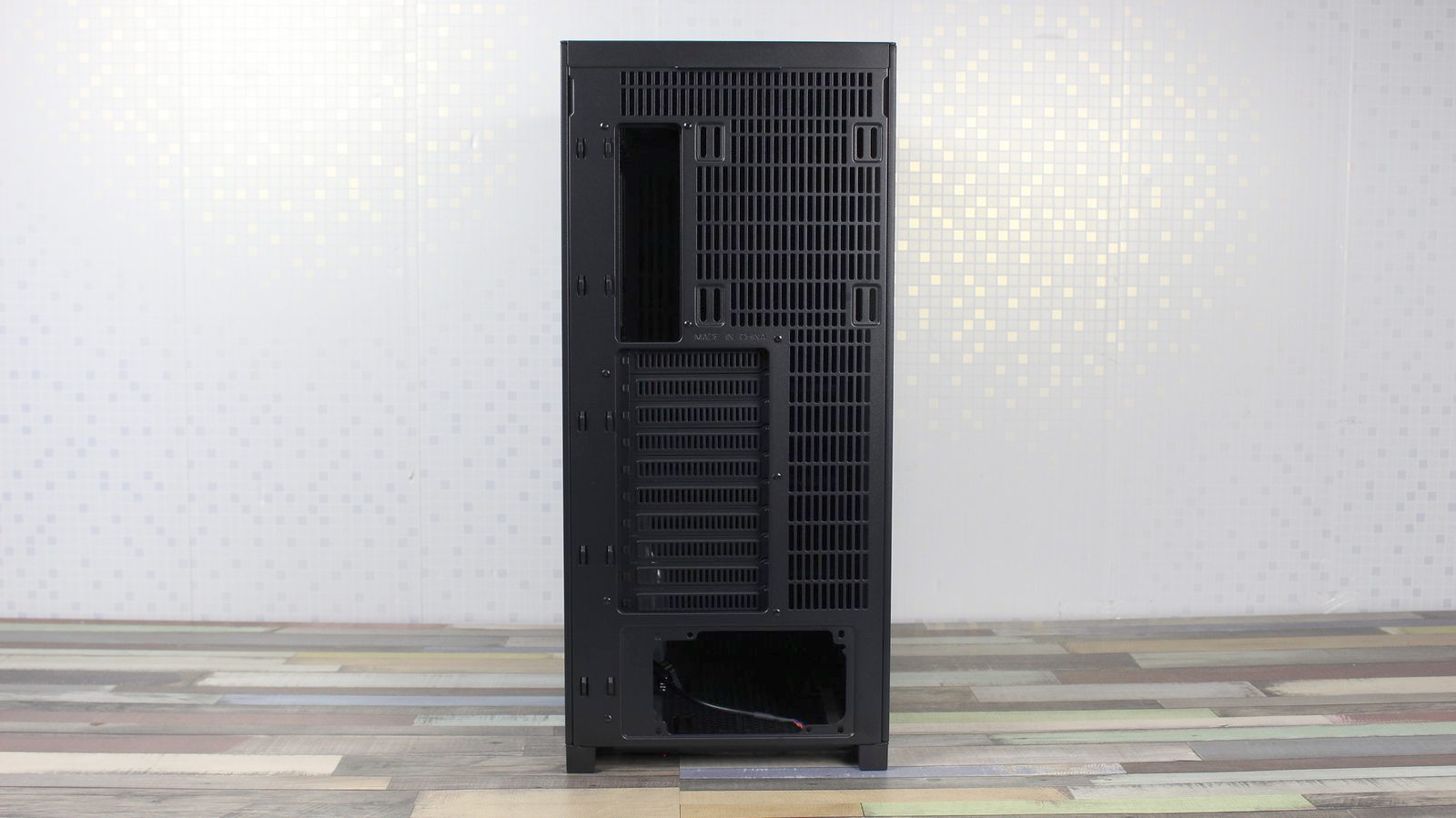
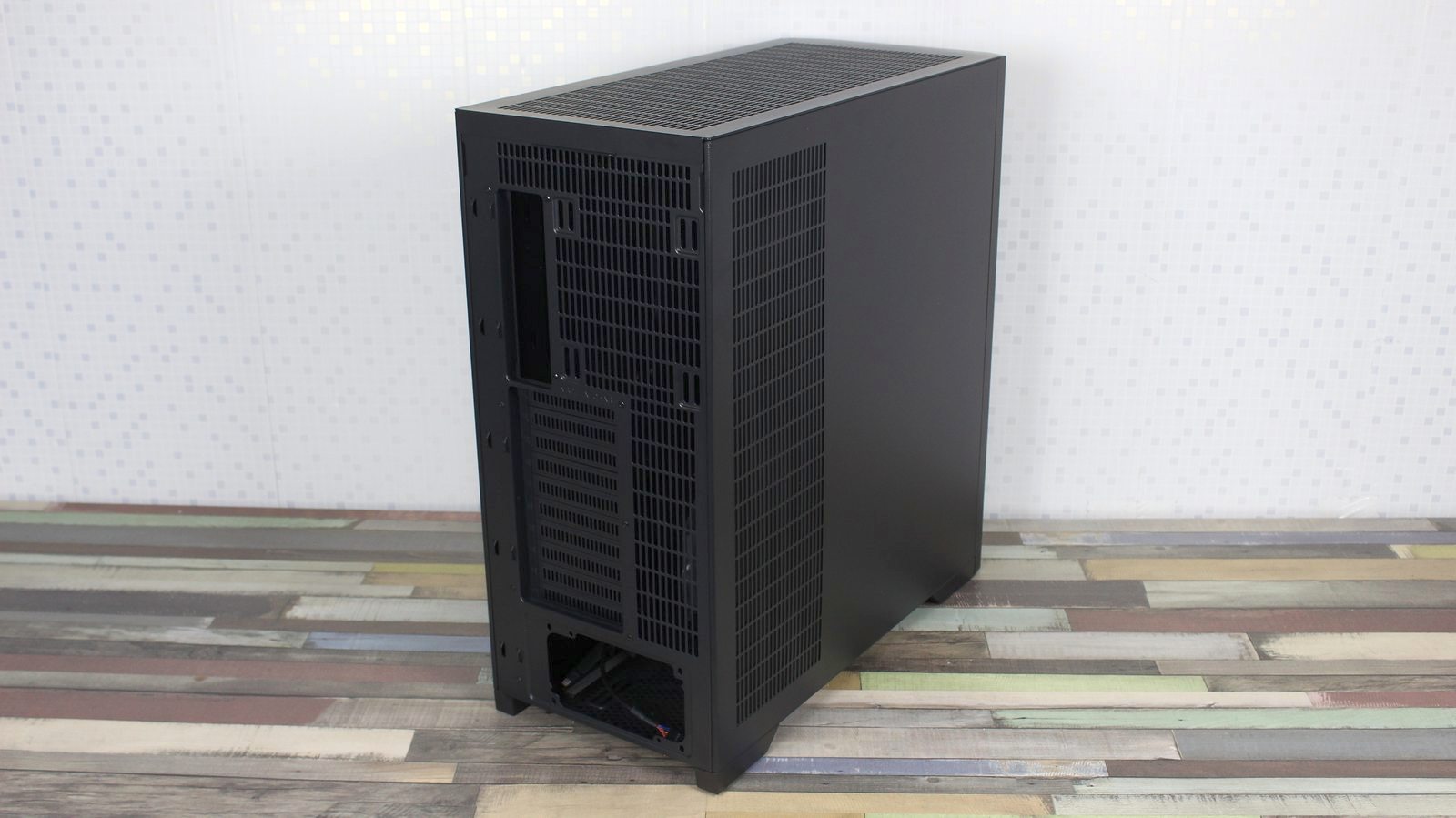
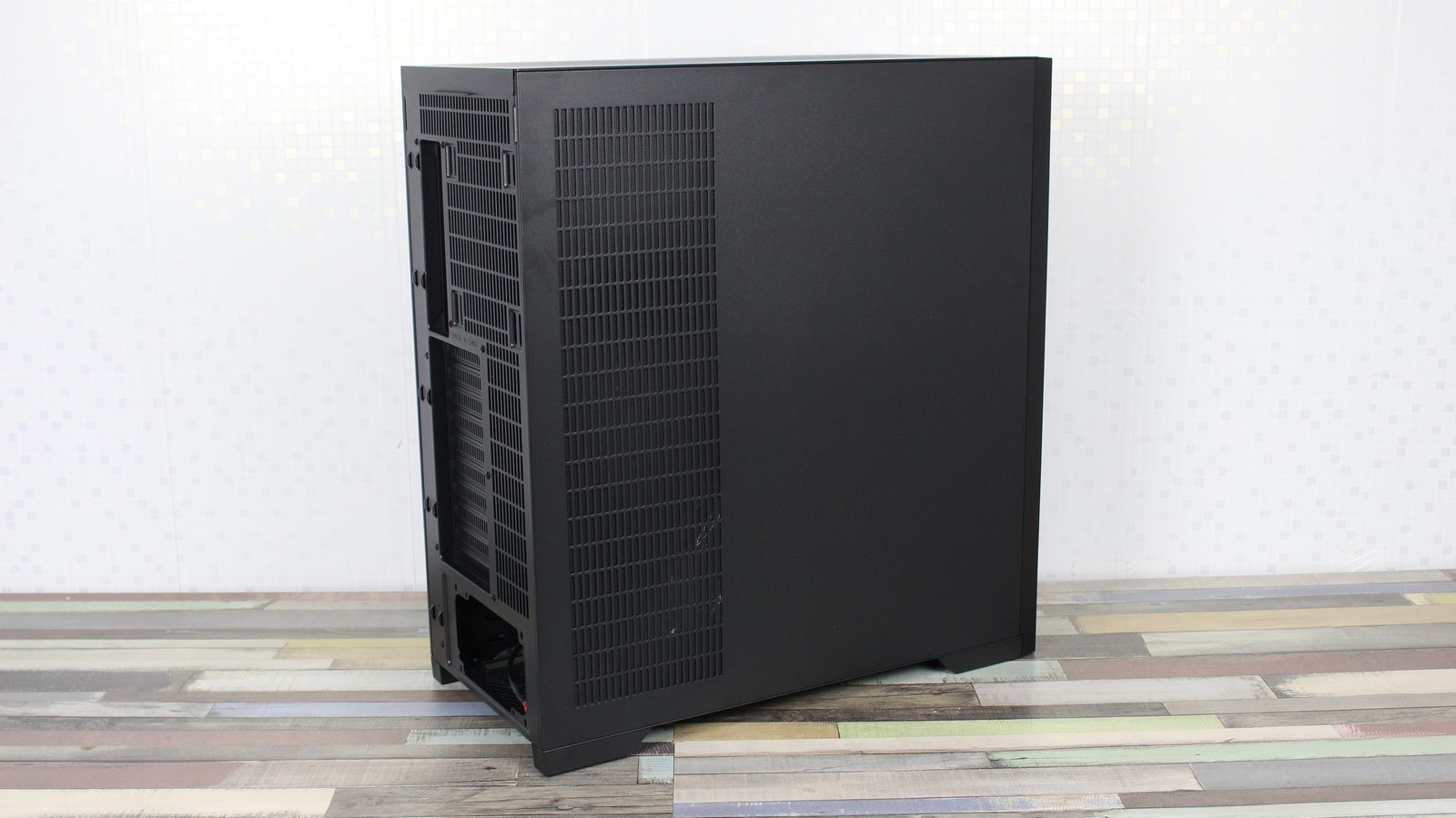
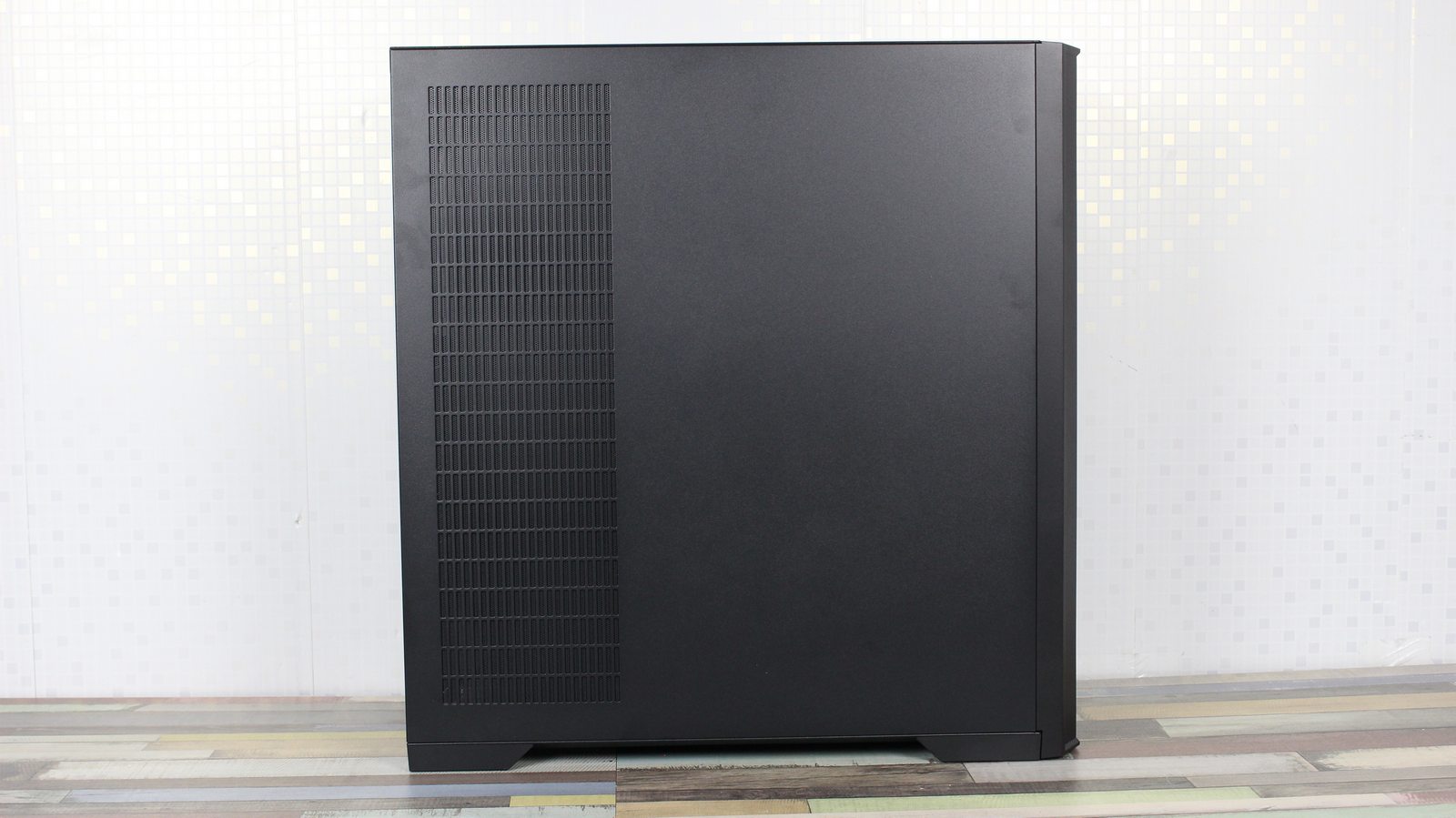
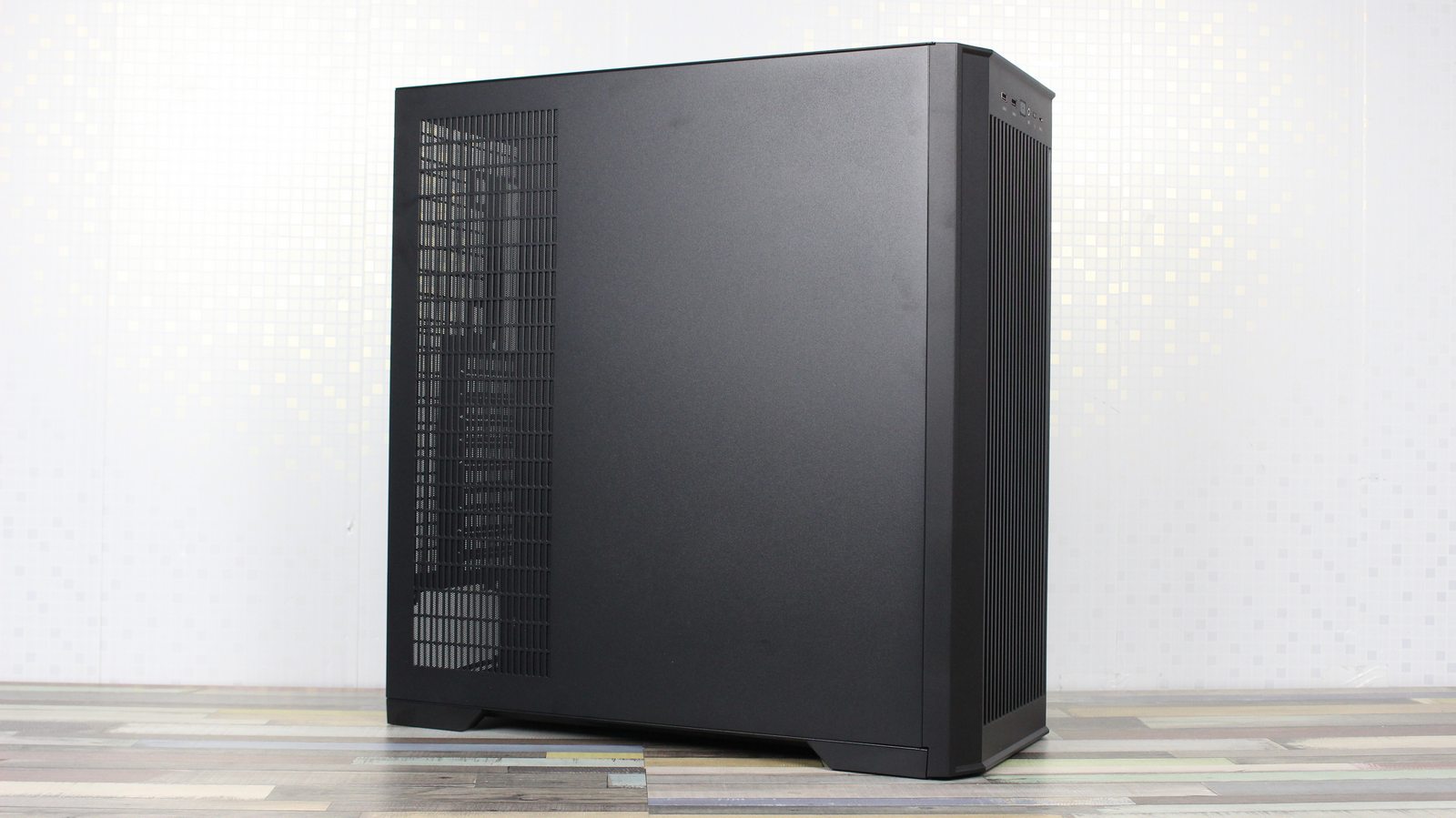
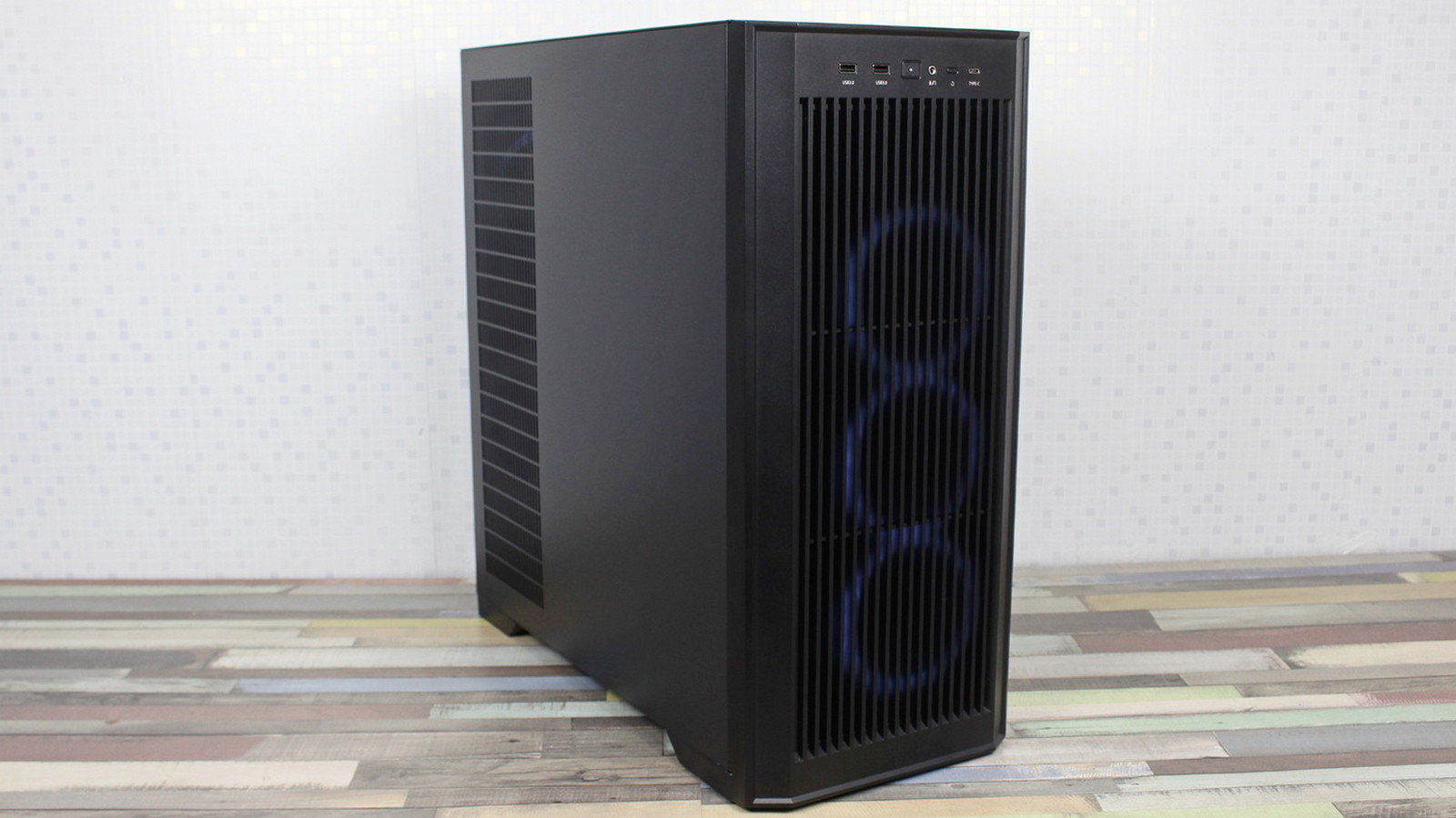
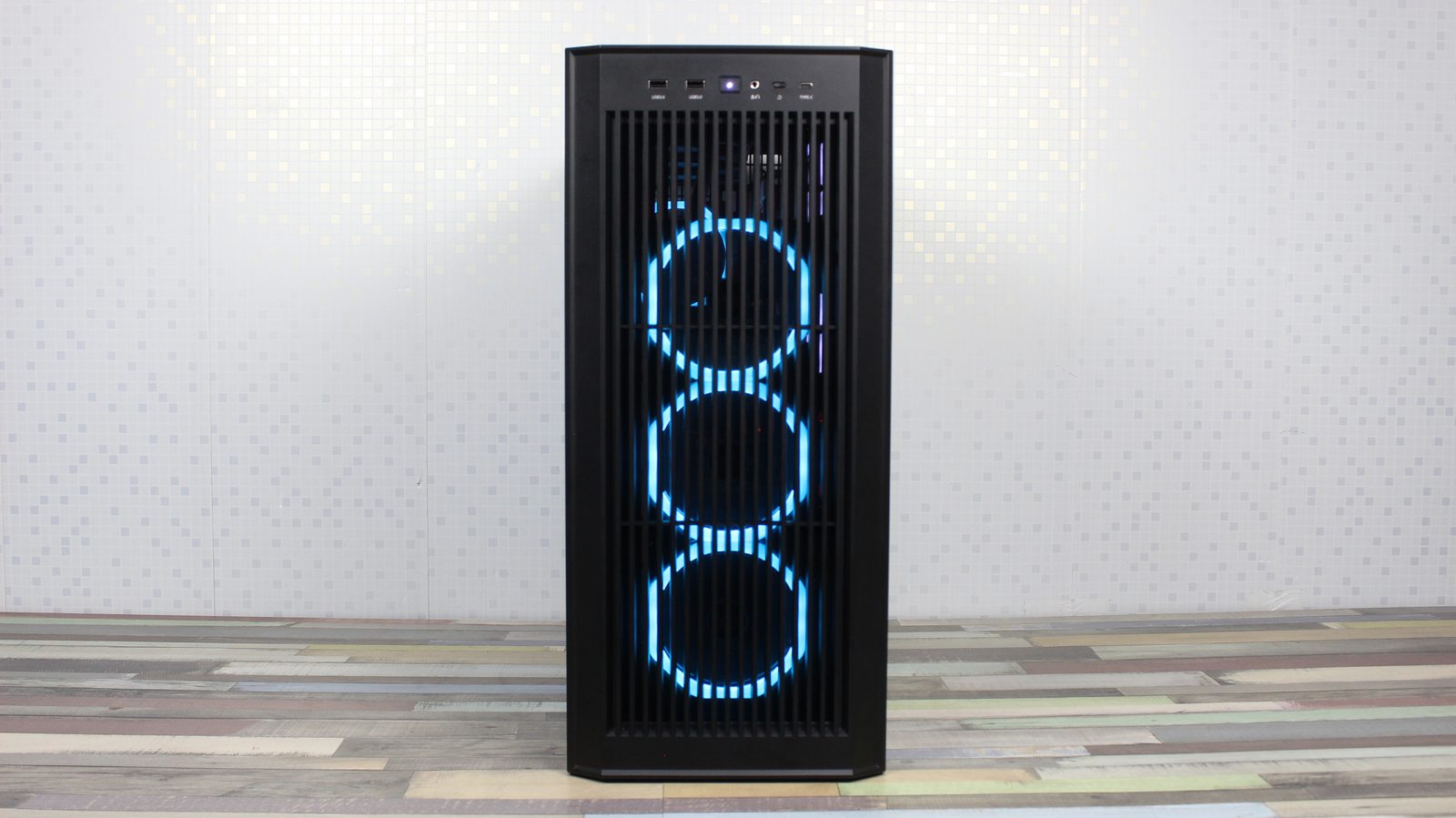
At first glance, the case captivates with its simplicity. The absence of unnecessary details makes it look like professional equipment, where form is completely subordinated to functionality.
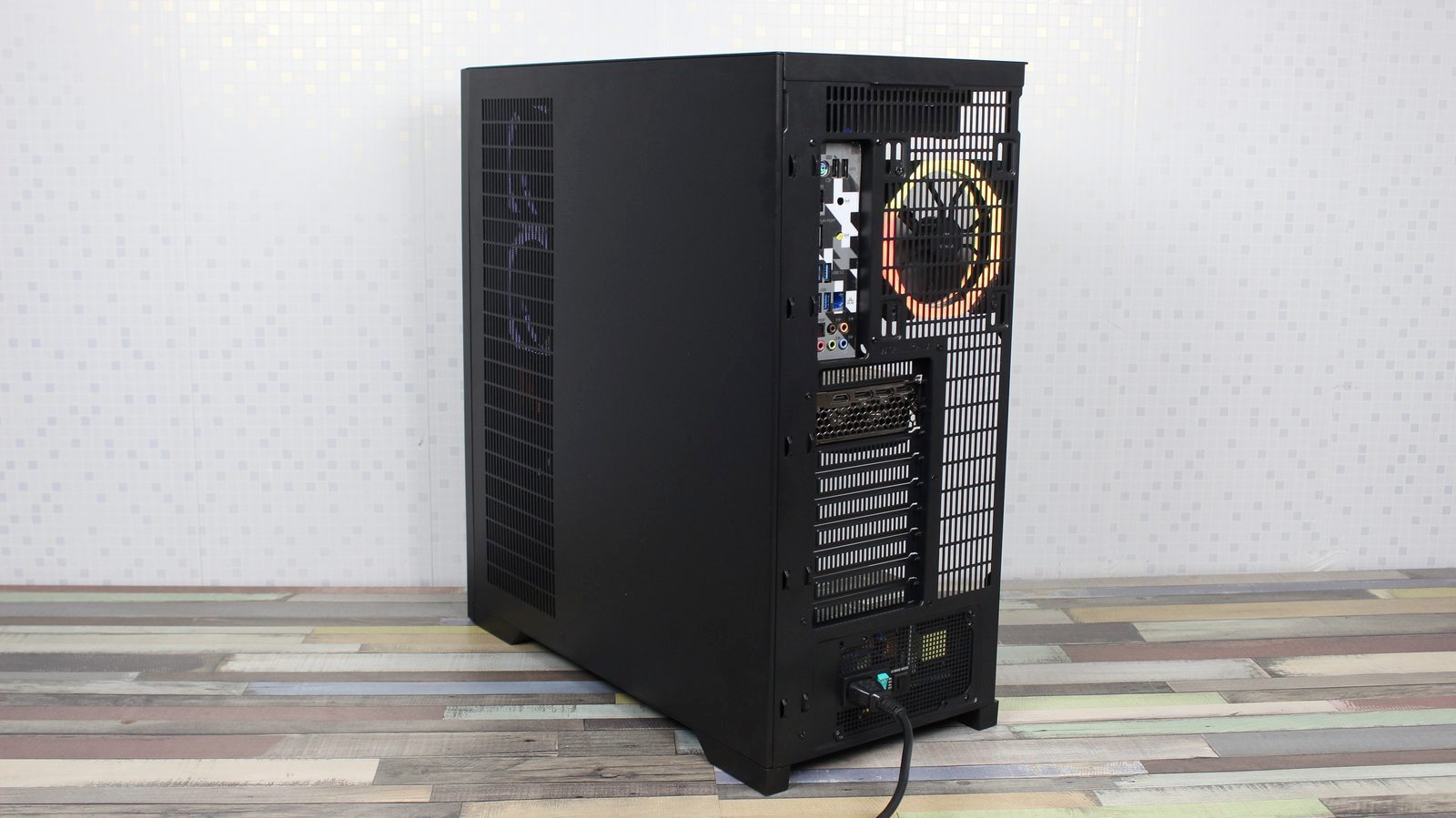
Vinga Shatter is made of durable steel: the sides, front, and rear of the chassis, along with the motherboard tray, have a thickness of 0.91 to 0.93 mm, while the top removable cover and bottom are 0.77 mm thick. The total weight of the structure is 9.2 kg, indicating high rigidity and reliability.
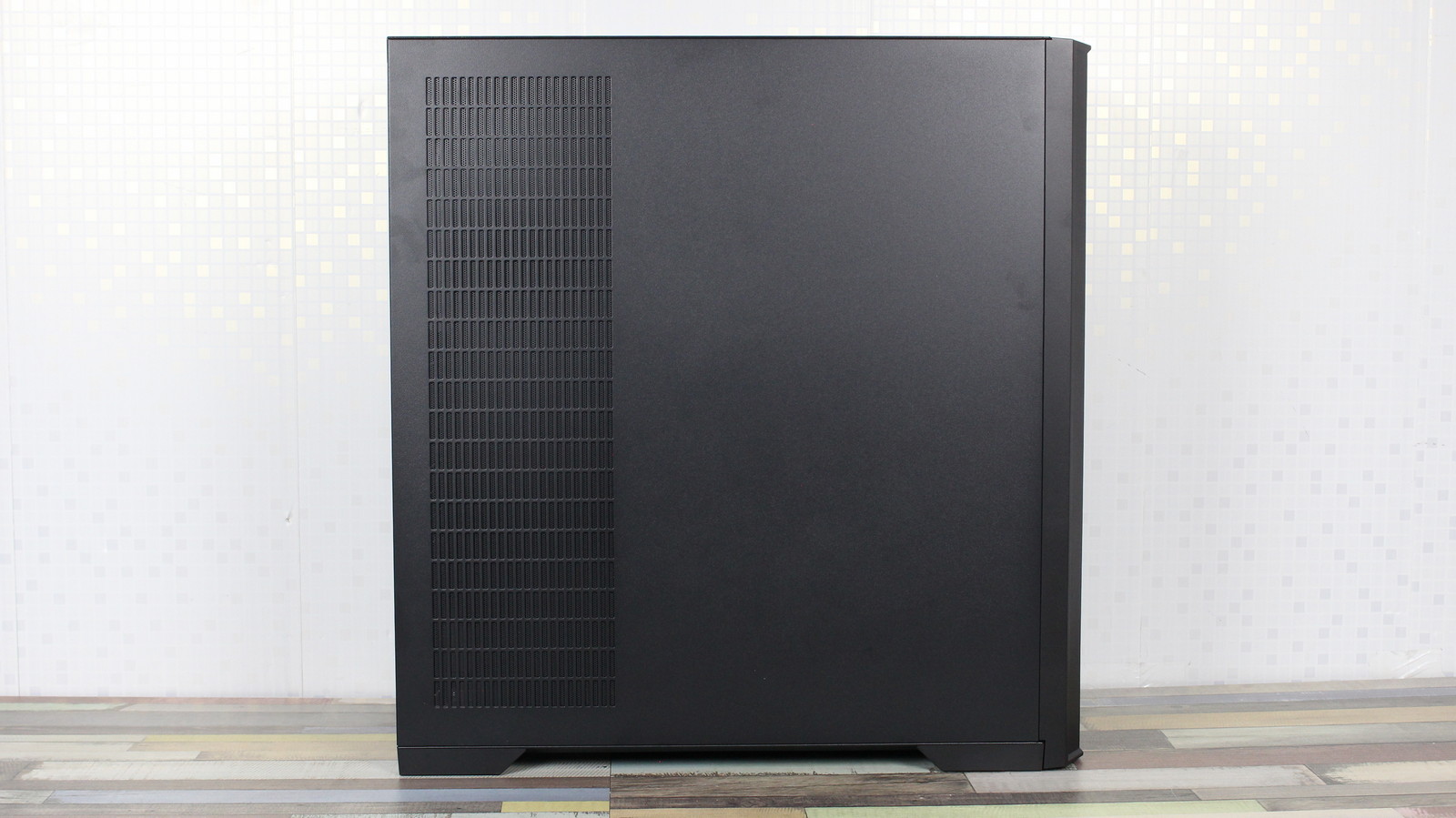
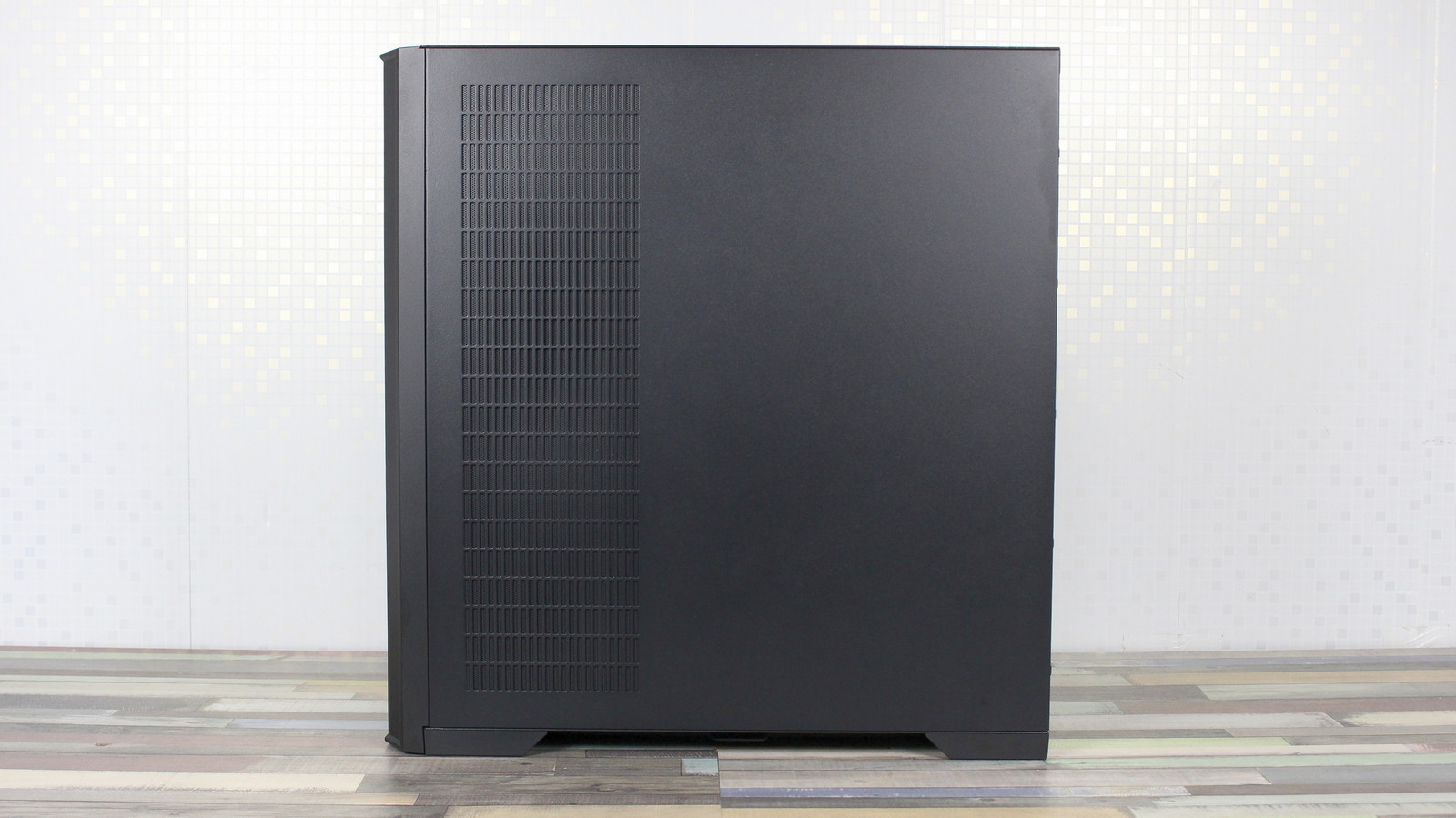
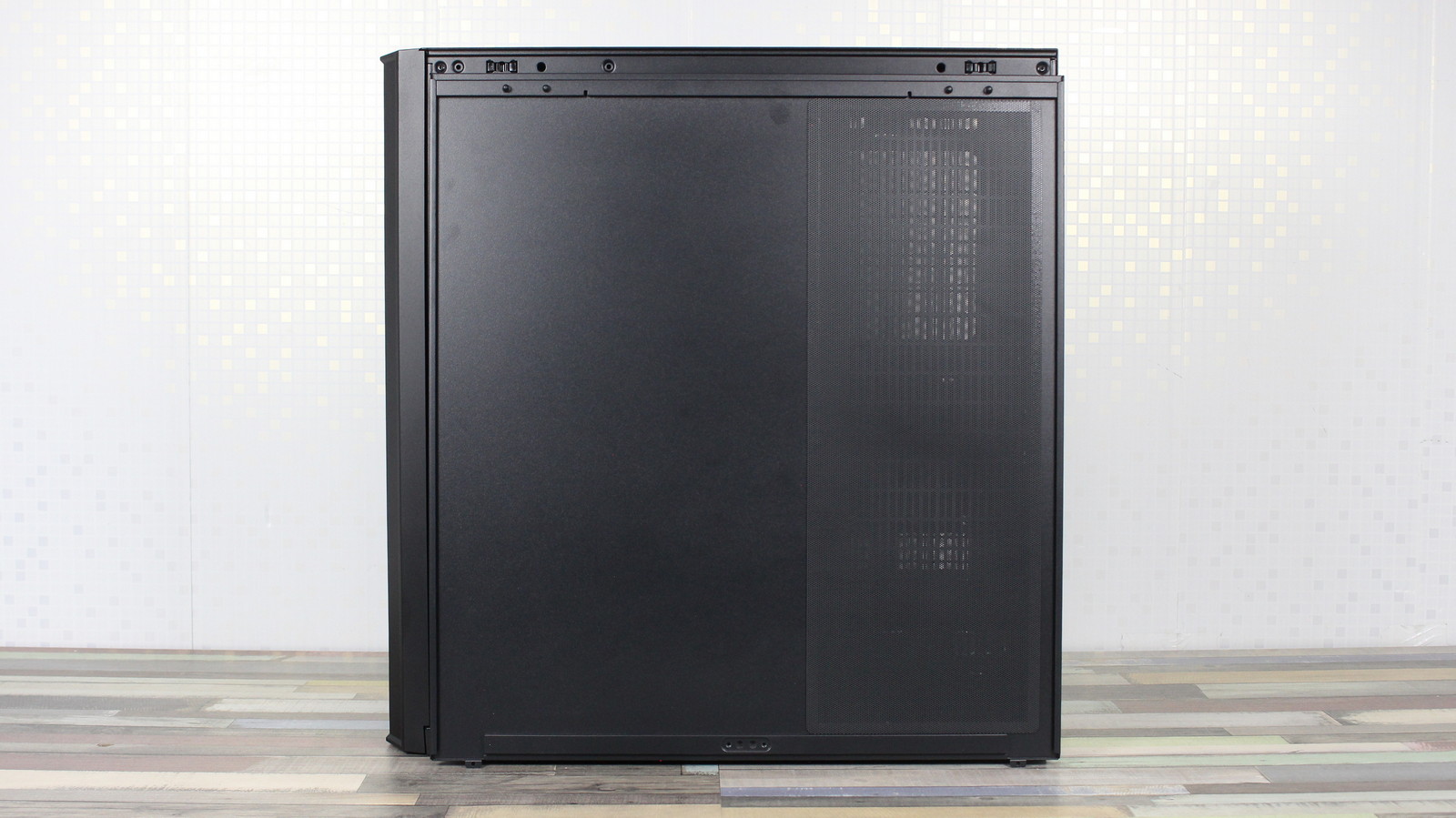
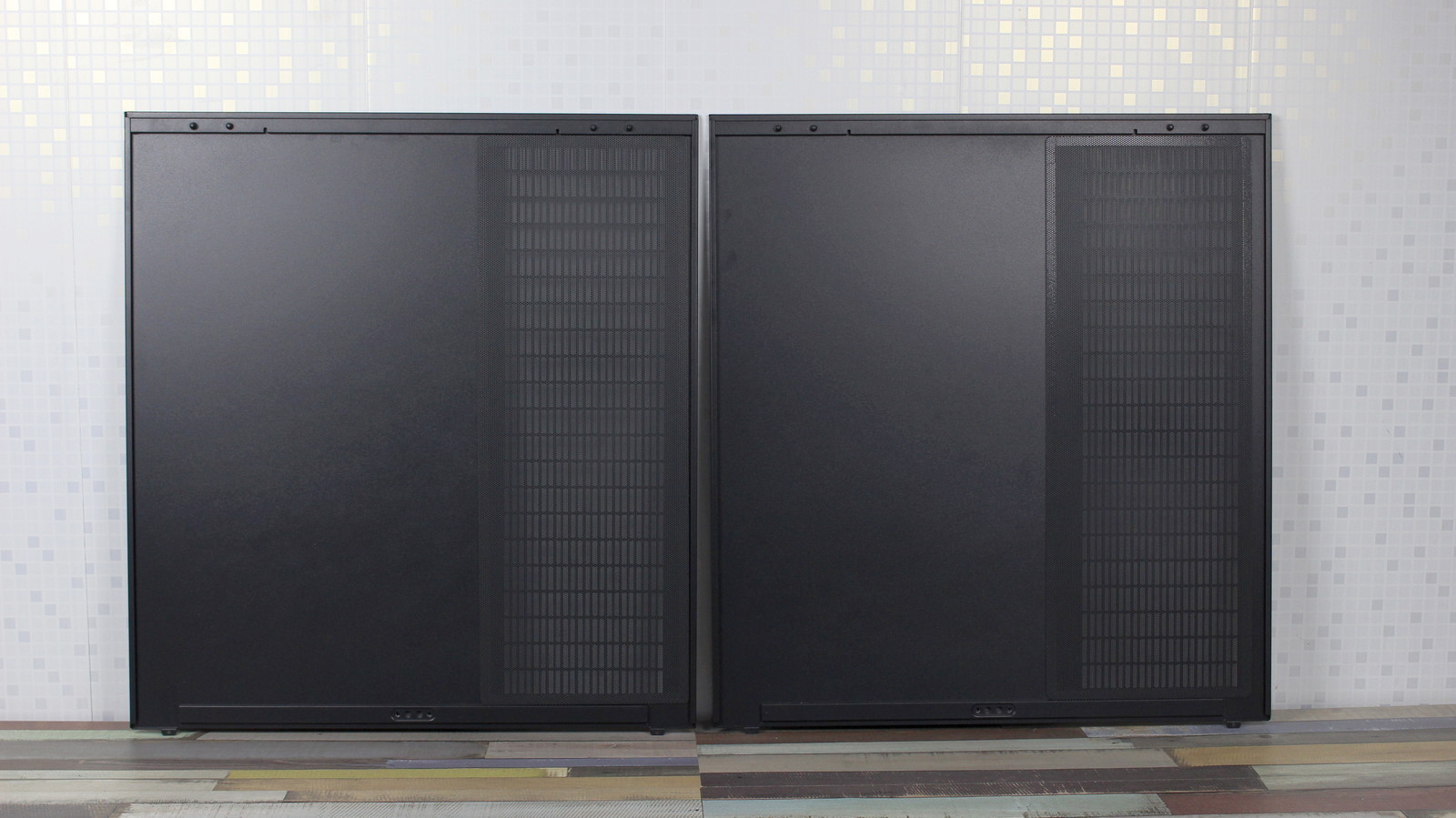
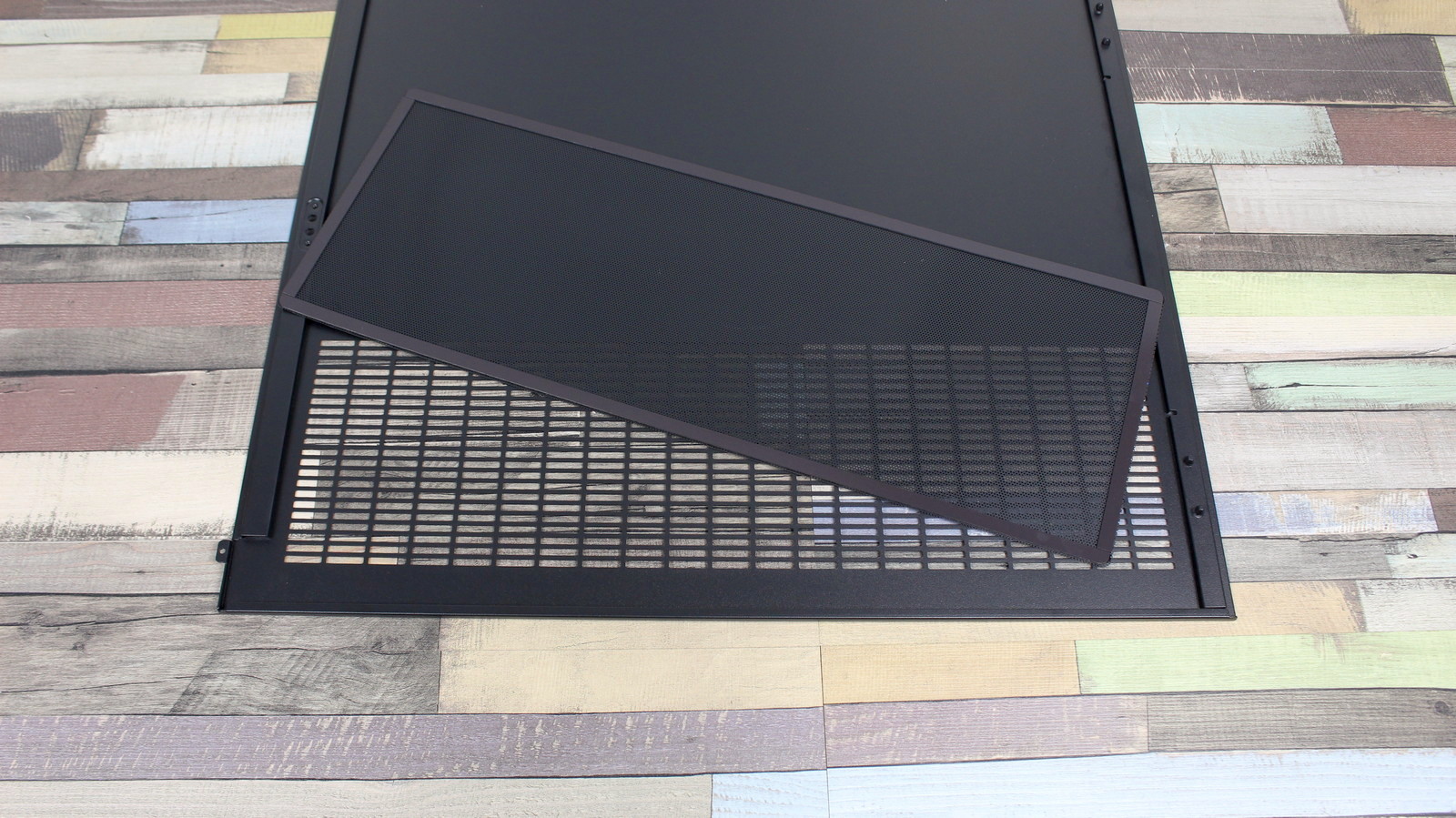
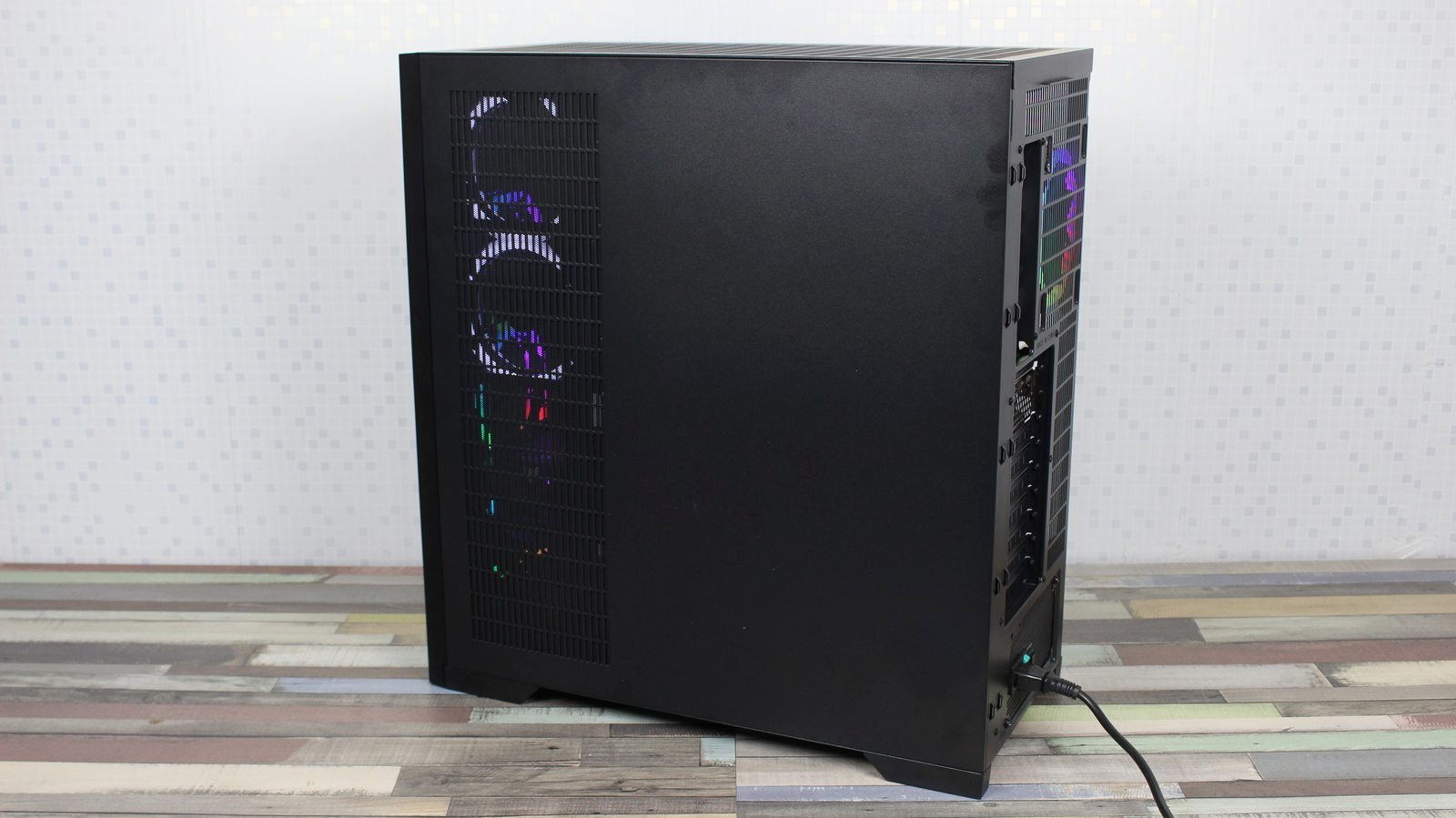
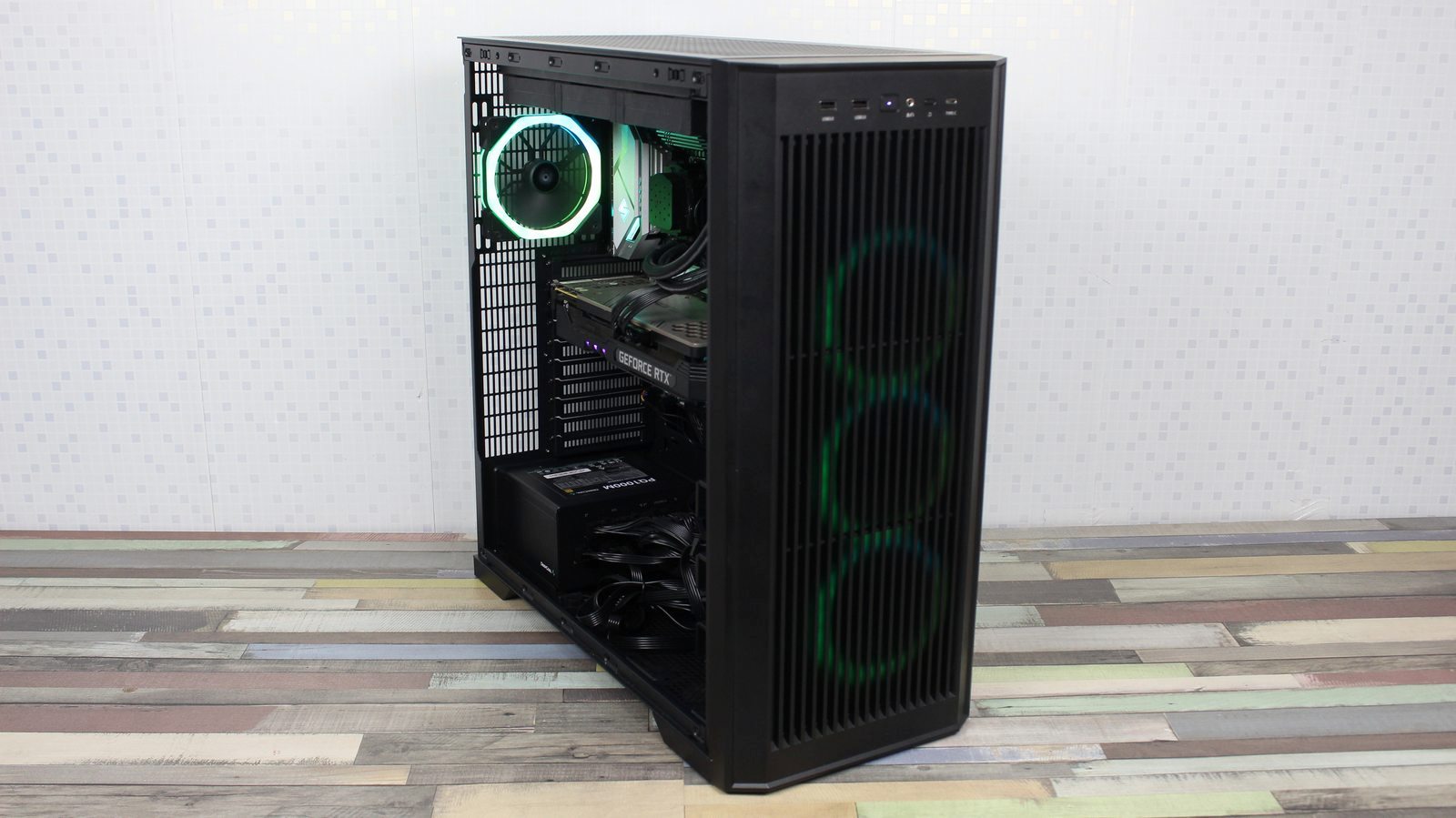
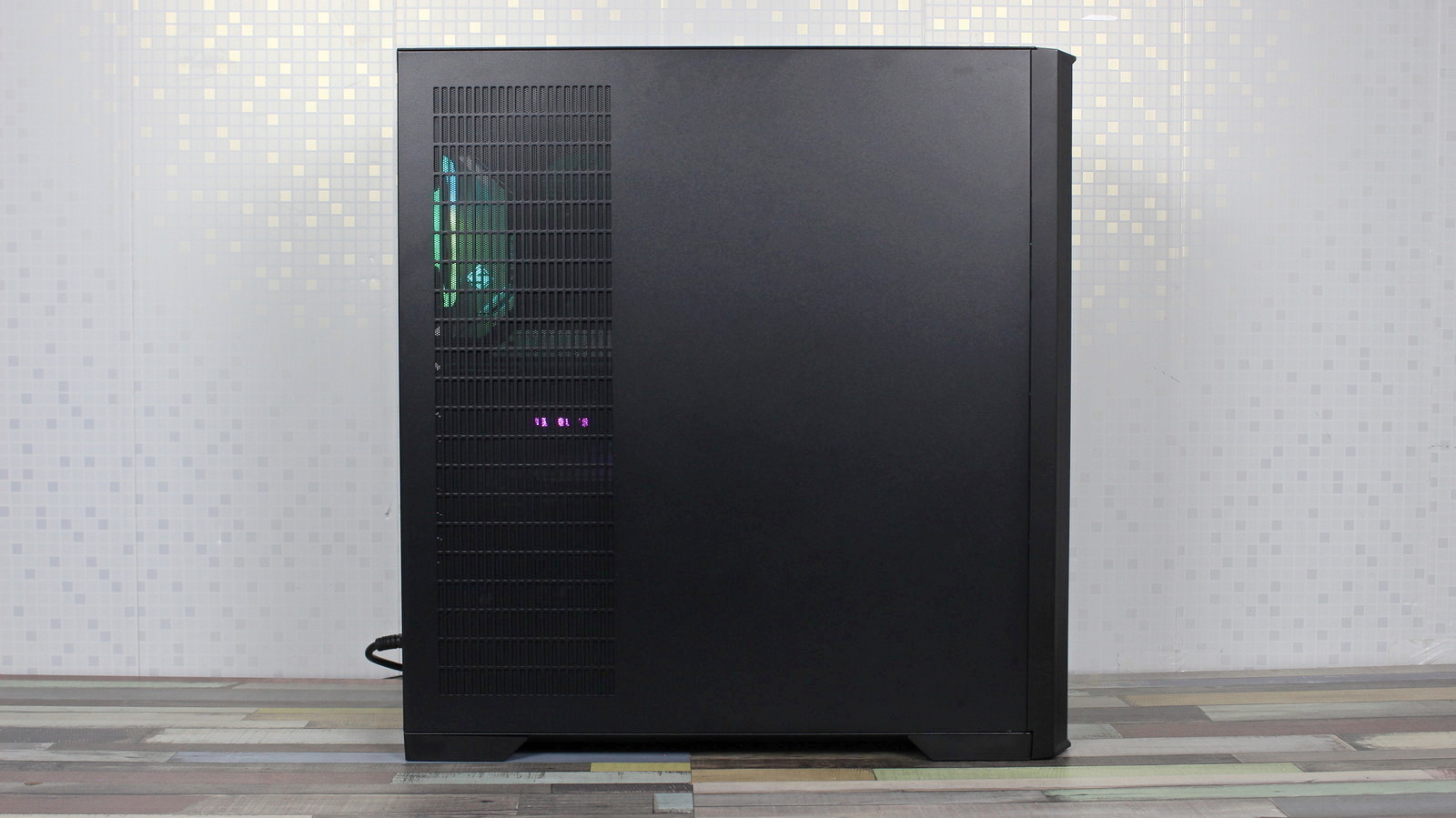
The side panels use a convenient screwless mounting system. They are equipped with perforated areas for ventilation and complemented by internal nylon filters on magnets. The panels are fixed with sleeves on top and catches on the bottom, so for quick access inside, simply pull the cover towards you using the convenient opening at the back.
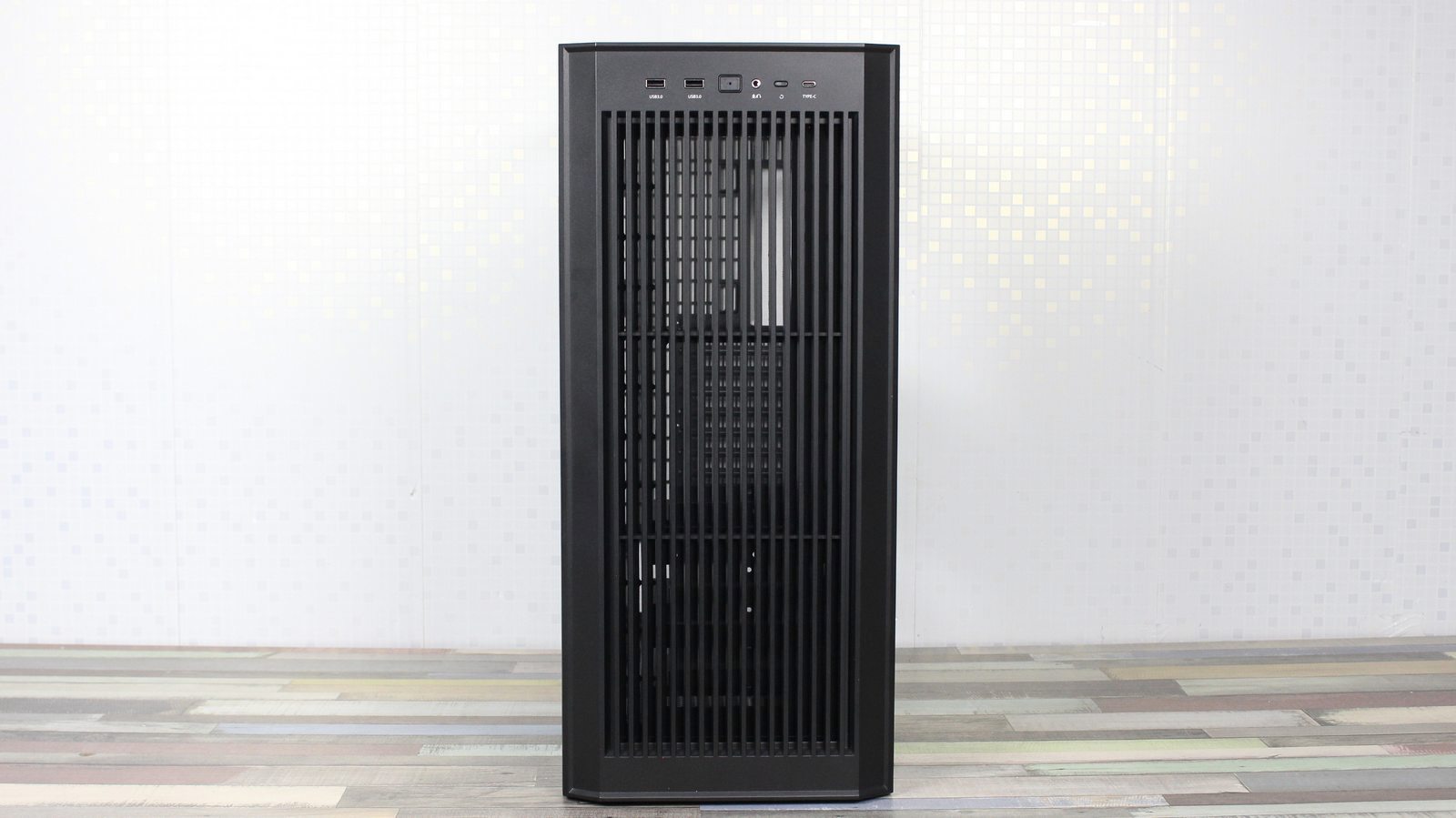
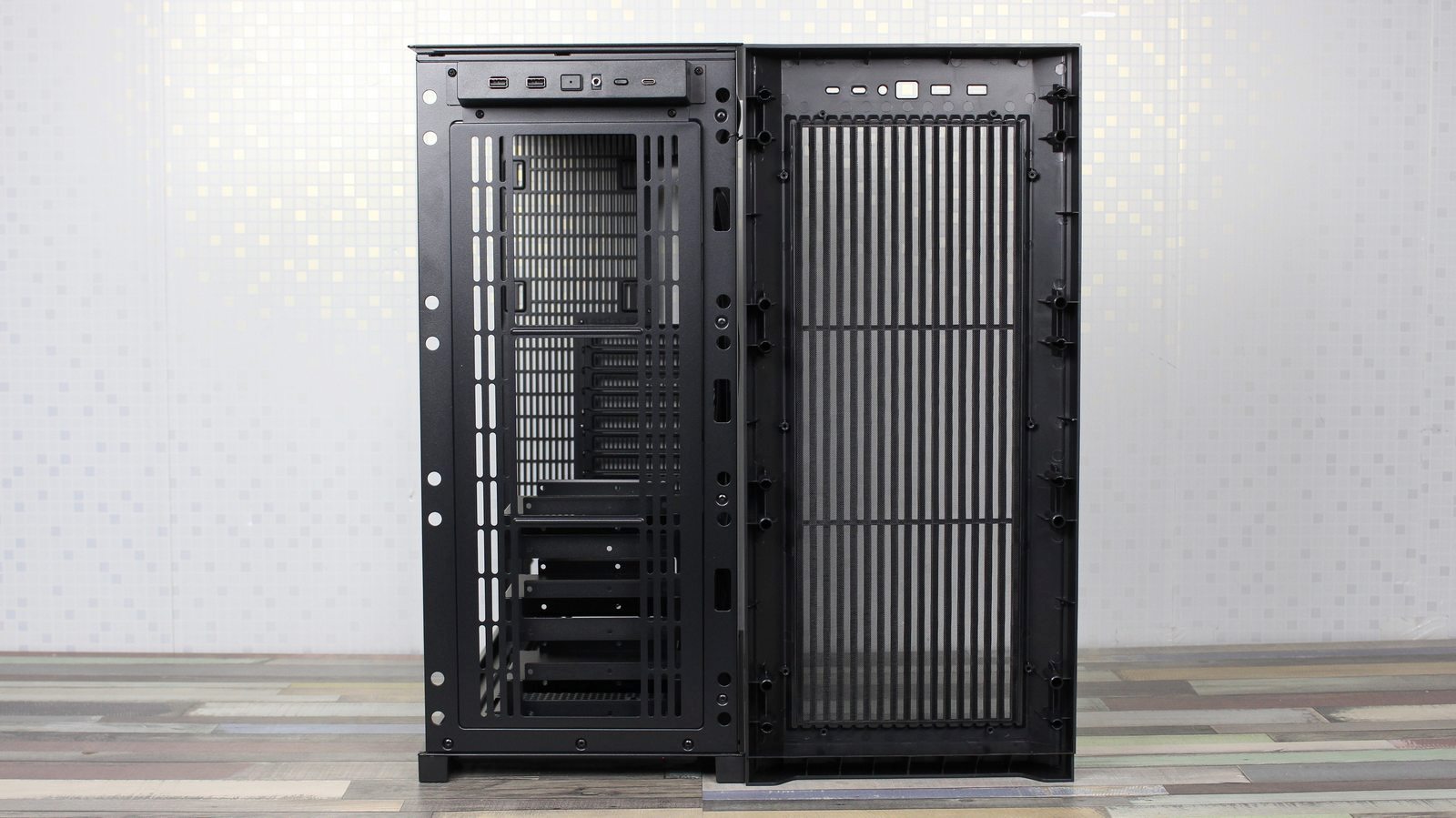
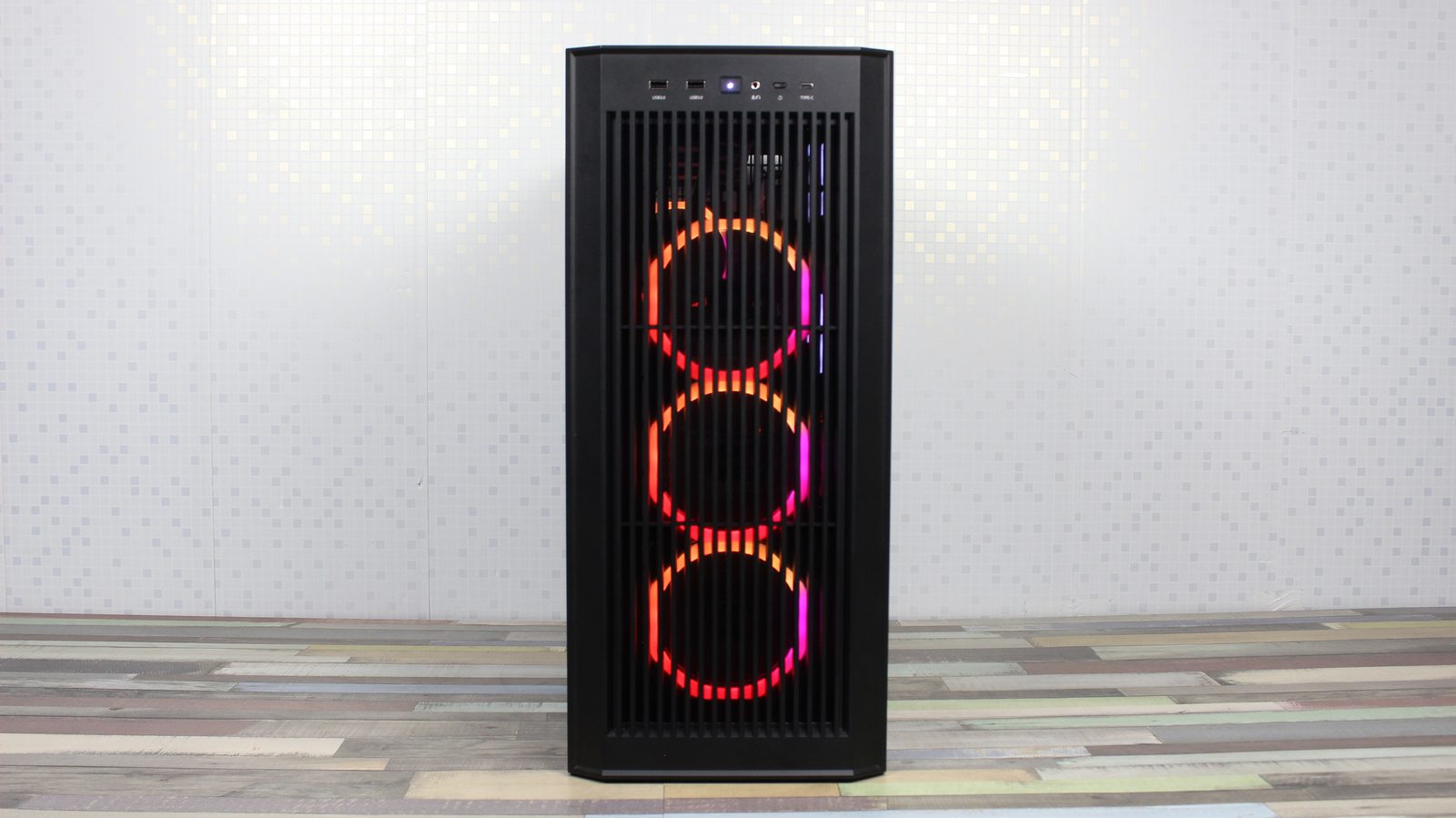
The front part has a decorative plastic panel with vertical openings. It is fixed with eight sleeves, requiring effort during disassembly, and its inner side is equipped with a non-removable nylon filter.
The front of the chassis has mounting locations for installing three 120/140 mm or two 160 mm fans. A liquid cooling system with a radiator up to 360 mm in length can also be installed here.
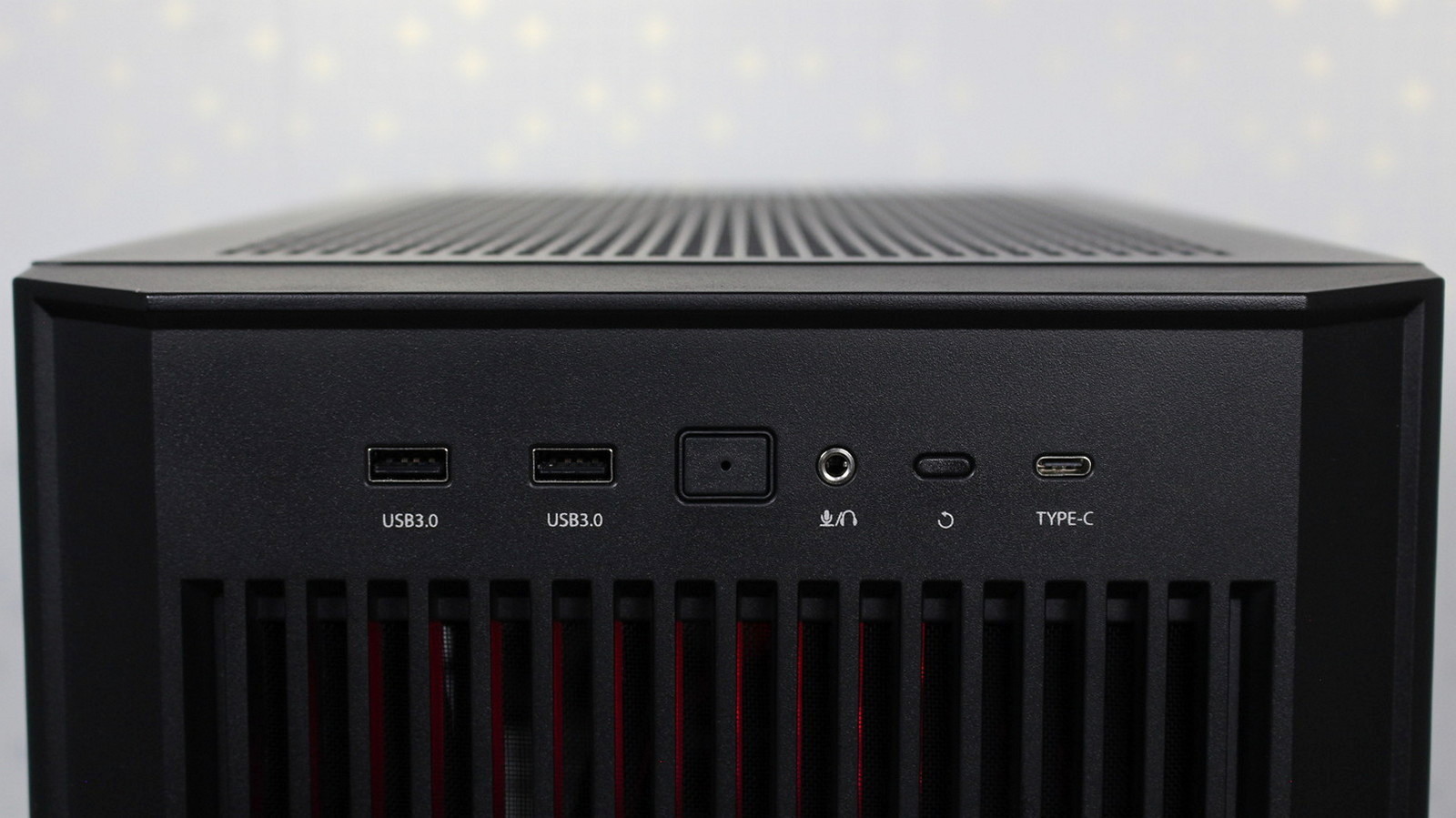
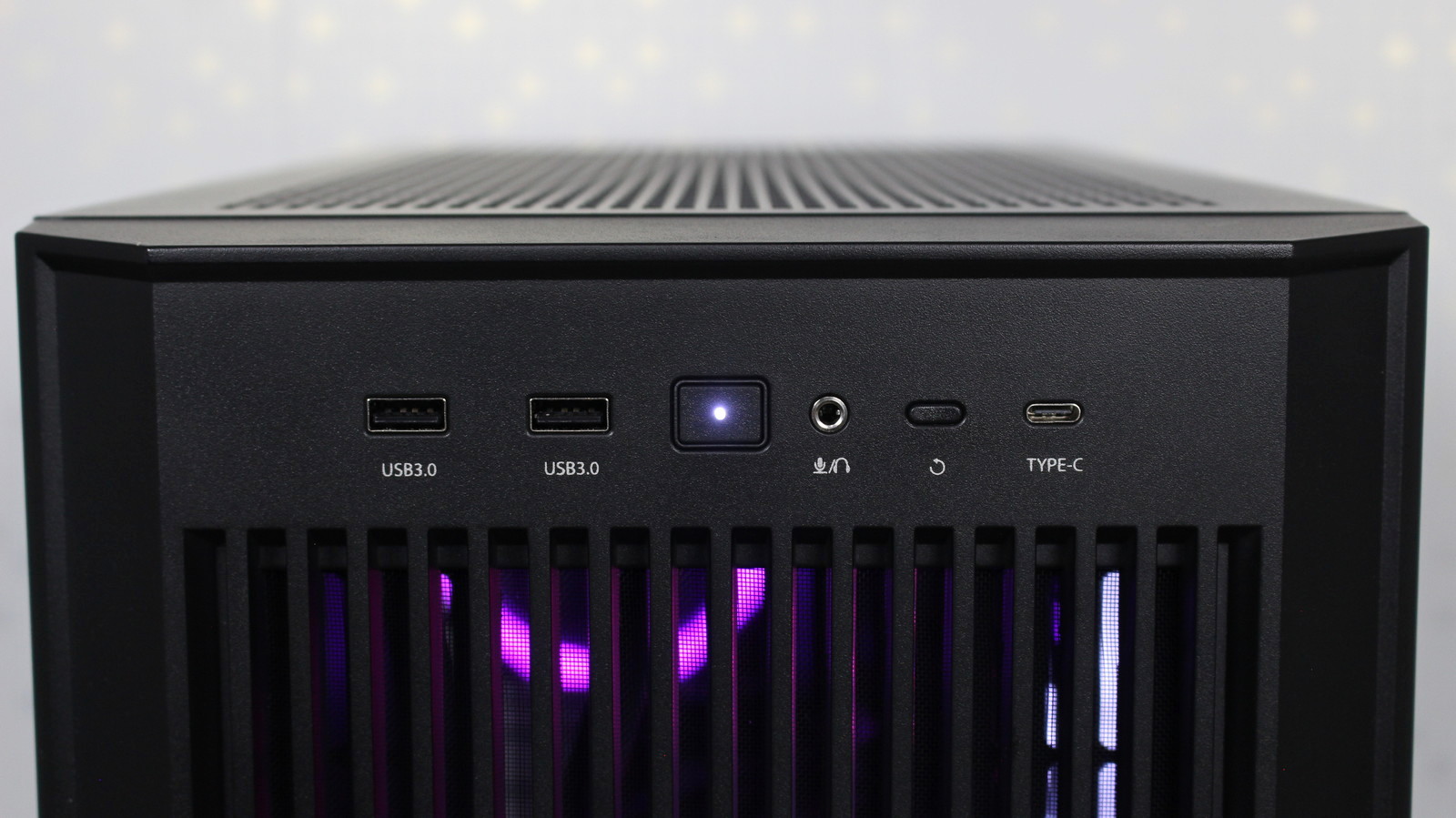
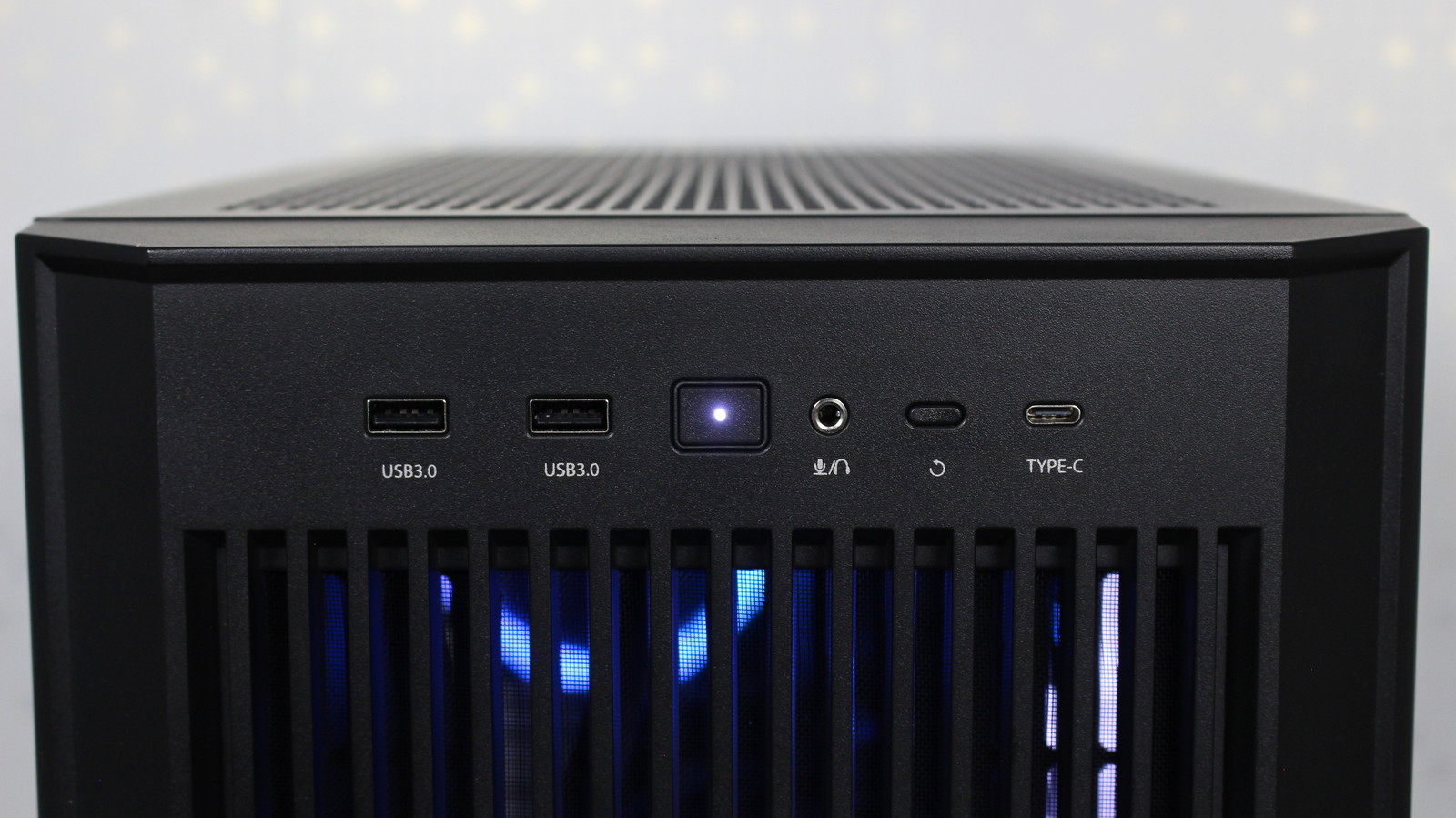
The top integrates an interface block: two USB 3.0, one modern USB 3.1 Type-C, a combined audio jack, reset and power buttons. The latter has LED indication, which lights up white. The different sizes of the buttons help to easily recognize them by touch, preventing accidental presses.
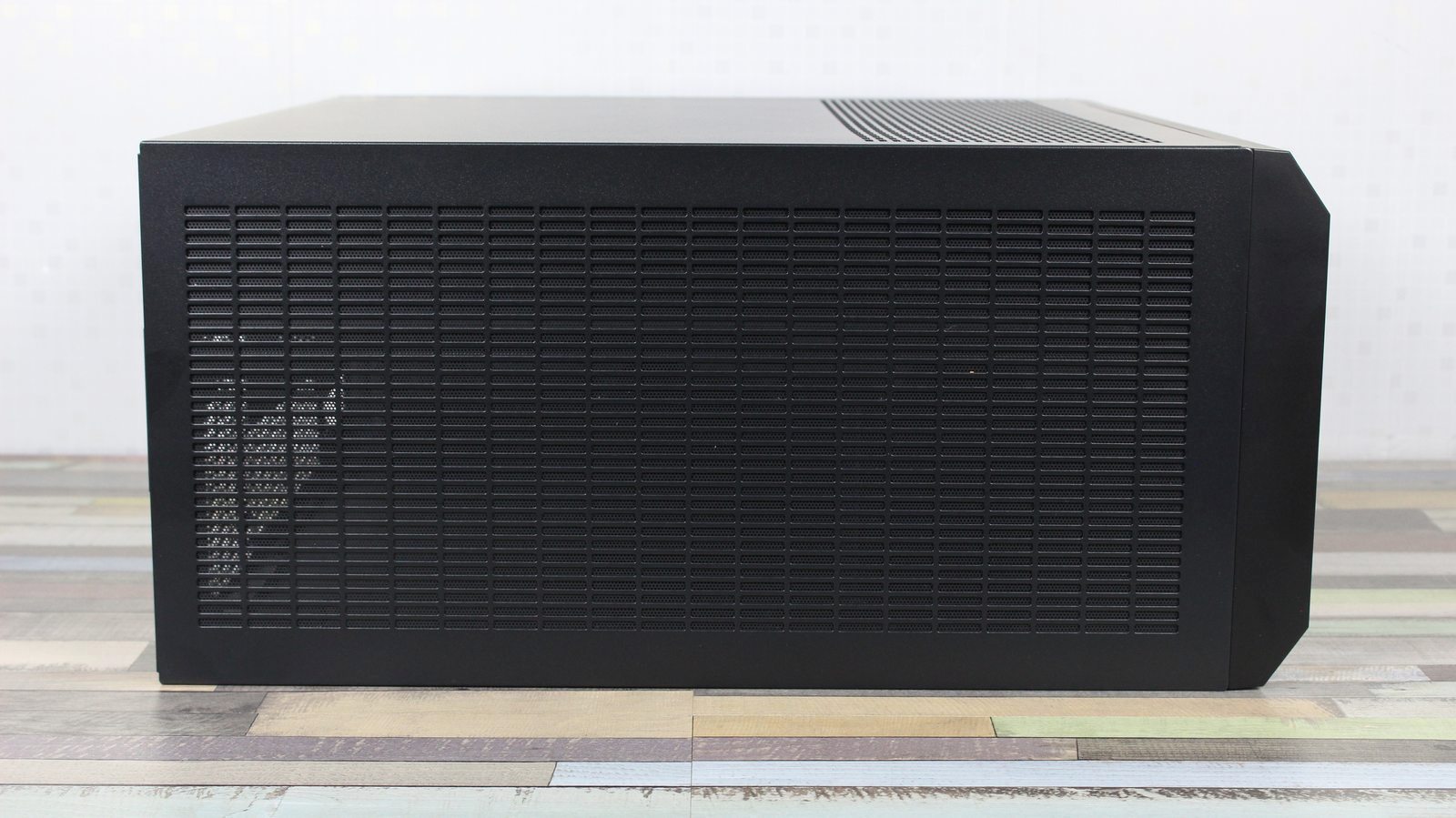
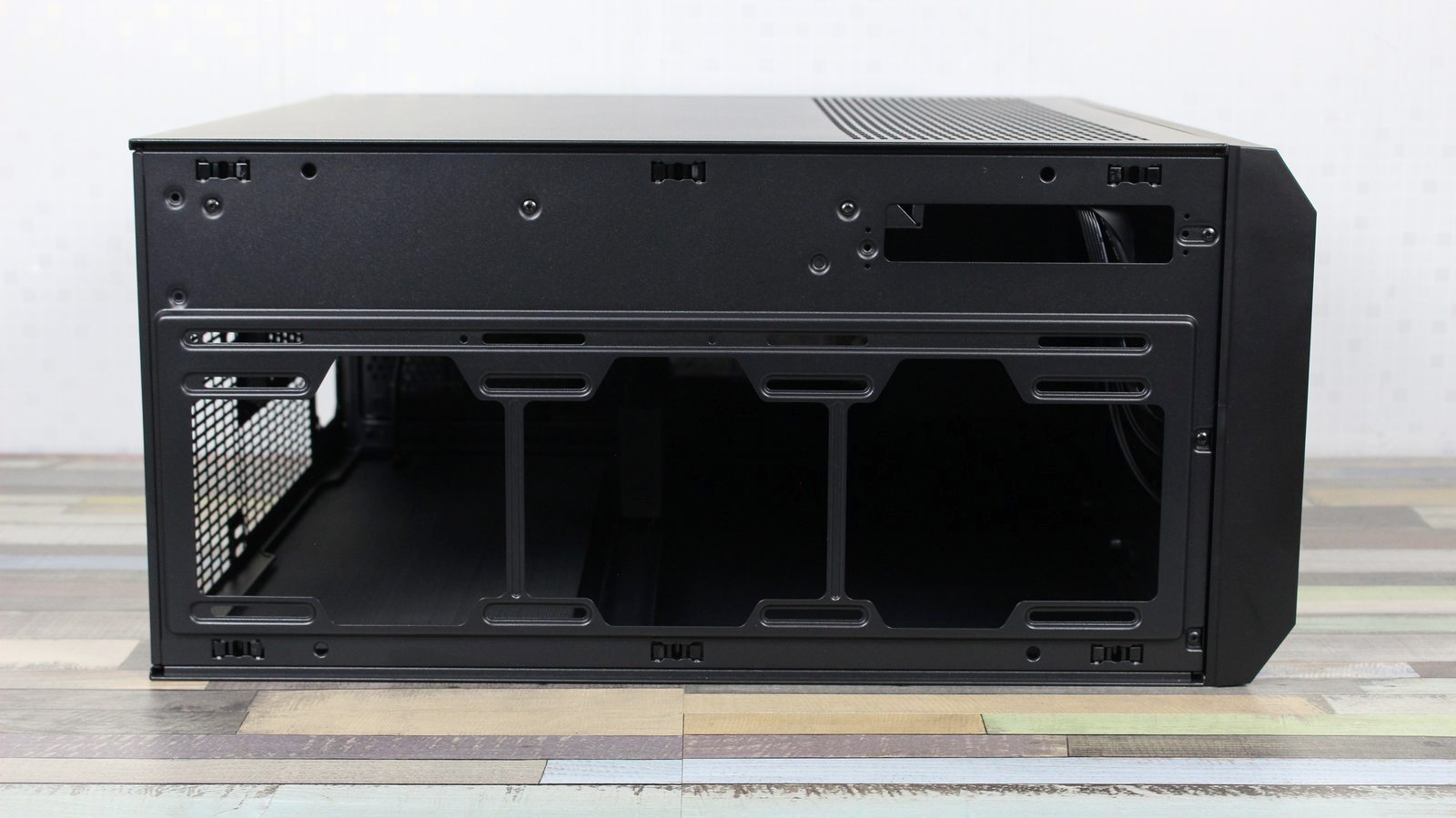
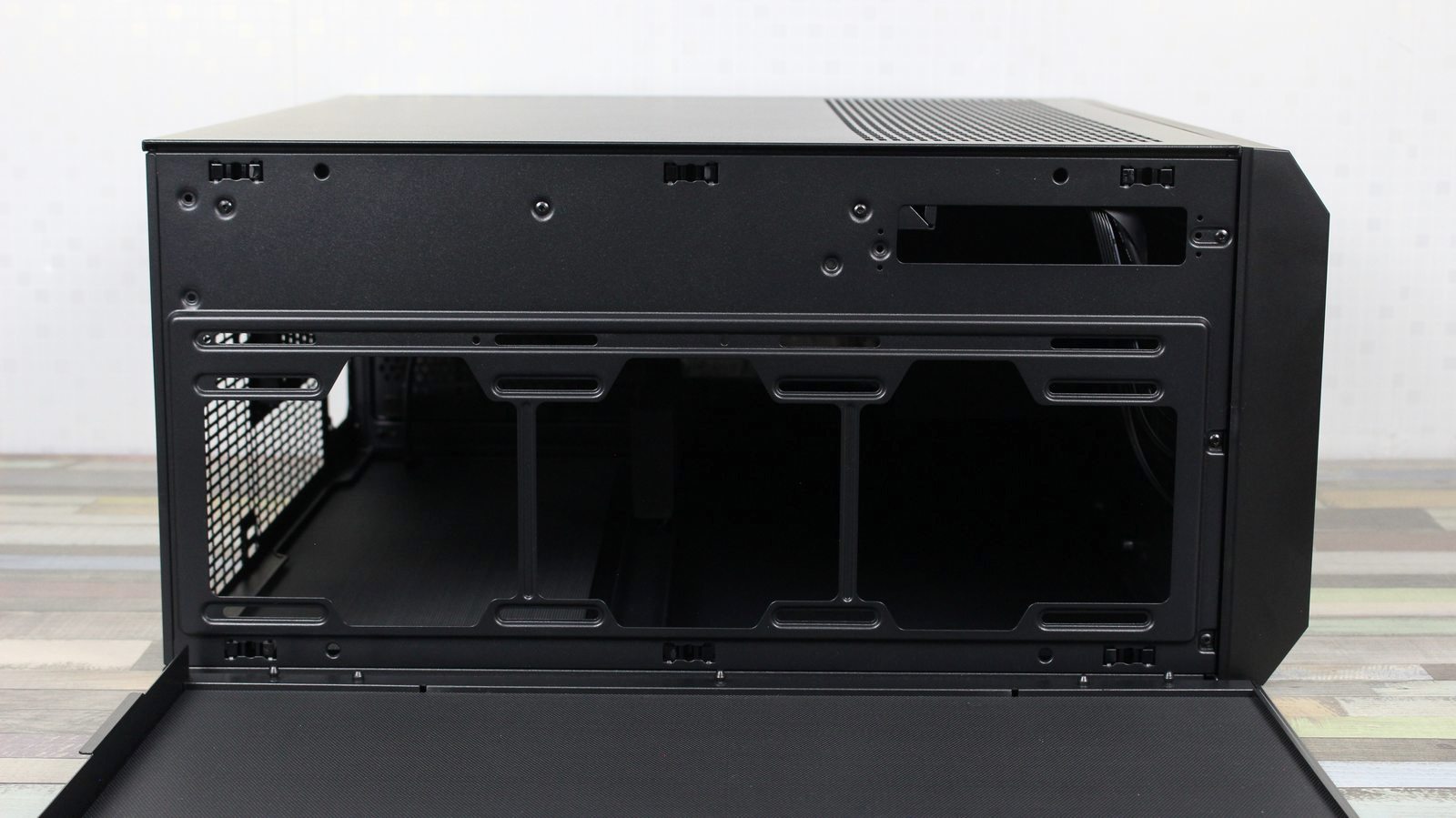
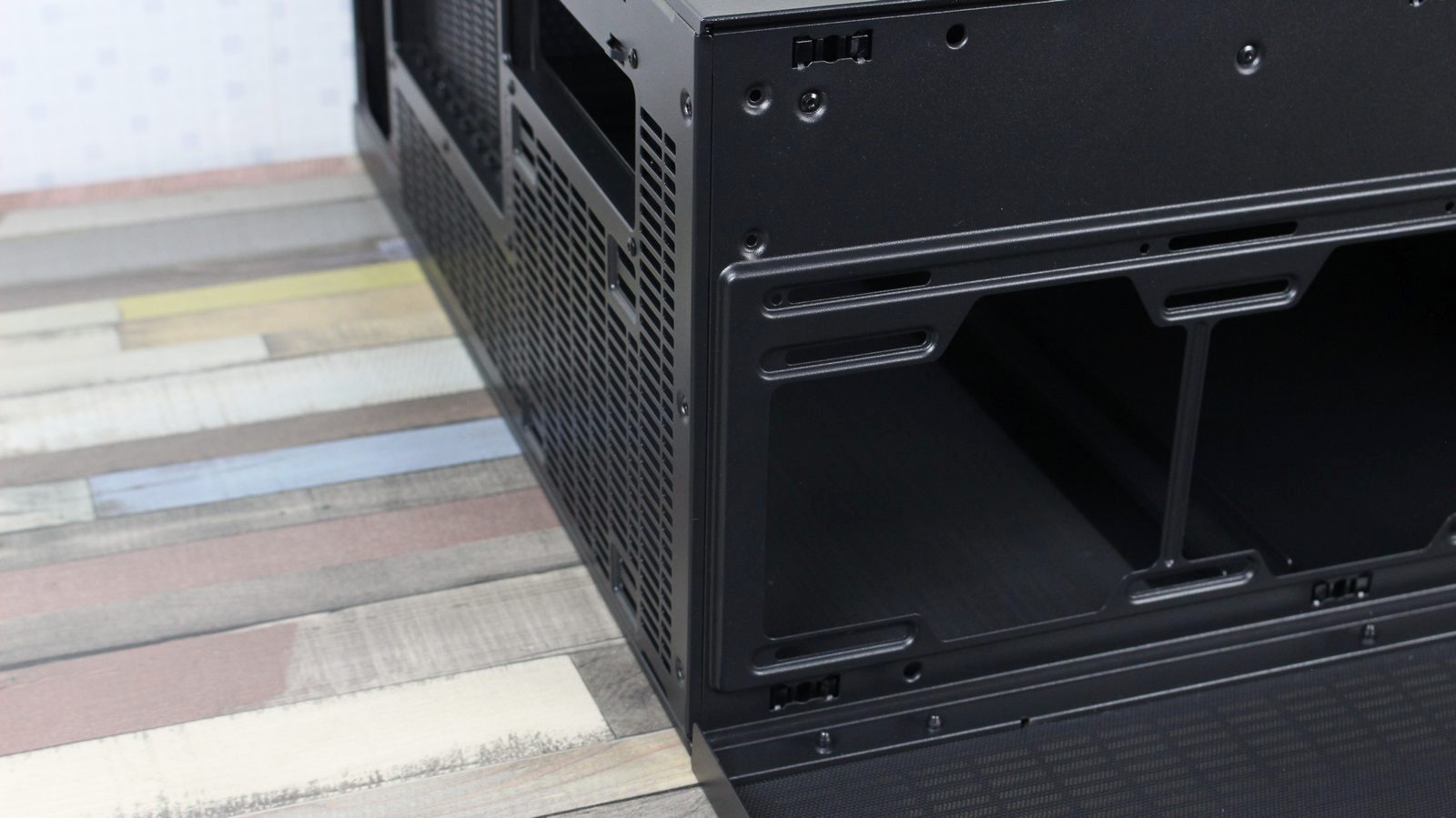
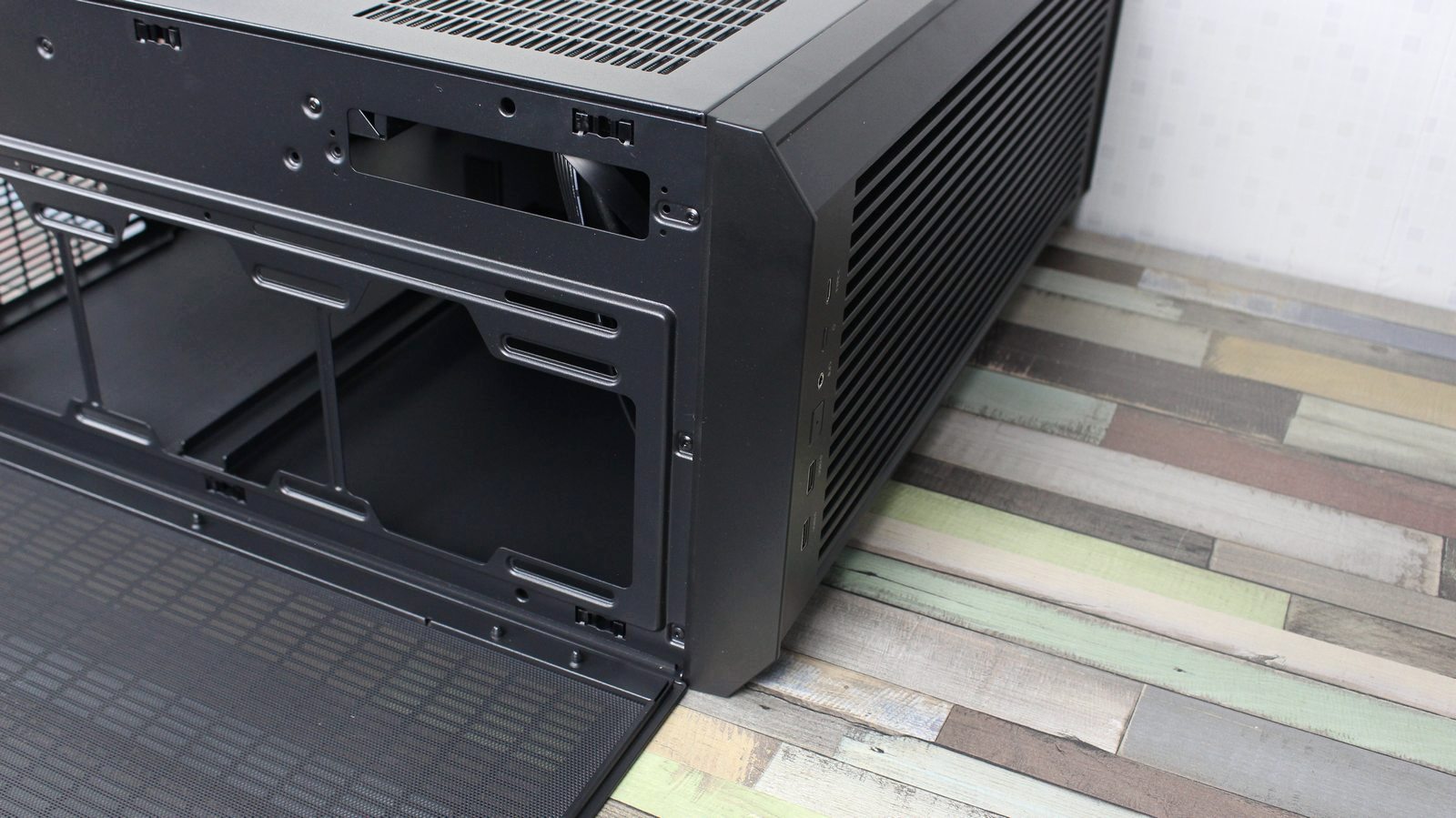
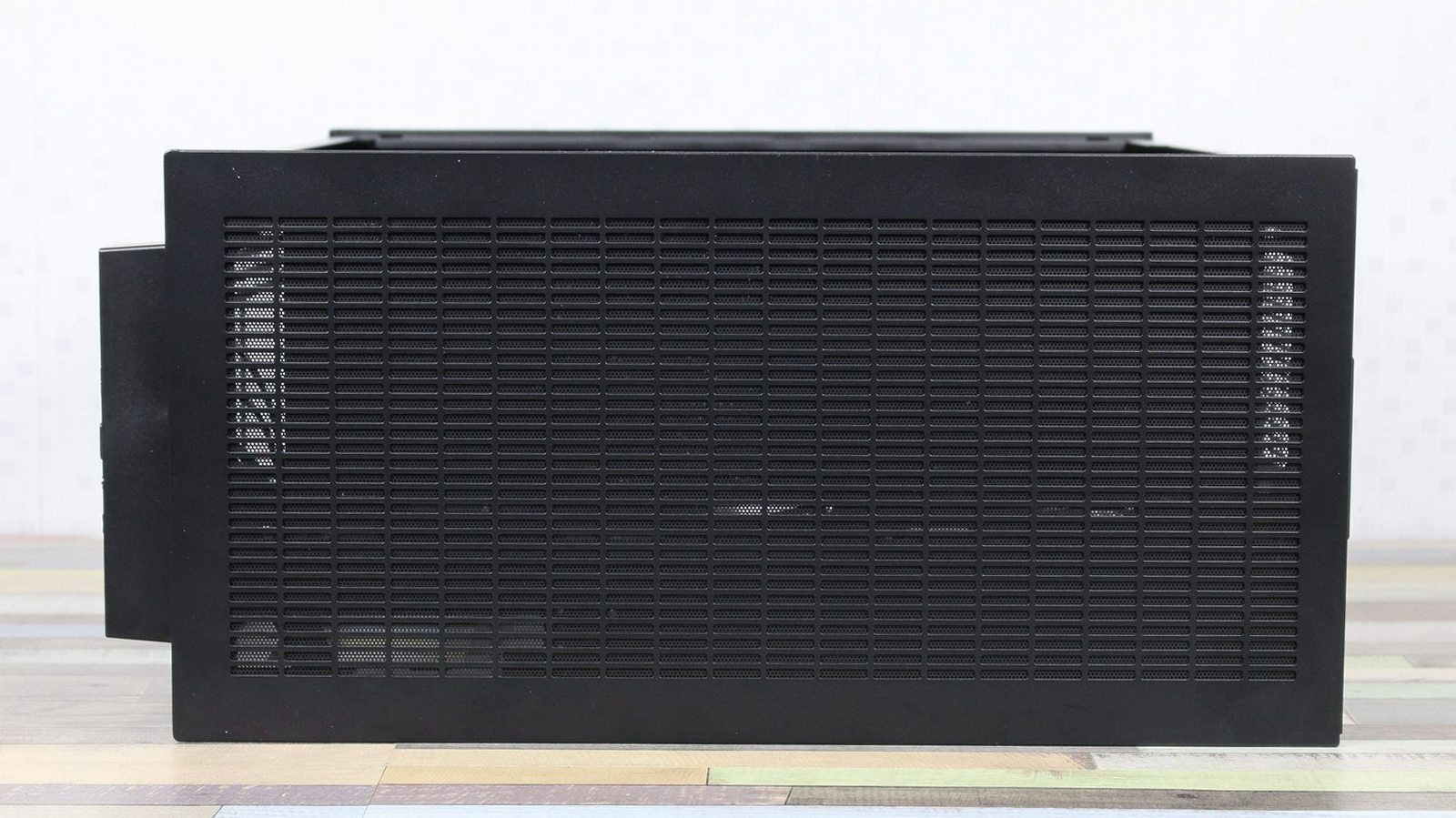
The top removable panel has a large perforated area, which is protected from the inside by a removable dust filter on a magnetic strip.
The cover is fixed with sleeves, and a special protrusion on the rear part allows it to be easily hooked and removed for quick access to the internal space.
Underneath it, the chassis has mounting locations for installing three 120 mm or 140 mm fans. A liquid cooling system with a radiator up to 360 mm in length can also be installed here.
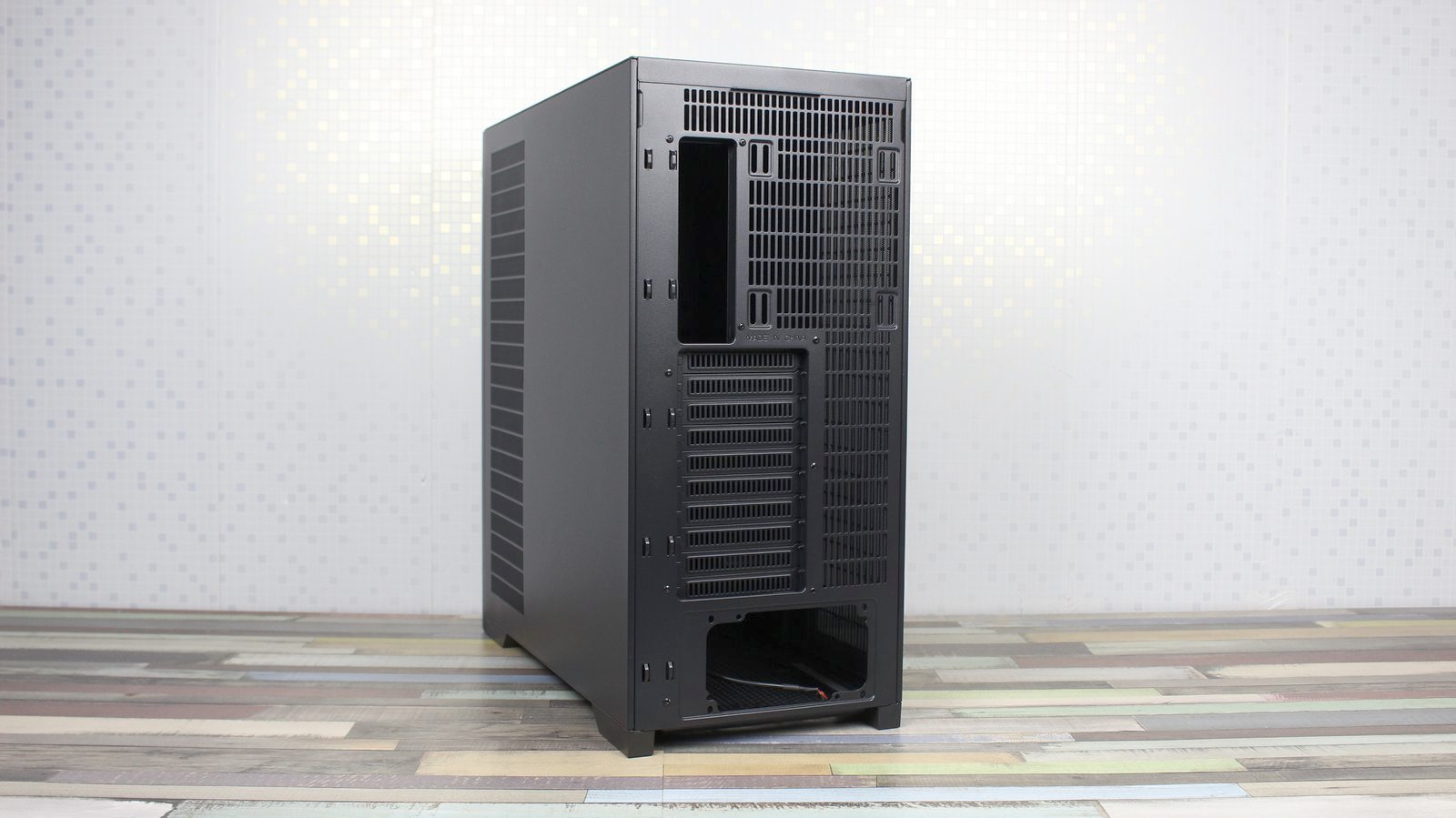
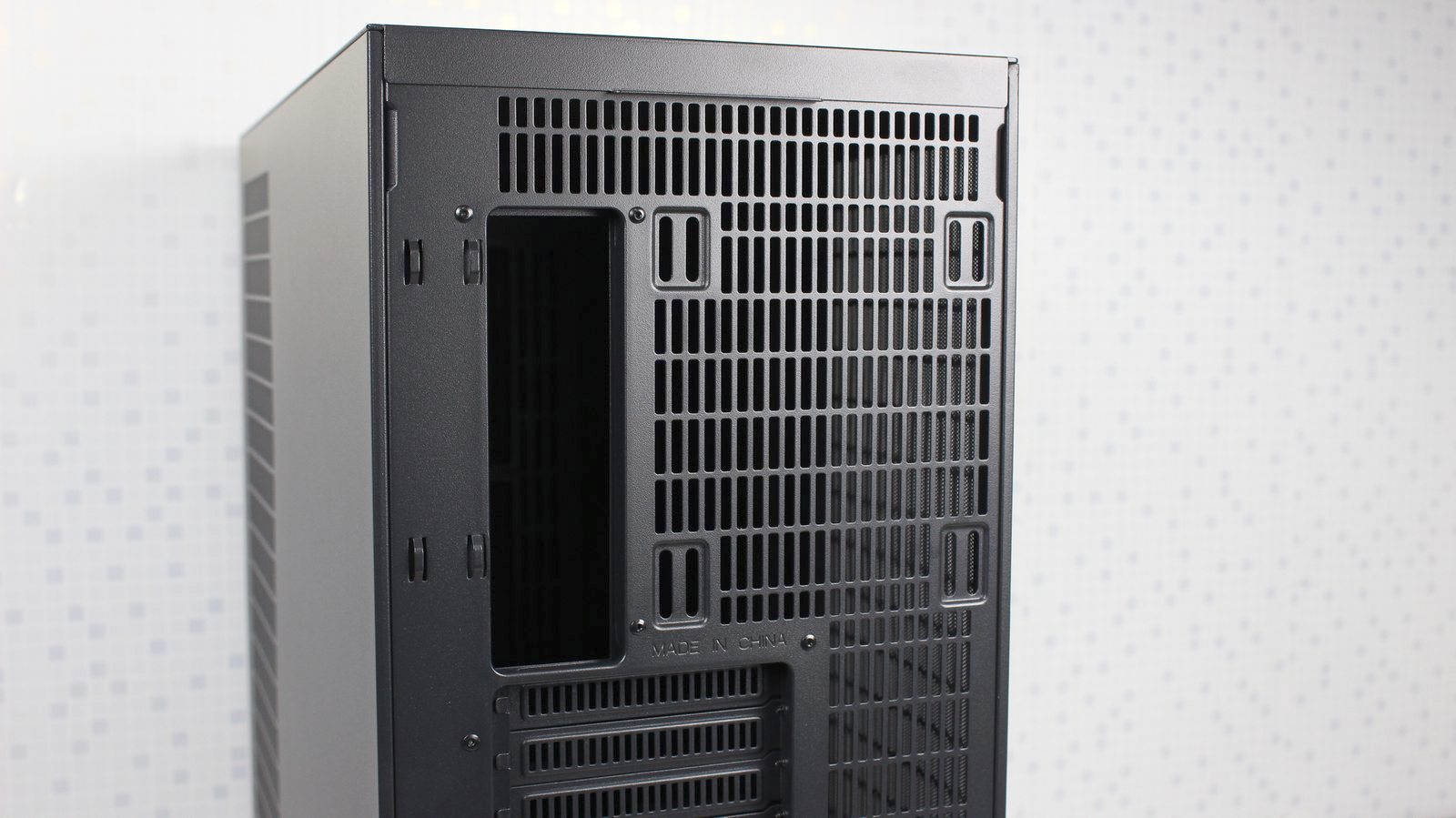
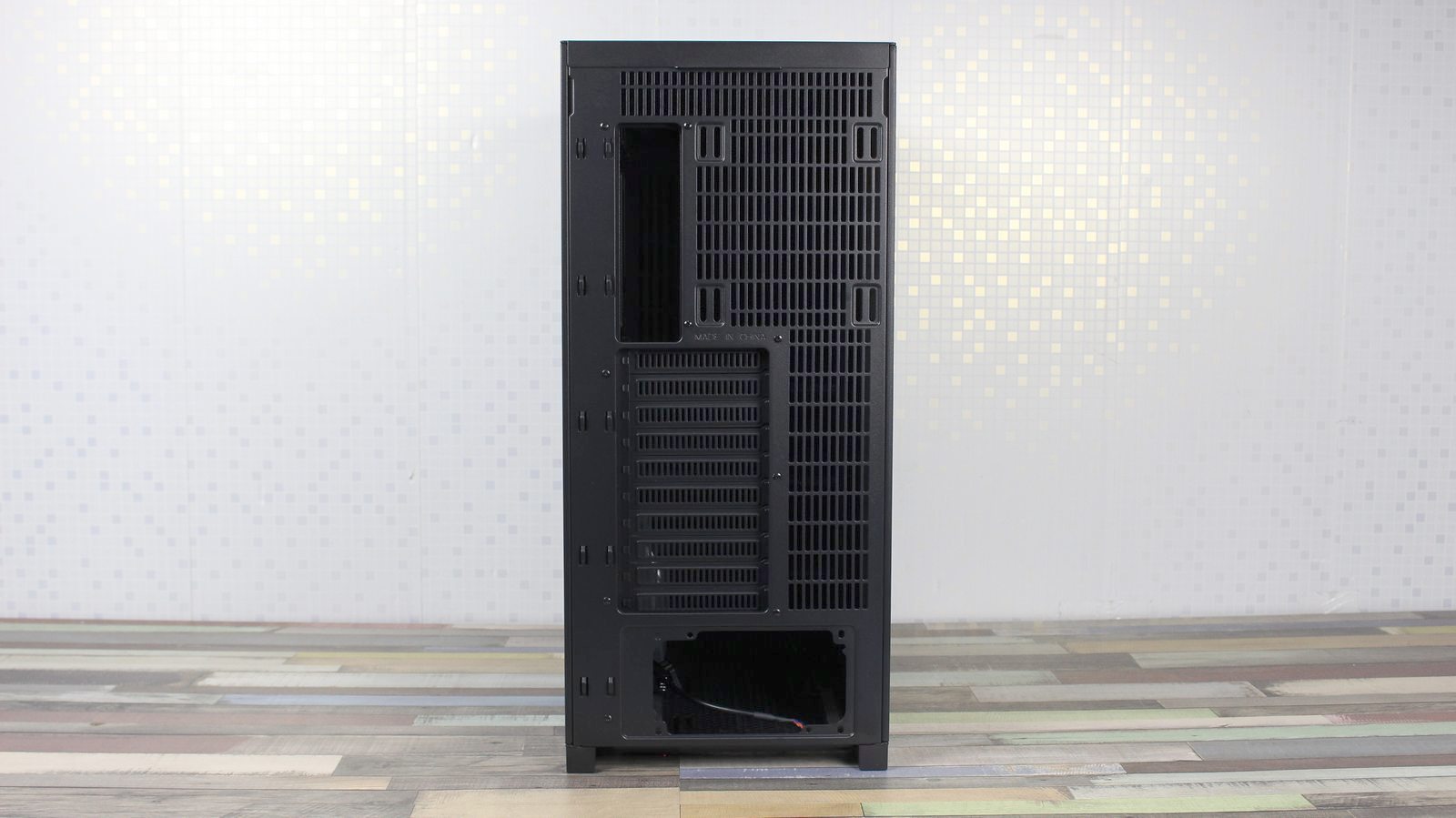
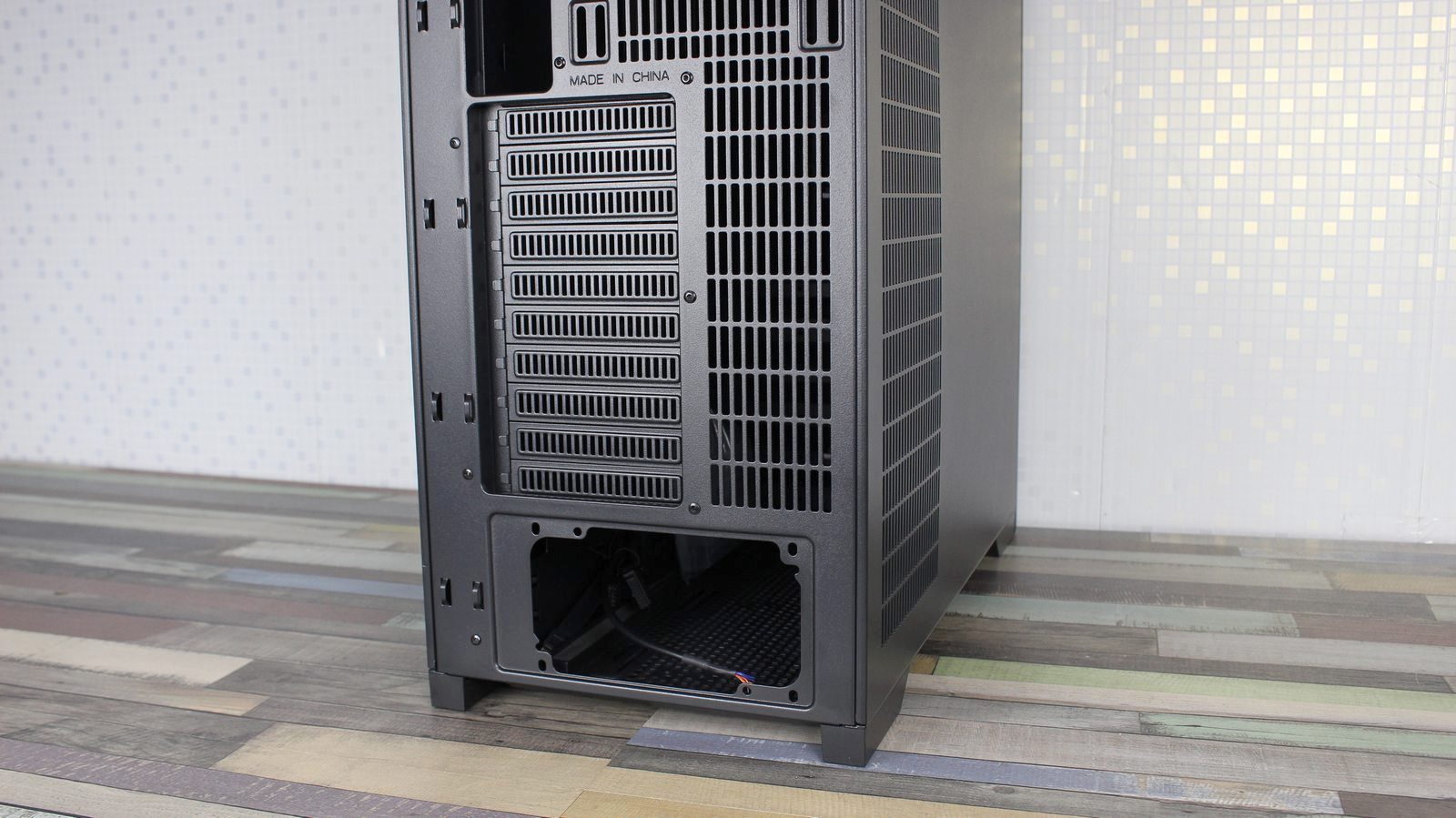
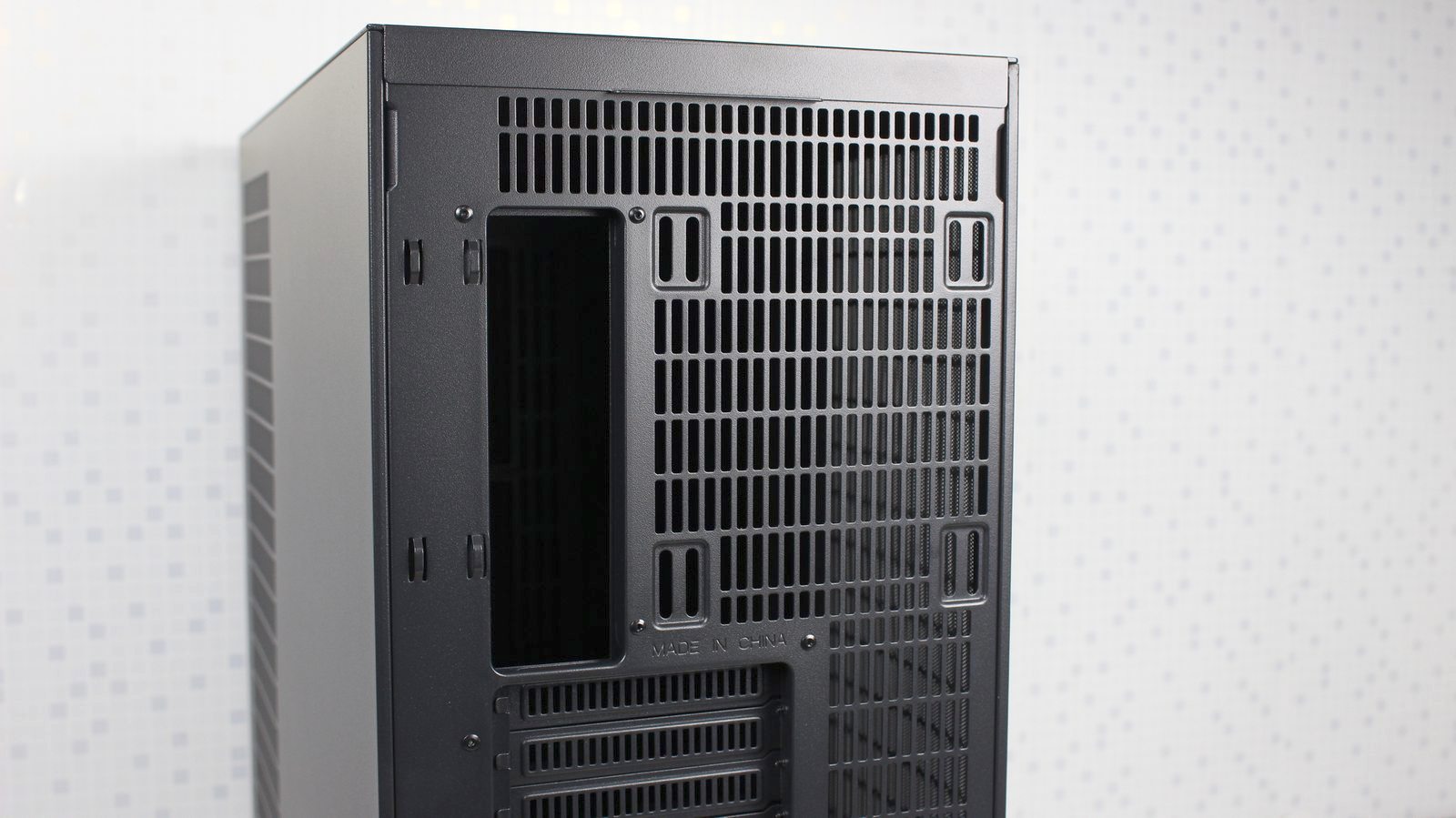
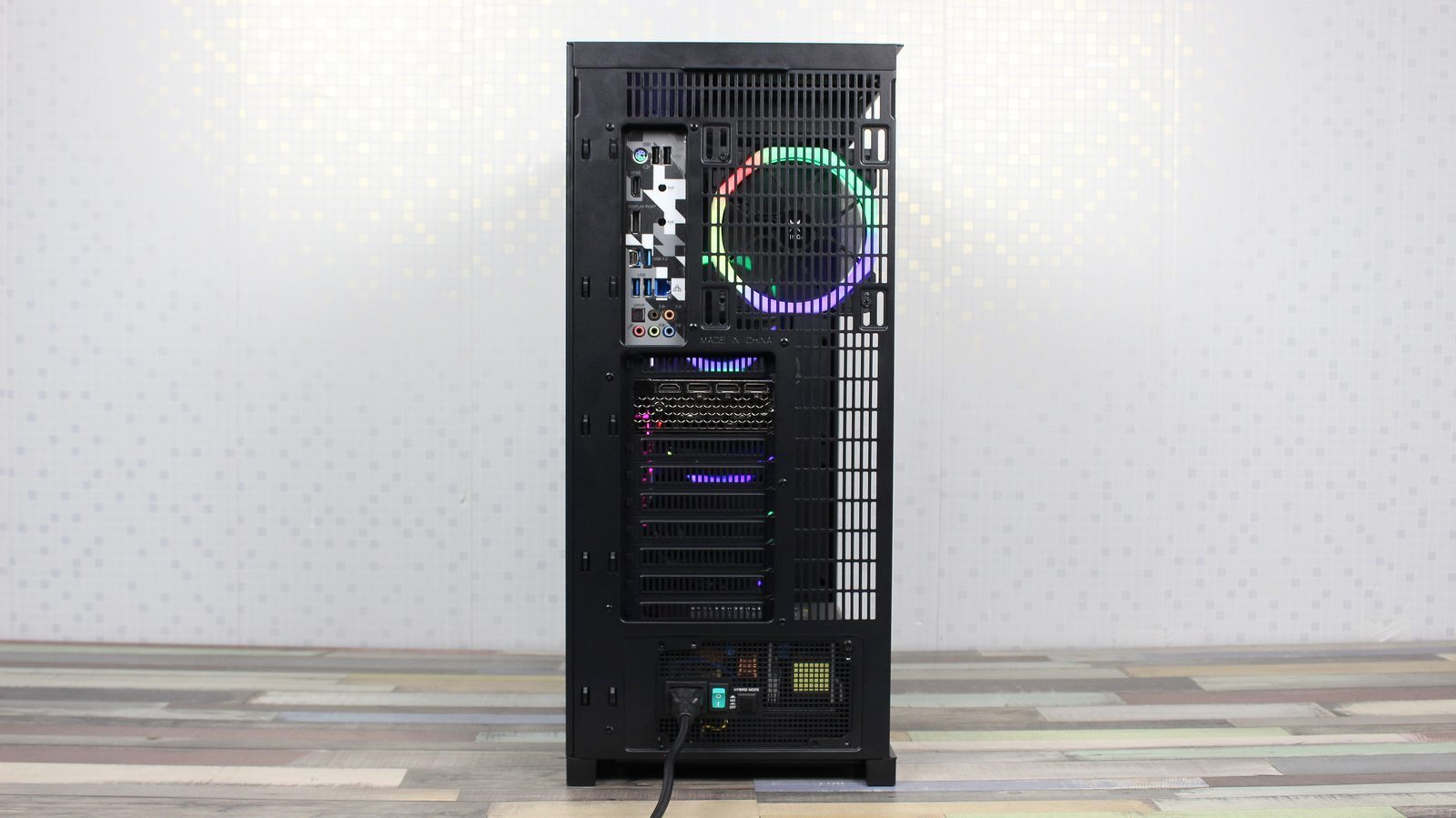
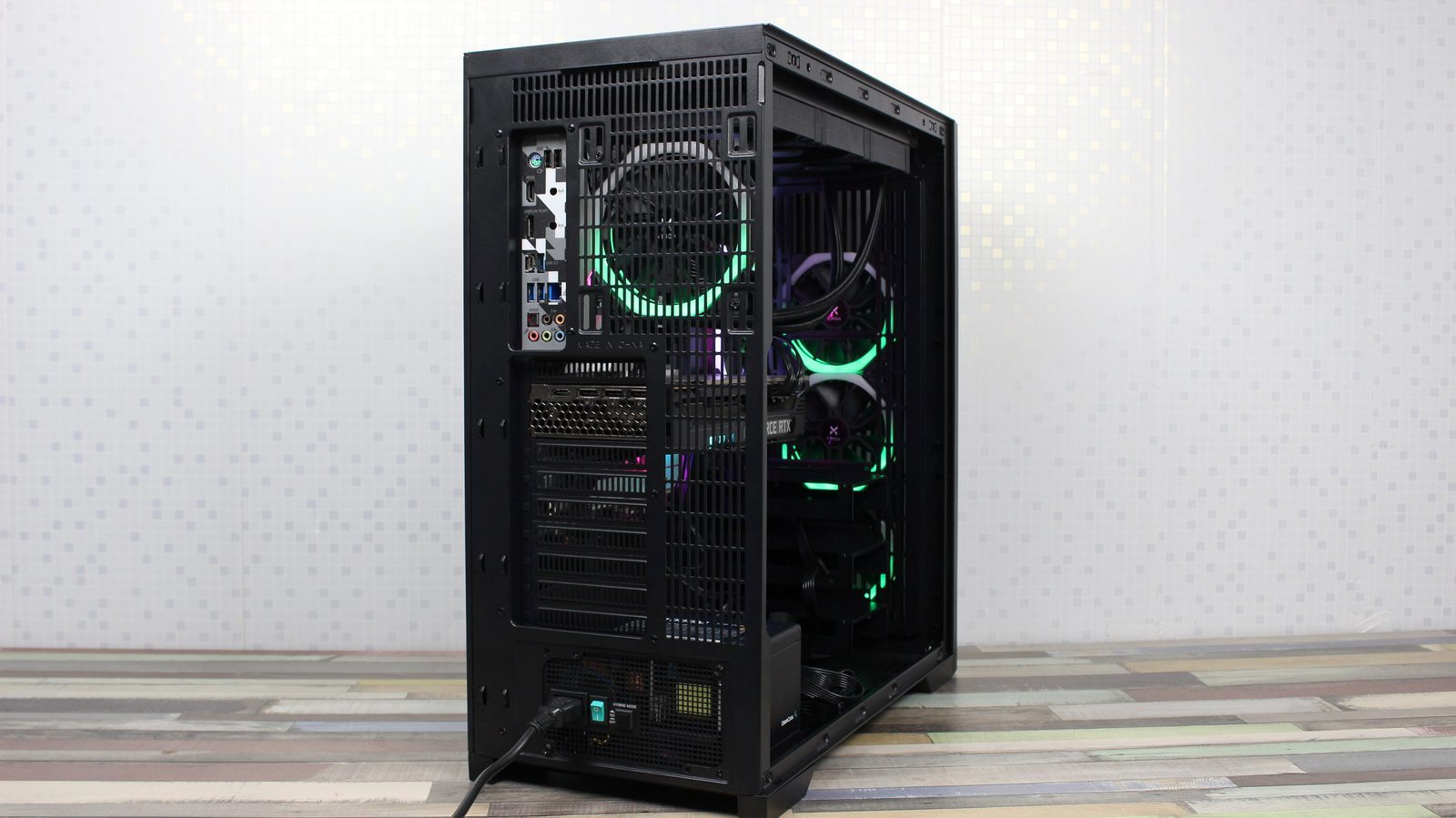
The rear side has cutouts for the motherboard's interface panel and a place for installing a 120 mm or 140 mm fan. A feature of the design is the presence of 10 expansion slots, covered with reusable plugs, and a significant area occupied by a large number of openings, ensuring the free exit of hot air.
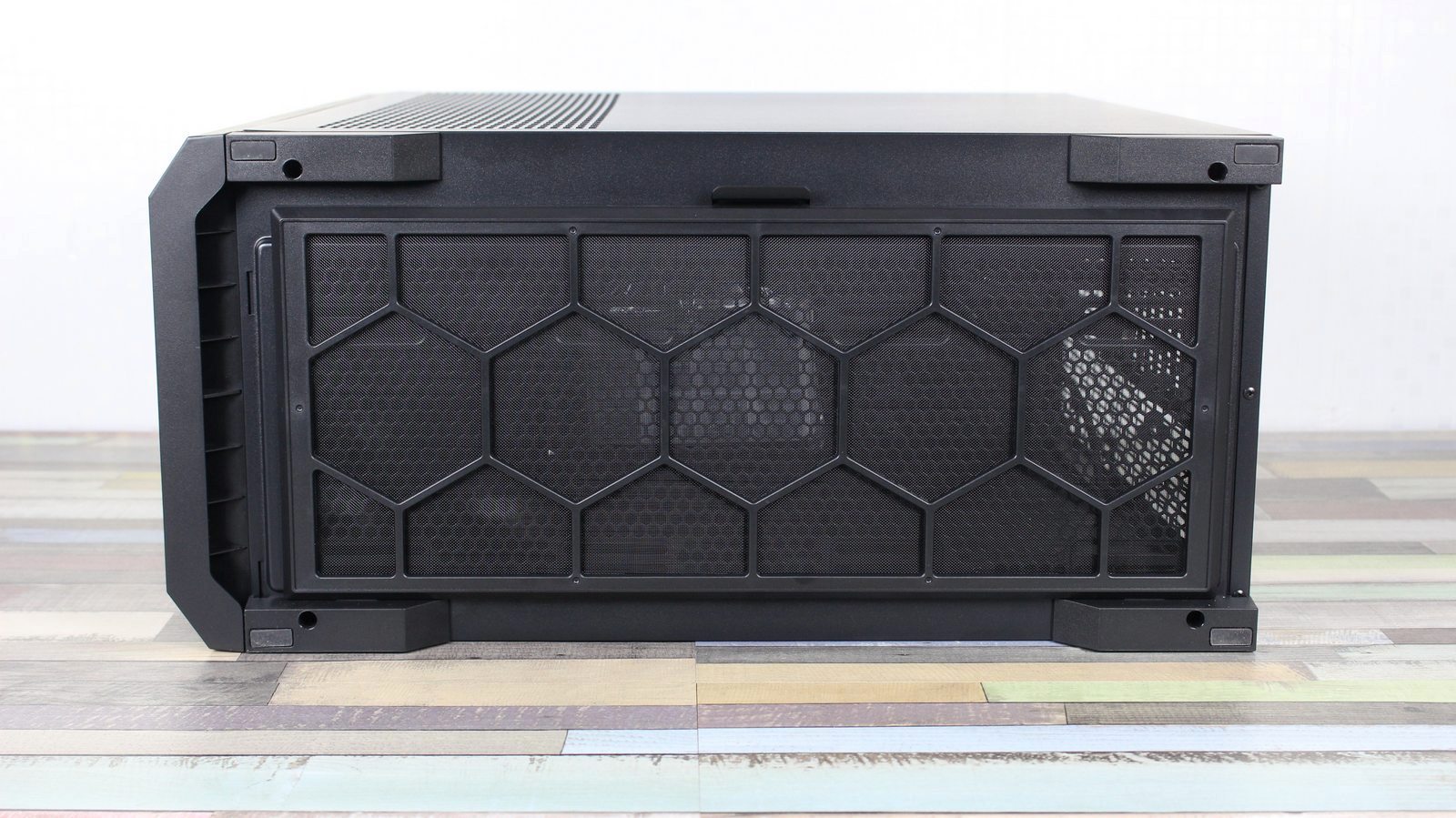
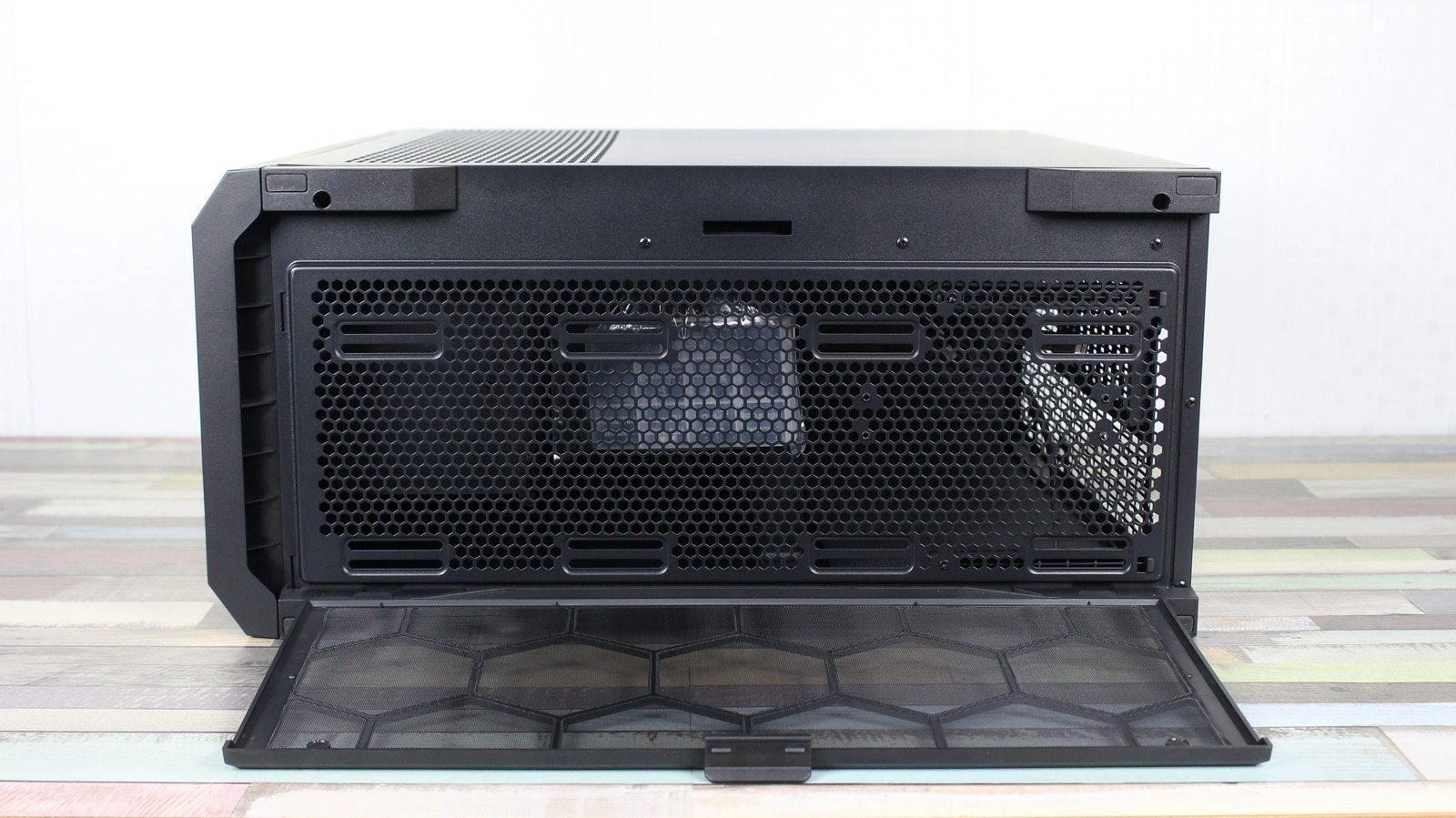
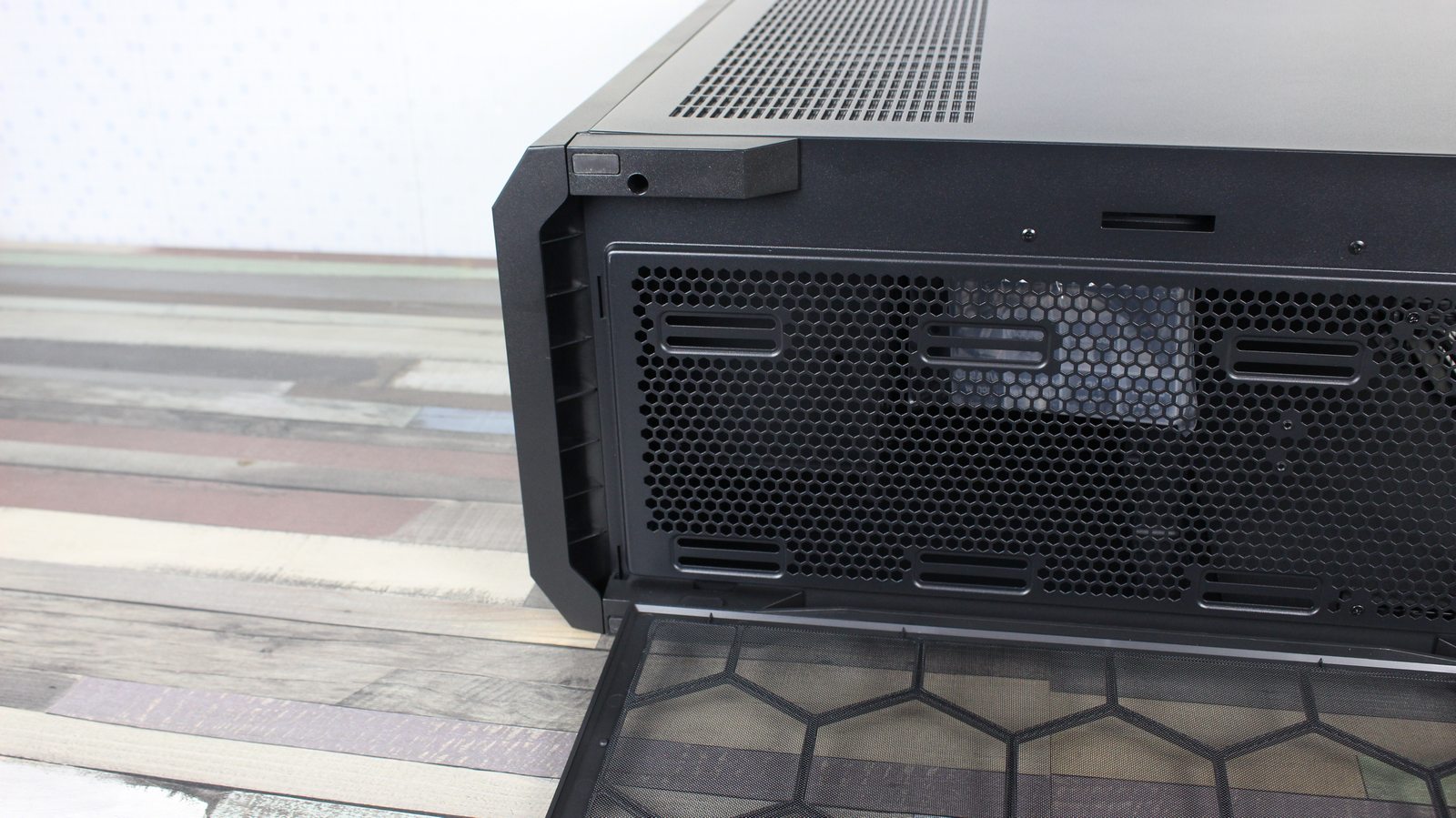
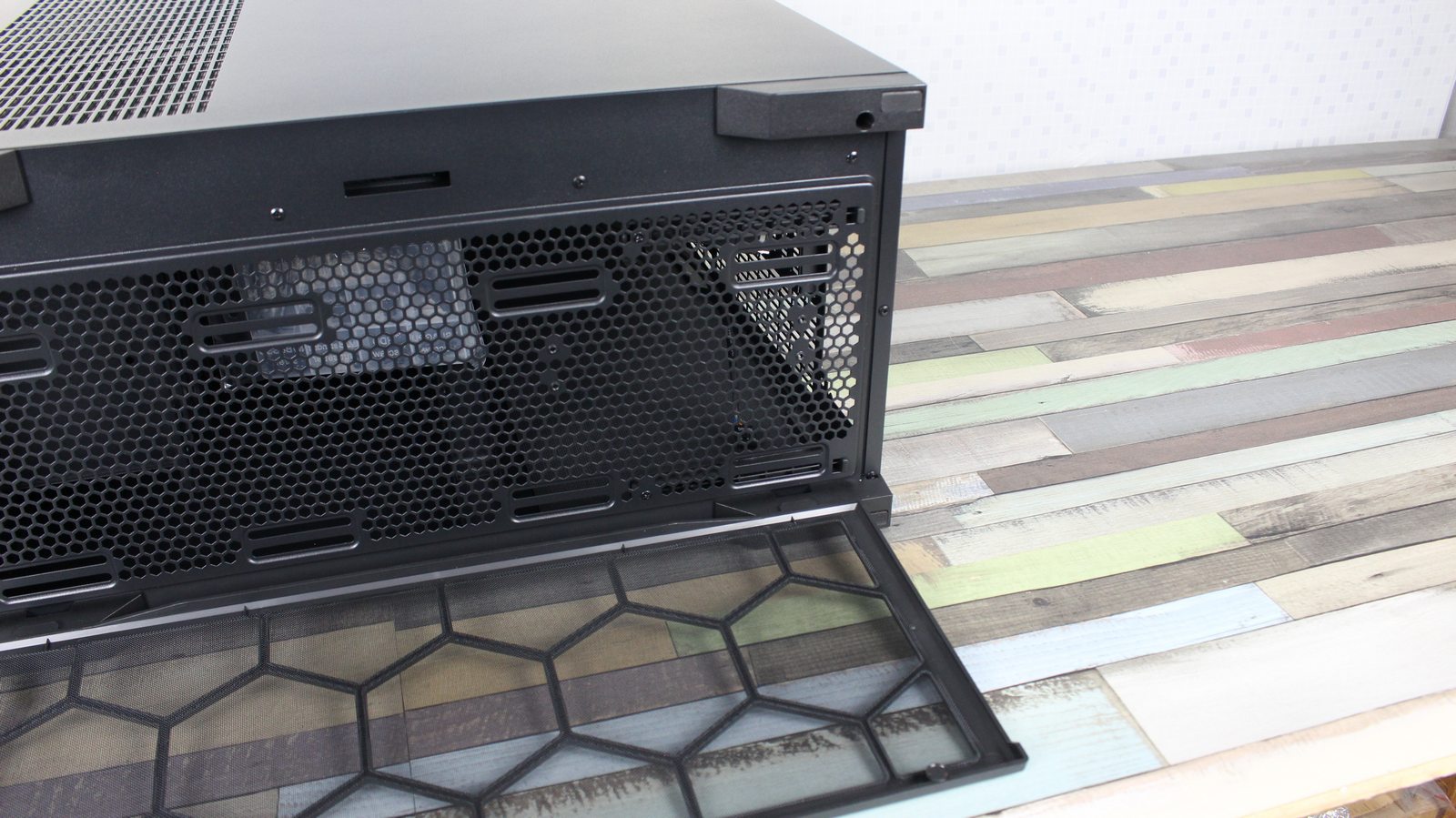
The bottom panel has a large perforated area for unobstructed airflow to the power supply and cooling system. This entire area is covered by a solid removable filter, which is fixed with a reliable system of grooves and a protrusion, allowing it to be easily removed for cleaning with one motion.
The bottom design allows for the installation of up to three 120 mm or two 140 mm fans, but it should be noted that when installing a long power supply, the actual number of available mounting locations may be less.
The case rests on massive feet 2.3 cm high, equipped with rubber inserts that provide the necessary space for ventilation and effectively dampen vibrations.
Internal Structure
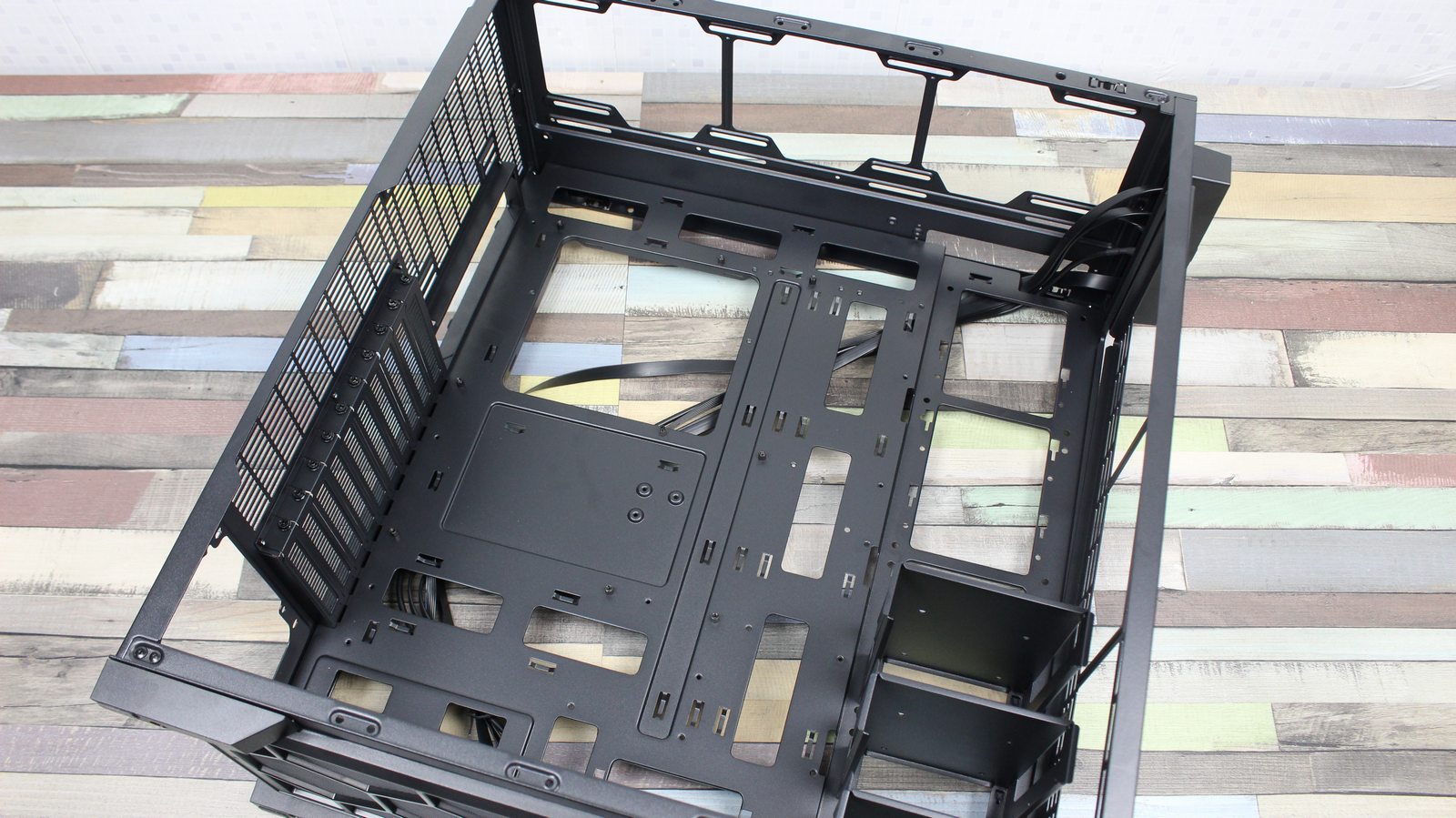
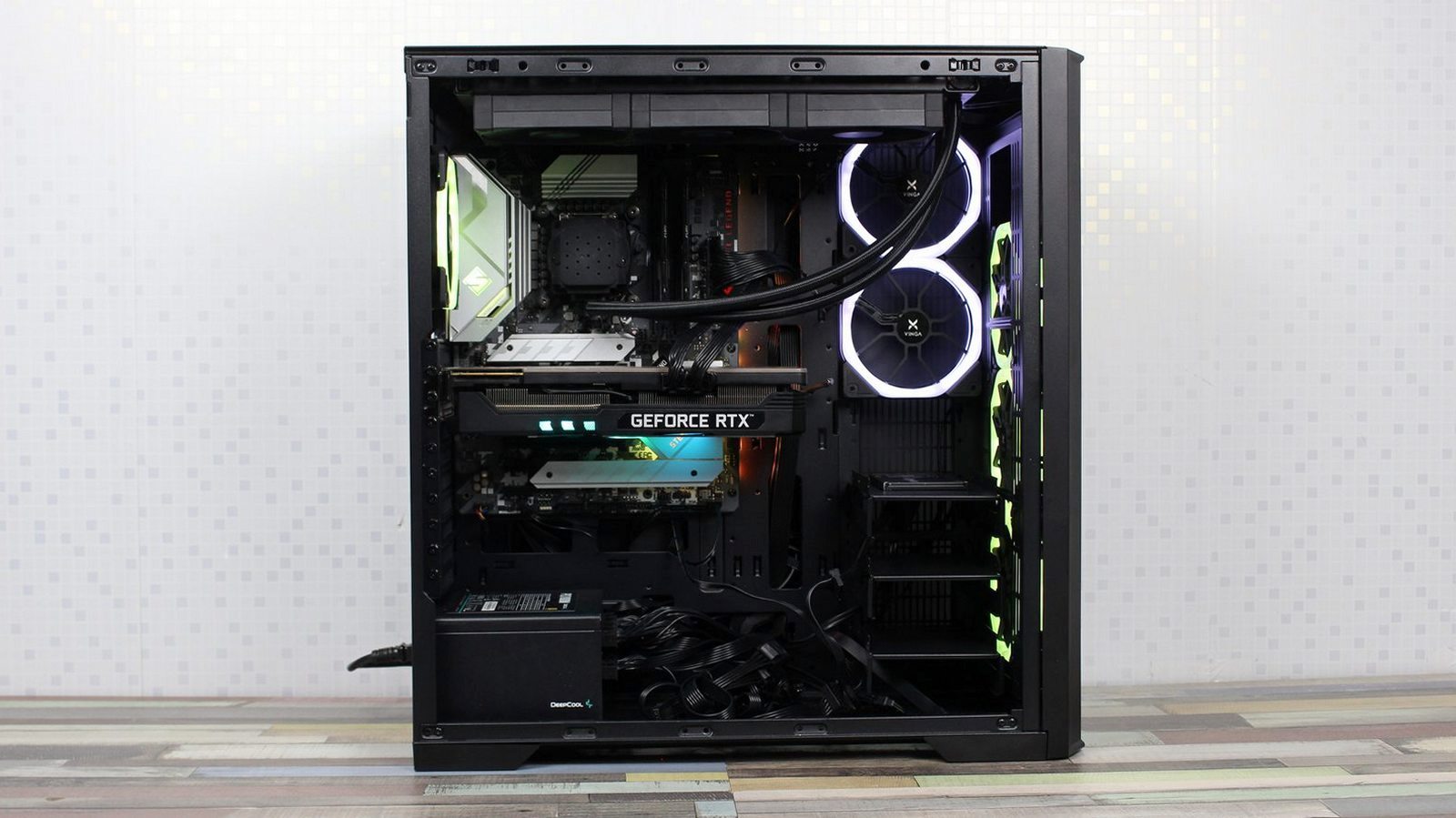
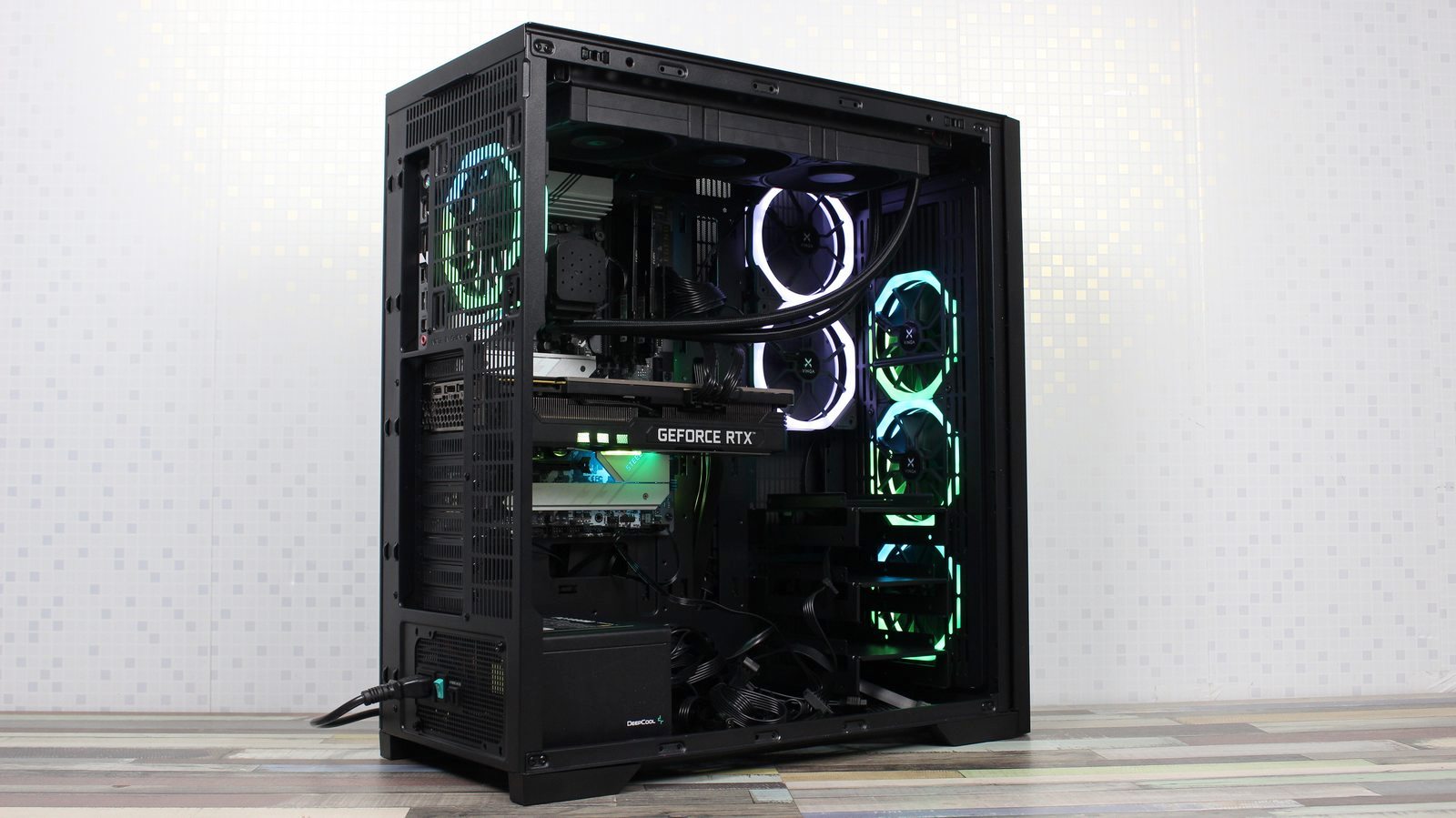
The internal layout of the Vinga Shatter case provides for two separate zones.
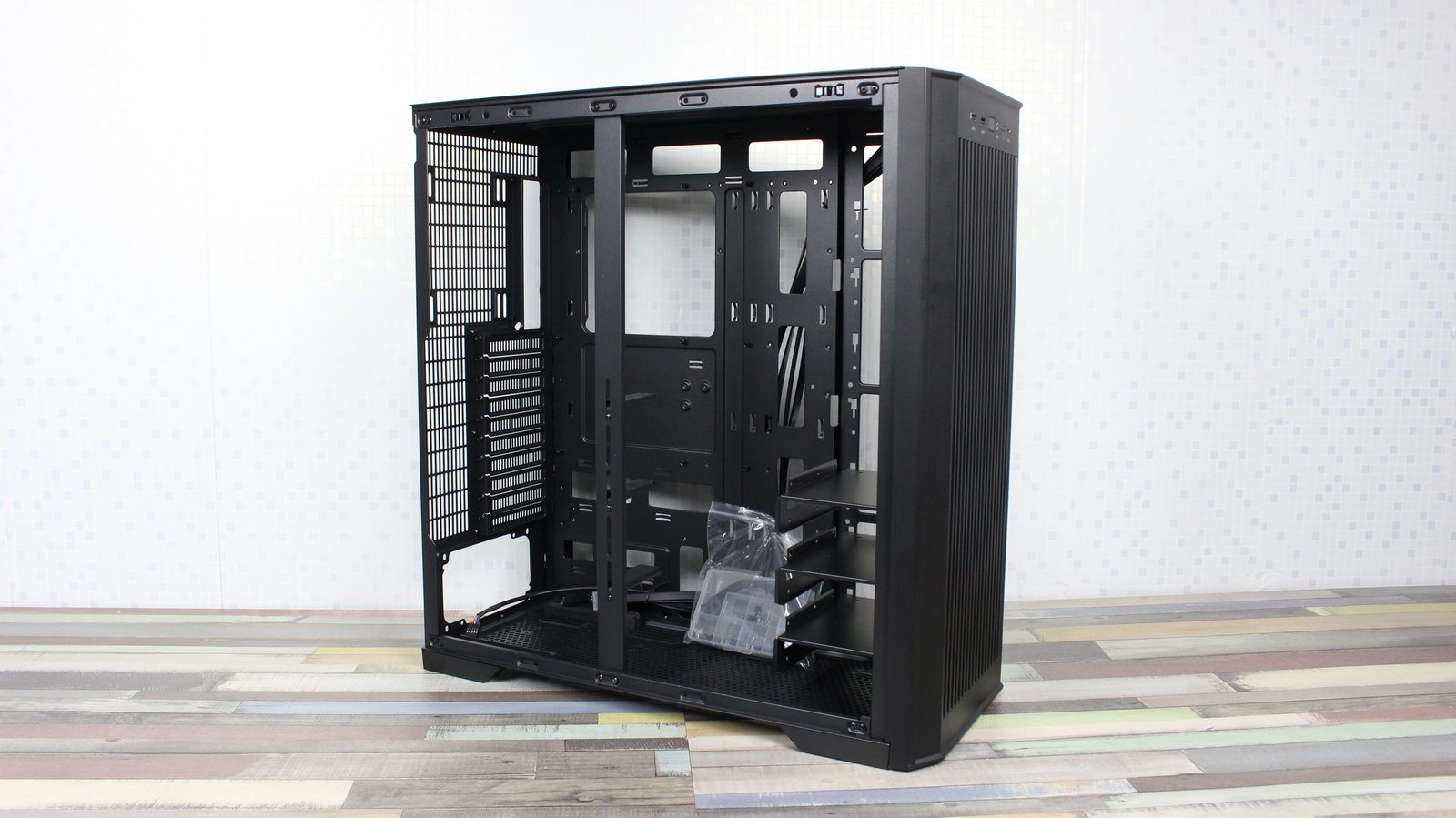
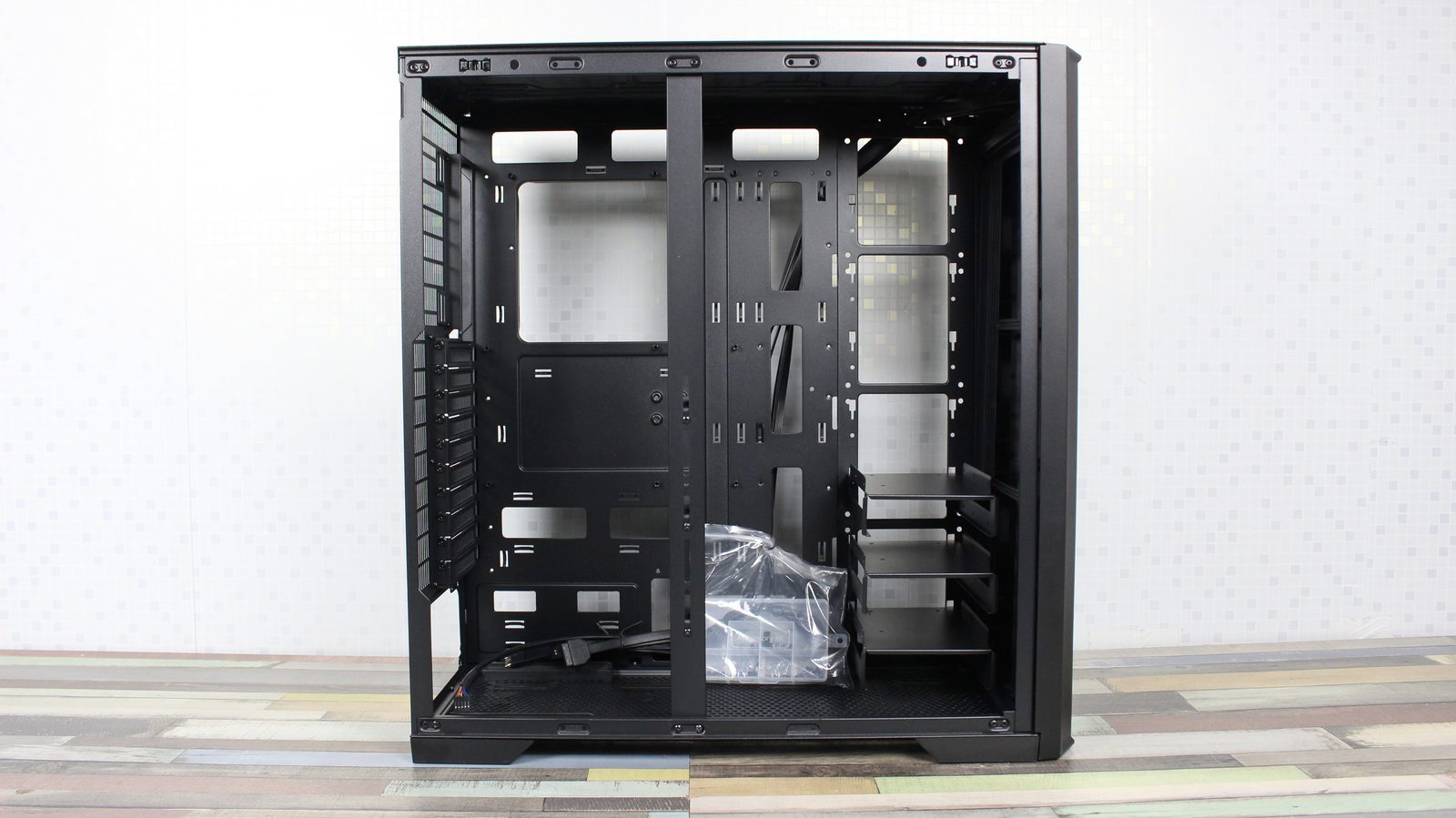
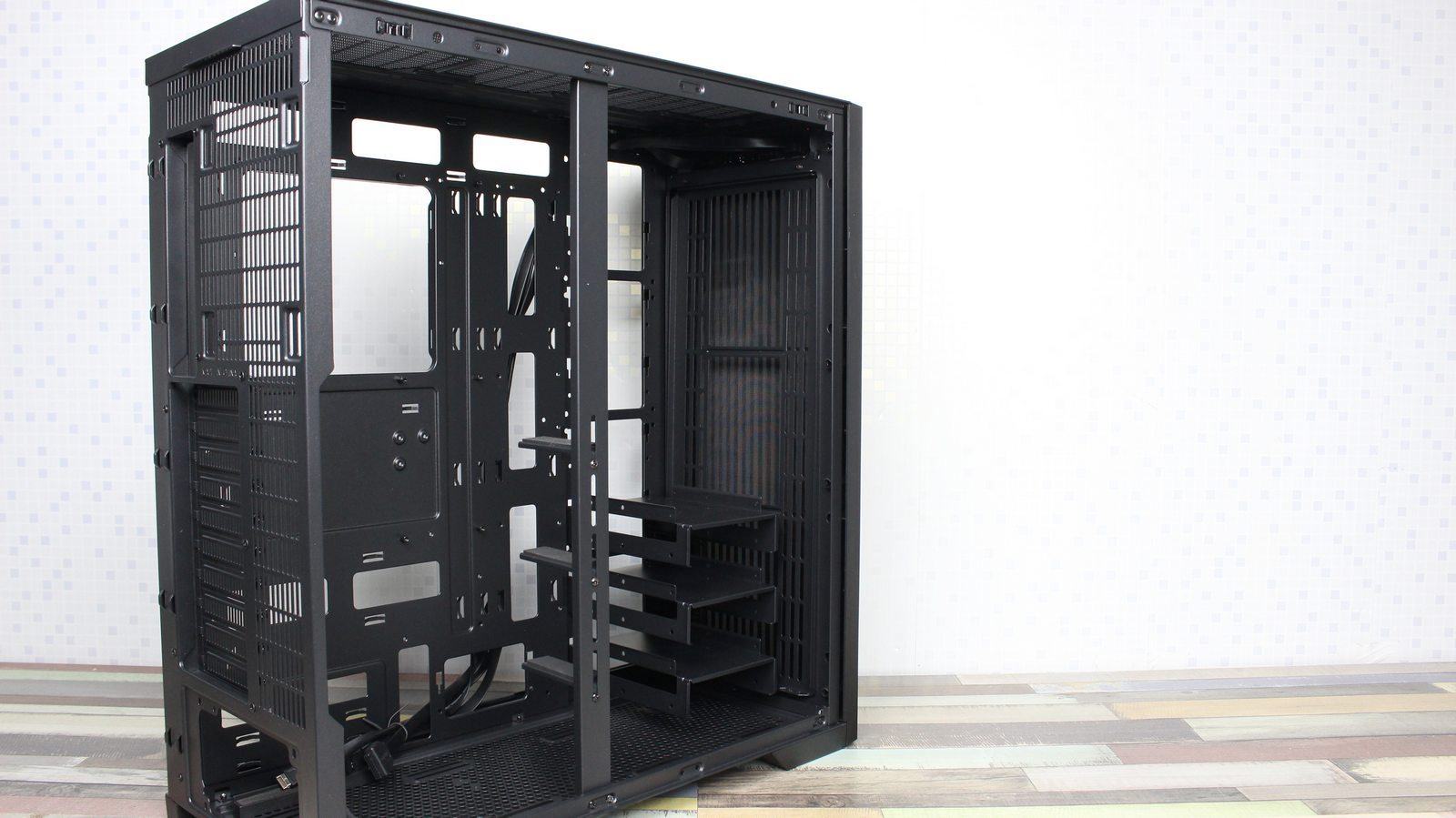
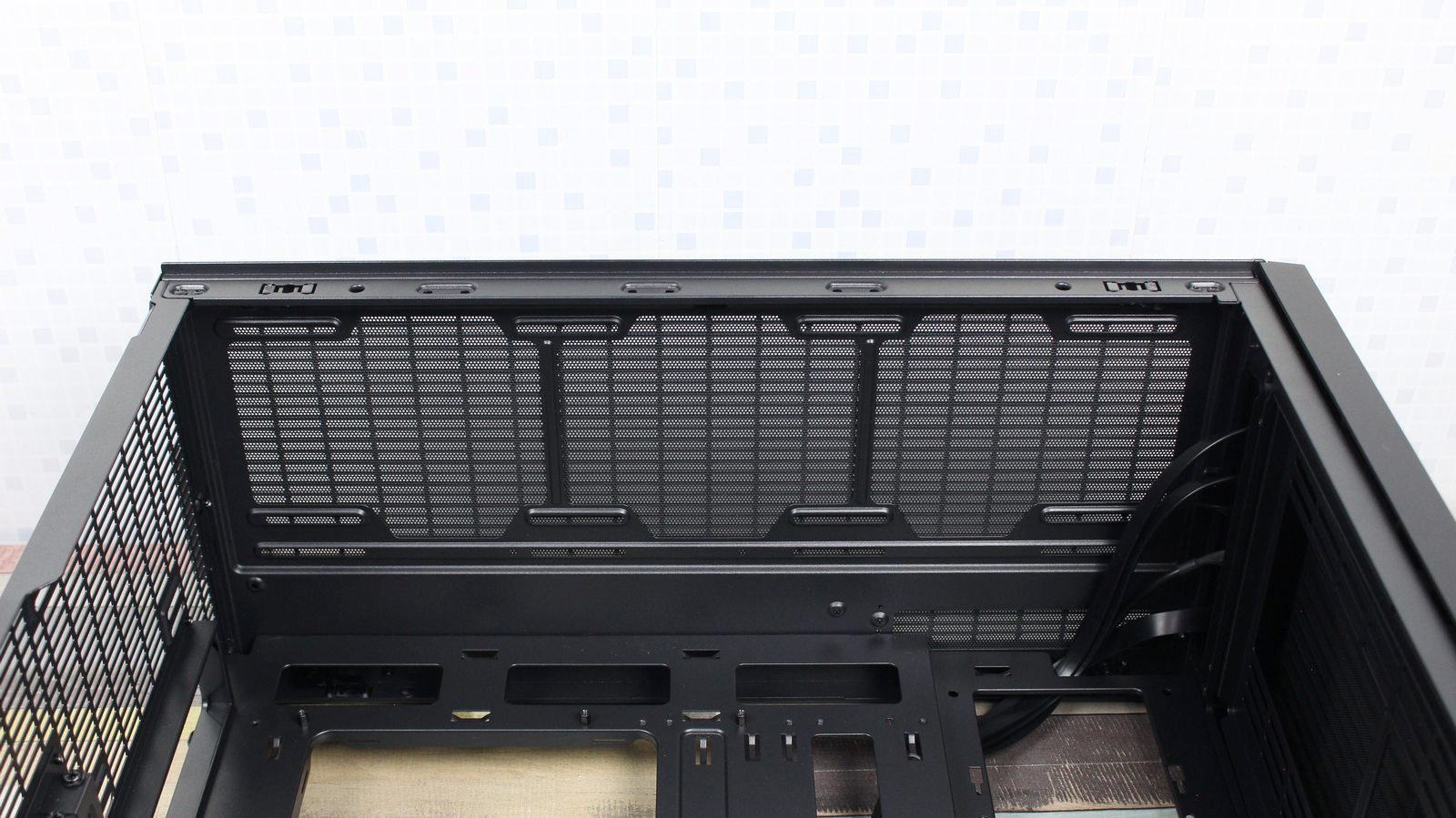
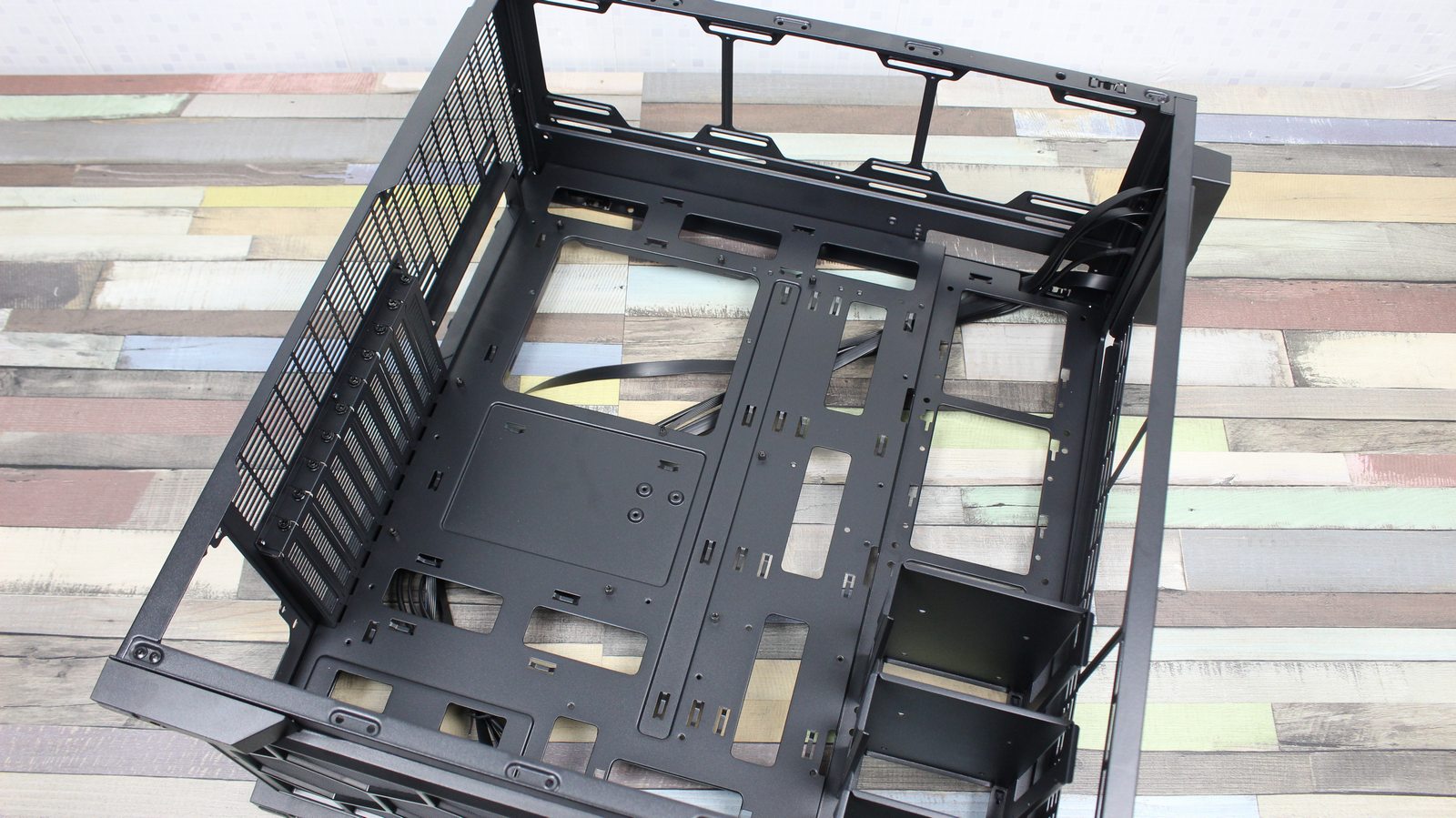
The main part is designed for installing the motherboard, graphics card, drives, and cooling systems, which contributes to the efficient distribution of airflow and the maintenance of a stable temperature regime.
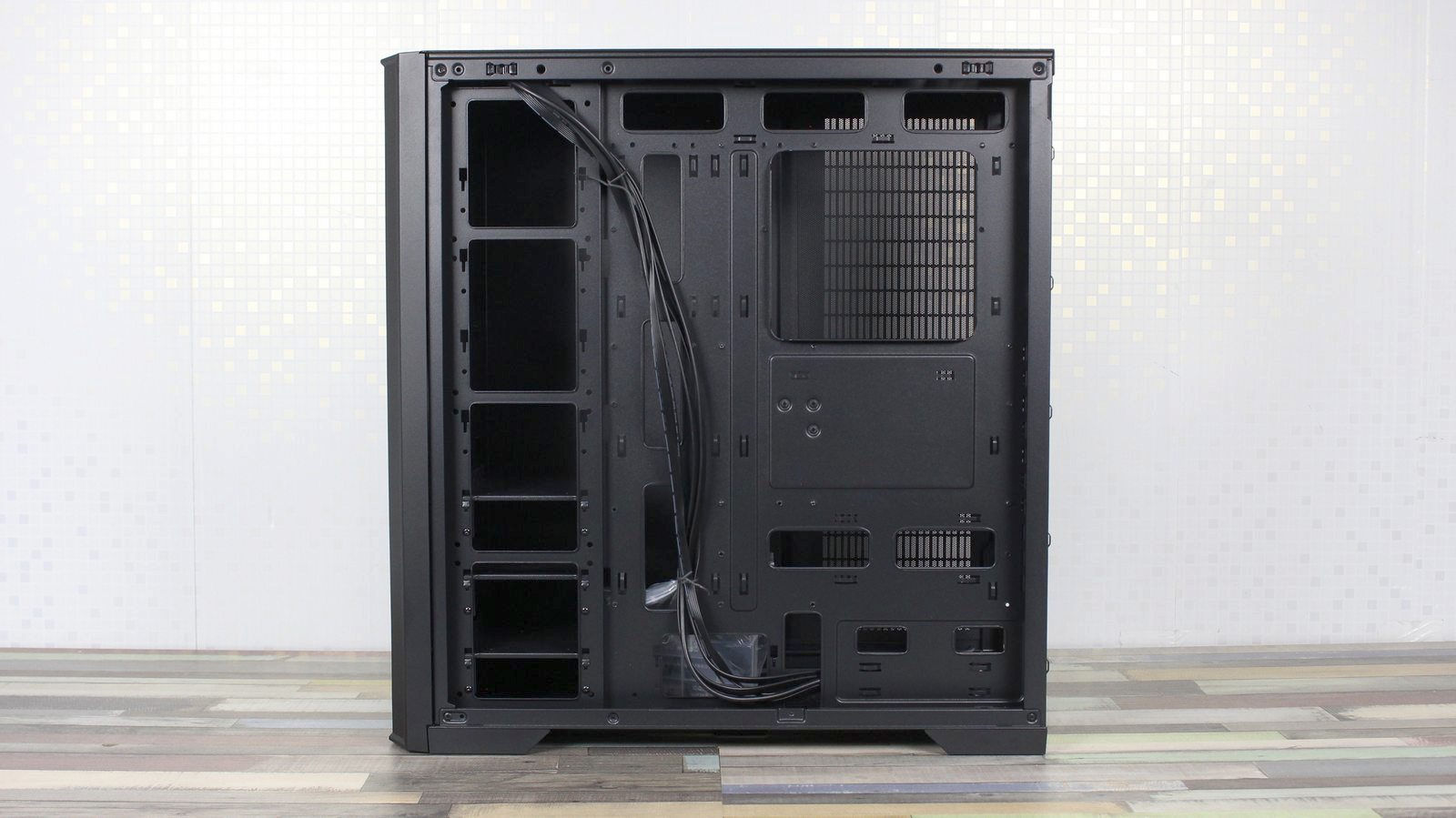
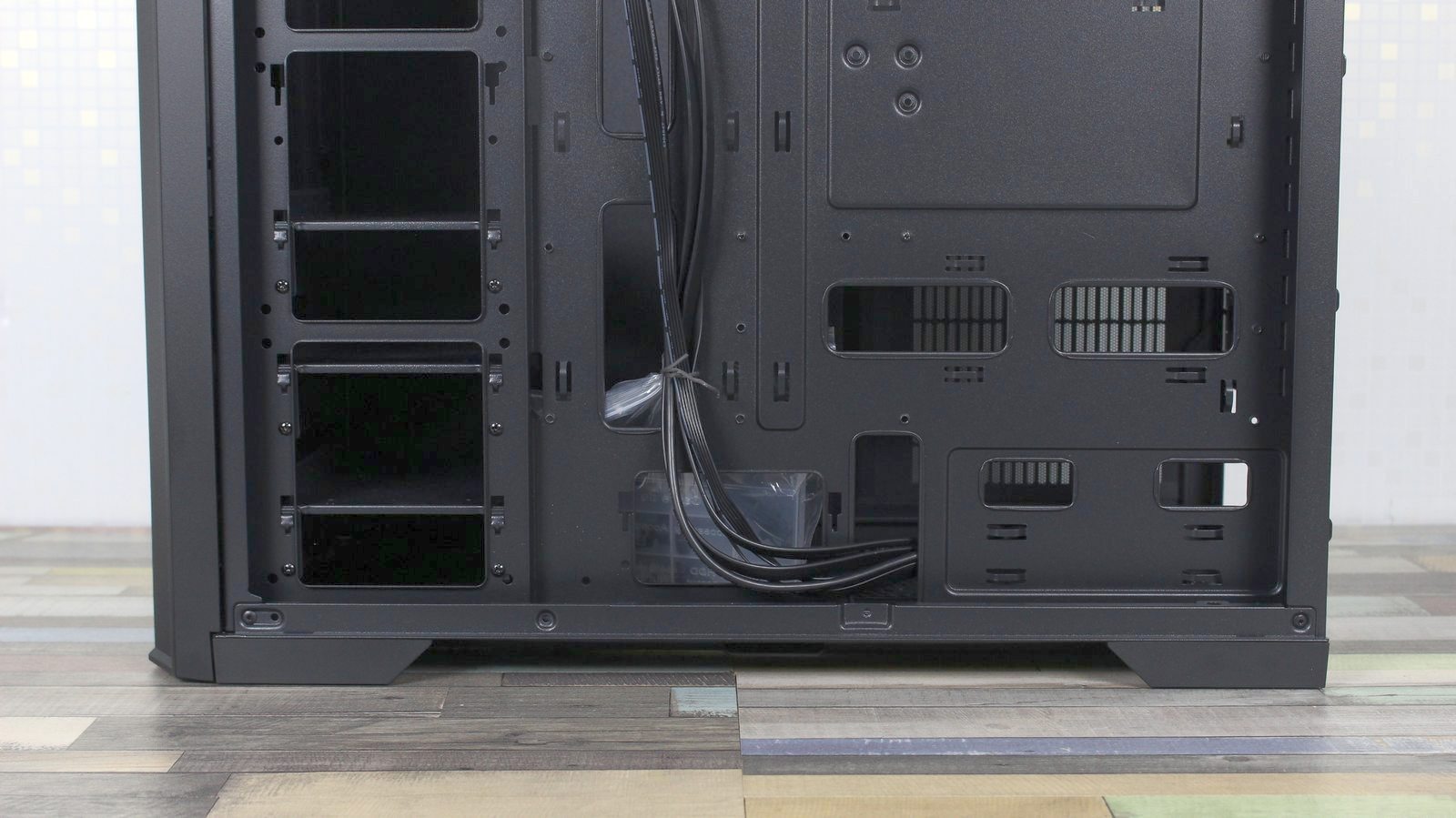
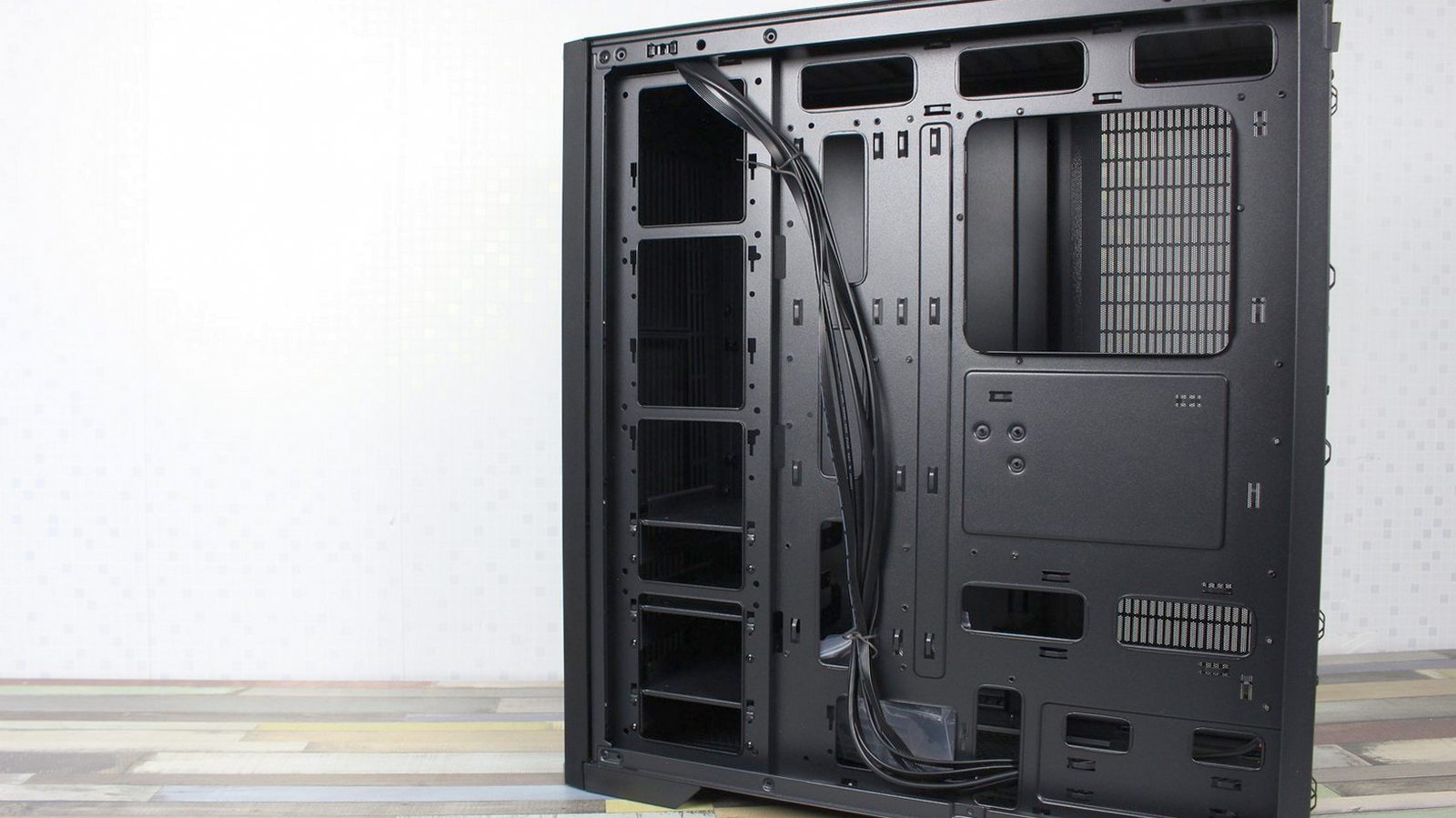
The space behind the motherboard tray is fully dedicated to professional cable management organization.
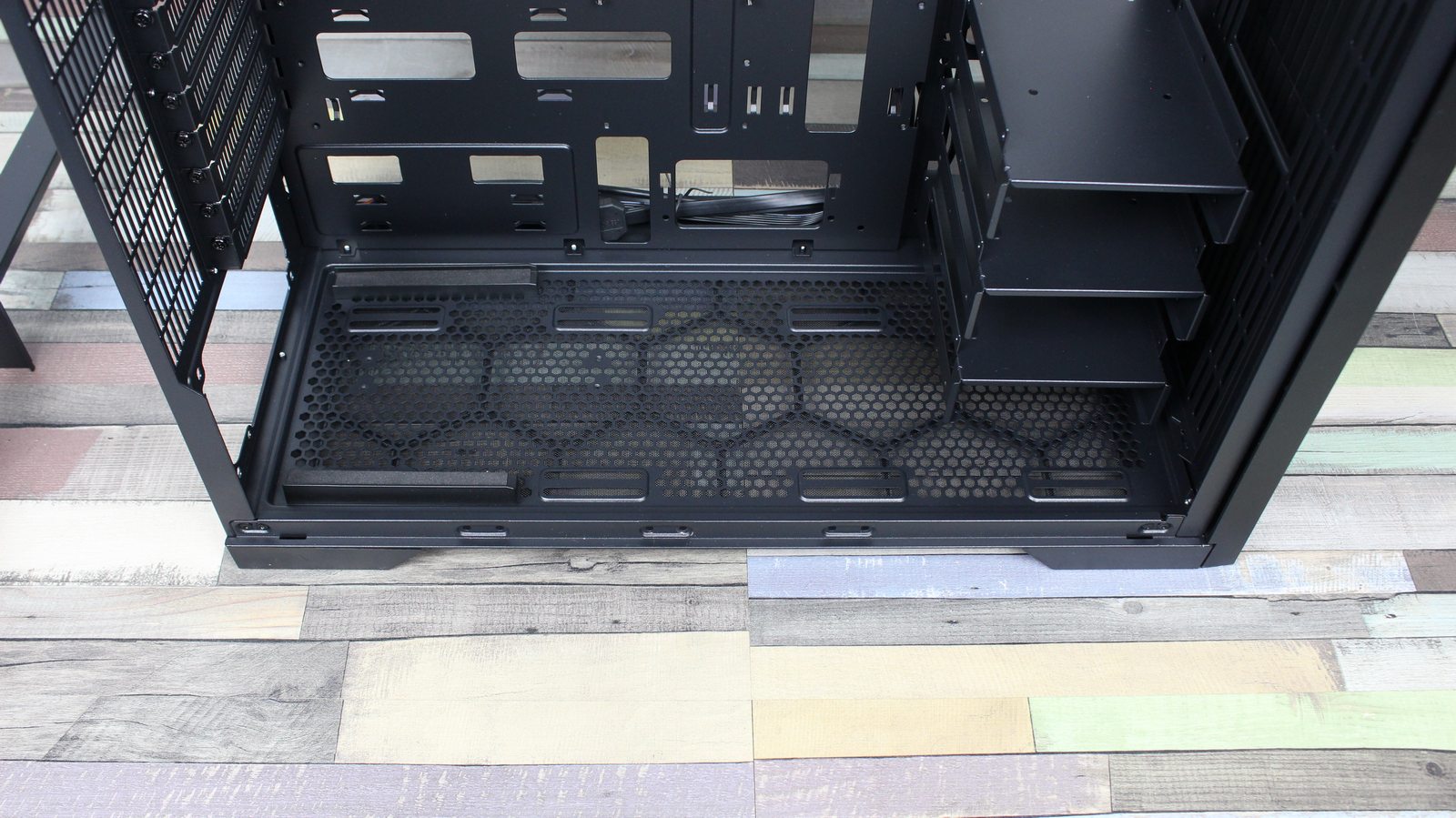
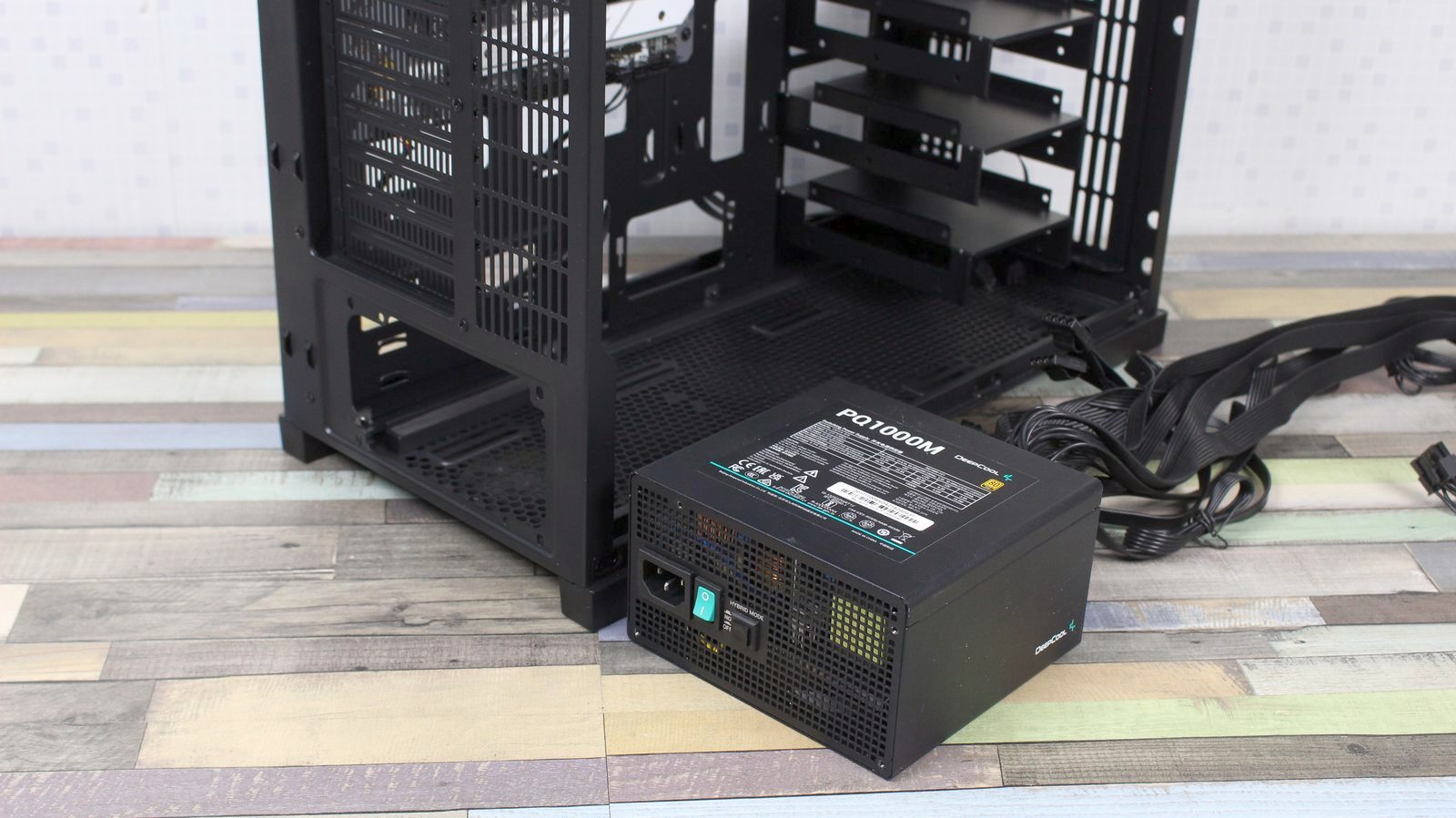
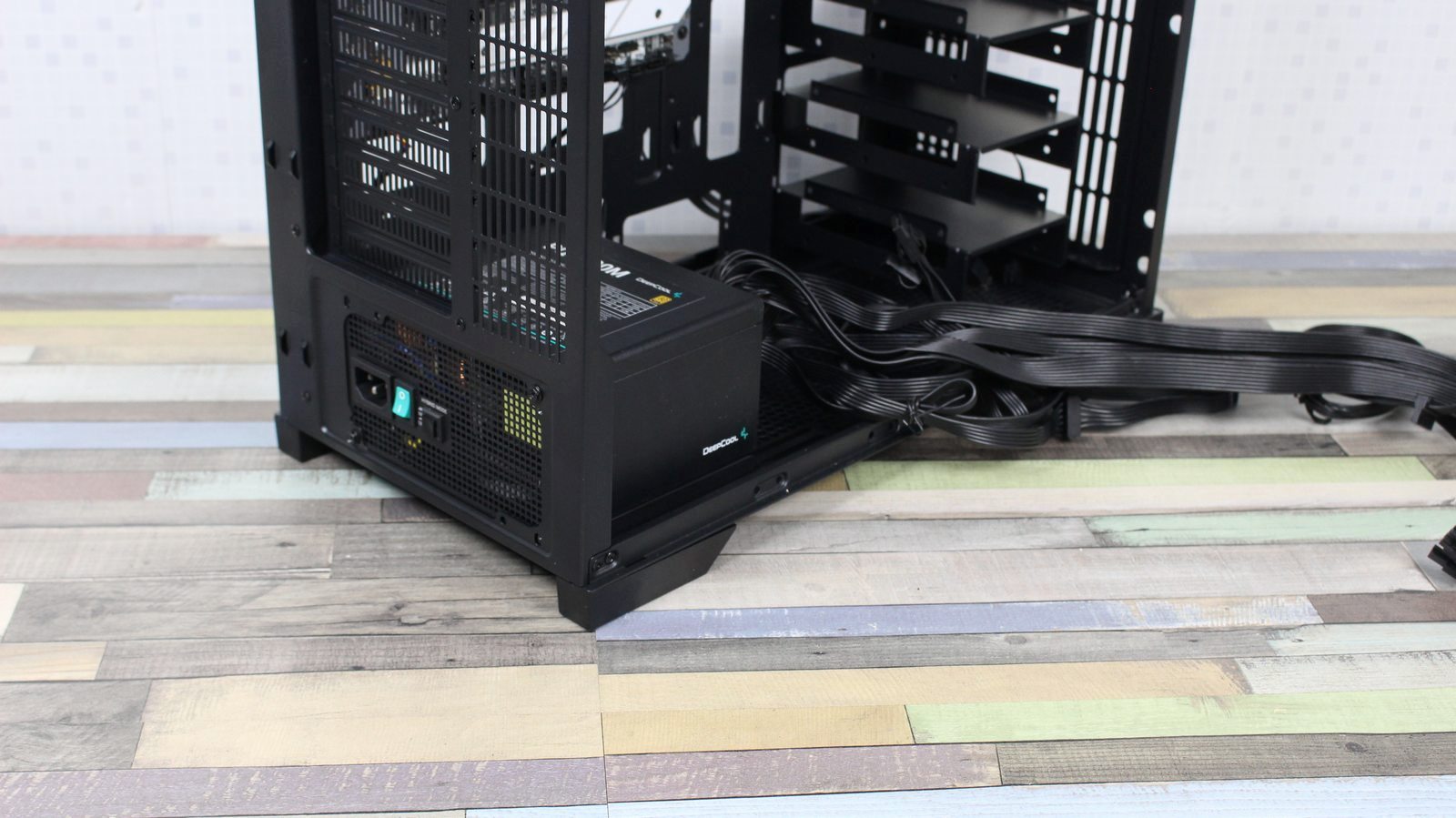
The power supply is installed at the bottom of the case. The universal design allows for the placement of a model of almost any length.
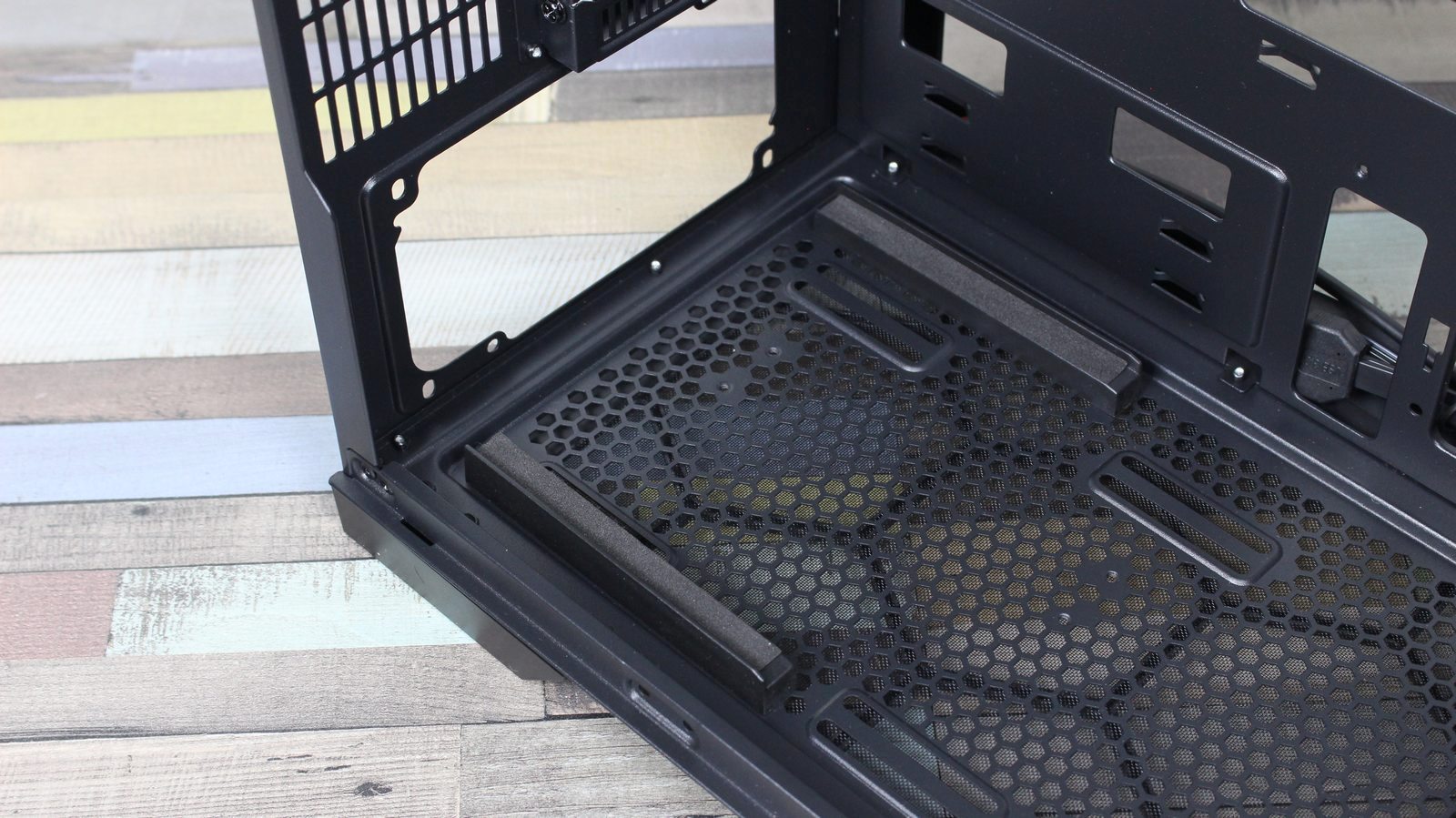
The bottom features two stamped supports, equipped with rubber spacers to minimize noise and ensure secure fixation.
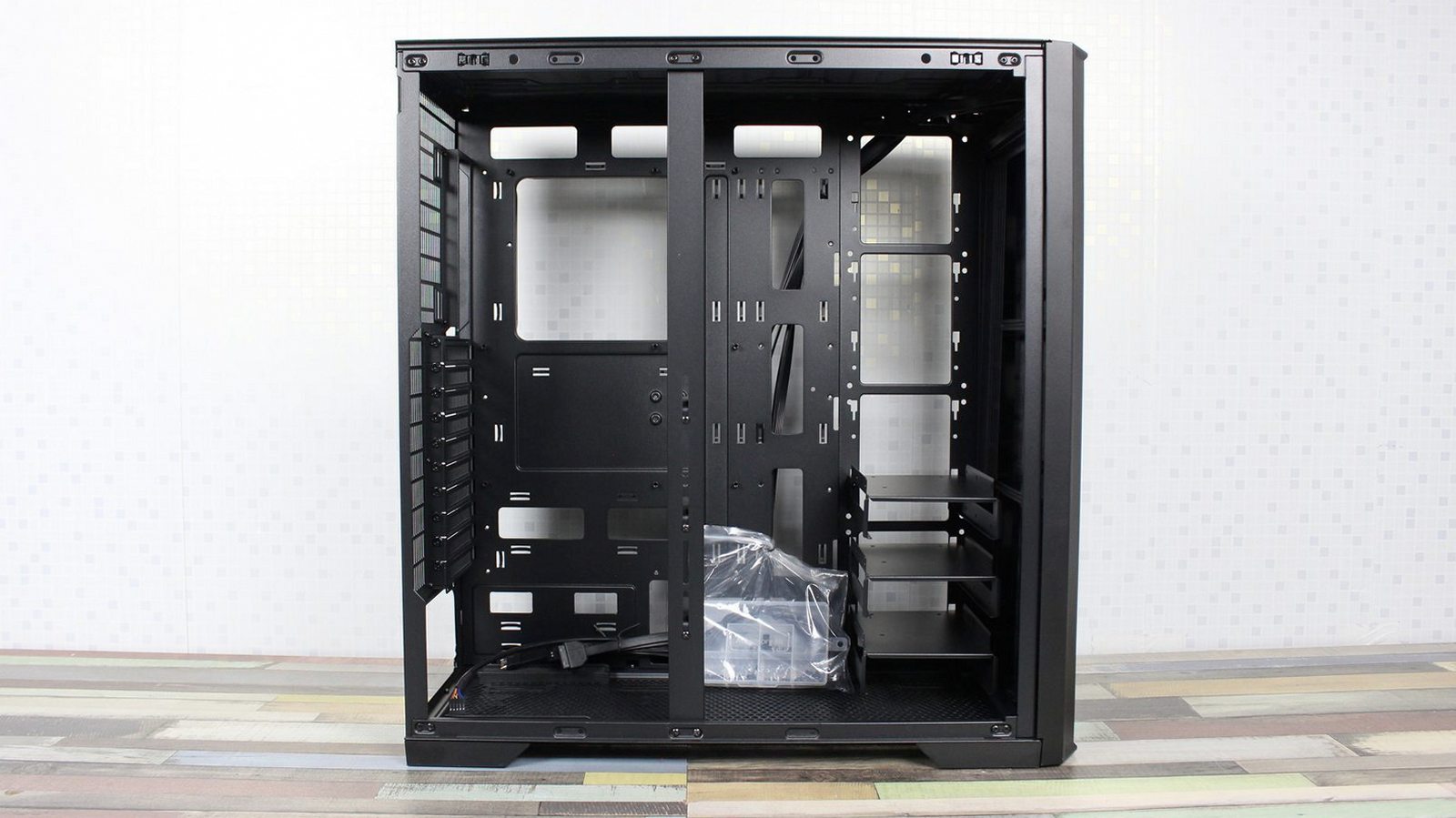
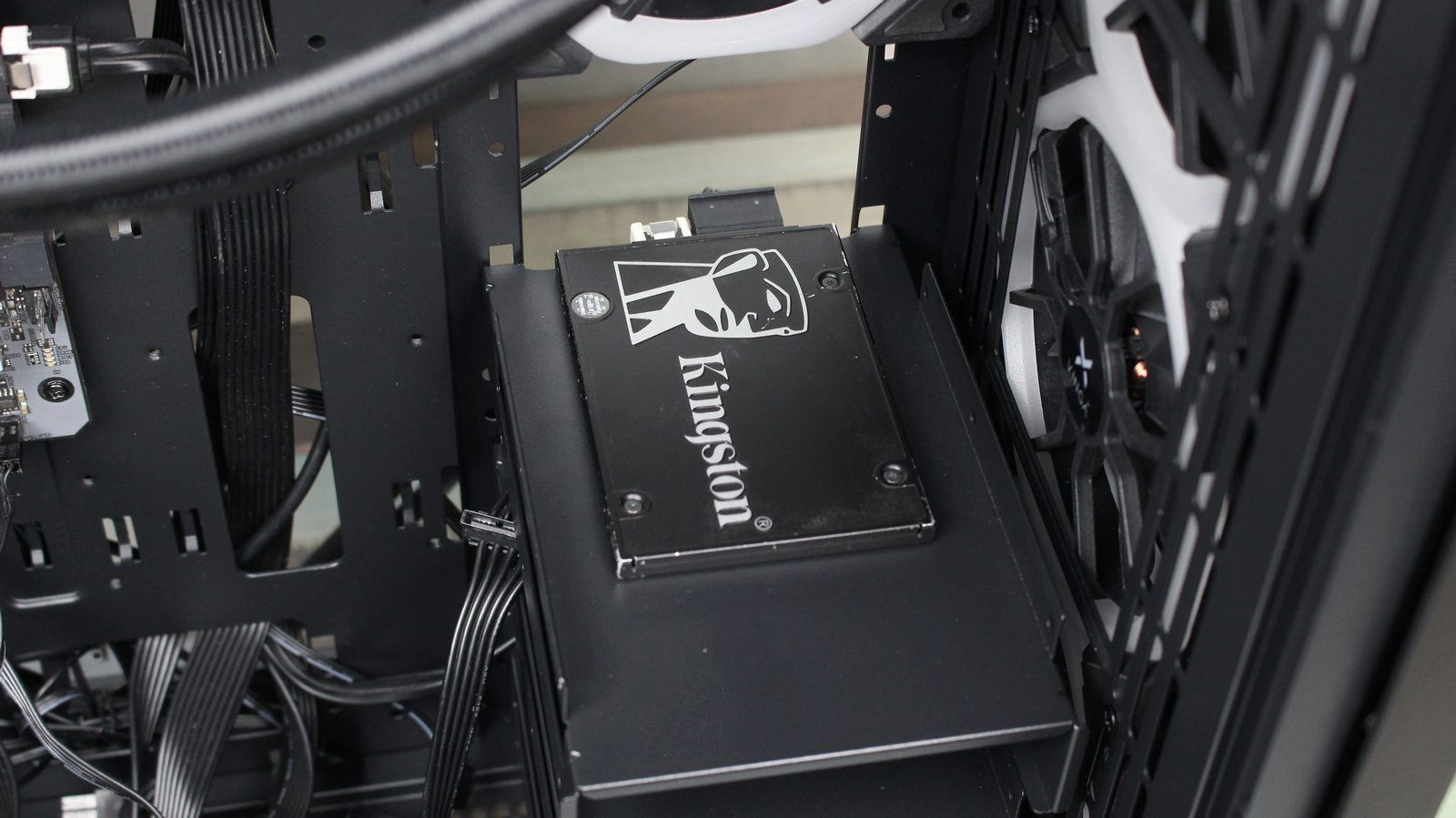
The modular drive system includes three removable cages that can be fixed on the right vertical stand in different positions.
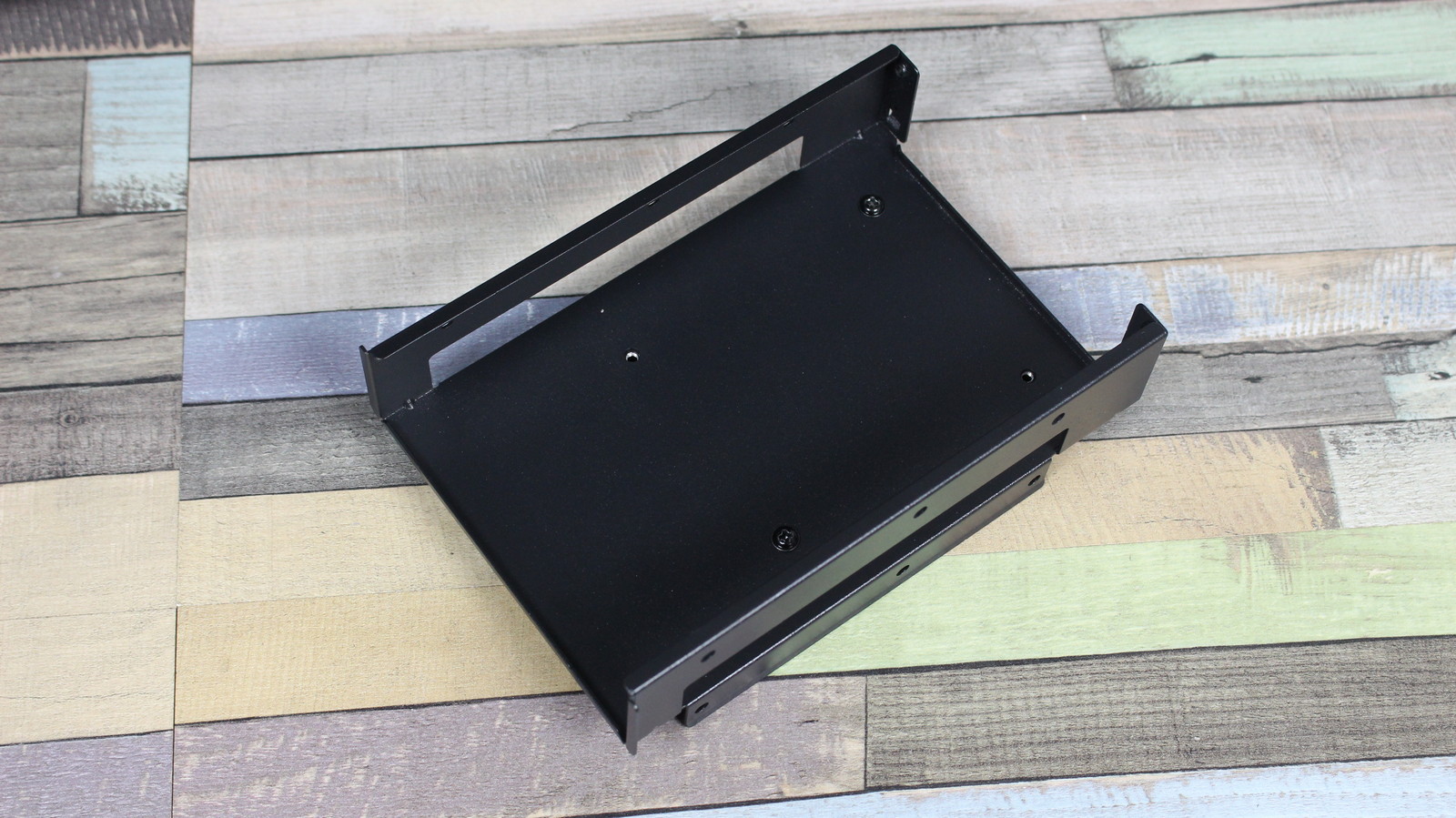
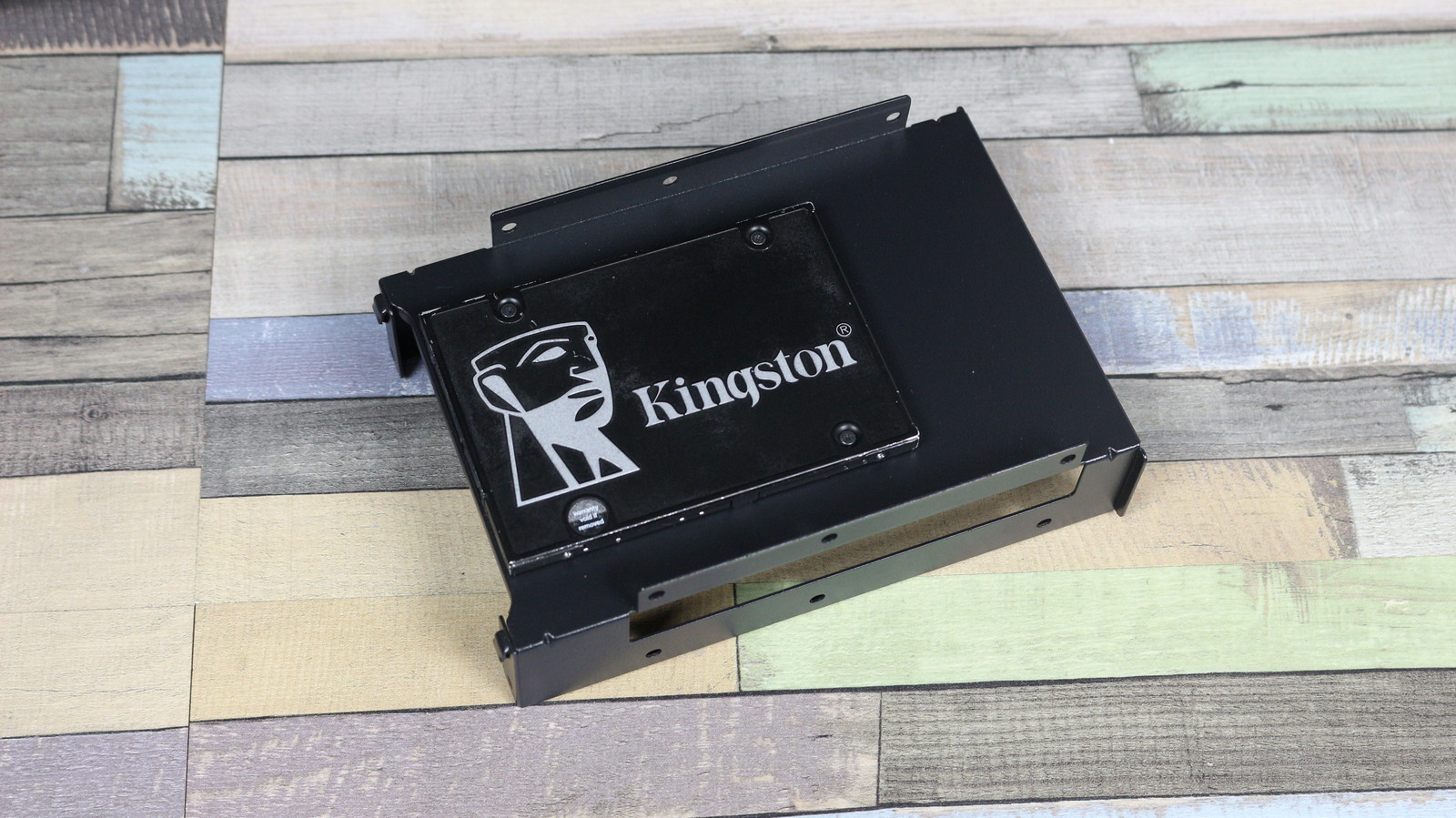
Each cage allows for the simultaneous placement of up to two 3.5" HDDs and one 2.5" SSD, supporting up to 9 drives.
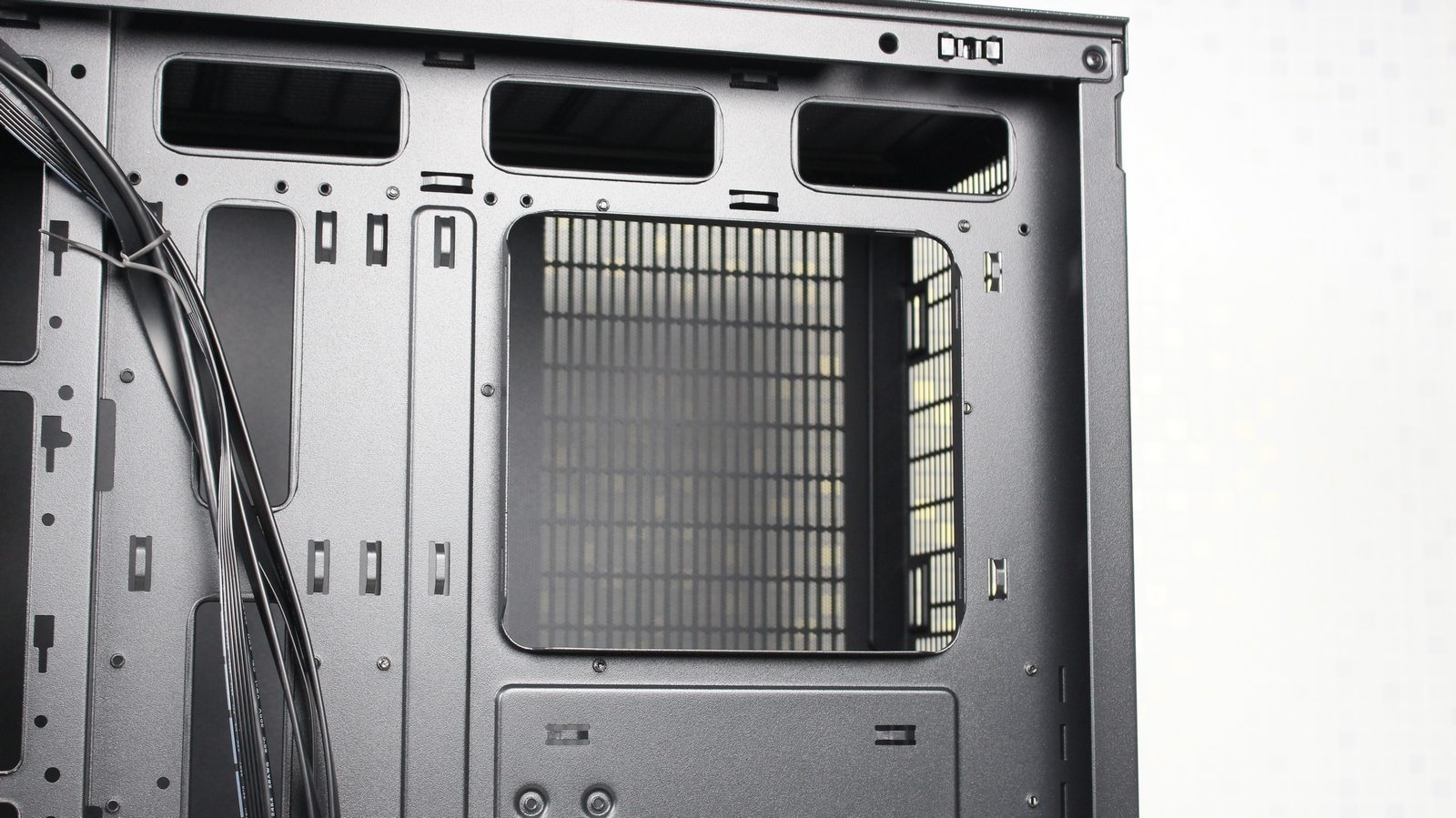
The motherboard tray has a large rectangular cutout that facilitates the installation or replacement of the CPU cooler mount without removing the motherboard.
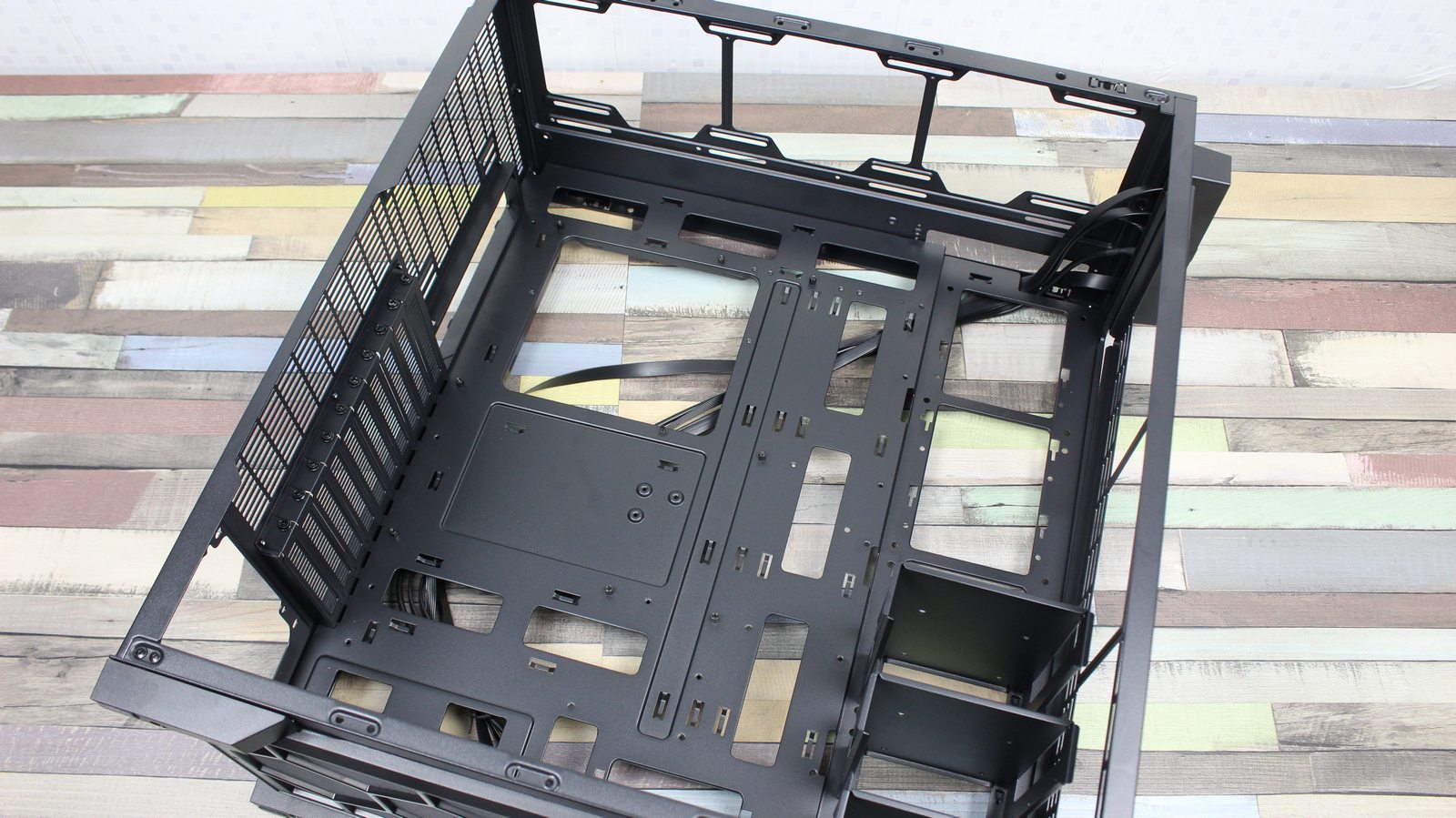
For hidden cable routing around the perimeter of the tray, there are numerous large holes, and on the back, there are special loops for securing them with ties.
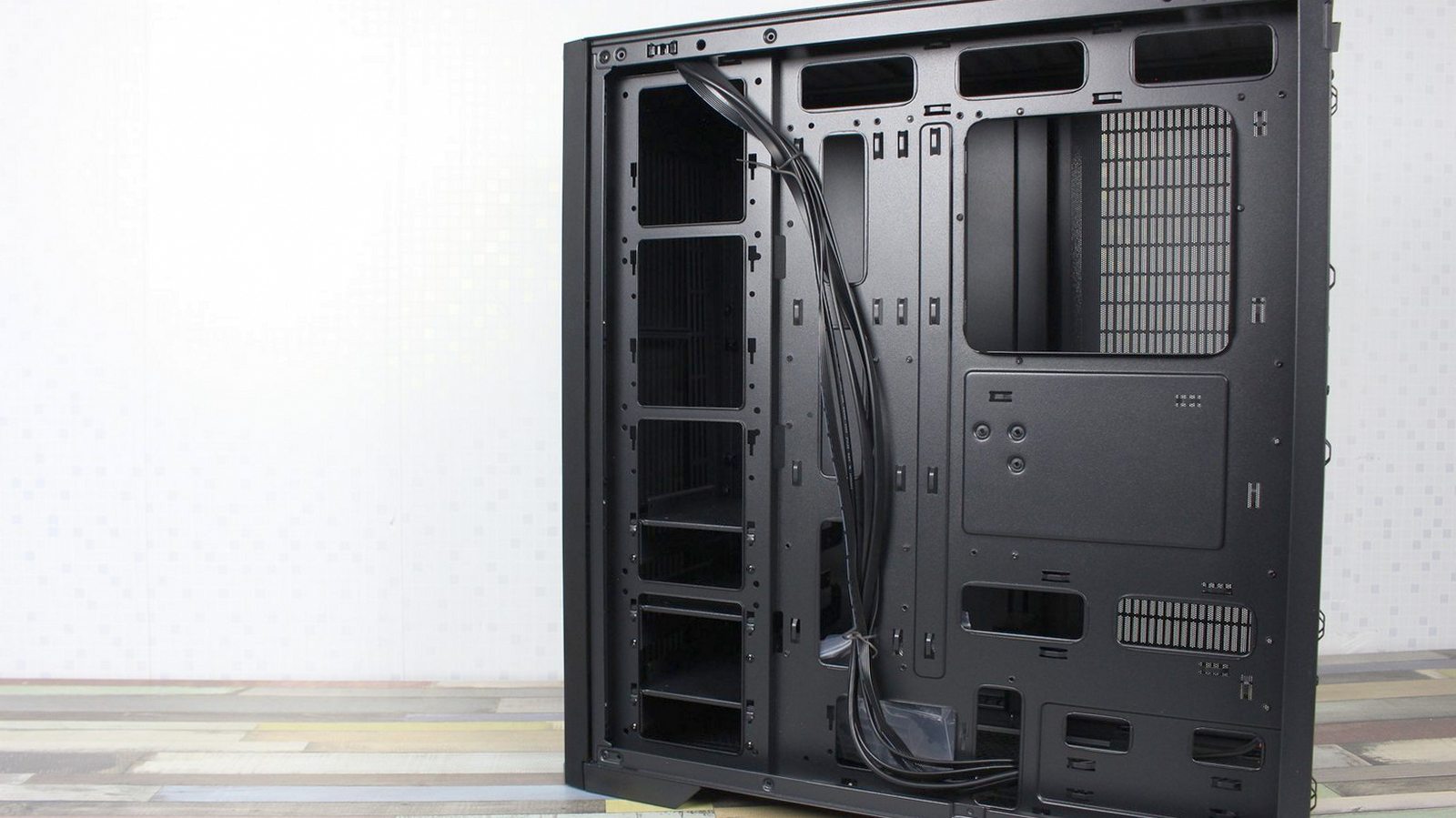
The distance between the tray and the right cover is 23 mm, ensuring enough space for neat cable placement.
The case is compatible with ATX, micro-ATX, and Mini-ITX form factor motherboards. Thanks to its significant internal width, the model supports air coolers up to 185 mm in height, which is an excellent indicator.
There is 58 mm of free space between the top panel and the edge of the motherboard, so when choosing a cooling system, it is worth considering that a standard 360 mm radiator with fans will occupy almost all of this space, so it is important to check compatibility with the height of the motherboard components in advance.
Flexibility in choosing graphics cards is ensured by the ability to increase the allowable length of the graphics adapter from the standard 340 mm to 430 mm by rearranging or completely removing the drive cages, even when using a 360 mm radiator.
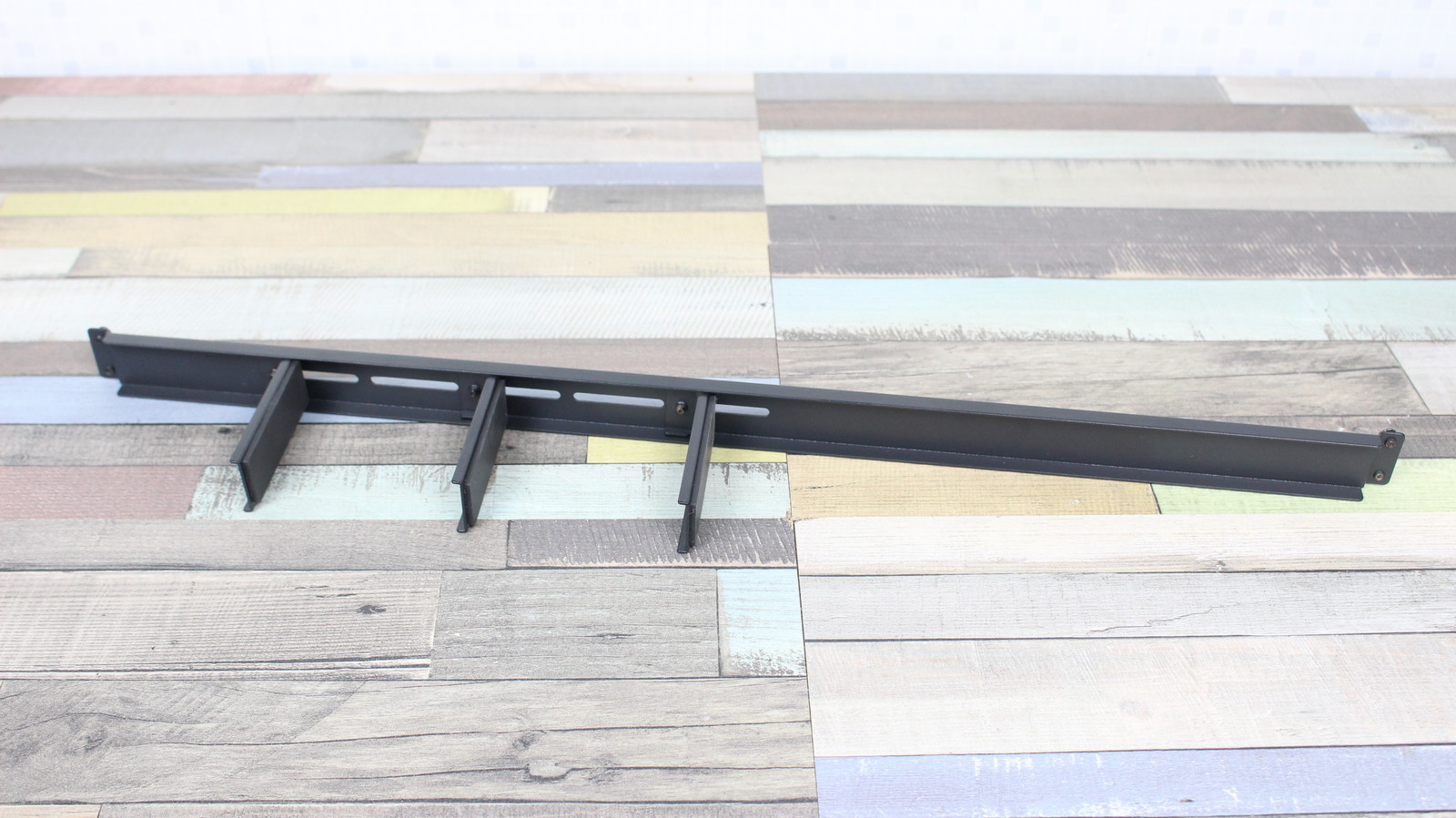
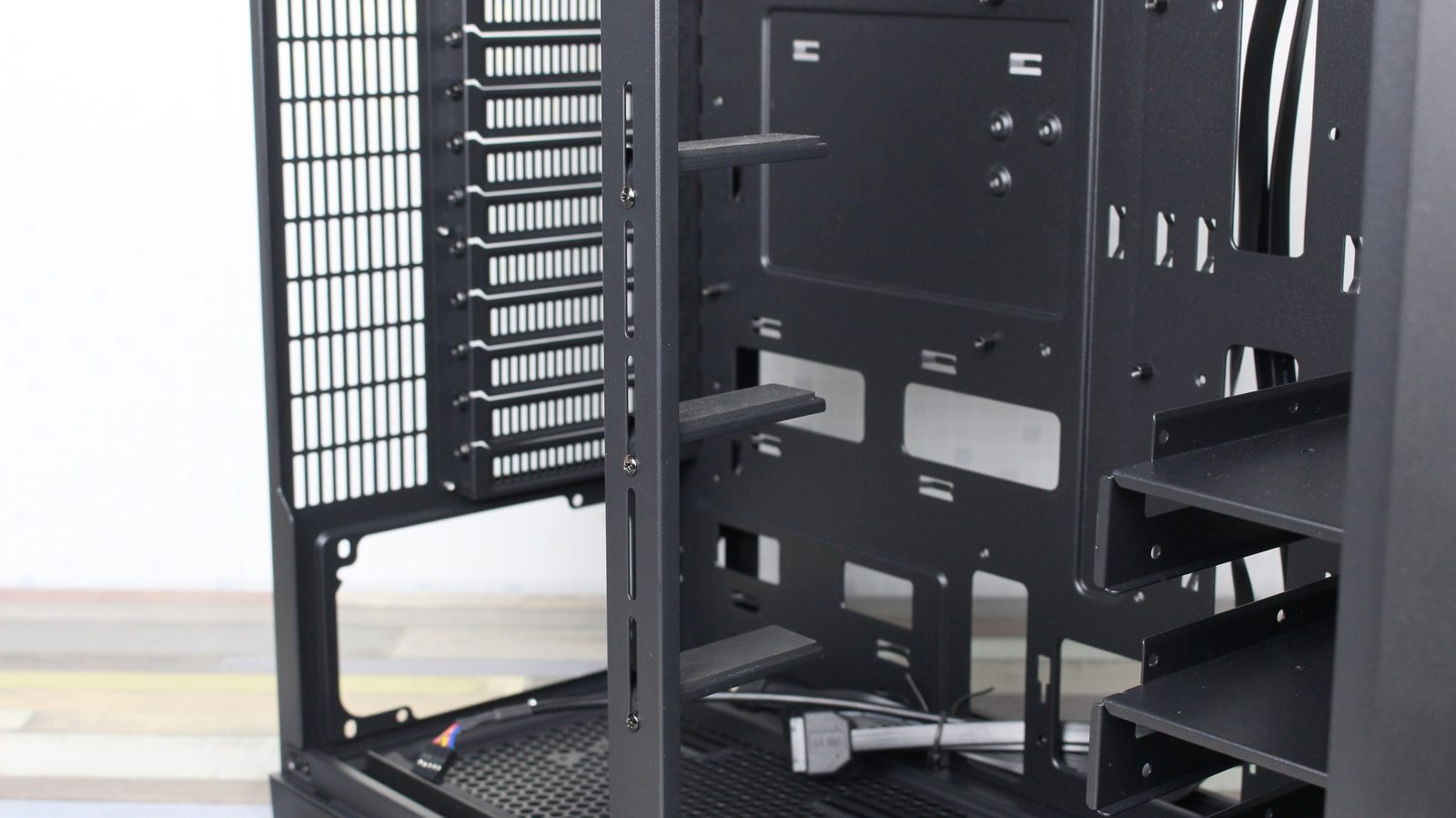
Additionally, the design includes a vertical support bar with three adjustable supports for the graphics card. Each of them is height-adjustable and equipped with a rubber pad that protects the graphics card shroud from scratches. The bar itself can also be installed in one of three positions depending on the length of the graphics adapter.
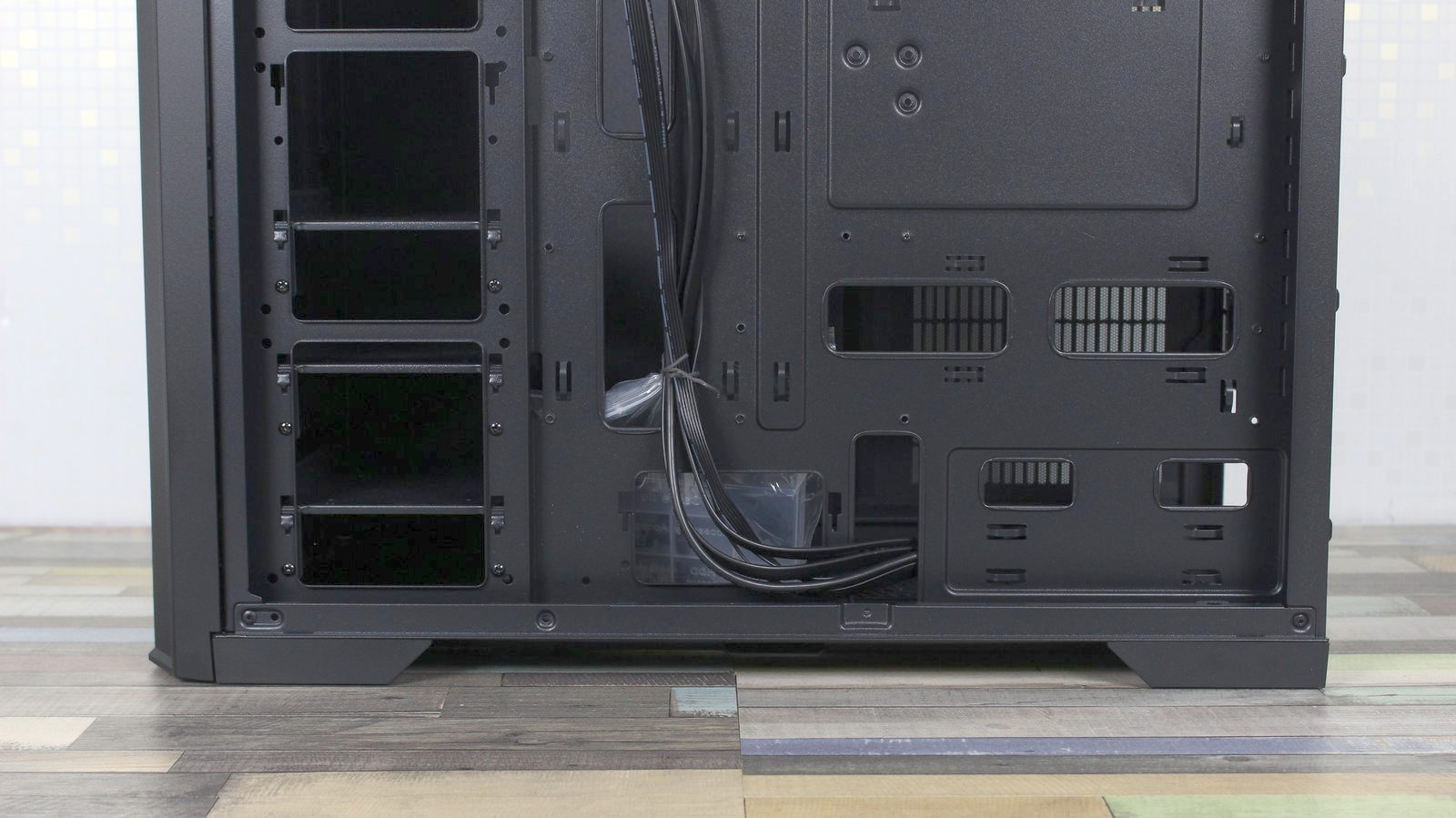
The safety of the assembly is ensured by carefully rolled technical holes that eliminate the risk of cuts. Vinga Shatter is focused on maximum comfort: most operations are performed without a screwdriver. Tools are only needed for mounting the motherboard, plugs, fans, or radiators, which greatly simplifies further upgrades and system maintenance.
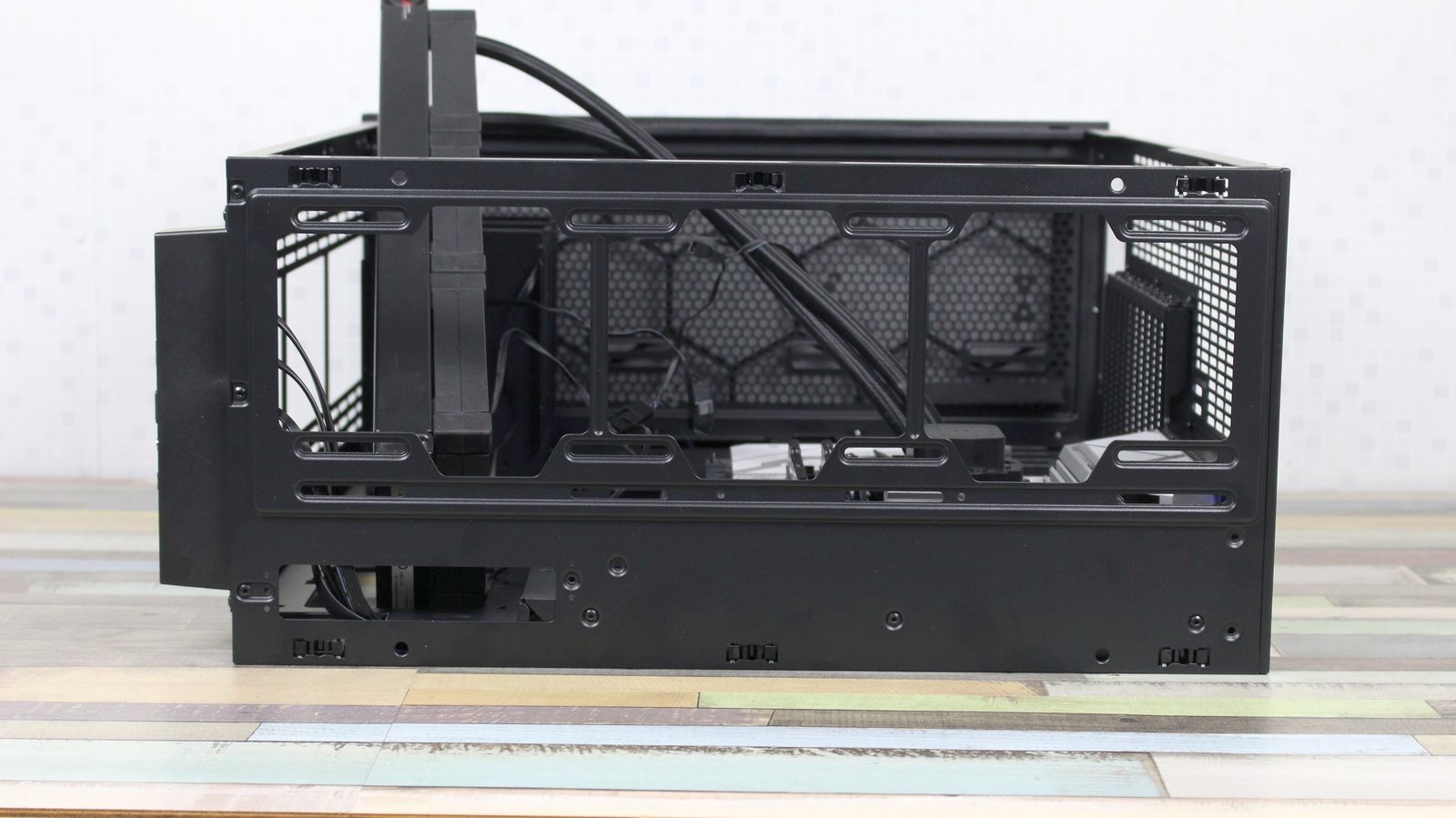
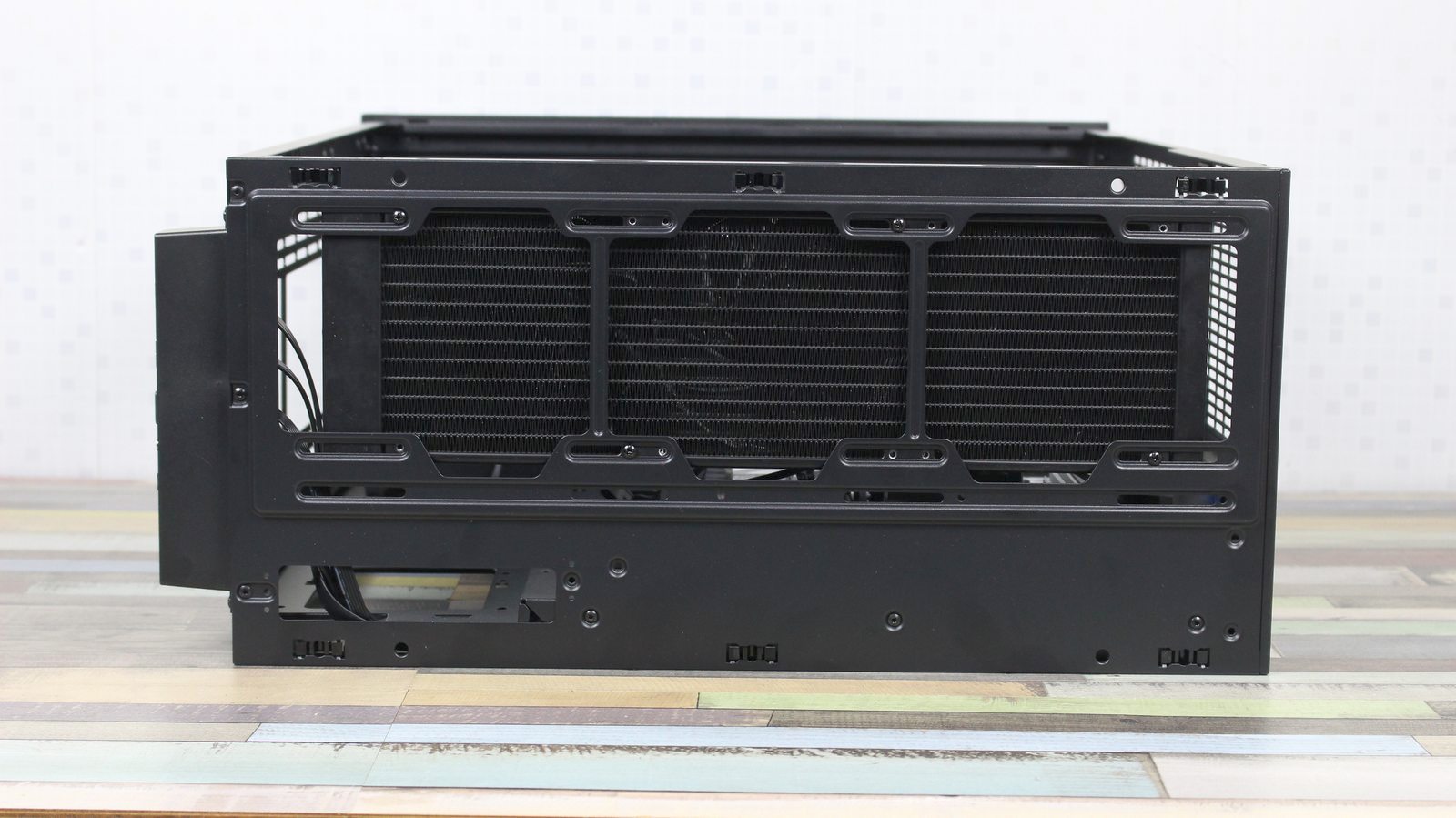
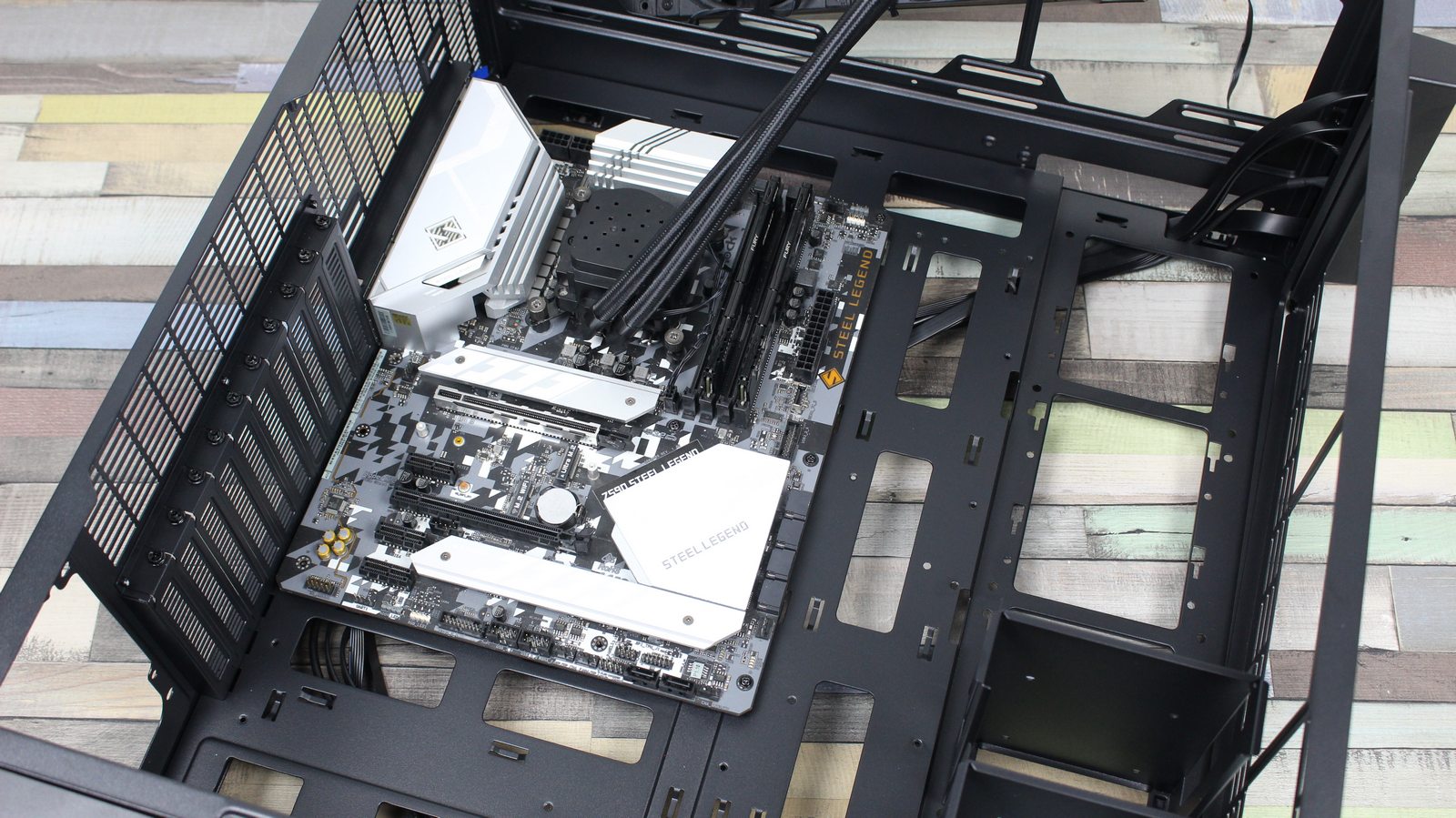
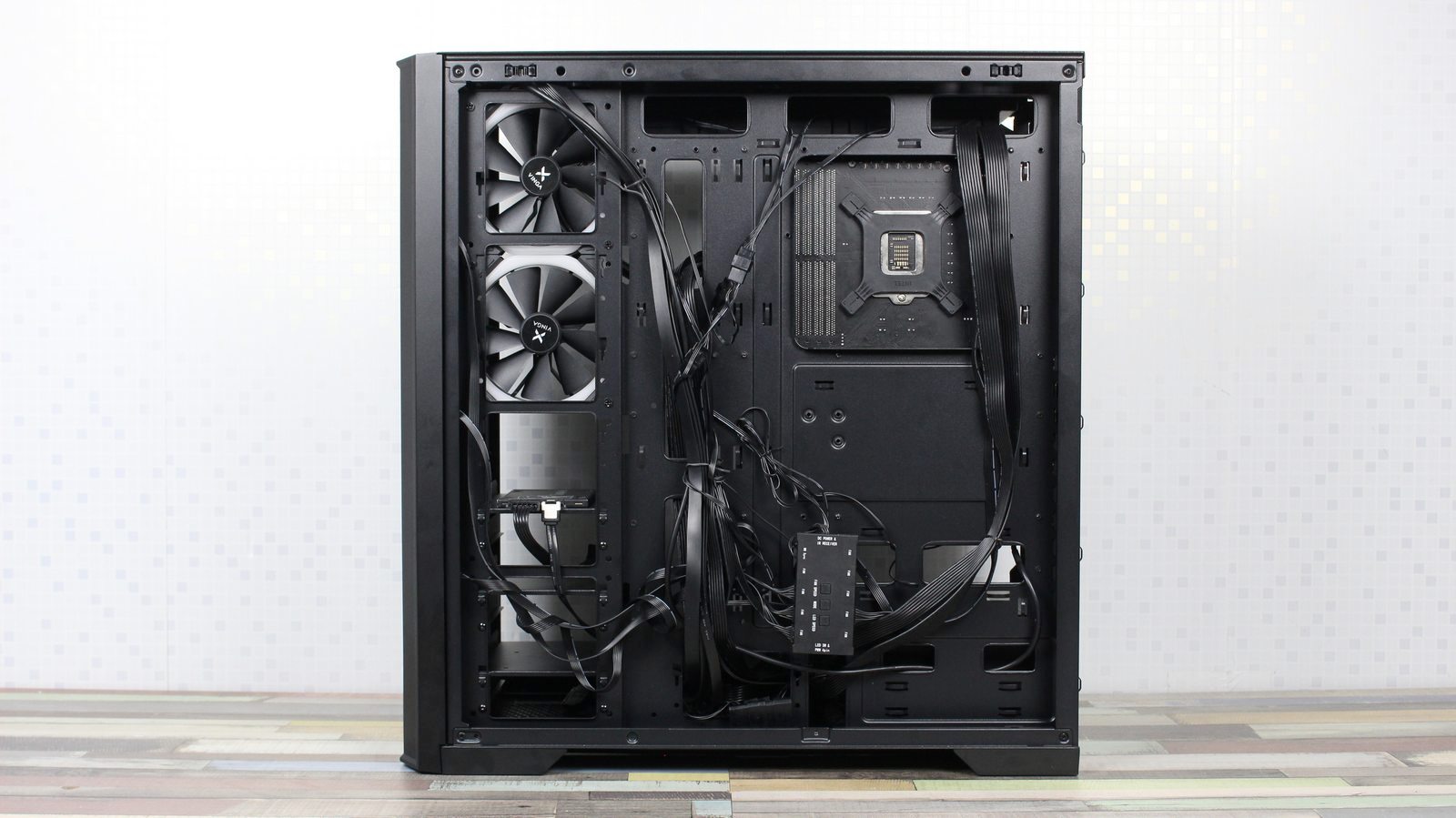
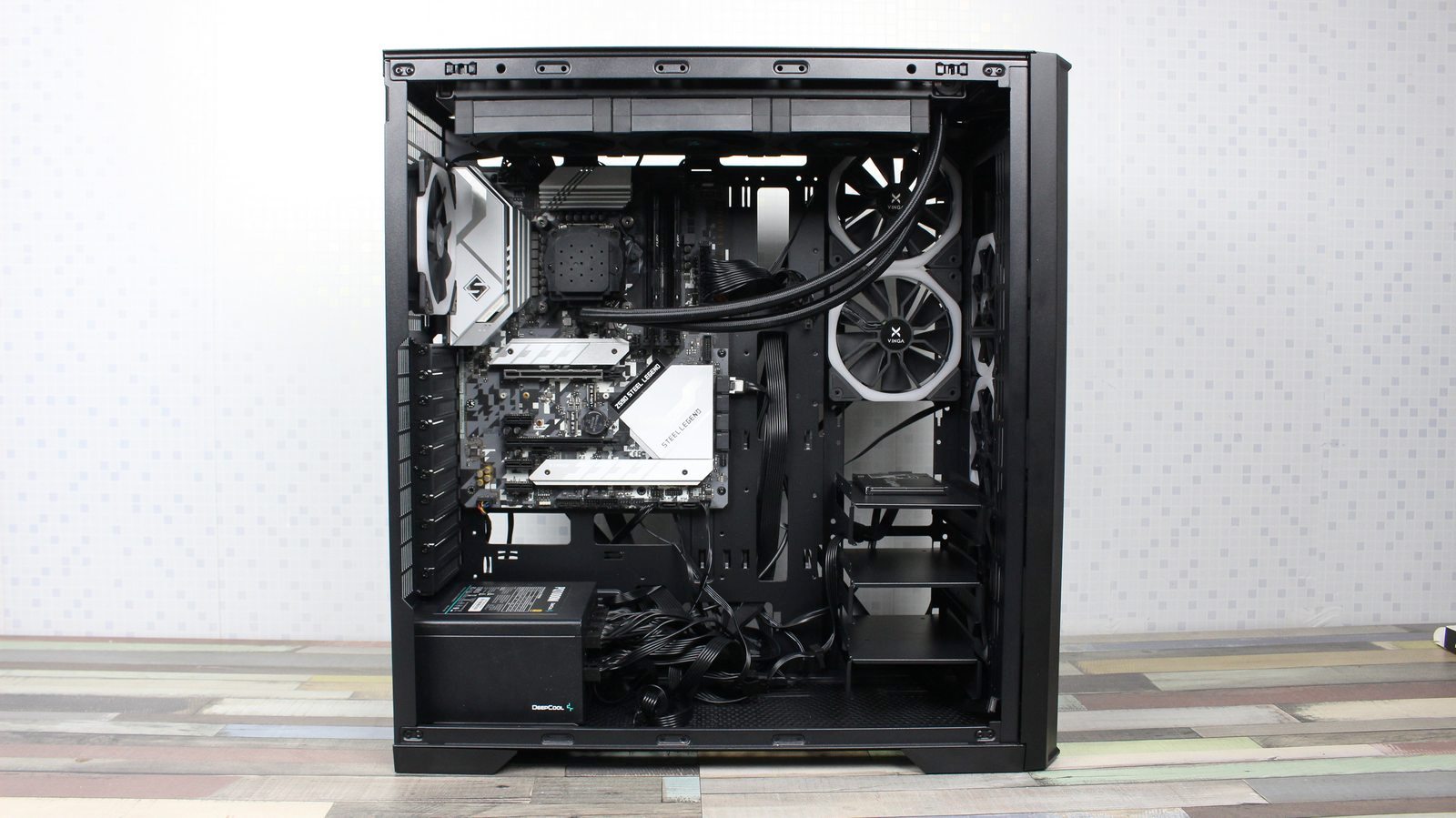
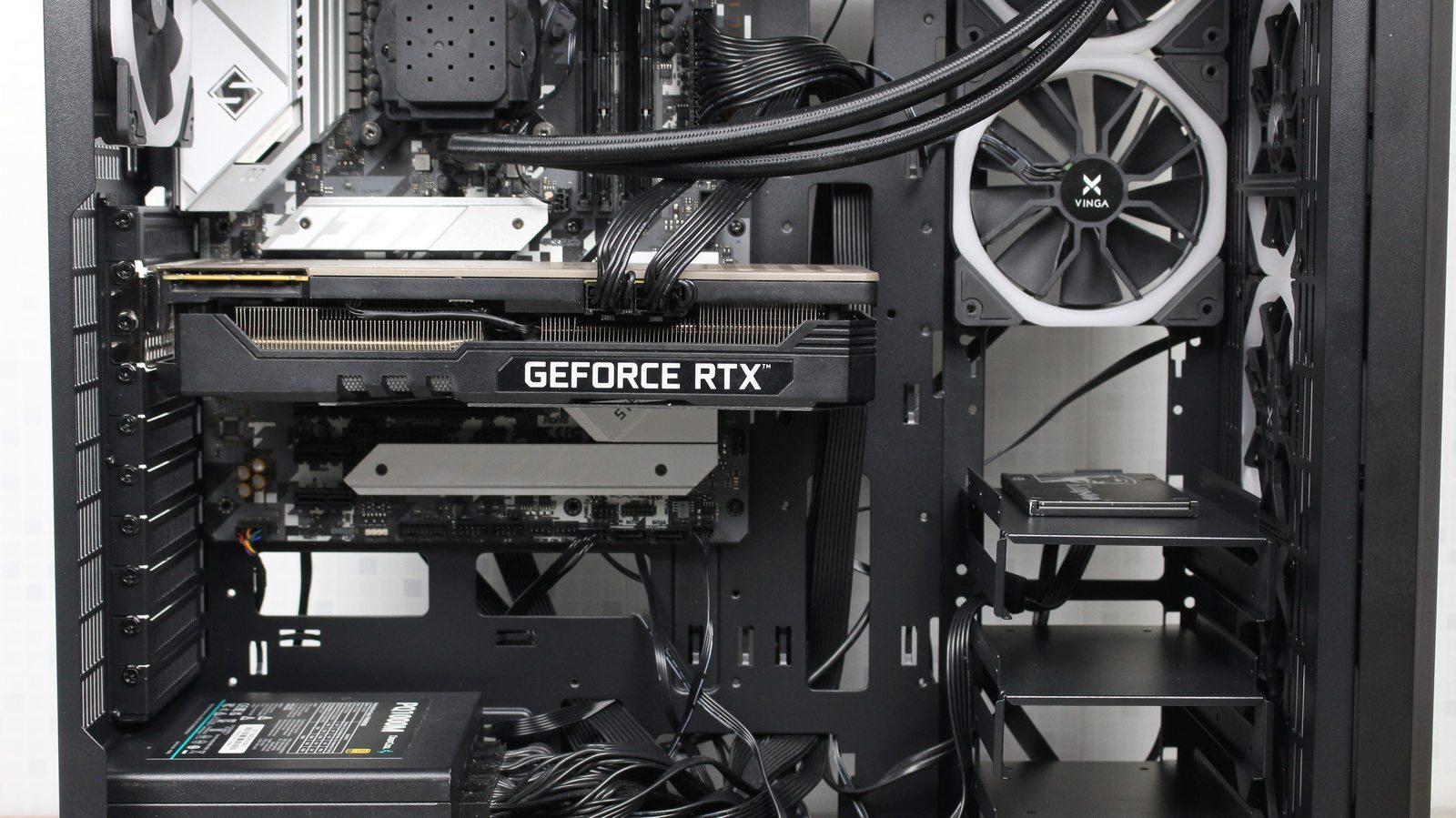
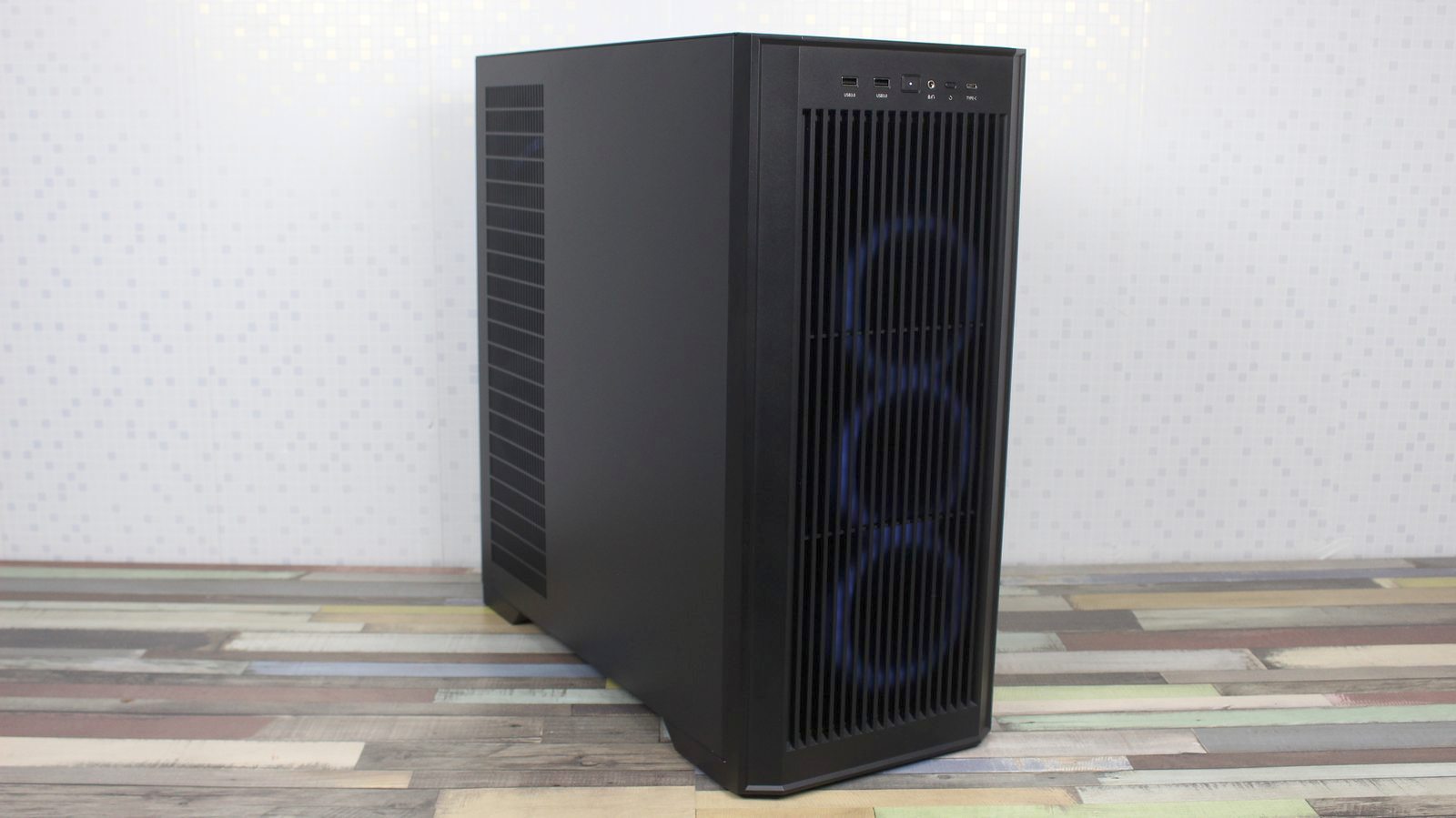
The assembly went smoothly. The space behind the motherboard tray is sufficient for convenient cable management, contributing to an orderly cable organization. The case stands out for its sturdy construction, thick metal, and monolithic rigidity. The build quality is at a high level: there are no gaps, creaks, or gaps, and no vibrations or extraneous noises are observed during operation.
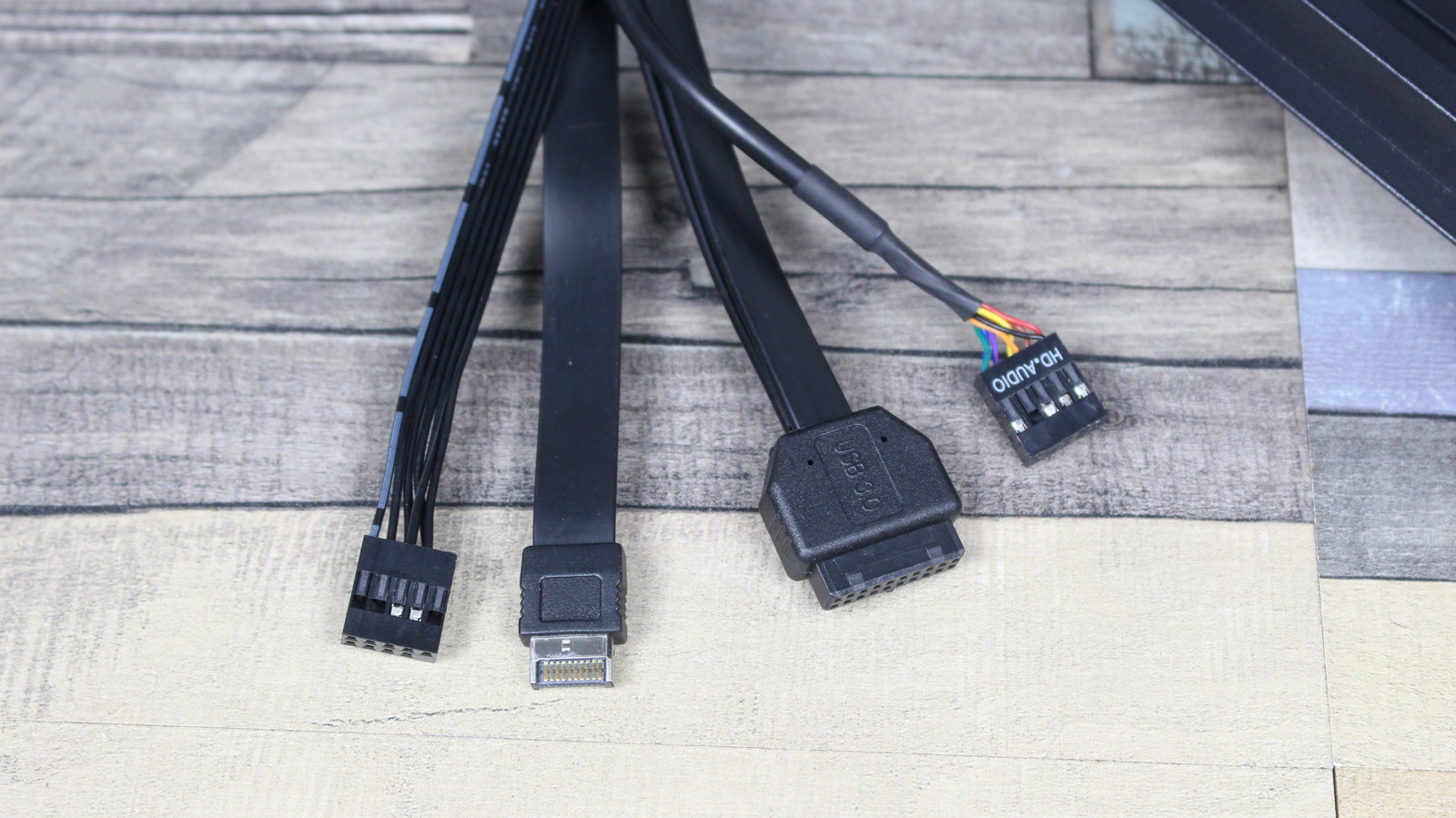
The cables from the interface panel have enough length for comfortable connection to the motherboard, regardless of its format. This eliminates potential difficulties during routing and simplifies cable management organization.
|
Name |
Length, cm |
|
USB 3.1 Type-C |
85 |
|
USB 3.0 |
80 |
|
HD Audio |
92 |
|
Buttons and indicators |
80 |
Testing
|
Name |
Model |
|
Processor |
Intel Core i7-11700K (Socket LGA1200, 8 cores, 16 MB cache, 3.6–5.0 GHz, TDP 125 W) |
|
Cooler |
DeepCool LP360 |
|
Motherboard |
ASRock Z590 STEEL LEGEND (Intel LGA 1200, Z590, ATX) |
|
RAM |
2 x DDR4-3600 16 GB Kingston Fury (KF436C18BBAK2/32) |
|
Graphics card |
Palit GeForce RTX 3090 24GB GDDR6x GAMINGPRO OC (fan speed 70%) |
|
SSD |
Kingston KC600 512 GB SSD (SKC600/512G) |
|
Power supply |
DeepCool PM800D |
|
Thermal interface |
GD900 |
The ambient temperature at the time of measurement was 26°C. We tested the Vinga Shatter case with a 360 mm CPU cooling system DeepCool LP360, which was installed at the top of the case.
Since the case comes without pre-installed fans, we used our own test models for cooling the components: four Vinga RGB Fun-06 fans and two Vinga RGB Fun-02 White. All of them were controlled by the Vinga RGB Control-02 lighting module.
The fans operated at maximum speed: 2500 RPM for the cooling system and 1100 RPM for the case fans. The noise level exceeded the average, but remained relatively comfortable.
The fan speed of the graphics card was limited to 70%. No additional settings were made in the motherboard BIOS. Given the "hot temper" of the processor, let's take a look at the results obtained.
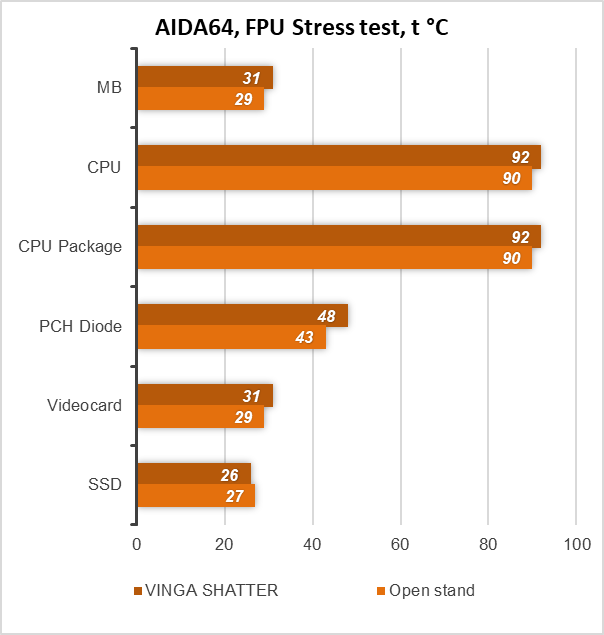
In the AIDA64 Stress FPU test, the processor in the case heated up to 92 degrees, which is 2 degrees higher than the open stand indicator. This difference is minimal and quite acceptable for a stress test that maximally heats the crystals.
The temperatures of other components, such as 31 degrees for the motherboard and 48 for the chipset, remain within normal limits, indicating no overheating of key board nodes during full processor load.
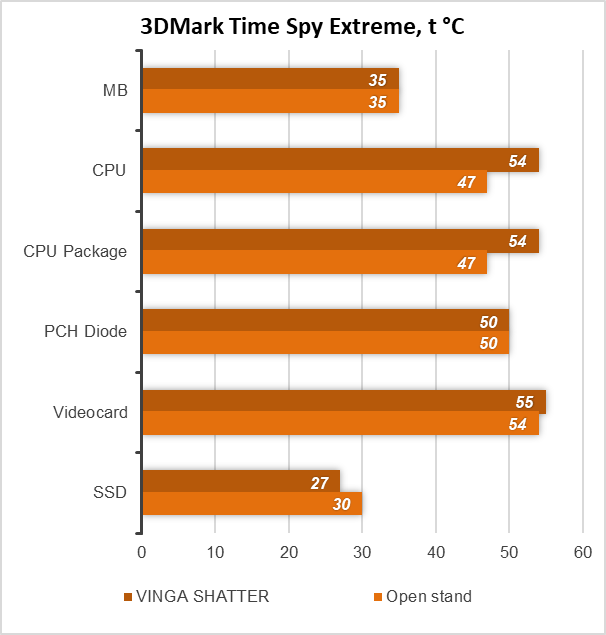
In the 3DMark Time Spy Extreme benchmark, under load typical for gaming scenarios, the processor in the case reached 54 degrees, which is 7 degrees higher than the open stand. Although the difference is noticeable, the absolute value is low, so there is no cause for concern.
The graphics card, with a result of 55 degrees, demonstrates excellent temperature performance, keeping the heat almost at the level of the open stand, confirming the effectiveness of heat dissipation from the graphics adapter.
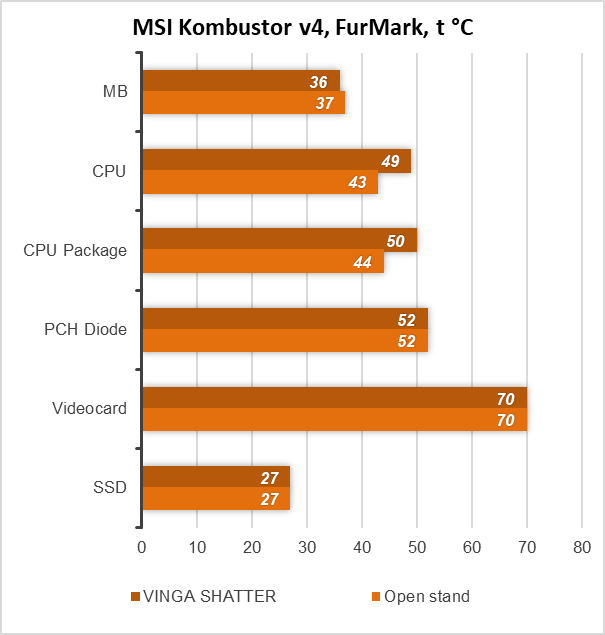
During testing in MSI Kombustor FurMark under maximum load on the graphics card, a result of 70 degrees in both scenarios indicates that the cooling system of the adapter itself copes with the load regardless of the case.
The processor in this test heated up to 49 degrees, which is 6 degrees higher than the open stand, but this value remains completely safe.
The stability of the temperatures of other components confirms the efficiency of the ventilation configuration: three front intake fans, as well as a rear, two on the right side, and a top-mounted radiator with three fans for exhaust, successfully expel heated air out of the system, ensuring stable operation of components under maximum load.
Conclusions
Can Vinga Shatter be considered a reliable foundation for a powerful workstation or gaming PC? Definitely yes. This is an example of how the manufacturer consciously directed the budget towards the quality of the chassis and metal thickness, instead of filling the box with cheap fans that many users replace after purchase.
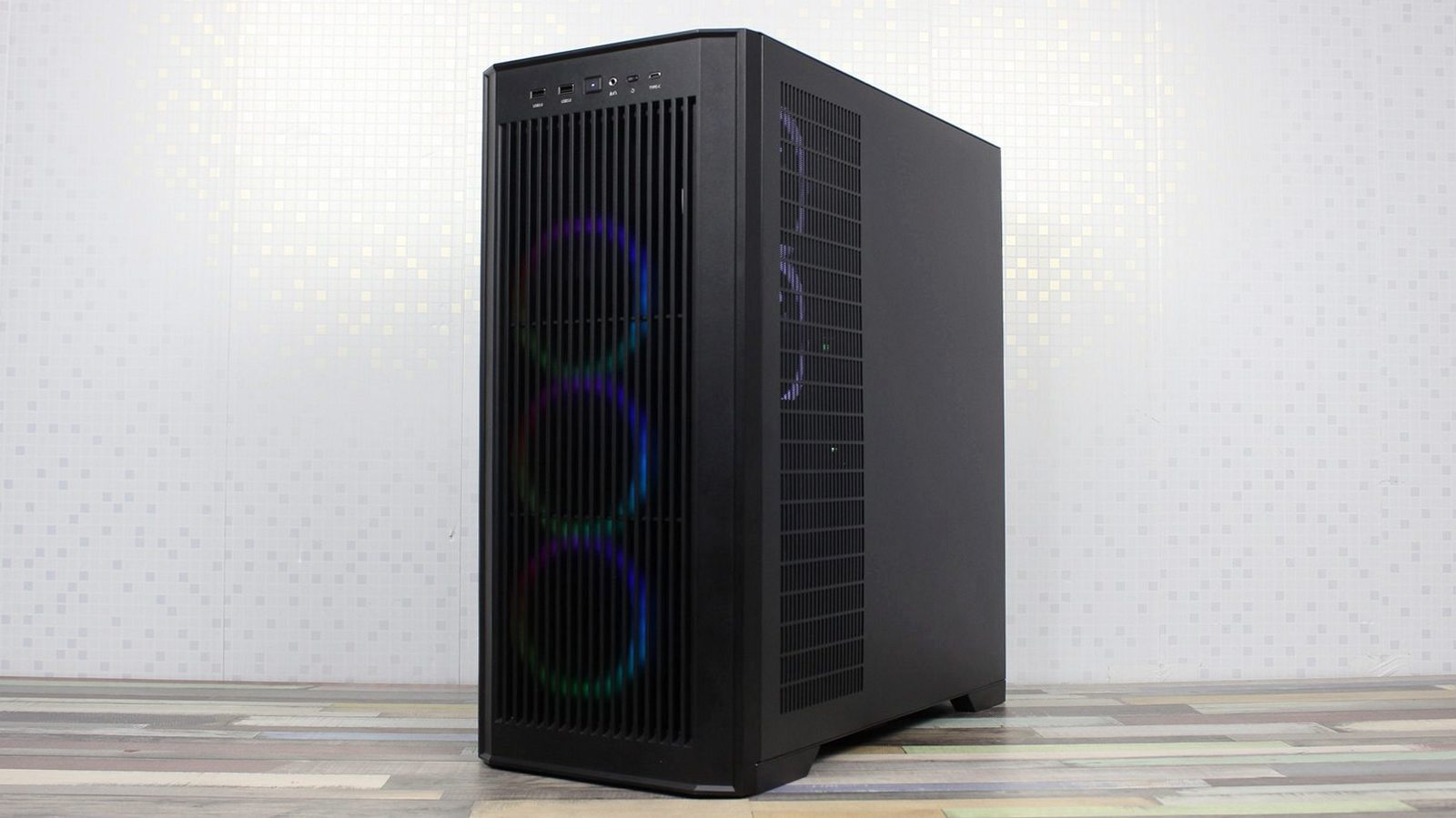
The construction impresses with high-quality execution and thoughtfulness. Modularity allows you to adjust the internal space to any needs: from installing massive cooling systems to accommodating a large number of drives. The vertical stand with three supports is a real find for owners of monstrous graphics cards, ensuring system reliability.
Case maintenance is maximally simplified: magnetic dust filters are located on the top and side panels, and a convenient removable filter is provided at the bottom. The positive impression is complemented by a tool-free mounting system and reusable expansion slot covers, highlighting the manufacturer's attention to detail.
Of course, there are compromises. The supply package is maximally spartan—you only get the case, and the front dust filter is non-removable as it is an integrated part of the plastic front panel. However, considering the excellent price, these features seem entirely justified.
As a result, we have a stylish, strict, and solidly built case that stands out with excellent airflow and lack of vibrations.
Vinga Shatter — a choice for those who know exactly what they expect from their system and value a reliable foundation worth investing time and money in.
Advantages:
- solid construction with thick metal that effectively dampens vibrations;
- high modularity: ability to move the stand, support for up to 9 drives, and compatibility with power supplies of various lengths;
- vertical stand with 3 supports for reliable fixation of heavy graphics adapters;
- excellent airflow due to a developed system of ventilation openings;
- ease of maintenance: magnetic filters on top and sides, bottom removable filter, and tool-free assembly;
- reusable expansion slot covers;
- strict design with effective light accents through technical slots;
- excellent price, making the case one of the most interesting options on the market.
Features:
- spartan supply package;
- the front dust filter is a non-removable part of the plastic front panel.