A 750-watt power supply unit with an 80 PLUS Gold certification, offering ample power reserve and high energy efficiency. At the same time, most such models cannot boast a modular cable connection system and are at best equipped with Taiwanese capacitors. However, there are solutions among them that pleasantly surprise.
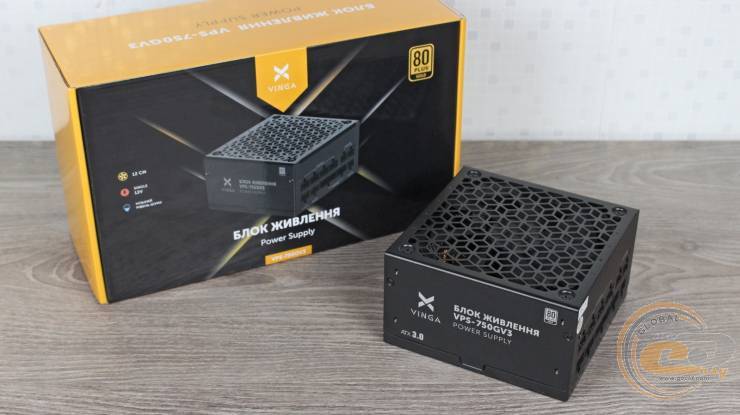
One of them is Vinga 750W (VPS-750GV3), equipped with modular cables and high-quality Japanese capacitors. How this device performs in practice, what other advantages it offers, and where the manufacturer decided to save money — more on this in the material.
Specification
|
Model |
Vinga 750W (VPS-750GV3) |
|
Type |
ATX12V 3.0 |
|
Maximum power, W |
750 |
|
Power on +12V channel, W |
748.8 |
|
Power on +3.3V and +5V lines, W |
100 |
|
Number of +12V lines |
1 |
|
Maximum current on +3.3V channel, A |
20 |
|
Maximum current on +5V channel, A |
20 |
|
Maximum current on +12V channel, A |
62.4 |
|
Maximum current on -12V channel, A |
0.4 |
|
Maximum current on +5Vsb (standby power line), A |
3.0 |
|
Input voltage, V |
100 − 240 |
|
Input current, A |
10 |
|
Efficiency, % |
≤93 |
|
80 PLUS certification |
Gold |
|
Power factor correction method |
Active |
|
Power factor (PF), % |
≤99 |
|
PCIe connectors |
3 (6+2-pin) |
|
PCIe 5.0 connector (12VHPWR) |
1 (600 W) |
|
Modular |
Yes |
|
Fan dimensions, mm |
140 x 140 x 25 |
|
Fan bearing type |
Sleeve |
|
Protections |
OVP, UVP, OCP, OTP, SCP |
|
Dimensions (L x W x H), mm |
150 x 150 x 86 |
|
Warranty, years |
3 |
|
Device page |
|
|
Manufacturer's website |
|
|
Purchase page |
Packaging and Supply Kit
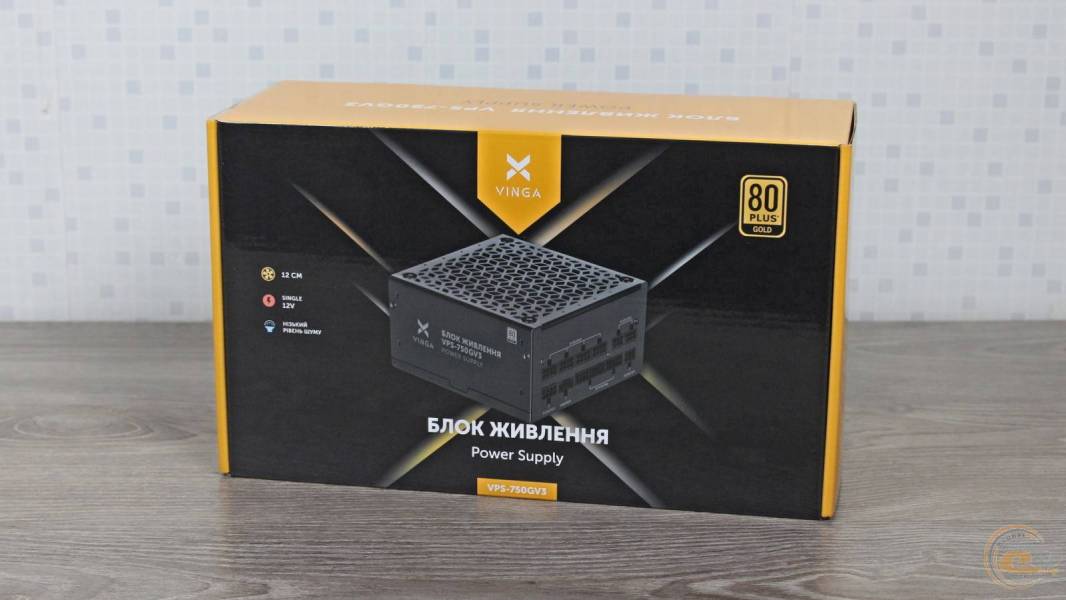
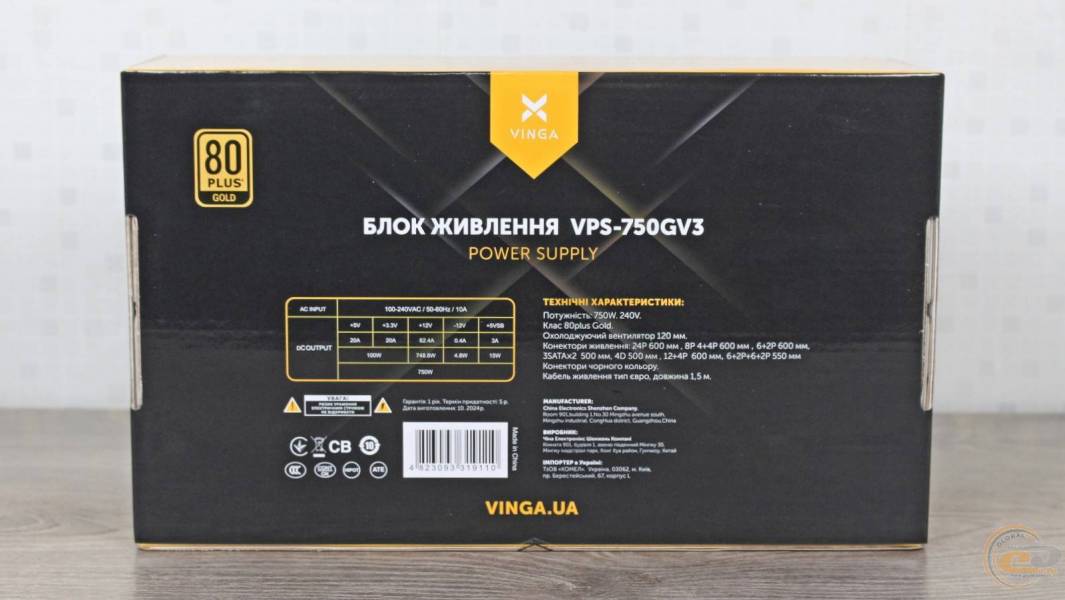
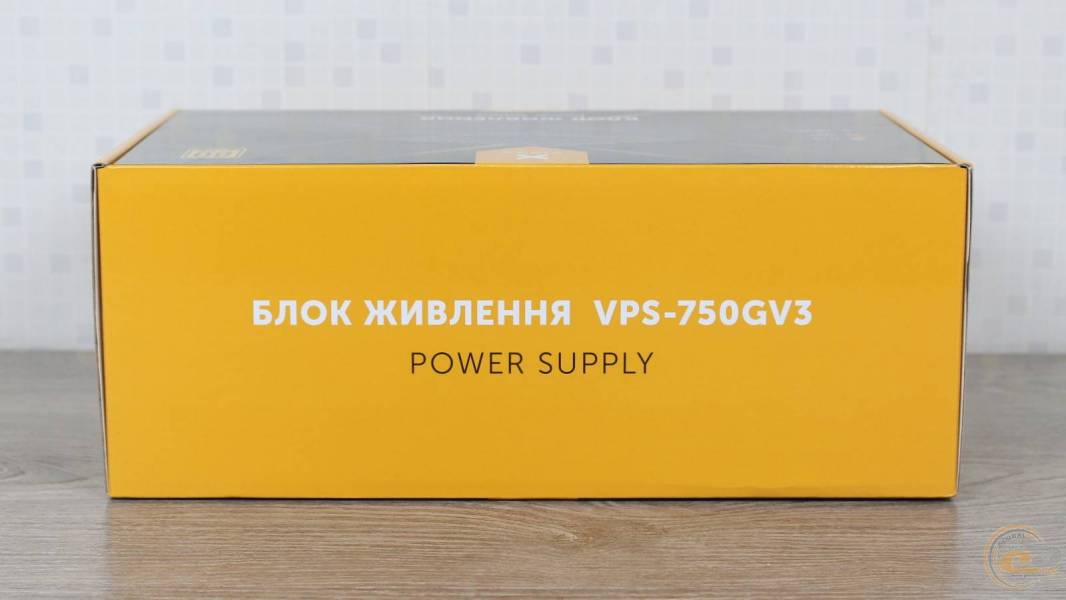
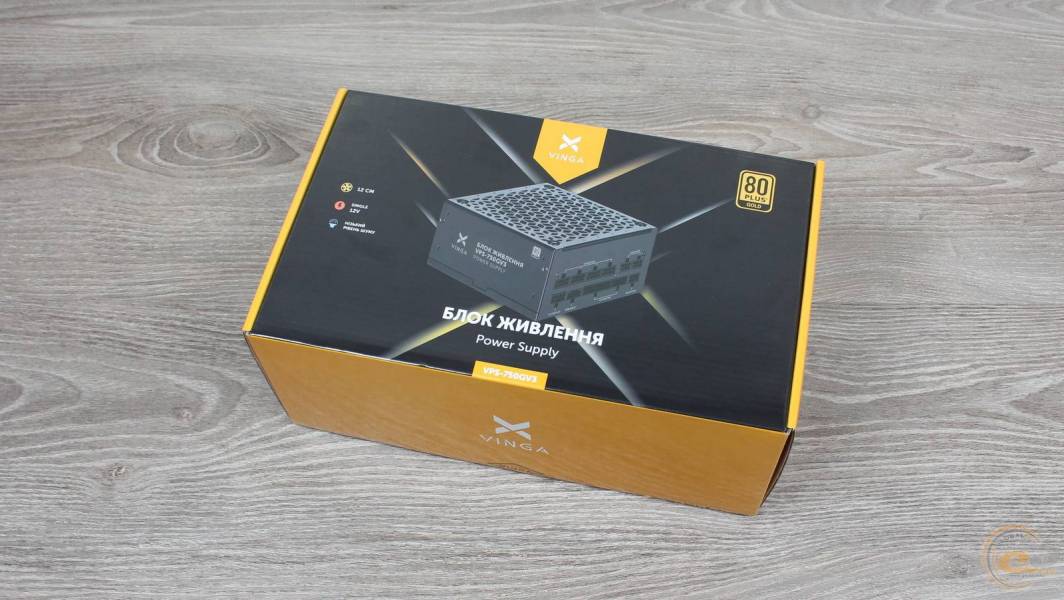
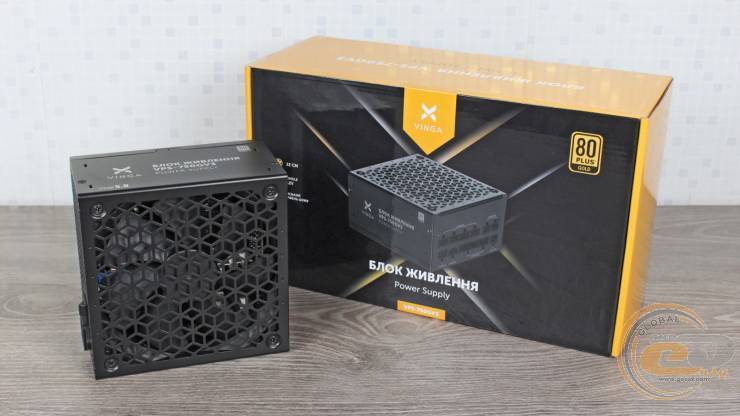
The box is designed in the usual Vinga style and immediately attracts attention — unfortunately, not only with its design but also with errors. It mentions the use of a 120mm fan twice, although a 140mm fan is actually installed. In addition, it states a 1-year warranty, whereas the actual term is 3 years. The Ukrainian translation is also slightly "limping" in places.
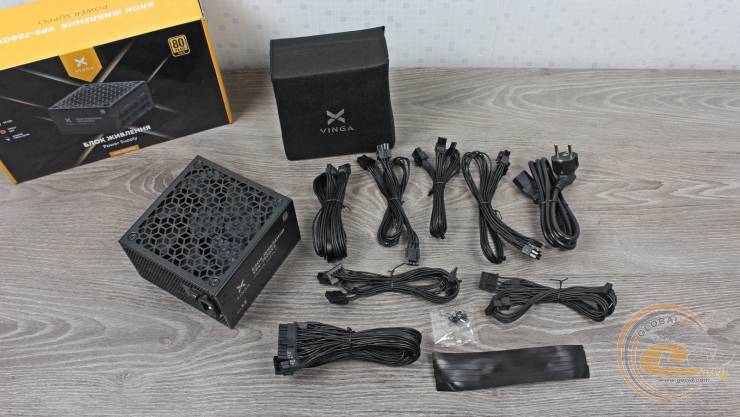
The power supply kit pleasantly surprises with its completeness. In addition to the standard power cable, modular cables, and mounting screws, the set also includes a cover and a set of Velcro ties.
Appearance
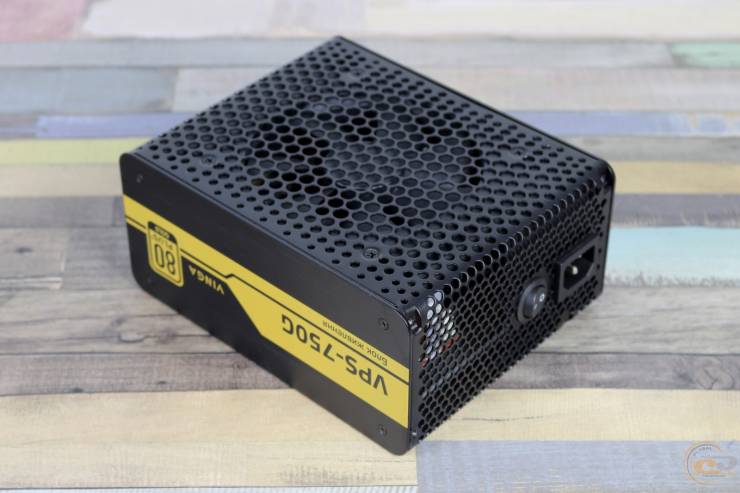
Vinga VPS-750G
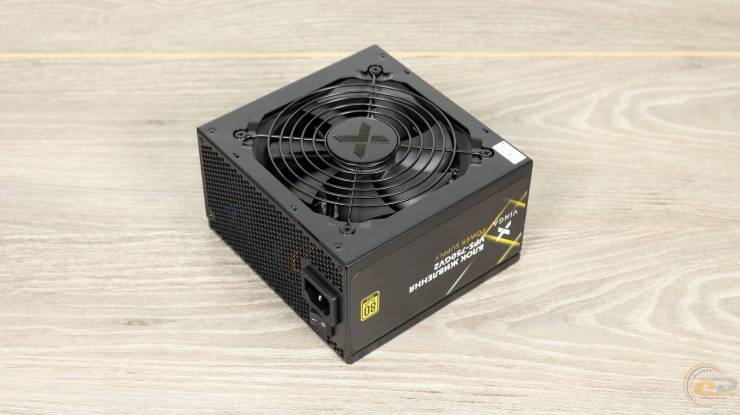
Vinga 750W (VPS-750GV2)
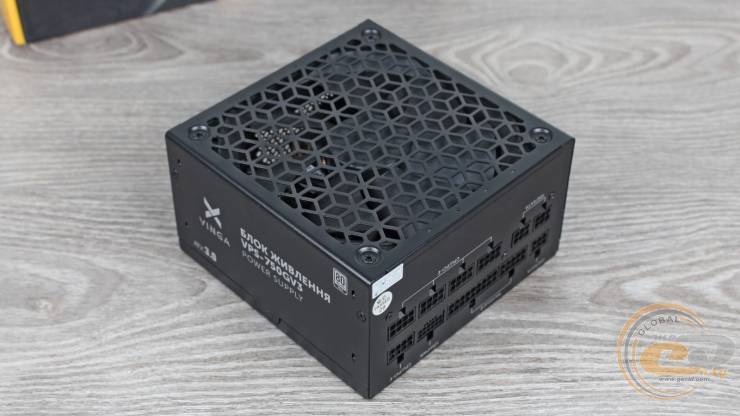
Vinga 750W (VPS-750GV3)
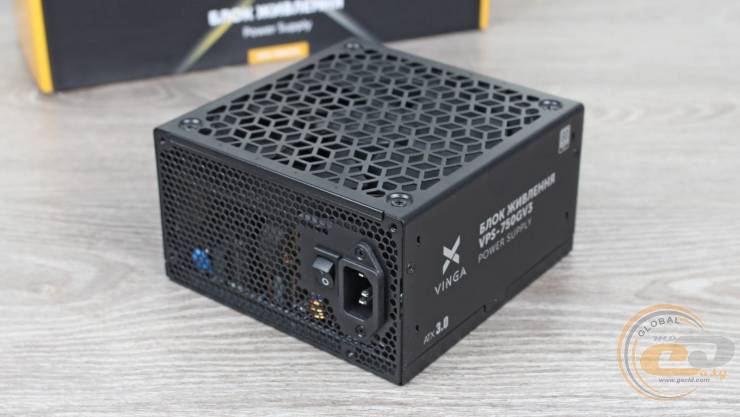
It seems that each new generation of "gold" power supplies changes its appearance, and this clearly benefits them. Vinga 750W (VPS-750GV3) looks modern and restrained: not as extravagant as Vinga VPS-750G, and at the same time not as simple as Vinga 750W (VPS-750GV2). In addition, the dimensions of 150 × 150 × 86 mm allow it to be installed even in relatively compact cases.
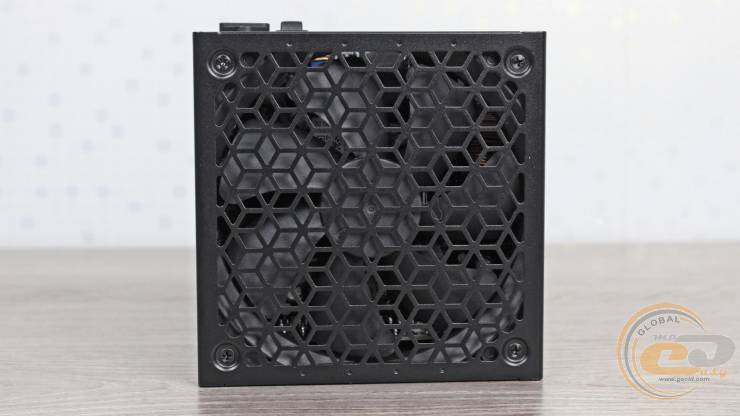
The 140mm fan favorably distinguishes the novelty from its predecessors, and the diamond-shaped cutouts on the grille add style.
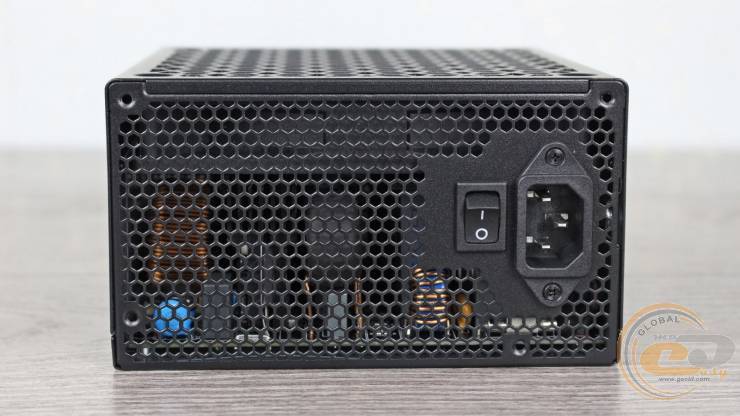
The rear part is traditionally designed: ventilation holes in the form of honeycombs, power connector, and switch.
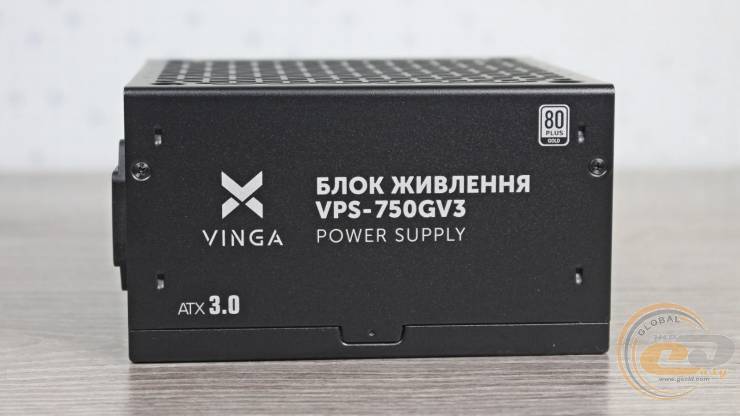
The sides are marked with the model designation, compliance with the ATX12V 3.0 standard, and the 80 PLUS Gold certificate. Regardless of the block's orientation, the inscription will always be correctly directed to the user.
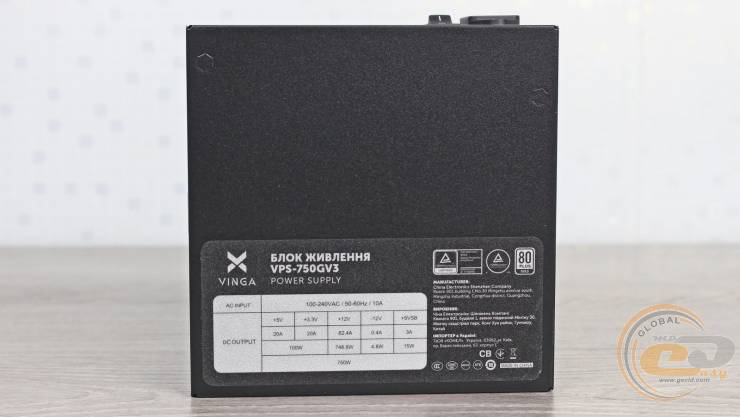
The key characteristics are indicated on the label. Among them is the presence of a single +12V line with a power of 748.8 W, which is an excellent indicator for a 750-watt unit. The +3.3V and +5V channels provide 100 W or 20 A each, which is quite a usual indicator. In addition, the device can operate in a wide voltage range — from 100 to 240 V.
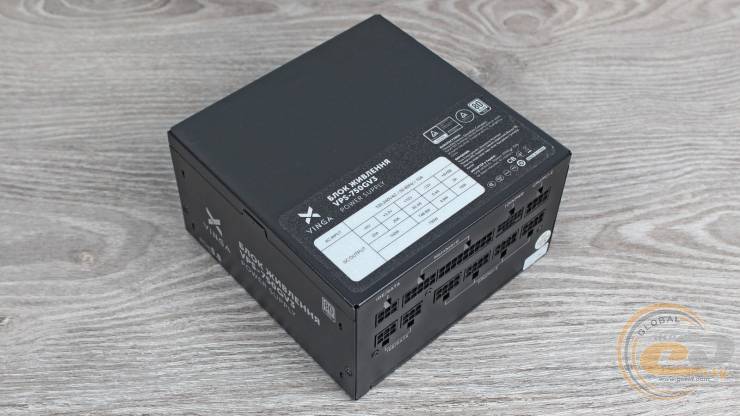
Overall, the design of Vinga 750W (VPS-750GV3) is not as bright as its predecessors, and this is only a plus — the block will easily fit into any build.
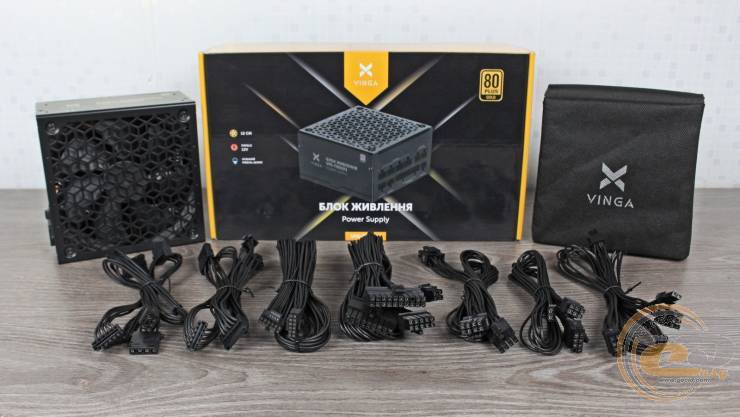
Modular cables have received individual fabric braiding — it looks beautiful, although it's difficult to assess the thickness of the wires.
The connector set includes everything necessary:
|
Connectors |
Quantity |
Wire length, cm |
|
20+4-pin ATX |
1 |
60 |
|
two 4+4-pin ATX12V |
1 |
60-75 |
|
two 6+2-pin PCIe |
1 |
55-70 |
|
6+2-pin PCIe |
1 |
60 |
|
PCIe 5.0 (600W) |
1 |
60 |
|
three SATA + one PATA |
2 |
45-60-75-95 |
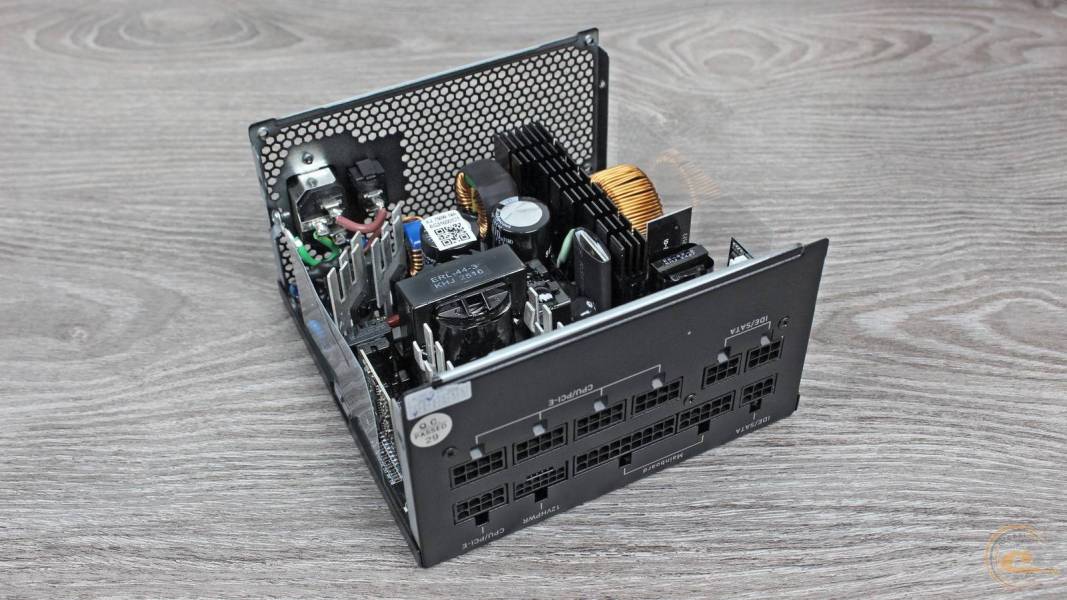
The main connectors are 20+4-pin ATX and two 4+4-pin ATX12V on a common cable. To power the video card, there are three classic 6+2-pin PCIe (on two separate wires) and a modern PCIe 5.0 (also known as 12VHPWR). Yes, this is not the latest PCIe 5.1 version (12V-2×6), but the connector has received the maximum possible power of 600W. For storage and peripherals, six SATA connectors and two PATA are available.
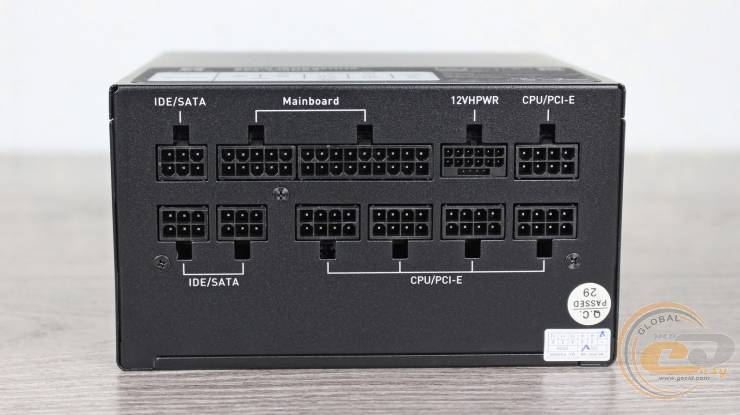
All connectors are labeled, and the shape of the connectors prevents incorrect connection. By the way, the number of connectors on the case is greater than the cables included. Obviously, this is done for unification with models of 850 and 1000W power.
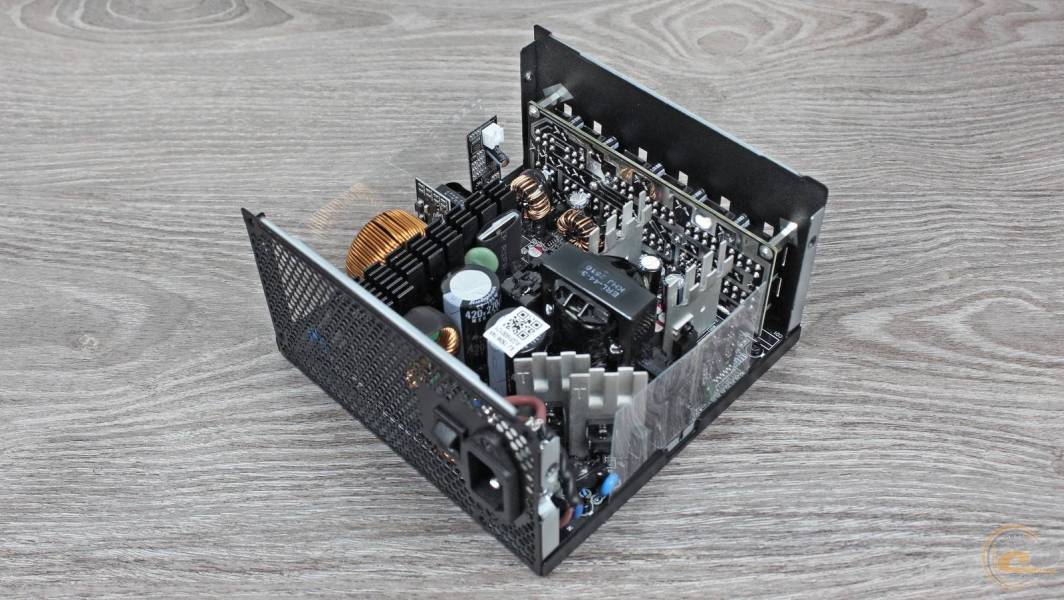
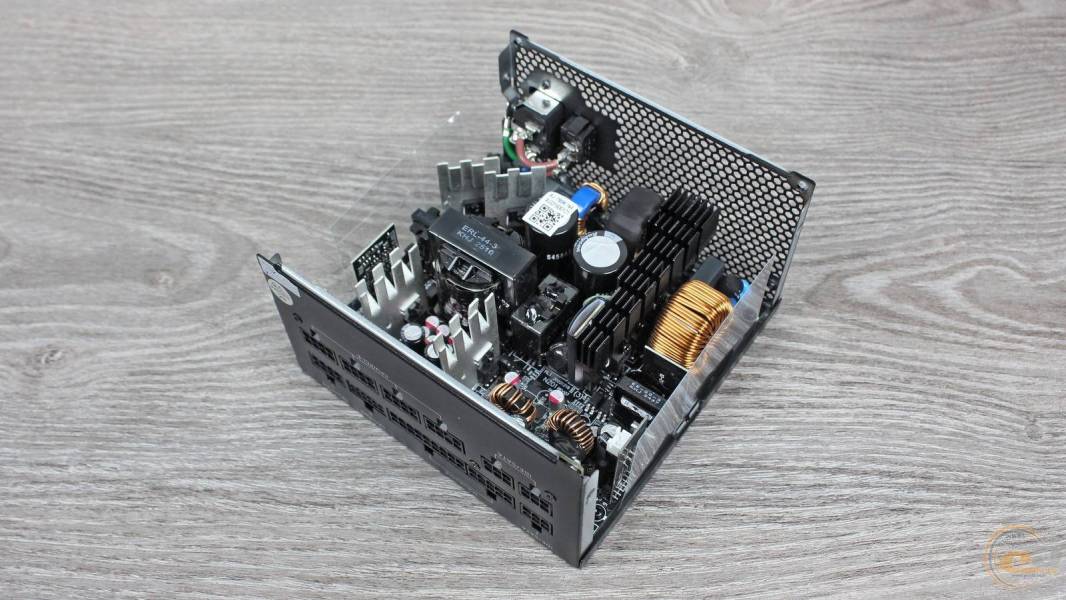
Internal structure
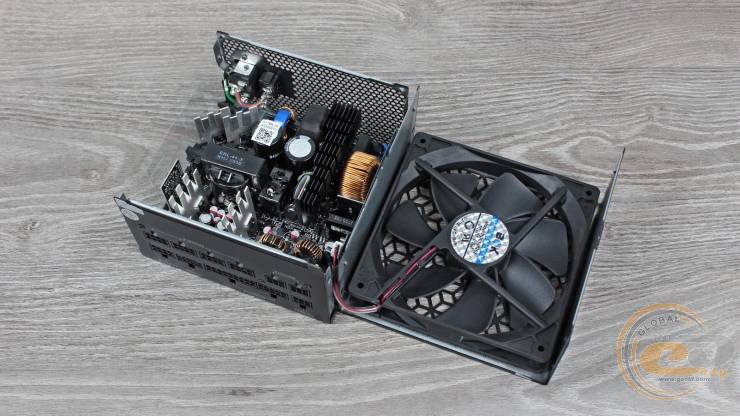
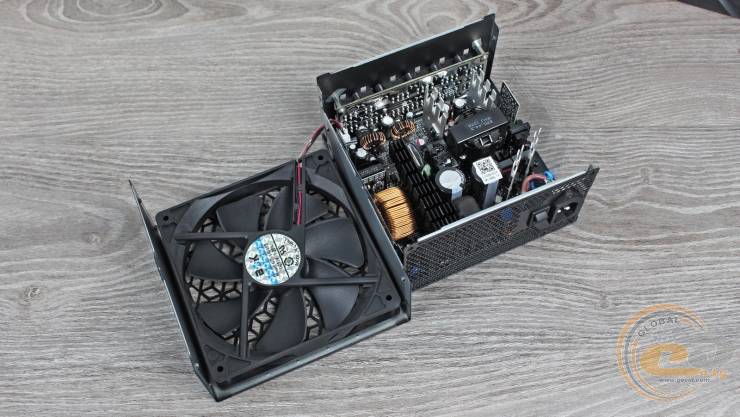
The appearance of Vinga 750W (VPS-750GV3) makes a positive impression, but the main thing is what's inside.
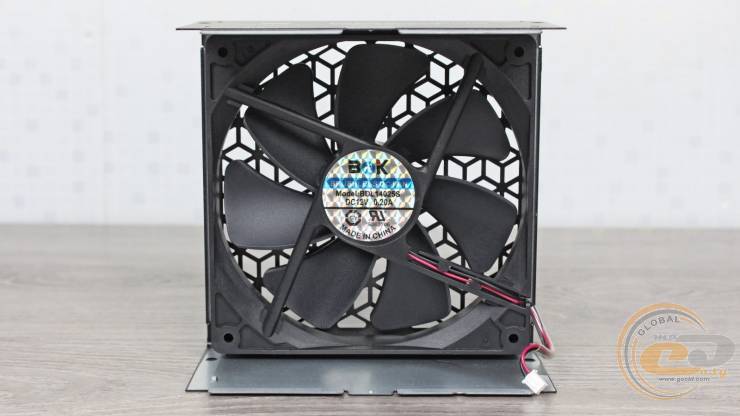
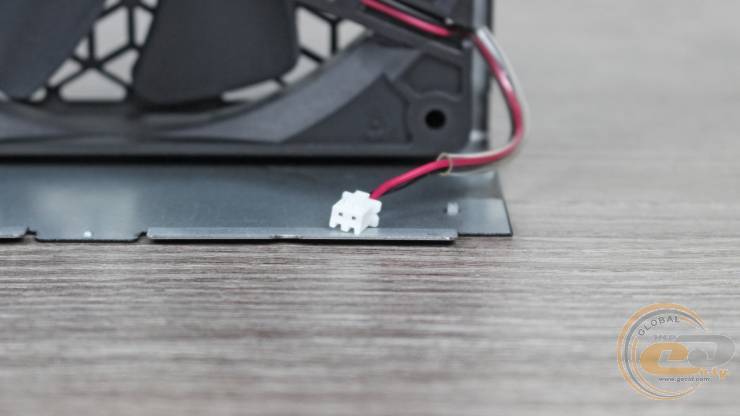
The installed 140mm fan BDK BDL14025S consumes up to 2.4W of electricity (12V at 0.5A) and connects via a removable 2-pin connector. The letter «S» in the marking indicates the use of a sleeve bearing — a budget and less reliable solution than the FDB used in the previous model VPS-750GV2.
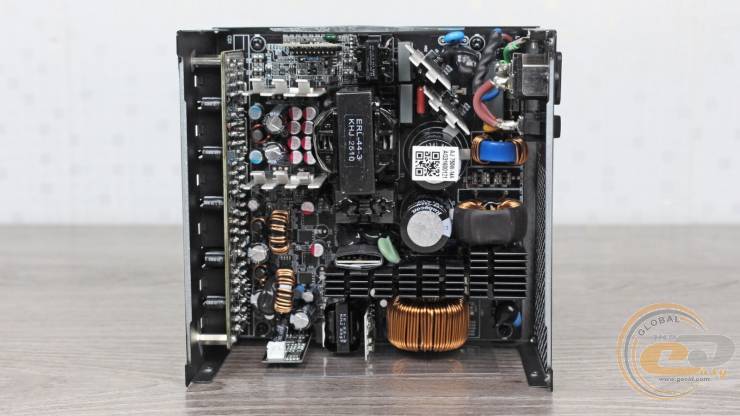
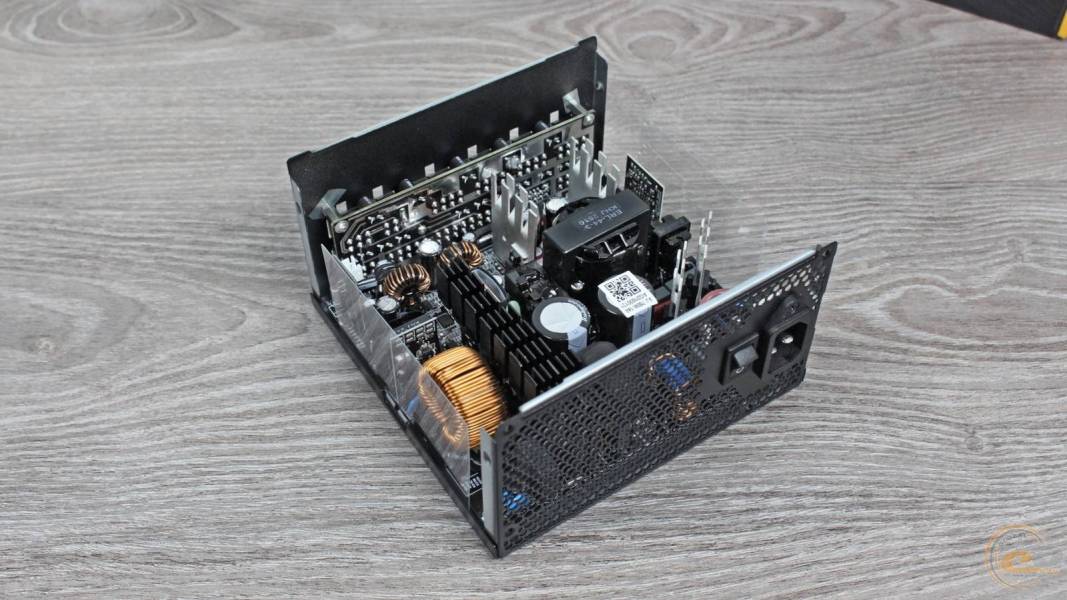
Let's move on to the elements on the printed circuit board. The input electromagnetic filter contains the necessary set of a pair of coils, X- and Y-capacitors, and a varistor for protection against voltage spikes.

One of the X-capacitors is located quite unusually — under the inductance coil.
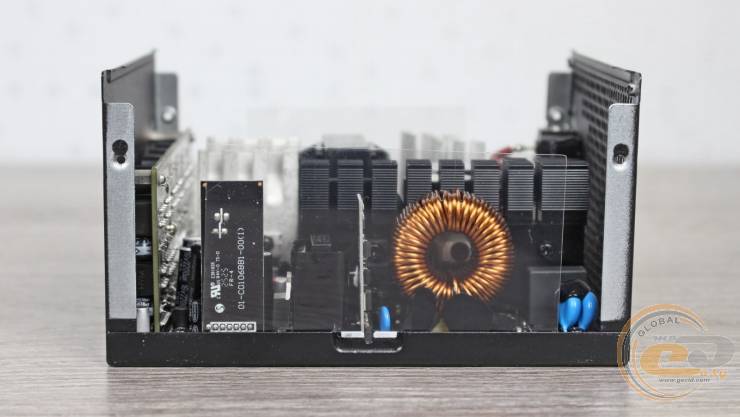
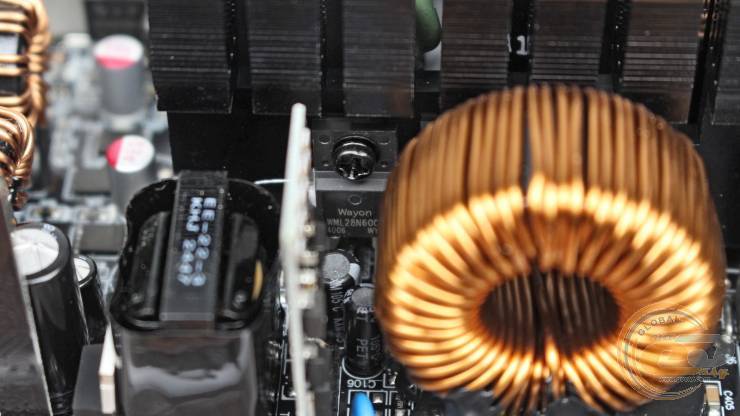
The nearby heatsink dissipates heat from the diode assembly and power elements of the APFC unit, including the field-effect transistor WAYON WML28N60C4. Note that WAYON is a Chinese mid-level component manufacturer, whose products usually fall short of the solutions of leading brands.
The large choke of the APFC unit is also in place.
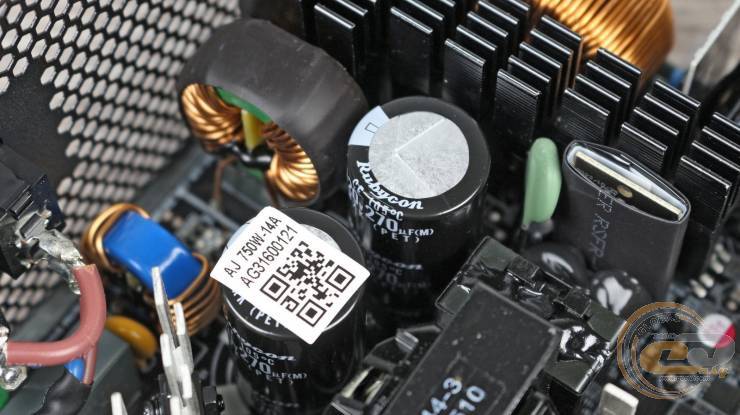
A thermistor is also present, which protects against high inrush currents. There are two input capacitors here — these are high-temperature elements from the Japanese company Rubycon with a total capacity of 540 μF (2 x 270 μF). For an inexpensive 750-watt unit, this is quite a good indicator.
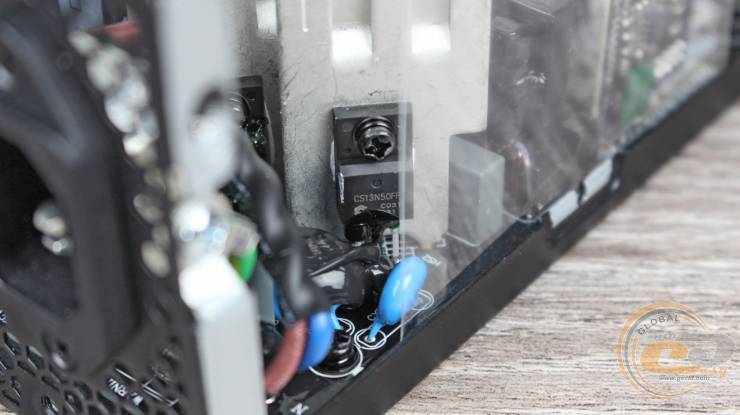
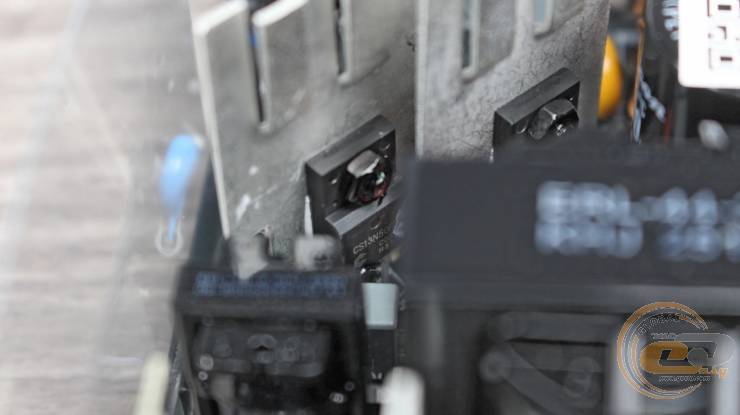
The keys of the primary converter are four CS13N50FF transistors of Chinese origin, located on two comb-shaped heatsinks. Formally, this hints at the use of a Full Bridge scheme, but the presence of a pair of characteristic capacitors indicates a Half Bridge with doubled keys — for even heat distribution and increased reliability.
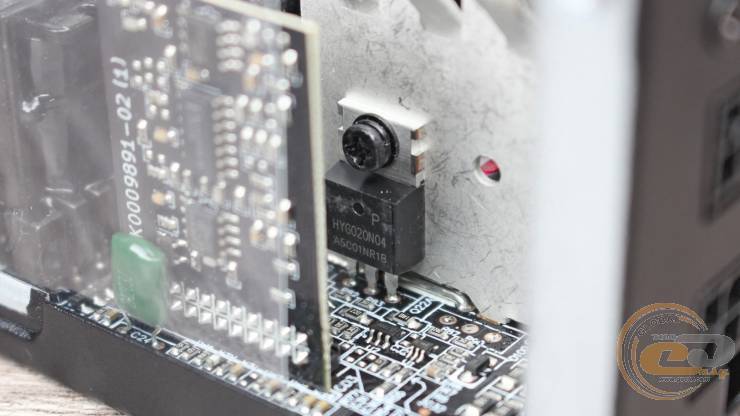
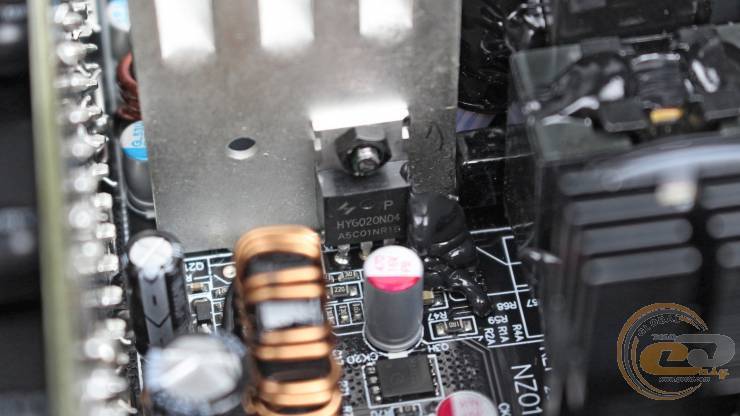
Behind the transformer, there are two more aluminum combs with four HUAYI Semiconductor HYGO20N04 transistors of medium quality.
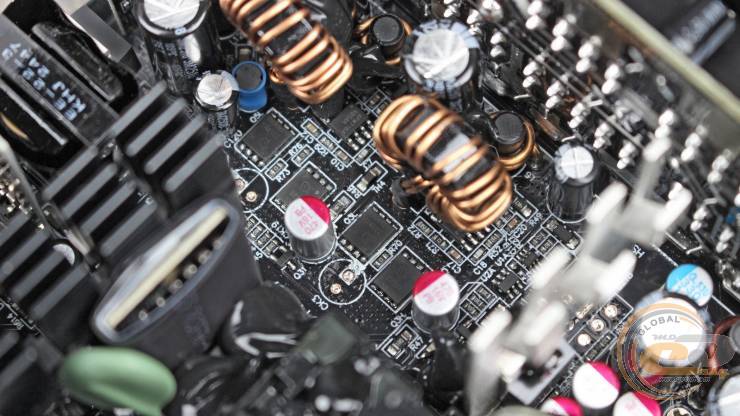
Further, four Infineon field-effect transistors of a high class are working. Nearby are reliable solid-state capacitors and chokes, responsible for forming the minor +3.3V and +5V channels.
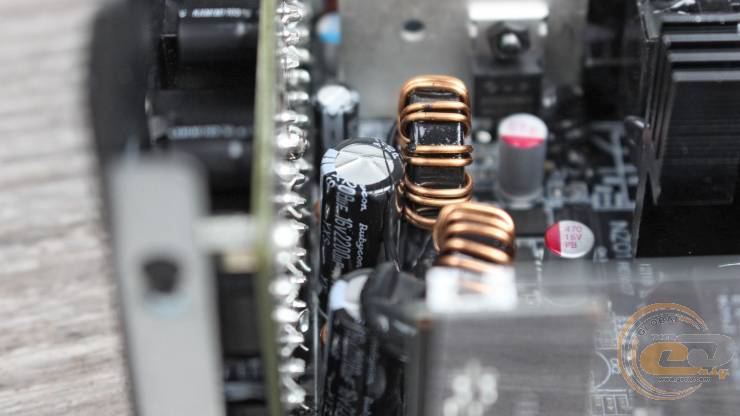
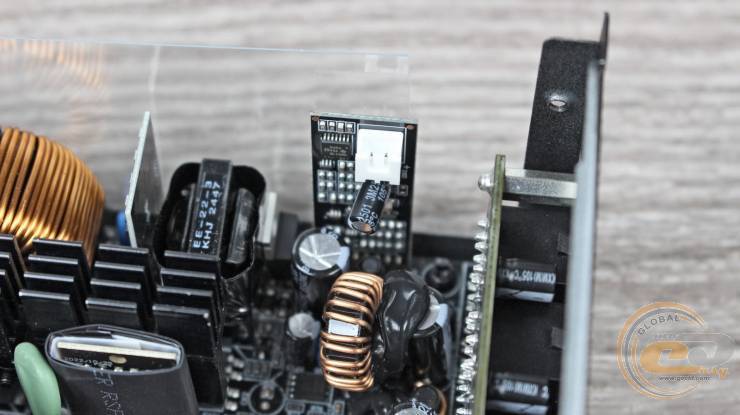
In addition, the device uses a lot of high-temperature electrolytes from the same Japanese Rubycon, as well as a number of polymer elements.
What else was liked, the voltage transfer to the board with output connectors is carried out through conductive tracks, not with wires, as is often the case in affordable devices.
The Vinga 750W (VPS-750GV3) power supply is equipped with a number of protections:
- overvoltage protection (OVP);
- undervoltage protection (UVP);
- short circuit protection (SCP);
- overcurrent protection for each channel (OCP);
- overheating protection (OTP).
This list lacks only OPP — overpower protection. Interestingly, in affordable models, they often save on OCP, whereas here it is implemented.
Cross-load characteristics
It's time to check how the Vinga 750W (VPS-750GV3) performs in practice. Let's start with cross-load tests of the three main lines, where the ATX12V standard allows voltage deviations at the level of ±5% from the nominal.
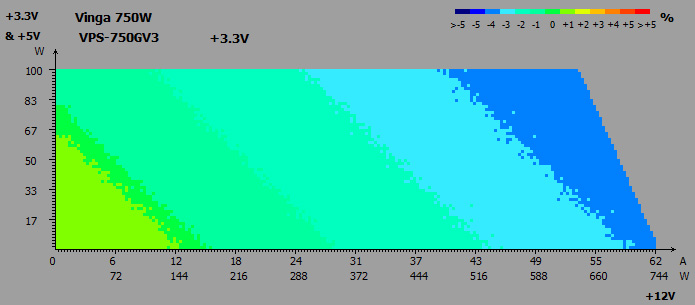
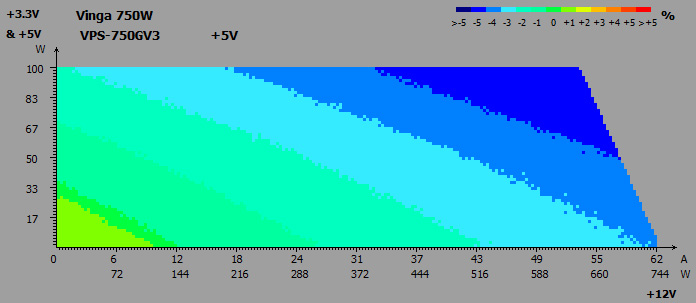
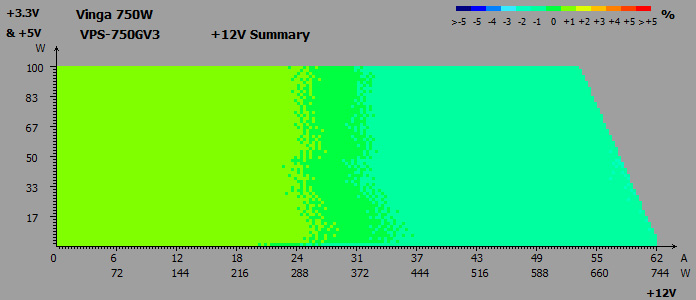
The test results on the main power lines showed the following deviations:
- +3.3V line: from -4% to +1%;
- +5V line: from -5% to +1%;
- +12V line: from -1% to +1%.
All values remained within the norm, although the drop on the +5V line reached the limit of -5%. However, this was observed only with simultaneous significant load on +12V and over 50W on the minor channels — and in real conditions, such a scenario occurs rarely.
Noise and ripple
For the ATX12V standard, the following permissible norms regarding ripple levels (peak-to-peak) are provided:
- lines +3.3V and +5V: 50 mV;
- line +12V: 120 mV.
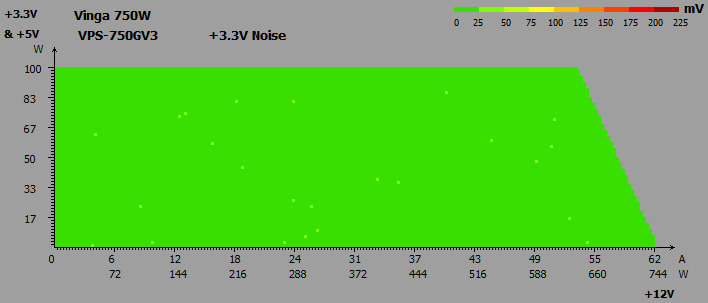
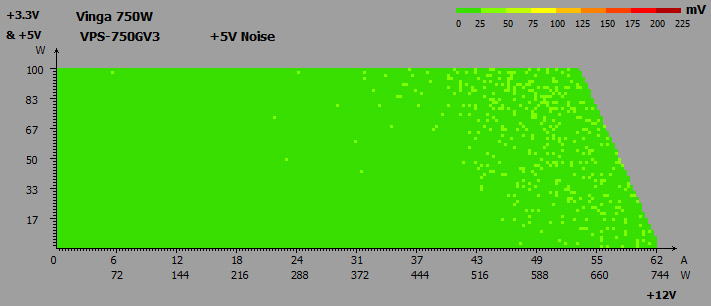
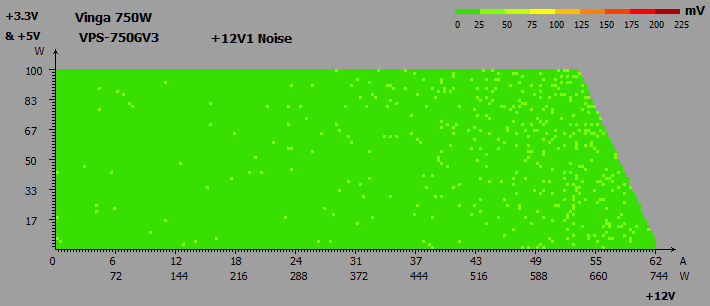
Everything is in perfect order with the ripples: on all three lines they did not exceed 50 mV, which can be considered a very good result.
Standby power line + 5VSB
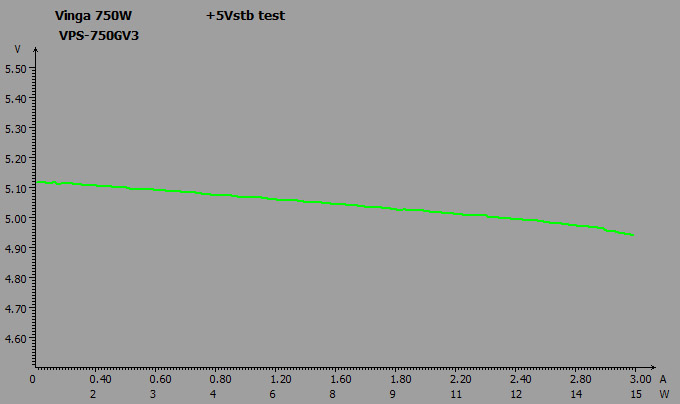
The standby power line also pleases with minimal deviations within the range of 5.12 to 4.94 V, or from +2.4% to -1.2%.
PF
Table showing the change in PF depending on the load of the power supply:
|
Load, W |
75 |
150 |
220 |
300 |
375 |
450 |
525 |
600 |
675 |
750 |
|
Load*, % |
10 |
20 |
29 |
40 |
50 |
60 |
70 |
80 |
90 |
100 |
|
PFC |
0,72 |
0,87 |
0,94 |
0,96 |
0,97 |
0,97 |
0,97 |
0,98 |
0,98 |
0,99 |
Load* – load as a percentage of the nominal power of the power supply unit.
The APFC unit works efficiently: already at a consumed power of 220 W, the PF coefficient reaches 0.94, and the maximum value is 0.99.
Efficiency
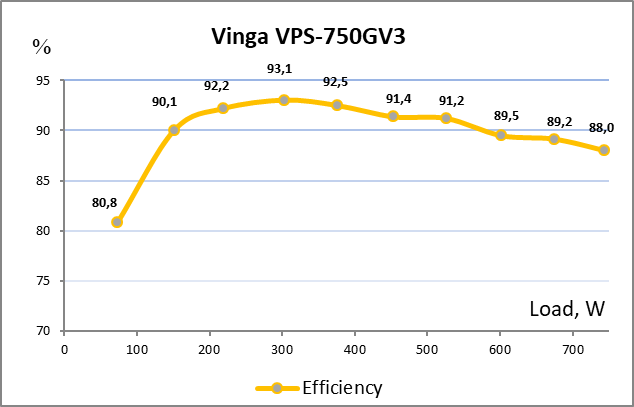
At loads of 20%, 50%, and 100% of the nominal, the efficiency exceeded 88%, 92%, and 88% respectively, confirming compliance with the 80 PLUS Gold certification.
Cooling system and temperature mode
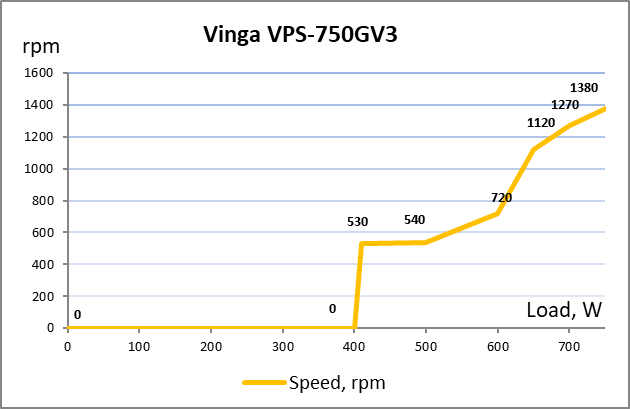
A pleasant bonus of the Vinga 750W (VPS-750GV3) is the hybrid mode of the cooling system. Up to a load of 400 W, the fan does not spin at all. Then it starts at 530 RPM and up to 600 W works very quietly. As the load increases, the noise level rises, but remains quiet up to 700 W and below average in the last 50 W range. The maximum speed is a quite comfortable 1380 RPM.
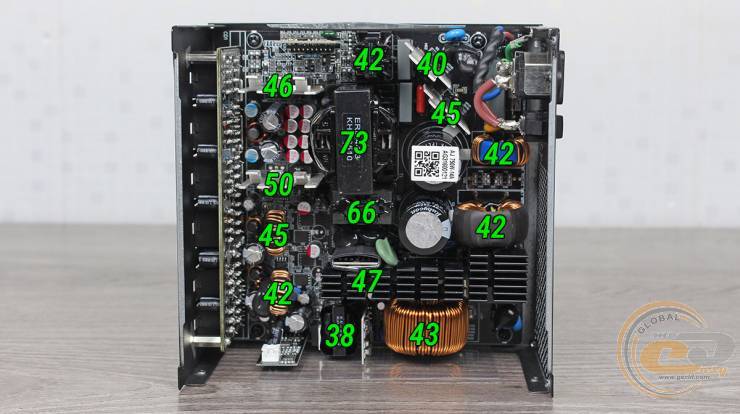
After 15 minutes of operation at a 730-watt load, the main transformer heated up to 73°C, which is an excellent indicator. Other units remain noticeably cooler, even though the room temperature during testing was quite warm— +25°C.
Testing on a real configuration
We tested the capabilities of Vinga 750W (VPS-750GV3) on a system with a 170-watt processor AMD Ryzen 9 7900X and a 350-watt graphics card Palit GeForce RTX 3090 GamingPro.
|
Component |
Model |
|
Processor |
AMD Ryzen 9 7900X (Socket AM5, 12 / 24 x 4.7 – 5.6 GHz, TDP 170 W) |
|
Cooler |
ASUS TUF Gaming LC II 360 ARGB |
|
Motherboard |
ASUS TUF GAMING X870-PRO WIFI7 W NEO (AMD X870, Socket AM5, DDR5, ATX) |
|
RAM |
2 × DDR5-6000 16 GB Kingston FURY DDR5 (KF560C40BBAK2-32) |
|
Graphics Card |
Palit GeForce RTX 3090 GamingPro |
|
SSD |
Kingston KC600 512 GB (SKC600/512G) |
|
Wattmeter |
Seasonic PowerAngel |
|
Multimeter |
MASTECH MY64 |
Measurements were taken in "Idle" and "Maximum Load" modes (using the FurMark Donut (GK) test in the MSI Kombuster utility). As a result, the following values were obtained:
|
Mode |
Value, V |
Deviation, % |
|
+12V |
||
|
Idle |
12.18 |
1.5 |
|
Burn |
12.32 |
2.7 |
|
+5V |
||
|
Idle |
5.07 |
1.4 |
|
Burn |
5.07 |
1.4 |
|
+3.3V |
||
|
Idle |
3.35 |
1.5 |
|
Burn |
3.35 |
1.5 |
|
Input power consumption, W |
||
|
Idle |
87 |
|
|
Burn |
600 |
|
The use of DC-DC converters positively affected stability. Regardless of the load, the voltages remained very close to nominal values, deviating only by 1.4–2.7%. There were no sags, and the difference on +12V between idle and load was a modest 1.4%. Moreover, on the real configuration, the +3.3V and +5V channels delighted with exceptional stability.
Power consumption in idle and off state
Additionally, the tested device consumes only 2 W in the computer's off state and 4 W in sleep mode.
Conclusion
Overall, the power supply Vinga 750W (VPS-750GV3) made a very pleasant impression. Compared to its predecessor VPS-750GV2, it received an updated design, an enlarged 140 mm fan, and became quieter. This is largely due to the introduction of a hybrid cooling system mode, which prevents the propeller from spinning at all up to a load of about 400 W. Meanwhile, the temperatures of all key components remain within comfortable limits.
Another important improvement is the addition of a 600-watt PCIe 5.0 (12VHPWR) connector, which was lacking in previous models. On the other hand, it would be nice to see a more modern PCIe 5.1 (12V-2×6) connector.
At the same time, most of the predecessor's advantages have been preserved: the 80 PLUS Gold certificate, a fully modular cable system, Japanese capacitors, and good voltage stabilization. The device is based on an efficient half-bridge circuitry, although the power elements are predominantly of Chinese origin. However, the use of a fan with a sleeve bearing instead of an FDB solution can be considered a step back.
As a result, the Vinga 750W (VPS-750GV3) appears to be one of the most interesting power supplies in its price segment. It offers Japanese capacitors, high energy efficiency, modular cables, a 600-watt PCIe 5.0 (12VHPWR) connector, and quiet operation. A three-year warranty only adds confidence in the choice.
Advantages:
- very high efficiency level (80 PLUS Gold);
- DC-DC converters in the secondary circuit;
- use of Japanese high-temperature electrolytic capacitors and polymer components;
- good voltage condition on the main power lines;
- no voltage drops even when connecting a powerful configuration;
- presence of a number of protections;
- ability to operate in a wide range of network voltages;
- three 6+2-pin PCIe connectors and one 600-watt PCIe 5.0 (12VHPWR);
- fully modular cable system;
- efficient and quiet cooling system with hybrid operation mode;
- silent operation up to 400W load;
- compact size (length 150 mm);
- affordable price;
- 3-year warranty.
Features:
- use of PCIe 5.0 (12VHPWR) connector instead of the more modern PCIe 5.1 (12V-2×6);
- fan based on a sleeve bearing.