The laptop market today offers solutions for every taste — from ultrabooks for the office to powerful gaming machines. But there is a separate category that stands apart: Rugged Notebook. These are rugged laptops designed for professionals working in extreme conditions. Their audience includes military personnel, rescuers, engineers, builders, energy workers, and anyone dealing with harsh operating conditions.
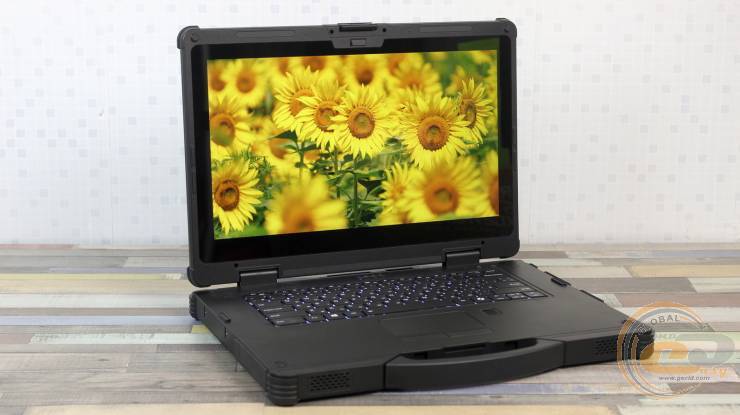
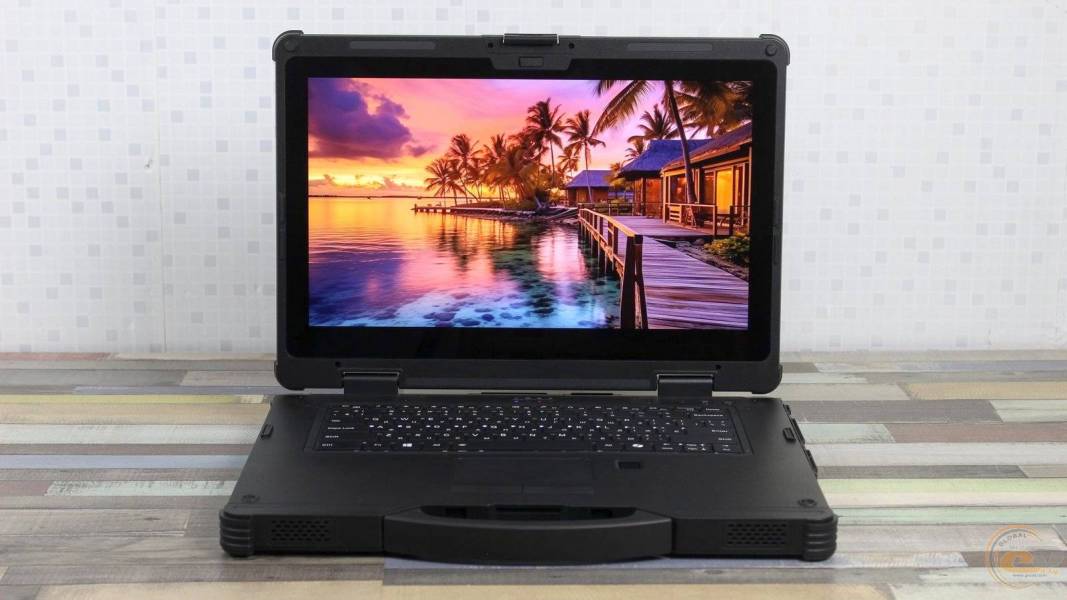
This time we have a laptop from this category for testing for the first time — Vinga Scout X14M (X14M-155H321024B). Its design speaks for itself: metal display block cover, keyboard drainage, rubberized port covers, special display latch with dampers, and a recessed keyboard block.
The model has two batteries — one removable, the other built-in, allowing for longer work and hot-swapping the battery. There is an expansion block for SSD and Wi-Fi modules, slots for microSD and SIM cards, as well as a 4G/LTE module with GPS for mobile tasks.
Practical details are also important: a carrying handle, considerable weight, which immediately makes it clear — this is not a toy, but a tool for work.
Vinga Scout X14M has military certificates MIL-STD-810H and IP65 protection against dust and moisture. It withstands drops, works in the rain, and in harsh conditions where regular laptops simply won't survive.
It is clear that such a laptop costs a lot — in Ukraine, it is available on the official Vinga website for 119,999 UAH. But for a machine designed for extreme conditions and professional tasks, this seems quite justified. Next — a detailed analysis of its capabilities.
Specification
|
Manufacturer and Model |
|
|
Display |
Thin Framed, IPS (CSOT SNE001BS2-1) 14", FullHD, 1920 × 1080, 16:9, 60 Hz, brightness 1000 nits, gamma 2.20 |
|
Processor |
Intel Core Ultra 7 155H (16 cores / 22 threads, 0.9-1.4 GHz base, up to 4.8 GHz Turbo, 24 MB L3, TDP 28 W) |
|
Integrated Graphics |
Intel Arc Xe LPG (8 Xe-cores, support for DX12 Ultimate, XeSS, AV1, frequencies up to 2.2 GHz) |
|
Discrete Graphics Card |
- |
|
AI Hardware Acceleration |
Yes, Intel NPU, 11 TOPS
|
|
RAM |
2 x 16 GB SO-DIMM DDR5-4800 MT/s Kingston (Micron CBD48S40BS8MD-16) |
|
Storage |
SSD NVMe Kingston OM8SGP41024K2-A00 (M.2 2280, PCIe 4.0, NVMe 1.4, TLC, DRAM-less, HMB, Phison E19T, rebranded Micron or YMTC 3D NAND) |
|
Card Reader |
Yes, TF-card (microSD) |
|
SIM Card Slot |
Yes, nano-SIM |
|
Interfaces |
1 × USB 3.2 1 × USB 3.0 1 × USB 2.0 1 × USB-C 1 × mini HDMI 2.0a 1 × combined audio 3.5 mm 2 × RJ-45 1 × RS-232 1 × DC-in 19V/3.78A 1 × left expansion slot (M.2-2280 SSD + M.2 E-Key Wi-Fi/custom) |
|
Acoustics |
Stereo system 2 x 3 W |
|
Microphone |
Yes, 2 pcs |
|
Webcam |
5.0 M with mechanical shutter |
|
Networking Capabilities |
LAN: Realtek PCIe GbE Family Controller (RTL8153E) — Gigabit Ethernet (RJ-45); WLAN: Intel AX211D2W (M.2 Key E) — Wi-Fi 6E (IEEE 802.11ax/ac/n/g/b/a), Bluetooth 5.3; 4G modem: Quectel EC200A-EL — LTE Cat.1 with GNSS GPS/GLONASS). |
|
Security |
TPM 2.0 module, Kensington Lock |
|
Features |
GPS, keyboard backlight, fingerprint scanner, camera shutter, RF switch, liquid drainage hole |
|
Additional |
Additional battery, MIL-STD-810H (drop from 1.2 m, extreme temperatures, humidity), IP65 (dust and water drop protection), reinforced body, port covers, hatch for RAM/SSD/SIM/SD |
|
Battery |
Built-in: Li-ion, 11.1 V, 1300 mAh, 14.43 Wh (522982P); Removable: Li-ion, 11.4 V, 4700 mAh, 53.58 Wh (YB-3072135-3S X14M). |
|
Charger |
WTB72-1900378-T2 Input: 100-240 V AC, 1.5 A at 50/60 Hz Output: 19.0 V DC, 3.78 A, 71.82 W |
|
Dimensions, mm |
363.2 × 287.4 × 42.1 |
|
Weight, kg |
2.97 |
|
Color |
Black |
|
Operating System |
DOS |
|
User Manual |
|
|
Device Page |
|
|
Manufacturer's Website |
Vinga |
Packaging and Completeness
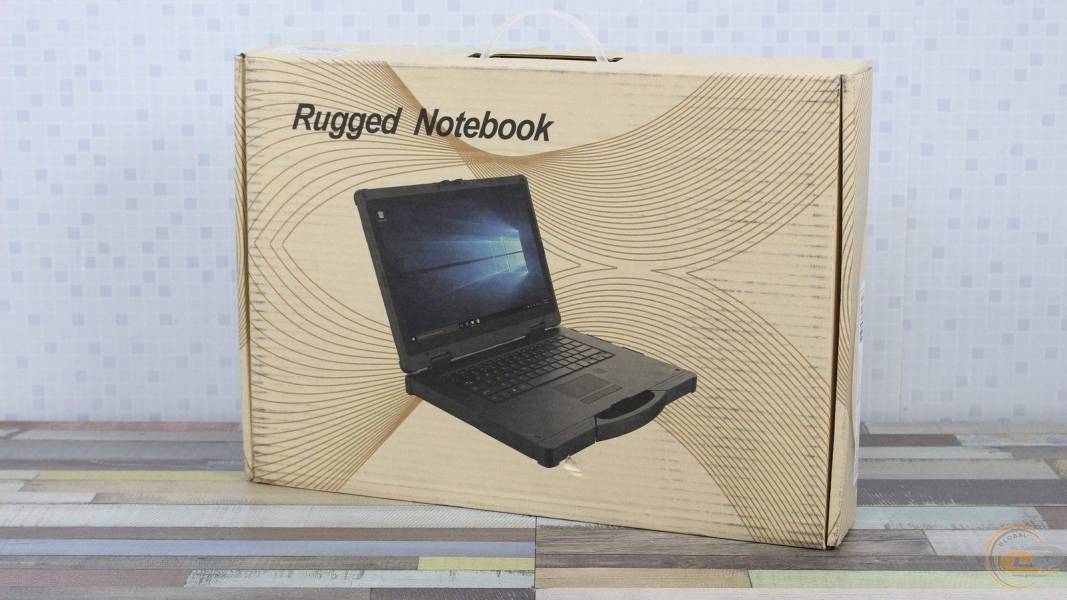
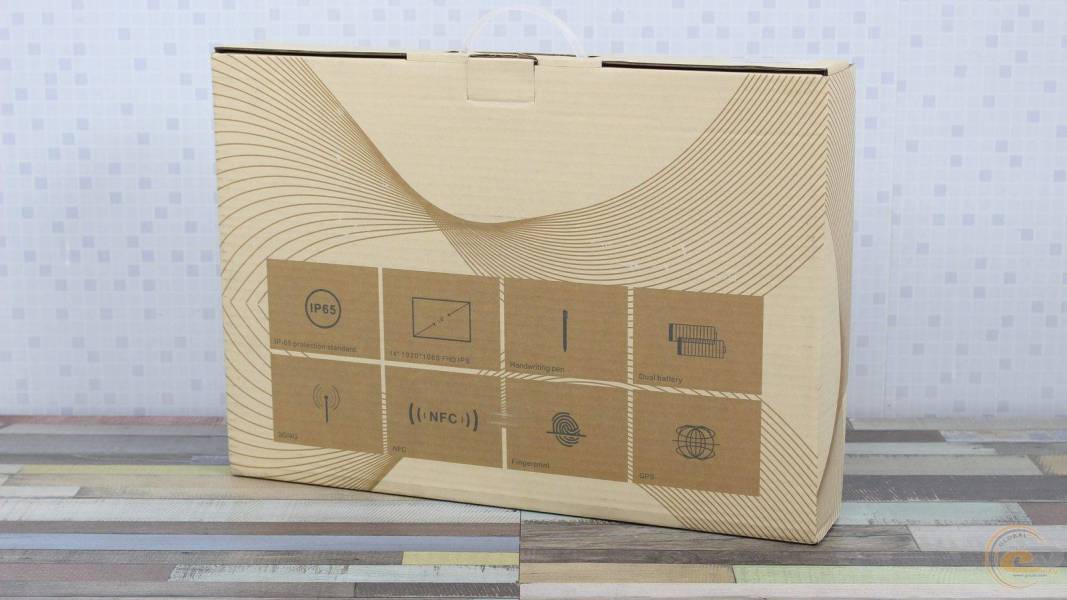
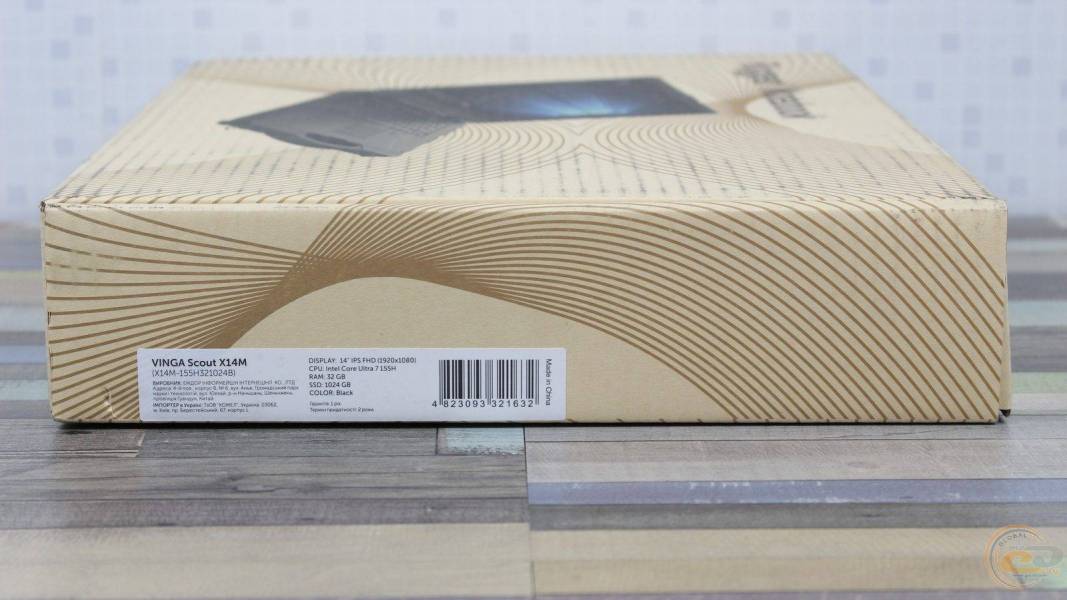
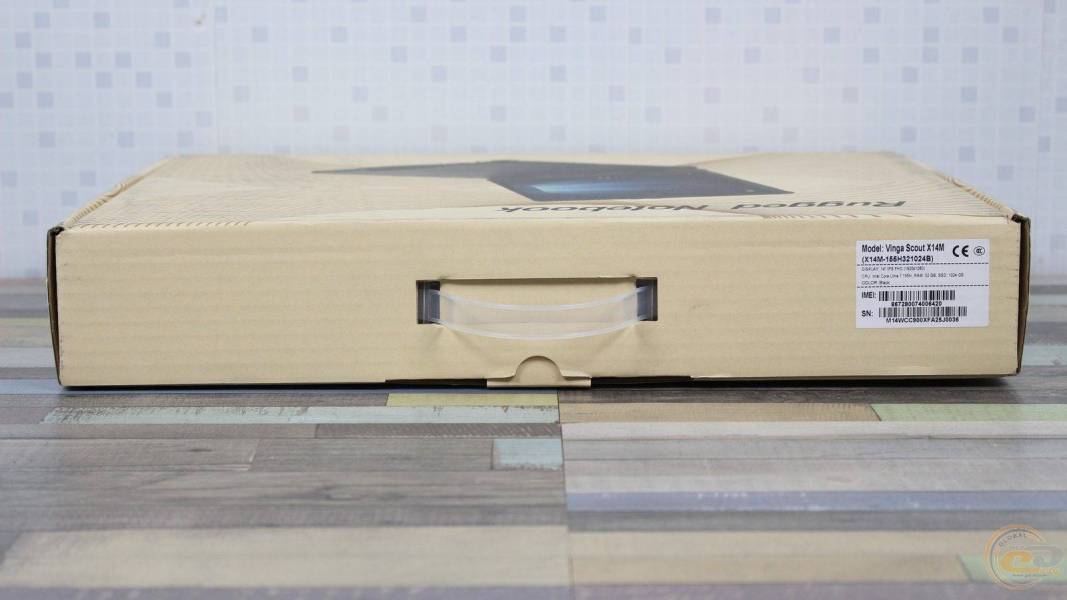
Vinga Scout X14M arrived in a dense cardboard box of natural color with an abstract linear pattern. On the front side, there is a colored image of the laptop and a large inscription «Rugged Notebook». On the back — a block with pictograms highlighting the main features. The top edge is equipped with a plastic handle for convenient transportation. On the side edges, there are stickers with technical specifications, information about the manufacturer and importer in Ukraine, as well as warranty information.
The package is spartan but sufficient to start working. In the box: the laptop itself, a power adapter, a power cable, two removable batteries (one in the laptop), and a user manual. There are no additional accessories — everything is as utilitarian and practical as possible.
Appearance, Element Placement
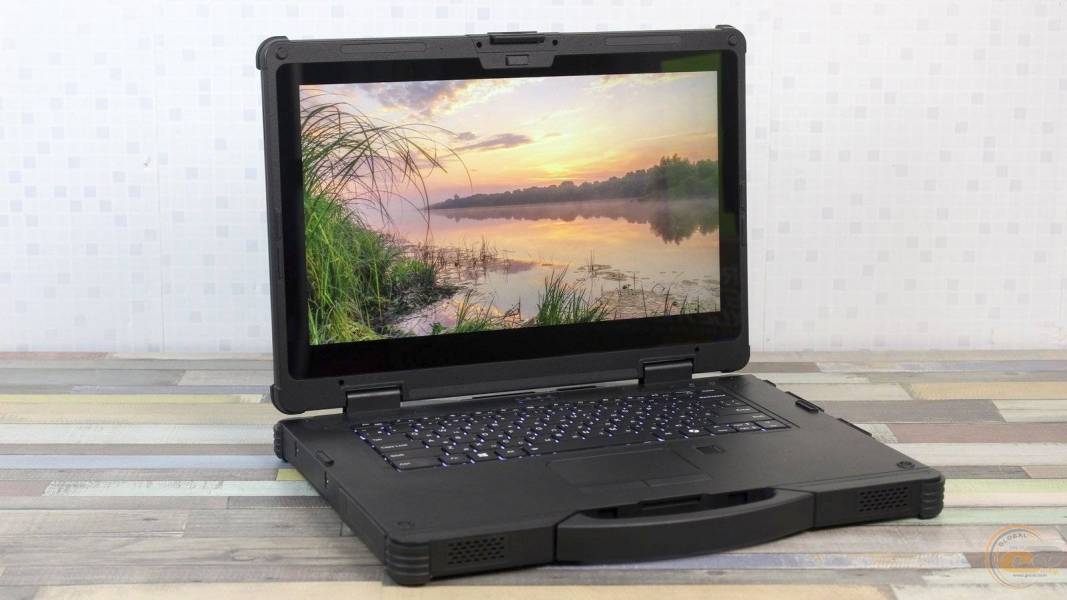
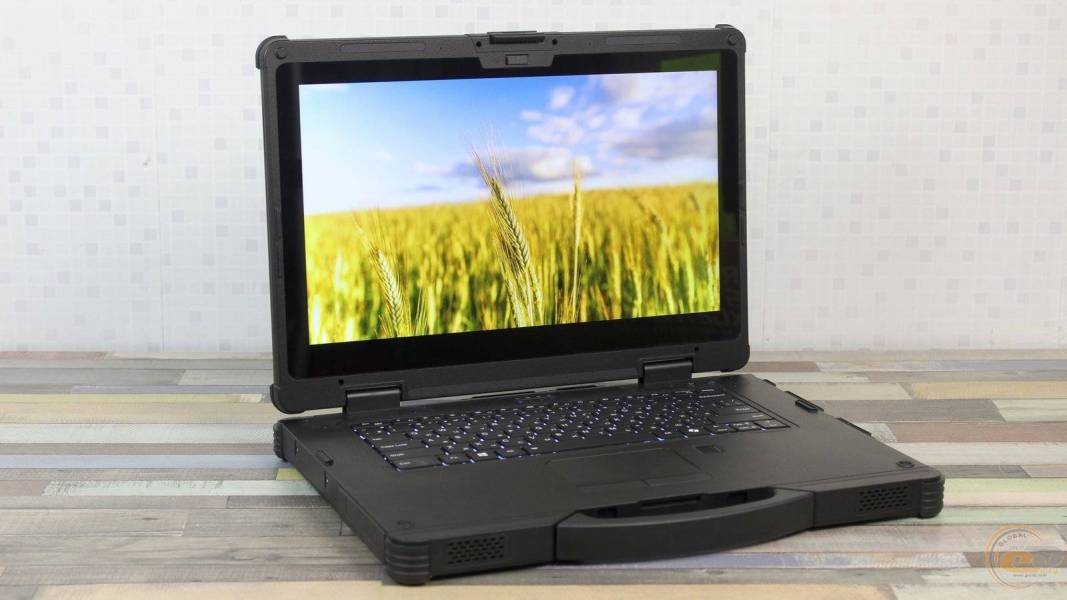
Externally, the Vinga Scout X14M is a typical rugged laptop with a utilitarian design. The massive body with reinforced corners, black textured plastic, and the absence of decorative elements immediately indicate its purpose for working in environments where ordinary equipment cannot withstand.
The dimensions of the body are 363.2 × 287.4 × 42.1 mm, and the weight is 2.97 kg. This is a protected laptop that combines performance with durability and mobility, remaining suitable for daily transportation. The keyboard is liquid-resistant, which is especially important for field conditions, and the 14-inch IPS screen with a brightness of about 1000 nits is suitable for working in direct sunlight.
This is a solution for those who need power in a mobile format without being tied to one place.
The top cover is made of textured plastic, and the central part is reinforced with a metal plate with stiffening ribs. This increases strength and protects the matrix from deformation. The "X" logo is located in the center. The corners have protrusions-dampers that help maintain integrity during falls and impacts.
The screen opens almost 170°, and the massive hinges securely fix it in any position.
Around the matrix are protective protrusions and rubber spacers that prevent the display from contacting the keyboard. The central lock holds the screen in a closed position during transportation.
The bottom part of the body is made of durable textured plastic, resistant to scratches and dirt. In the upper left corner is an information sticker with technical data and a serial number. On the right is an external battery with a quick-change mechanism. Under the sticker is a drainage hole for liquid drainage. In the center is a hatch for access to memory modules, SSD, and expansion slots. On the left are the ventilation openings of the cooling system.
The legs are integrated into the reinforced corners of the body. The absence of rubber inserts is a completely correct decision, as in extreme conditions, rubber quickly wears out or falls off. Their height is about 4 mm in the front and 5.5 mm in the back, creating a slight tilt of the body, improving ventilation, and providing better stability.
A handle for carrying is integrated on the front edge, protruding forward and providing a convenient grip and good weight balance.
Here are also the speaker openings, directed forward.
The rear edge contains: RJ-45, mini HDMI 2.0a, a combined audio 3.5 mm, USB-C, and a Kensington lock slot.
All ports are covered with plastic plugs with rubber seals, protecting them from dust and moisture. On the right are the ventilation openings of the cooling system.
The left edge contains two metal holes for mounting and a removable expansion module with M.2 slots for SSD and Wi-Fi. This provides configuration flexibility and the ability to add specialized boards.
On the right are: COM (RS-232), RF ON/OFF switch, USB 3.0, USB 2.0, another RJ-45, and a power connector.
They are also covered with plastic plugs with rubber seals.
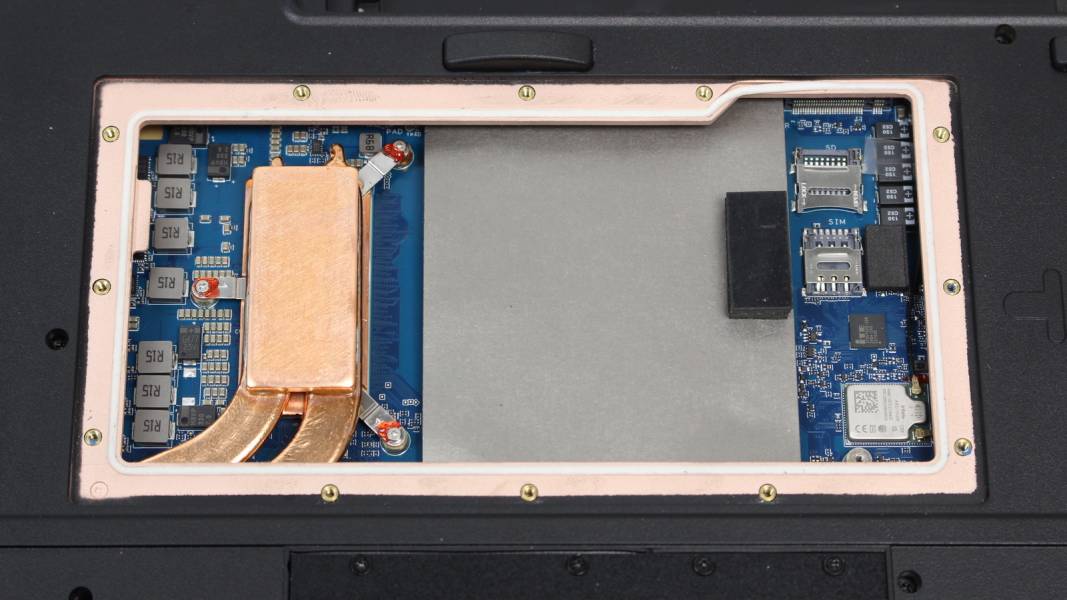
The bottom hatch is easily removable, providing access to memory slots and storage, as well as the SIM card and TF card. This simplifies upgrades and maintenance.
Input Devices
Island-style keyboard with ANSI layout without a numeric keypad ensures comfortable typing. The top row of function keys has a reduced height (16×10 mm), while the main keys and arrows are standard 16×16 mm. The overall dimensions of the keyboard block are 272×105 mm. The key travel is medium, the pressing is light and predictable, with a clear tactile response. Brightness and volume adjustment functions are prioritized. To the left of the arrow block, there is a separate Copilot button for quick utility launch.
The legends are applied with contrasting white paint and are easily readable even without backlighting. There is a single-zone white key illumination with two brightness levels.
The keyboard block is slightly recessed into the body and has spill resistance: in case of liquid ingress, it is drained through a through-drain hole at the bottom of the body.
Above the keyboard in the center are four status indicators:
- Power — lights up blue when the laptop is on.
- Battery — red during charging; blinks red if the external battery is removed.
- Caps Lock — lights up red when Caps Lock is activated.
- 4G — lights up when a 4G module is recognized.
To the right and above the keyboard are two separate buttons:
- Power — controls the device's power on and off; by default, a short press puts the system into sleep mode.
- P — hardware display switch: pressing and holding for more than 1 second turns off the screen and turns it on with a repeat press.
The touchpad is compact — 87×40 mm. The surface is matte, the finger glides well, but the dimensions are not very convenient for prolonged use. The touch panel works accurately, and there are separate hardware buttons with a clear press. Overall, there are no complaints about the operation, although the ergonomics could be better.
To the right of the touchpad is a fingerprint sensor. It is used for system login via biometric data, preventing unauthorized access to the computer.
Display, Webcam, Sound
Vinga Scout X14M is equipped with a 14-inch IPS screen with a Full HD resolution (1920×1080), a 16:9 aspect ratio, and brightness up to 1000 nits. The refresh rate is a standard 60 Hz, which is sufficient for office and field tasks. The matte coating reduces reflections and maintains image clarity in bright lighting. The 16:9 format is optimal for versatile scenarios — from working with documents and spreadsheets to watching videos.
The bezels around the screen are quite massive, which is typical for rugged models. They occupy almost 40% of the front panel area of the display block, but provide additional protection for the matrix against impacts and falls according to the MIL-STD-810 standard.
|
Parameters |
Values |
|
sRGB coverage, % |
72.3 |
|
Adobe RGB coverage, % |
52.1 |
|
DCI-P3 coverage, % |
54.2 |
|
Average / maximum dE*00 deviation |
0.39 / 1.25 |
|
White point color temperature, K |
6826 |
|
Minimum brightness, cd/m² |
50.3 |
|
Maximum brightness, cd/m² |
651.7 |
|
Contrast ratio |
1258:1 |
|
Average gamma |
1.31 |
The actual matrix model is CSOT SNE001BS2-1. It covers 72.3% of the sRGB space, 54.2% of DCI-P3, and 52.1% of Adobe RGB. The average color deviation dE*00 is 0.39, the maximum is 1.25, indicating precise factory calibration. The white point temperature is fixed at 6826 K, the image is visually neutral, without a pronounced cold or warm tint.
The average gamma is 1.31 — it was intentionally lowered in the laptop for better readability outdoors. The brightness of the black field is 0.518 cd/m², and the contrast ratio is 1258:1, providing sufficient black depth even at high brightness. The claimed brightness reaches 1000 nits, while the actual maximum is 651.7 cd/m², and the minimum is 50.3 cd/m². This allows comfortable work both in a dark room and in daylight.
Above the display is a webcam module with an activity indicator and two microphones.
The camera has a mechanical shutter that allows physically closing the lens — this is a basic level of privacy protection, implemented without additional software. Above it is also a mechanical display block latch, ensuring tight closure and protection from play during transportation.
The webcam in Vinga Scout X14M is equipped with a 5 MP sensor. It allows taking photos in full resolution with sufficient detail, and records video in Quad HD (2560×1440) at 30 frames per second. The image quality is acceptable under adequate lighting conditions, with noticeably higher detail than simple modules with a resolution of less than 1 MP. Under low lighting, the noise level increases, but it is quite sufficient for video calls. The flicker reduction function at 50/60 Hz is supported, improving image stability under artificial lighting.
Overall, this is a practical module that provides quality 5 MP photos and stable video in Quad HD, meeting the requirements of modern online calls and field use conditions.
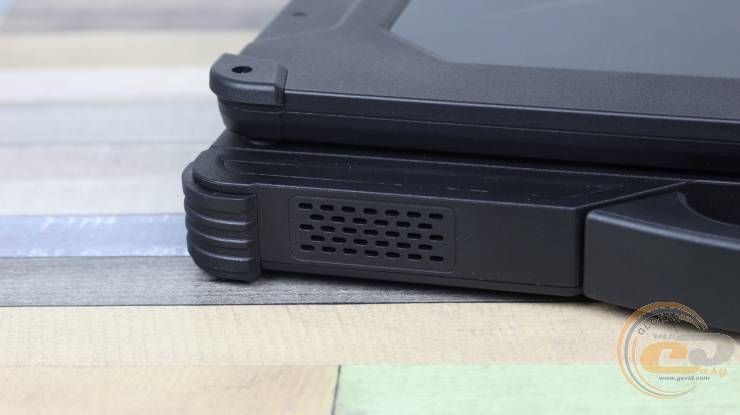
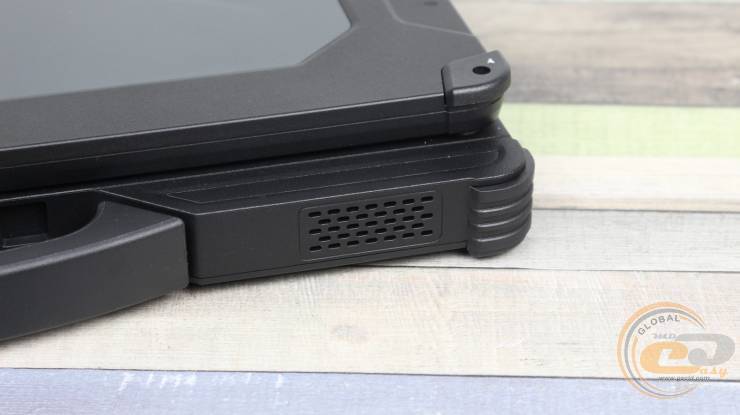
The laptop's audio system consists of two speakers located on the front edge. During testing, a comfortable volume level was achieved at just 20% — sufficient for video calls or background multimedia. The sound is clear at mid and high frequencies, but there is a noticeable lack of bass. At maximum volume, the high frequencies become somewhat sharp, but without distortion. In headphones, the quality is significantly better: the detail is high, the music sounds comfortable, and a sufficient volume reserve is also achieved at about 20%.
Hardware Platform and Performance
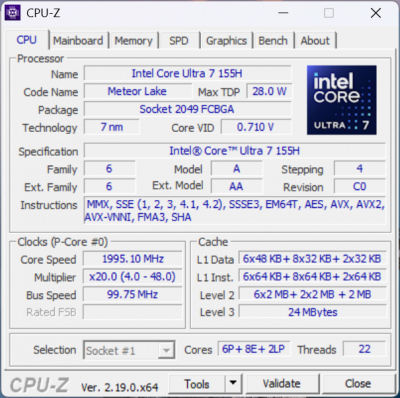
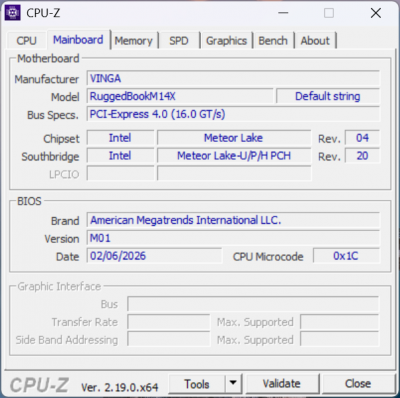
Vinga Scout X14M is built on the Intel Meteor Lake platform and equipped with a Core Ultra 7 155H (Intel 7, Foveros) processor. This is a 16-core, 22-thread chip with a hybrid architecture: performance cores Redwood Cove, energy-efficient Crestmont, and two additional "Low Power Island" cores for energy saving. In tests, the frequency varied in the range of 0.9–4.8 GHz depending on the load. Cache: 24 MB L3 and 18 MB L2, providing fast data access under multi-threaded loads. Modern instructions AVX2, AVX512, FMA3, and SHA are supported.
According to preliminary tests, under peak load, the processor can briefly consume over 70 W, although the official TDP is stated at 28 W. Under prolonged load conditions, power consumption stabilizes within 35–45 W, and the frequency of all cores is maintained at around 2.3–2.5 GHz.
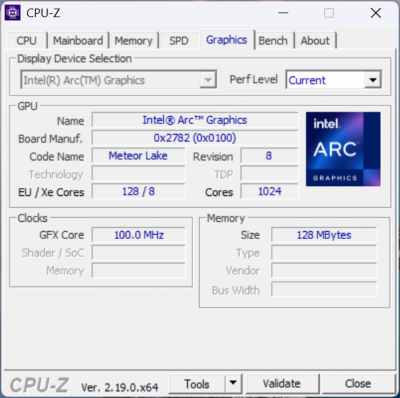
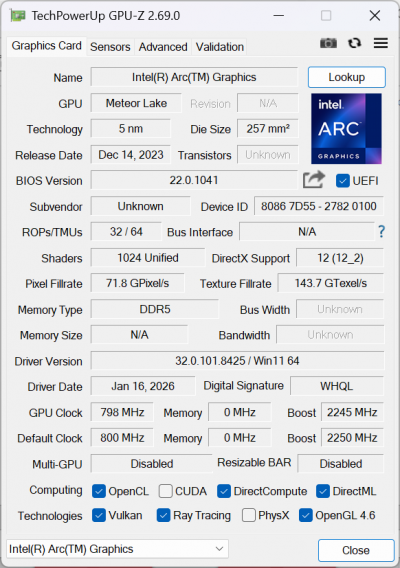
Integrated Graphics Core — Intel Arc Xe LPG (8 Xe cores, up to 2.2 GHz), which supports DirectX 12 Ultimate, XeSS, and AV1 hardware decoding. This is a basic solution for multimedia and light gaming, automatically activated under low load.
The laptop does not have a discrete graphics card — this aligns with the concept of rugged devices, where reliability and autonomy are prioritized over maximum graphics performance.
It is also worth mentioning the hardware block Intel AI Boost (NPU), capable of performing up to 11 TOPS. It is used to accelerate AI tasks and multimedia processing, reducing the load on the CPU and GPU.
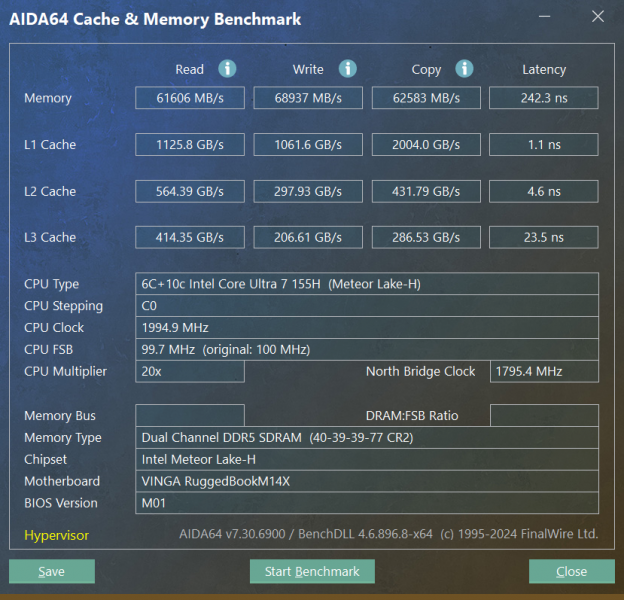
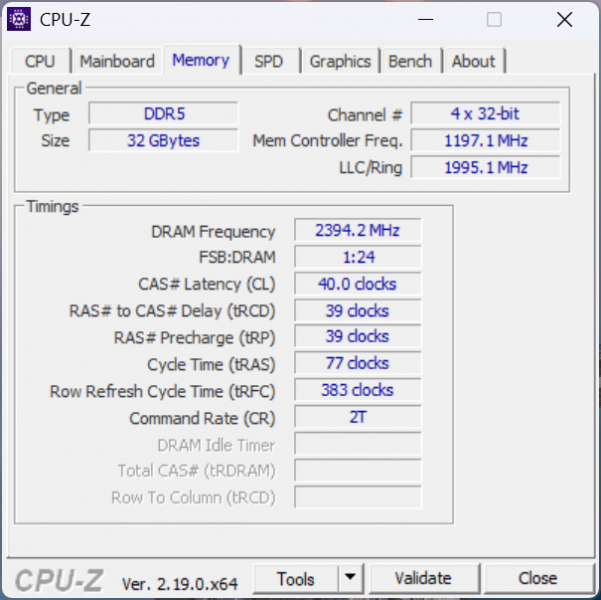
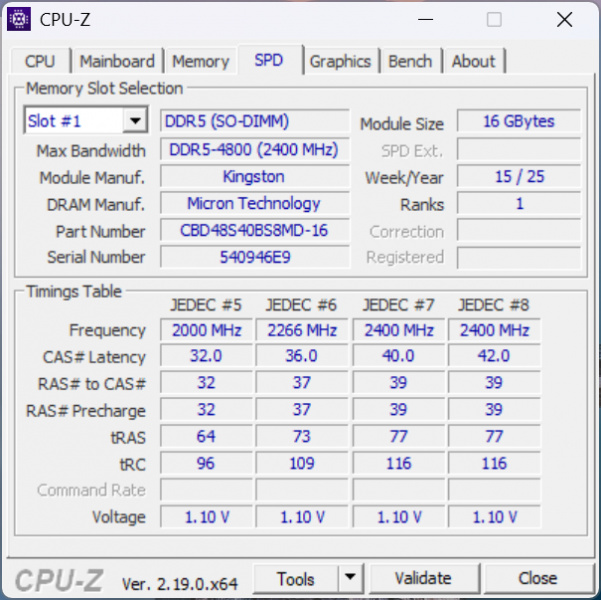
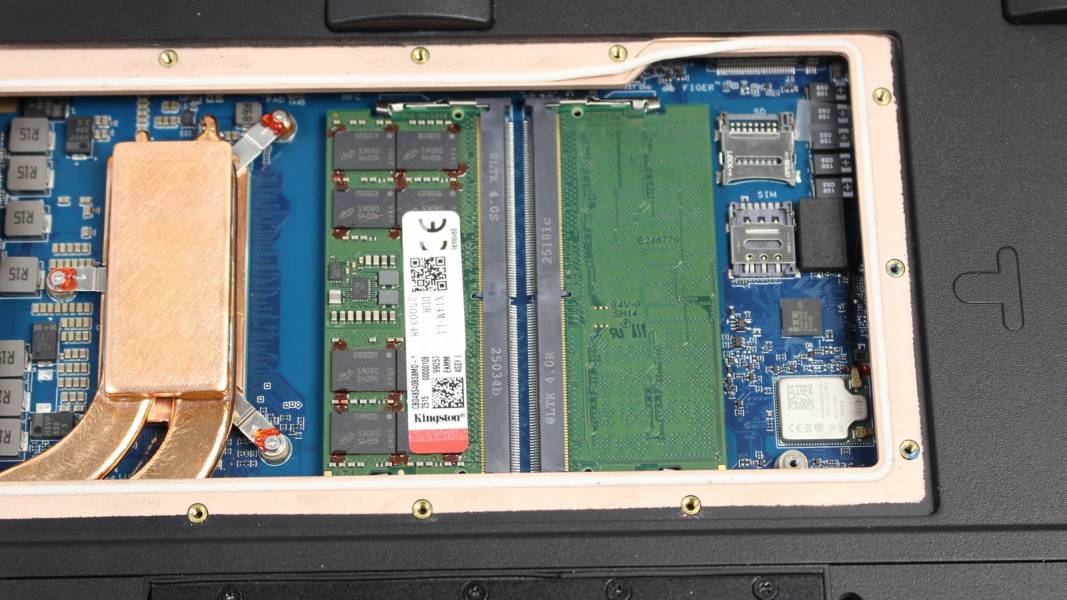
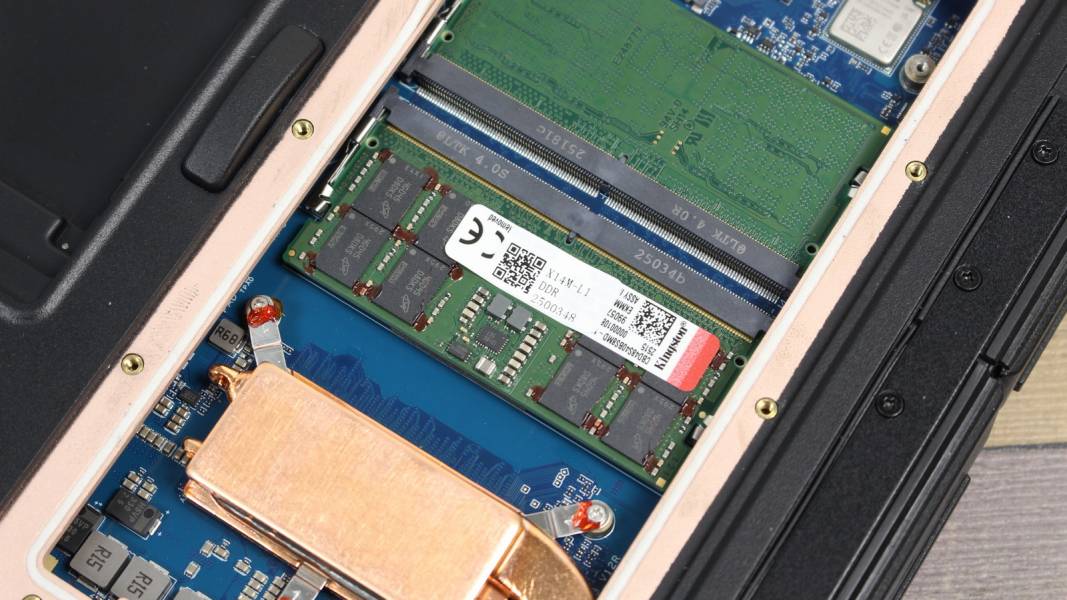
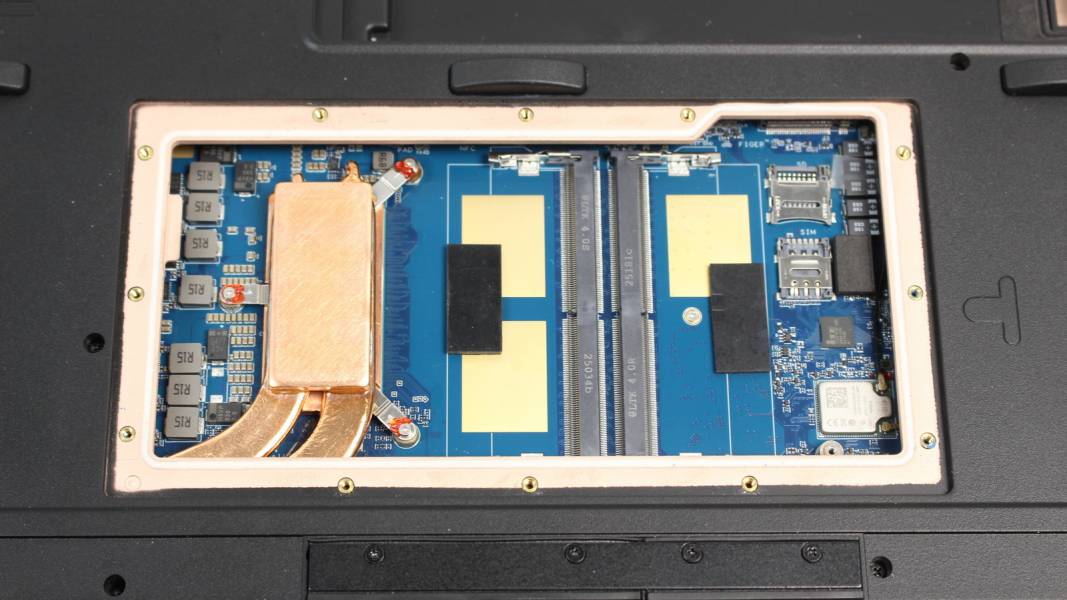
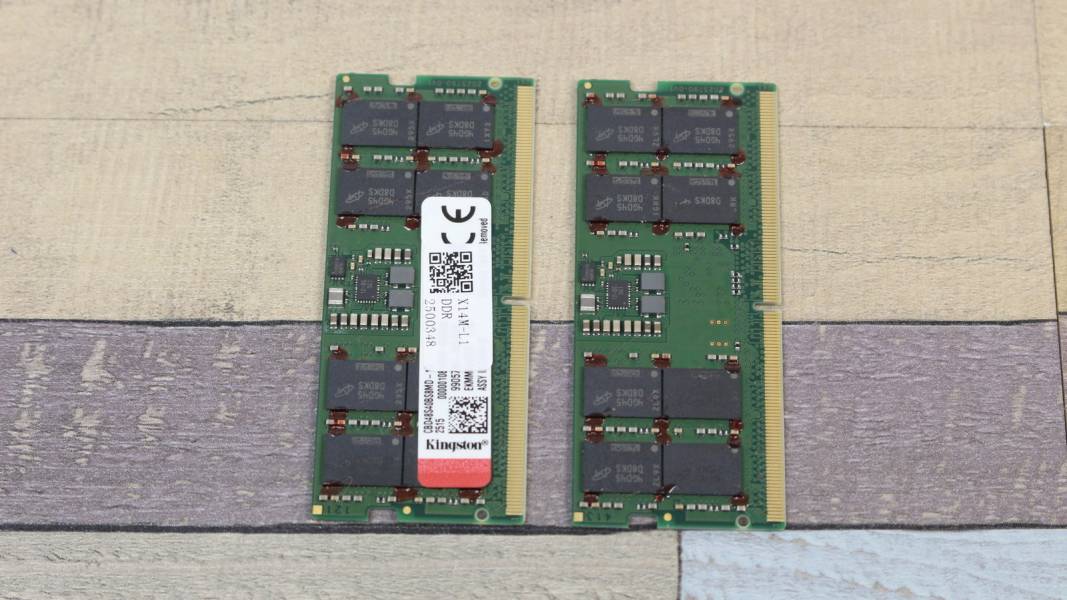
The laptop is equipped with 32 GB of DDR5-4800 Kingston (CBD48S40BS8MD-16) RAM on Micron chips. A standard mobile configuration with two SO-DIMM slots operating in dual-channel mode (4 x 32-bit) is used. By default, the modules operate with timings of 40-39-39-77 at a voltage of 1.1 V. In tests, the bandwidth was 61.6 GB/s for reading and 68.9 GB/s for writing — a very solid result for the Meteor Lake platform.
The maximum upgrade is possible up to 96 GB (2×48 GB), which corresponds to the limits of the Core Ultra 7 155H controller. This provides a reserve for professional software, AI computations, and working with large data sets, where fast memory access is critically important for the integrated Intel Arc graphics.
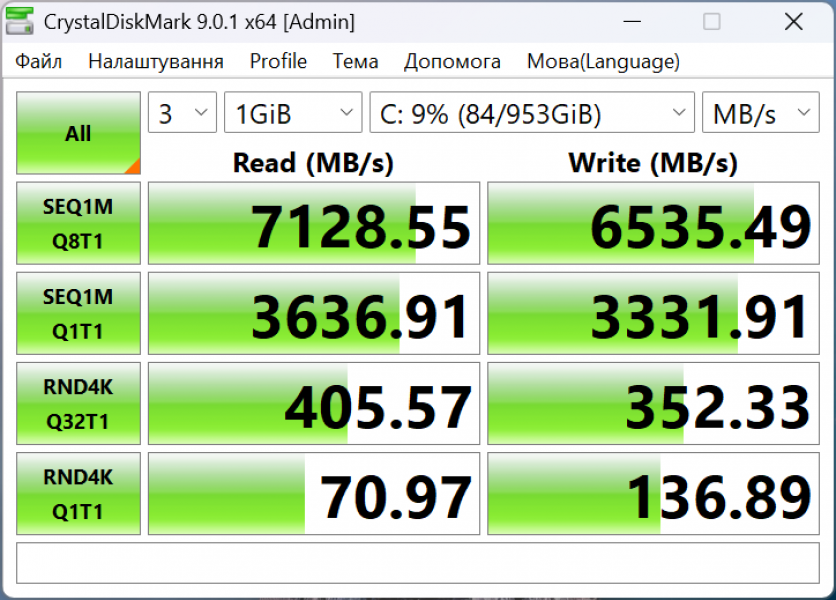
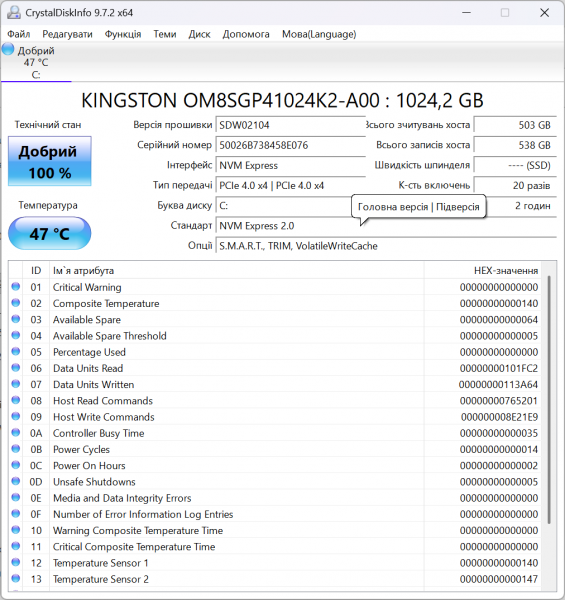
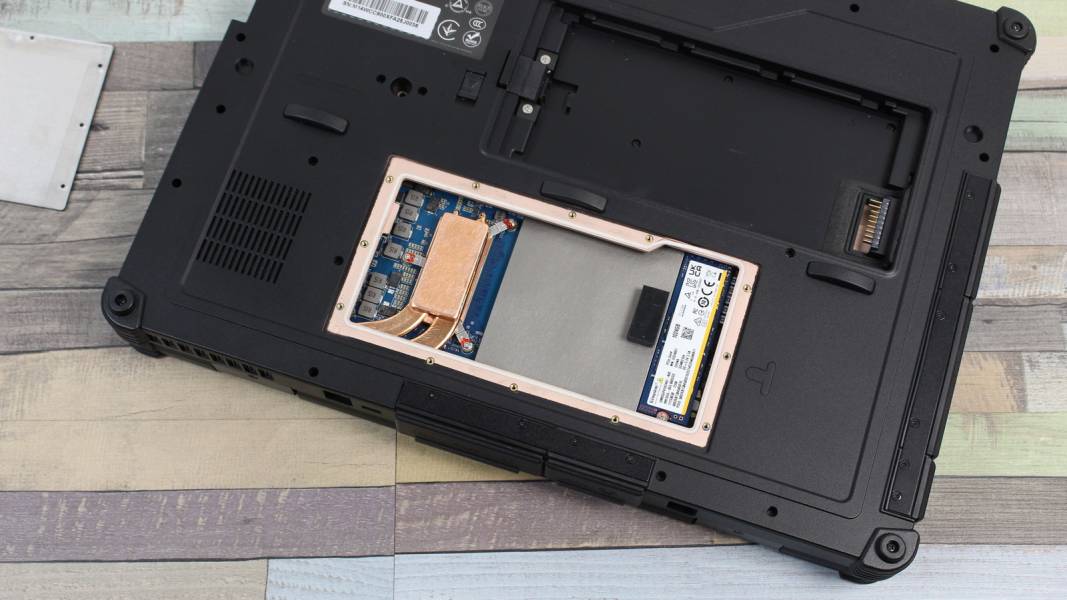
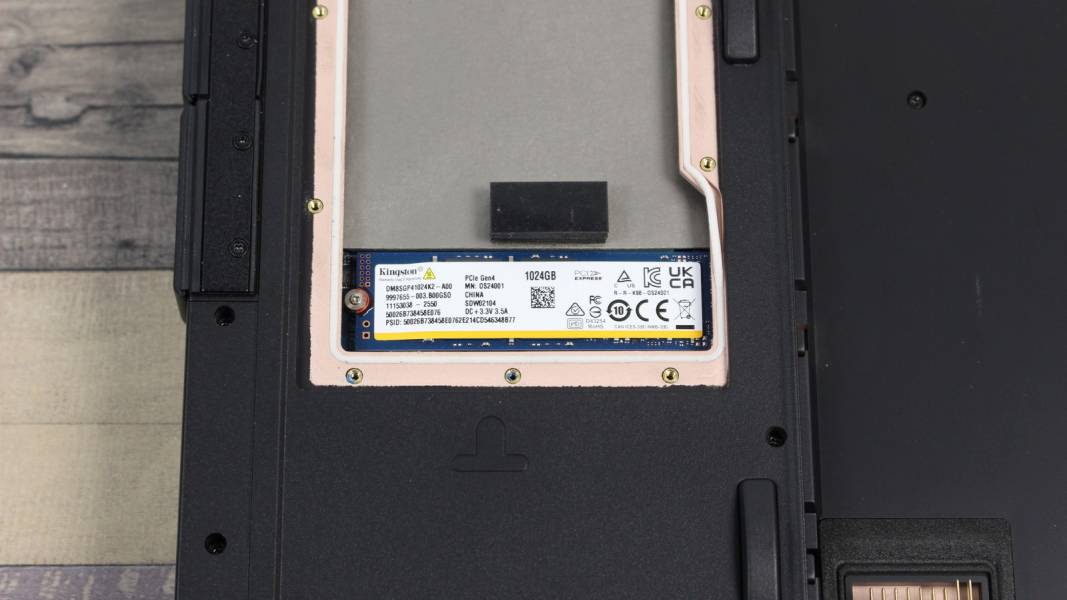
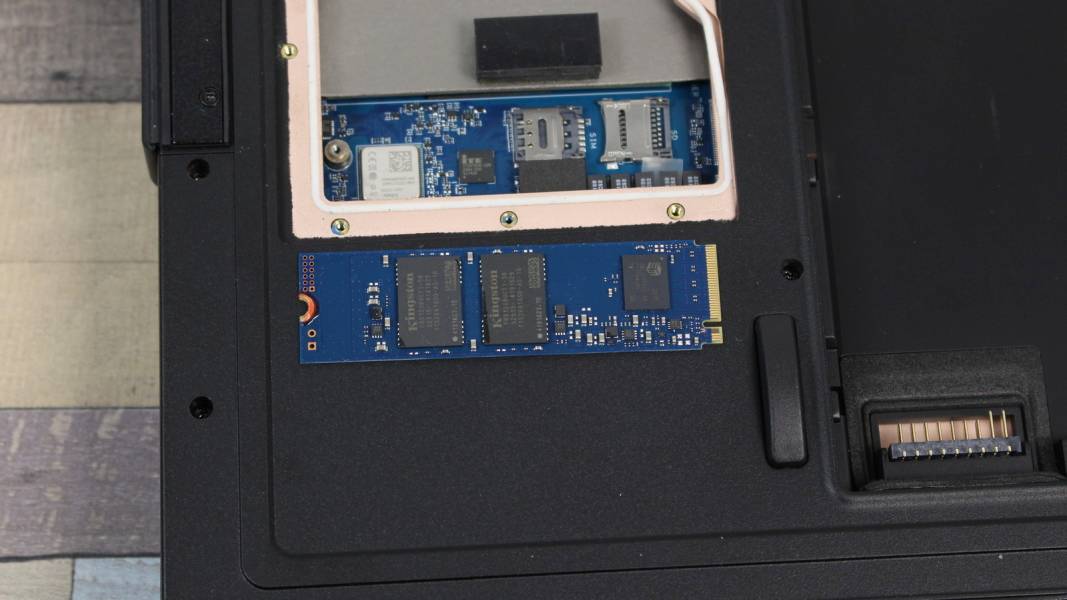
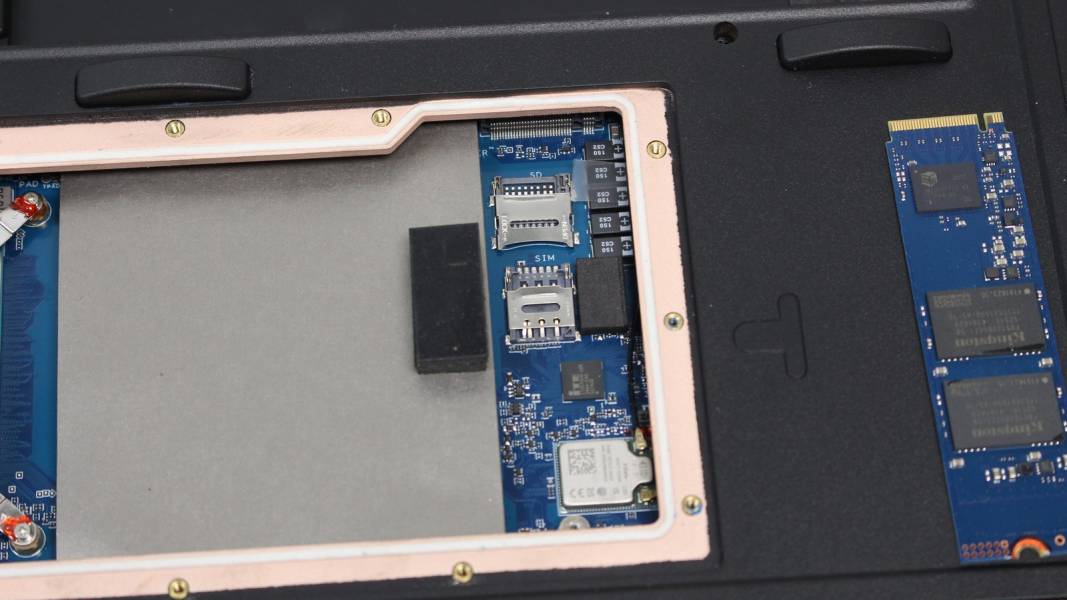
The disk subsystem is represented by a Kingston OM8SGP41024K2-A00 NVMe drive with a capacity of 1 TB in M.2 2280 format. It operates via the PCIe 4.0 x4 interface and complies with the NVMe 2.0 standard. A Phison controller with TLC NAND memory is used, and instead of a separate DRAM buffer, the Host Memory Buffer (HMB) mechanism is applied.
In practical tests, the drive performed very well: the system responds instantly, applications launch without delays, and working with large files is fast and stable. For a rugged laptop, this is an optimal solution — high speed combined with reliability and energy efficiency.
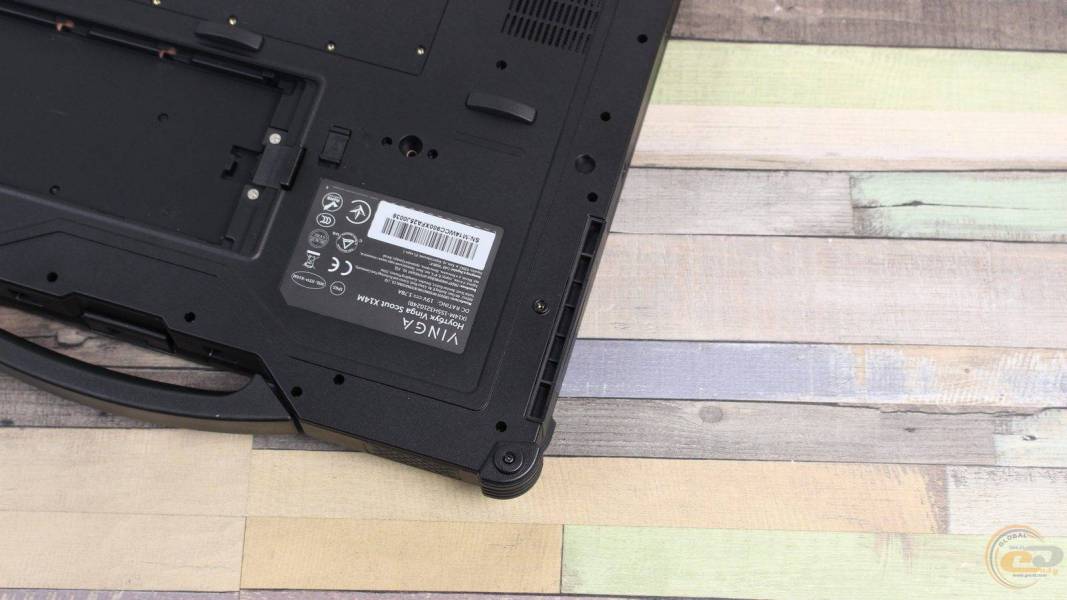
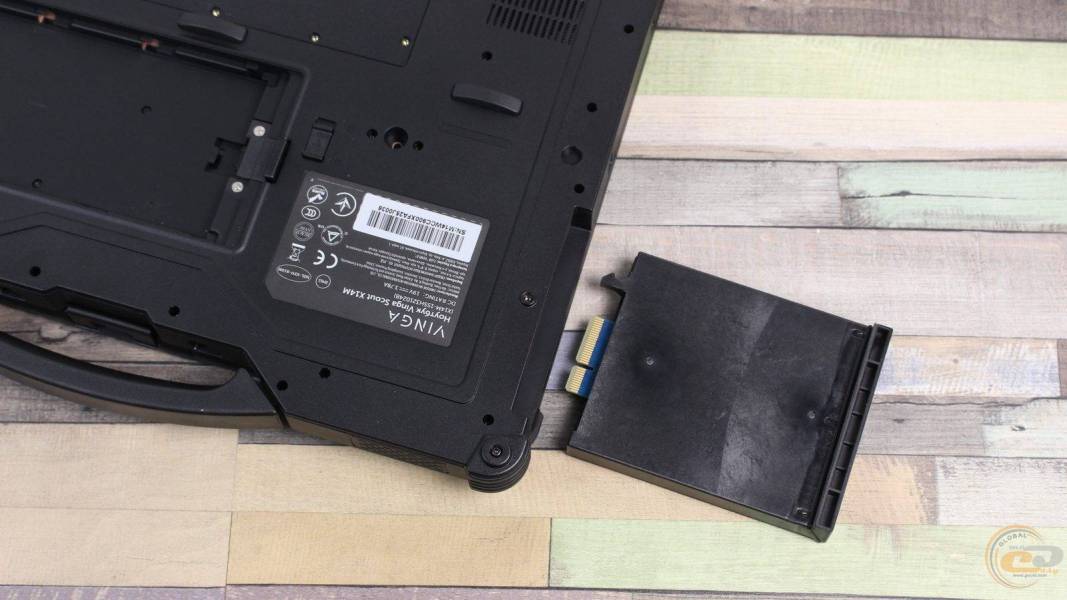
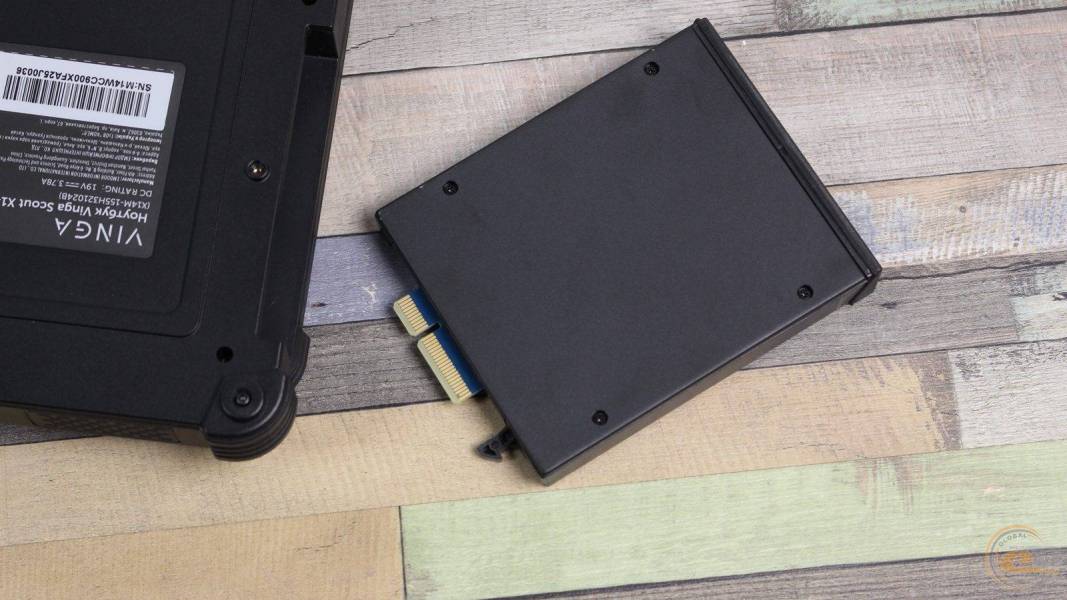
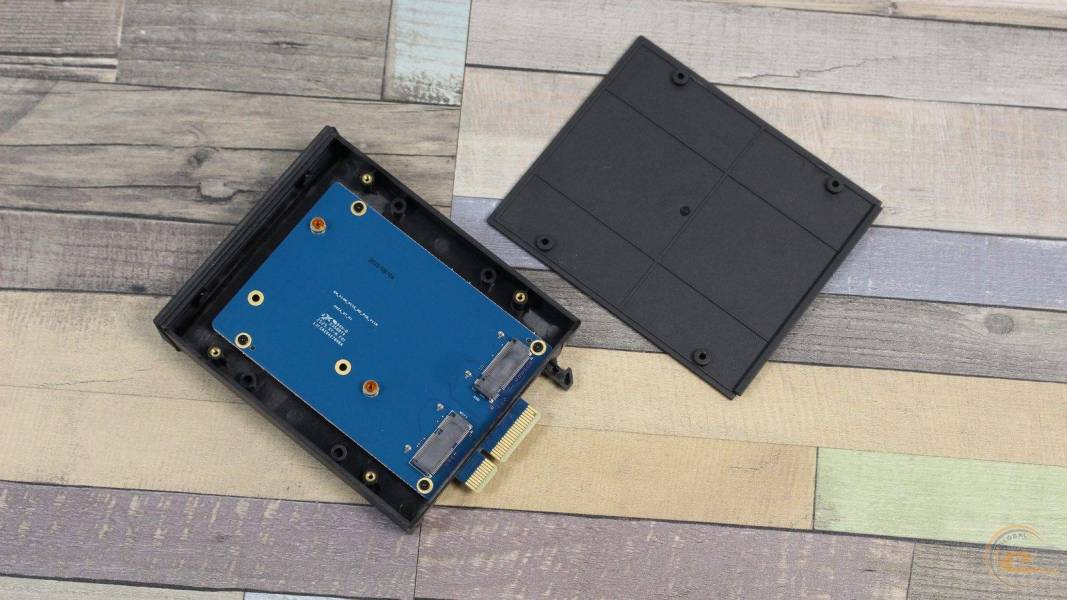
On the left side of the case, there is a retractable expansion module. Inside, there are two standard connectors: M.2 2280 for installing an additional SSD drive and M.2 Key-E for a wireless communication module (Wi-Fi 6/6E, LTE, or 5G). This design allows for quick adaptation of the laptop to specific tasks — from increasing memory capacity to integrating communication solutions. The module itself is secured in the case and can be easily replaced in the field, which aligns with the concept of rugged devices.
The laptop is equipped with a full set of communication modules for operation in various conditions. Wired connectivity is handled by the Realtek PCIe GbE Family (RTL8153E) controller, which provides a stable Gigabit Ethernet connection through the standard RJ-45 port.
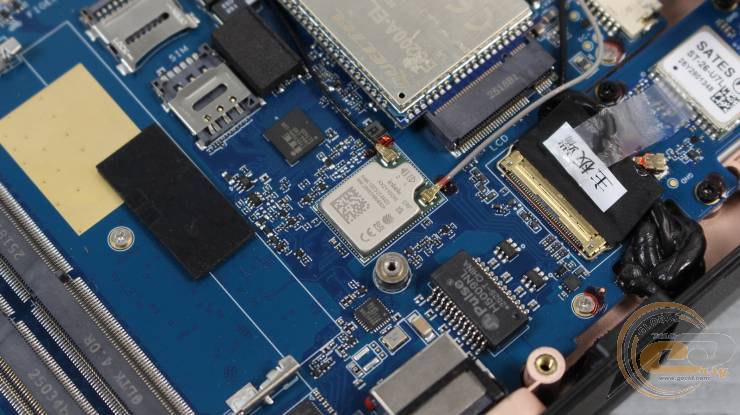
Wireless capabilities are implemented by the Intel AX211D2W module in M.2 Key E format. It supports the modern Wi-Fi 6E standard with operation in the 2.4, 5, and 6 GHz bands, as well as Bluetooth 5.3 for peripheral connectivity.
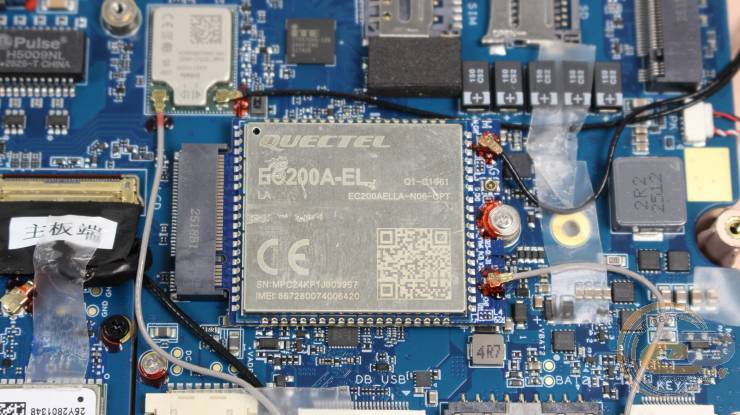
For mobile internet, there is a Quectel EC200A-EL modem operating in the LTE Cat.1 standard and featuring an integrated GNSS receiver with GPS and GLONASS support. This configuration allows staying connected both in stationary conditions and during field trips.
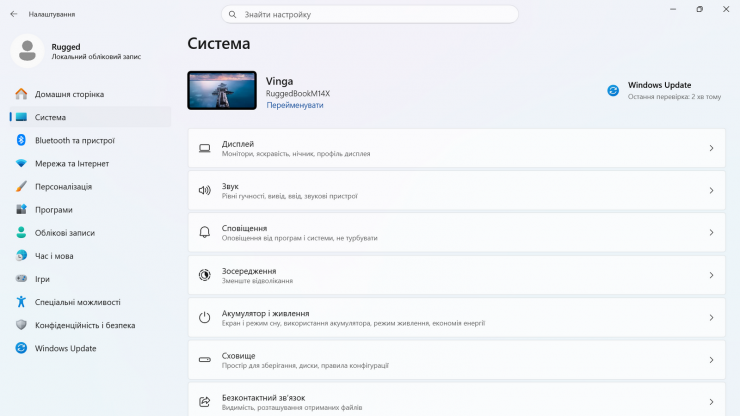
The retail version of Vinga RuggedBookM14X comes without a pre-installed OS, so a test Windows 11 Pro 25H2 was used for testing, and all drivers were installed from the manufacturer's official page. A proprietary utility for managing operating modes was not found, so performance settings were made through the standard OS tools. Games were run from an external SSD Transcend ESD350C (NTFS, USB Type-A).
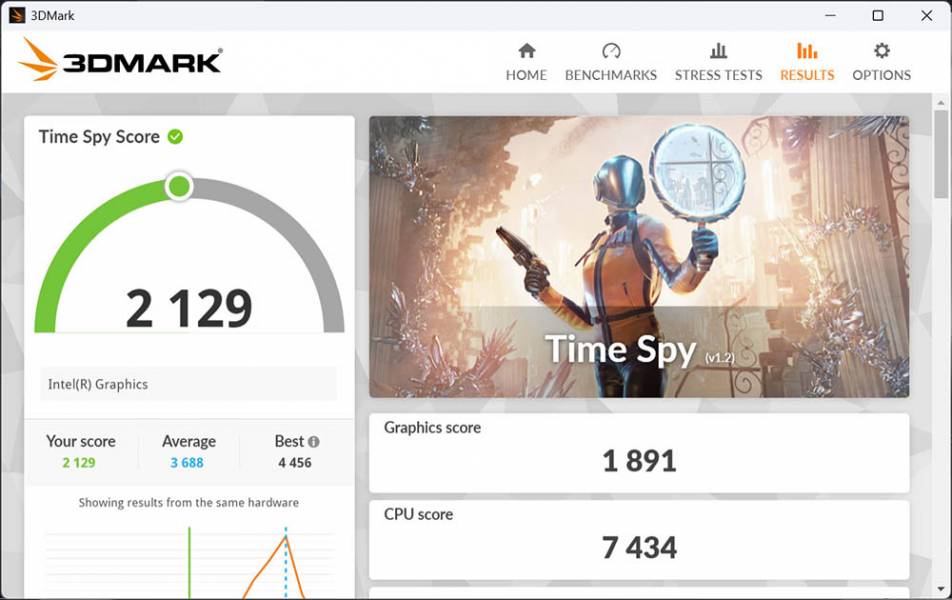
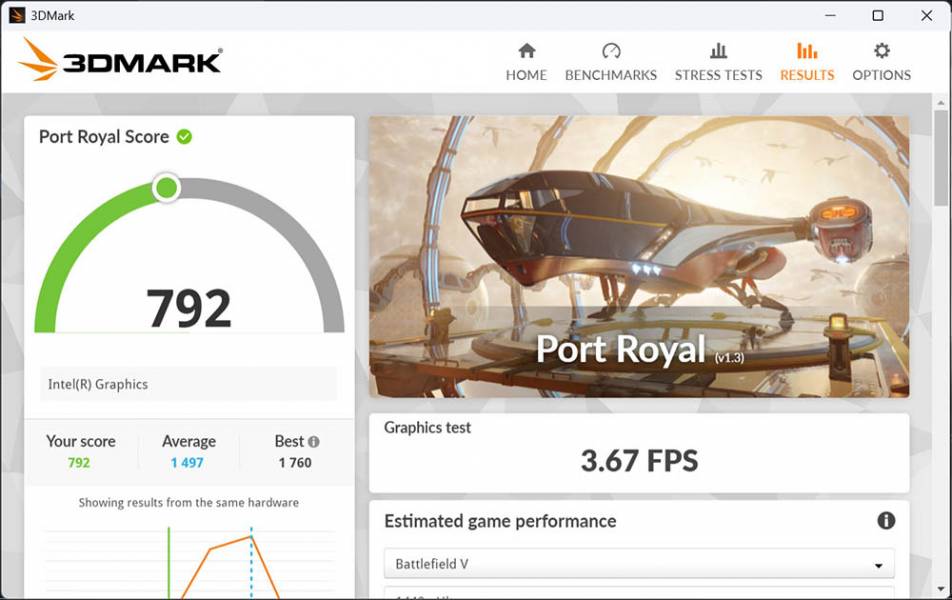
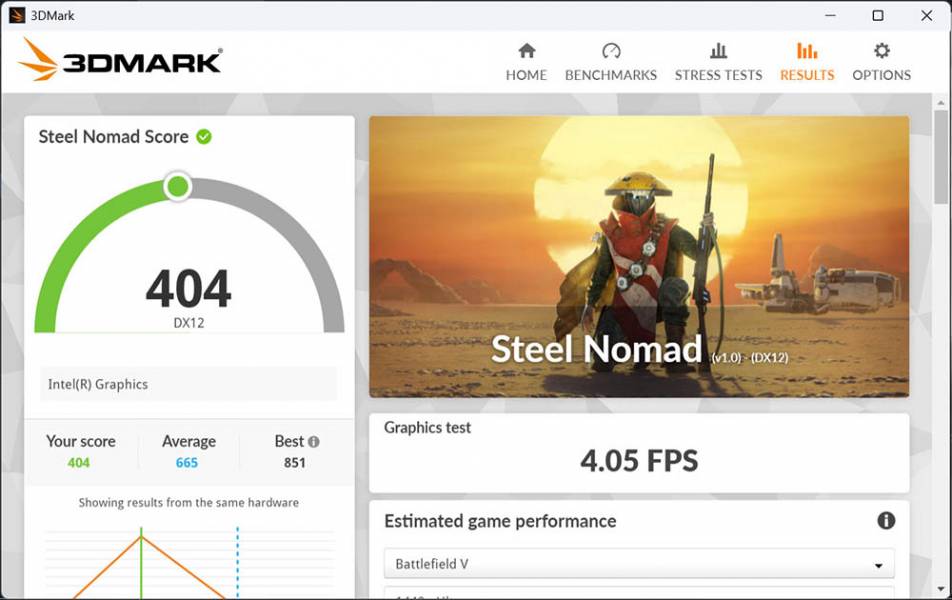
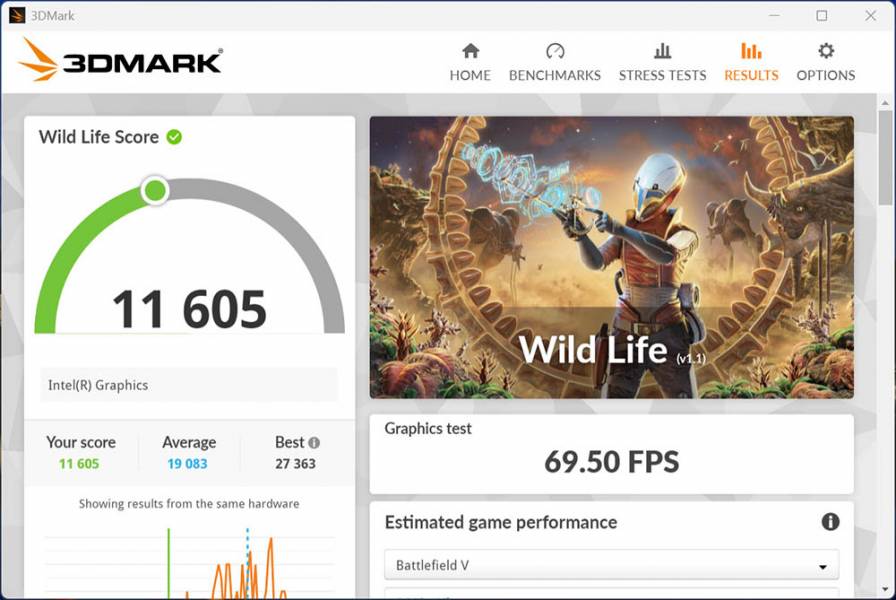
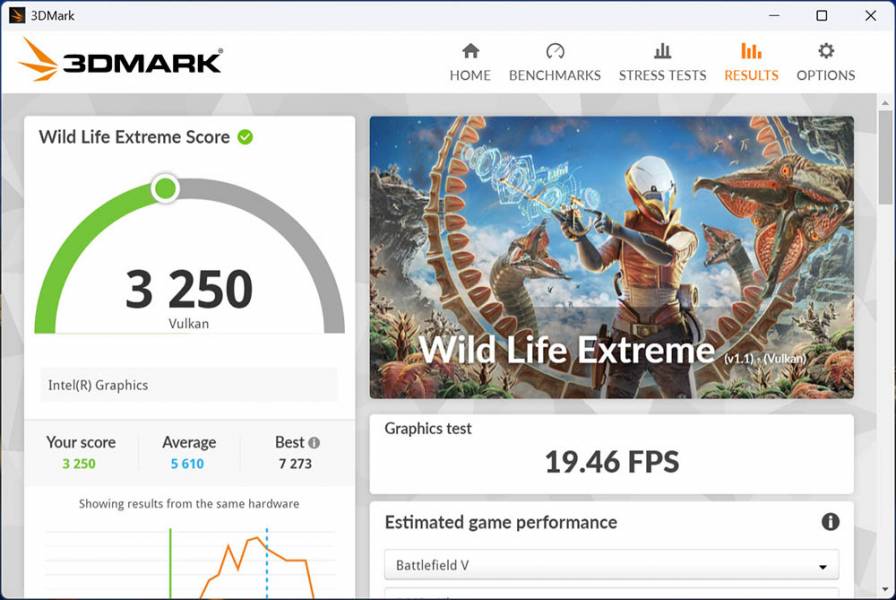
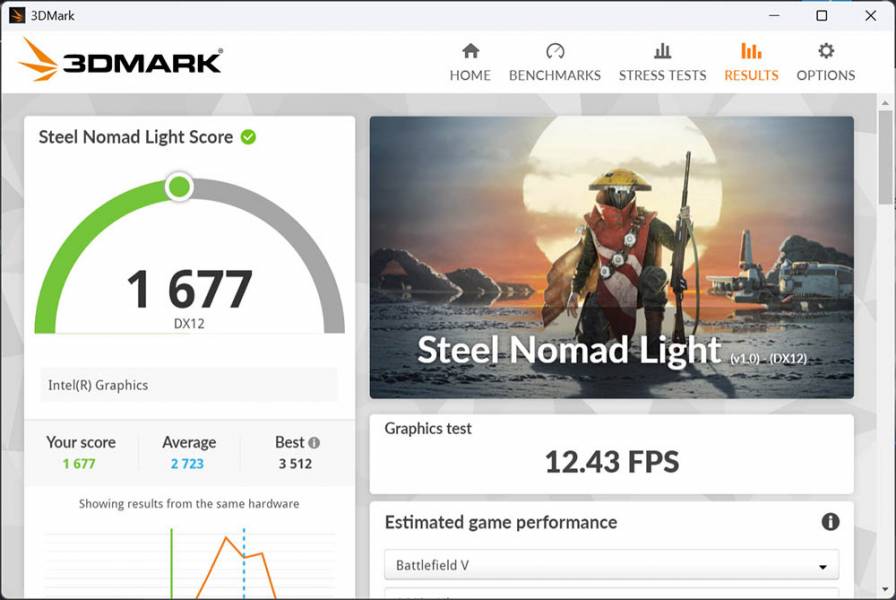
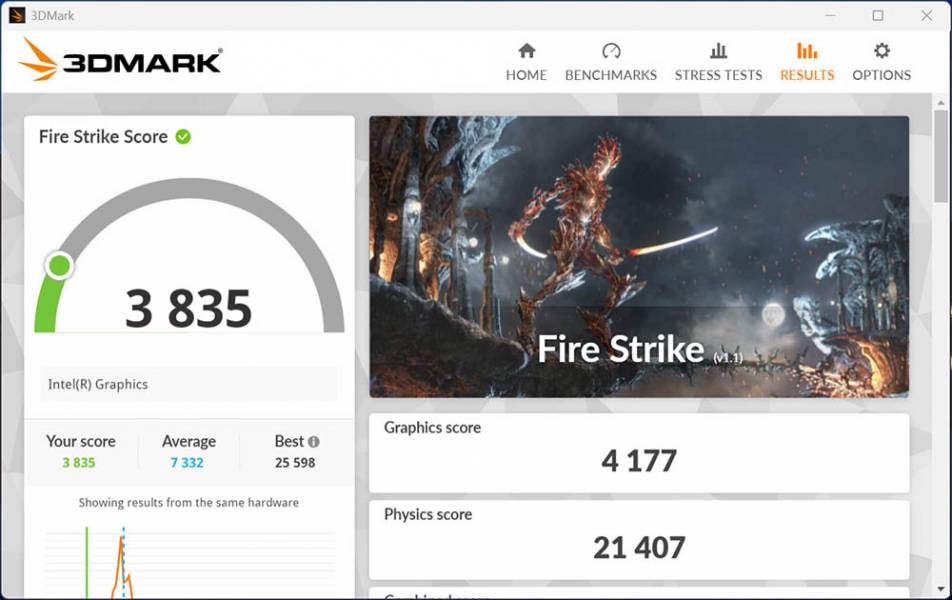
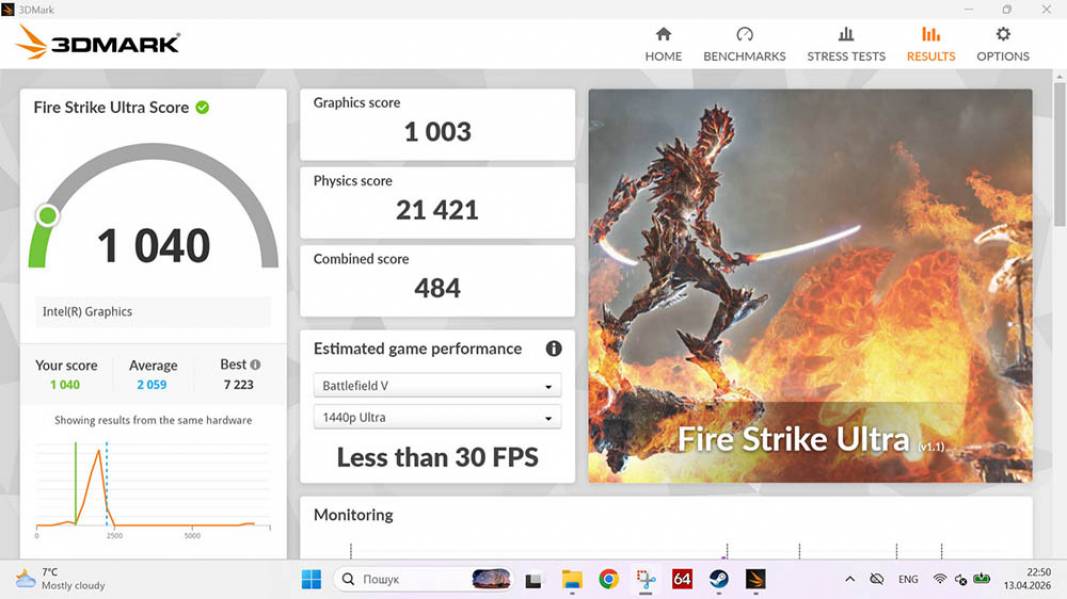
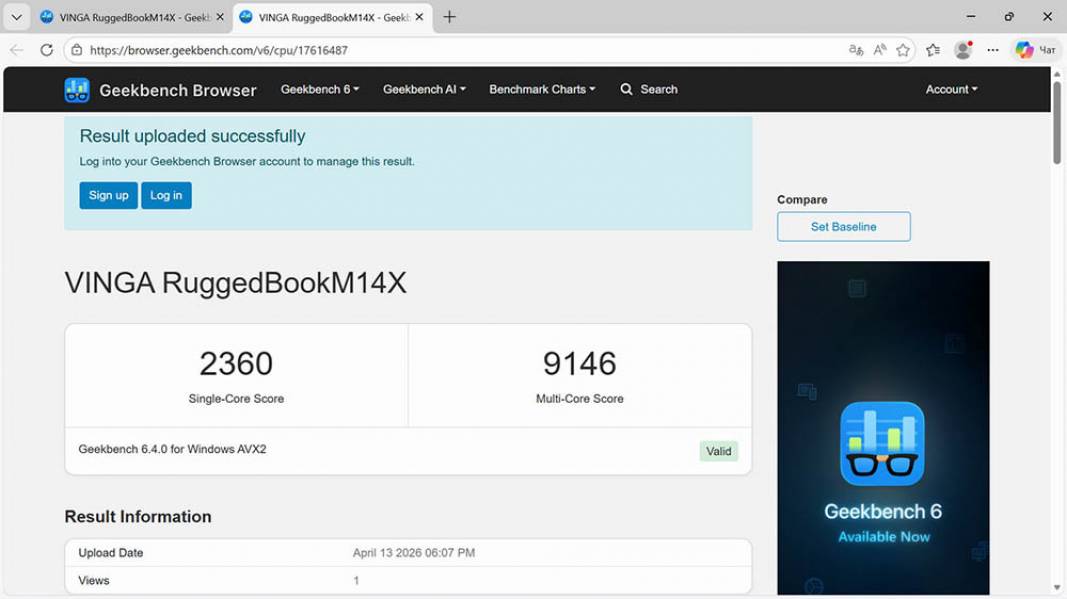
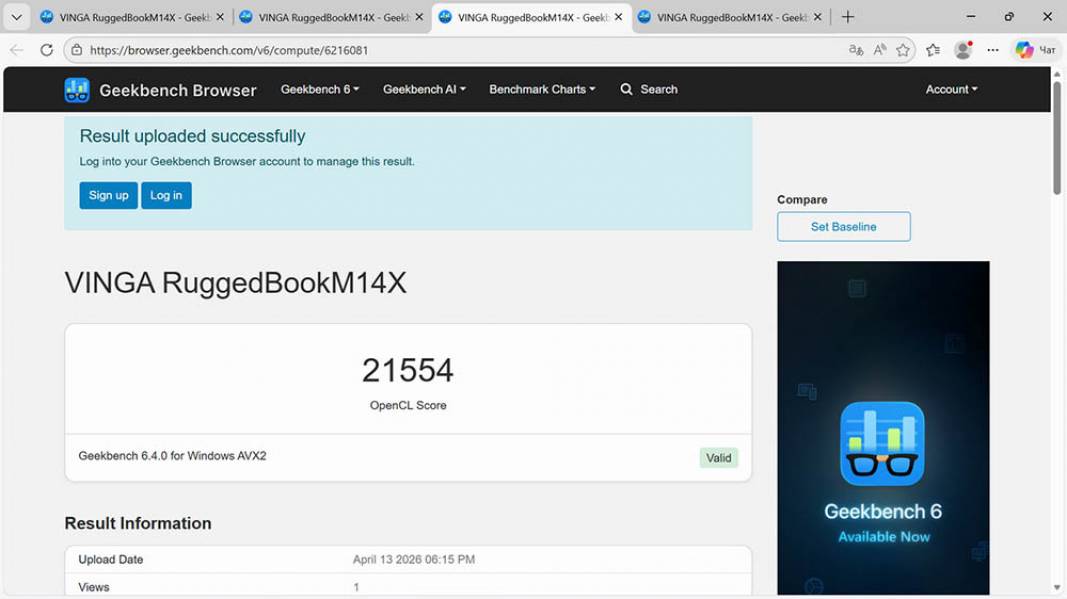
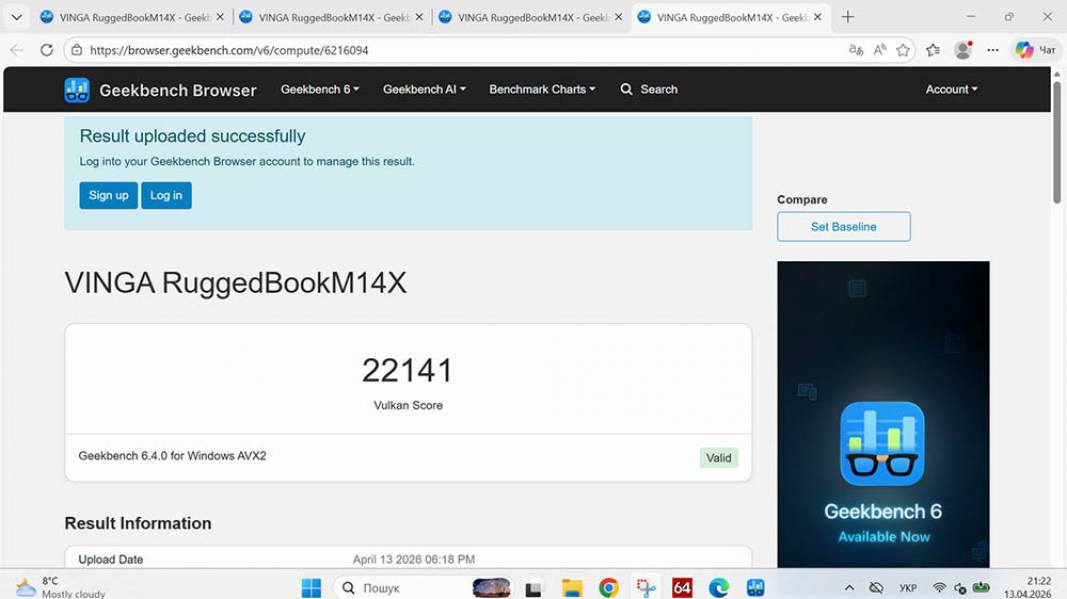
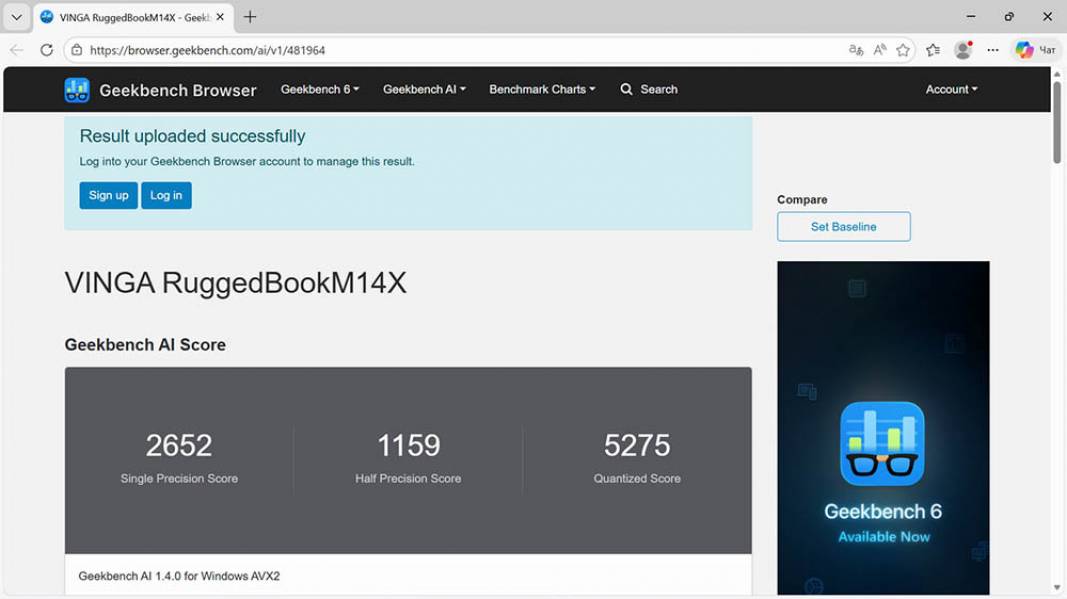
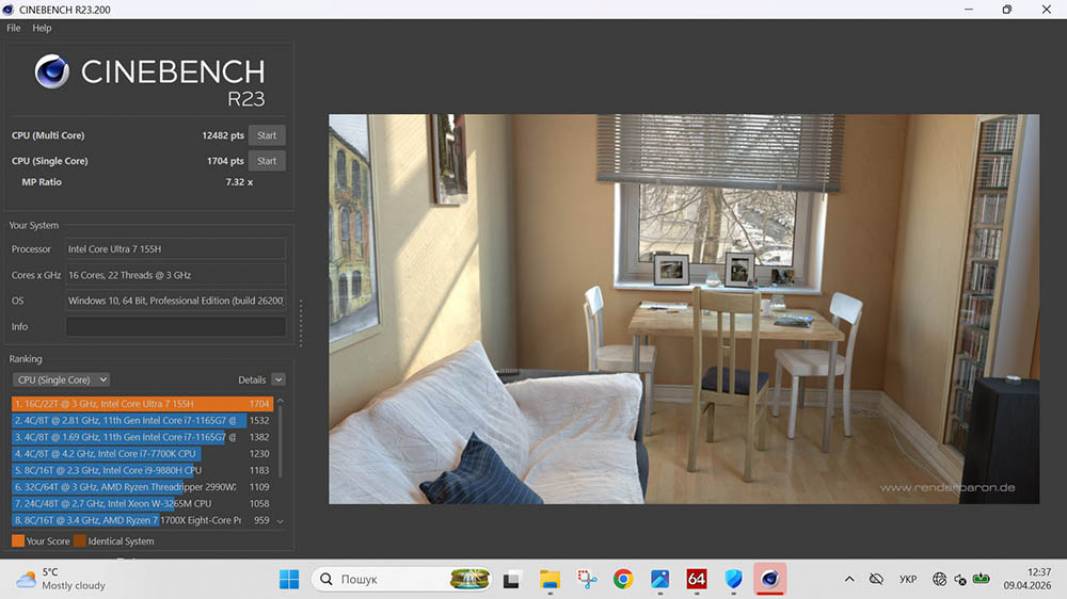
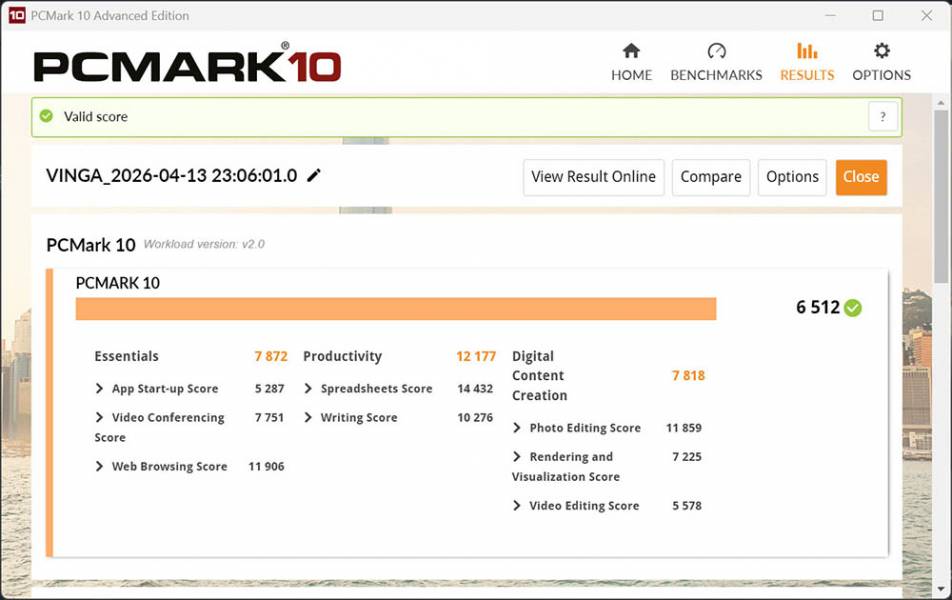
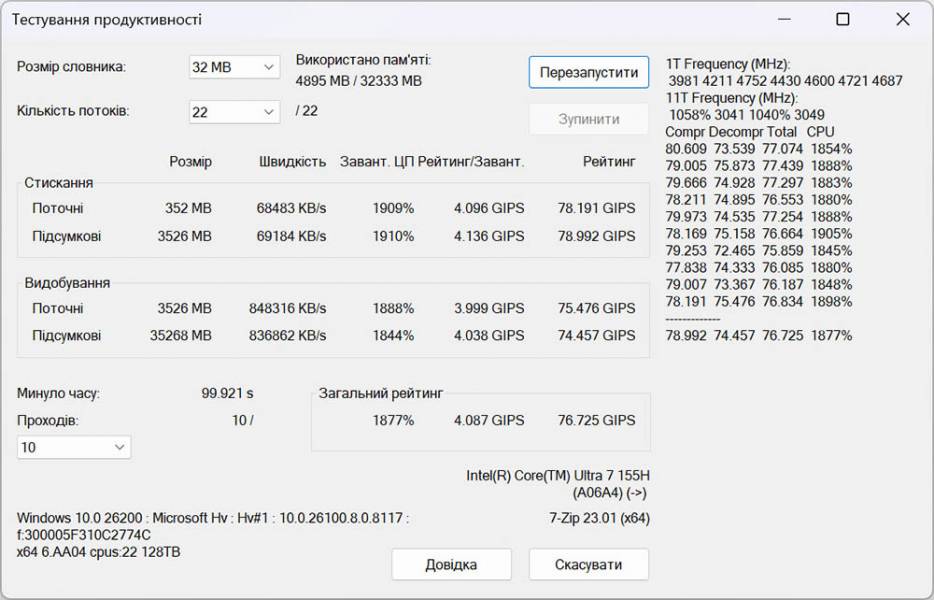
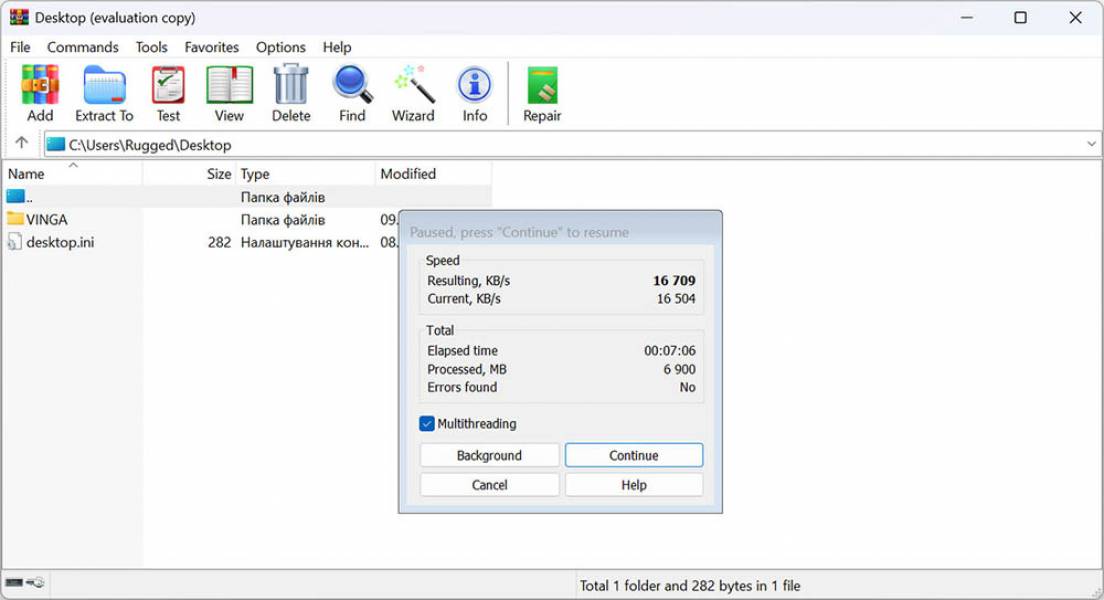
All testing, including heating and performance measurement in AIDA64, was conducted in the "Best Performance" mode of Windows with maximum cooling system speeds. This configuration allowed the laptop to operate at full power without energy consumption restrictions. The results of synthetic tests are presented in the table below.
|
Benchmark |
Results |
|
3DMark |
|
|
Time Spy, points |
2 129 |
|
Time Spy, Graphics score, points |
1 891 |
|
Time Spy, CPU score, points |
7 434 |
|
Port Royal, points |
792 |
|
Steel Nomad, points |
404 |
|
Wild life, points |
11 605 |
|
Wild life Extreme, points |
3 250 |
|
Steel Nomad Light, points |
1 677 |
|
Fire Strike, points |
3 835 |
|
Fire Strike Graphics score, points |
4 177 |
|
Fire Strike Ultra score, points |
1 040 |
|
Fire Strike Ultra, Graphics score, points |
1 003 |
|
Geekbench 6 |
|
|
Single-Core, points |
2360 |
|
Multi-Core, points |
9146 |
|
OpenCL, points |
21555 |
|
Vulcan, points |
22 141 |
|
Geekbench AI |
|
|
Single Precision, points |
2652 |
|
Half Precision, points |
1159 |
|
Quantized, points |
5275 |
|
Cinebench R23 |
|
|
CPU (Milti Core), points |
12482 |
|
CPU (Single Core), points |
1704 |
|
PCMark 10 |
|
|
Total result, points |
6 512 |
|
Essentials, points |
7 872 |
|
Productivity, points |
12 177 |
|
Digital Content, points |
7 818 |
|
Arhivators |
|
|
7zip |
76 725 |
|
Win RAR |
16 709 |
Vinga Scout X14M demonstrates confident performance in synthetic tests. The integrated Intel Arc Xe LPG graphics provide a basic level of performance in 3DMark and Geekbench GPU, which is sufficient for multimedia, office tasks, and light gaming. In more demanding tests, such as Port Royal or Steel Nomad, the results are predictably modest, confirming that this laptop is not oriented towards heavy graphical loads.
Intel Core Ultra 7 155H processor showcases the strengths of the Meteor Lake architecture — high multi-threaded performance in Cinebench and Geekbench, fast operation with archivers, and good energy efficiency. It consistently maintains frequencies and ensures comfortable operation even under prolonged load.
Overall, the system appears balanced: the processor part has a significant power reserve, and the graphics match their class. This makes the laptop suitable for professional tasks, data work, and multimedia.
Of course, the Scout X14M is not positioned as a gaming device — its purpose is entirely different. However, for reference, we conducted several gaming tests to show the capabilities of the integrated graphics in games.
Game testing results:
|
Graphics settings |
1920×1080 DX12 (if possible), fps |
||
|
Minimum |
Medium |
Maximum |
|
|
Witcher 3 |
34 |
27 |
20 |
|
Counter Strike 2 |
56 |
43 |
30 |
|
DOTA 2 |
88 |
68 |
36 |
In real gaming tests, the integrated graphics Intel Arc Xe LPG in Core Ultra 7 155H showed the expected level of performance. The Witcher 3, even on minimum settings, provides about 34 frames per second, which is already on the edge of comfort. In Counter‑Strike 2, the result reaches 56 fps on minimum and about 43 fps on medium, allowing for smooth gameplay considering the 60 Hz screen. The laptop performed best in DOTA 2 — over 80 fps on minimum and about 68 fps on medium settings, and even on maximum, it maintains over 30 fps.
Thus, the Scout X14M is suitable for esports disciplines and less demanding games, but in modern AAA projects, the performance of the integrated graphics is limited. This aligns with the model's positioning: the laptop is designed for work and endurance, not for gaming loads.
Cooling system, noise level, and temperature regime
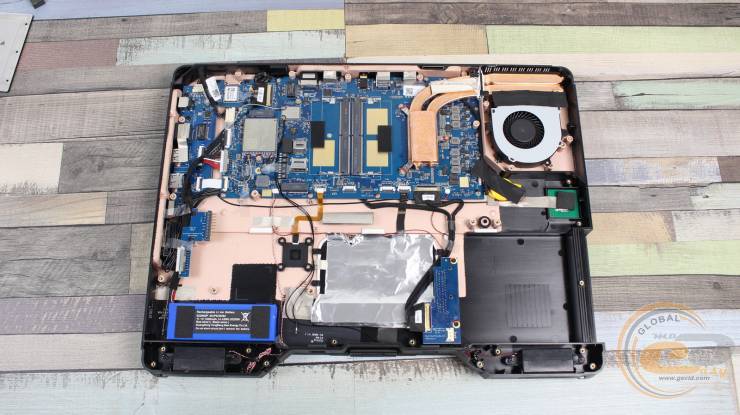
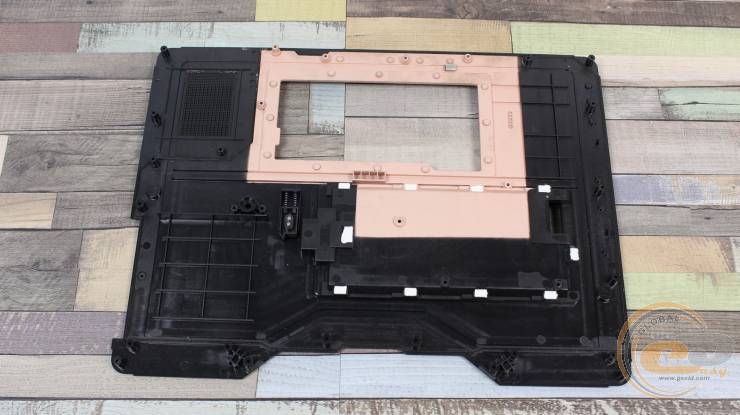
The internal space is organized rationally: the system board occupies the rear part of the case, while the front is allocated for batteries and an expansion module with its own interface board. To reduce vibrations, foam rubber dampers are used, and the memory modules are covered with a metal plate that acts as a heatsink. Contacts are protected with a compound, and a drainage channel with a rubber seal is provided to divert liquid in case it enters the interior.
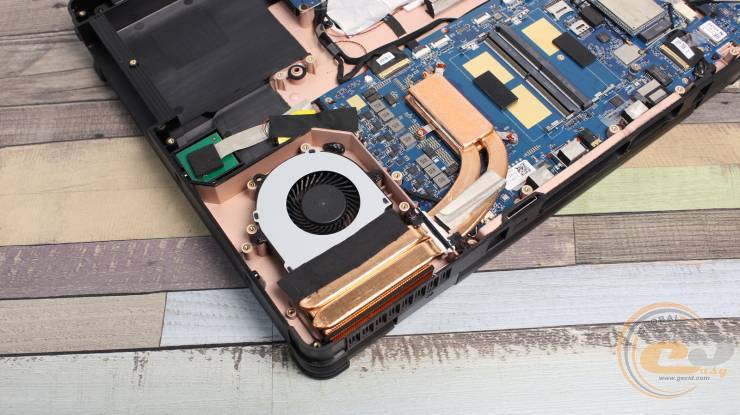
The cooling system is housed in a separate chamber: a radial fan works together with a copper heatsink, and heat from the crystals is dissipated by two massive heat pipes.
It's time to evaluate the laptop's temperature indicators. During testing in the laboratory, the air temperature was 24°C.
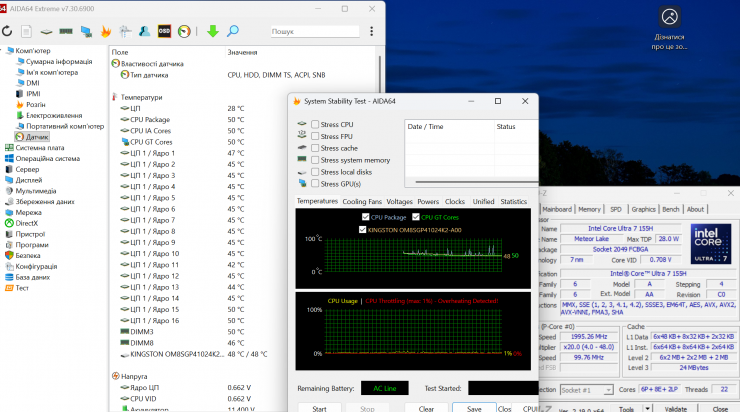
In idle state, the processor heats up to 50°C, the SSD storage — up to 54°C, and the memory modules — up to 53°C. The system operates stably, with fans spinning at minimal speeds without noticeable noise.
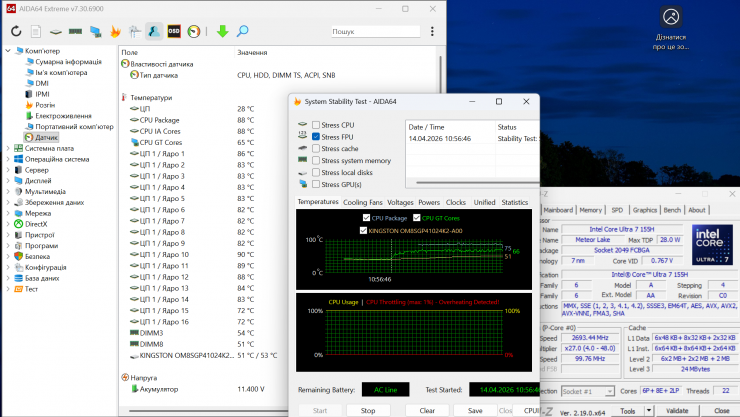
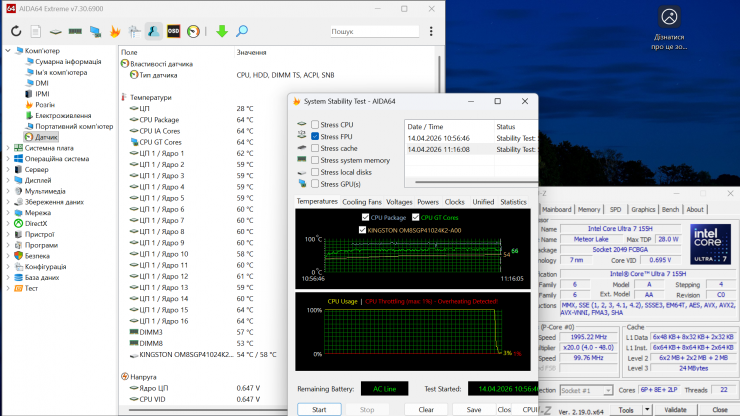
An isolated FPU stress test brings the system to maximum thermal load. Initially, the processor temperature briefly reaches 90 °C, accompanied by occasional throttling spikes up to 3%. However, stabilization algorithms are then activated: the frequency is fixed at 2.0 GHz, and the temperature drops to a very comfortable 64 °C. This indicates a priority on endurance and stability over peak frequencies.
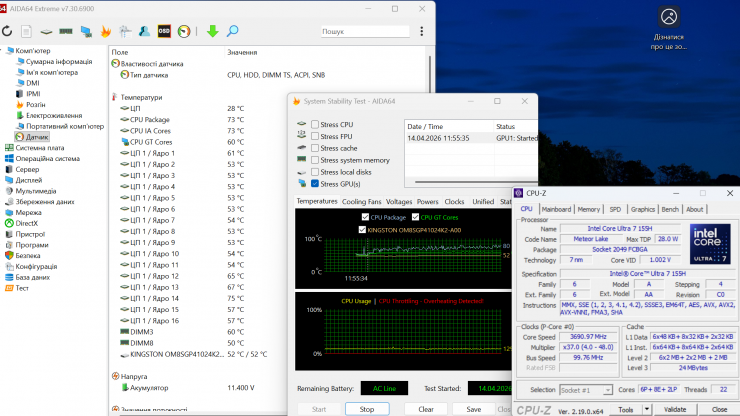
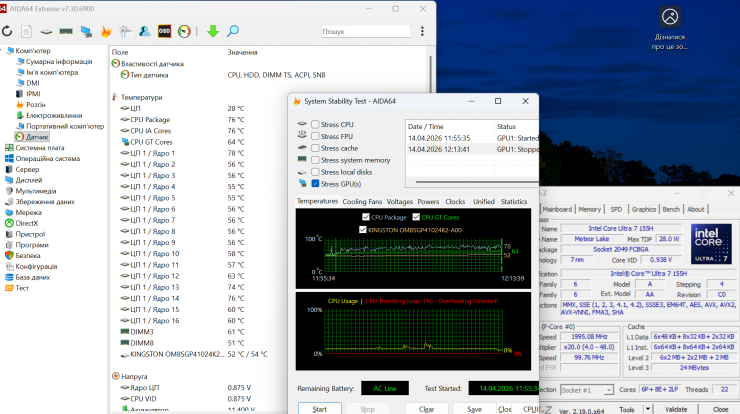
During separate load on the integrated graphics (GPU), the video core temperature stabilizes at 64°C, and the entire processor package — at 76°C. Throttling is completely absent, and the frequency of the processor cores can rise to 3.7 GHz. SSD and RAM temperatures remain within 54–61°C.
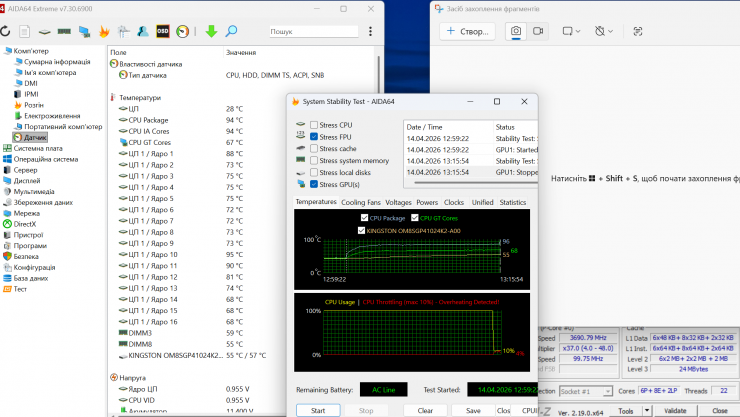
Comprehensive heating of GPU and FPU models the most challenging scenario: the processor temperature reaches 94°C, and the graphics core — 67°C. In this mode, operational throttling is recorded at 10%, allowing the system to keep the temperature within safe limits and avoid critical overheating.
Under load, the noise level of the cooling system is average and remains comfortable for work. The case heating reaches 40 °C in the area above the F3 key. This confirms the effectiveness of the isolated chamber: the main heat is dissipated through the heatsink, not causing discomfort for the operator's hands.
Summing up the results, we note: the cooling system confidently handles the load. Thanks to conservative power limits and efficient air exhaust through a separate compartment, the laptop maintains full operability even in the most demanding computational scenarios, which is critical for a field device.
Power supply, battery, and battery life
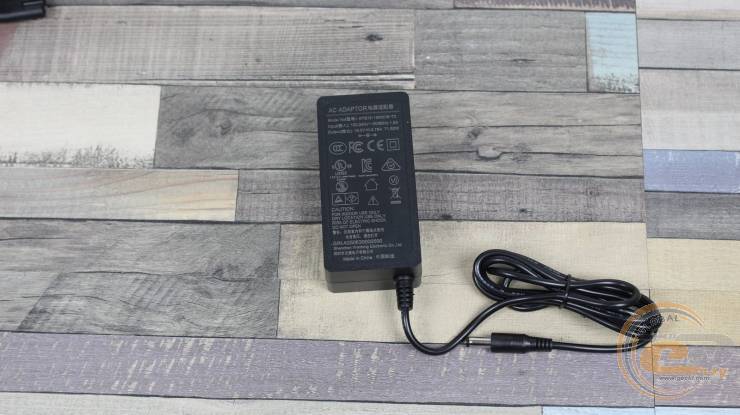
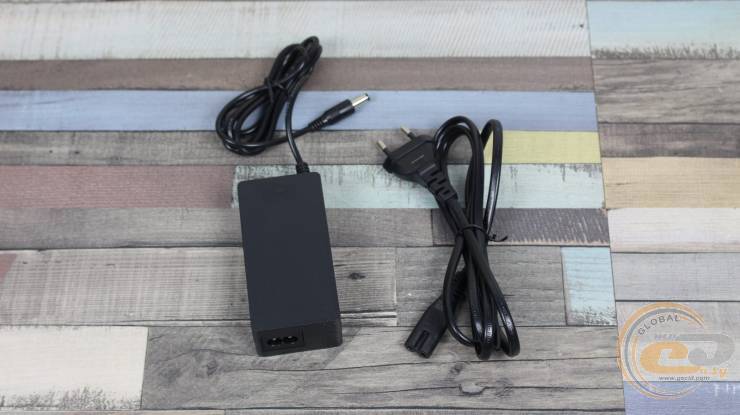
The laptop comes with a WTB72‑1900378‑T2 power supply. It supports an input voltage of 100–240 V AC (1.5 A, 50/60 Hz). The output power is 71.82 W at 19.0 V DC and a current of 3.78 A.
Power consumption of the laptop under different load types:
|
Load |
Power consumption, W |
|
AIDA64 Stress FPU |
68 |
|
AIDA64 Stress GPU |
42 |
|
AIDA64 Stress FPU+Stress GPU |
62 |
|
Idle* |
17 |
|
*with minimum screen brightness, in "Balanced Optimization" mode. Measurements under load were conducted in "Best Performance" mode with maximum fan speeds and maximum screen brightness. |
|
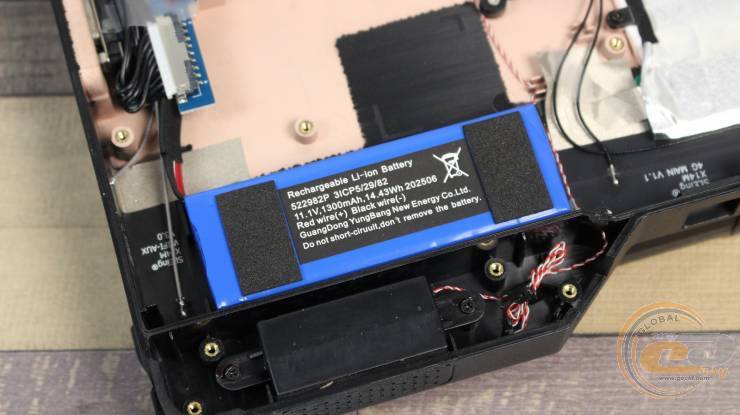
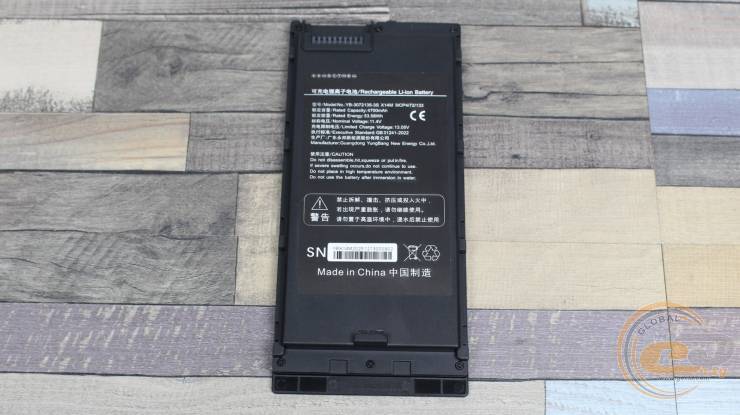
The laptop is equipped with a dual power system from two lithium-ion batteries. The internal non-removable module with a capacity of 1300 mAh (14.43 Wh, 11.1 V, model 522982P) supports system operation and allows for the replacement of the main battery without turning off the device. The main autonomy is provided by a removable battery with a capacity of 4700 mAh (53.58 Wh, 11.4 V, model YB-3072135-3S X14M).
The results of its testing are summarized in the table (in all cases, Wi-Fi and Bluetooth are activated):
|
Load Type |
Battery Life, h |
|
Maximum load (Battery Eater, brightness 100%), hours |
1:30 |
|
Full HD video playback, brightness 100%, hours |
6:24 |
|
Minimum load, brightness 50%, hours |
6:24 |
|
Charge recovery, hours |
4:46 |
Testing in the "Balanced Optimization" mode showed: with mixed use, the laptop works for about 6 hours and 24 minutes, and under maximum load — 1 hour and 30 minutes. Full charge recovery takes 4 hours and 46 minutes.
Yes, it's unfortunate that there is no fast charging. But this is a rugged laptop — the main focus here is not on records, but on stability and durability. Moreover, you can always replace the discharged external battery with an additional one from the supply kit. And the ability to hot-swap without turning off the device makes this solution truly convenient and practical.
Conclusions
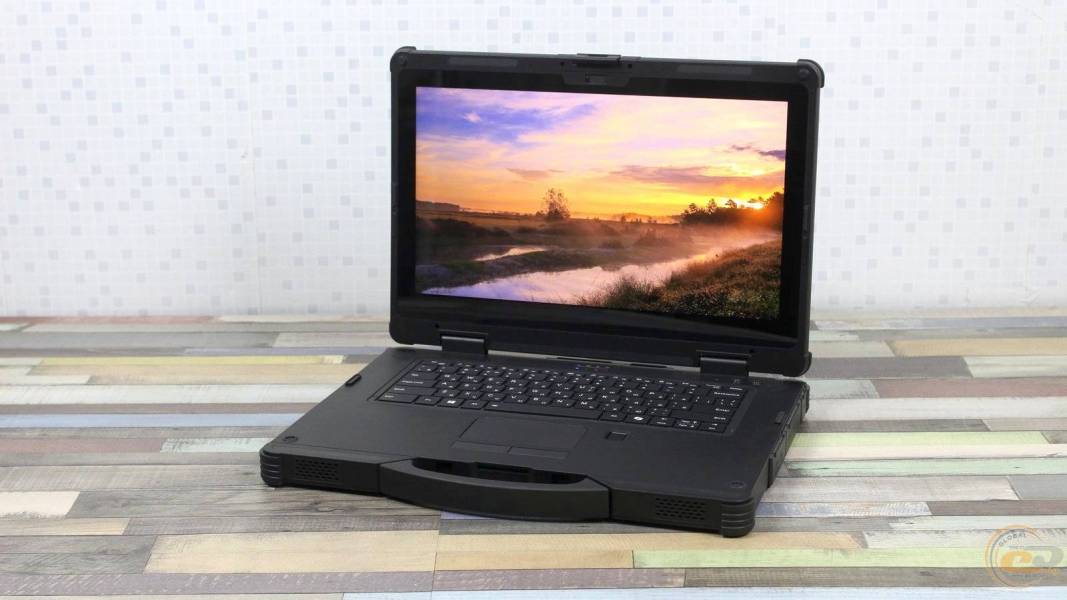
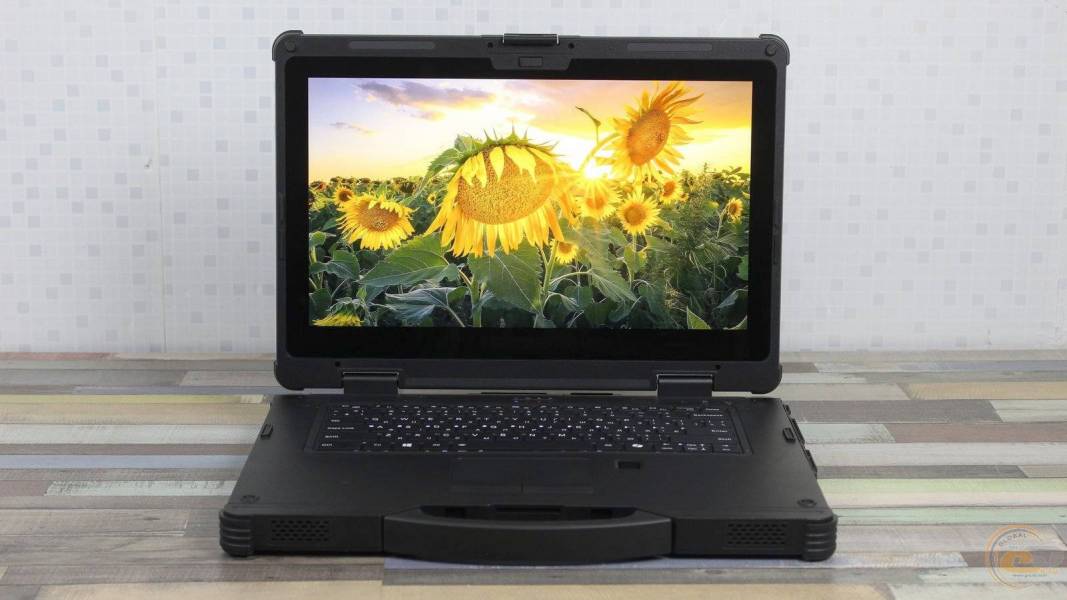
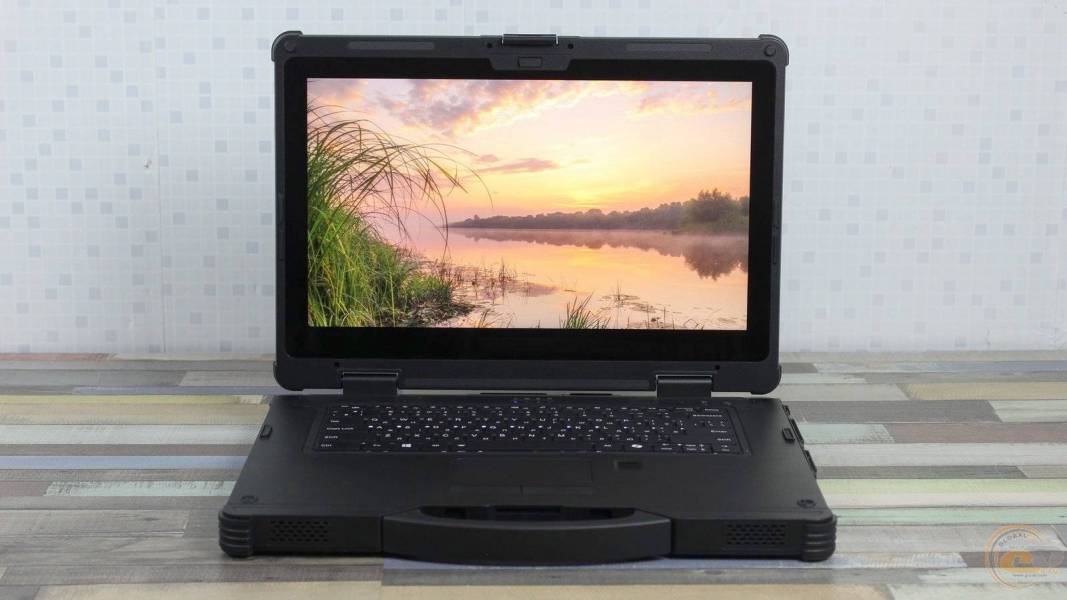
Vinga Scout X14M (X14M-155H321024B) is an example of a utilitarian professional laptop designed for work in extreme conditions. Everything in it is dedicated to endurance and stability: a massive body with reinforcements, dampers, and plugs, a drainage keyboard, an isolated cooling system, a dual battery with hot-swap capability.
The screen is one of the key advantages: ultra-bright, with a corrected gamut for better readability in sunlight. The LTE modem with GPS provides constant connectivity and allows for precise location determination without additional devices. The camera with a shutter is not "wow," but quite suitable for work. The Intel Core Ultra 7 155H processor with an AI acceleration module, although not super powerful, still adds value in specialized software.
Compromises are expected: mediocre acoustics, average autonomy, and lack of fast charging. However, this is compensated by the ability to hot-swap the battery and the overall concept of "working despite everything."
Vinga Scout X14M leaves the impression of a solid and well-thought-out machine that honestly offers the maximum possible in its segment. It is a solution for professionals working in the field, in the rain, in dust, or on construction sites — and it justifies its price.
Advantages:
- rugged body with MIL-STD-810H and IP65 certifications;
- dual battery with hot-swap function;
- additional removable battery included in the supply kit;
- LTE modem with GPS — always online and with precise coordinates;
- ultra-bright screen optimized for outdoor work;
- fingerprint scanner, camera shutter, and RF switch;
- upgrade possibilities: hatch for SSD, RAM, SIM, SD;
- dampers and compound for protection against shocks and vibrations.
Features:
- mediocre acoustics of built-in speakers.