This year, the Ukrainian brand Vinga expanded its range of budget-friendly laptops by introducing the Vinga Iron S151 model. At the time of writing this review, it has two modifications – Iron S151-131516512S with an Intel Core i3-1315U processor and Iron S151-133416512S with a more powerful Intel Core i5-1334U. Let us remind you that U-processors of the Raptor Lake generation are primarily focused on lightweight and compact ultrabooks, so do not expect large dimensions from the laptop.
By the way, in 2024, we explored the previous model - Vinga Iron S150. And if we set aside some skepticism about the fact that this is not a globally renowned brand, the tested device offered significantly better capabilities for the same money. We hope that this time the manufacturer has remained committed to the same concept.
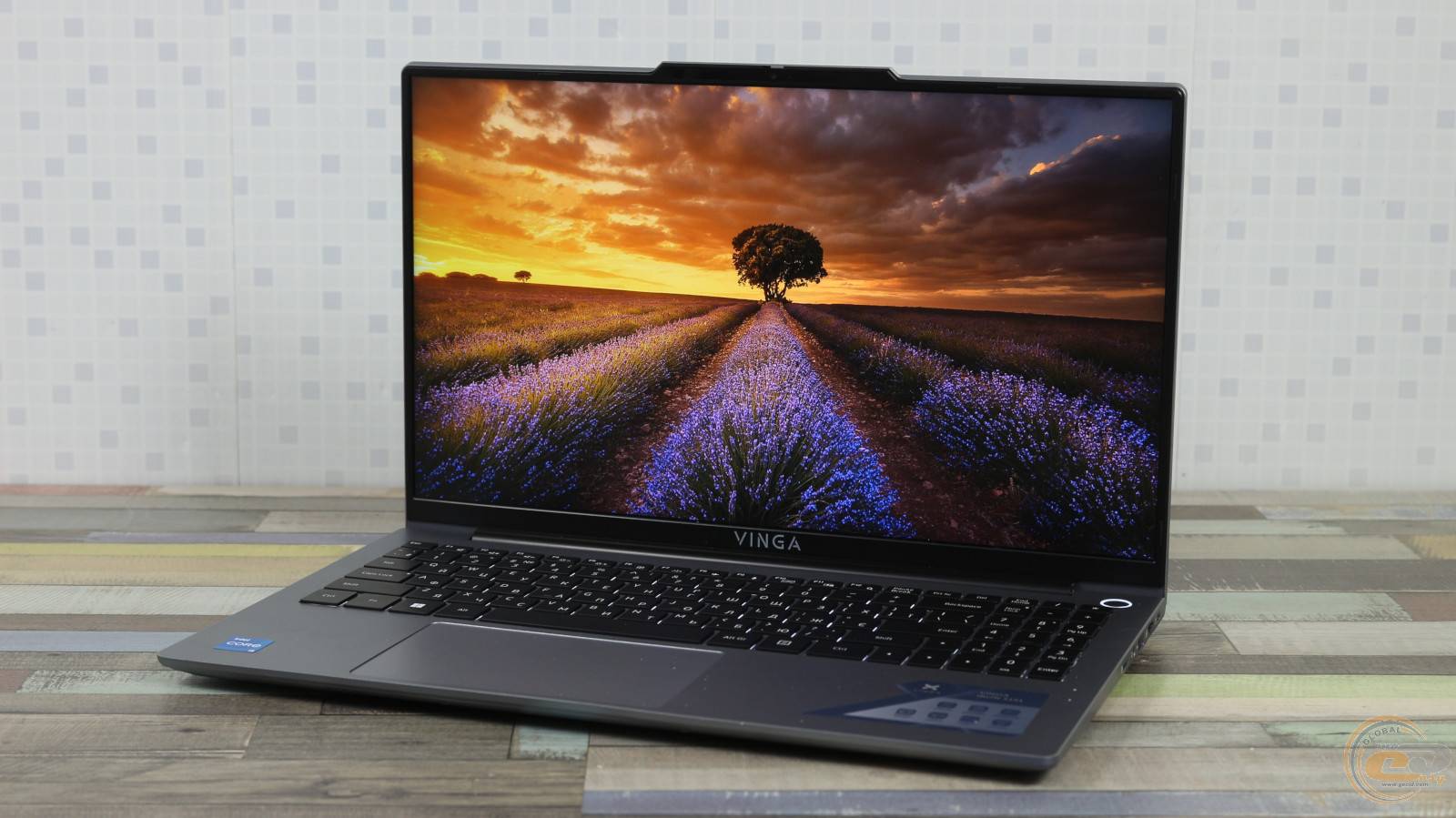
Now let's return to the hero of our review. We will be testing the Vinga Iron S151 (S151-133416512S). Our sample differs from the usual retail version only by the installed Windows 11 Pro. In retail, the model is sold on the official website for 21,999 UAH (approximately $527).
Specification
|
Model |
Vinga Iron S151 (S151-133416512S) |
|
Display |
JDZ10ED (G156ED06), 15.6", IPS, 1920 × 1080, 16:9, 60 Hz |
|
Processor |
Intel Core i5-1334U (2 x 1.3 – 4.6 GHz + 8 x 0.9 – 3.4 GHz, 12 MB L3, TDP 15 – 55 W) |
|
Integrated Graphics |
Intel Iris Xe Graphics (80 @ 300 – 1250 MHz) |
|
RAM |
1 x 16 GB SO-DIMM DDR4-3200 (support up to 64 GB) |
|
Storage |
SSD HOGE STORAGE H753 (H753P3512T4SC0A) 512 GB (M.2 2280, PCIe 3.0, NVMe, TLC NAND) |
|
Card Reader |
MicroSD |
|
Interfaces |
1 x HDMI 2.0 1 x USB 3.2 Gen 1 Type-A 2 x USB 3.2 Gen 1 Type-C 1 x RJ45 1 x USB 2.0 1 x 3.5-mm combo audio jack |
|
Acoustics |
Stereo speakers |
|
Microphone |
Yes |
|
Webcam |
2.1 MP (1080p) |
|
Networking |
802.11ax Wi-Fi (1×1) and Bluetooth 5.2 (Intel Wi-Fi 6 AX101D2W), Gigabit Ethernet (Realtek RTL8168) |
|
Security |
Kensington lock, hardware TPM, fingerprint scanner |
|
Battery |
Lithium-polymer, non-removable: 11.55 V, 5630 mAh, 65.03 Wh |
|
Charger |
Input: 100~240 V AC at 50/60 Hz Output: 20 V DC, 3.25 A, 65 W |
|
Dimensions |
355.6 × 228.4 × 16.9 mm |
|
Weight |
1.58 kg |
|
Color |
Gray |
|
OS |
DOS |
|
Device Page |
|
|
Manufacturer's Website |
Packaging and Completeness
The manufacturer has retained the overall black-and-white color scheme of the packaging, but the image of the laptop on its side is now depersonalized and does not resemble the model inside.
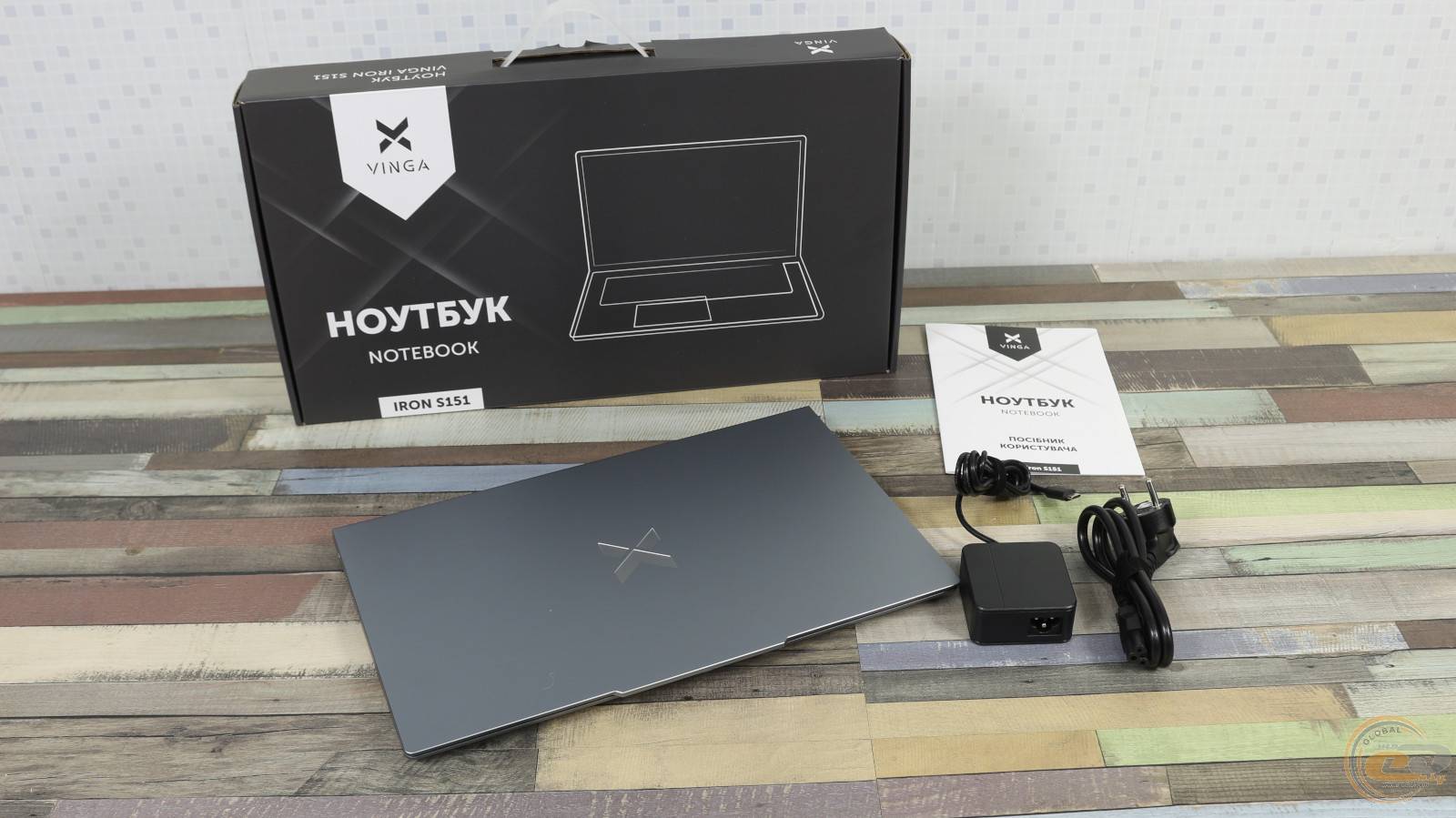
The device package includes a power adapter with a USB Type-C plug and a separate cable, as well as a brief user guide.
Appearance, Element Placement
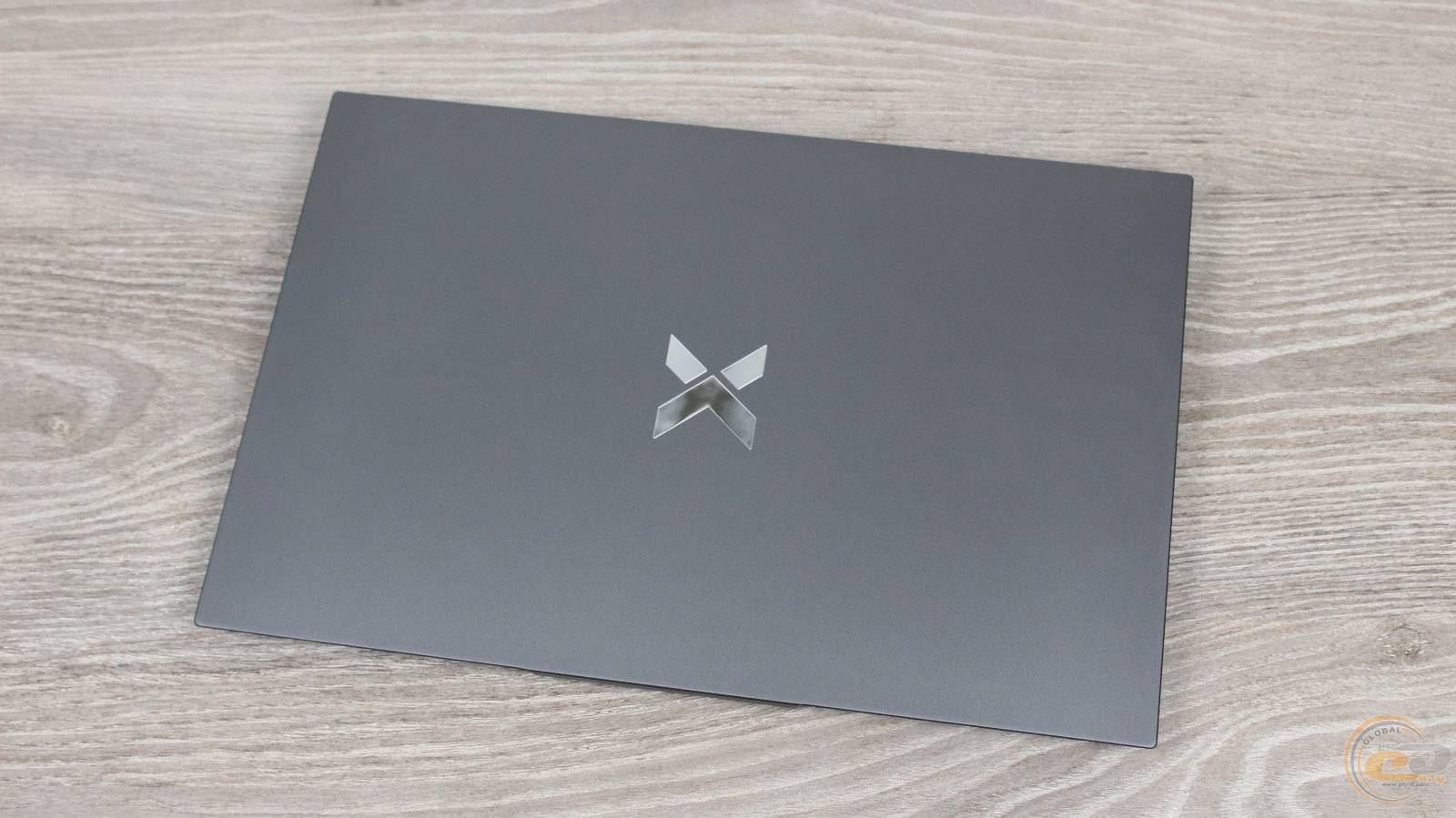
Vinga Iron S150 (S150-123516512G)
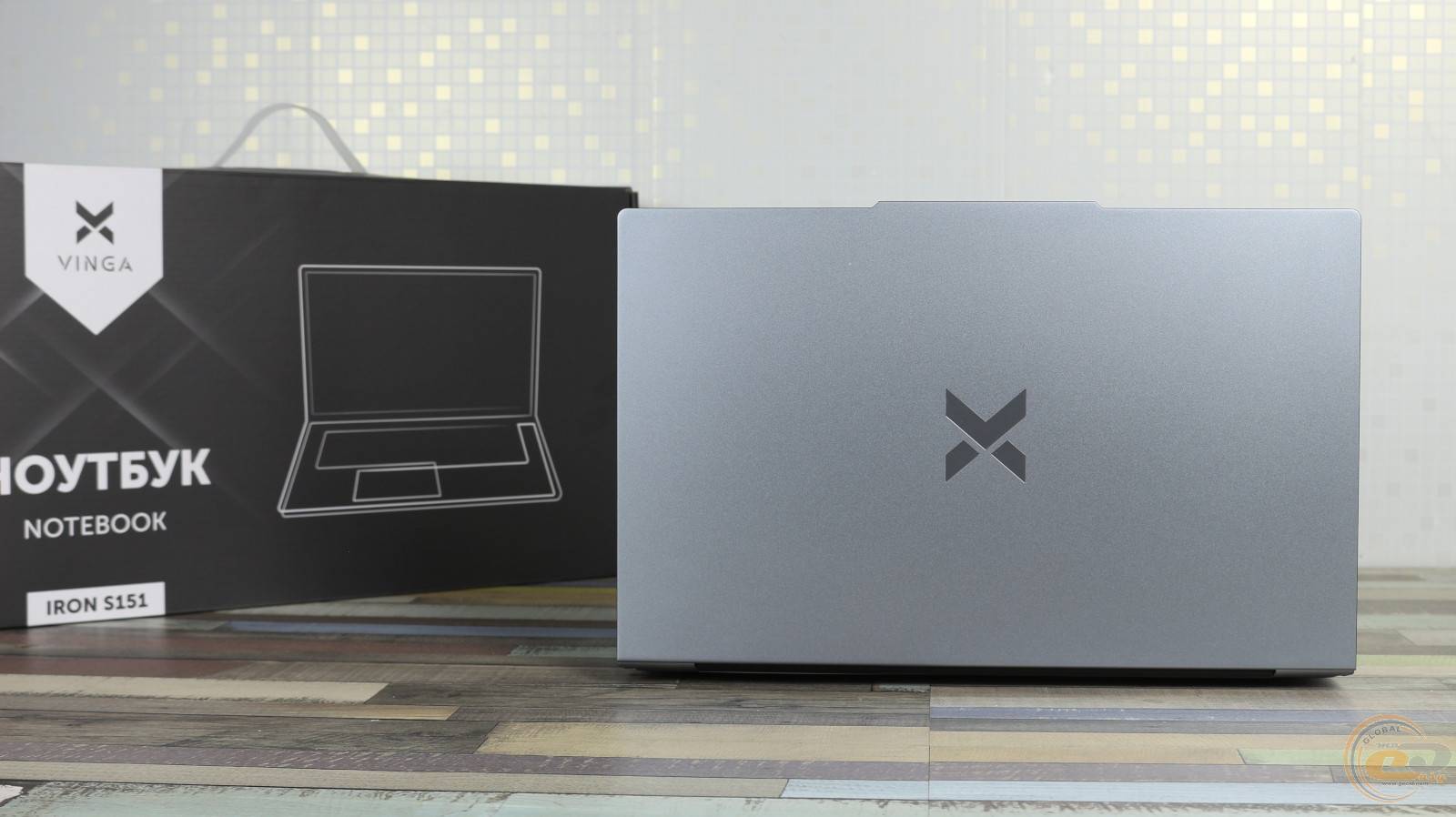
Vinga Iron S151 (S151-133416512S)
Vinga has retained key features in this model, such as a minimalist design with a mirrored logo and the use of metal elements in the body. It can be said that the device itself is made in gray color, excluding the black hinge mechanism behind the laptop.
The display lid and the bottom part of the body are made of aluminum and have a smooth matte finish that does not collect fingerprints. These metal elements, in turn, provide good structural rigidity.
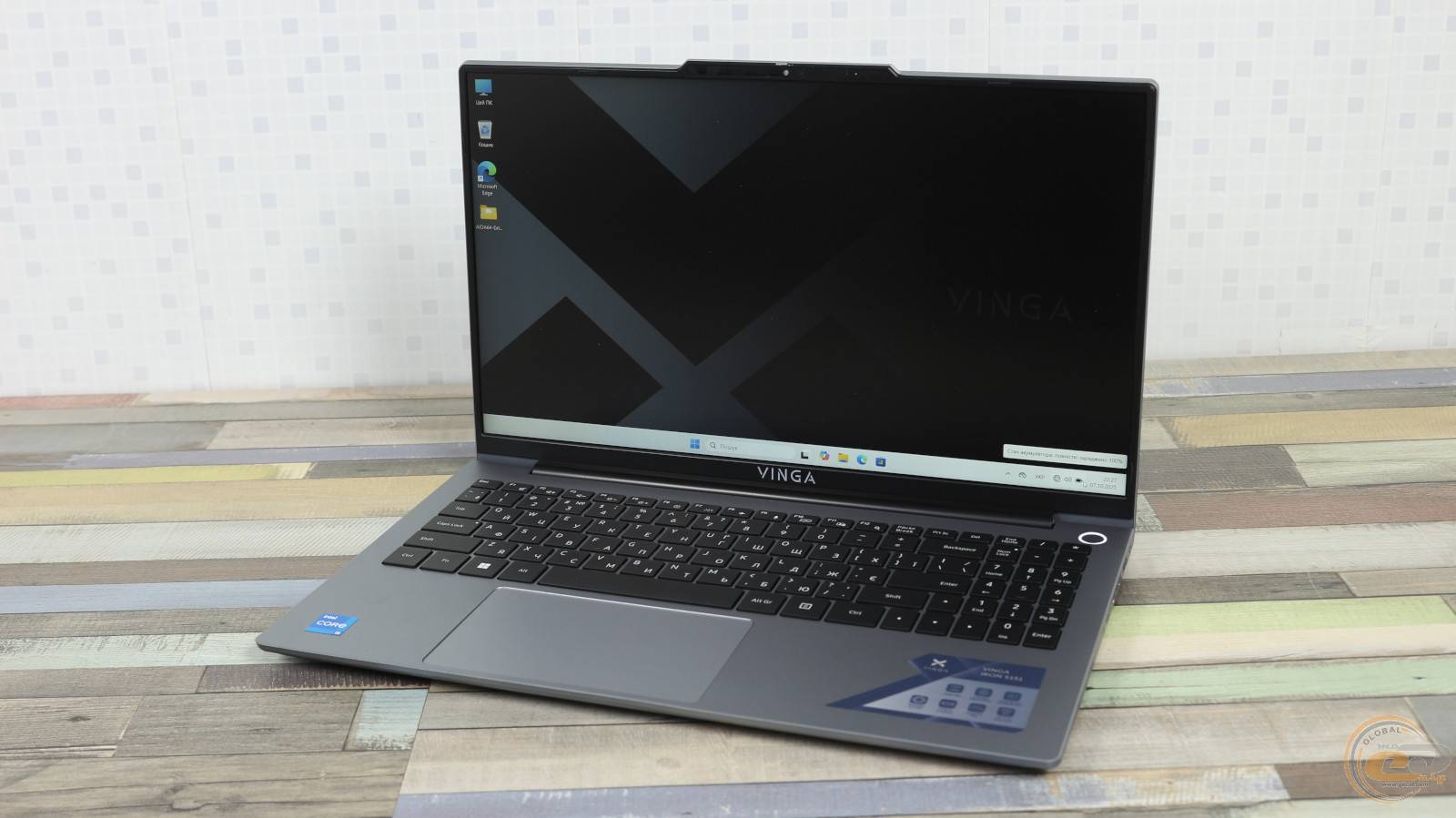
The frame around the screen is made of plastic with a smooth matte surface, as is the top part of the main block.
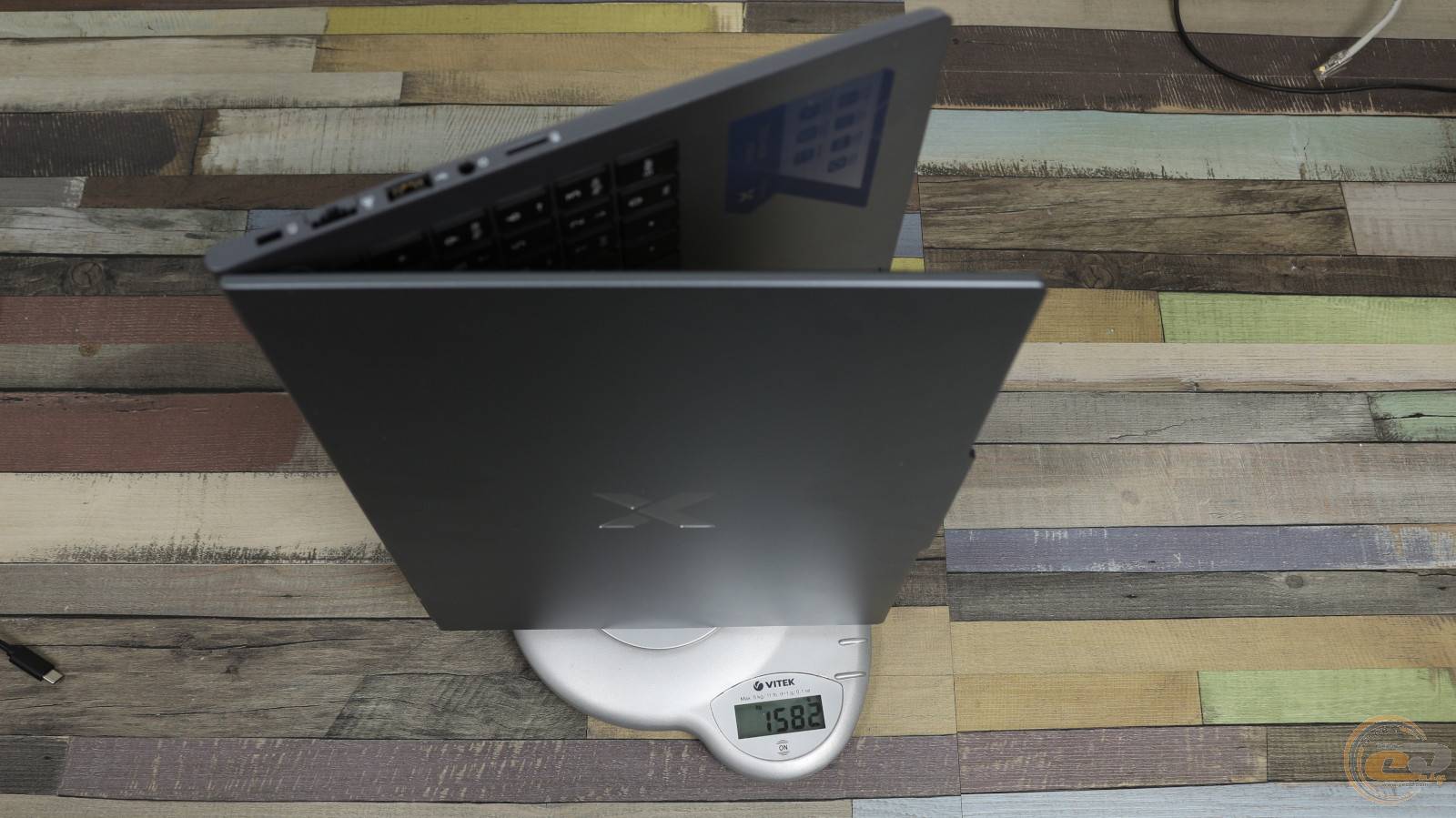
The Vinga Iron S151 (S151-133416512S) weighs only 1.58 kg.
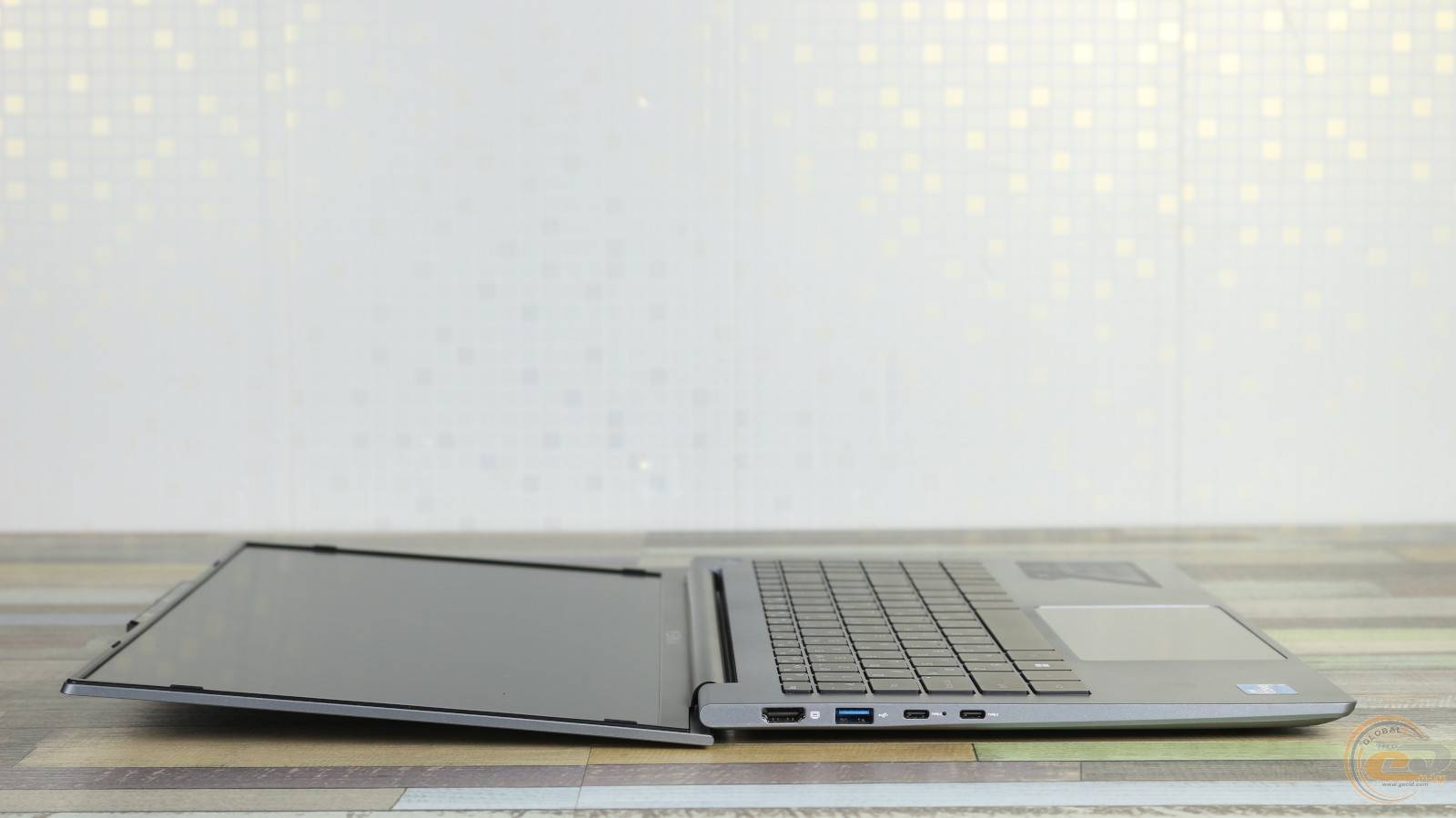
Despite this, it opens quite easily with one hand. The maximum opening angle is 170°.
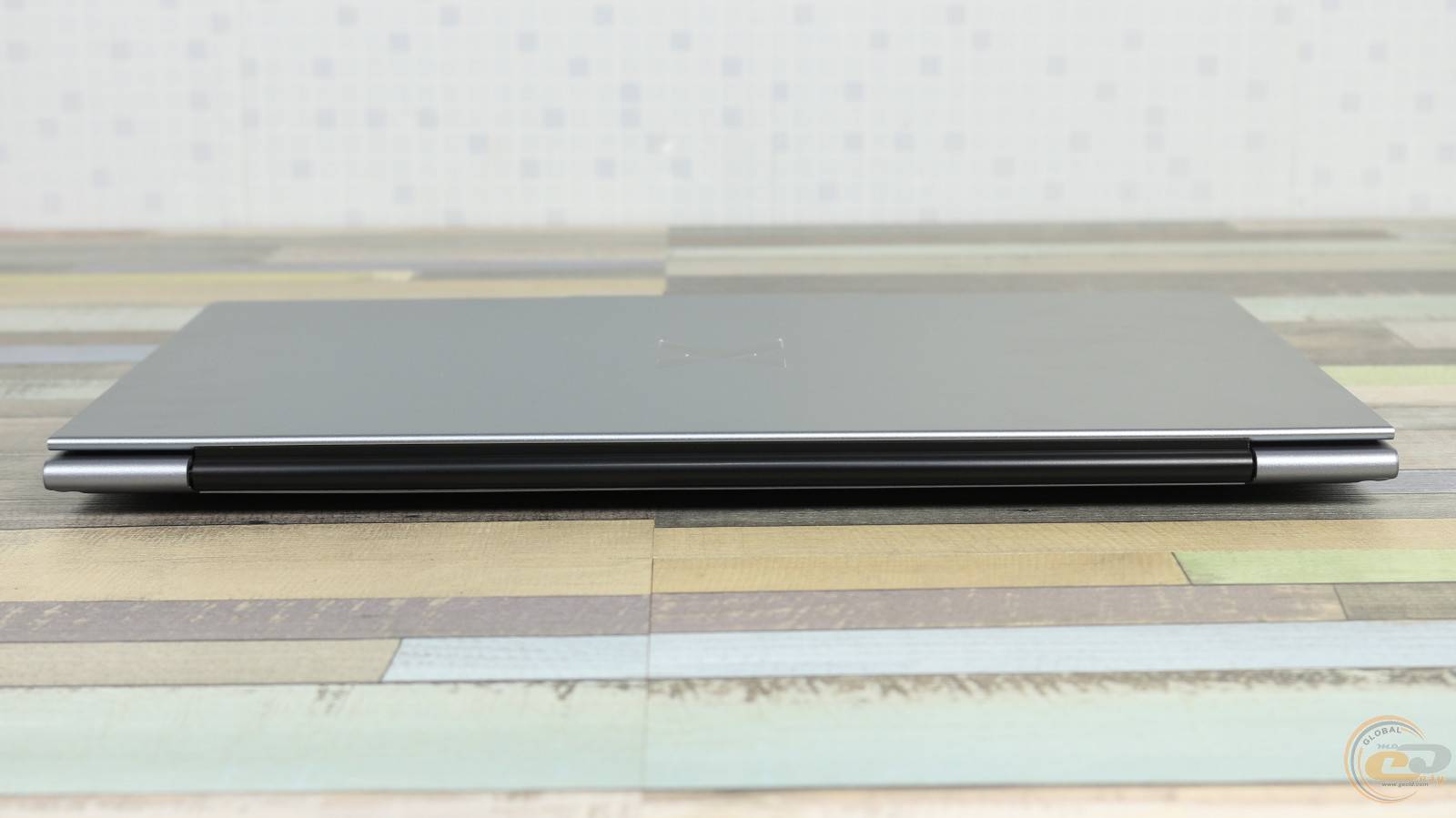
On the back of the device, you won't see the usual cutouts used by the cooling system to dissipate hot air, as they are hidden behind the hinge.
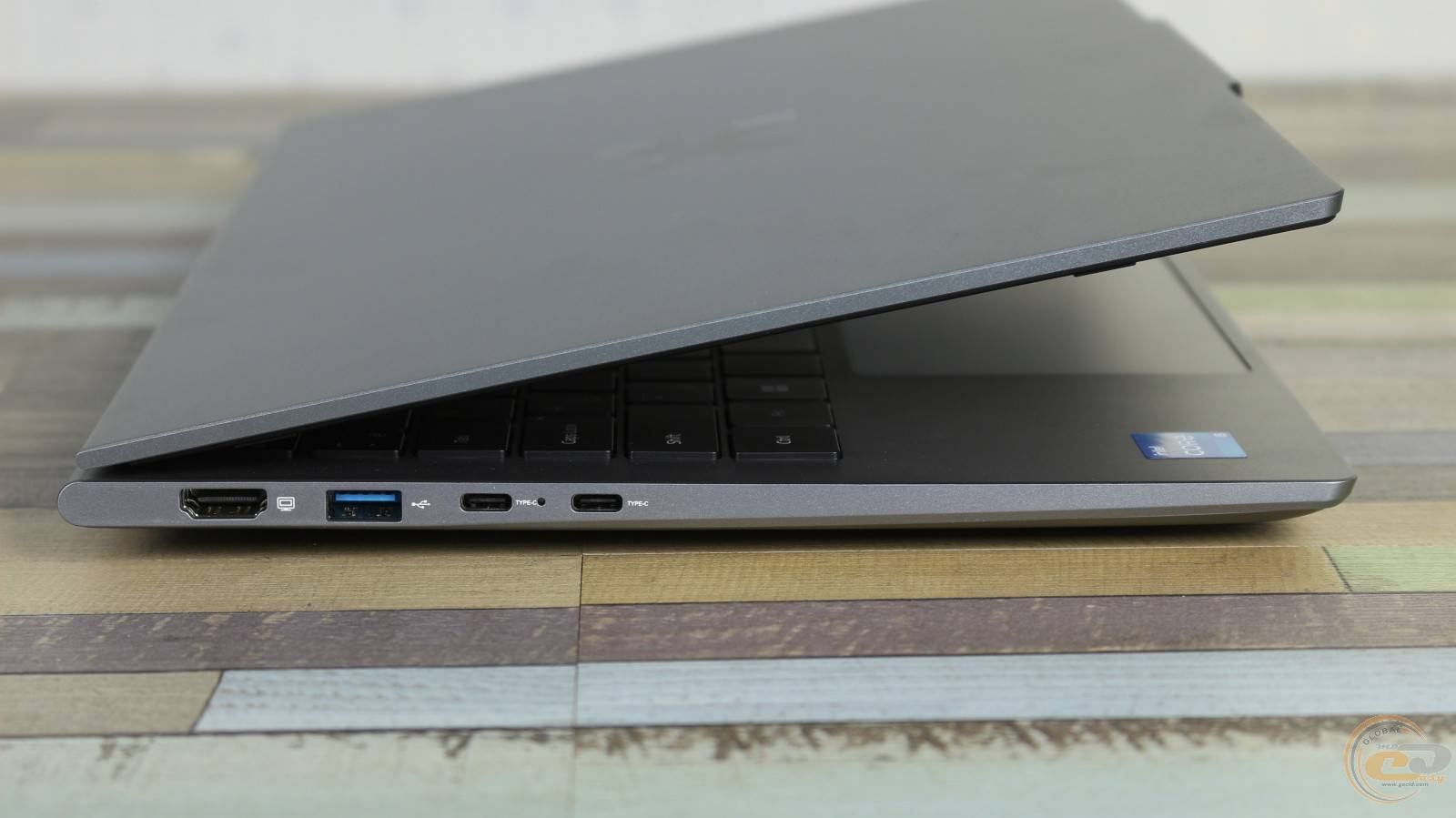
All available ports and connectors on the Vinga Iron S151 are located only on the side edges of the case. The left side offers the user one HDMI 2.0, one USB 3.2 Gen 1 Type-A, and two USB 3.2 Gen 1 Type-C, both with Power Delivery support, allowing not only data transfer but also charging the laptop itself or external devices.
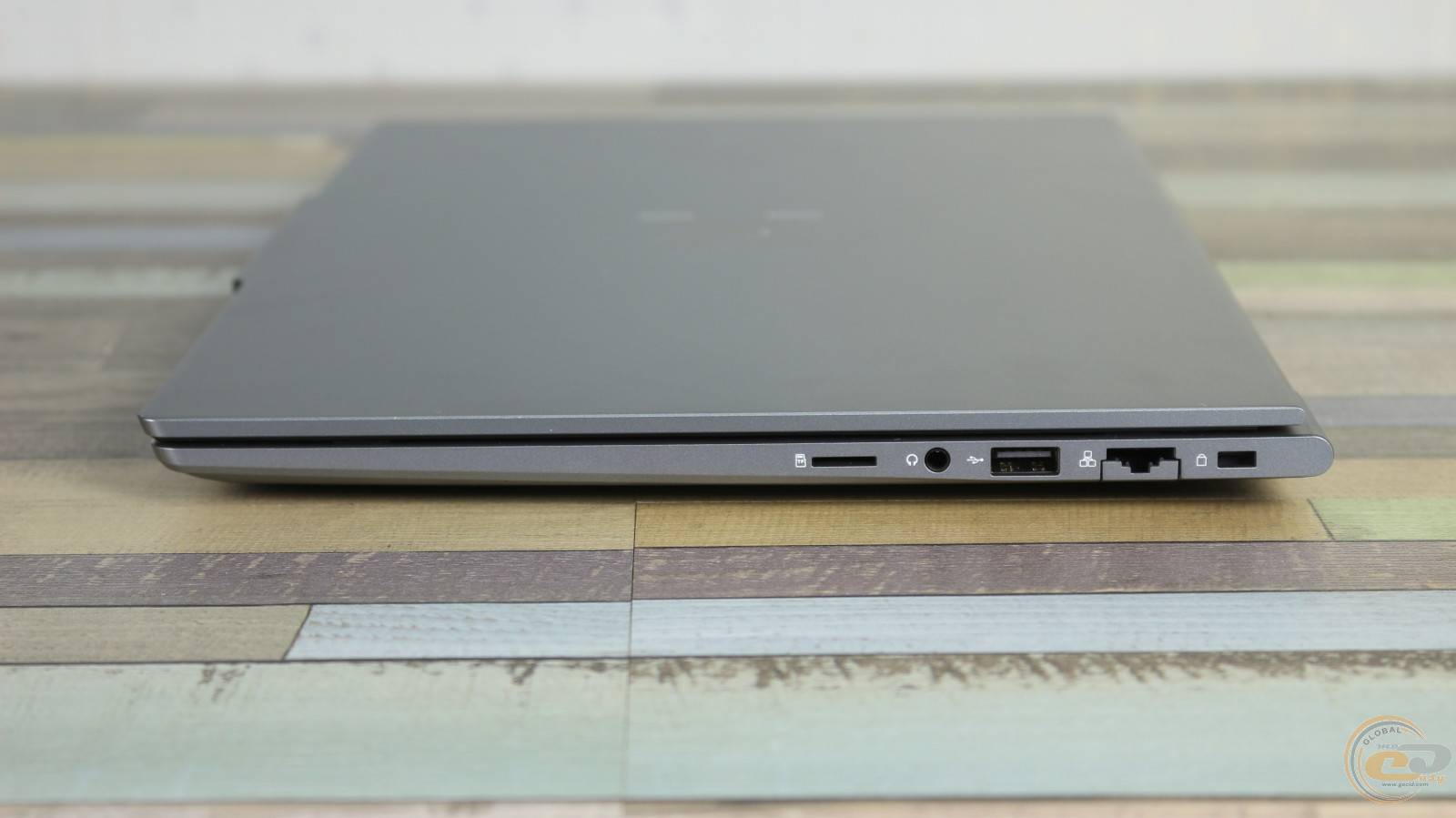
The right edge pleasantly surprises with a set of ports: Kensington lock, USB 2.0, a combined audio jack, gigabit RJ45, and a MicroSD card reader — for an ultrabook, this is a generous and atypical configuration.
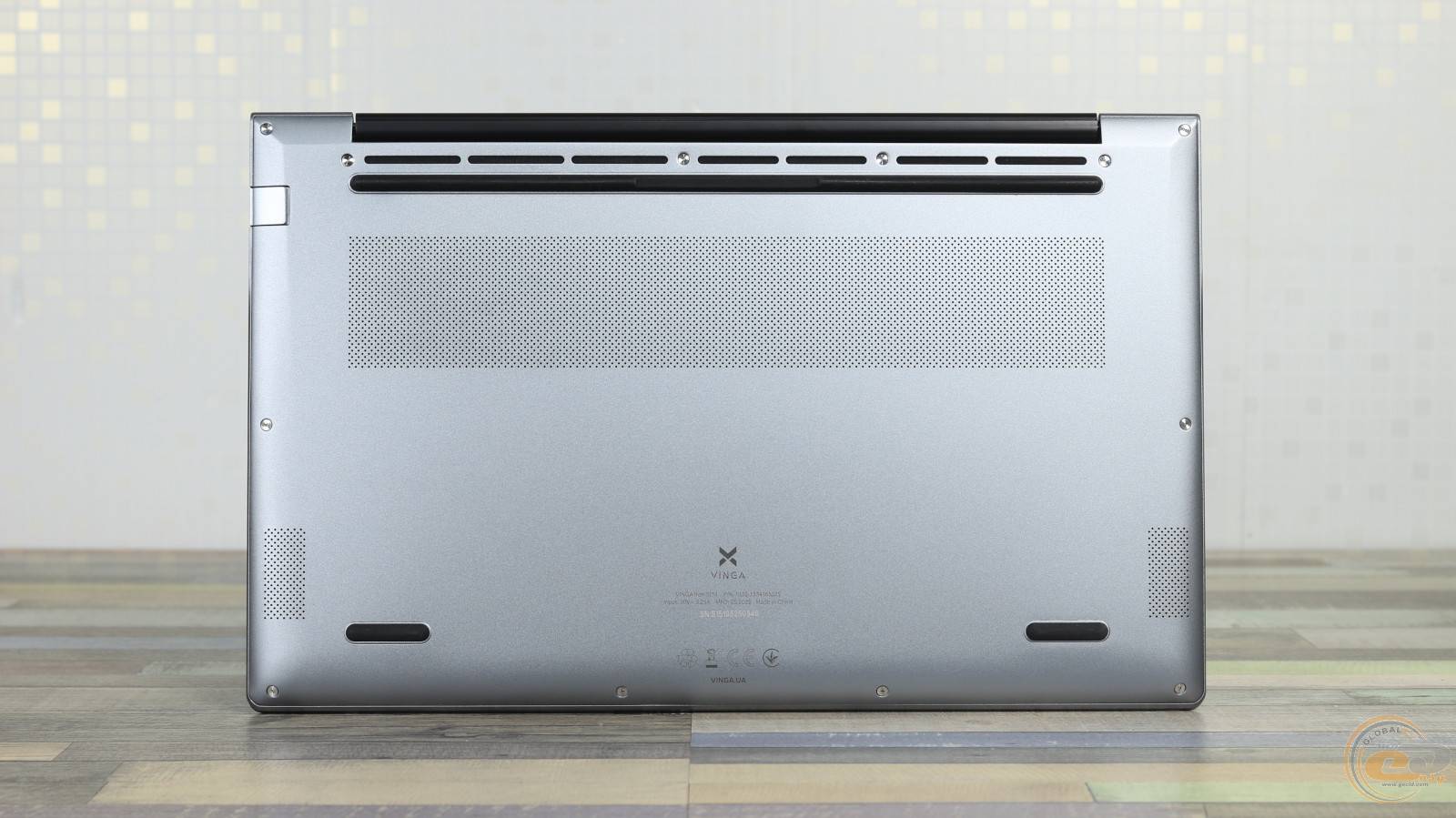
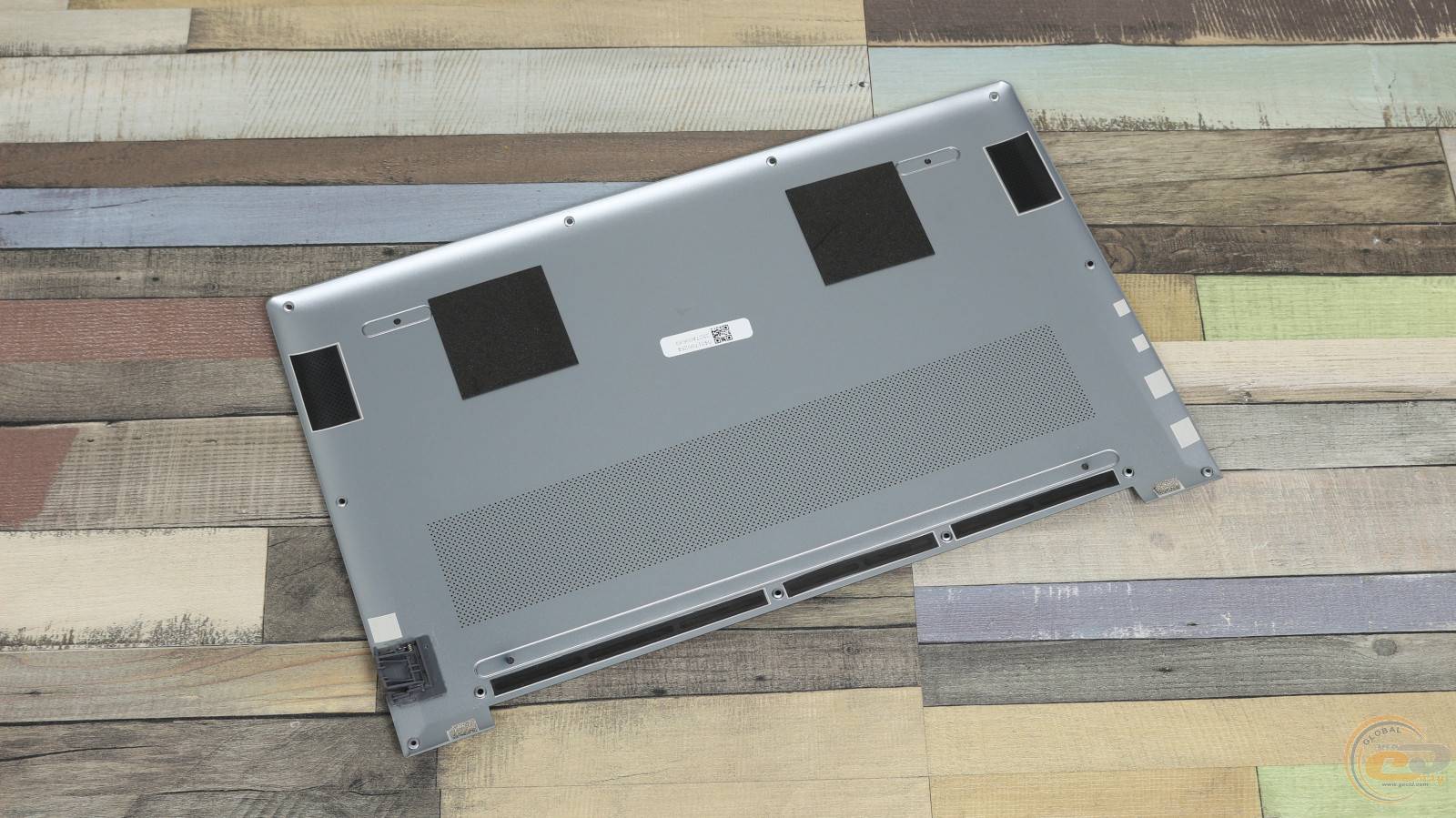
On the bottom metal cover of the Vinga Iron S151, you can see a considerable number of small ventilation holes for cold air intake, as well as larger cutouts through which the cooling system dissipates heated air. The laptop stands on three rubber feet, providing it with average grip on the surface.
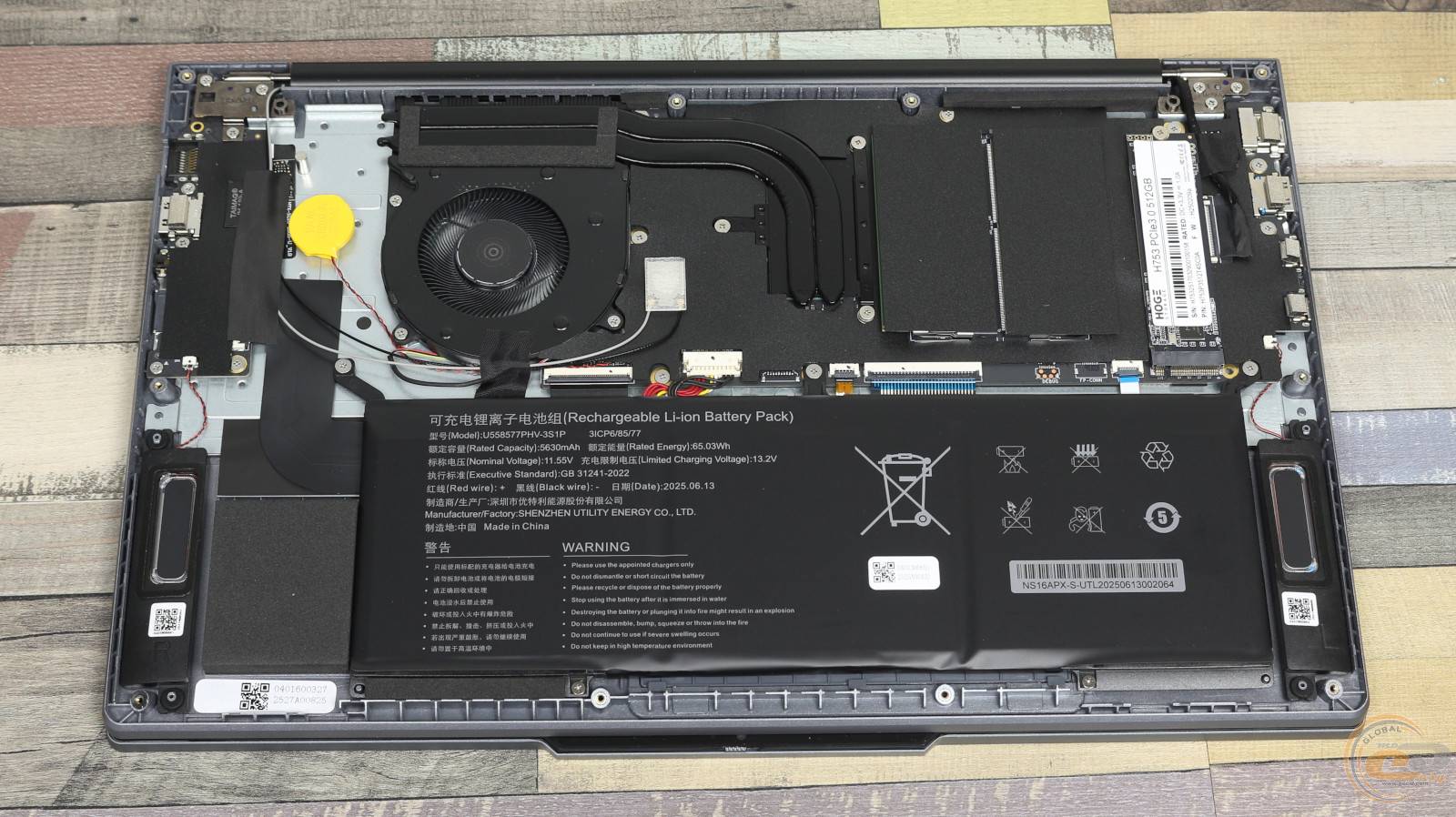
If necessary, the user has the opportunity to upgrade the system: replace the installed drive and RAM module or add another RAM stick.
Input Devices
The Vinga Iron S151 features a full-size (322 × 105 mm) island-style keyboard with an additional numeric keypad. It has white backlighting with two brightness levels, which evenly illuminates all symbols. The "Caps Lock" and "Num Lock" keys have their own light indicators. The keyboard turned out to be surprisingly comfortable to use. It's nice to see that the manufacturer preferred full-size arrow keys.
Flat keycaps with a light and short travel are used here. They have the following sizes: main keys — 16 × 16 mm, function keys — 13 × 8 mm, arrows — 12 × 18 mm, and numeric keypad — 12 × 16 mm.
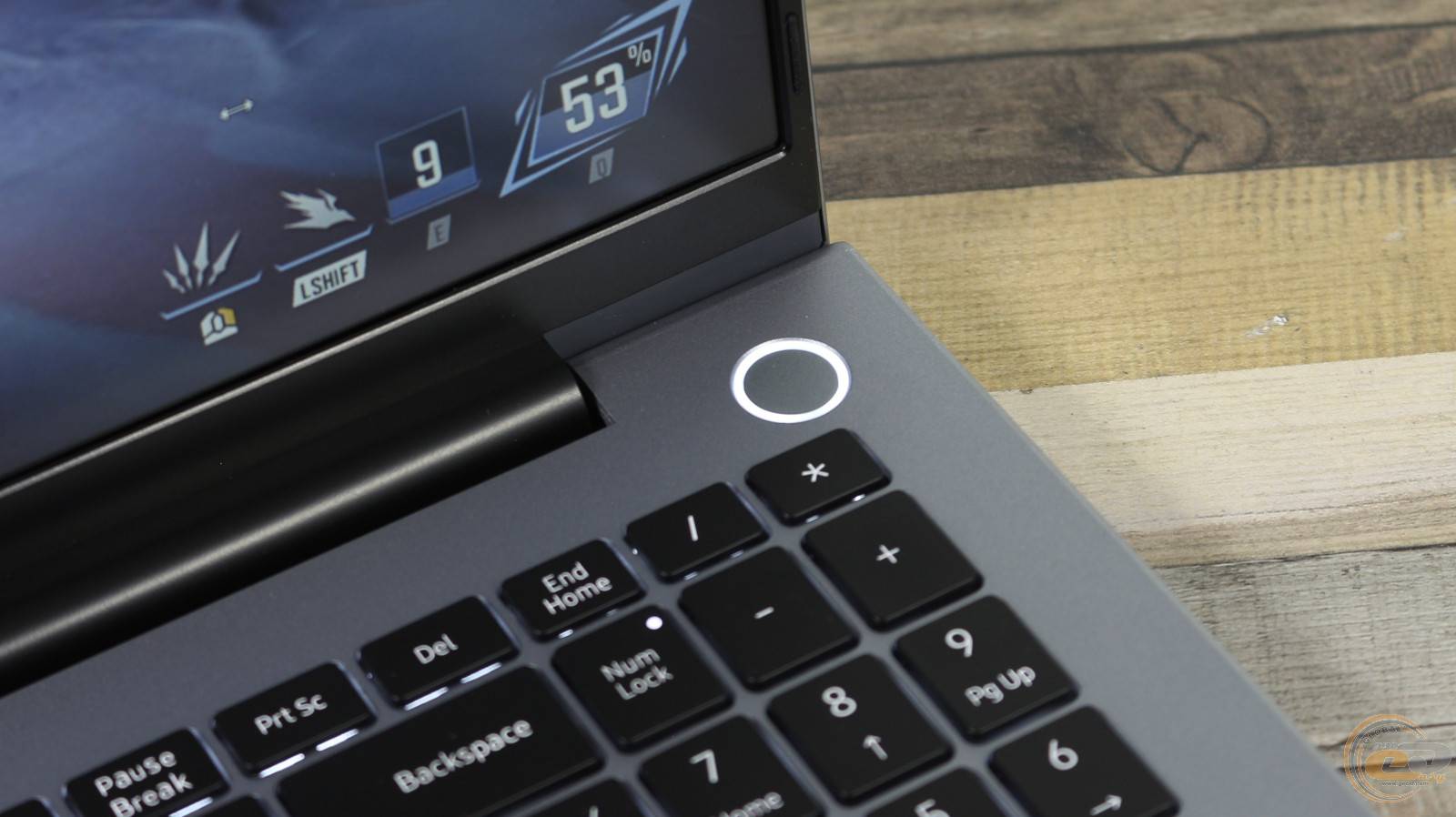
The power button is placed outside the main block of keys, combined with a fingerprint scanner, and has its own white indicator.
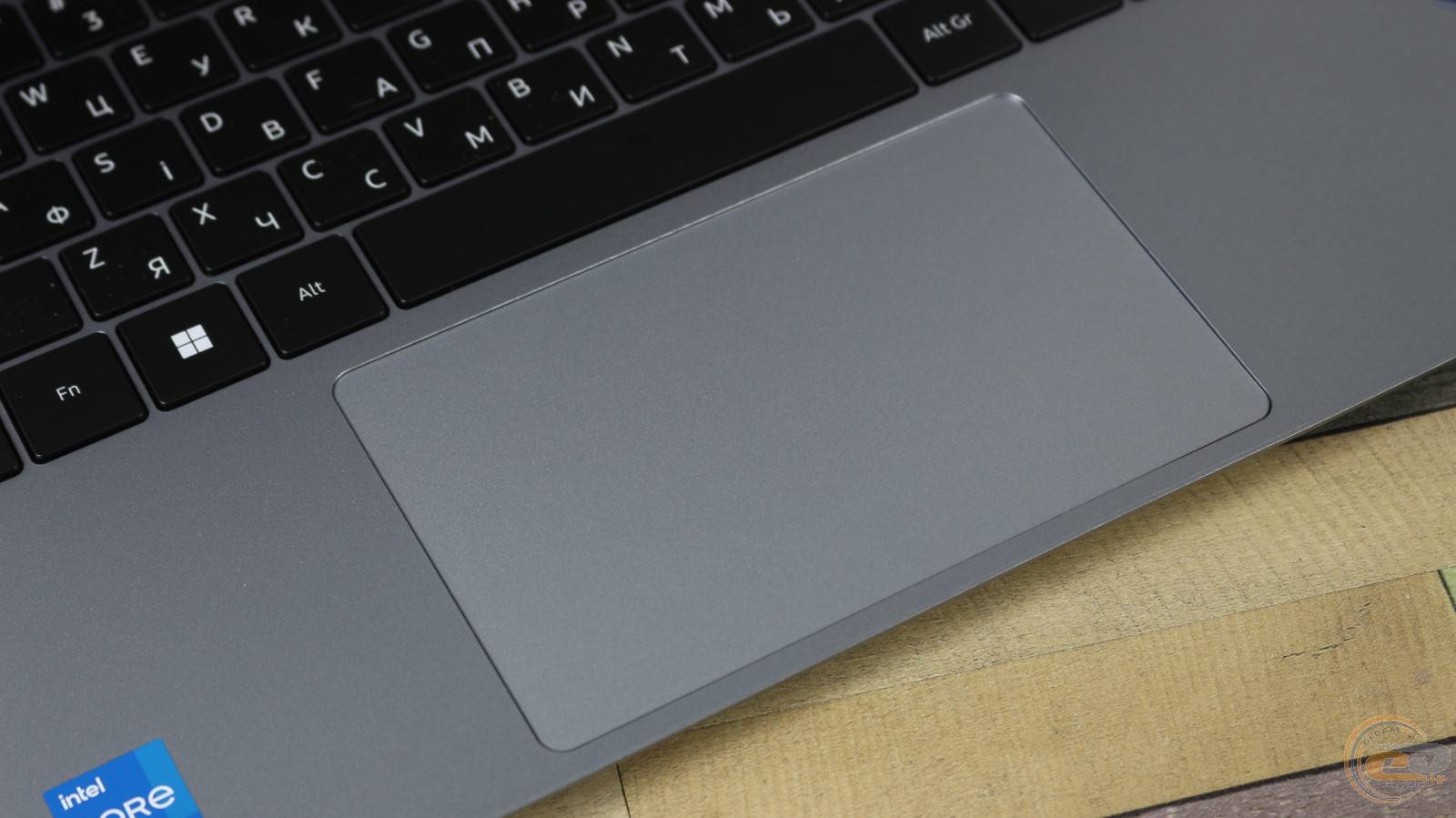
The touchpad, measuring 126 × 78 mm, is convenient to use: the finger glides well over the surface, and the accuracy of the sensor panel remains high.
Display, Webcam, Sound
The Vinga Iron S151 (S151-133416512S) is equipped with a 15.6" IPS panel JDZ10ED (G156ED06) with a resolution of 1920 × 1080 and an aspect ratio of 16:9. The refresh rate is standard - 60 Hz.
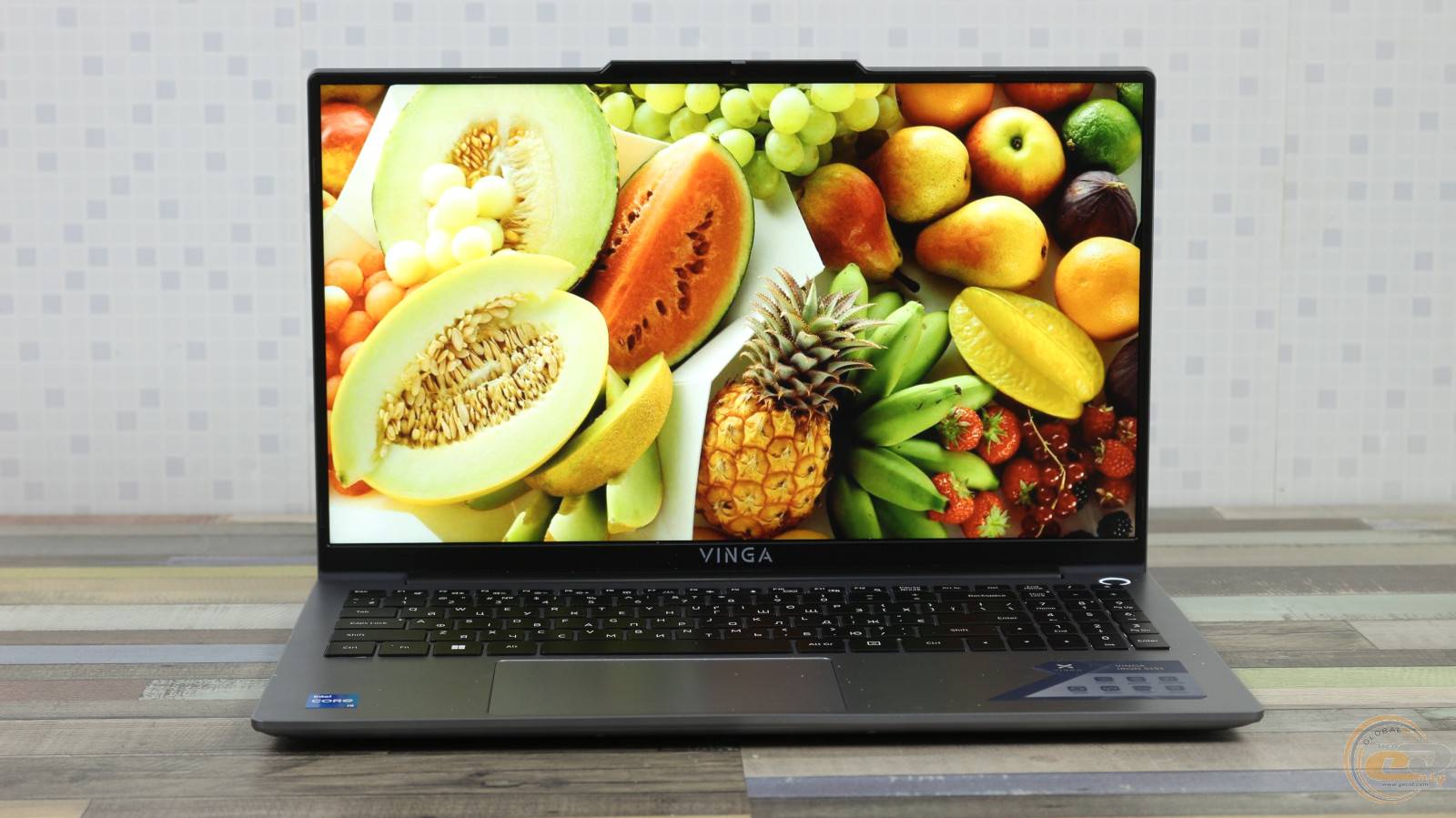
For comfortable interaction with this laptop, it was necessary to use 100% display brightness. However, the bezels are quite thin: side and top - 4 mm, and bottom - 10 mm. Around the perimeter of the display unit, you can see rubber inserts that prevent contact between the screen and the keyboard.
The key screen parameters are summarized in the table:
|
Parameters |
Values |
|
sRGB / Adobe RGB / DCI-P3 coverage, % |
59.8 / 41.2 / 42.3 |
|
Average dE*94 deviation |
0.25 |
|
White point color temperature, K |
7200 |
|
Maximum/minimum brightness, cd/m2 |
285 / 2 |
|
Black field brightness, cd/m2 |
0.2244 |
|
Contrast ratio |
1271.5:1 |
|
Average gamma |
2.28 |
The color gamut range of this model turned out to be typical for laptops in this price category.
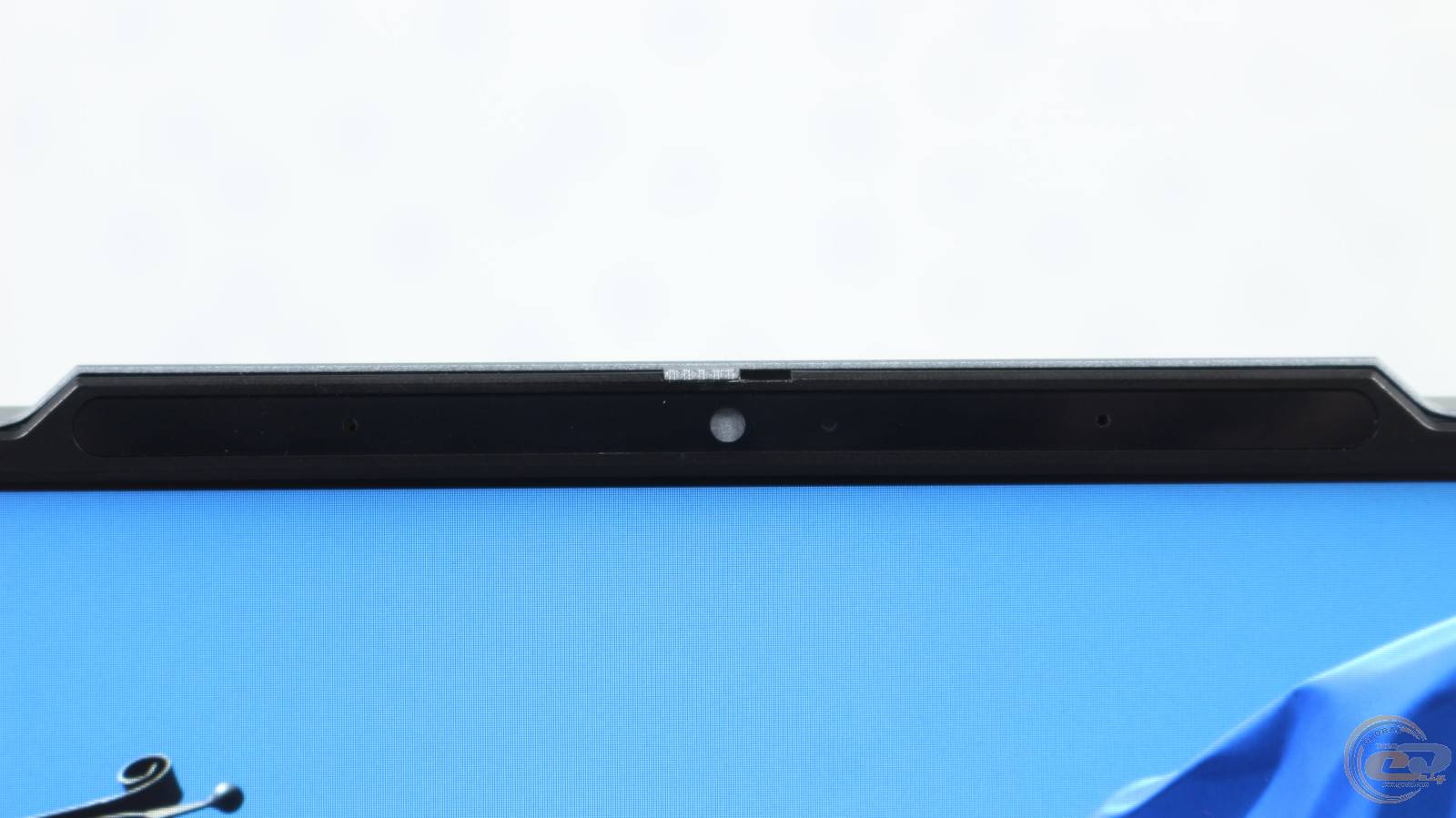
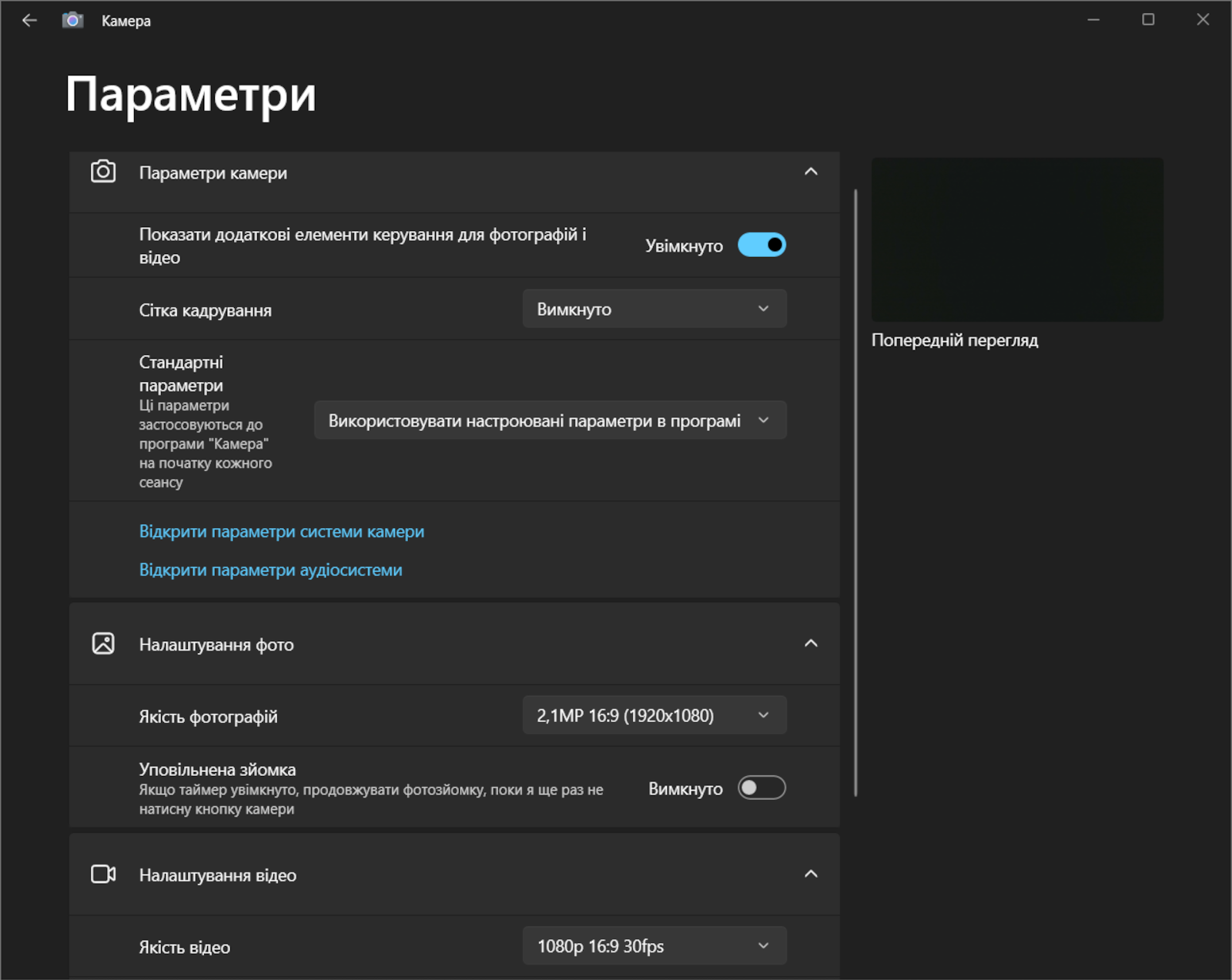
The built-in webcam has a 2.1 MP sensor, 1080p resolution, and is equipped with a physical privacy shutter for privacy protection.
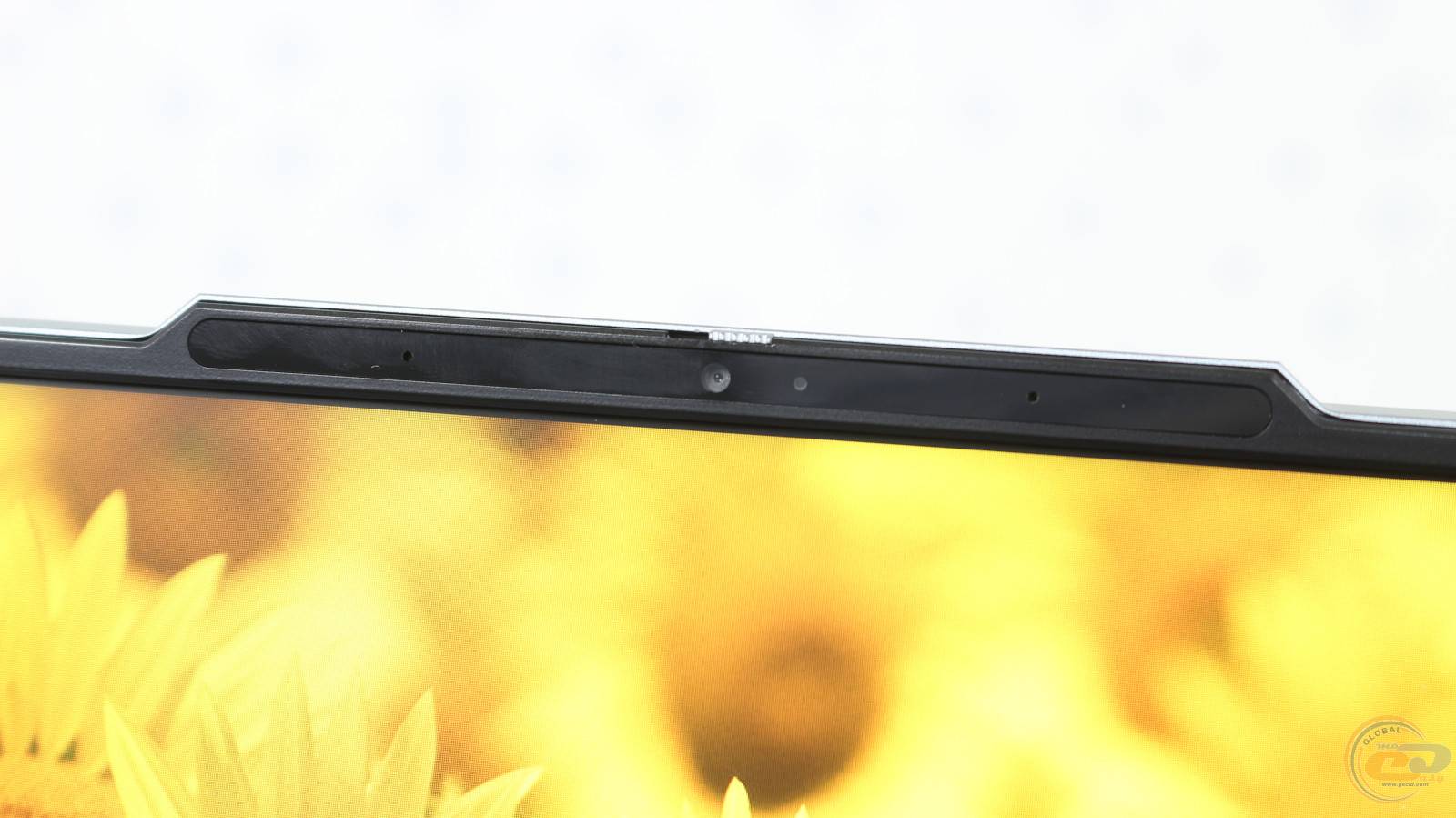
Next to it are two microphone holes. The image is sufficiently detailed, and the sound recording quality from the microphone array does not cause any complaints.
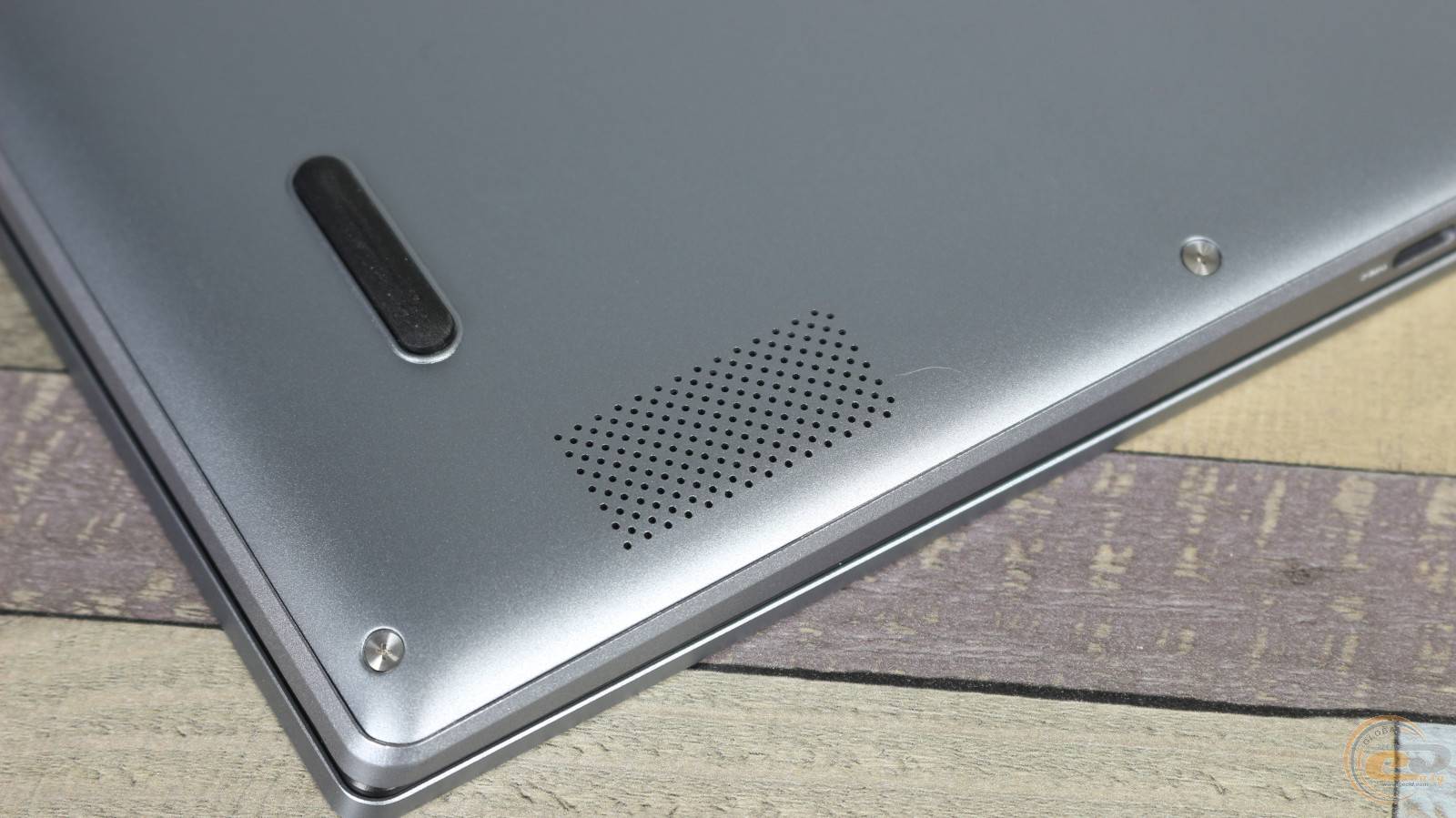
The speakers of the Vinga Iron S151 are located at the bottom on the sides. They pleasantly surprised, considering their price category. Fully enjoying music listening is, of course, not possible due to the lack of low frequencies, but the sound detailing is good. At 50% volume level, the sound is quite loud. The sound quality in headphones is slightly better, and it was quite loud at 50%.
Hardware Platform and Performance
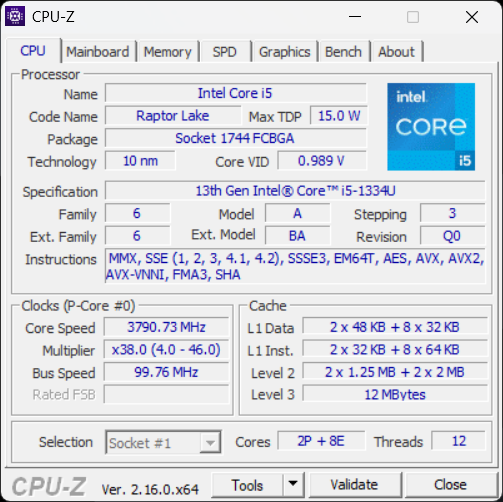
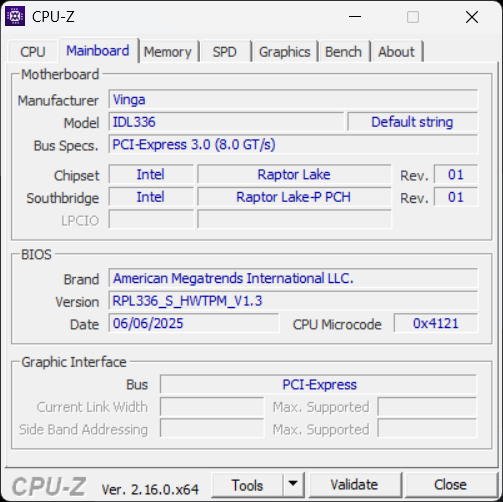
Vinga Iron S151 (S151-133416512S) features a 10-core 12-thread Intel Core i5-1334U processor. The base frequency of its two high-performance cores is 1.3 GHz, with a dynamic boost up to 4.6 GHz. The remaining cores are energy-efficient, operating at a frequency of 0.9 GHz with a boost up to 3.4 GHz. All cores have access to 12 MB of L3 cache. The TDP of this CPU is 15 W, but under high load, it can temporarily increase to 55 W.
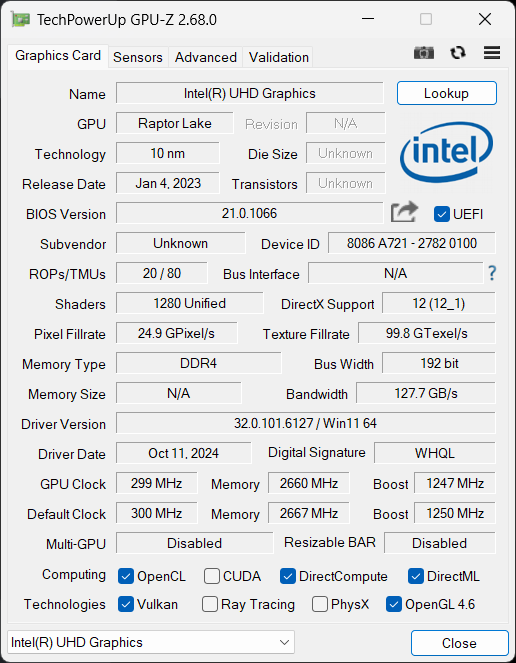
The integrated graphics core is represented by Intel Iris Xe Graphics with a working frequency of 1250 MHz. This modification has 80 execution units out of a possible 96. Memory for the graphics subsystem is allocated from the system's RAM.
The RAM subsystem of Vinga Iron S151 (S151-133416512S) is represented by a single SO-DIMM DDR4 module manufactured by HOGE STORAGE. It operates at a speed of 3200 MT/s and has a capacity of 16 GB. In fact, it is a rebranded module manufactured by SK hynix. The latency and bandwidth performance of the memory, considering its operation in single-channel mode, can be called quite typical.
The disk subsystem of Vinga Iron S151 (S151-133416512S) is represented by an M.2 SSD HOGE STORAGE H753 (H753P3512T4SC0A) with a capacity of 512 GB, PCIe 3.0 interface, and Maxio MAP1202C-F1C controller without a DRAM buffer. The sequential read speed exceeds 3336 MB/s, and the write speed is 2606 MB/s. This is a typical representative of affordable solid-state drives with a PCIe 3.0 interface, but its capabilities will be more than sufficient in real usage scenarios.
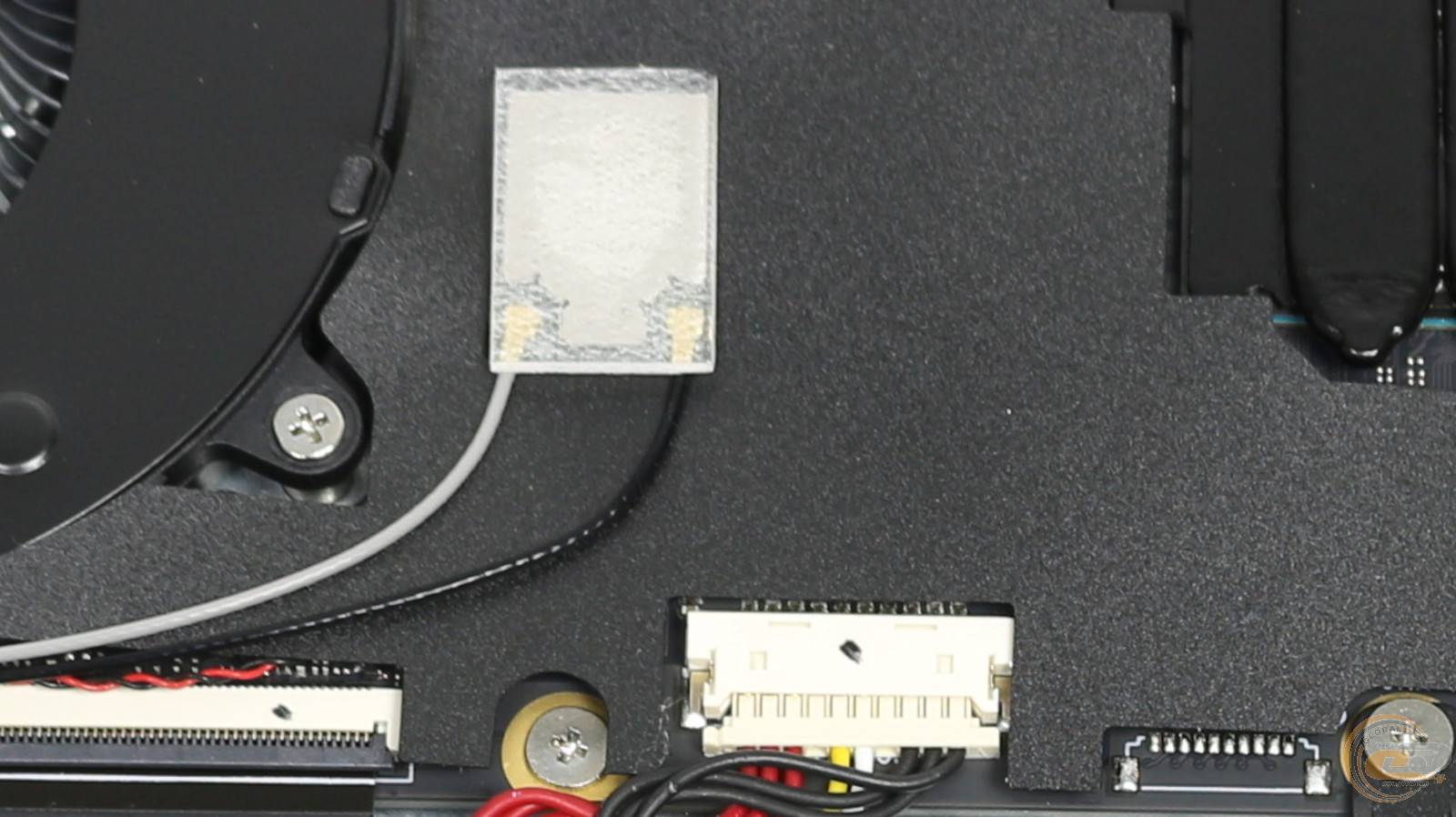
Wireless communication is provided by a combined network controller Intel Wi-Fi 6 AX101D2W, which supports Wi-Fi 6 (802.11ax, 1×1) and Bluetooth 5.2. For wired connection, there is a gigabit adapter Realtek RTL8168 — a rare find in this class of devices.
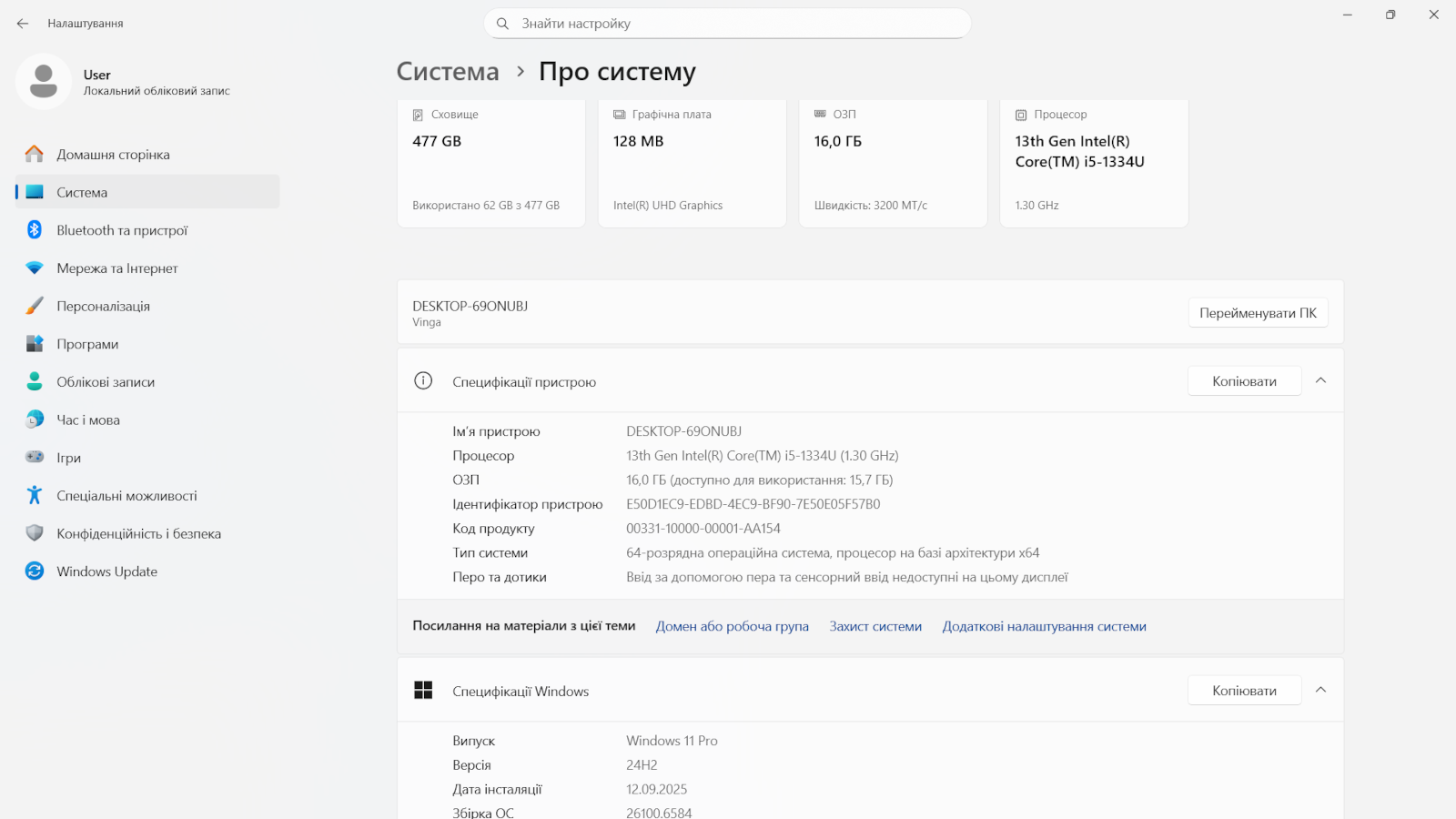
As we mentioned earlier, the sample provided for testing, unlike the usual retail version, has a pre-installed Windows 11 Pro operating system for evaluation. Therefore, all tests were conducted in it.
The results of synthetic benchmark testing are presented in the table:
|
Benchmark |
Results |
|
3DMark |
|
|
Wild Life, points |
7 406 |
|
Wild Life Extreme, points |
2 049 |
|
Steel Nomad, points |
111 |
|
Steel Nomad Light, points |
768 |
|
Fire Strike, points |
2 824 |
|
Fire Strike, Graphics score, points |
3 230 |
|
Fire Strike Ultra, points |
708 |
|
Fire Strike Ultra, Graphics score, points |
687 |
|
Time Spy, points |
1 157 |
|
Time Spy, Graphics score, points |
1 030 |
|
Time Spy, CPU score, points |
3 884 |
|
PCMark 10 Basic |
|
|
Total result, points |
4 512 |
|
Essentials, points |
7 384 |
|
Productivity, points |
6 387 |
|
Digital Content, points |
5 287 |
|
Geekbench 6 |
|
|
Single-Core, points |
2 271 |
|
Multi-Core, points |
6 317 |
|
OpenCL dis, points |
10 539 |
|
Vulkan int, points |
13 089 |
|
Geekbench AI |
|
|
Single Precision, points |
1 859 |
|
Half Precision, points |
752 |
|
Quantized, points |
4 093 |
|
Cinebench R23 |
|
|
CPU (Multi Core), points |
5 049 |
|
CPU (Single Core), points |
1 625 |
|
Cinebench 2024 |
|
|
CPU (Multi Core), points |
326 |
|
CPU (Single Core), points |
93 |
|
7-ZIP |
|
|
Total Rating, MIPS |
35 300 |
|
WinRAR x64 621 |
|
|
Total Speed, KB/s |
6 993 |
The Intel Core i5-1334U scores in synthetic benchmarks are slightly better than the performance level of the Intel Core i5-1235U and AMD Ryzen 3 7335U. More specifically, it is indeed a device for performing simple work tasks.
Game testing results:
|
Graphics settings |
1920×1080, DX12 – if possible, fps |
||
|
Mode |
Minimum |
Medium |
Maximum |
|
The Witcher 3: Wild Hunt |
19 |
18 |
14 |
|
Counter-Strike 2 |
37 |
32 |
18 |
|
Total War: Three Kingdoms |
27 |
22 |
13 |
|
Dota 2 |
62 |
37 |
27 |
Interestingly, the integrated graphics still allow for gaming at Full HD resolution, but only in Dota 2 with minimum graphics settings. In other projects, to achieve a more or less acceptable FPS level, you will need to further reduce the resolution to HD.
Cooling system, noise level, and temperature regime
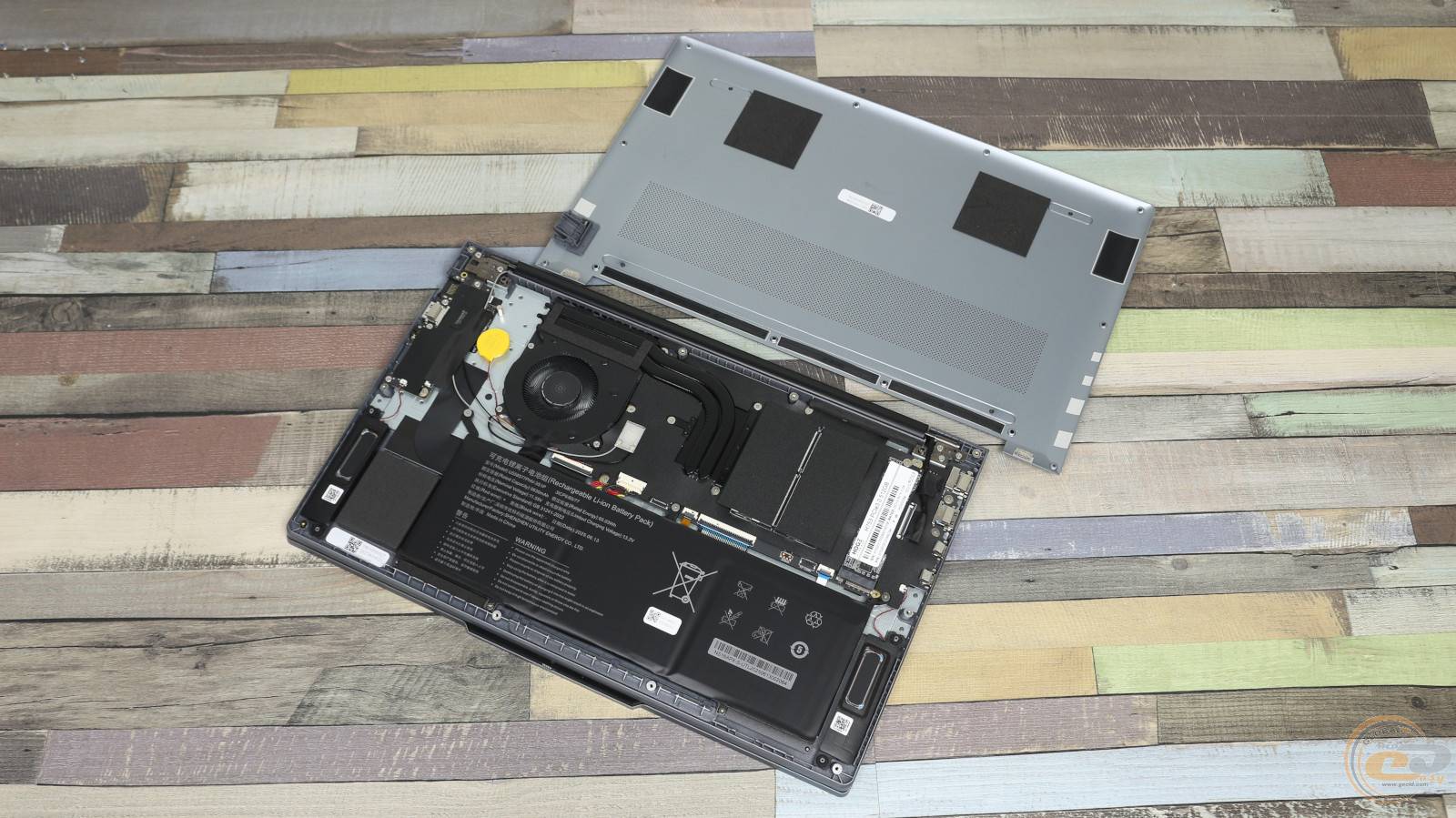
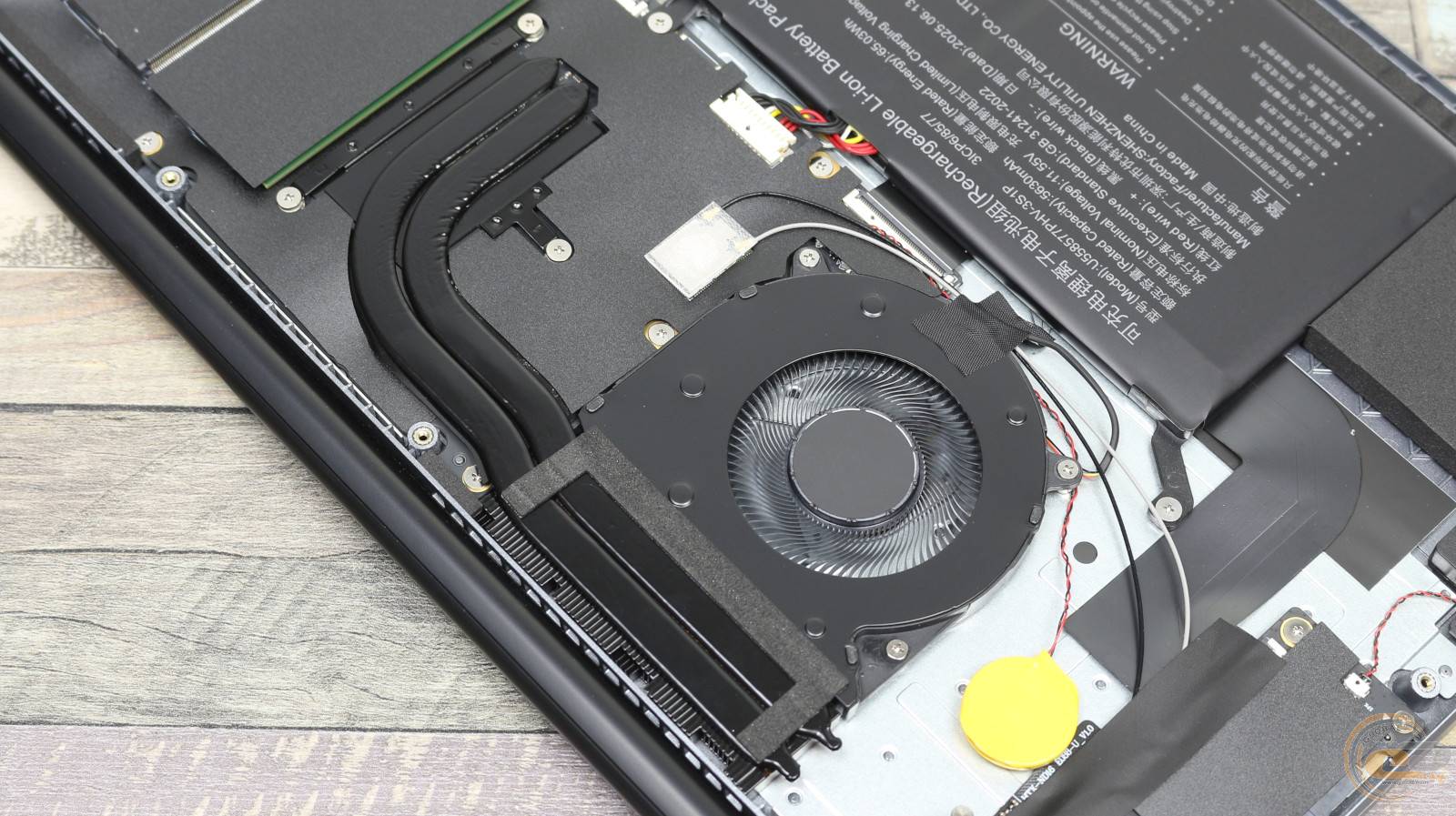
The cooling system of Vinga Iron S151 consists of a single radial fan and a heatsink with two thick copper heat pipes. The ambient air temperature during our tests was 25°C.
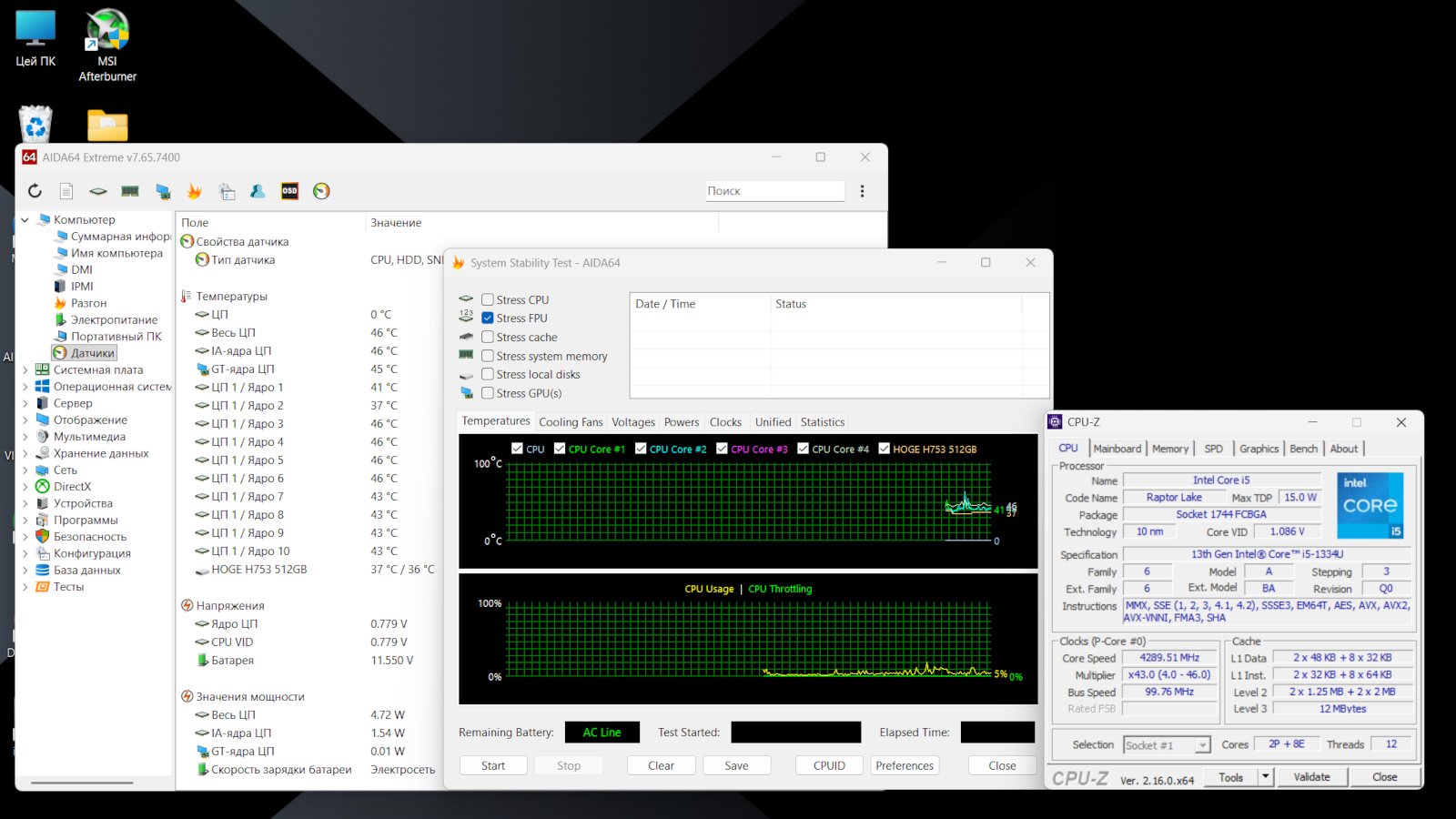
In idle mode, the CPU temperature reached a maximum of 46°C, and the iGPU was 45°C.
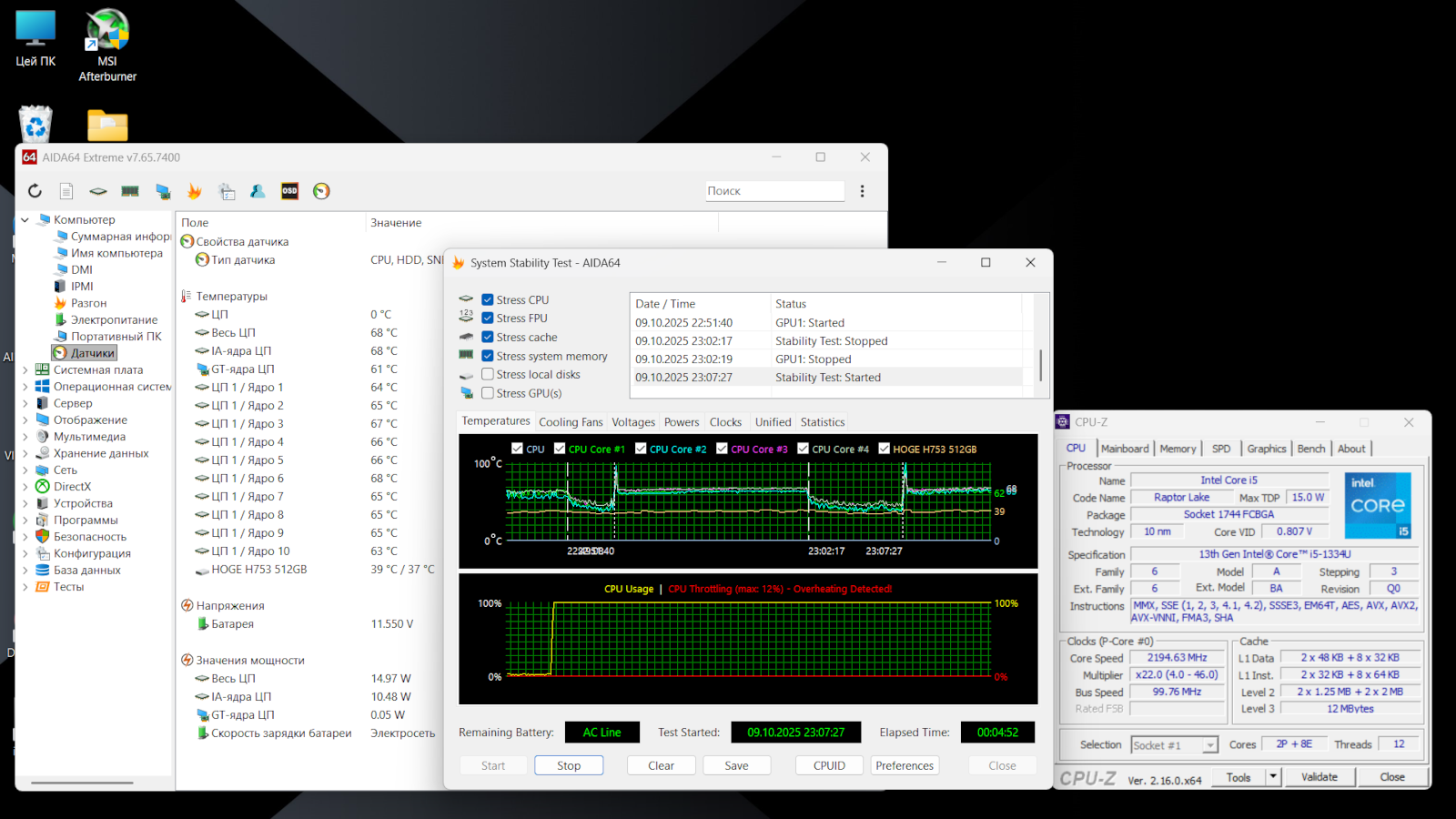
We tested the cooling system's efficiency using the AIDA64 stress test. During the test, the maximum CPU temperature was only 68°C, and the average frequency of high-performance cores reached 2.2 GHz.
Under maximum load, the fan operates quite loudly, but the noise level remains average and comfortable. The laptop's body temperature reached a maximum of 37°C (near the "F8" and "F9" keys). And without load, the cooling system is not audible at all.
Power Supply, Battery, and Battery Life
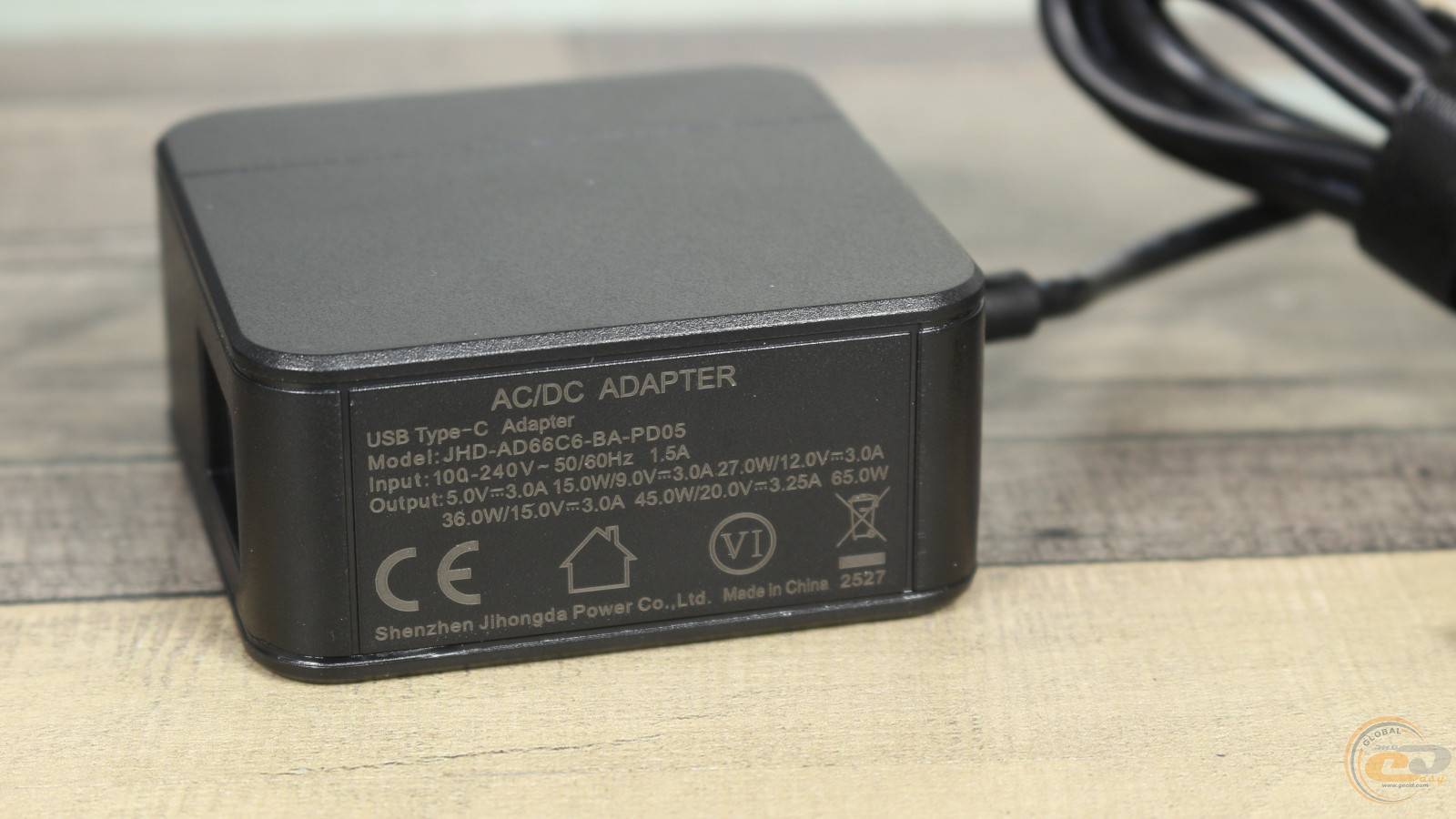
The package includes a JHD-AD66C6-BA-PD05 power supply with a power of 65 W. The input signal parameters are 100 - 240 V at a current of 1.5 A and a frequency of 50 - 60 Hz. The output provides 20 V at 3.25 A.
Power consumption of the laptop under different types of load:
|
Load |
Power, W |
|
AIDA64 Stress FPU |
38 |
|
AIDA64 Stress FPU + Stress GPU |
64 |
|
AIDA64 Stress GPU |
41 |
|
Idle (with minimum screen brightness in "C-balance" mode) |
6 |
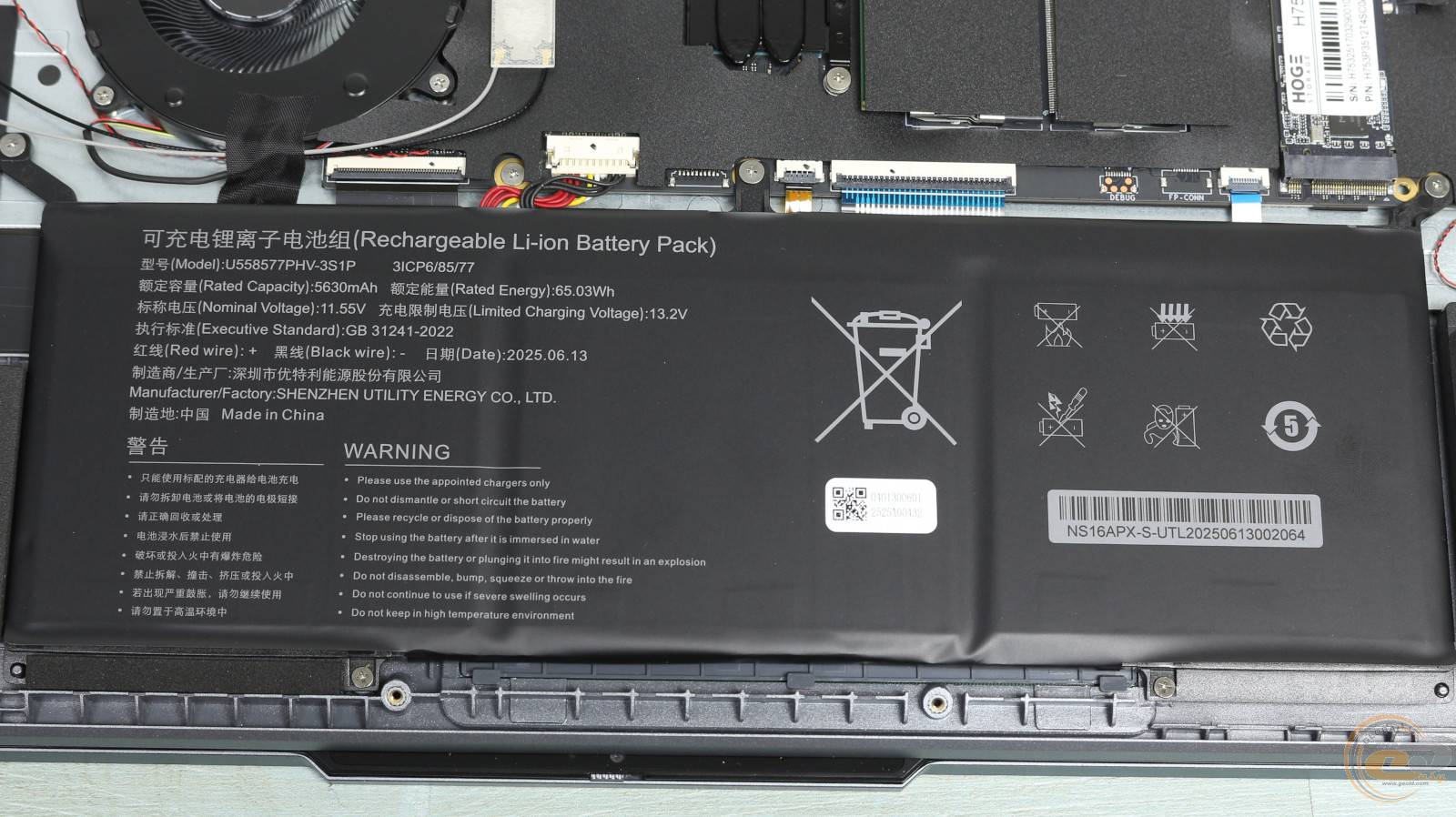
The non-removable lithium-ion battery U558577PHV-3S1P with a nominal capacity of 5630 mAh (65.03 Wh) is responsible for autonomous operation. The results of its testing with the "Silent" cooling system mode are summarized in the table (in all cases, Wi-Fi and Bluetooth are activated):
|
Type of Load |
Battery Life, hours |
|
Maximum load (Battery Eater, brightness 100%), hours |
3:08 |
|
Watching Full HD video, brightness 100%, hours |
12:53 |
|
Minimum load, brightness 50%, hours |
13:35 |
|
Charge recovery, hours |
2:02 |
The autonomy of the Vinga Iron S151 (S151-133416512S) is pleasantly impressive. You can count on a full 13 hours of operation with a mixed usage scenario.
Conclusions
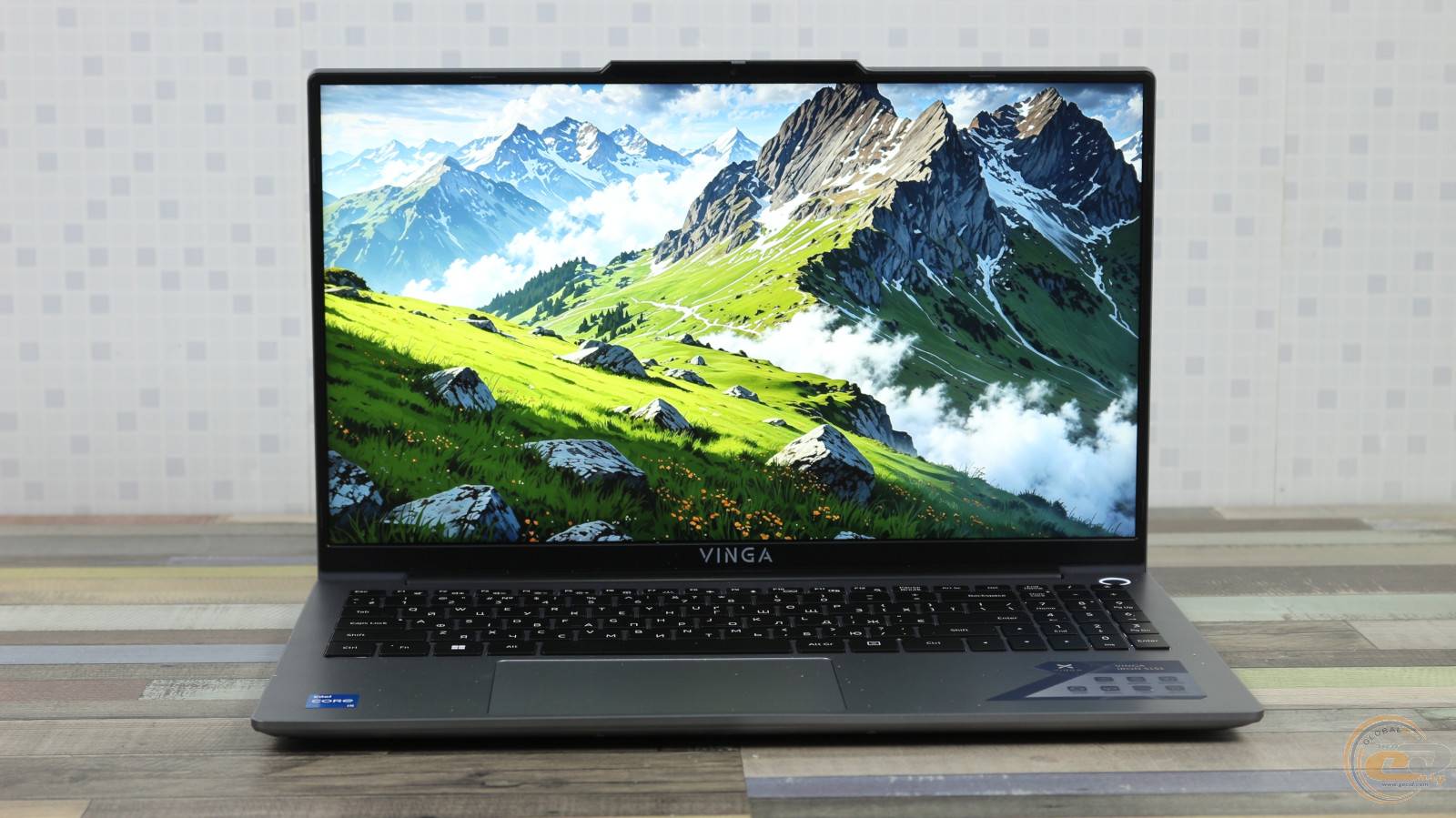
As the manufacturer notes, the ultrabook Vinga Iron S151 (S151-133416512S) is primarily designed for work and study. And indeed, based on the tests, the capabilities of the installed ten-core Intel Core i5-1334U with integrated Intel Iris Xe Graphics are more than sufficient for such scenarios. Meanwhile, the 65.03 Wh battery provides this laptop with excellent autonomy compared to devices in a similar price category.
Although the installed IPS matrix cannot boast high brightness, the thin bezels around the screen positively affect the perception of the image. From a technical standpoint, the Vinga Iron S151 offers a complete set of necessary ports, including a card reader, and the keyboard is equipped with white backlighting with two brightness levels.
An interesting decision is that the manufacturer did not skimp on RAM for both modifications and installed a 16 GB module "out of the box" for both. The disk subsystem is represented by a high-speed drive with a necessary capacity of 512 GB in modern realities.
The upgrade possibilities here can be called restrained, but it's good that the manufacturer did not follow the path of the "new reality" with components soldered to the board.
Another unchanged positive aspect of Vinga laptops remains the use of metal elements in the body, which positively affects the overall rigidity of the construction.
Among the conditional disadvantages of this model, we can highlight only the operation of RAM in single-channel mode. Therefore, it's better to add another RAM module yourself to increase the performance of the integrated graphics and processor.
Advantages:
- small thickness and moderate weight of the device;
- sufficiently productive and not hot processor;
- well-recognized, fail-safe minimalist design;
- presence of a card reader;
- display block cover and bottom part of the body made of aluminum;
- good set of input-output ports for this price category;
- support for Wi-Fi 6 (802.11ax, 1×1) and Bluetooth 5.2;
- gigabit Ethernet;
- convenient full-size keyboard with a separate numeric block and two levels of backlighting;
- 16 GB of RAM with the possibility of upgrading to 64 GB;
- presence of two USB Type-C ports with Power Delivery charging capability;
- webcam equipped with a physical privacy shutter;
- relatively quiet cooling system;
- fingerprint scanner located in the power button;
- hardware encryption module TPM;
- competitive price;
- necessary possibilities for further upgrades;
- about 13 hours of autonomous operation in a mixed usage scenario from a single battery charge.
Features:
- to increase performance, it is worth adding another RAM module to enable dual-channel mode.

Author: Ivan Morgun
Review on the site gecid.com