Review and Testing of Vinga S65UHD20G TV: to Buy or to Save
In one of the previous reviews, we explored the capabilities of the 55-inch Vinga S55UHD20G TV, but the flagship in the current model range of this brand is the 65-inch model Vinga S65UHD20G. Interestingly, its price is more than twice as high: 32,999 UAH ($1244) compared to 15,999 UAH ($603).
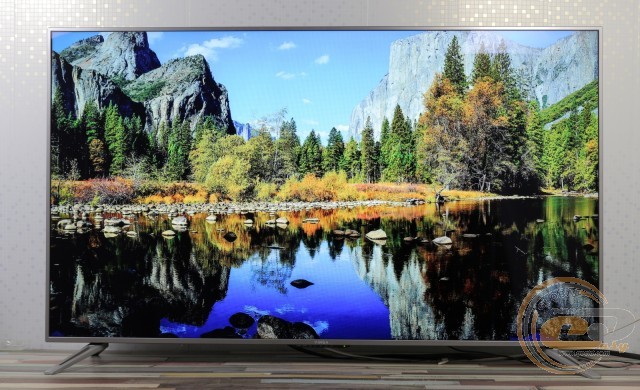
What accounts for such a high difference, as both support 4K resolution, SmartTV functionality, have a built-in Wi-Fi module, and run on Android 5.1 OS. Let's figure it out, but first, let's take a look at the technical specifications.
Specification
|
Model |
Vinga S65UHD20G |
|
Panel Type |
LCD with Direct LED backlight |
|
Diagonal, inches |
65 |
|
Aspect Ratio |
16:9 |
|
Maximum Resolution |
3840 x 2160 |
|
Vertical Refresh Rate, Hz |
60 |
|
Response Time GtG, ms |
6 |
|
Brightness, cd/m2 |
240 |
|
Contrast Ratio |
5000:1 |
|
Horizontal / Vertical Viewing Angles, ° |
178 / 178 |
|
Color System Standards Support |
SECAM, PAL |
|
Video Signal Support |
2160p, 1080i, 1080p, 720p, 480i, 480p |
|
Tuner Type |
Digital (DVB-C, DVB-S2, DVB-T2) |
|
Smart TV Support |
Yes |
|
Wi-Fi Support |
Yes |
|
OS |
Android 5.1 |
|
Built-in Speaker Power, W |
16 (2 x 8) |
|
Interfaces |
1 x CI+ 2 x 3.5mm audio 1 x RF (S2) 1 x RF (T2) 3 x USB 3 x HDMI 1 x D-Sub 1 x SCART 1 x Component In (Y/Pb/Pr) 1 x Coax |
|
Typical Power Consumption in Active Mode, W |
200 |
|
VESA Mount Support, mm |
400 x 200 |
|
Dimensions with Stand / without Stand, mm |
1460 x 310 x 896.2 / 1455 x 79 x 833.7 |
|
Warranty, months |
12 |
|
Manufacturer's Website |
|
|
Product Page |
|
|
Purchase Page |
Packaging and Delivery Set
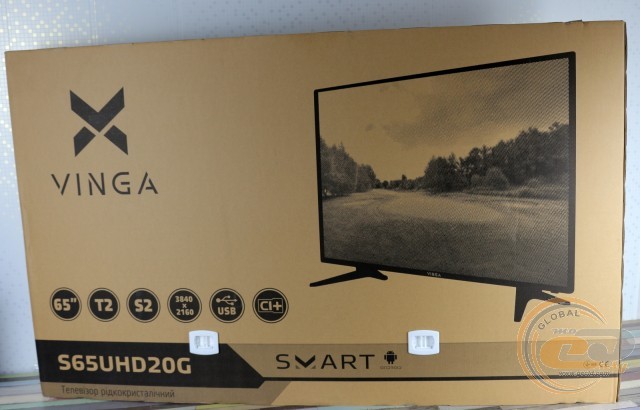
The packaging of the Vinga S65UHD20G TV is not much different from previous models. To save costs, it lacks color printing, but this does not affect its informativeness, as all key features and specifications are listed on the sides of the box. The sides also have holes for easy transportation.
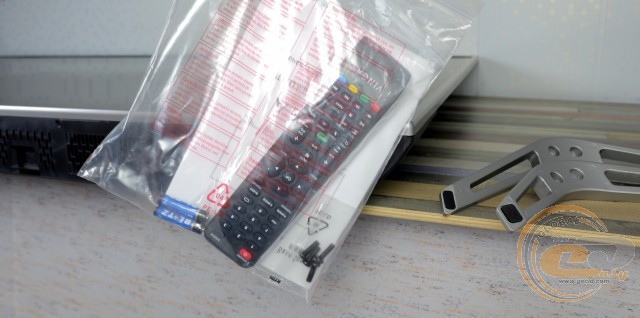
The delivery set has also not changed. It includes a set of paper documentation, a pair of legs and four screws for their attachment, as well as a remote control and a pair of AAA batteries for its power supply.
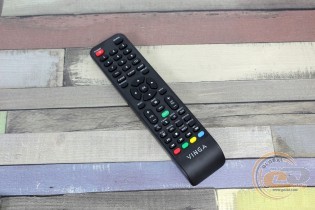
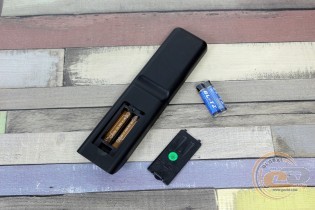
The remote control case is made of matte plastic. It fits comfortably in the hand, and its functionality is not limited to just switching channels. The remote can also be used to adjust the volume of the built-in speakers, navigate the menu, and activate additional functions. The buttons require medium pressure to press. Almost each of them is labeled or has an understandable icon. The user manual provides the purpose of each button.
For correct operation, it is desirable (though not necessary) to point the remote directly at the sensor on the TV. There is even reflected operation, but only at a short distance.
Appearance and Features of Operation
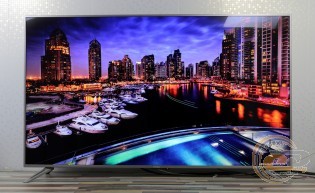
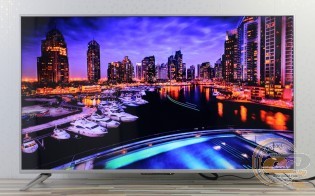
Vinga S65UHD20G and Vinga S55UHD20G
In terms of appearance, the Vinga S65UHD20G and Vinga S55UHD20G models do not differ from each other: both use an elegant thin gray bezel around the screen and two stand legs that securely fix the display but do not allow changing its height or tilt angle. Overall, this design looks modest but attractive.
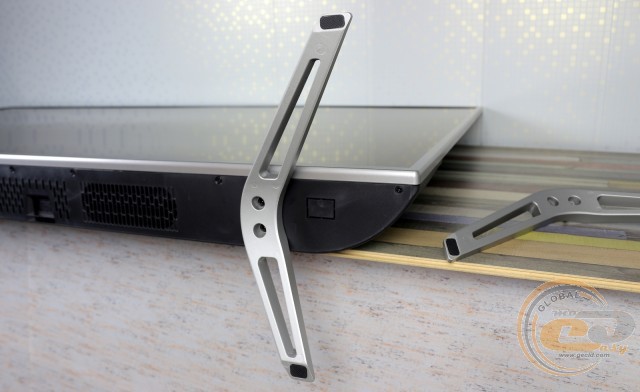
The legs are additionally equipped with rubber pads for more secure fixation of the TV on the table and to protect the surface from possible scratches.
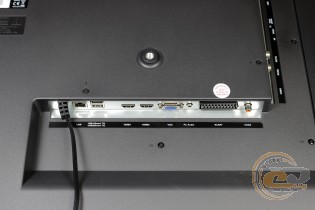
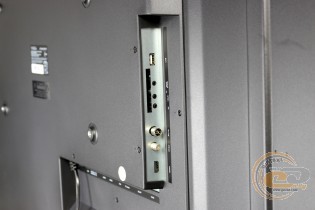
The power supply unit is traditionally integrated into the TV case, which leads to an increase in profile thickness. However, there are positive aspects to such a design, as all interface connectors are located on the side edges of the central thickening. They are directed downward or sideways, providing convenient access to them even in the case of wall mounting using a VESA bracket (400 x 200 mm). All ports are labeled for easy access even for inexperienced users. Moreover, the large number and variety of ports are pleasing: you can connect several flash drives or USB peripherals, a number of signal sources, various antennas, and more.
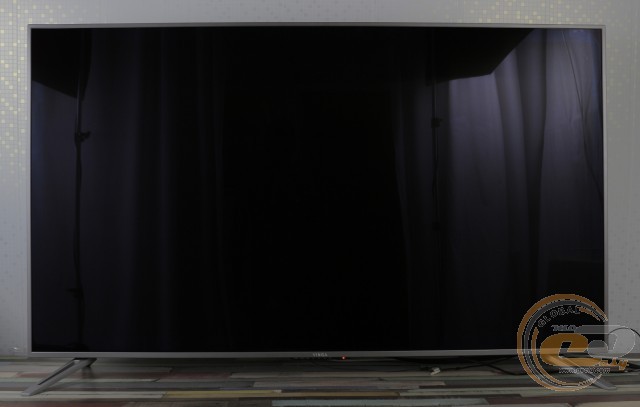
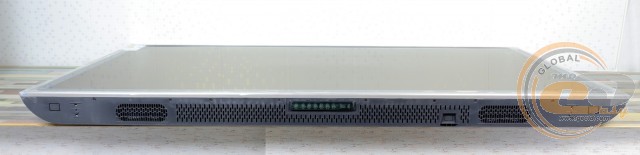
At the bottom center is an activity indicator, which lights up green when the TV is on and red when in standby mode. Below it is a row of additional buttons with medium pressure, which, in the absence of a remote control, allow you to select the signal source, activate the menu, switch channels, and adjust the volume level.
On the bottom edge, you can also notice holes for sound output from the internal speakers with a total power of 16 W. Their volume is sufficient for watching movies or playing games. The frequency spectrum even hints at bass, but overall nothing outstanding.
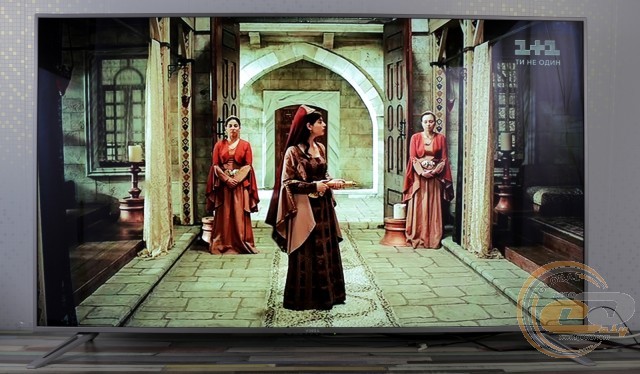
Now let's move on to the rich functional capabilities of the Vinga S65UHD20G TV. First of all, it is worth highlighting the support for the DVB-T2 standard, which is relevant for our country and allows you to watch digital channels in excellent quality without the need to purchase an additional set-top box.
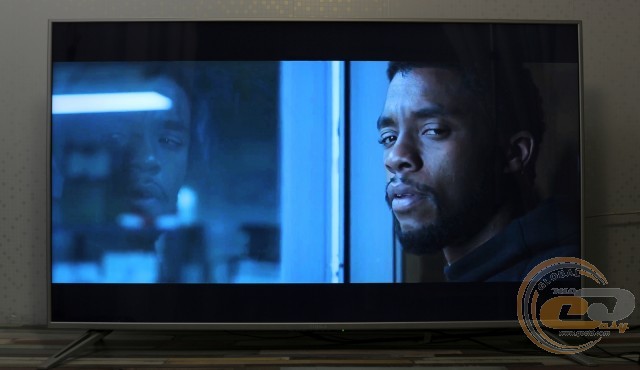
Three USB ports allow you to easily connect a flash drive to the TV for playing multimedia content. We were able to read MKV, AVI, MP4, and TS without any problems.
The Vinga S65UHD20G model operates under the control of the Android 5.1.1 OS with a set of useful pre-installed applications for playing multimedia content, accessing the internet, and more. If desired, you can also install other applications from the official Google Play online store.
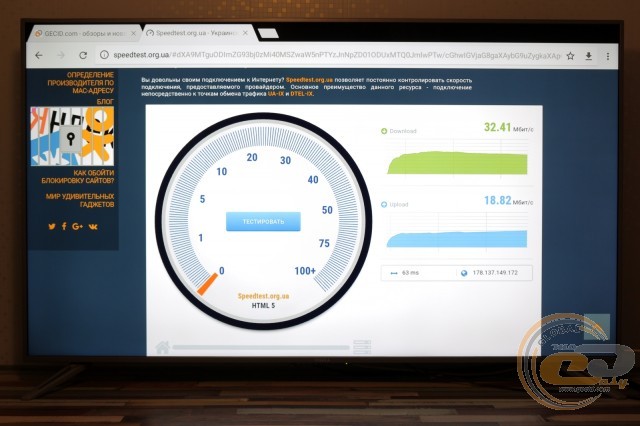
Internet connection can be implemented using the built-in Wi-Fi module. The maximum data download speed in this case exceeded 32 Mbps, and upload speed was 18 Mbps, with a channel width of 50 Mbps. Recall that in the Vinga S55UHD20G model, these indicators reached 18 and 14 Mbps, respectively, meaning the Wi-Fi module in the flagship works faster.
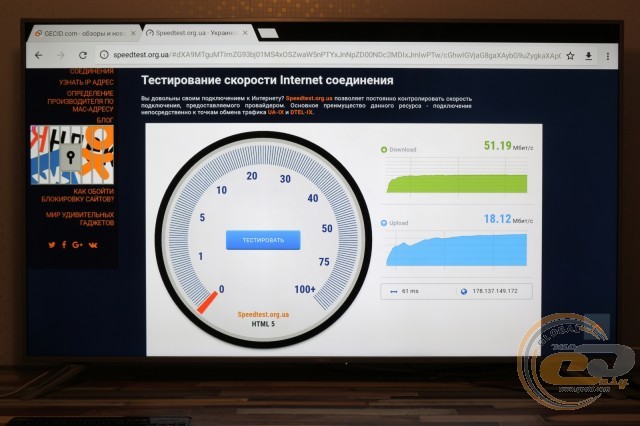
If desired, you can also use an Ethernet cable, which increases the data download speed to 51 Mbps. The upload speed remained at 18 Mbps. In the previous model, the results were similar: 51 and 21 Mbps, respectively.
After connecting to the internet, you can easily search for the necessary information online, visit social networks, watch videos or listen to music online, and much more.
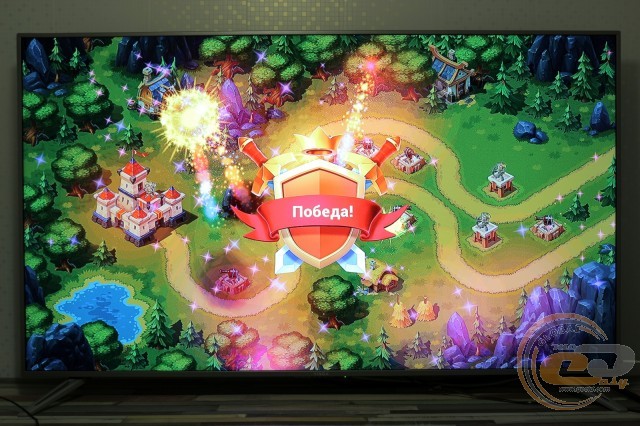
If desired, you can spend time playing games that are easily installed from Google Play.
On-Screen Menu
To access the menu and adjust settings, you can use the controls under the screen, but it is more comfortable to do so using the remote control. The functionality allows you to select the input signal source, a pre-set image profile, or audio subsystem mode, set the time and sleep timer, set channel lock, specify the image format, and much more. The presence of high-quality Ukrainian language localization in the menu was pleasing.
Testing
The hardware platform during the testing of the Vinga S65UHD20G TV was the ZOTAC ZBOX nano ID65 PLUS mini-computer. You will find a full description of the research methodology in the relevant material.
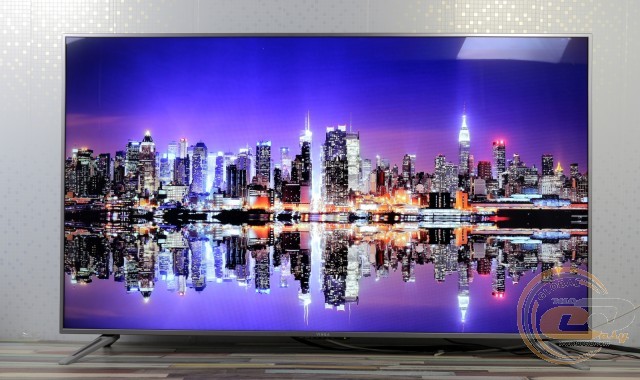
The device includes four color profiles: "Dynamic," "User," "Standard," and "Mild." For convenience, we have compiled all their parameters in a single table:
|
|
"Dynamic" |
"User" |
"Standard" |
"Mild" |
|
Brightness of white field, cd/m2 |
376 |
376 |
378 |
354 |
|
Black field brightness, cd/m2 |
0.0639 |
0.0637 |
0.0637 |
0.0635 |
|
Contrast ratio |
5881:1 |
5905:1 |
5931:1 |
5582:1 |
|
White point color temperature, K |
9156 |
9133 |
9080 |
9028 |
|
sRGB color space compliance, % |
85.7 |
85.2 |
85.3 |
82.2 |
|
Adobe RGB color space compliance, % |
62.3 |
60.5 |
60.5 |
56.8 |
|
Average deviation dE*94 (∆E) |
4.16 |
3.55 |
3.47 |
3.72 |
|
Maximum deviation dE*94 (∆E) |
12.97 |
11.36 |
11.31 |
11 |
|
Average gamma |
1.75 |
2.03 |
2.02 |
2.07 |
|
Power consumption, W |
170 |
170 |
170 |
170 |
First of all, the brightness level was pleasing: it is specified at 240 cd/m2 in the specification, but during testing, it exceeded 350 cd/m2, allowing for comfortable viewing even on a bright sunny day. However, the static contrast ratio was even more impressive. The manufacturer indicates 5000:1, although in reality, it almost reaches 6000:1. This ensures deeper blacks and rich shades. However, the white point temperature is higher compared to the standard.
Color Coverage
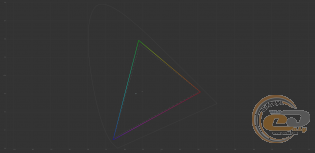
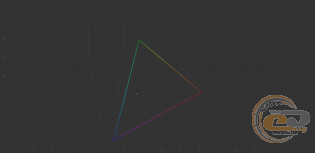
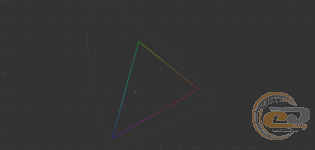
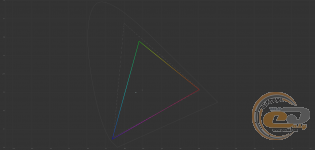
CIE diagrams of the "Dynamic" profile for sRGB and Adobe RGB spaces
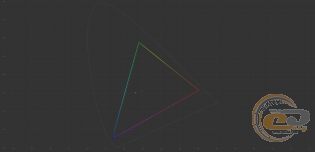
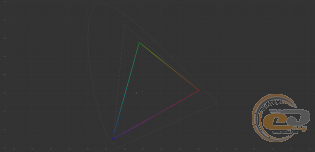
CIE diagrams of the "User" profile for sRGB and Adobe RGB spaces
CIE diagrams of the "Standard" profile for sRGB and Adobe RGB spaces
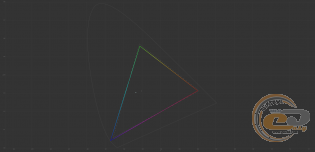
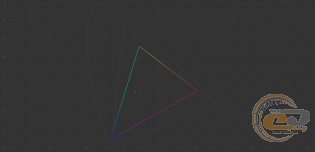
CIE diagrams of the "Moderate" profile for sRGB and Adobe RGB spaces
For mass-market, non-professional displays, acceptable coverage levels for sRGB and Adobe RGB spaces are considered to be 90% and 65%, respectively. Vinga S65UHD20G slightly fell short of these figures, delivering 82% – 86% (sRGB) and 57% – 62% (Adobe RGB). However, this is sufficient for regular viewing of shows, movies, or gaming.
The "User" and "Standard" profiles produced the best CIE diagrams for the sRGB space: there is only minimal shift of the three reference points, resulting in only slight oversaturation in the areas of green, cyan, blue, and magenta hues.
Color Accuracy
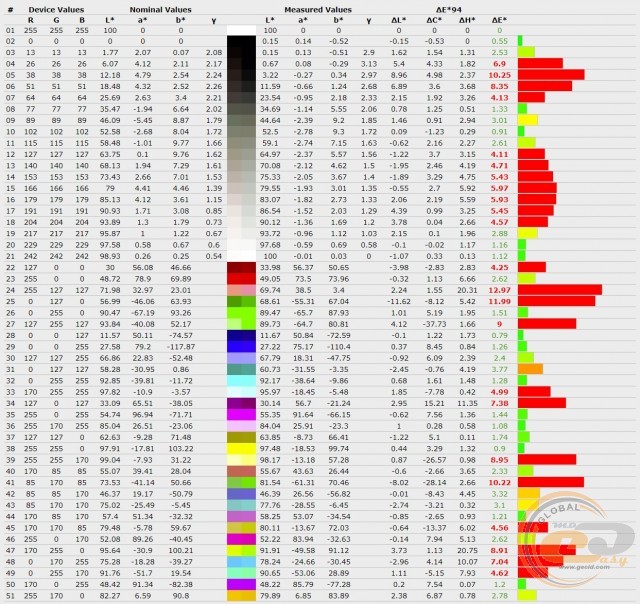
Diagram of deviation of primary colors and shades from standards in the "Dynamic" profile
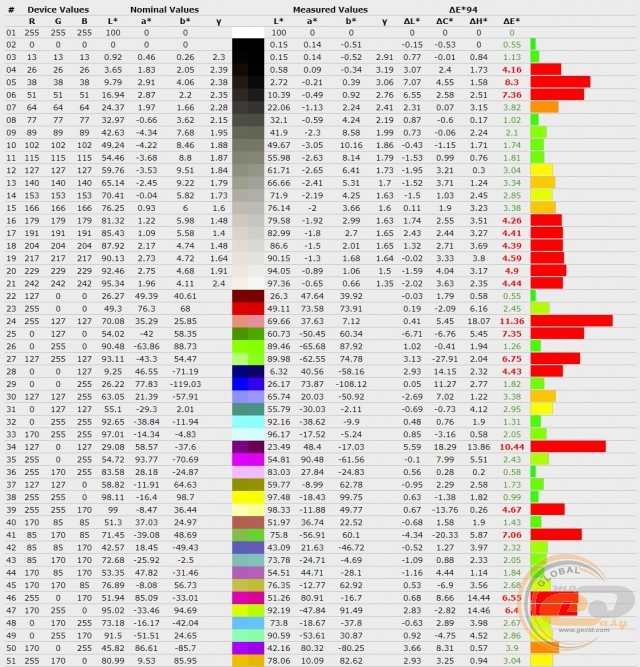
Diagram of deviation of primary colors and shades from standards in the "User" profile
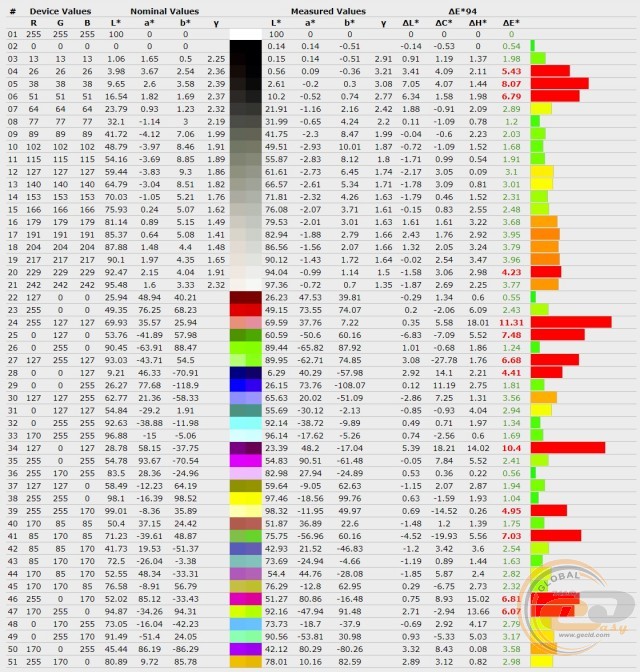
Diagram of deviation of primary colors and shades from standards in the "Standard" profile
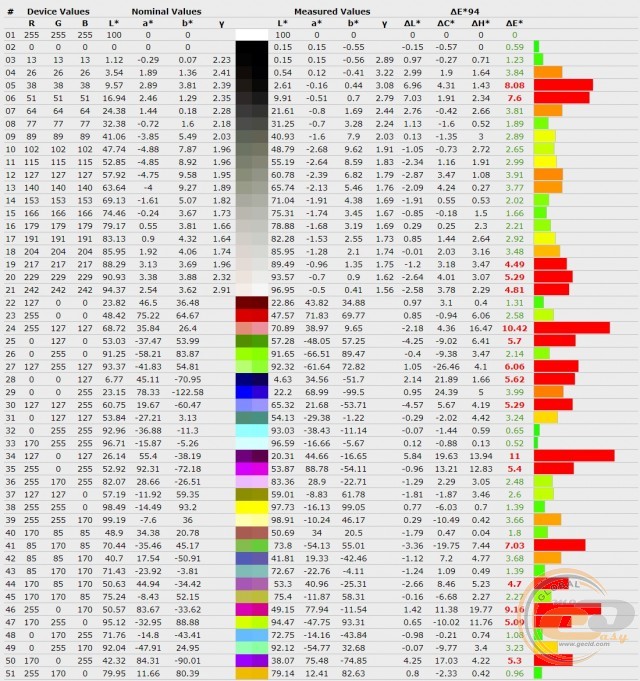
Diagram of deviation of primary colors and shades from standards in the "Moderate" profile
However, the color and shade accuracy is worse in all modes, as none of them met the required standards (1.5 and 4 for average and maximum deviation ΔE). The "User" and "Standard" profiles performed slightly better than others, while the "Dynamic" profile fared the worst in the test.
RGB Levels
RGB Levels Chart for the "Dynamic" Profile
RGB Levels Chart for the "Custom" Profile
RGB Levels Chart for the "Standard" Profile
RGB Levels Chart for the "Moderate" Profile
The RGB levels adjustment is also not perfect: only the green curve is within the acceptable range of ±10% from the reference black line. The red component is understated across the entire range, while the blue is overstated in most areas. As a result, the image may take on cooler tones.
Gamma
Gamma Curves Chart in the "Dynamic" Profile
Gamma Curves Chart in the "Custom" Profile
Gamma Curves Chart in the "Standard" Profile
Gamma Curves Chart in the "Moderate" Profile
The average gamma in all three cases is below the reference 2.2, and the curves themselves are above the reference black line. If not for the excellent contrast, the image could be overexposed, losing details in bright areas.
Brightness Range
Based on testing results, the most balanced profile in the Vinga S65UHD20G TV is the "Custom" profile, so further research was conducted based on it.
The brightness range is from 186 to 380 cd/m2, exceeding the declared maximum of 240 cd/m2. The minimum brightness value may be excessive for viewing in the dark, but the upper limit will ensure comfortable operation in bright sunny conditions.
Monitor Calibration
CIE Diagrams of the Calibrated Profile for sRGB and Adobe RGB Spaces
Diagram of Primary Colors and Shades Deviation from Standards in the Calibrated Profile
RGB Levels Chart of the Calibrated Profile
Gamma Curves Chart in the Calibrated Profile
The calibration parameters file is available at this link. The results obtained before and after hardware calibration are summarized in the table.
|
Parameters |
"Custom" |
Calibrated |
|
White Field Brightness, cd/m2 |
376 |
255 |
|
Black Field Brightness, cd/m2 |
0.0637 |
0.0659 |
|
Contrast Ratio |
5905:1 |
3875:1 |
|
White Point Color Temperature, K |
9133 |
6961 |
|
sRGB Color Space Compliance, % |
85.2 |
90.5 |
|
Adobe RGB Color Space Compliance, % |
60.5 |
63 |
|
Average dE*94 (∆E) Deviation |
3.55 |
4.58 |
|
Maximum dE*94 (∆E) Deviation |
11.36 |
12.22 |
|
Average Gamma |
2.03 |
2.22 |
Thanks to manual adjustments, it was possible to normalize the white point temperature, increase the coverage of sRGB and Adobe RGB color spaces, improve the state of RGB levels and gamma curves, and bring the average gamma closer to the reference level. On the other hand, contrast and color and shade reproduction accuracy decreased.
Screen Backlight Uniformity
Usually, we lower the central luminance to 100 cd/m2 and assess the deviation of adjacent areas. In this case, it was only possible to reduce it to 179 cd/m2. The maximum brightness deviation does not exceed 27 cd/m2.
The white point temperature slightly exceeded the allowable range of ±250 K in just one area, which can be considered quite normal for a 65-inch diagonal. There are no issues on the 3D diagram either.
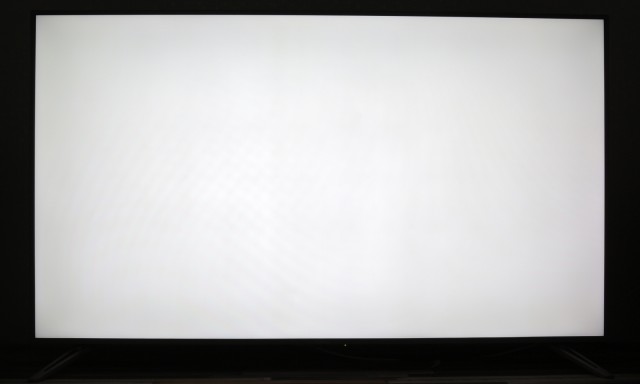
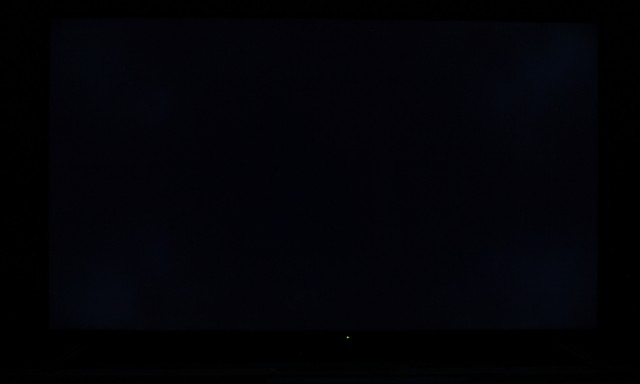
The larger the screen diagonal, the harder it is to avoid backlight bleeding, but in this case, everything is fine on both black and white backgrounds.
Matrix speed and PWM
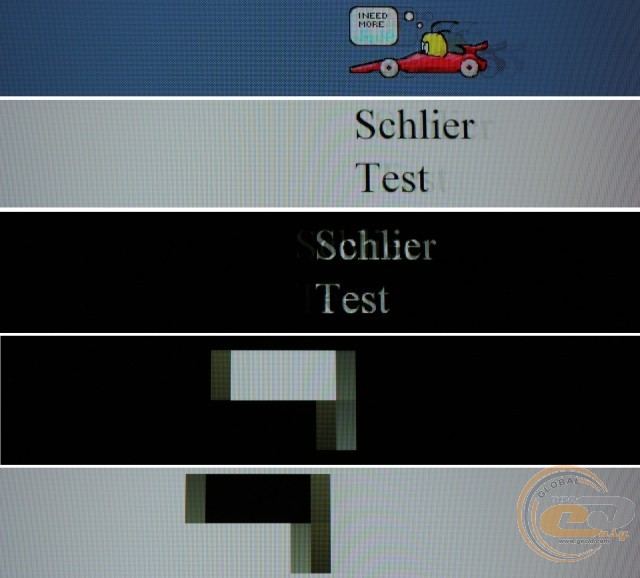
The matrix response speed is claimed by the manufacturer to be 6 ms. During testing, slight trailing from moving objects can be noticed, but it's not critical. Therefore, the TV can be used not only for watching dynamic movies but also for gaming.
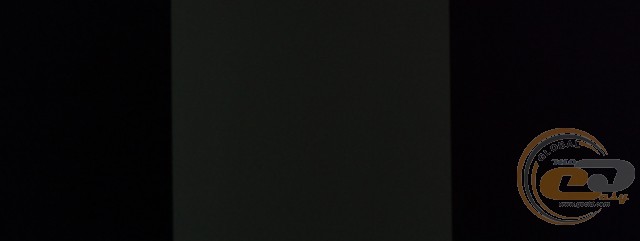
Brightness – 25%, exposure – 1/15
A single solid front in the photo indicates the absence of visible backlight flickering. This reduces eye strain for the viewer and increases comfort during prolonged screen time.
Viewing angles
Vinga S65UHD20G boasts a 65-inch diagonal and wide viewing angles of 178°, allowing it to be used as a full-fledged home theater. Only when viewed diagonally at a sharp angle can slight color fading be noticed.
Conclusions
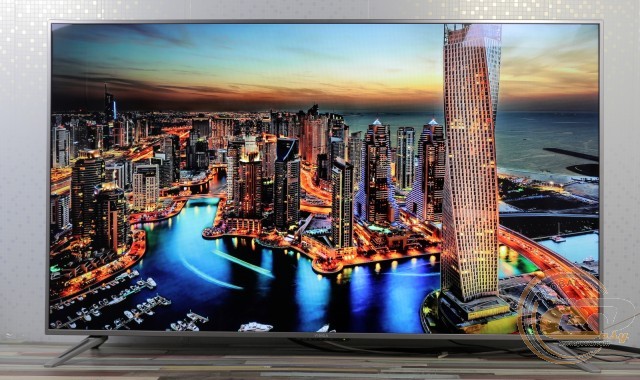
At the beginning of the review, we set an additional goal: not only to get acquainted with the capabilities of the 65-inch TV Vinga S65UHD20G but also to find the reason for its higher price compared to the 55-inch model Vinga S55UHD20G. At first glance, they are very similar: they use a similar attractive but restrained design, are equipped with 4K LCD panels, provide the user with a wide range of external interfaces, a Wi-Fi module, and digital tuners. They operate under the Android 5.1.1 OS.
However, a closer acquaintance revealed significant differences between them. Firstly, there are an additional 10 inches of screen space diagonally. Secondly, the use of a faster Wi-Fi module: the download speed reaches 32 Mbps instead of 18 Mbps. Thirdly, the Vinga S65UHD20G is equipped with a higher quality LCD panel. Its maximum brightness reaches 380 cd/m2, and static contrast exceeds 5900:1. For comparison: these same indicators in the Vinga S55UHD20G were 302 and 472:1, respectively. This means the new model provides deeper black and richer shades. All this leads to an increase in the visual quality of the picture – after all, this is what is most important when choosing a TV.
With factory calibration, of course, not everything is smooth, but we are talking about a regular TV, which does not have the heightened requirements of a professional monitor. In the end, whether to "buy" or "save" is up to you. If the budget is limited, you can quite safely choose the 55-inch model, but if you want a richer and higher quality picture along with a larger diagonal, then you might consider the Vinga S65UHD20G.
Advantages:
- 65-inch panel with 4K resolution;
- impressive maximum brightness and static contrast figures;
- Smart TV support;
- built-in Wi-Fi module and Ethernet port;
- attractive and functionally designed case;
- user-friendly remote control;
- expanded set of external interfaces;
- ability to play multimedia content from an external USB drive;
- support for digital television;
- convenient interface orientation for wall mounting;
- pair of built-in speakers with a total power of 16 W;
- functional menu with Ukrainian localization;
- pre-installed Android 5.1.1 OS with Play Market access and ability to install apps or games;
- wide viewing angles;
- high response speed;
- support for wall mounting.
Author: Serhiy Budilovskyi
Translation: Yuriy Koval
We express our gratitude to BRAIN Computers, the official representative of Vinga, for providing the TV for testing.