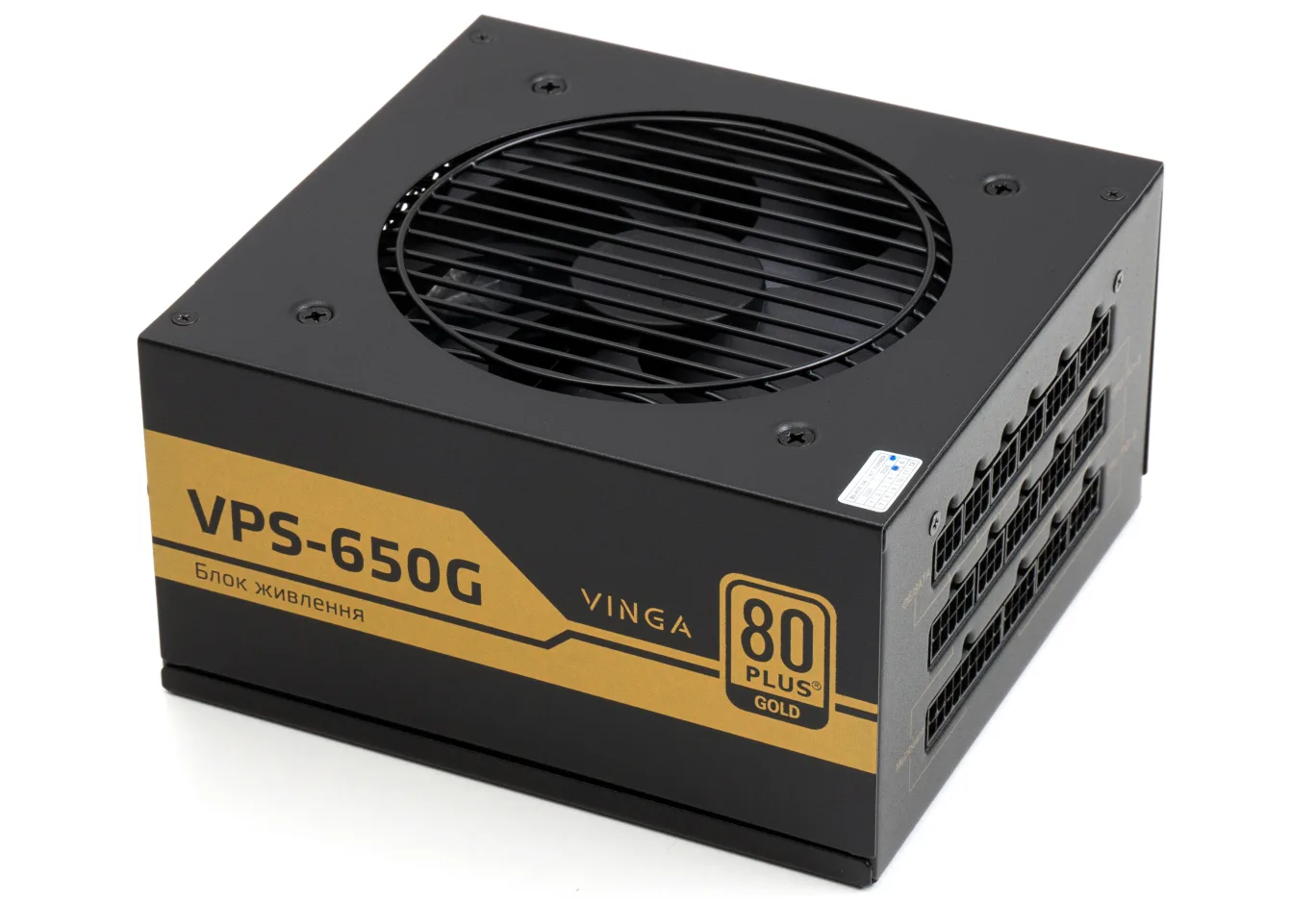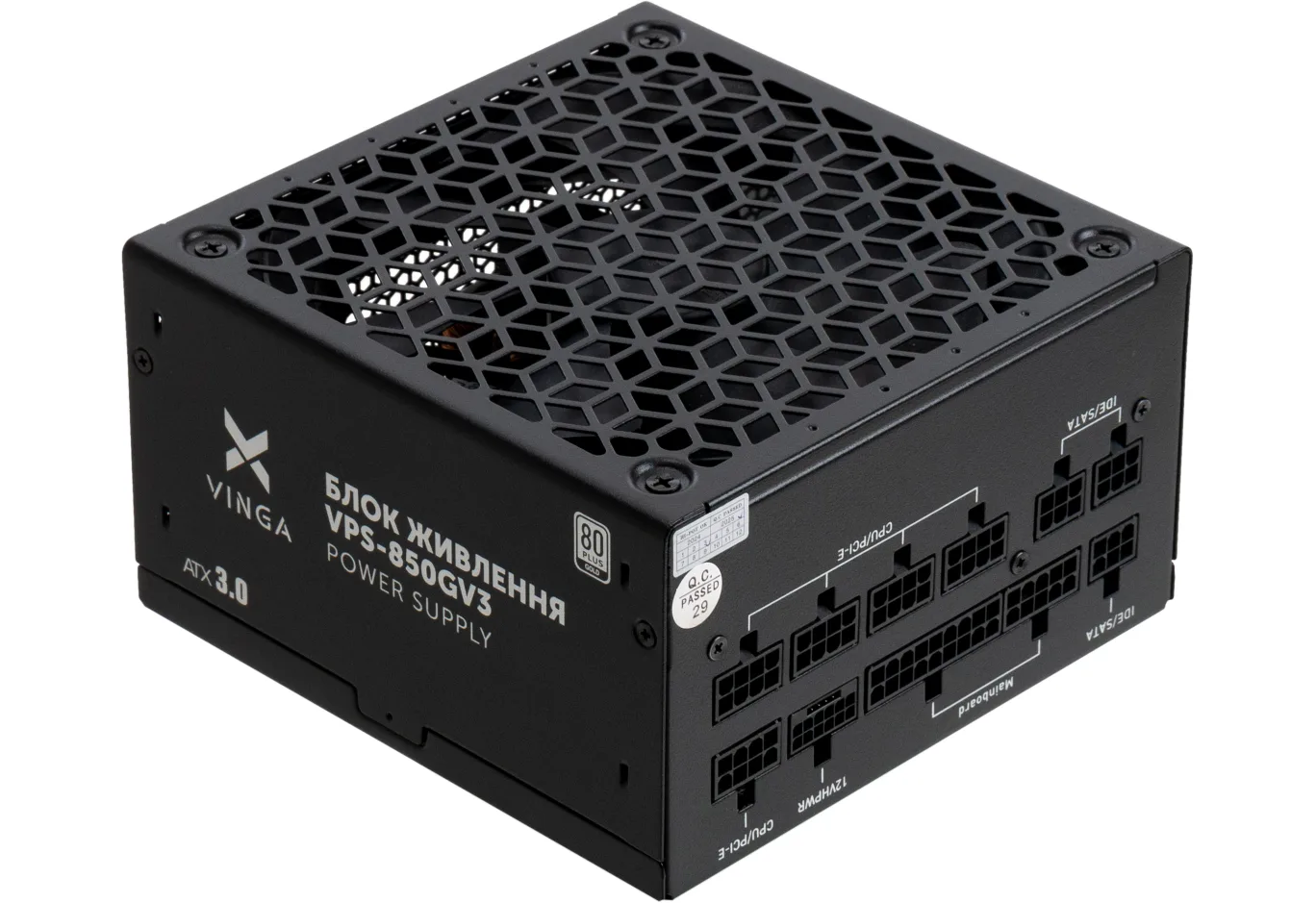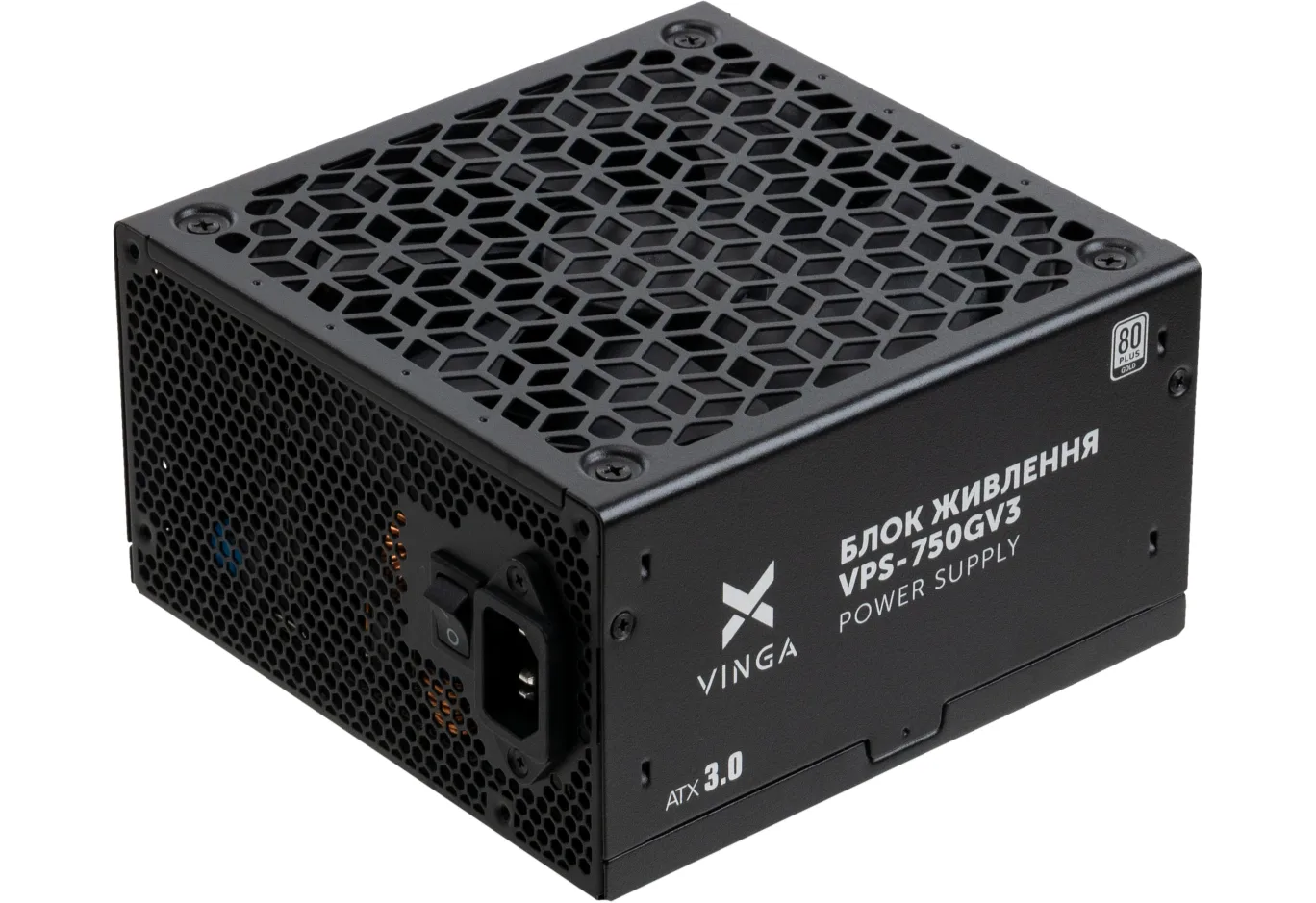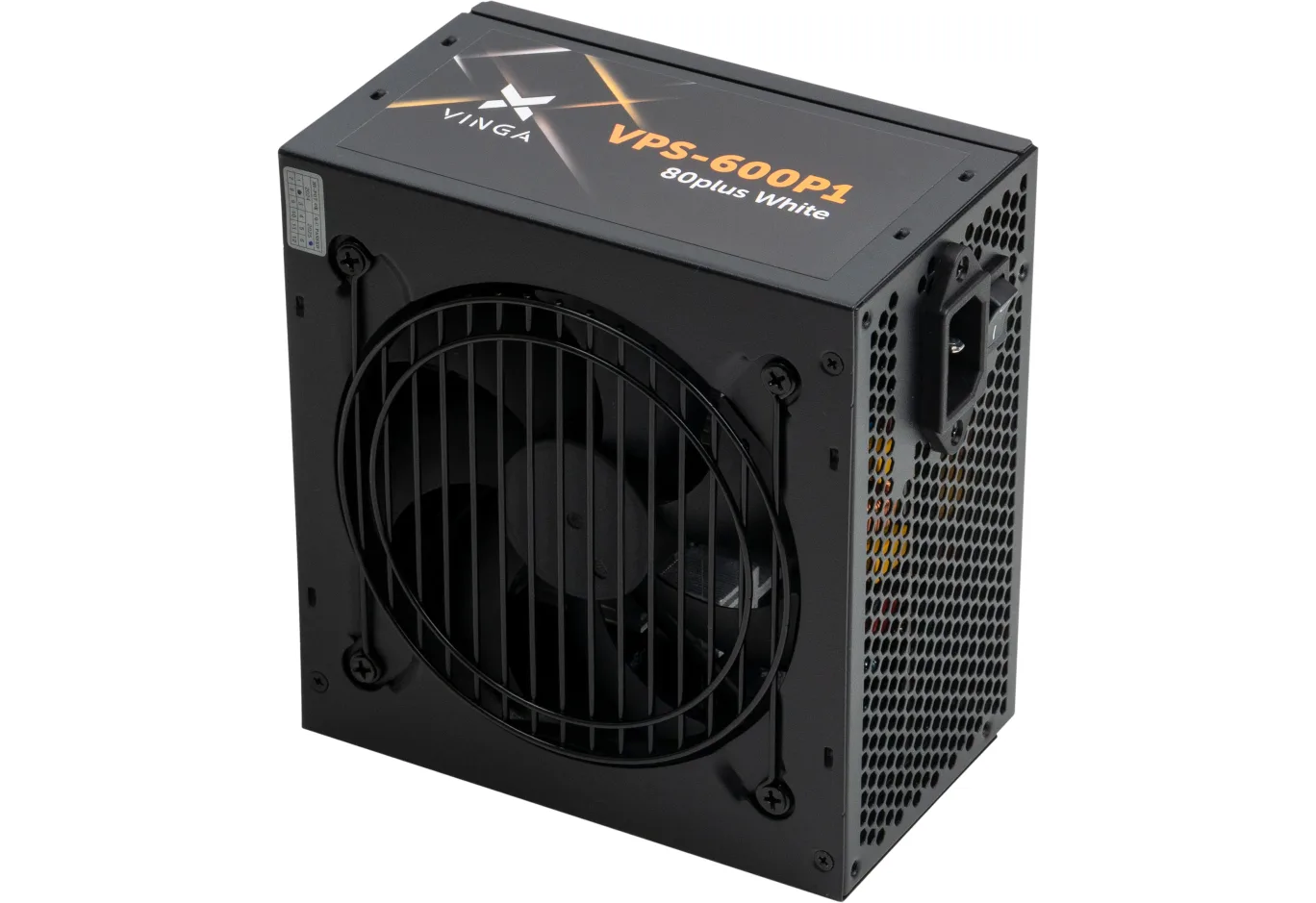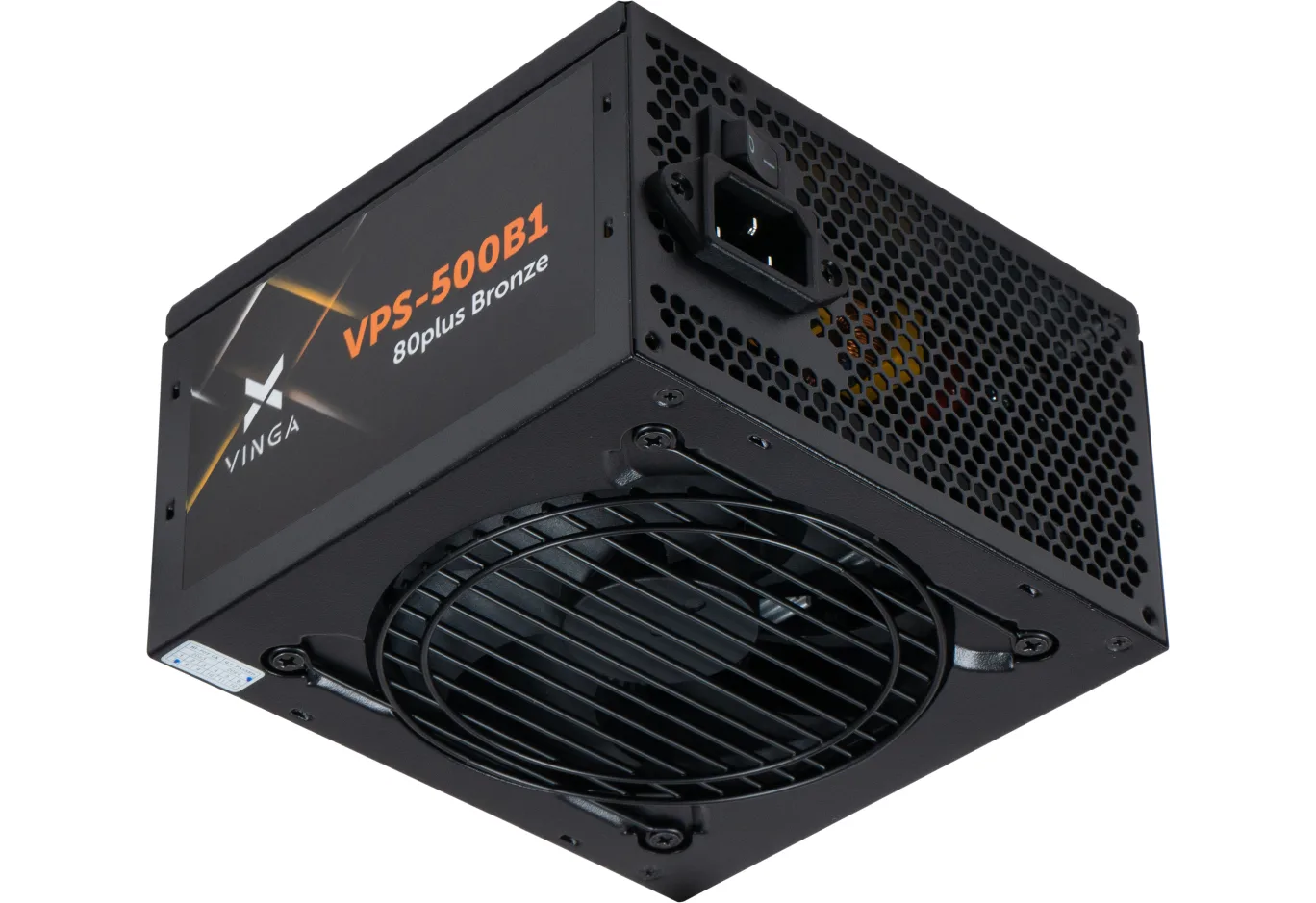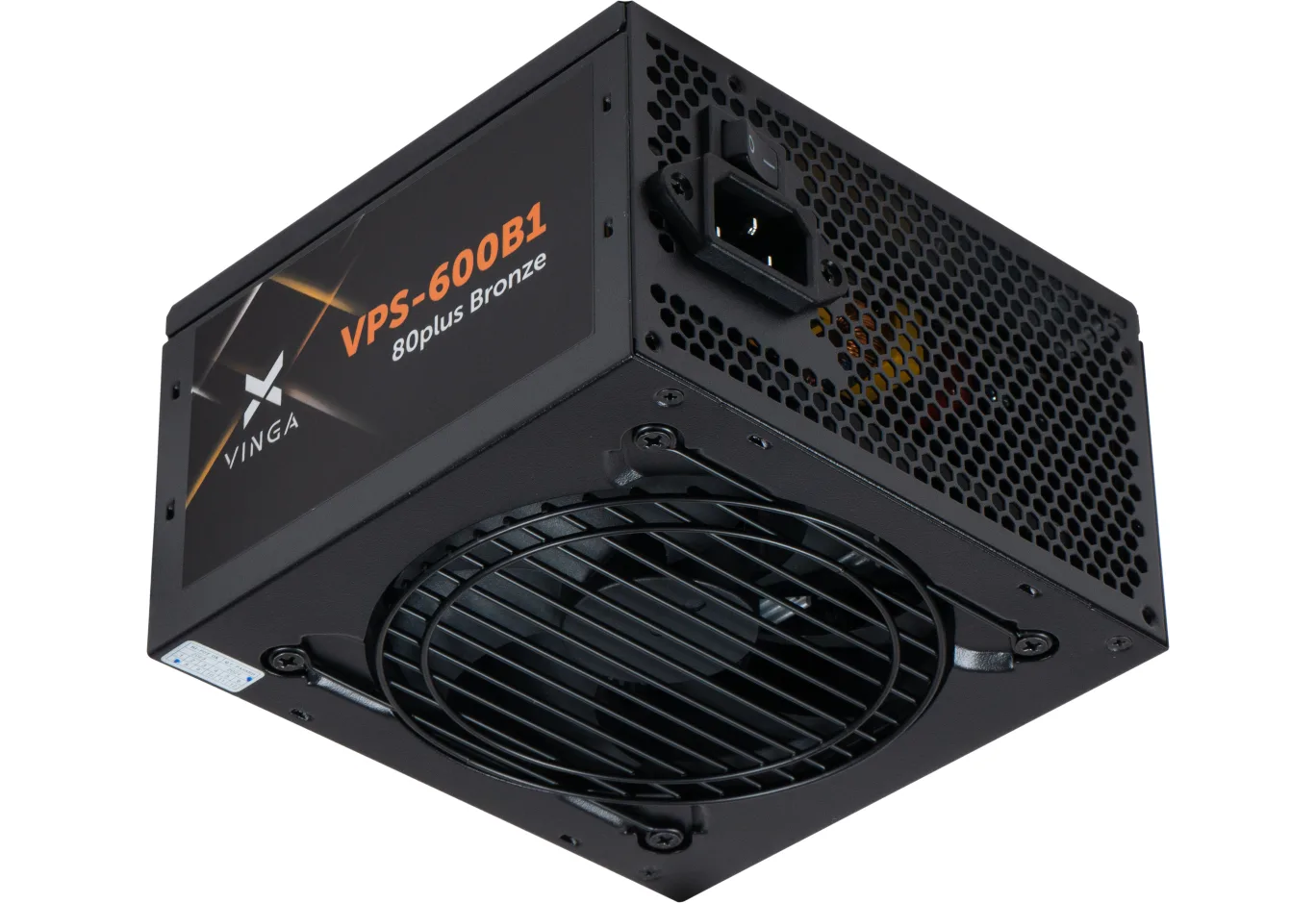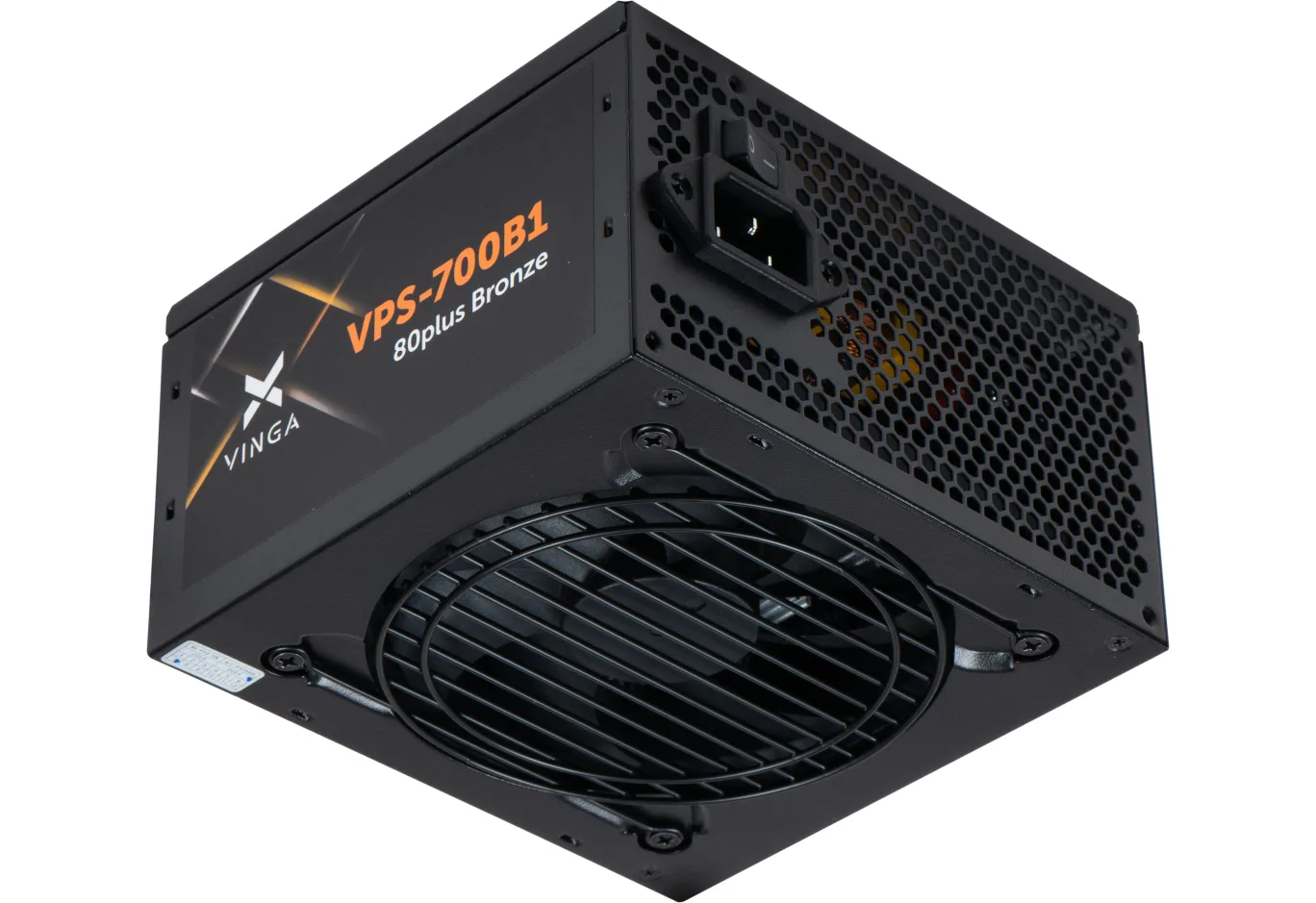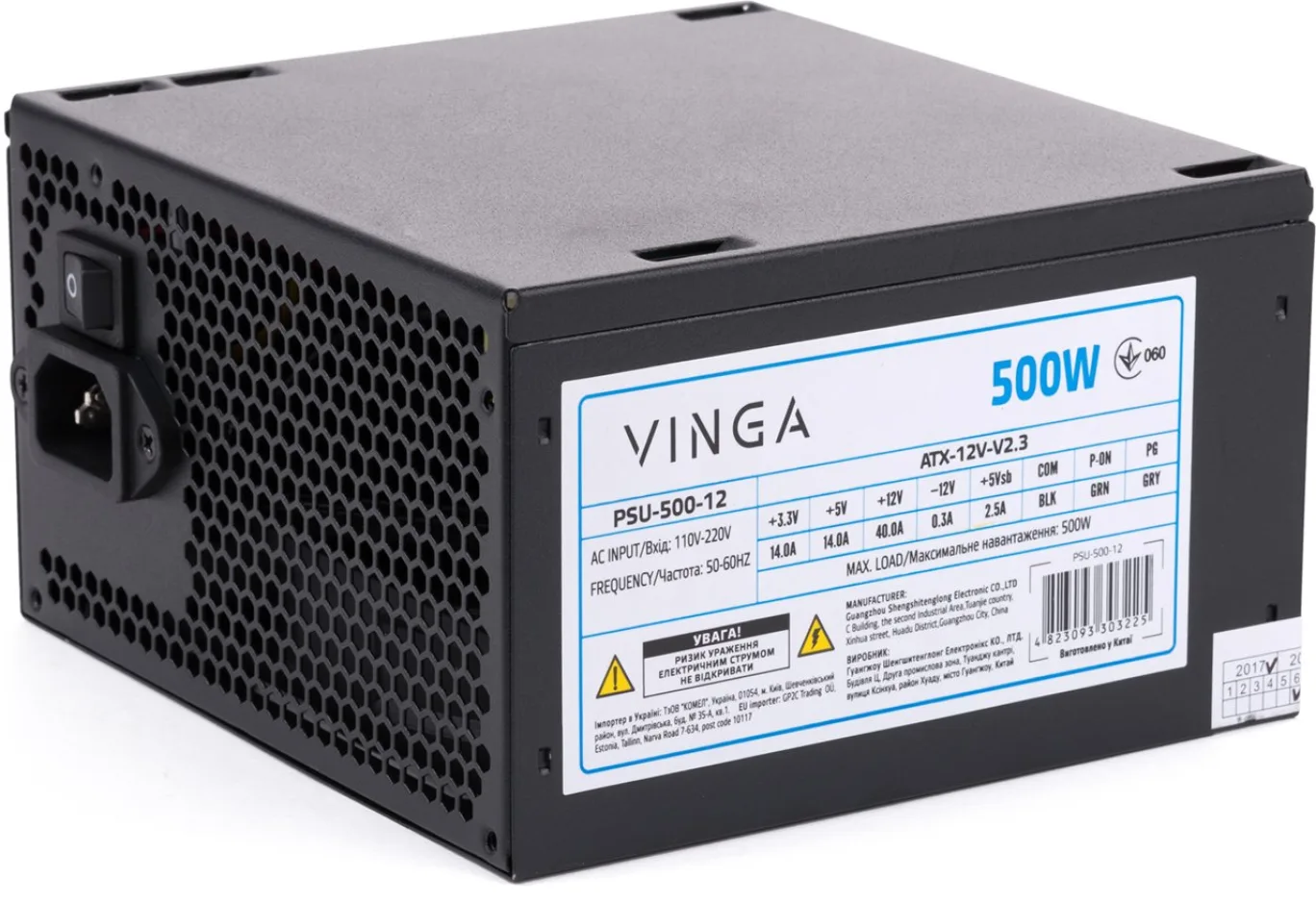





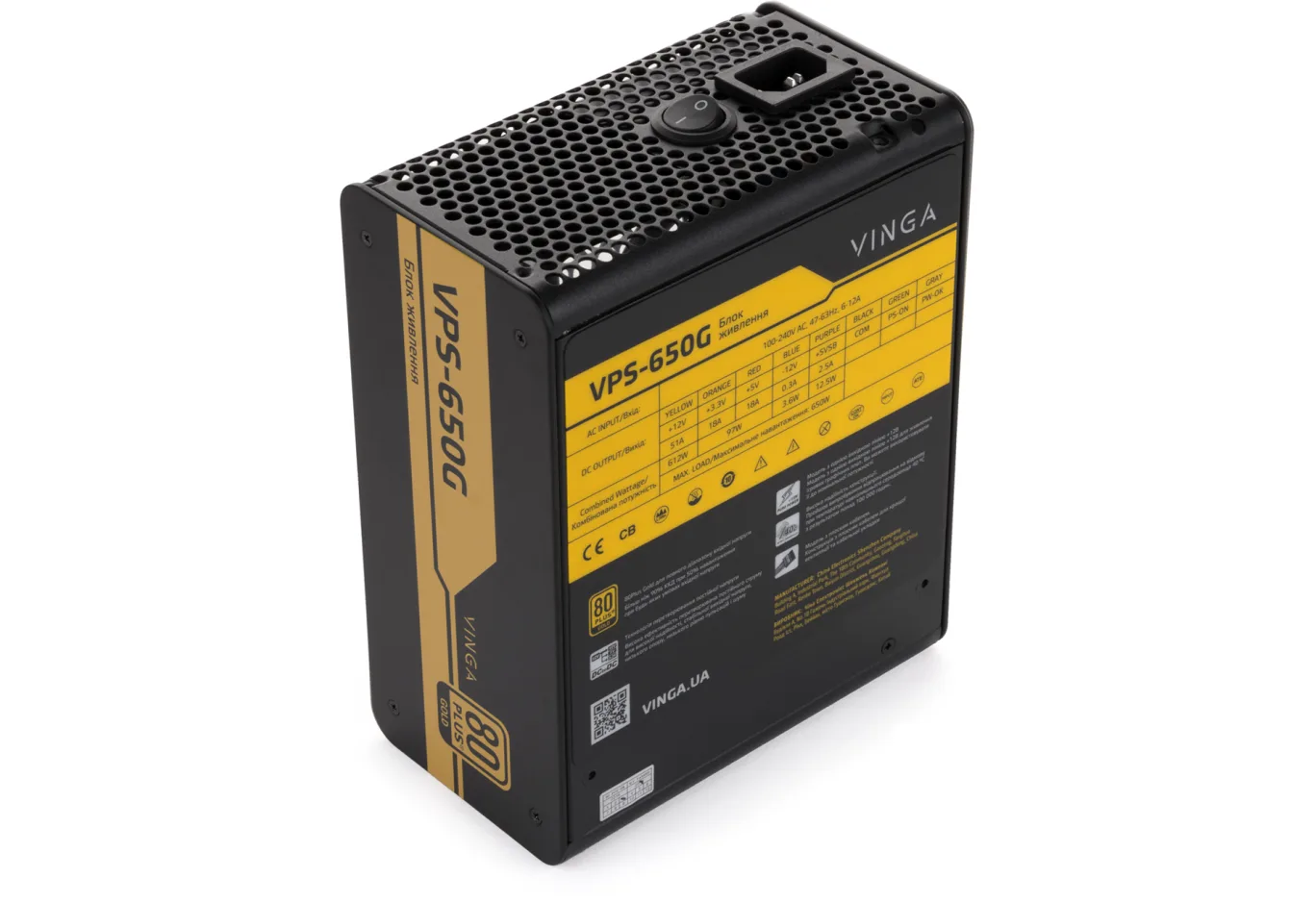

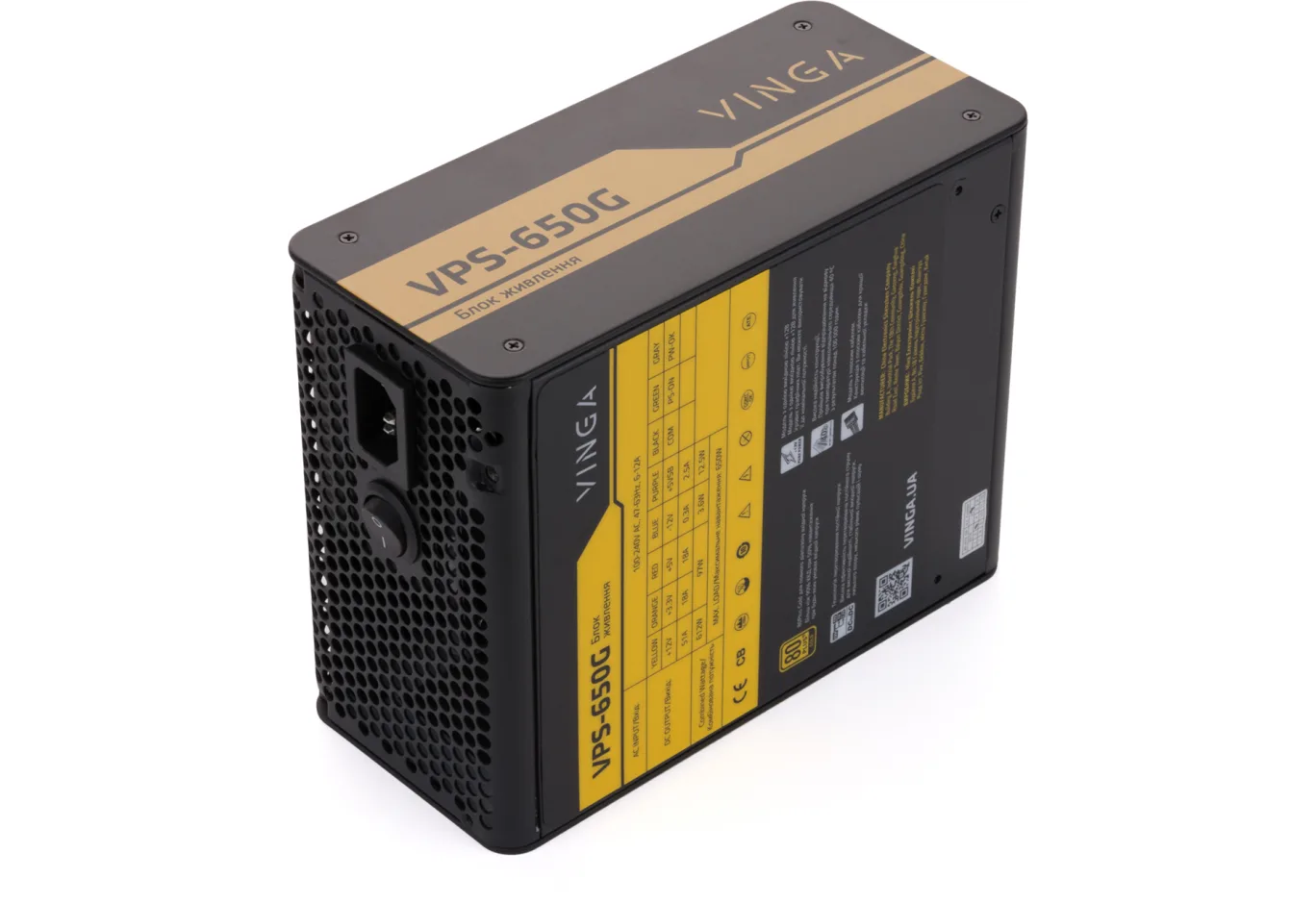
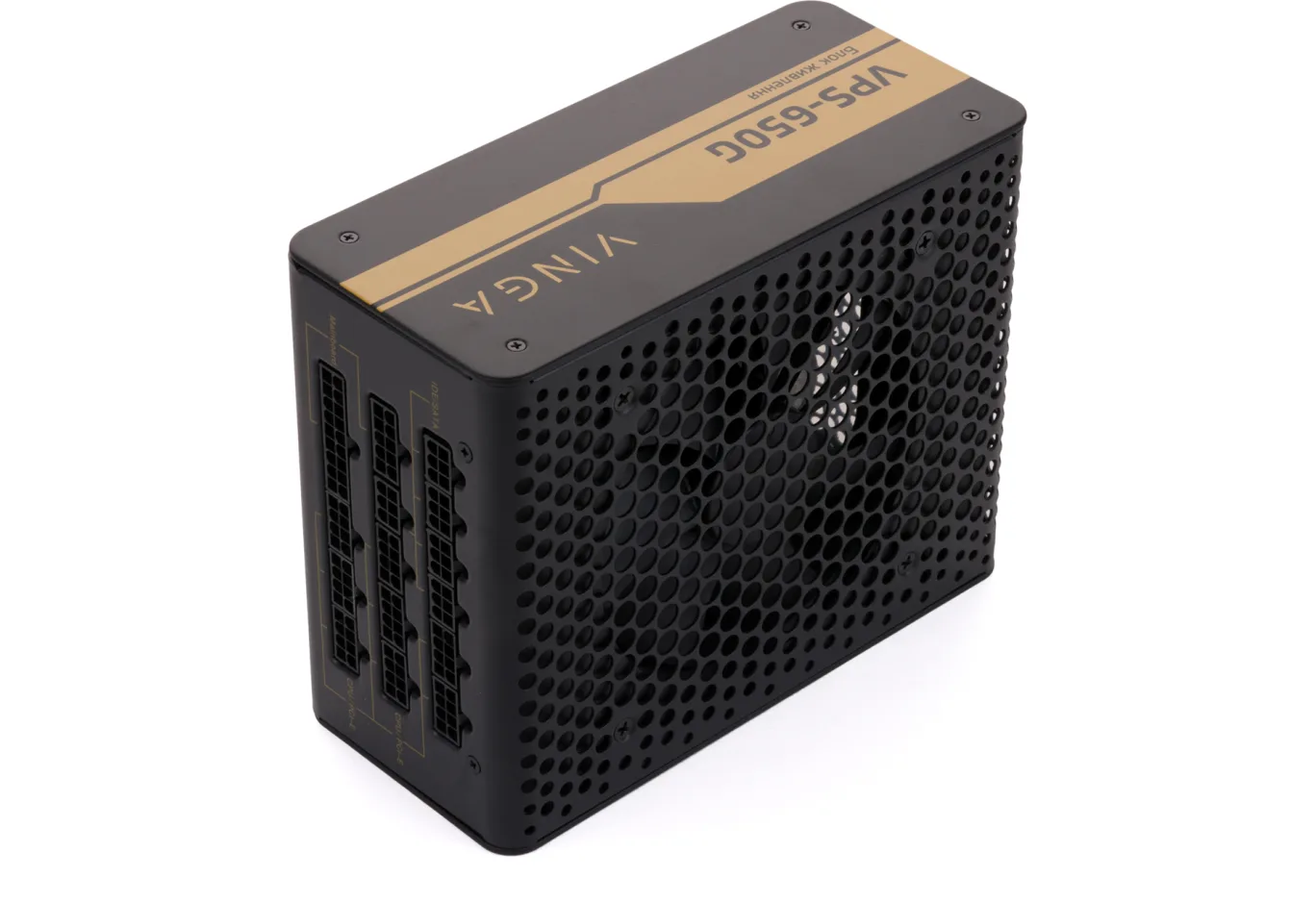
Power supply Vinga 650W (VPS-650G)
If in the computer case segment the Vinga brand is probably associated with affordable solutions among our readers, the situation is different with power supplies. The first to be tested was the "golden" Vinga VPS-550G power supply with a price tag of less than $75. The second to reach us was a bird of no less high flight - the Vinga VPS-650G power supply.
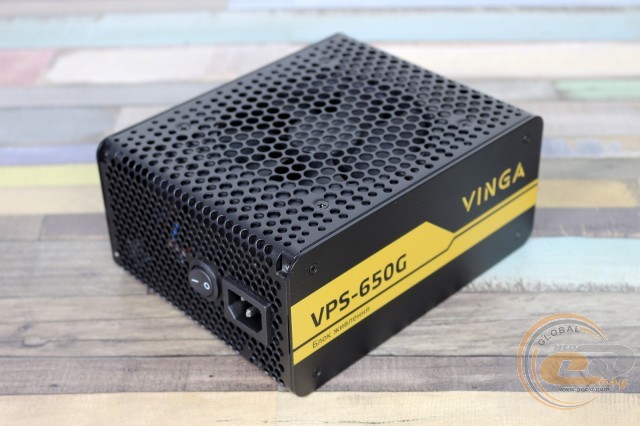
Priced around $85, it is the most affordable 650-watt unit with an 80 PLUS Gold certificate on the domestic market. However, compared to the 550W modification, the changes are much more radical than just increasing the power and changing one digit in the name. What options can you get for additional investment? You'll find out soon.
Specification
|
Model |
Vinga VPS-650G |
|
|
Type |
ATX12V |
|
|
Nominal Power, W |
650 |
|
|
Power on 12V Channel, W |
624 |
|
|
Power on +3.3V and +5V Lines, W |
100 |
|
|
Number of +12V Lines |
1 |
|
|
Outputs, A |
+3.3V |
24 |
|
+5V |
15 |
|
|
+12V |
52 |
|
|
-12V |
0.3 |
|
|
+5Vsb (standby power line) |
3 |
|
|
Input Voltage, V |
100 − 240 |
|
|
Frequency, Hz |
47 − 63 |
|
|
Input Current, A |
6 − 12 |
|
|
Efficiency, % |
>90 |
|
|
80 PLUS Certified |
Gold |
|
|
Power Factor Correction Method |
Active |
|
|
Power Factor (PF), % |
>90 |
|
|
PCIe Connectors |
4 (6+2-pin) |
|
|
Modular |
Yes |
|
|
Fan Dimensions, mm |
120 x 120 x 25 |
|
|
Fan Bearing Type |
Hydrodynamic |
|
|
Protections |
OPP, OVP, SCP |
|
|
Dimensions, mm |
190 x 152 x 86 |
|
|
Warranty, years |
3 |
|
|
Manufacturer's Website |
||
Packaging and Delivery Set
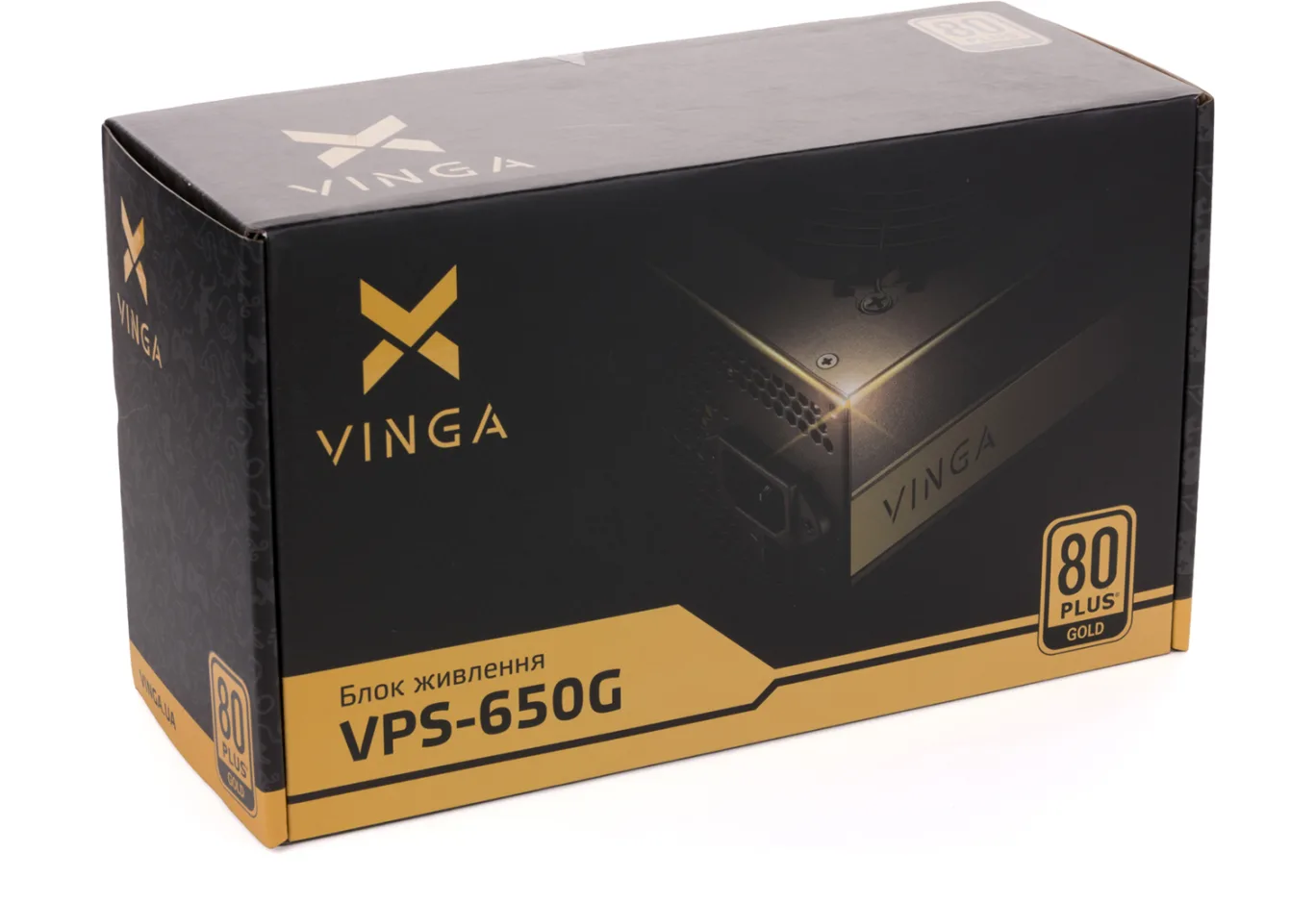
A specification table would not have hurt on the nice packaging. However, the manufacturer decided to stick with defining the main advantages of the novelty and listing the available connectors. There is also an image of the edge of the power supply, but during the photo session, some other model with a more traditional design was clearly used.
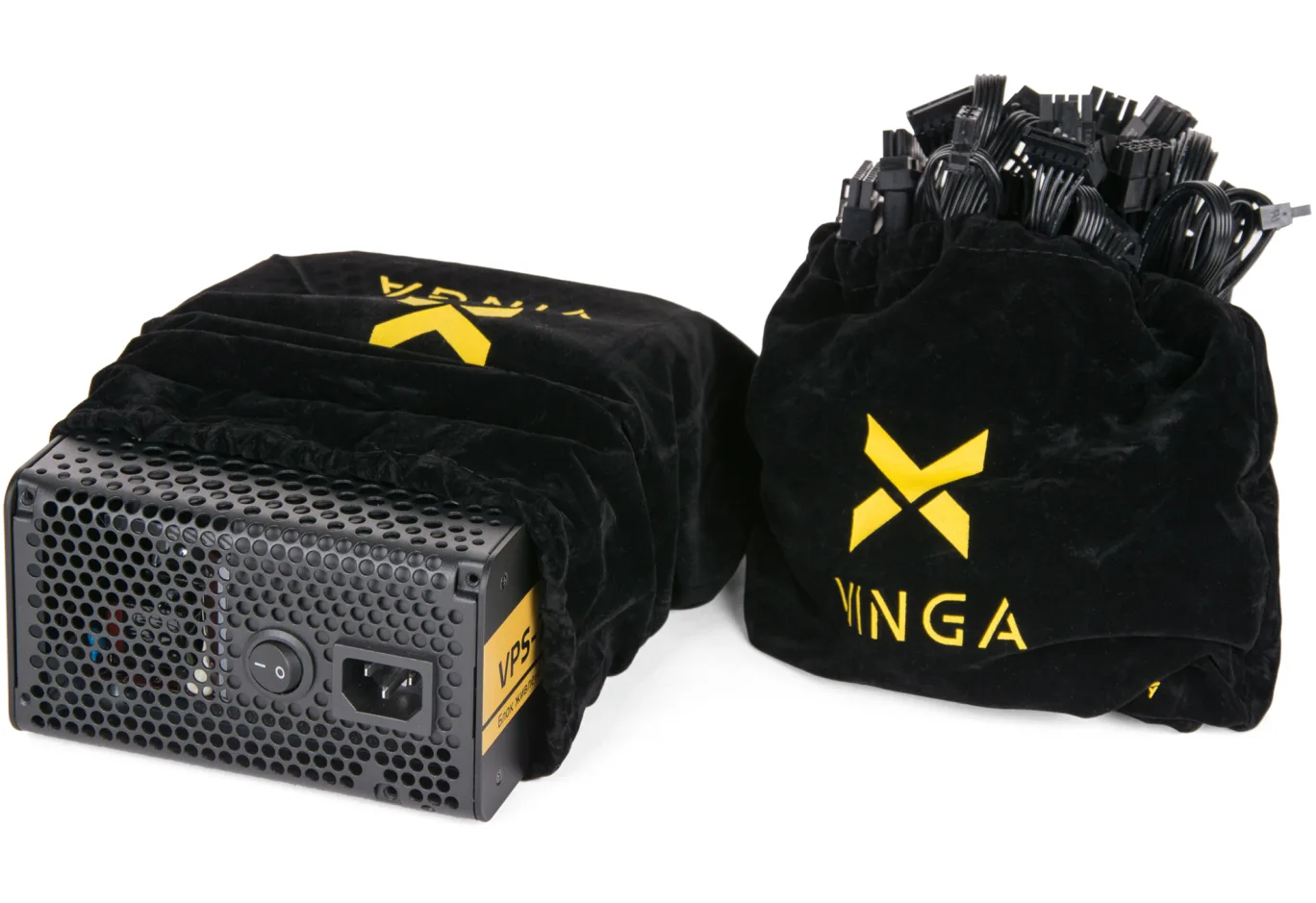
Inside the box, we found two pouches with branded logos, mounting screws with shaped heads (6 pcs, with a spare), and a power cable. One of the pouches contains the power supply itself, and the other is used for transporting and storing power cables.
Appearance
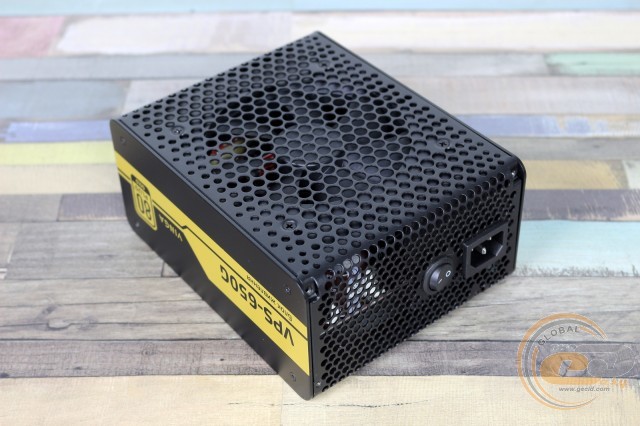
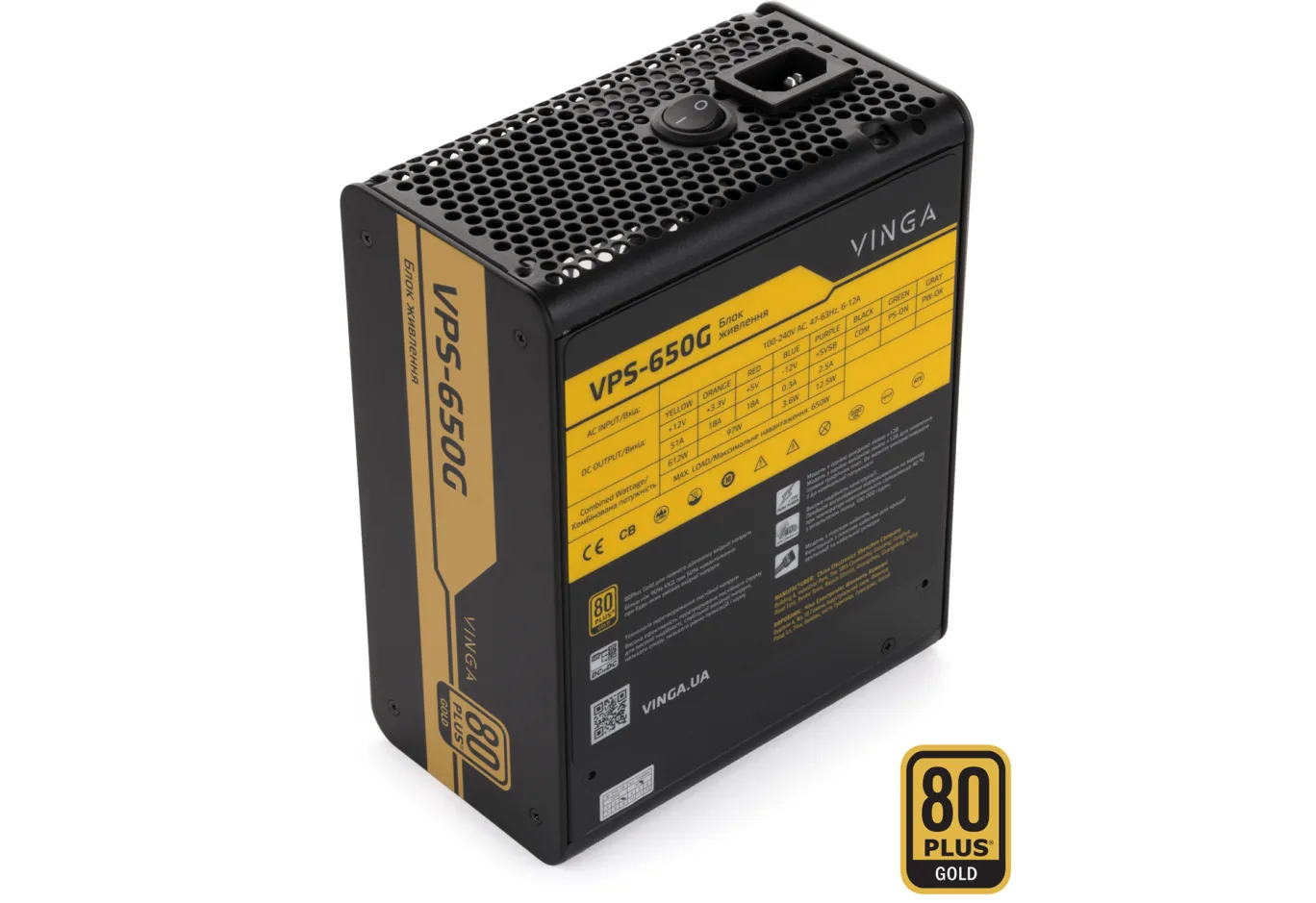
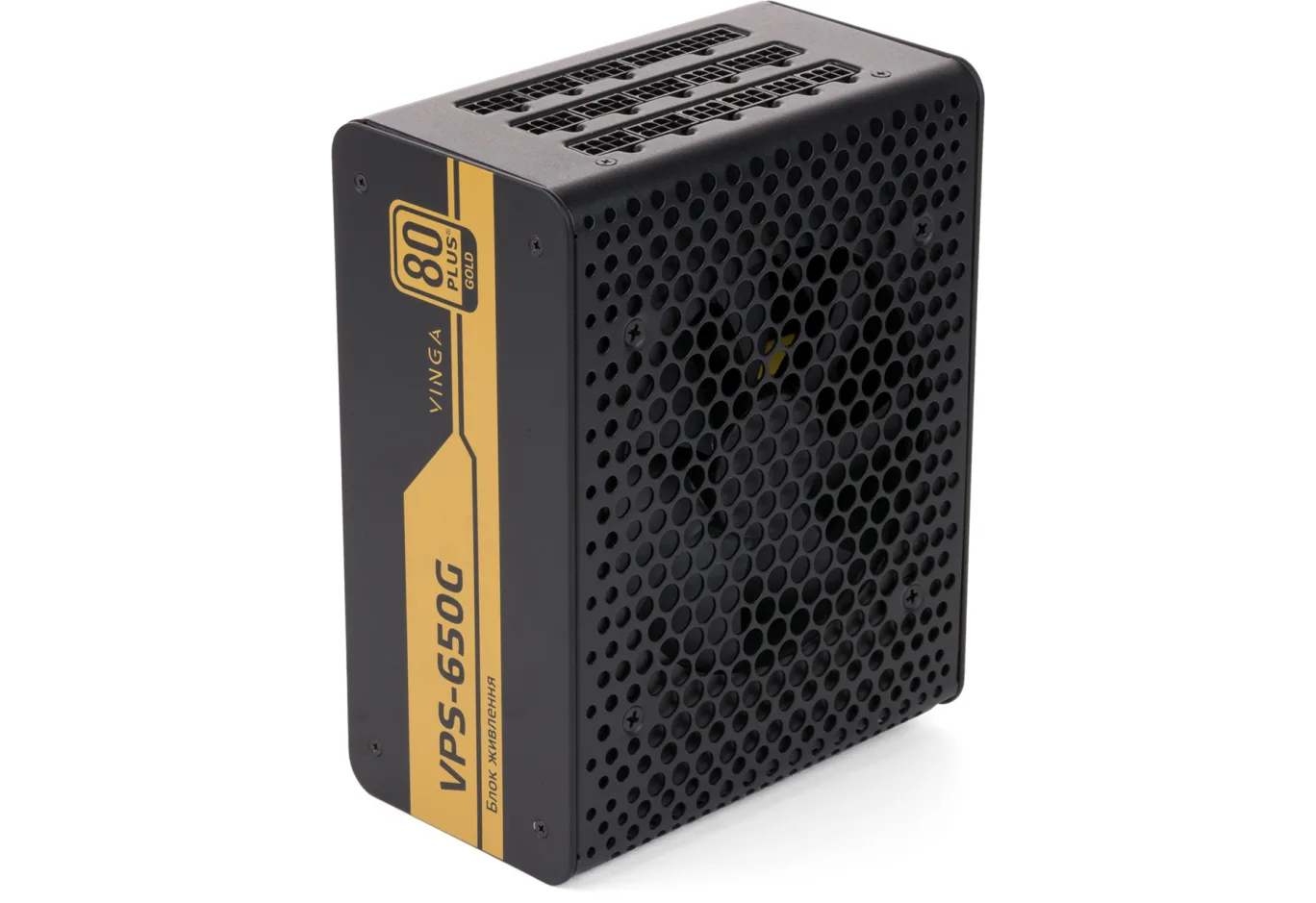
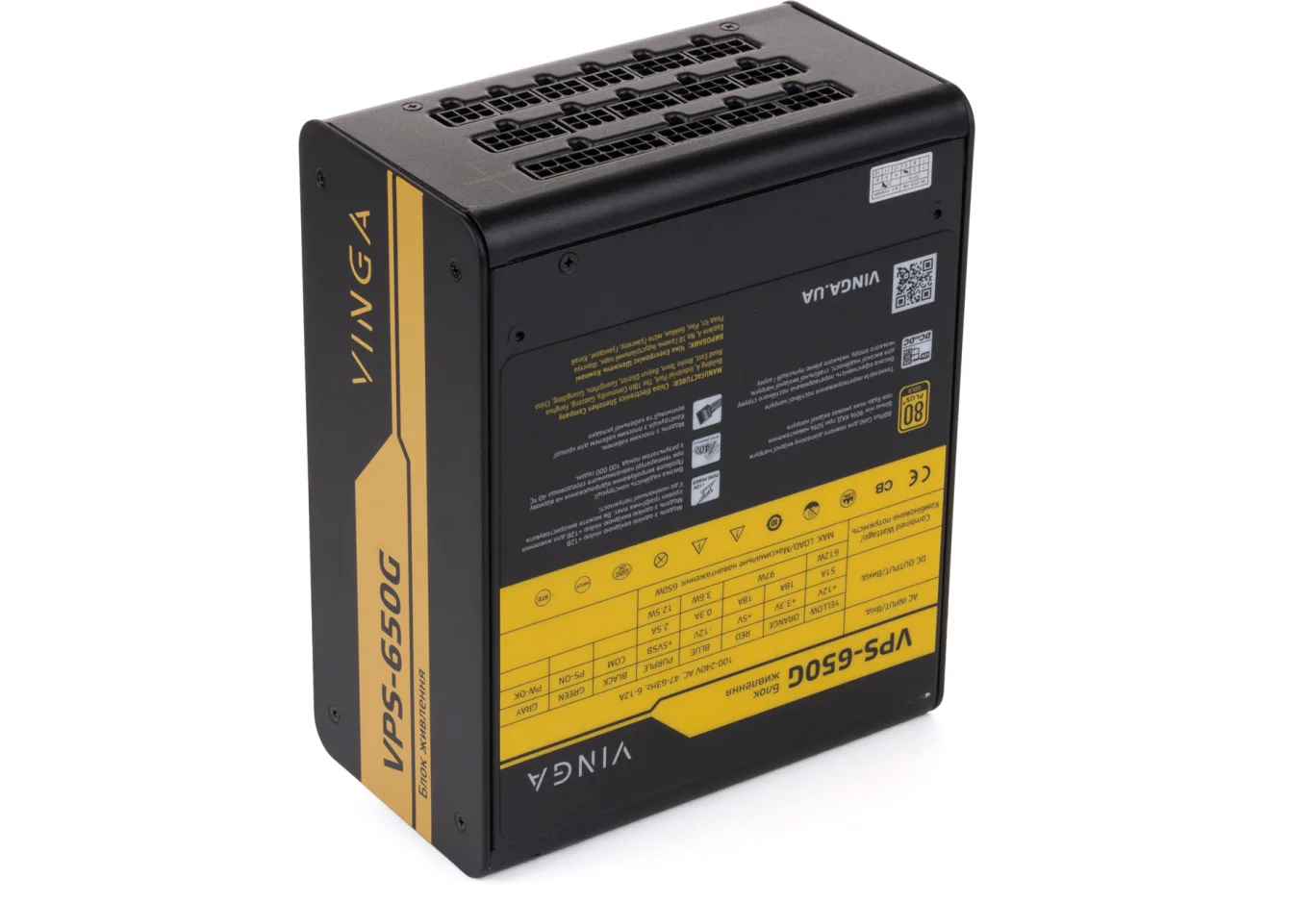
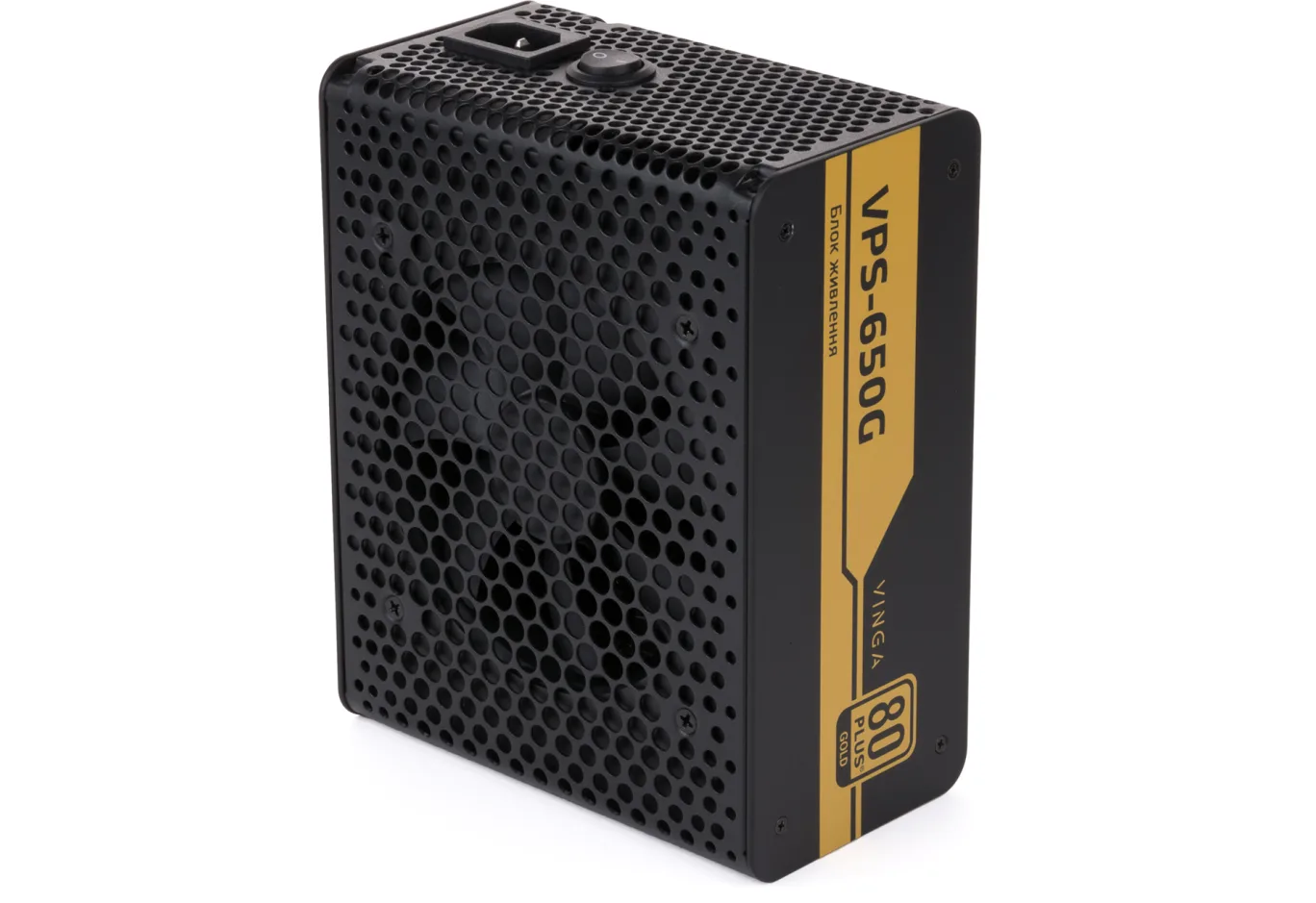
The unique streamlined appearance of the Vinga VPS-G power supplies immediately catches the eye. However, inside modern cases, it is unlikely to please the owner, as in many cases the sources are hidden as deep as possible. Such an original design resulted in rather large dimensions of the device, which means it will not fit into some even modern cases (for example, the Vinga Polaris). A somewhat dubious price for beauty...
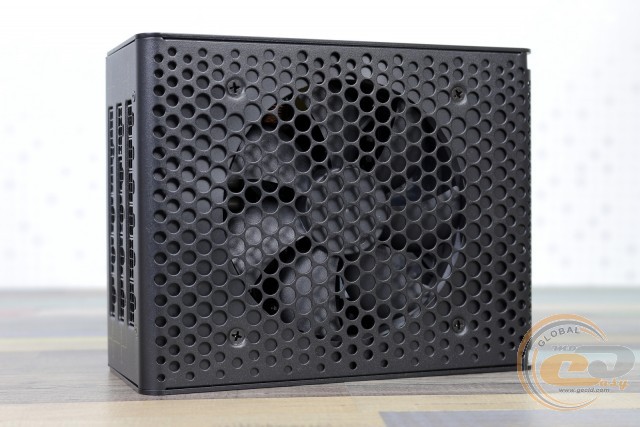
Despite the significant size, inside the novelty operates a 120 mm fan that draws in cool air through original round holes.
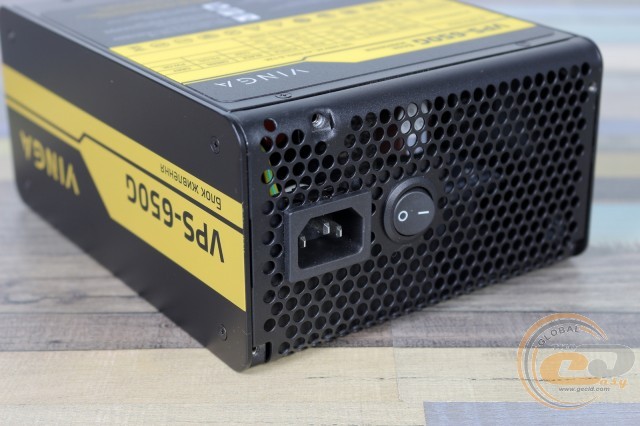
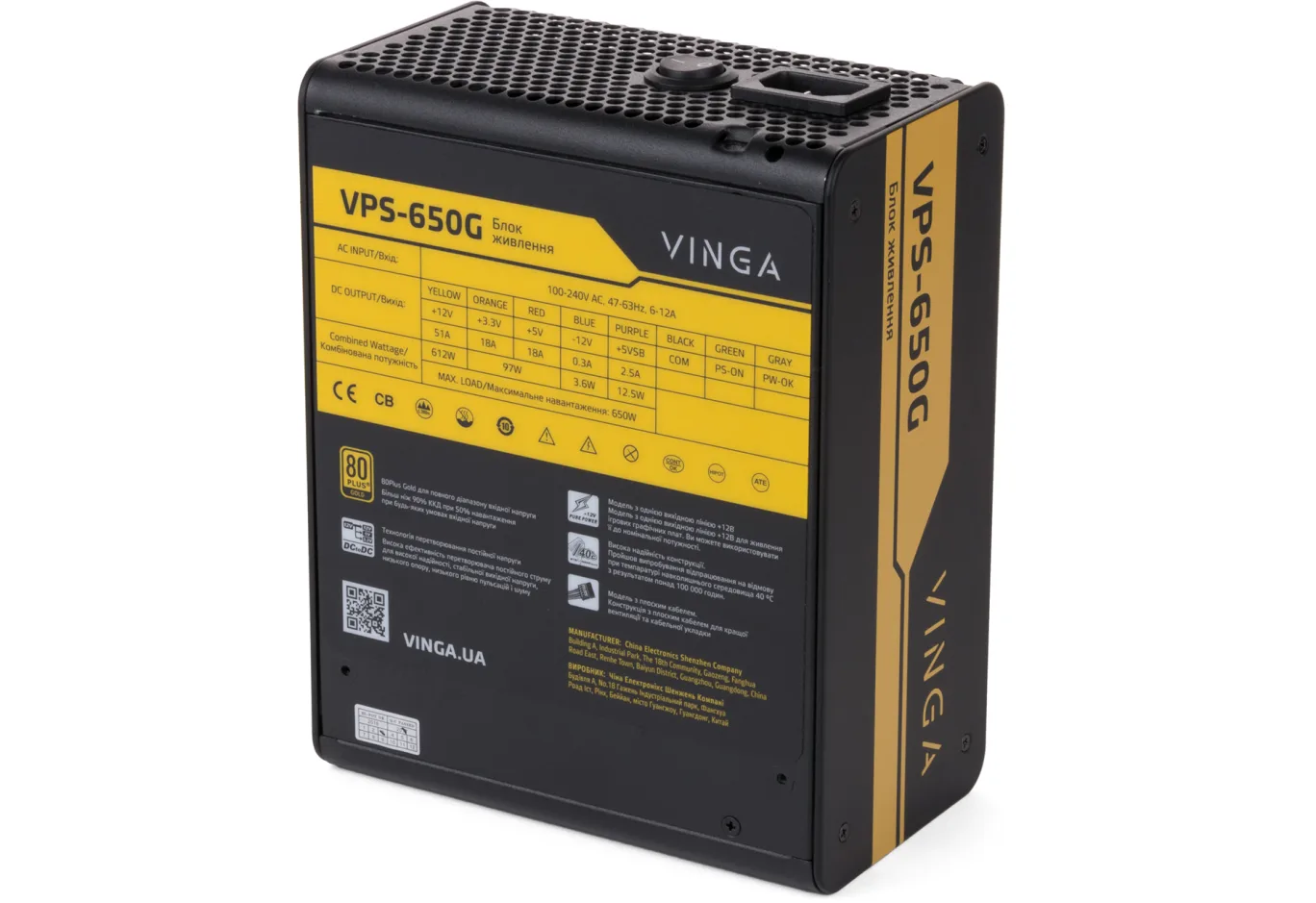
On the rear side, smaller cutouts are used for expelling warm air. The usual input power connector and round power button, which harmonizes with the overall design, are in place.
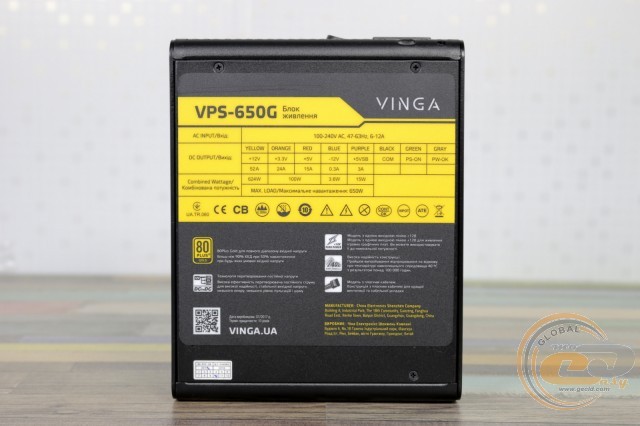
The manufacturer decided to adorn the sticker with a list of the block's key features, but most importantly, it includes a table with electrical characteristics. A single 12-volt rail at 624 W (52 A), which equals 96% of the source's nominal power, allows for even distribution of total power. Hundreds of watts for the smaller +3.3V and +5V rails should also be quite sufficient.
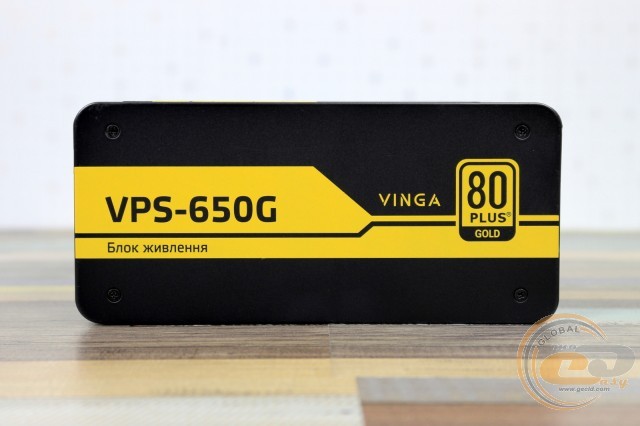
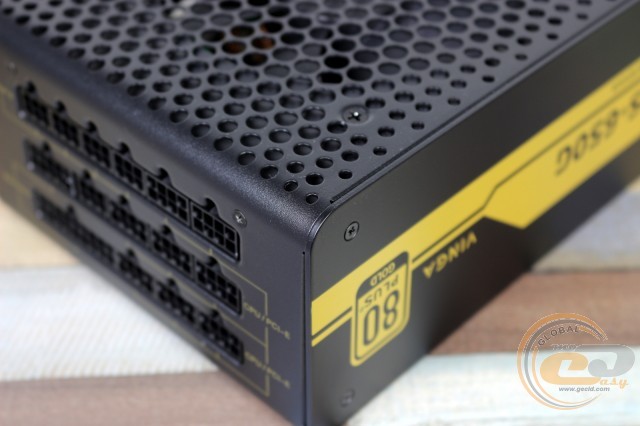
Unlike the vast majority of sources with a removable bottom panel, here you will also need to unscrew the screws on the sides to access the interior.
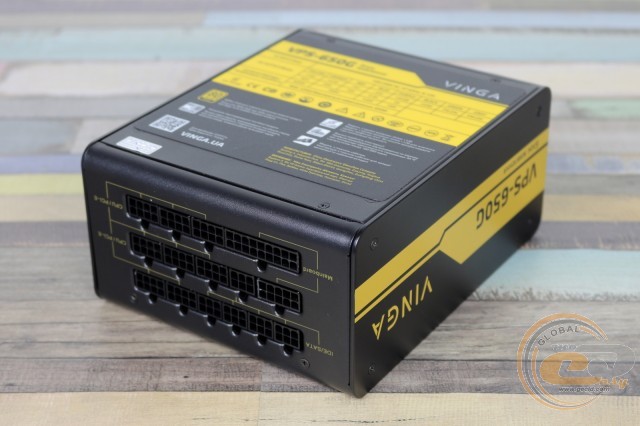
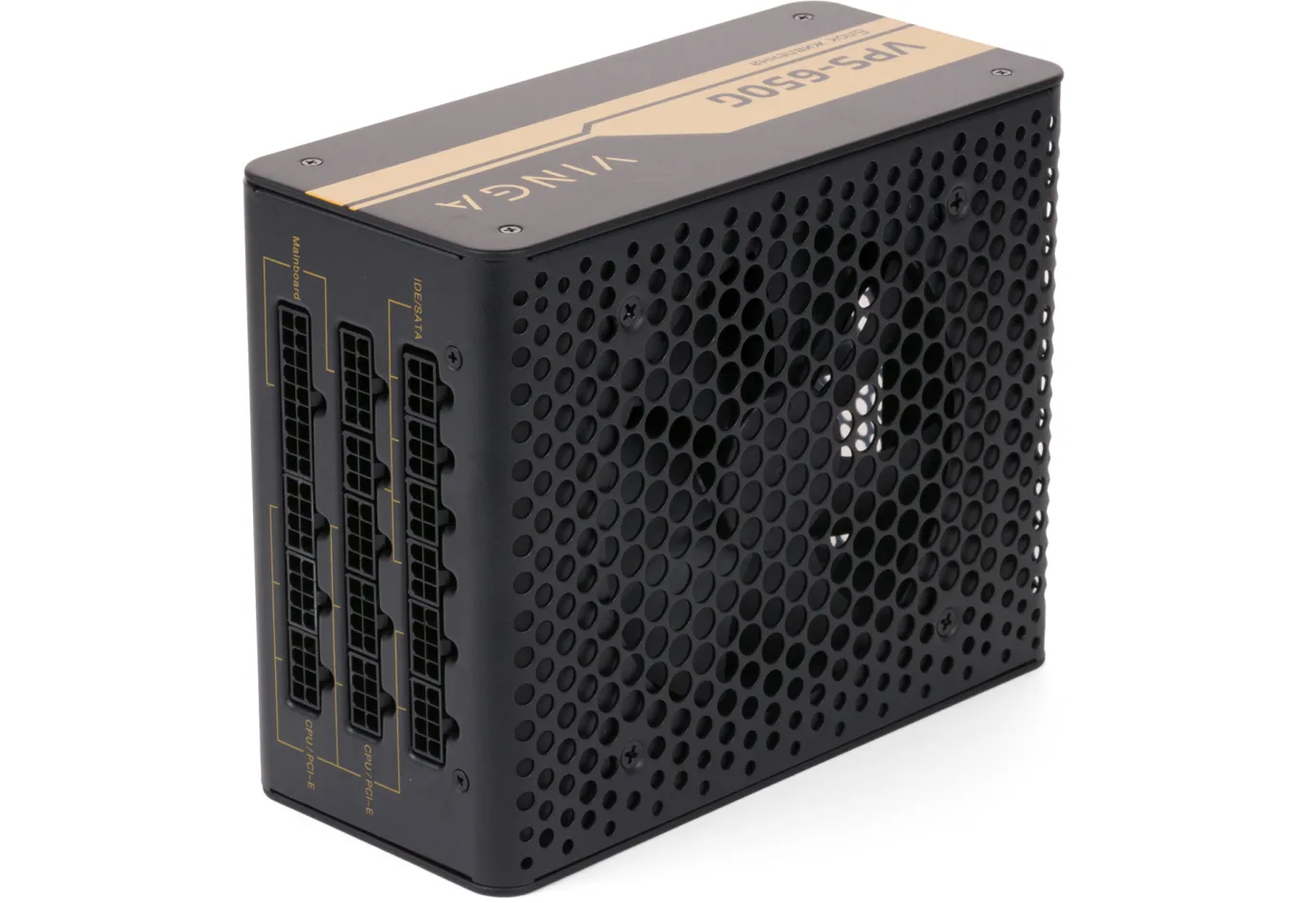
The Vinga VPS-650G power supply is equipped with a modular cable connection system. Recall, in the 550-watt model, they all come directly out of the case. The information on available connectors and cable lengths almost exactly matches the information on the box, which is certainly pleasing.
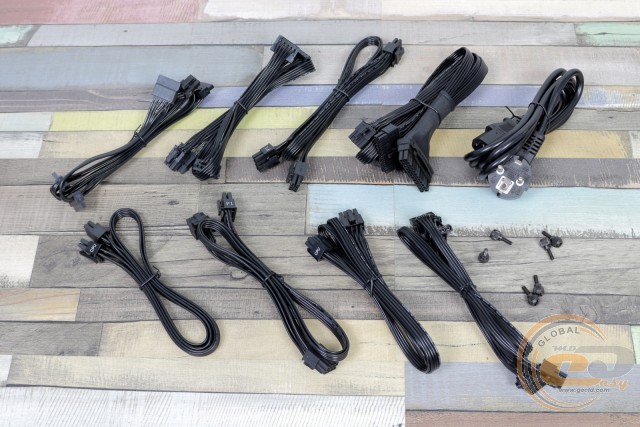
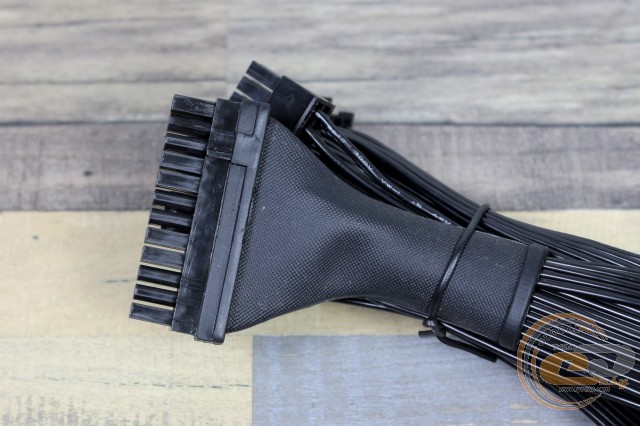
All cables (including the 20+4-pin ATX) are made in the form of easy-to-lay ribbons, and the wire gauge is chosen with a thickness reserve - 18 AWG (1.02 mm in diameter with a cross-sectional area of 0.82 mm2). Their length will easily help perform hidden laying.
The main connectors are represented by a 20+4-pin ATX and a pair of 4+4-pin ATX12V. This is just right for high-performance platforms AMD Socket TR4 and Intel Socket LGA2066, where a single 4+4-pin connector is usually not enough.
For fans of powerful gaming or mining, there are four 6+2-pin PCIe cables, and to meet the needs when connecting peripherals, eight SATA (on two separate wires) and three PATA with "grandfather" FDD will help.
The full configuration of the cable system looks as follows:
|
Connector Types |
Quantity |
Wire length to connector(s), cm |
|
20+4-pin ATX power connector |
1 |
57 |
|
4+4-pin ATX12V power connector |
2 |
60 |
|
two 6+2-pin PCIe connectors |
2 |
50-65 |
|
four SATA connectors |
2 |
50-65-80-95 |
|
PATA connectors + one FDD |
1 |
50-65-80-95 |
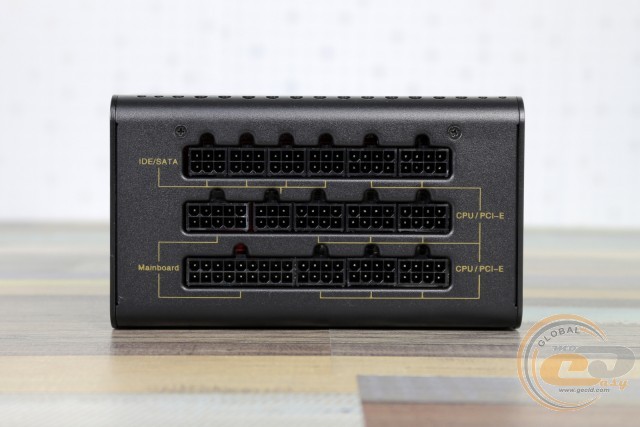
All connectors on the case and connectors on the wires are carefully labeled, so there should be no difficulties when connecting cables.
Internal Structure
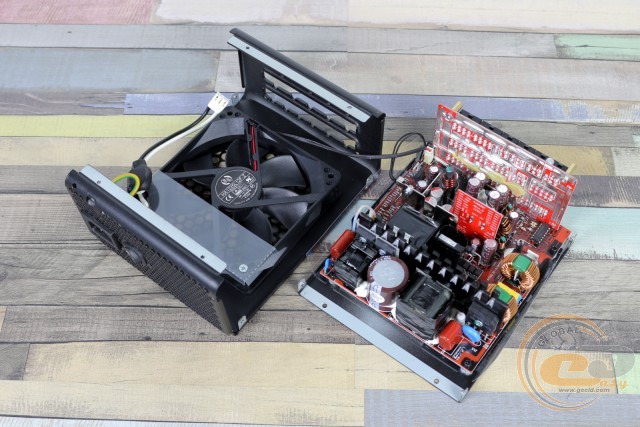
After unscrewing 12 screws (8 on the sides and 4 on the panel with the sticker), the printed circuit board and fan came into view.
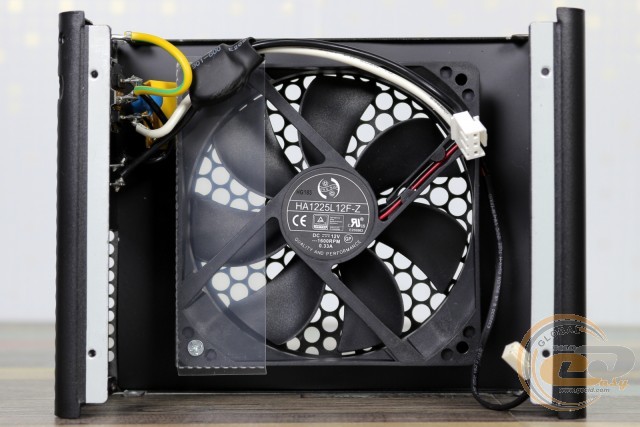
The latter is represented by a 120-mm HONG HUA HA1225L12F-Z solution. The letter "F" in the name indicates the use of a fluid dynamic bearing (FDB). The fan consumes 3.96 W of electricity (12V, 0.33A), with a nominal rotation speed of 1600 RPM. It connects via a removable two-pin connector.
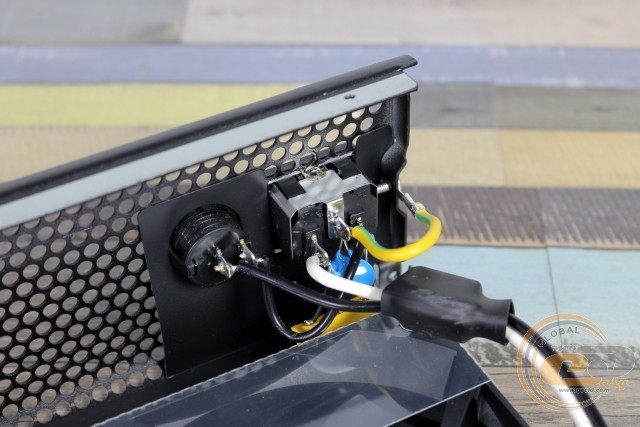
On this same panel is part of the EMI filter, consisting of two Y and one X capacitors. Further, power is supplied to the main printed circuit board through a 3-pin connector, in which only the outer connectors are used.
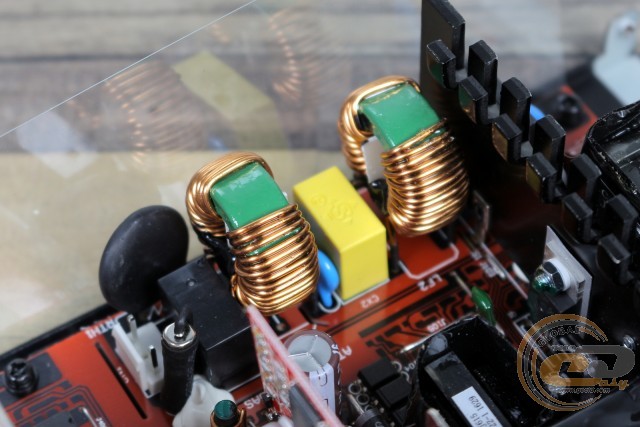
Near the two-pin input interface on the main PCB, other elements of the electromagnetic filter are soldered: a varistor, a pair of coils, two Y and another X capacitor, as well as a fuse.
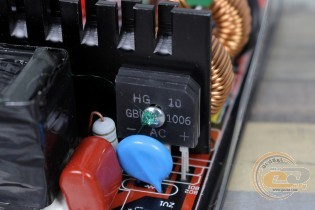
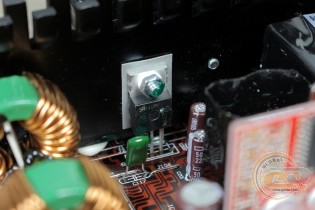
Voltage rectification is performed by a pair of diode assemblies GBU1006, each rated for a current of up to 10 A. They are attached to the main heatsink (though both together, not one on each side), which at the same time dissipates heat from the high-voltage section's power elements. Among the latter are transistors manufactured by the well-known German company - Infineon 5R140P.
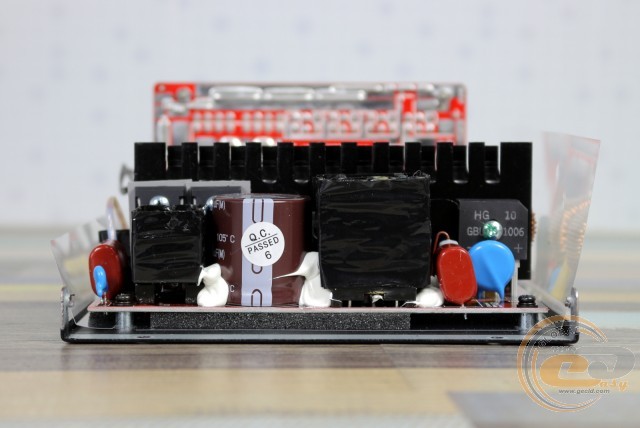
Next, in a plastic case, is the inductor of the active power factor correction (APFC) module.
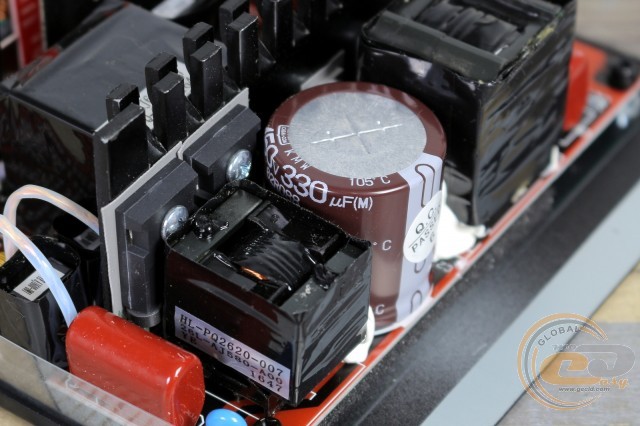
Accompanying it is a "barrel" released by the well-known Japanese company Nippon Chemi-Con (330 µF x 450 V). Although the high quality of the capacitor complements its belonging to the high-temperature series, inside the 650-watt unit, one would like to see a higher capacitance value.
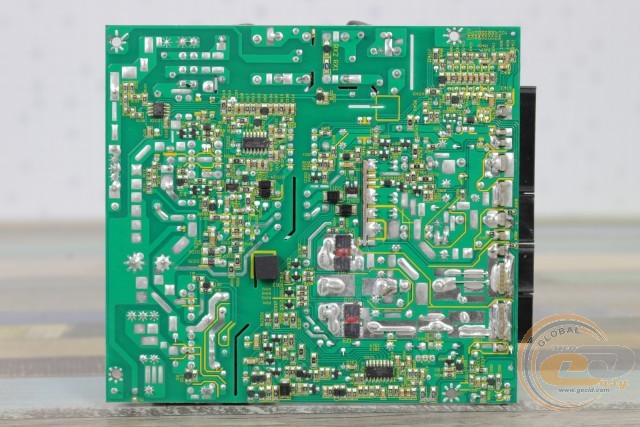
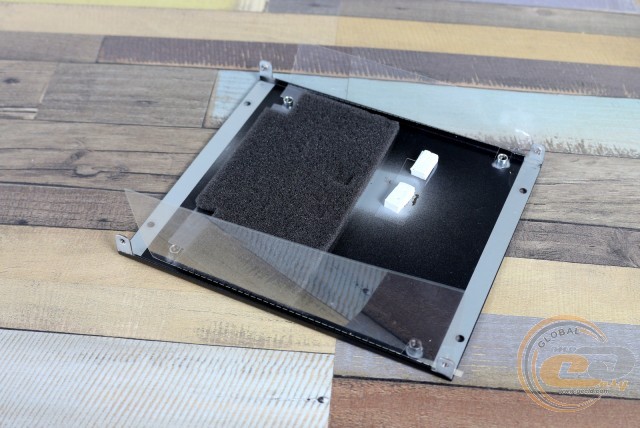
The +5V and +3.3V voltages are derived from the +12V rail using DC-DC converters. Thanks to this, we have fully independent voltage stabilization on different rails.
Here, the synchronous rectifier includes four MOSFETs located on the back of the PCB. Thanks to the presence of thermal pads, the case directly participates in dissipating heat from them.
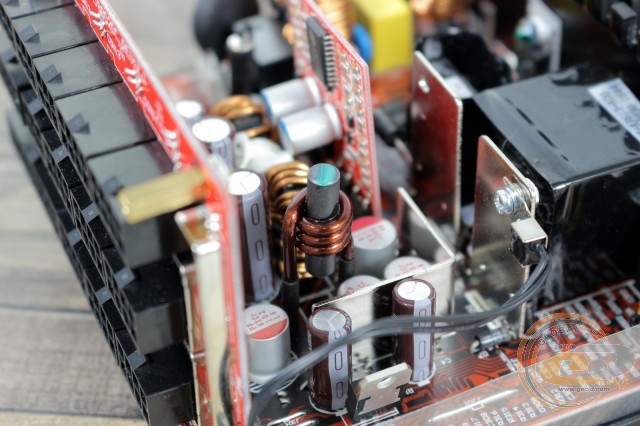
The same role is assigned to the plates located on the front side of the printed circuit board. One of them has a thermal sensor fixed on it, the readings of which determine the fan's rotation speed.
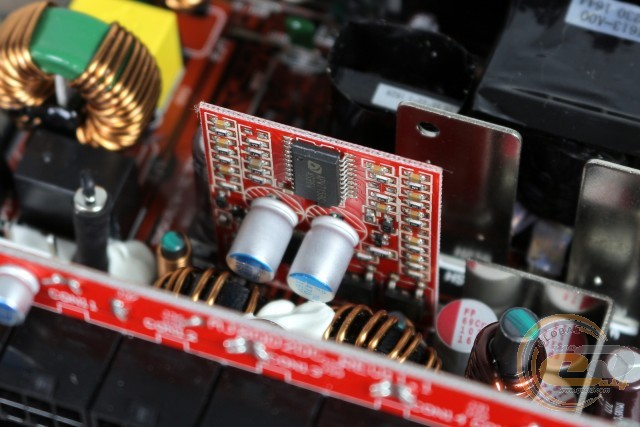
The components of the DC/DC converters are located on a small daughter board and next to it. These include capacitors, coils, and ANPEC APW7159C PWM controllers.
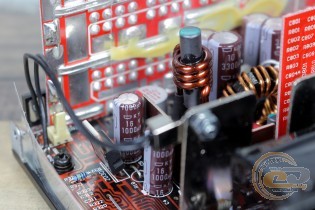
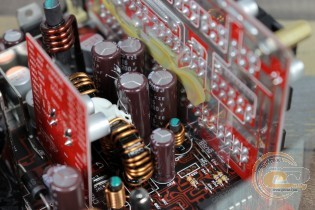
The component base of the voltage filtering unit also pleasantly surprised. It uses electrolytes from the high-temperature series by the same Nippon Chemi-Con, as well as reliable solid-state solutions.
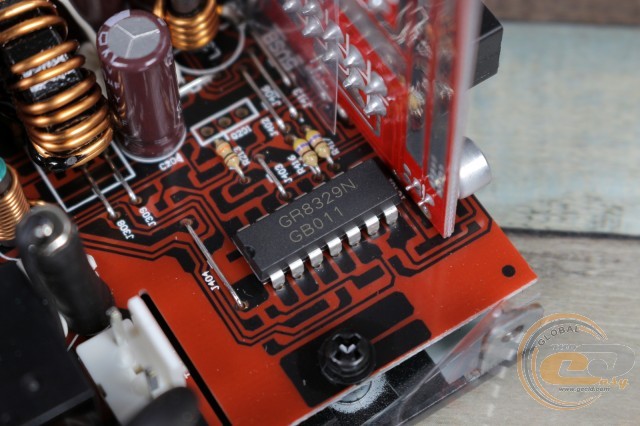
The manufacturer's official website mentions the presence of the following protections:
- overvoltage protection (OVP);
- short circuit protection (SCP);
- overpower protection (OPP).
At the same time, the Grenergy GR8329N supervisor chip is used, which also allows for undervoltage protection (UVP) and overcurrent protection (OCP) for each channel.
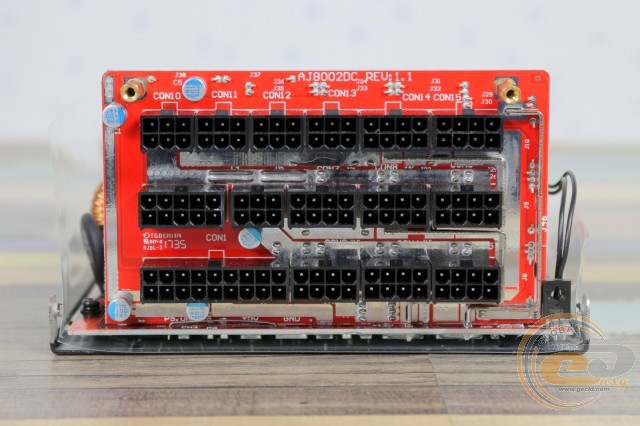
The printed circuit board with output connectors is distinguished by the exclusive use of polymers. As we can see, the manufacturer did not skimp on capacitors, which allows for a long service life of the device as a whole.
Cross-load characteristics
According to the ATX12V standard, the allowable range of voltage deviations for all power lines is ± 5% of their nominal value.
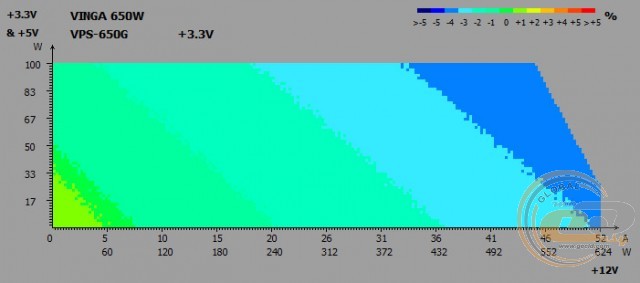
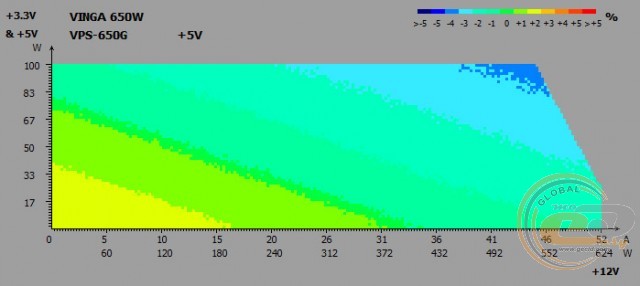
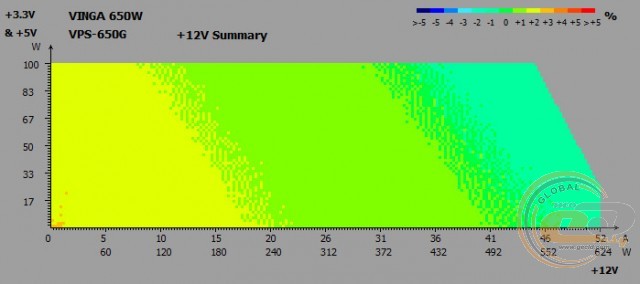
During cross-load tests on the main power lines of the Vinga VPS-650G, the following voltage deviations were recorded:
- +3.3V line: from -4% to +1%;
- +5V line: from -3% to +2%;
- +12V line: from -1% to +2%.
The voltage stabilization unit performs well, as the deviations did not exceed the permissible limits. The use of separate voltage stabilization provided excellent stability for the +12V line, with only slight drops observed under high load.
Noise and ripple across the entire voltage range
For the ATX12V standard, the following permissible norms regarding ripple level (peak-to-peak) are provided:
- +3.3V and +5V lines: 50 mV;
- +12V line: 120 mV.
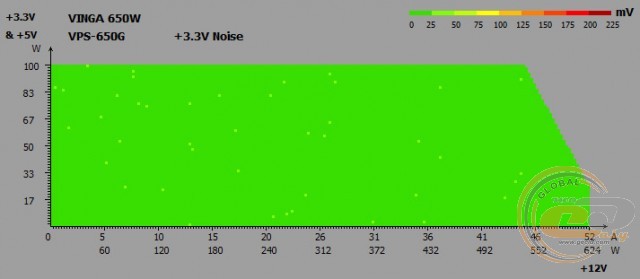
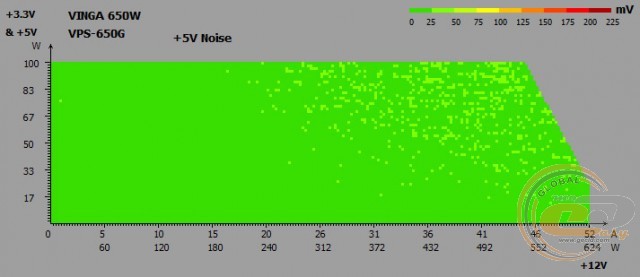
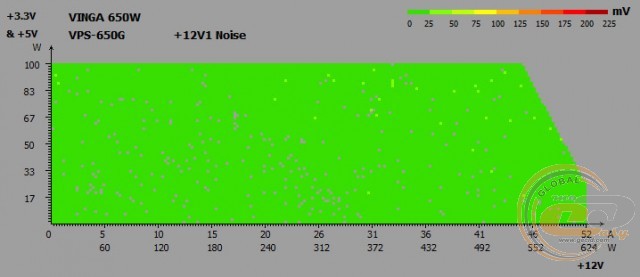
The low ripple level also left a pleasant impression, as on all three lines they did not exceed the 50 mV mark. For the +12V channel, this is an exemplary indicator.
Standby power line +5VSB
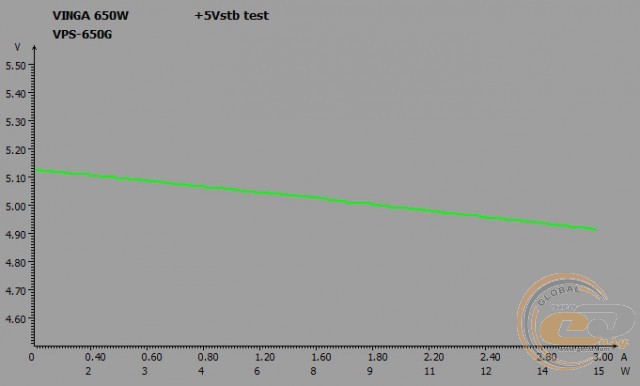
The state of the standby power line of the Vinga VPS-650G did not raise any concerns. Depending on the load, the voltage on it changes within acceptable limits: from 5.12 to 4.91 V, staying within the ± 5% range.
PFC
Table showing the change in PFC depending on the power supply load:
|
Load, W |
65 |
130 |
200 |
280 |
325 |
420 |
500 |
580 |
650 |
|
Load, % |
10 |
20 |
31 |
43 |
50 |
65 |
77 |
89 |
100 |
|
PFC |
0.82 |
0.91 |
0.95 |
0.96 |
0.96 |
0.97 |
0.98 |
0.98 |
0.98 |
Load* − load as a percentage of the power supply's nominal power.
The power supply's APFC module performs very well. At a power consumption of 130 W, the PFC factor reaches 0.91, while the maximum value (0.98) was recorded at a load above 500 W.
Efficiency
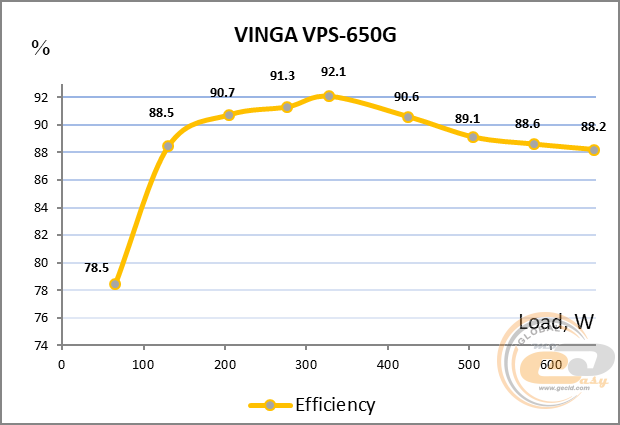
The real efficiency test at different loads confirmed the compliance of the Vinga VPS-650G with the 80 PLUS Gold standard for 230V voltage. At loads of 20%, 50%, and 100% of the nominal power, the power supply's efficiency exceeded 88%, 92%, and 88%, respectively.
The most efficient performance was observed at loads from 170 to 460 W - in this range, the owner can expect an efficiency of over 90%, and the cooling system will need to dissipate from 17 to 46 W of thermal power. For example, in nominal mode (650 W), this figure will already reach 77 W.
Cooling system and temperature regime
The noise level of the device can be indirectly assessed by the fan's rotation speed under different load levels. The time interval after which the rotation speed was measured and the subsequent power increase was about twenty minutes. The measurement results are marked with points on the graph. At the same time, the ambient temperature for the power supply was approximately 27°C. It should be noted that the air inside the computer case can be hotter, with a temperature of 40°C being quite acceptable. Meanwhile, the load created by the computer system is variable, facilitating the power supply's thermal regime.
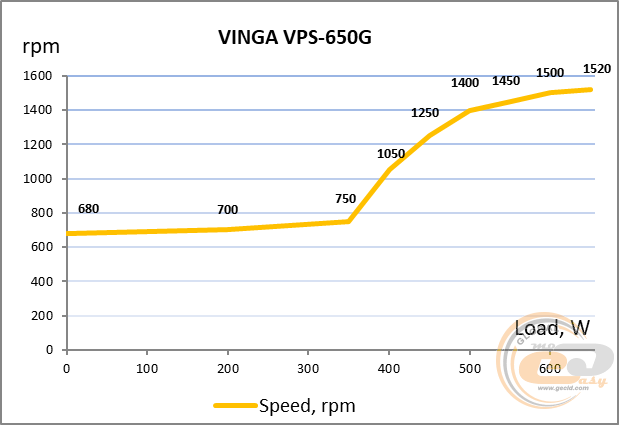
The Vinga VPS-650G fan rotates very quietly at a frequency of 680-750 RPM up to the 360W mark. Beyond that, the propeller speed increases more sharply to 450W (1250 RPM), with the resulting noise level being characterized as quiet. At the nominal 650W, the fan accelerates to 1520 RPM, not exceeding the average level and remaining in a very comfortable noise range.
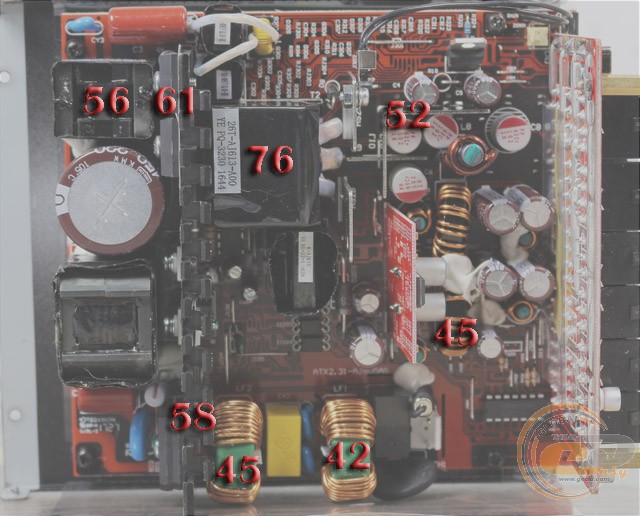
The heating of the components was minimal. The highest temperature was observed at the main transformer, but the value of 76°C obtained during prolonged constant load is far from critical.
Overall, the cooling system setup was very pleasing with a low rotation frequency under light load and a generally low noise level combined with low heating of the main units. Well done, great effort!
External noises during power supply operation
As practice showed, across the entire range of nominal power, the Vinga VPS-650G does not produce additional noises in the form of annoying coil whine or characteristic transformer hum.
OverLOAD
The load on the tested model was increased to 750W (+15% to nominal). At the same time, the output voltages still remained within the norm, and the source operated properly. However, we did not dare to continue the experiment further.
Practical tests on a real configuration
To build a real computer system, a powerful 6-core processor Intel Core i7-4960X was used, operating in nominal mode. As a video accelerator, we used a rather power-hungry model ZOTAC GeForce GTX 480 AMP! with factory overclocking. It should be noted that the purpose of this experiment is to recreate real loads of a productive PC and check how the power supply behaves in practice.
|
Motherboard |
ASUS P9X79 PRO (Socket LGA2011, Intel X79 Express) |
|
Processor |
Intel Core i7-4960X (Socket LGA2011, 3.6 GHz, L3 12 MB) @ 4.4 GHz, 1.3 V |
|
Cooler |
Thermalright TRUE Spirit 120M |
|
RAM |
4 x 4096 MB DDR3-1333 Transcend PC3-10600 |
|
Graphics Card |
ZOTAC GeForce GTX 480 AMP! |
|
Hard Drive |
WD Caviar Blue 1 TB (WD10EALX) |
|
Case |
Spire SwordFin SP9007B with two 120mm fans |
|
Wattmeter |
Seasonic PowerAngel |
|
Multimeter |
MASTECH MY64 |
Measurements were conducted in two modes: "Idle" and "Maximum load," created by Linpack and FurMark 1.10.4 utilities. During testing, the system's total power consumption was measured using the Seasonic PowerAngel device, and the voltage on the +12V, +5V, and +3.3V power lines was recorded using the MASTECH MY64 multimeter.
As a result of measuring the power supply voltage on the output lines, the following values were obtained:
|
|
Vinga VPS-650G |
be quiet! Straight Power 11 750W |
Seasonic X-760 |
|||
|
Mode |
Value, V |
Deviation, % |
Value, V |
Deviation, % |
Value, V |
Deviation, % |
|
+12V |
||||||
|
Idle |
12.32 |
+2.7 |
12.17 |
+1.4 |
12.37 |
+3.1 |
|
Burn |
12.29 |
+2.4 |
12.21 |
+1.8 |
12.36 |
+3.0 |
|
+5V |
||||||
|
Idle |
5.12 |
+2.4 |
5.06 |
+1.2 |
5.06 |
+1.2 |
|
Burn |
5.13 |
+2.6 |
5.05 |
+1.0 |
5.06 |
+1.2 |
|
+3.3V |
||||||
|
Idle |
3.41 |
+3.3 |
3.39 |
+2.7 |
3.43 |
+3.9 |
|
Burn |
3.41 |
+3.3 |
3.38 |
+2.4 |
3.44 |
+4.2 |
|
Input Power Consumption, W |
||||||
|
Idle |
112 |
107 |
114 |
|||
|
Burn |
542 |
538 |
545 |
|||
The output indicators of Vinga VPS-650G under load (Burn mode) and when the system is idle (Idle mode) can be characterized as excellent. Not a single line showed any drops, let alone exceeding the permissible values. Overall, the indicators of the novelty can be compared with more expensive solutions from well-known brands.
Power consumption in idle and off state of the computer
|
Power Supplies |
Power Consumption in Mode, W |
|
|
Sleep |
Power Off |
|
|
Vinga VPS-650G |
7 |
3 |
|
be quiet! Straight Power 11 750W |
7 |
3 |
|
Seasonic X-760 |
7 |
3 |
The power consumption of the Vinga VPS-650G power supply in the off state of the computer and in sleep mode corresponds to the indicators of other similar power solutions that have been in our test lab.
Conclusions
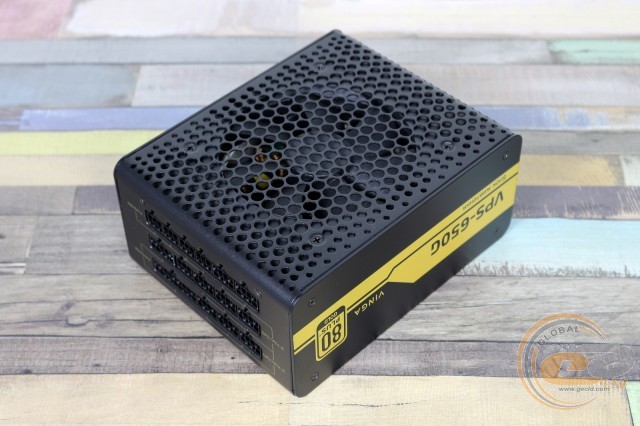
After getting acquainted with the power supply Vinga VPS-650G, we had a question: "Why so cheap?", to which we did not find an answer. At the time of writing, the device will cost the buyer only $85, and for this money, you get almost a "full package".
The "golden" efficiency allows the device to emit a relatively small amount of heat, which is excellently handled by the 120mm fan. In our case, at more than 50% load, it worked very quietly, but even at maximum speed, the noise level remains quite comfortable. Most importantly, the heating of internal components remains relatively low, which will help extend their lifespan. Moreover, the component base itself is made exclusively of Japanese electrolytes and polymers. To the above, we add the excellent state of output voltages without any drops when connecting a powerful configuration, the presence of power reserve, as well as a fully modular cable connection system, which are also made in the form of long flat ribbons.
The only downside was the use of an input electrolyte of low capacity (for a 650W source) and the device's excessive length (190 mm), which means it won't fit in every case. However, if there is enough space in the system case, and the heart desires a source with an 80 PLUS Gold certificate for a relatively small amount, then Vinga VPS-650G can be recommended for purchase without a shadow of a doubt.
Advantages:
- high efficiency level (80 PLUS Gold certification);
- presence of power reserve (at least +15%);
- good voltage condition on power lines;
- small deviations when changing the load on the 12-volt channel without drops below the nominal;
- very low ripple;
- presence of main types of protections;
- separate power stabilization system;
- high-quality component base, which includes Japanese capacitors and solid-state solutions;
- ability to operate in a wide range of network voltage;
- low power consumption in sleep mode and in the off state of the computer;
- use of long removable wires in the form of ribbons;
- very efficient and quite quiet cooling system;
- original design;
- active reactive power compensation method.
Features:
- the length of the device is 190 mm, which should be considered when choosing a case.
Author: Oles Paholok
Translation: Liliya Masyuk
We express our gratitude to the companies ASUS, Intel, Thermalright, Transcend, Western Digital and ZOTAC for providing equipment for the test bench.